
15 Brown Living Room Ideas for Small Apartments
Brown can bring warmth and depth to a small apartment living room, but using too much of it can make a compact space feel visually heavy. The key is deciding where the brown should appear and where lighter tones should take over. Cream, warm white, natural wood, soft beige, and carefully chosen accent colors can keep the room feeling open while allowing brown to remain the defining feature.
Small apartments also benefit from furniture that serves more than one purpose and layouts that leave enough visible floor around the seating area. A brown sofa does not need to be surrounded by brown furniture. Sometimes one rich piece against a lighter background creates a stronger result than repeating the same color everywhere.
These brown living room ideas for small apartments explore different ways to use chocolate, caramel, walnut, tan, espresso, and softer brown shades without sacrificing brightness or valuable space.
1. Chocolate Brown Sofa With Cream Walls
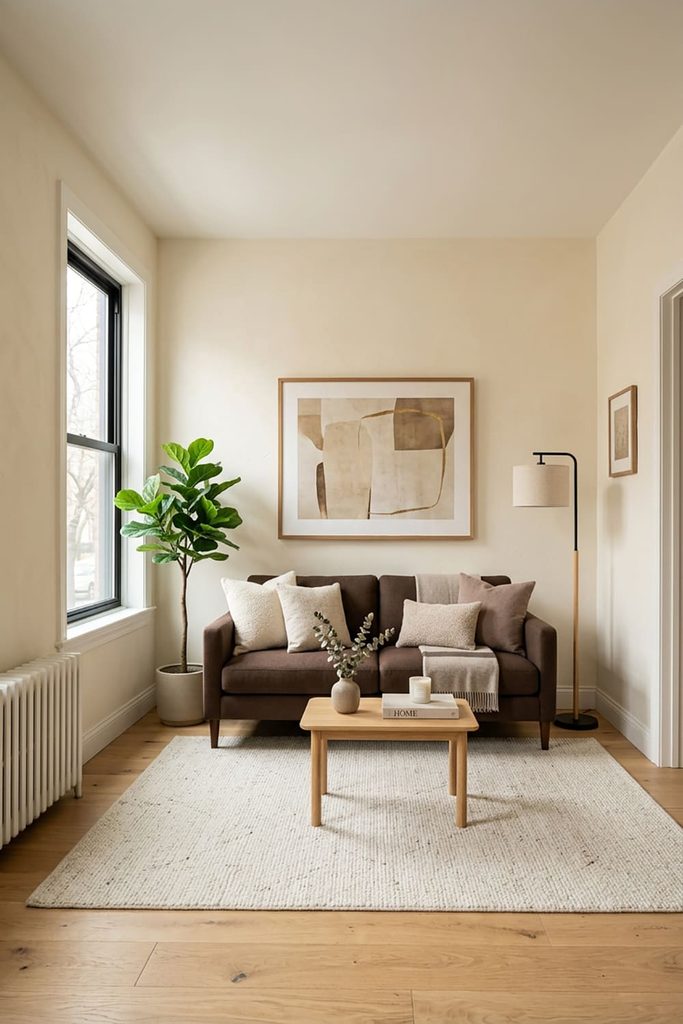
A chocolate brown sofa can become the main feature of a small living room without making the entire space feel dark. Keep the walls a warm cream or soft ivory so the deep sofa has plenty of contrast around it. Choose a compact sofa with clean arms and a relatively simple silhouette rather than an oversized sectional.
A light rug underneath the seating area can visually separate the sofa from the floor and make the room feel more balanced. Add a few cream, beige, or muted brown cushions rather than covering the sofa with many colors. A small wooden coffee table and one floor lamp can complete the arrangement without taking up unnecessary floor space.
2. Light Brown Sofa With Warm White Decor
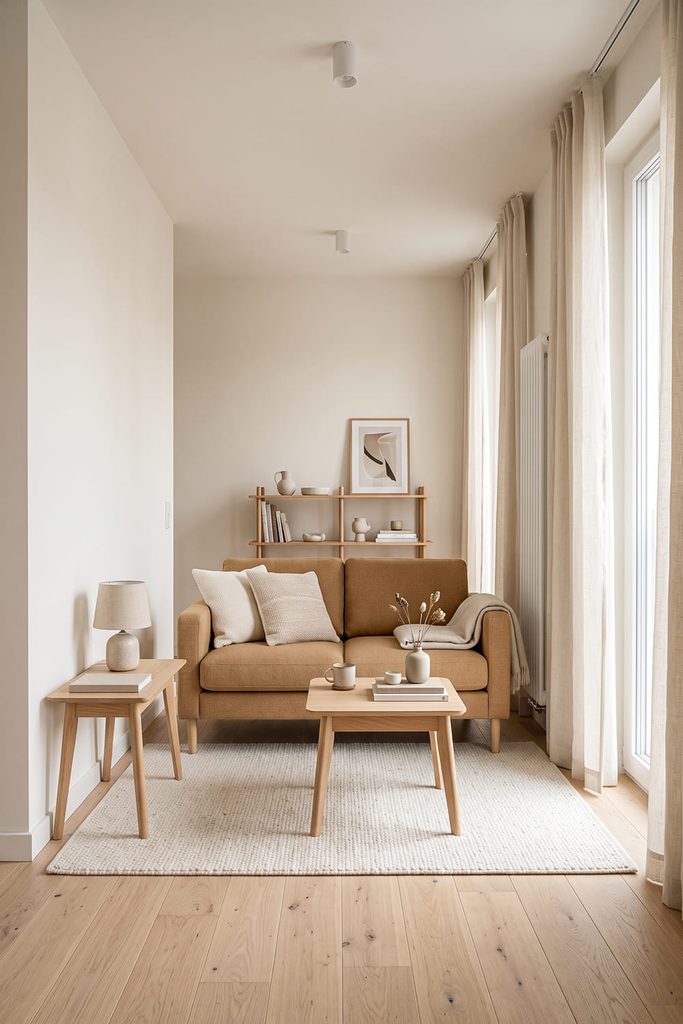
If your apartment receives limited natural light, a lighter brown sofa may be easier to work with than a deep chocolate shade. Think caramel, camel, tan, or soft chestnut upholstery.
Surround the sofa with warm white walls, an ivory rug, and light curtains. This creates a gentle contrast without making the brown look isolated. Natural wood can connect the different elements while maintaining the warm palette.
For a small room, choose furniture with visible legs whenever possible. Seeing more of the floor beneath the sofa and tables can help maintain a lighter visual appearance. Keep the coffee table compact and use a narrow side table instead of adding bulky furniture.
3. Brown Sofa With a Small Olive Green Accent
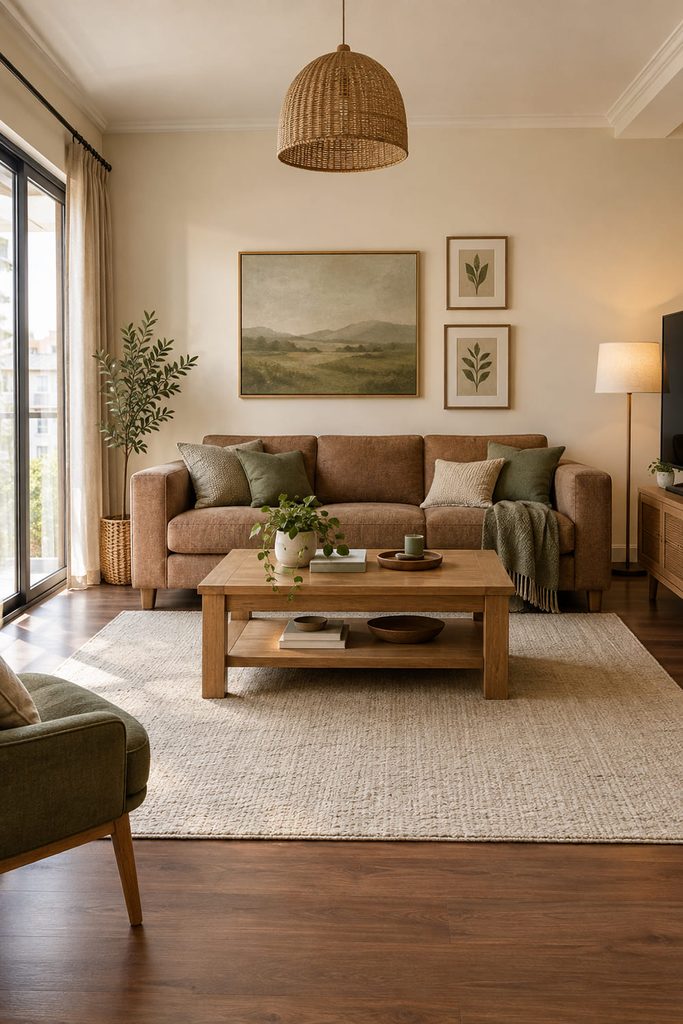
Brown and olive green create a natural combination that works especially well in compact living rooms. Keep brown as the dominant neutral and introduce olive through two or three carefully selected details.
For example, a brown sofa can sit against a warm cream wall with olive cushions, a small plant, and a piece of artwork containing muted green. You do not need to paint the entire room green.
Use a light-colored rug to separate the darker sofa from the floor. A natural wood coffee table can bridge the brown and green tones. Because the palette remains earthy, the room can feel layered without requiring a large collection of decorative objects.
4. Brown Leather Sofa With Light Wood Furniture
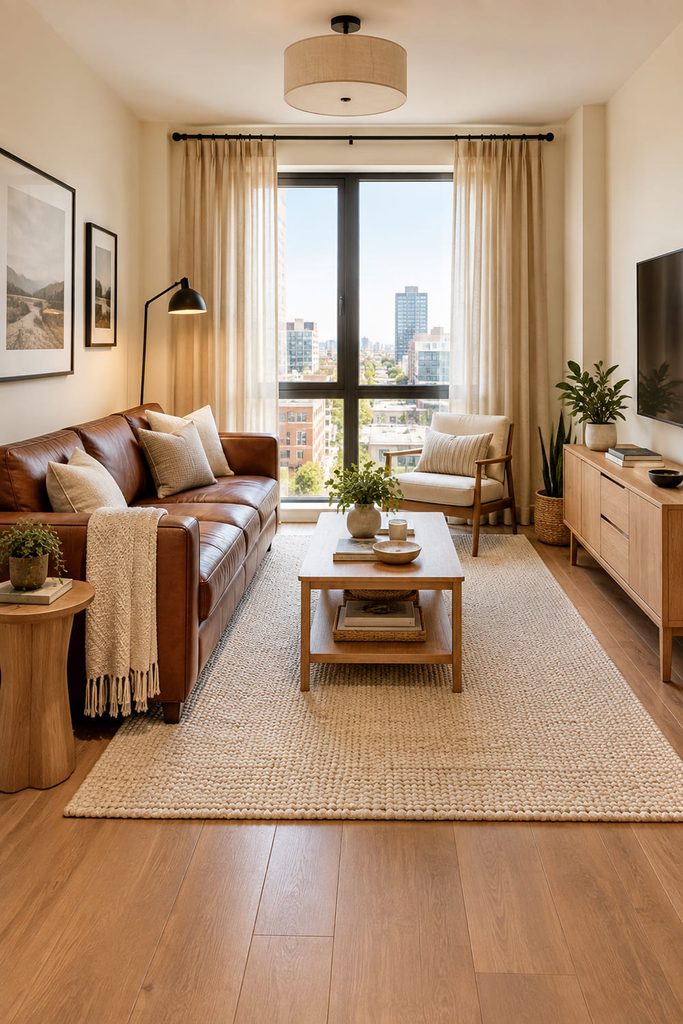
A brown leather sofa can give a small apartment a strong focal point while keeping the furniture arrangement relatively simple. Pair it with pale oak or other light wood pieces to prevent the room from becoming dominated by dark surfaces.
Choose a compact rectangular coffee table or a small round table depending on the shape of the room. Add one narrow console behind the sofa if there is enough space, but avoid filling every available wall.
Cream textiles, a textured light rug, and warm curtains can soften the leather. A few black details in the lighting or picture frames can provide definition without competing with the brown sofa.
5. Brown Accent Wall Behind a Light Sofa
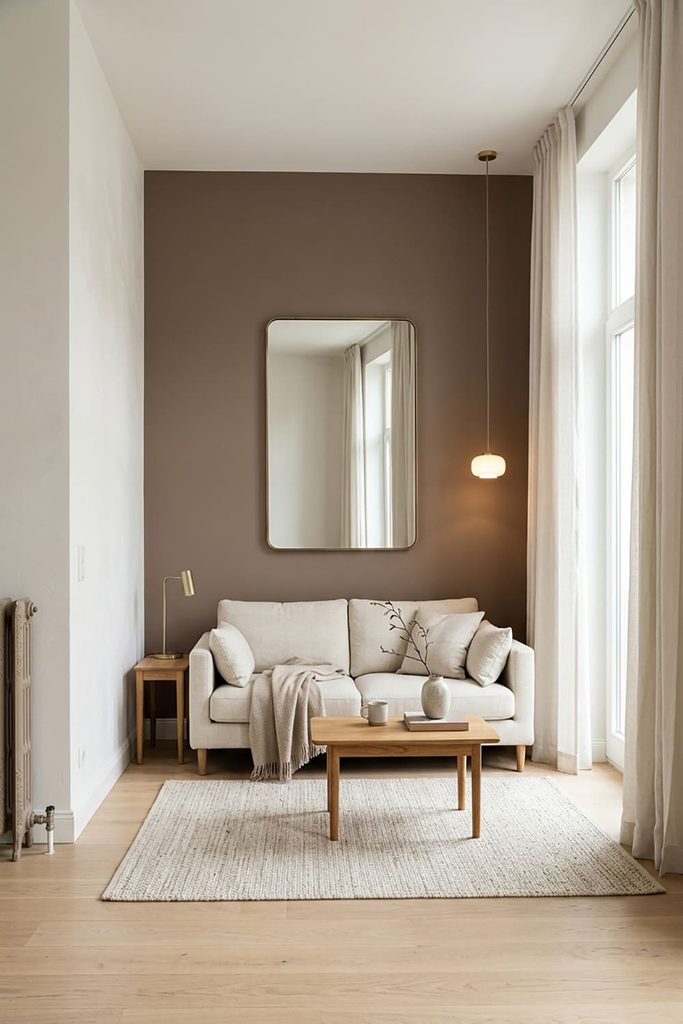
Brown does not have to belong to the sofa. A small apartment can look interesting with a warm brown accent wall behind a cream, beige, or light taupe sofa.
Choose a softer brown such as mocha, cocoa, or warm taupe if the room is narrow. Keep the remaining walls lighter so the accent wall remains a focal point rather than making the entire room feel enclosed.
Use simple artwork or one large mirror on the brown wall. Avoid placing too many small frames across it, since the darker background already provides visual weight. A light rug and pale curtains can help maintain the balance.
6. Walnut Furniture With a Neutral Sofa
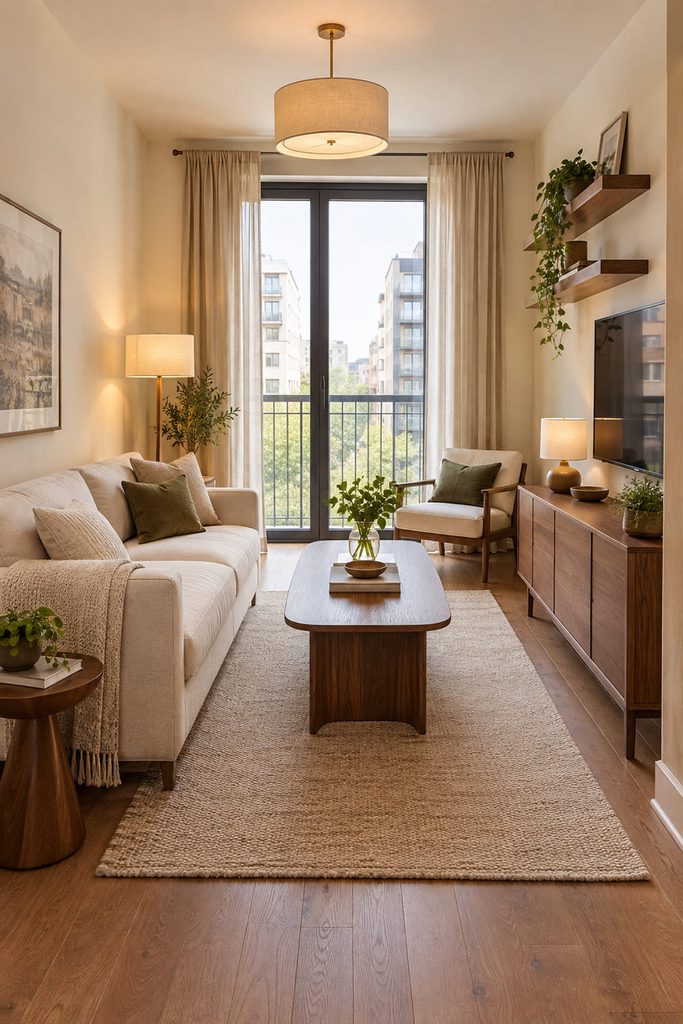
For a subtler brown living room, use walnut or medium-brown wood furniture instead of making the sofa brown. A cream or beige sofa can then sit comfortably among a walnut coffee table, media console, side table, or shelving.
This approach works particularly well in apartments where the living room needs to perform several functions. The furniture provides warmth while the lighter upholstery keeps the seating area visually open.
Repeat the wood tone in only a few places rather than buying a complete matching set. Different shapes and textures can make the room feel more natural. Add a small plant, simple artwork, and warm lighting to finish the space.
7. Small Brown Sectional With a Round Coffee Table
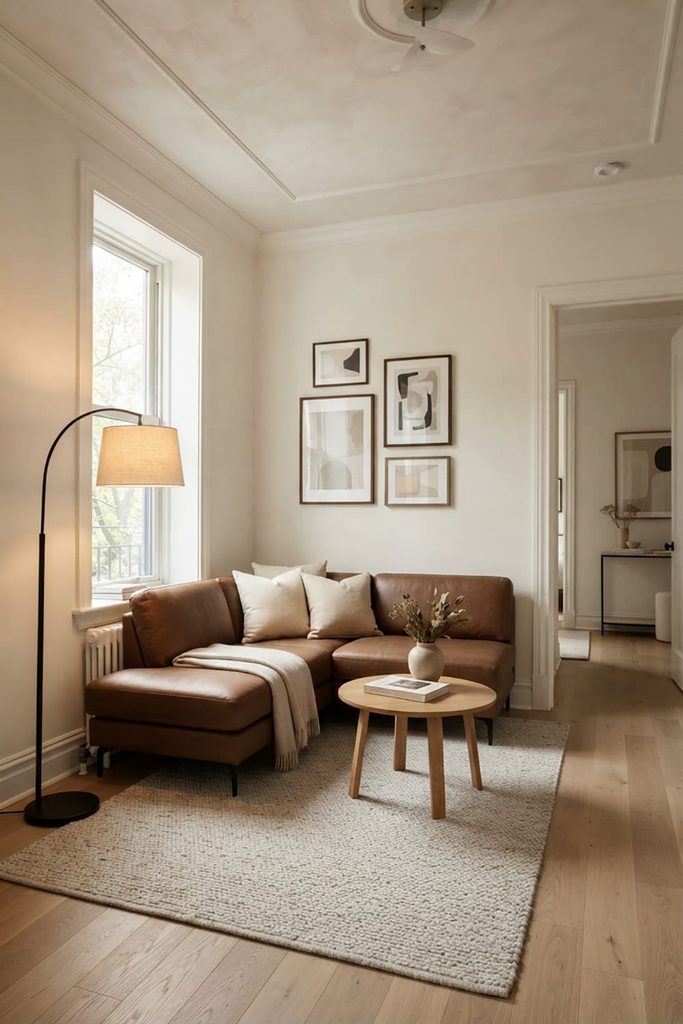
A sectional can work in a small apartment when it is carefully scaled to the room. Choose a compact L-shaped brown sectional that fits tightly into a corner instead of floating in the middle of the floor.
A round coffee table can make the arrangement easier to move around and can soften the strong horizontal and vertical lines of the sectional. Leave a clear walking path between the seating and the main entrance or other rooms.
Use cream or oatmeal-colored cushions and a light rug to keep the arrangement from becoming too dark. Wall-mounted lighting or a slim floor lamp can save valuable space around the seating area.
8. Brown and Beige Layered Living Room
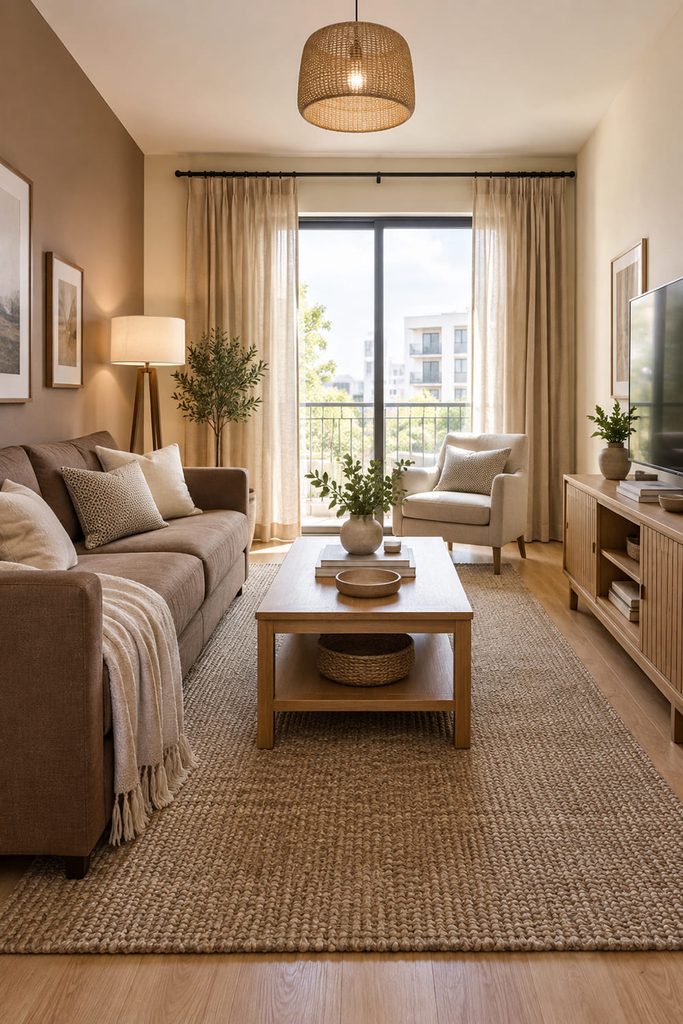
Instead of treating brown as one isolated color, combine several closely related shades. A medium-brown sofa can work with beige curtains, a taupe rug, cream cushions, and light brown wood.
The important part is creating enough difference between the shades so the room does not look like one continuous block of beige and brown.
Texture becomes especially useful here. Try linen curtains, a woven rug, soft upholstery, and a wooden coffee table. These materials create variation even when the overall color palette remains restrained. This is a practical approach for renters because many of the changes can come from furniture and textiles rather than permanent alterations.
9. Dark Brown Sofa With a Large Mirror
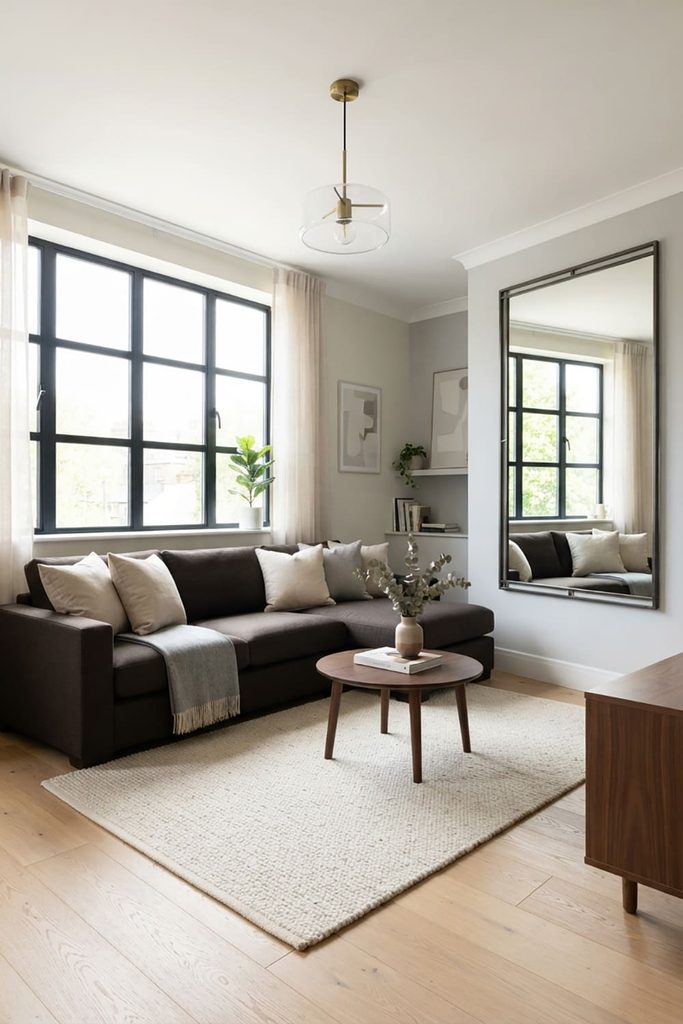
A large mirror can help a small living room feel brighter while giving a dark brown sofa enough surrounding contrast. Place the mirror on the wall opposite or perpendicular to the main window when the layout allows.
Choose a simple frame in dark wood, black, or a muted metallic finish. Avoid covering the entire wall with multiple small mirrors, which can make the arrangement feel fragmented.
Keep the sofa area simple with a cream rug, neutral cushions, and one small coffee table. The mirror becomes both a decorative feature and a practical way to reflect available daylight around the room.
10. Caramel Brown Sofa With Blue Accents
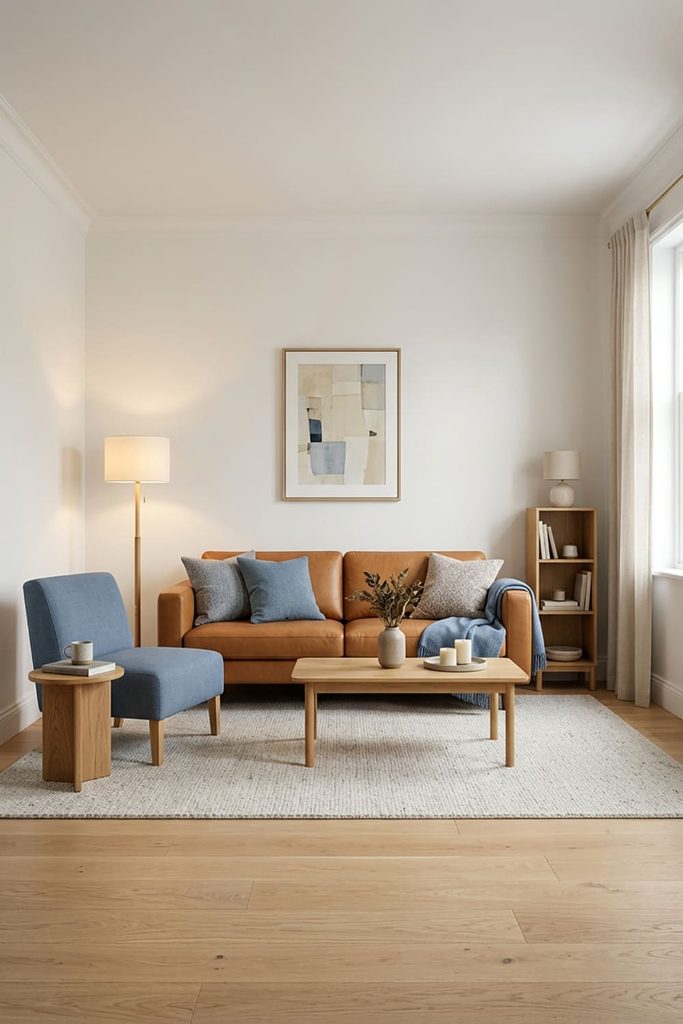
For a brown living room that feels fresher, combine caramel or tan upholstery with muted blue. The blue can appear through cushions, artwork, a small throw, or one accent chair.
Keep the blue slightly subdued rather than using an extremely bright shade. A dusty blue or soft denim tone works naturally with caramel brown.
Use warm white walls and light flooring or a pale rug to keep the small room visually open. Natural wood furniture can connect the two main colors. Because only a few blue elements are needed, this combination gives the room personality without turning it into a heavily themed space.
11. Brown Velvet Sofa With Minimal Decor
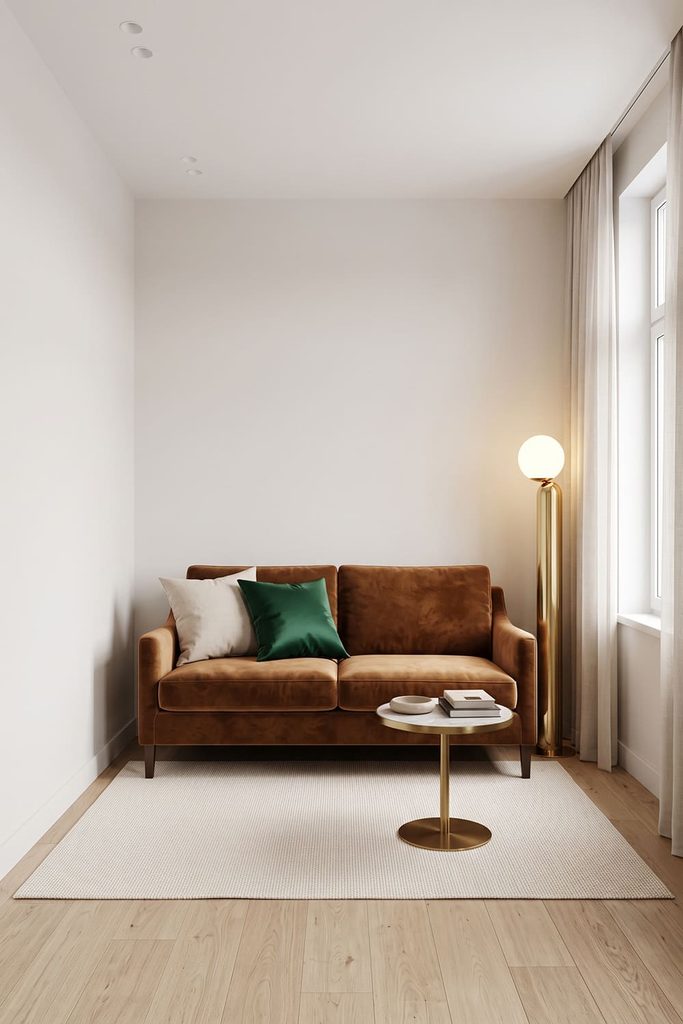
A brown velvet sofa can provide enough visual richness that very little additional decoration is necessary. Choose a compact sofa in chocolate, cocoa, or warm tobacco and let its texture become the main feature.
Keep the walls light and the floor relatively uncluttered. A simple cream rug, small round coffee table, and one sculptural lamp can be enough to complete the seating area.
Avoid filling the sofa with numerous decorative cushions because the velvet already creates texture. One or two contrasting cushions can provide a cleaner appearance. This approach is particularly useful when the apartment has limited storage and you want the living room to feel finished without adding many objects.
12. Brown Sofa With a Black and Cream Palette
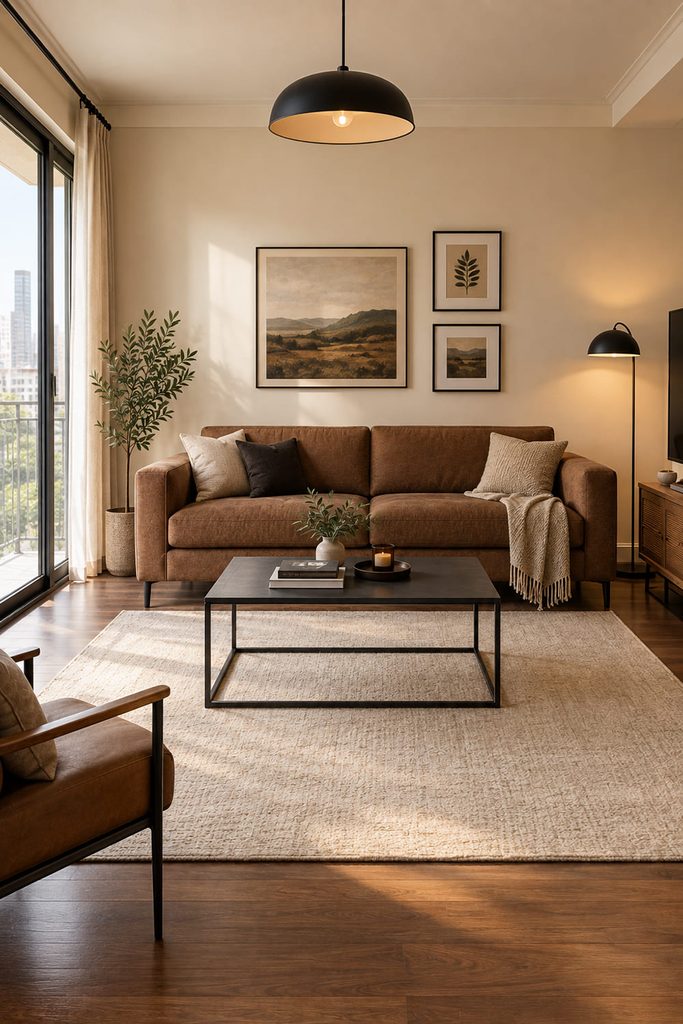
Brown, black, and cream can create a sophisticated small living room without requiring many colors. Start with a brown sofa and use cream for the walls or rug. Introduce black through a slim coffee table, lighting fixture, picture frames, or small decorative details.
The three colors create enough contrast to define different areas without overwhelming the room.
Keep the furniture profiles relatively simple. A black metal table with a thin frame can take up less visual space than a bulky dark wooden table. Add one warm-toned artwork or a small plant to prevent the palette from feeling too severe.
13. Small Brown Living Room With a Built-In Reading Corner
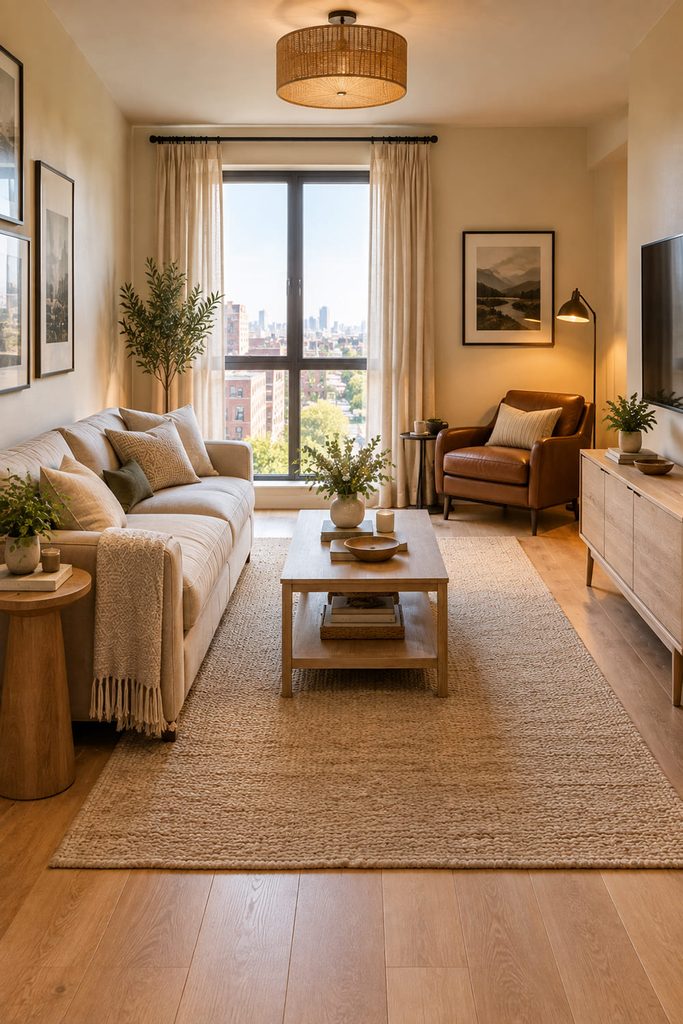
If your apartment has an unused corner near the living room, turn it into a compact reading area rather than filling the space with additional storage furniture.
A brown accent chair can sit beside a narrow floor lamp and a tiny side table. Keep the main sofa in cream, beige, or another lighter neutral. This distributes the brown around the room rather than placing all the darker color in one large block.
A small framed artwork above the chair can visually establish the corner as its own zone. The result is useful for apartments where one room needs to support relaxing, reading, working, and entertaining.
14. Brown and Terracotta Living Room
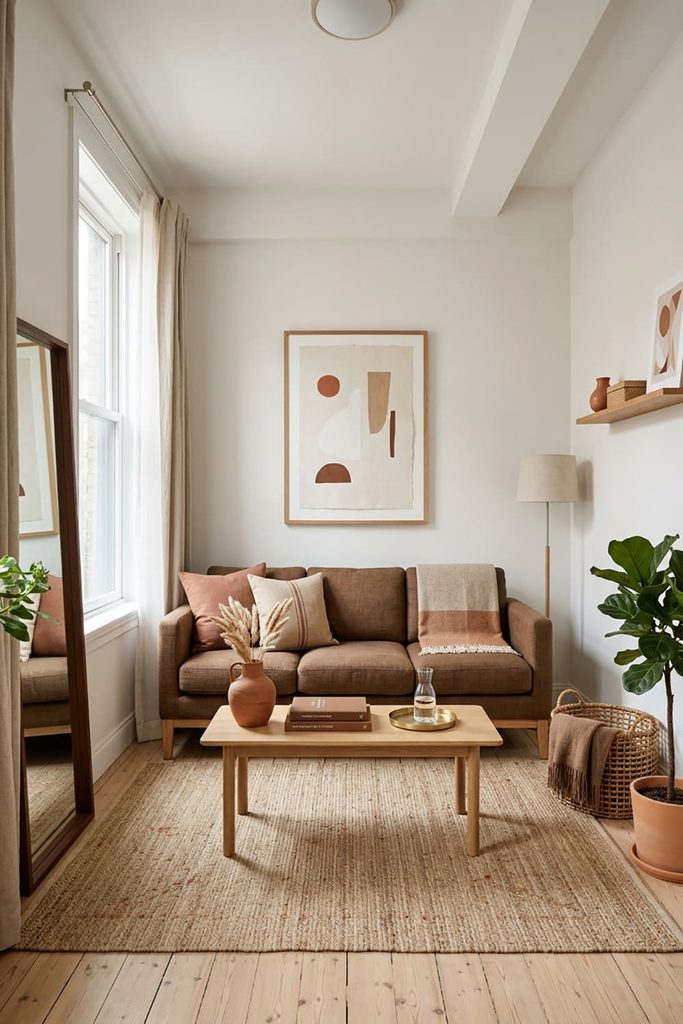
Terracotta can add warmth to a brown living room without requiring a dramatic color change. Use brown for the main sofa or wood furniture and introduce terracotta through cushions, artwork, a ceramic planter, or a small rug pattern.
Keep the walls light, preferably warm white, cream, or a very pale beige. This prevents the earthy palette from becoming too dense in a compact room.
Because both colors have warm undertones, natural materials work especially well alongside them. Try woven baskets, light wood, linen, or textured cotton. Limit the strongest terracotta color to a few locations so the room remains visually calm.
15. Brown Sofa With Floor-to-Ceiling Curtains
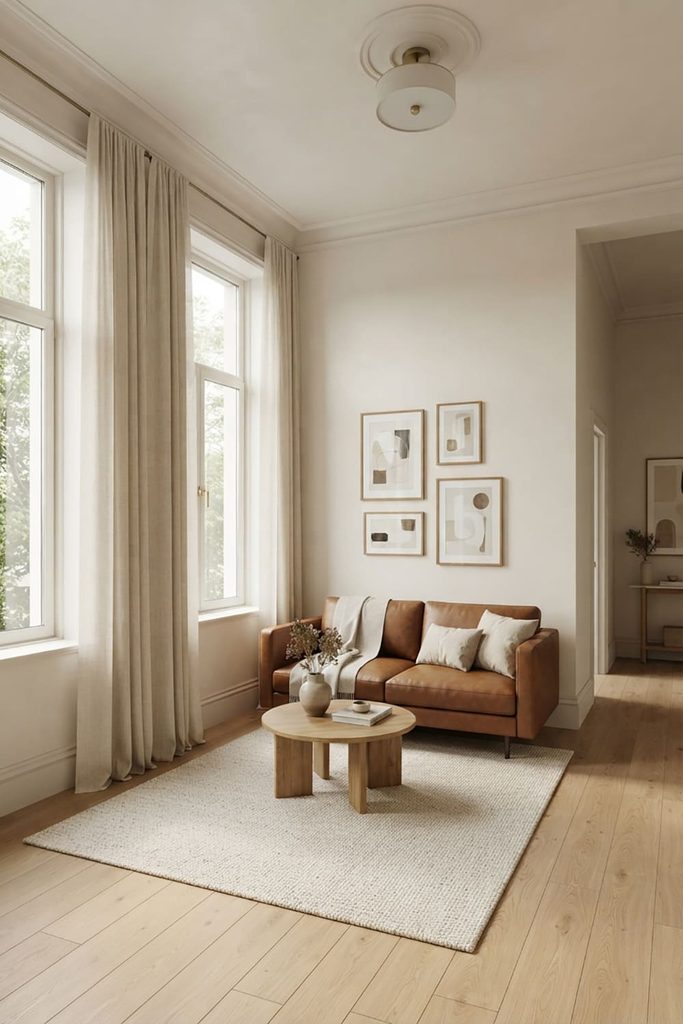
A brown sofa paired with long, light curtains can make a small apartment living room feel taller and more finished. Hang the curtains close to the ceiling and let them fall toward the floor rather than stopping at the window sill.
Choose cream, oatmeal, or warm ivory fabric so the curtains contrast gently with the brown furniture. Keep the curtain design simple and avoid heavy patterns.
Place a light rug beneath the sofa and use a compact coffee table in wood or another natural material. The vertical curtain line draws attention upward while the lighter fabric prevents the brown seating from making the room feel visually compressed.
How to Use Brown Without Making a Small Apartment Feel Dark
The easiest approach is to choose one major brown element and let lighter colors surround it. A brown sofa against cream walls is usually easier to balance than brown furniture, brown curtains, brown walls, and a dark rug all at once.
Natural daylight matters as well. Keep windows as unobstructed as possible and use lighter curtains where privacy allows. At night, combine several smaller sources of light instead of relying entirely on one overhead fixture.
Texture also helps. Wood, linen, woven materials, leather, cotton, and soft upholstery can make a brown palette feel layered without requiring more colors.
Best Brown Shades for Small Living Rooms
The right brown depends on the amount of natural light and the atmosphere you want.
- Caramel: warm and relatively light, useful for sofas and accent chairs
- Camel: soft and versatile with cream and beige
- Walnut: excellent for furniture and wood details
- Mocha: deeper but softer than very dark chocolate
- Chestnut: warm brown with a slightly richer appearance
- Chocolate: dramatic and best balanced with plenty of light neutrals
- Espresso: very deep and better used selectively in compact rooms
If the apartment is naturally dark, lighter browns can be easier to balance. In a bright room, deeper brown furniture can provide useful contrast.
How to Make a Brown Living Room Feel Larger
Start by keeping the central walking areas clear. Avoid oversized coffee tables and furniture that blocks the natural route through the room.
Use a rug large enough to connect the main seating pieces, but make sure it does not overwhelm the floor area. Furniture with exposed legs can also help preserve visible floor space.
Mirrors, light curtains, warm pale walls, and restrained decoration can further reduce visual heaviness. The goal is not to remove brown. It is to give the brown enough light and breathing room around it.
Final Thoughts
Brown works especially well in a small apartment when it is treated as a grounding color rather than covering every surface. A chocolate sofa, walnut table, caramel chair, or brown accent wall can provide plenty of warmth when balanced with cream, beige, soft white, natural wood, and carefully selected accent colors.
The most successful compact living rooms usually rely on a few well-chosen pieces rather than a crowded collection of furniture and accessories. Choose the brown element you want to highlight first, then build the rest of the room around it with lighter tones, useful furniture, open floor space, and varied textures.


