

Sheath vs Shift vs Wrap Dress for Work: How to Choose in 15 Checks
Three dresses hang in front of you, and all three look work ready at first glance. The sheath looks sharp, the shift looks easy, and the wrap looks kind. Yet only one of them will still feel right at 4 p.m.
That is the real test. A work dress has to sit well, move well, and hold its shape through a full day.
This guide on sheath vs shift vs wrap dress for work how to choose gives you 15 quick checks to run before you buy.
Try each check in the mirror, at your desk, and on the walk to your next meeting. The dress that passes the most checks for your day is the one to take home.
Keep a short note on your phone as you try each shape. Mark which one sat well, which one moved well, and which one you forgot you were wearing. Those notes make the final choice clear.
This post contains affiliate links. If you buy through them, we may earn a small commission at no extra cost to you. See our Affiliate Disclosure.
1. Run the sit test before anything else

A dress can look lovely standing up and still fail at a desk. Sit in it the way you sit at work, with your knees together and your feet flat on the floor. Watch what the hem does and where the fabric pulls.
A sheath usually stays smooth across the lap, but a tight one can ride up when you sit. A shift gives you room to breathe, though a boxy one can bunch at the waist.
A wrap should stay closed across the lap without you holding it shut.
Stay seated for two full minutes. Shift your weight, cross your legs once, then stand up again. If the dress needs constant fixing, it will steal your focus all day. Pick the shape that settles back into place on its own.
2. Check where the waist lands on you
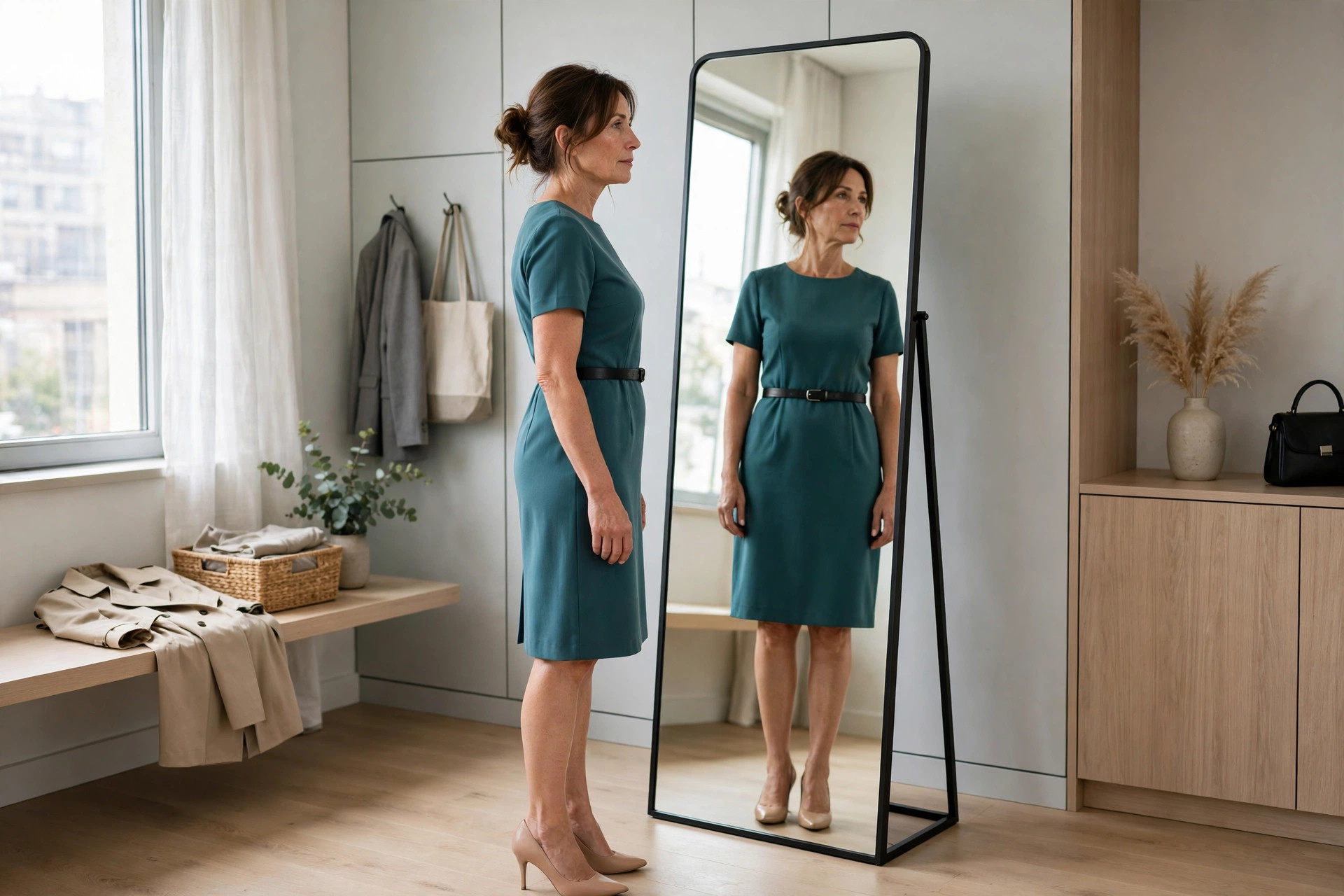
Each shape marks the waist in a different way. A sheath uses darts and seams to shape the waist. A wrap uses a tie that you place yourself. A shift skips the waist and falls straight down.
Stand sideways in the mirror and find your natural waist, the narrowest point above your belly button. A wrap tie should sit right there, not up under your bust and not down on your hips. A sheath seam should meet that same point.
If a shift makes you feel lost in fabric, add a slim belt at that point and check again. The belt should define your shape without squeezing. This one check often decides the whole choice, so take your time with it.
3. Test the wrap for gaps at the bust

A wrap dress is only office ready if it stays closed when you move. Lean forward as if you dropped a pen, then reach up as if you grabbed a file from a high shelf. Watch the crossed front closely in the mirror.
If the neckline opens, try a small safety pin at the crossover point, hidden inside the fold. Some wraps also have a small snap or an inner button that helps. If it still gaps after that fix, the cut is wrong for your bust.
A sheath or a shift with a modest round or boat neckline avoids this worry entirely. That trade matters on days with lots of bending, leaning, and presenting. Comfort with movement beats a pretty neckline every time.
4. Raise your arms and reach for something

Work asks more of your arms than a fitting room does. You reach for binders, wave to a colleague, and hang up a coat. Raise both arms overhead, then stretch one arm across your body.
A sheath with set-in sleeves can pull across the back if the fit is snug. A shift with a loose armhole gives you the most room here, and a knit wrap usually stretches with you. Note where the fabric tightens and whether the hem lifts.
If the dress lifts above your comfort point when you reach, size up or pick a shape with more ease. A dress that limits your arms will limit your day too. Keep the one that lets you move without thinking about it.
5. Walk a full hallway in it

Some sheaths look sharp in photos but fight you on every step. Walk at your normal pace down a long hallway, turn, and walk back. A pencil-style sheath should let you take a full stride without short, clipped steps.
Look for a small kick pleat or a back vent, which gives the hem room to move. A shift will walk easily in most cases, and a wrap skirt usually swings free. Listen for fabric rubbing and check if the skirt twists around your legs.
If you catch yourself taking tiny steps, that dress will slow you down between meetings. The right shape keeps your normal walk intact. That ease shows in how confident you look walking into a room.
6. Check the wrap tie after lunch

A wrap tie can loosen over a day, and lunch is when it often slips. Tie it as you normally would, then eat, sit, and stand again. Check whether the knot held its place and whether the waist still sits where you set it.
A double knot holds better than a single loop, and a tie threaded through a side loop stays put longer. If the tie still slips, a sheath with a fixed waist or a shift with a belt may suit your day better.
This check matters most if you dislike fussing with clothes at work. Some women love the adjustability of a wrap and happily retie it once. Others want a dress they can forget about, and that preference is a valid tiebreaker.
7. Match the hem to your height

On a shorter frame, a hem that hits just above the knee often looks neat and keeps proportions balanced. A shift in that length can look fresh and light, while a long wrap skirt may swamp a petite frame.
Try the dress with the shoes you actually wear to work, not the fitting-room heels. Stand on a flat floor and check the hem from the side. It should clear your knee when you walk and still cover enough when you sit.
If a sheath hem falls below the knee, it can shorten the leg line on a petite woman. A knee-length shift or a wrap that ends at the knee often reads better.
Hem length is a small detail with a large effect on the whole look.
8. Sit through a long meeting in it

A one-hour meeting tests a dress in ways a quick try-on cannot. A shift in a soft knit usually wins this check, since it does not bind at the waist or dig in at the arms.
A lined sheath can feel warm after an hour in a closed room.
Pay attention to the back of your knees, your waistband, and your shoulders. If any spot starts to pinch by minute thirty, it will only feel worse by minute sixty. Bring a light cardigan if the room runs cold, and check that it layers neatly.
For days packed with back-to-back meetings, ease often beats structure. That is why many women keep a shift for meeting-heavy days and save a sheath for shorter, sharper occasions. Let your calendar vote on this check.
9. Judge it for a client facing day

On a day when you meet clients, the dress speaks before you do. A sheath in a solid, dark color reads crisp and put together, with clean lines and no fuss. It photographs well and holds its shape under a blazer.
A wrap can also look polished for clients if the tie is neat and the neckline stays modest. A shift may need a blazer or a belt to reach the same level of polish, since its loose cut can read casual on its own.
Ask yourself what the client will notice first. If the answer is the dress itself rather than you, simplify. For high-stakes days, many women reach for the sheath, and keep the shift for quieter office days.
10. Test it on a warm day

Heat changes how every shape behaves. A shift in cotton or a light knit lets air move and dries fast after a walk from the car park. A lined sheath can feel heavy by midday, even in a light color.
A wrap in a breathable jersey falls between the two, with a tie waist that you can loosen slightly. Check the underarm area and the back after ten minutes in a warm room. Damp patches or clinging fabric are fair reasons to pass.
If your office runs warm in summer, the shift often earns its place first. For more on warm-weather choices, see these summer work dresses for women. Keep a sheath for cooler rooms and cooler months.
11. Layer a blazer over each shape

A blazer changes the verdict on all three shapes. A sheath slides neatly under a blazer, with no extra bulk at the waist. The two pieces read as one polished outfit, which is why this pairing is a classic.
A wrap can bunch where the tie sits, so try the blazer open and closed. If the knot shows as a lump, wear the blazer open or move the tie to the side.
A shift under a blazer can look boxy unless the blazer is fitted.
Button the blazer, sit down, and check the front line. The smoothest layer wins for formal days. If you rarely wear a blazer, weight this check less and focus on how the dress looks on its own.
12. Take it from desk to dinner
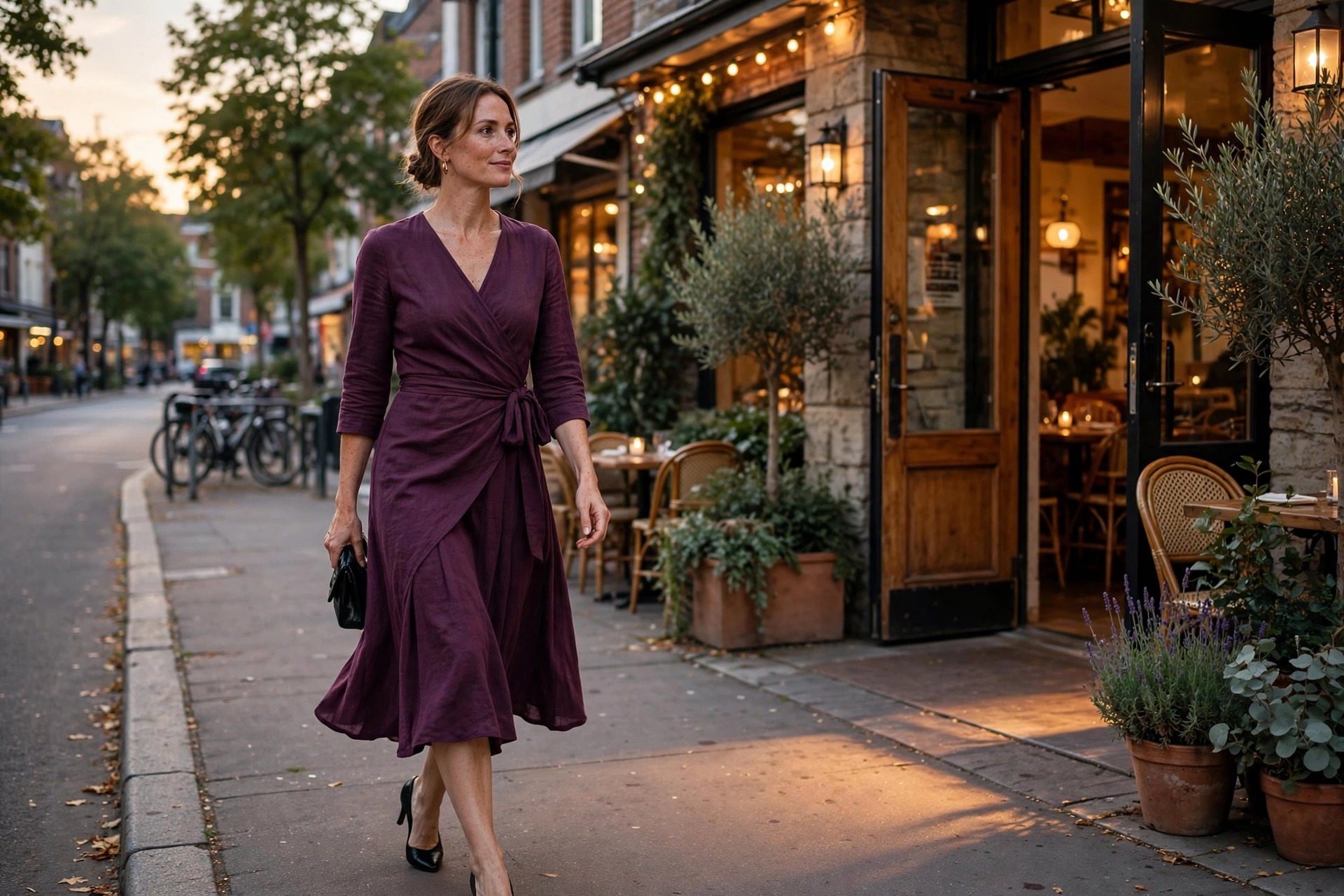
Some workdays end with dinner out, and one dress has to cover both. A wrap in a deep color often makes this switch best, since you can swap flats for heels and add simple earrings. The tie waist already gives it a dressed-up feel.
A sheath also travels well to dinner, especially in black or navy. Change your shoes, add a small clutch, and you are set. A shift may need more help, like a belt and a bolder shoe, to feel evening ready.
Think about how often your day runs long. If after-work plans are common for you, the wrap earns extra points here. If they are rare, do not let this check outweigh comfort and fit during office hours.
13. Check the fit across your middle

Every body carries weight differently, and each shape meets the middle in its own way. A wrap tie draws the eye to the waist and lets the skirt skim over the stomach. A shift skims without clinging, which many women find restful.
A sheath follows the body closely, so it shows every seam and dart. That can look striking, but it also leaves less room for a full lunch or a long sit.
Try all three after a meal if you can, rather than just on an empty stomach.
For more ideas shaped around this fit question, see these office outfits for apple shaped women and work outfits for women over 50 with a tummy. The shape that lets you breathe and stand tall is the right one.
14. Check the fit across your bust and hips

A sheath is cut to follow curves, so it often flatters a defined waist with fuller hips. Look for darts that point to the right places and seams that lie flat. If a seam pulls or gaps, the size or the cut is off.
A wrap adjusts at the waist, which helps when your bust and hips need different sizes. A shift offers the most forgiveness, but it can hide a waist you might like to show. A belt can restore that shape in seconds.
For shape-led outfit ideas, see these office outfits for hourglass women. Whichever shape you pick, the seams should lie flat and the fabric should not strain. Fit, not the label size, is the final judge.
15. Run the 60 second mirror check
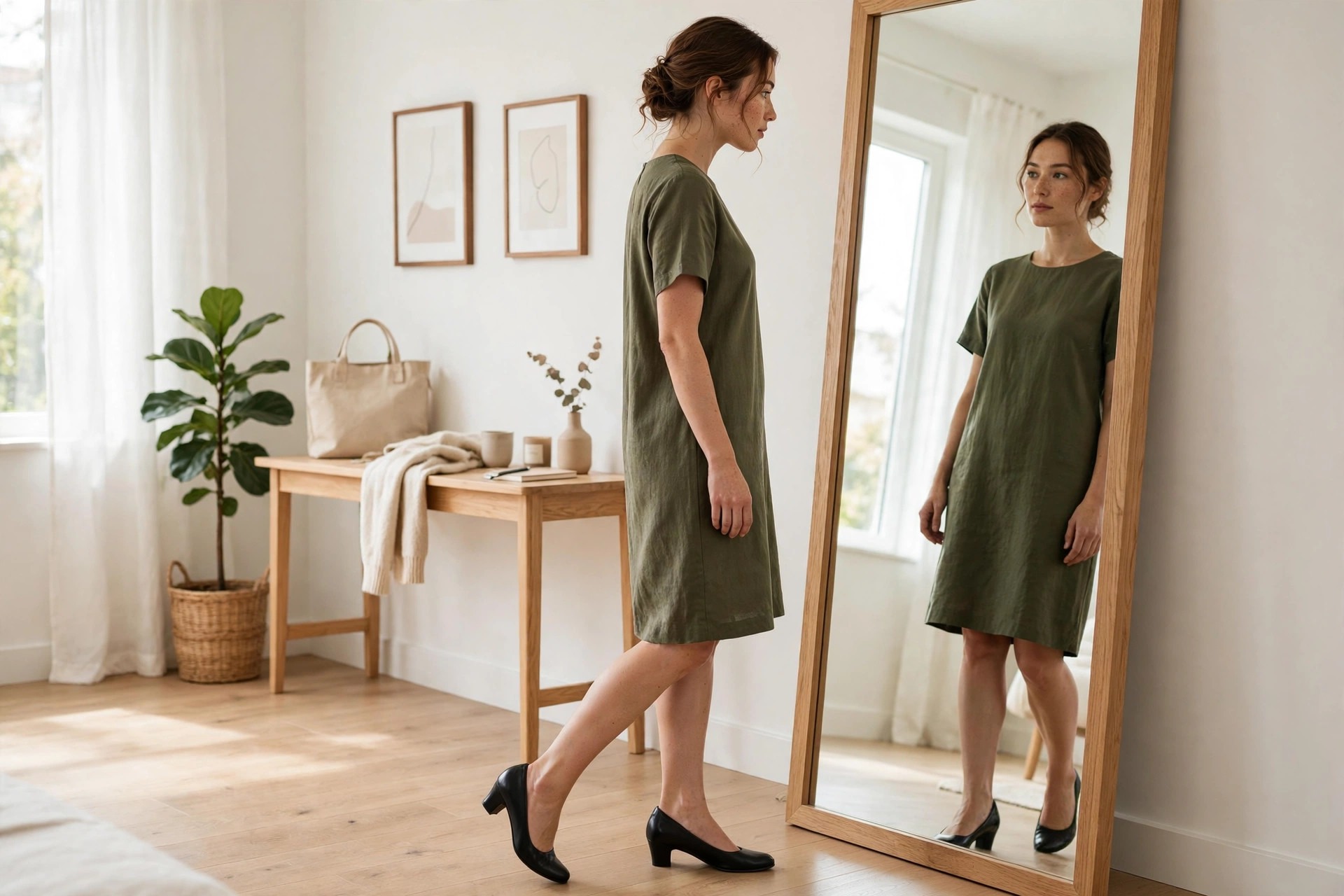
Stand in front of a full-length mirror and give yourself one minute. Sit, stand, walk two steps, and turn sideways. Ask three questions: does it stay closed, does it let me move, and would I still like it at 5 p.m.?
Count how many of the 15 checks each shape passed for you. The winner is rarely the dress you loved on the hanger. It is the one that passed the sit test, the walk test, and the mirror test without a fuss.
If two shapes tie, pick the one that fits your busiest day. A first meeting can also settle it, so see these work dresses for women for a job interview for occasion-led picks. Then buy that dress, and stop second-guessing the other two.
Pick the shape that passed your checks, not the one that looked best on the hanger. A sheath brings polish, a shift brings ease, and a wrap brings adjustability.
Your workday decides which of those matters most, and that is the heart of sheath vs shift vs wrap dress for work how to choose.
Save this to your work dresses board for later, and run the sit test and the mirror check on your next try-on. You will know within a minute which of the three is your workday dress.


