

15 Christmas Dining Room Ideas for a Festive Candlelit Dinner
Guests remember a Christmas dinner by its light long after they forget the menu. They walk into a dining room glowing with candles, sit down in soft warmth, and stay at the table longer.
These christmas dining room ideas for a festive candlelit dinner build that glow step by step, without cluttering the table or blocking conversation.
Candlelight works when it is plentiful but low. A dozen small flames at different heights, plus two low lamps, beat one bright overhead light every time. Keep every centerpiece below eye level, so guests can see each other across the table without leaning around greenery.
Set the table a day early if you can, and test the light at the hour guests will arrive. Daylight hides problems that dusk reveals, such as a dark corner or a candle hidden behind a tall vase.
For a rustic take on the same room, see these farmhouse dining room decor ideas before you choose your palette.
This post contains affiliate links. If you buy through them, we may earn a small commission at no extra cost to you. See our Affiliate Disclosure.
1. Lay a Low Evergreen Runner Down the Table Center
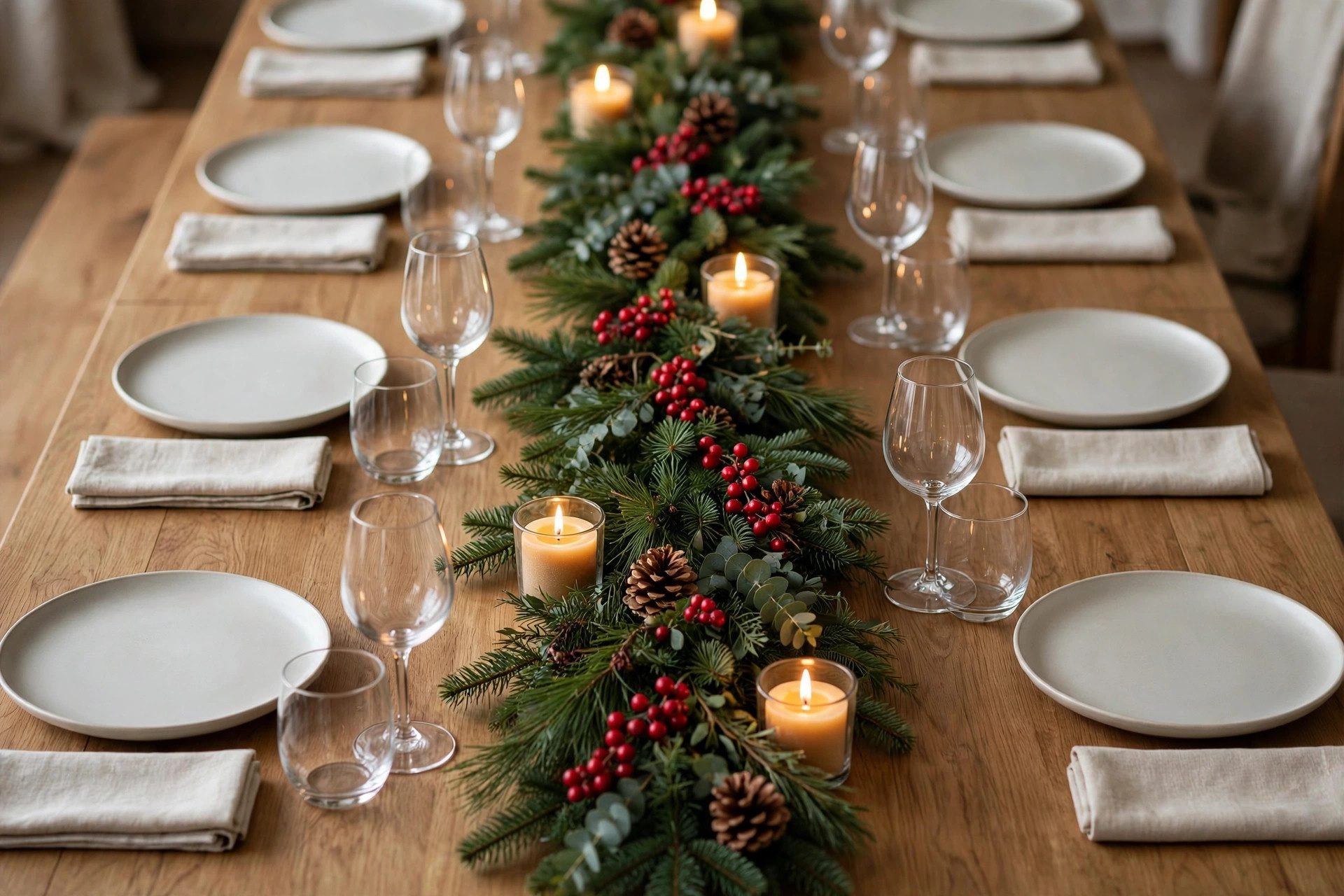
A low evergreen runner, laid straight down the table center, gives candles a natural bed to sit in. Use fresh cedar or fir branches, laid in overlapping lengths, so the runner looks like one continuous garland rather than separate sprigs.
Keep the runner narrow, so plates and glasses still have room.
Trim the runner to end a hand-width before each table end, so guests at the ends are not brushing greenery with their sleeves. Tuck a few pinecones and red berries into the runner, spaced evenly, for color that reads in candlelight.
Shake loose needles off the table before setting plates.
Check the runner height by sitting at the table and looking across it. If you cannot see the opposite chair clearly, the runner is too tall.
A runner that sits flat, under a few inches high, keeps conversation easy and lets candle flames rise above the green.
2. Mix Taper and Pillar Candles at Different Heights

Candles at one height look flat, while candles at three heights give the table depth. Mix tall tapers in holders, medium pillars, and low votives along the runner, grouping them in odd numbers.
The varied heights make the light move, which is what makes candlelight feel alive.
Place taller candles toward the table ends and shorter ones near the center, so no flame blocks a guest’s face. Keep every candle in a holder with a drip tray, since wax on a tablecloth is hard to remove during a party.
Light the candles just before guests sit down.
Use unscented candles on the table, since scented candles compete with food aromas. Save pine or cinnamon scents for the hallway, where they greet guests without reaching the plates. Count the flames before dinner, and keep matches nearby for any candle that goes out.
3. Dim the Overhead Light and Add Two Low Lamps
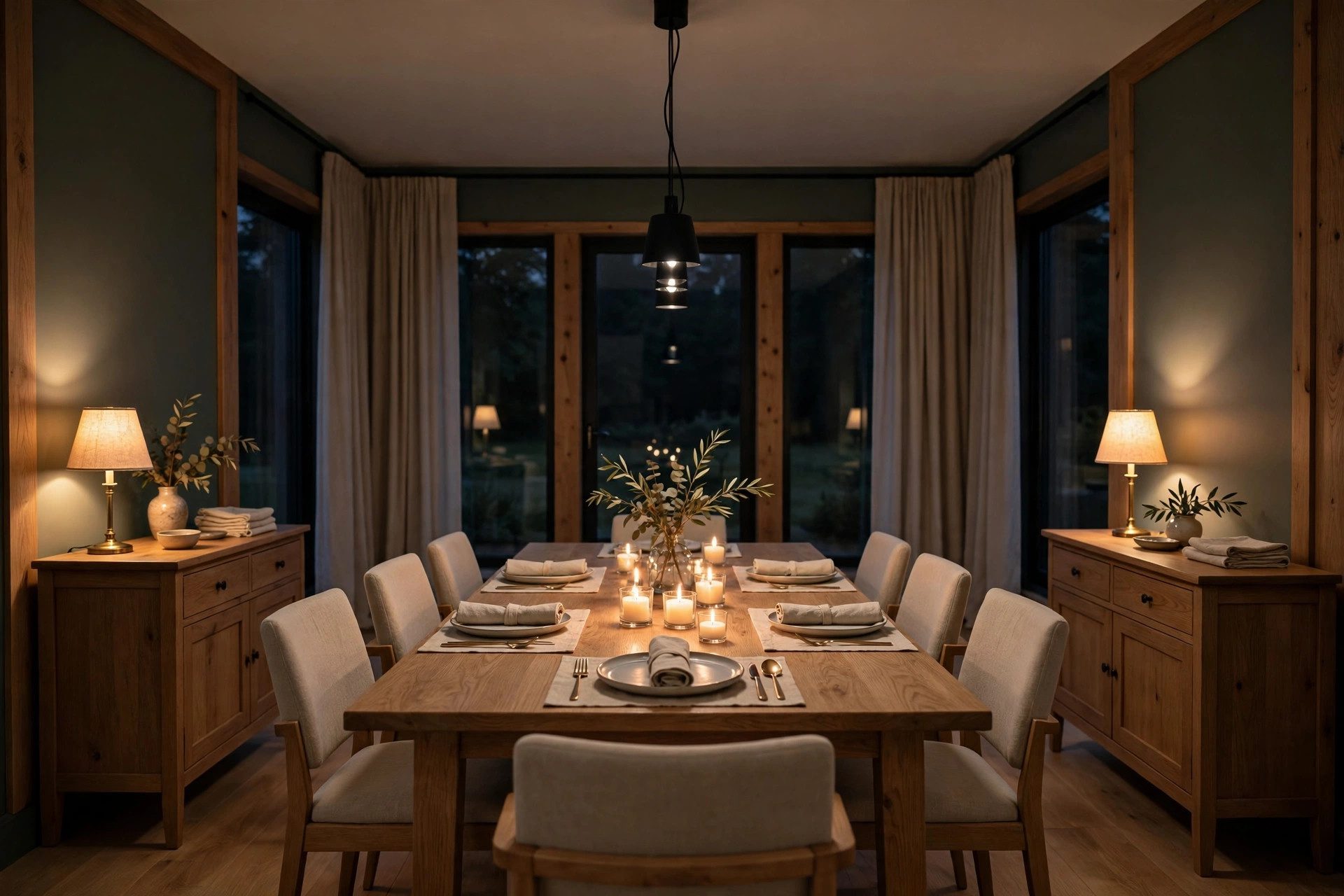
Candles alone can leave corners dark, so add two low lamps on the sideboard or on window sills. Dim the overhead light to its lowest setting, or switch it off entirely, and let the lamps fill the room edges while candles light the table.
The room should glow, not glare.
Choose warm bulbs for the lamps, since cool bulbs fight candlelight and make the room feel cold. A lamp with a fabric shade softens the light further, while a bare bulb creates harsh spots.
Test the lamp and candle mix at dusk, before guests arrive, and adjust.
Keep the overhead light available for serving, and dim it again once plates are cleared. Guests appreciate a brighter room while food is passed, and a softer room while they linger. One dimmer switch, or two lamps on a sideboard, gives you that control easily.
4. Set Gold Chargers Under Everyday Plates
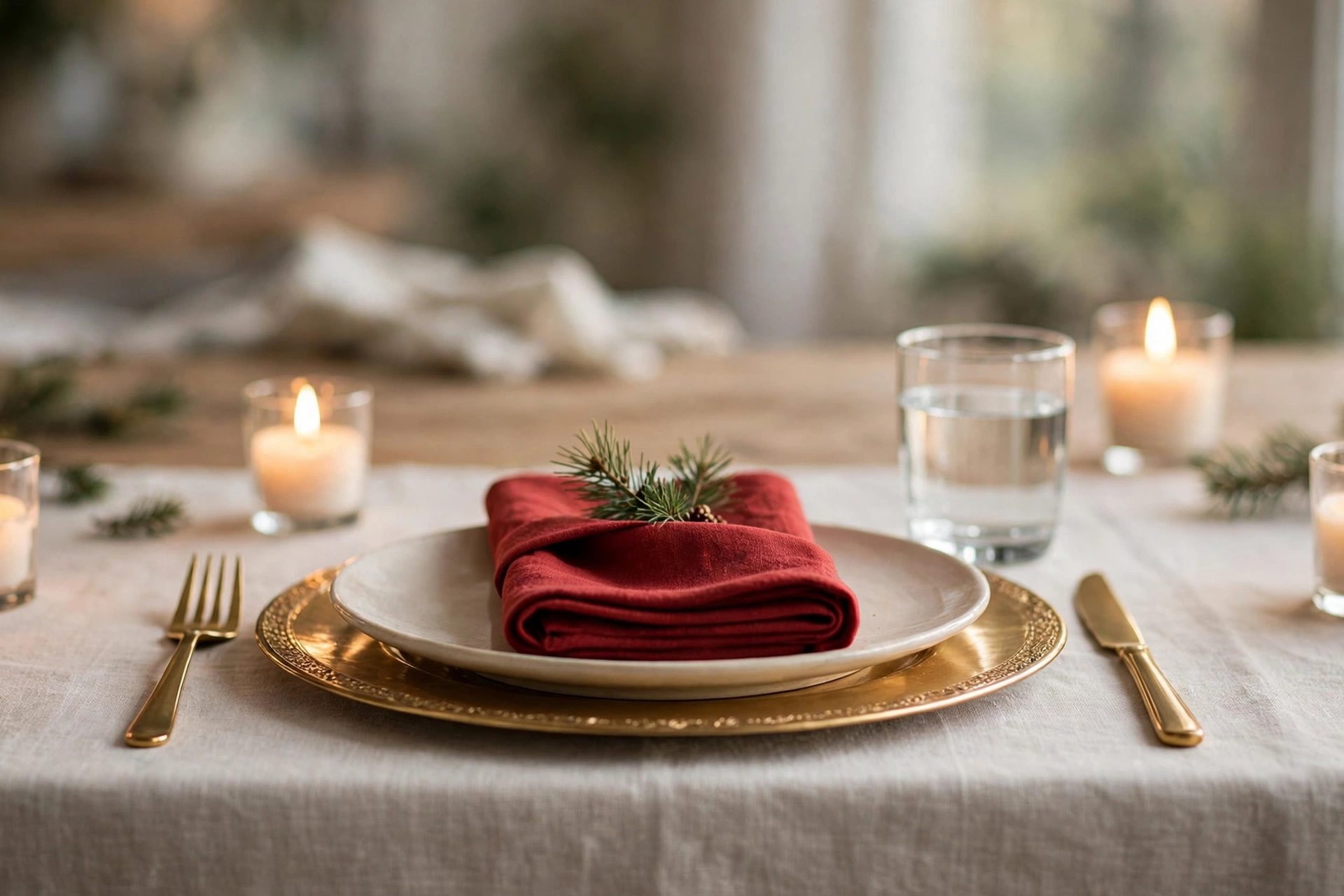
Gold chargers under everyday plates catch candlelight and make a familiar table feel festive at once. The metallic edge reflects flames across the table, so the whole setting glows even before candles are lit.
Chargers stay on the table through the meal, under each course plate.
Choose chargers in a warm gold rather than a bright, shiny gold, which can glare under candlelight. A brushed or matte gold reads as elegant, while a mirror gold distracts guests. Wipe the chargers before setting them, since fingerprints show clearly on metal.
Match the chargers to one other gold accent in the room, such as candle holders or a picture frame, so the metal feels planned. One repeated metal beats three different metals, which can look scattered.
Guests notice the glow, not the charger itself, when the mix is right.
5. Fold Red Napkins With a Pine Sprig
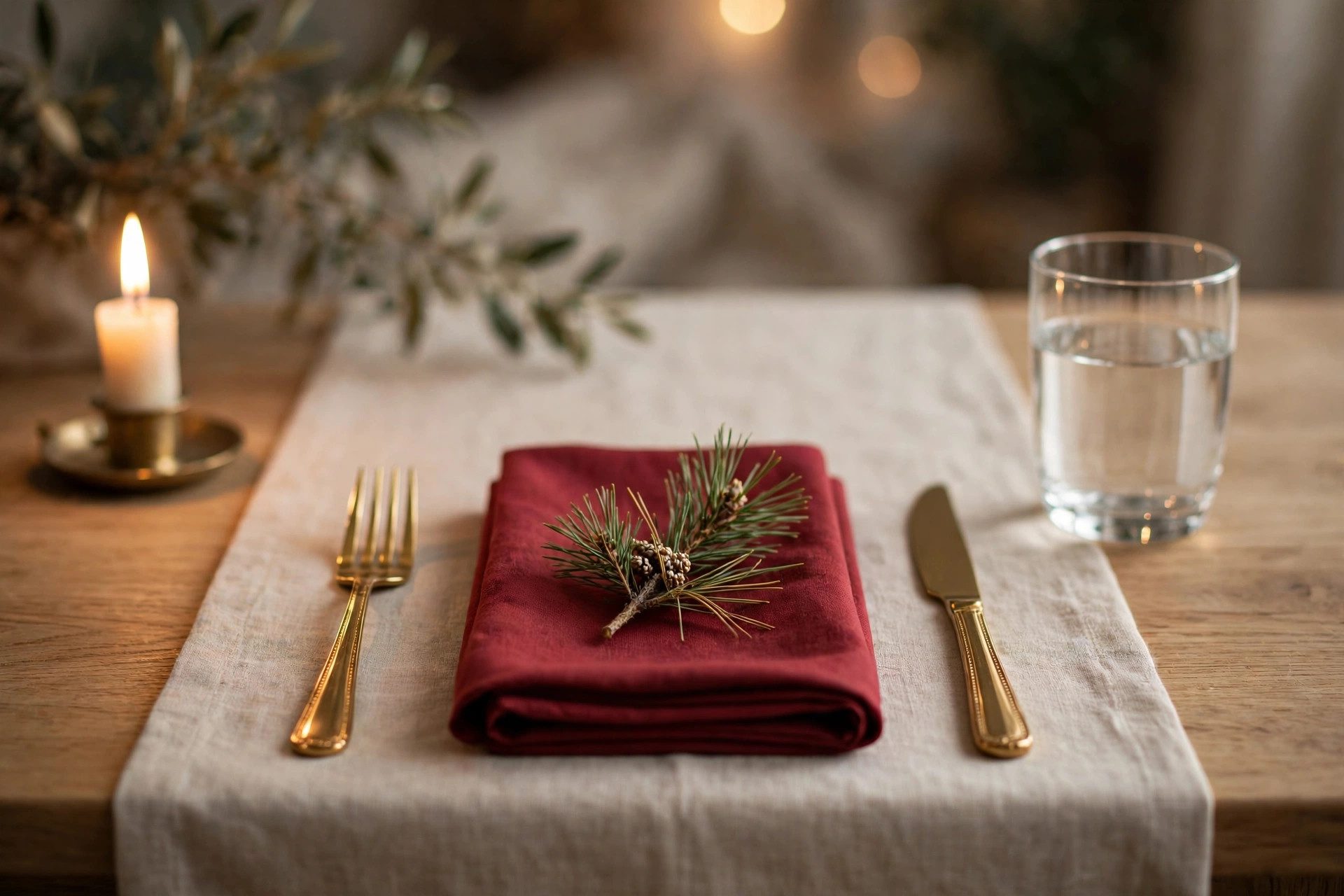
A red napkin folded simply, with a small pine sprig tucked into the fold, gives each place setting a festive finish. The sprig should be short, about a finger length, so it does not poke guests or fall into food.
Lay the napkin on the charger or to the left of the fork.
Press the napkins the day before, so they hold a crisp fold through the evening. A wrinkled napkin undermines an otherwise careful table, while a pressed one signals care. Use cloth napkins here, since paper napkins wilt in a warm, candlelit room.
Keep the sprig fresh by cutting it the morning of the dinner, and keep spare sprigs nearby for any that wilt. A sprig that sheds needles onto the plate is worse than no sprig at all.
Fresh, short, and simple is the rule that keeps this detail working.
6. Tie a Sprig and Ribbon on Each Chair Back
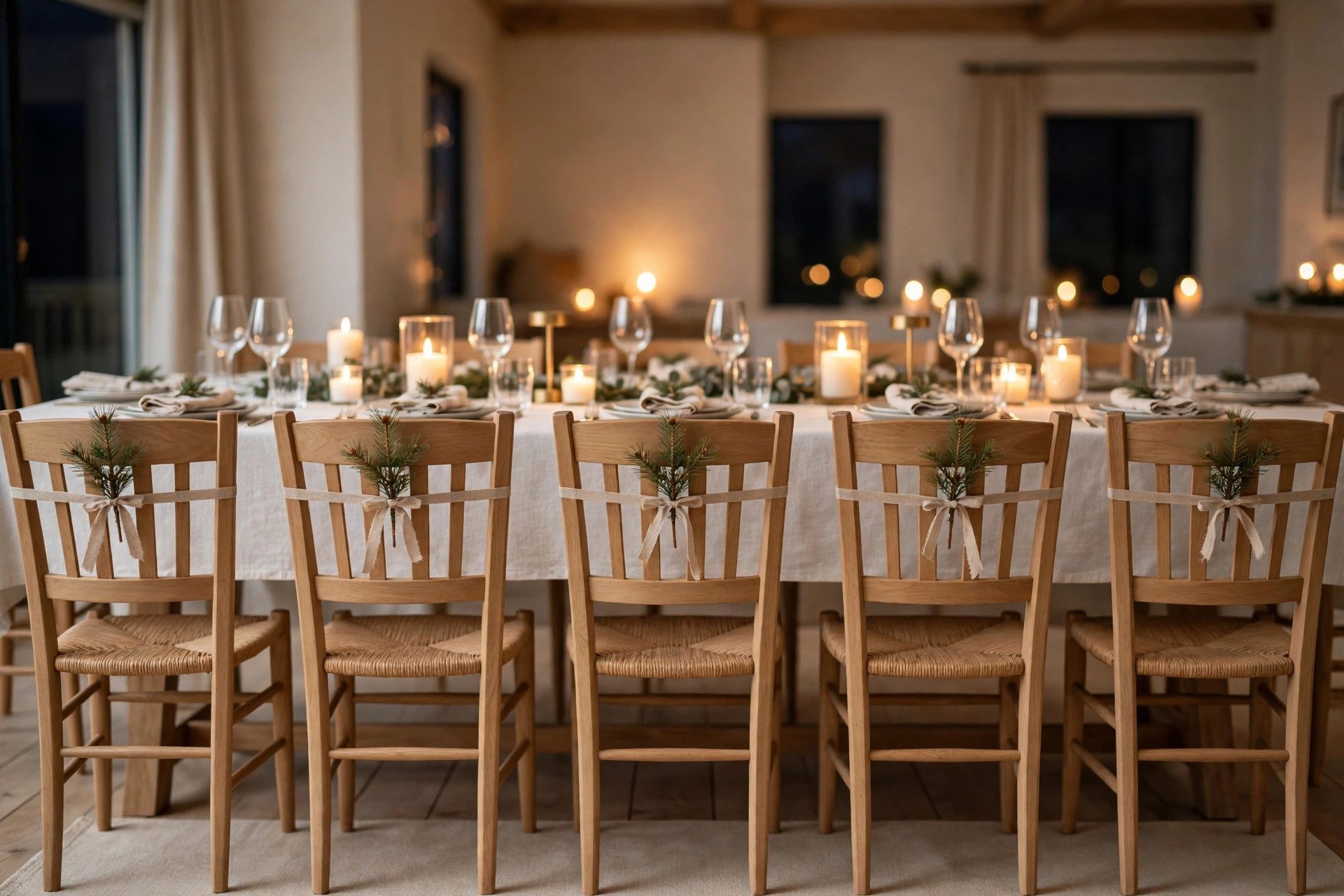
A small sprig tied with ribbon on each chair back dresses the whole room, not just the table. Guests see the chair backs as they enter, so the room feels festive before anyone sits down.
Use the same ribbon as the napkin sprigs, for a quiet repeat.
Tie the sprig at the top center of each chair back, with the ribbon in a simple bow. Keep the sprig small, so it does not catch on clothing when guests pull chairs out.
Test one chair by sitting down and standing up, checking that nothing snags or falls.
Use one sprig per chair, not a bunch, since a bunch adds weight and sheds needles onto the seat. A single sprig, tied neatly, reads as care, while a bunch reads as clutter.
Remove the sprigs after dinner if they wilt, so the room stays fresh for the next day.
7. Group Candles on the Sideboard for a Second Glow
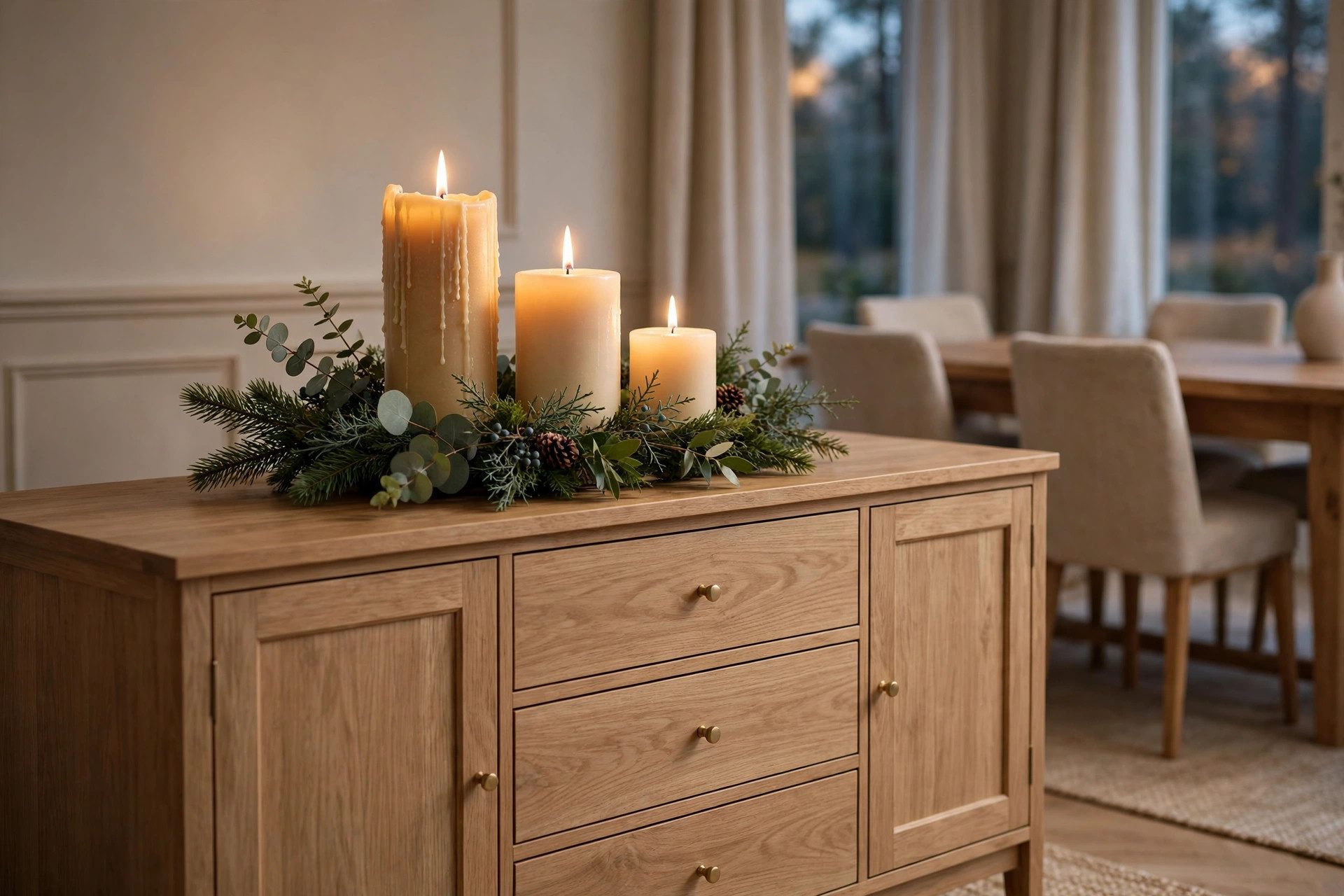
A second group of candles on the sideboard gives the room depth, so the table is not the only bright spot. Group five or seven pillar candles of different heights on a tray, with a short garland behind them.
The sideboard glow frames the room and lights the serving area.
Keep the sideboard candles away from the serving dishes, so guests reaching for food do not brush flames. Leave a clear serving zone in the middle of the sideboard, with candles grouped at one end. Safety and serving space matter more than symmetry here.
Light the sideboard candles at the same time as the table candles, so the room glows as one space. A sideboard lit late feels like an afterthought, while a room lit all at once feels planned.
Battery candles suit a sideboard near curtains, where real flames need watching.
8. Weave Fairy Lights Along the Window Frame
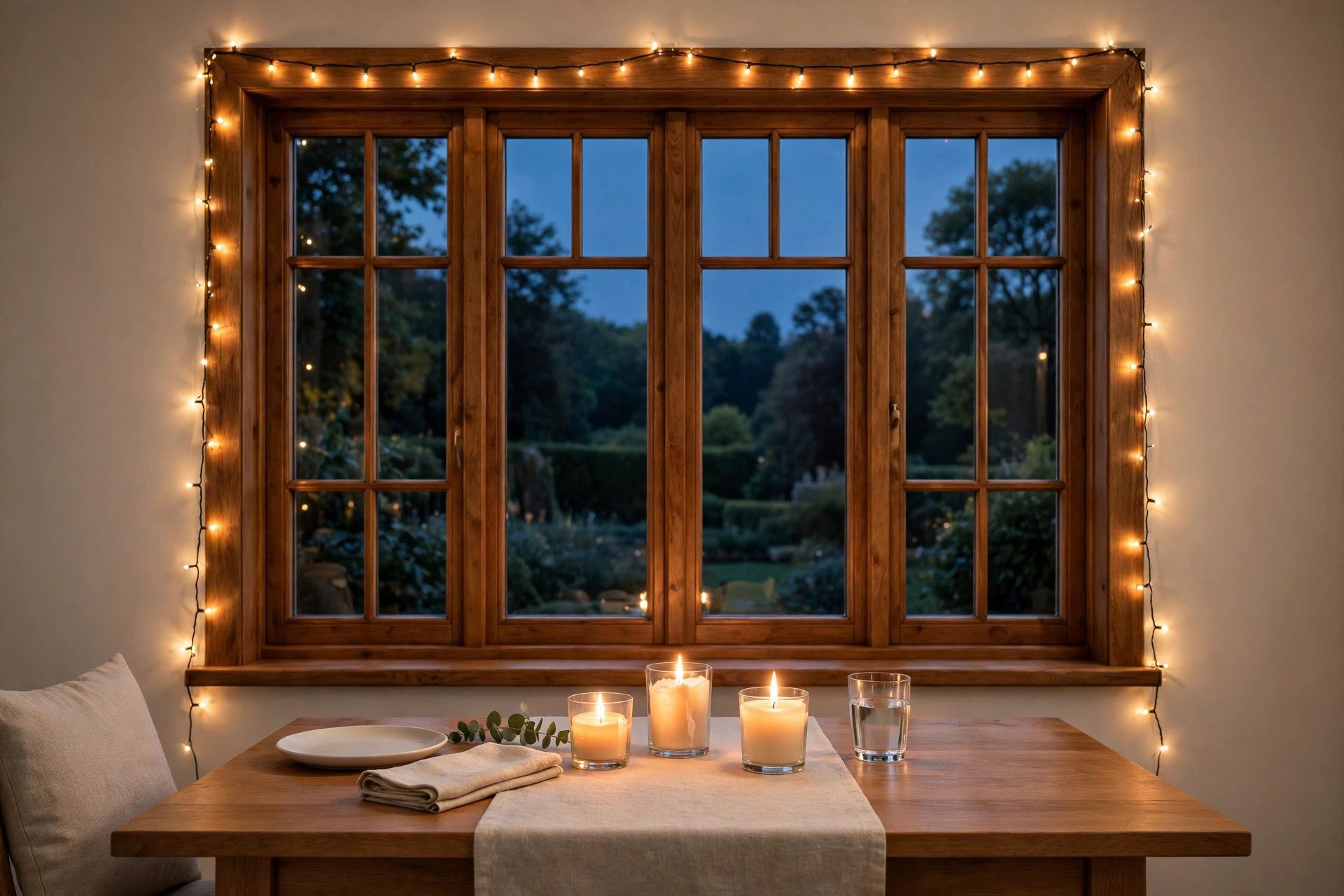
Fairy lights along the dining room window frame add a soft, starry edge to the candlelight. Weave a single strand of warm white lights around the frame, tucking the wire behind the trim so only the glow shows.
The window becomes a second light source, without competing with the table.
Choose warm white lights, not cool white, since cool lights clash with candle flames. Keep the strand to one window, the largest one, rather than every window in the room. One lit window looks magical, while every window lit looks like a shopfront.
Use a timer plug for the fairy lights, so they switch on at dusk without a daily reminder. Check the cord path, keeping it behind furniture and away from walkways.
A cord across the floor in a dim room is a trip hazard guests cannot see.
9. Hang a Greenery Ring on the Chandelier
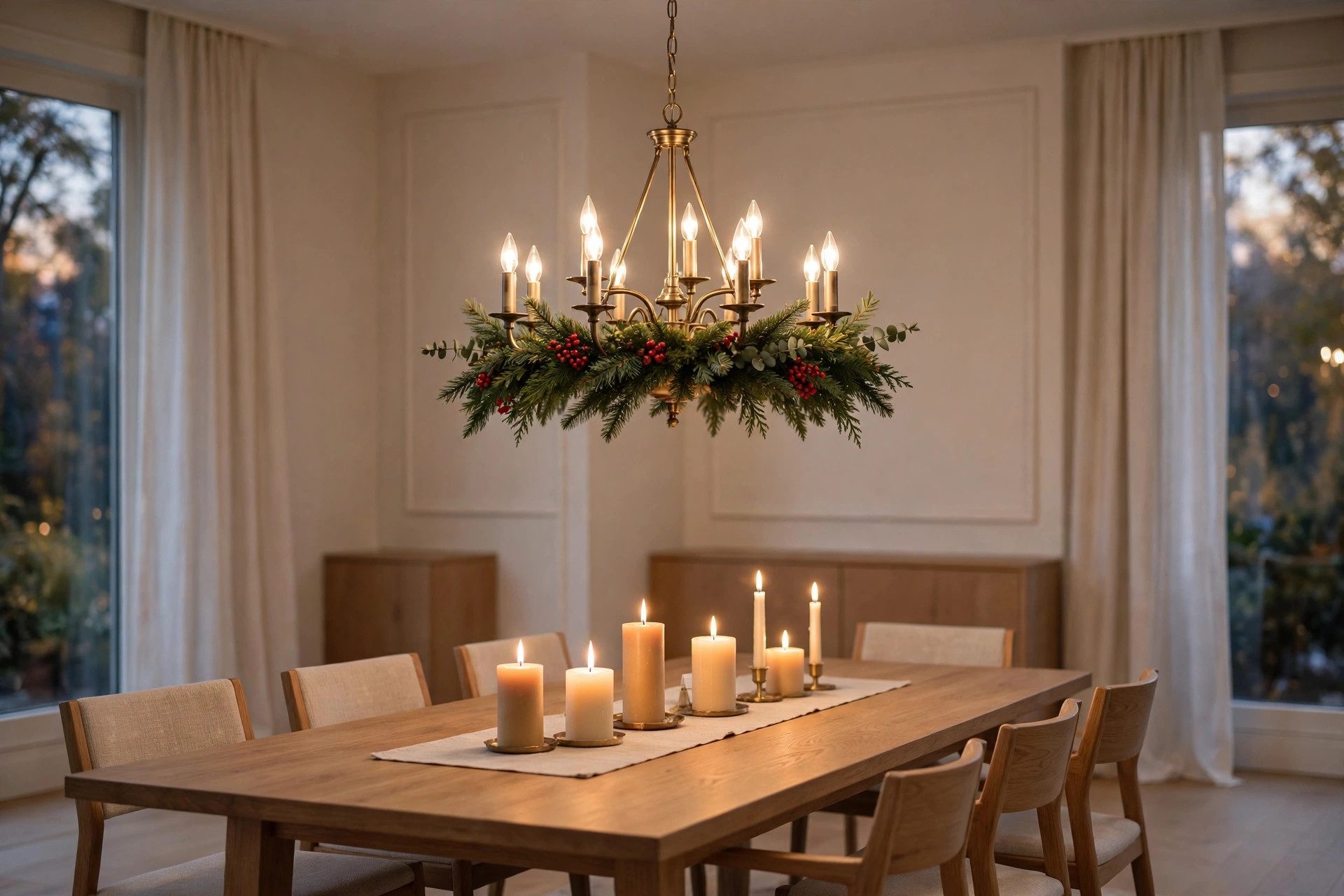
A greenery ring hung on the chandelier brings the table centerpiece up to eye level, framing the light above the table. Use a lightweight faux ring, wired loosely to the chandelier arms, with a few berries tucked in.
The ring should sit above the light, not around the bulbs.
Keep the ring light, since a heavy ring can tilt the chandelier or strain its mount. Check that the ring clears the bulbs by several inches, so greenery never touches a hot bulb.
Faux greenery avoids drying out under lamp heat, which real branches do quickly.
Remove the ring after the season by untying the wires, not by pulling it off, which can bend the chandelier arms. A ring that comes off cleanly can be reused next year.
Guests look up when they enter, and a dressed chandelier rewards that first glance.
10. Write Place Cards With a Pine Sprig Attached
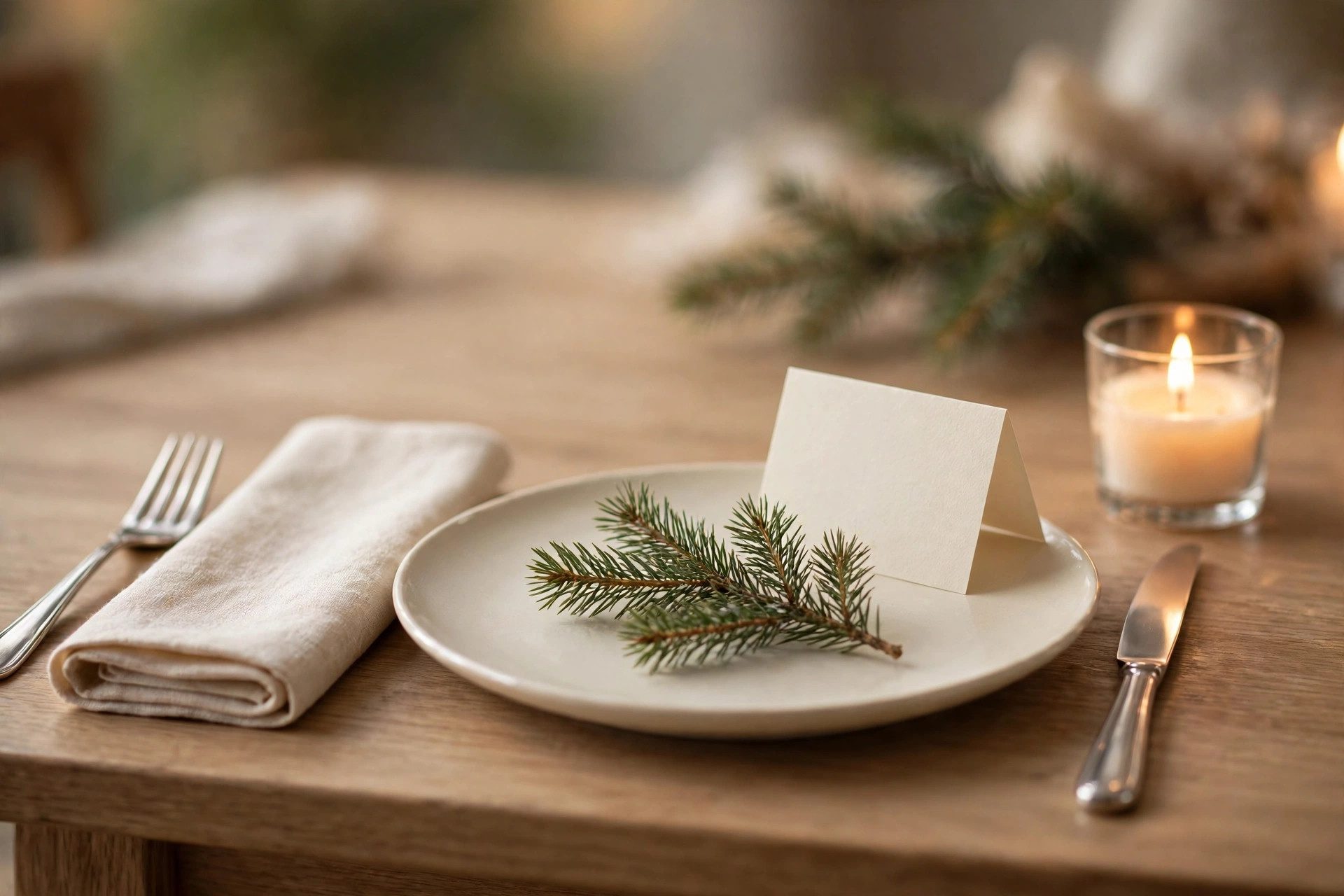
Place cards with a tiny pine sprig attached turn seating into part of the decor. Write each guest name in clear, large letters on a cream or kraft card, and attach the sprig with a short piece of twine through a punched hole.
Guests find their seats faster, and the table looks planned.
Keep the cards small, about the size of a credit card, so they do not crowd the place setting. Stand each card against a glass or lay it flat on the napkin, whichever stays upright.
A card that falls over during dinner looks untidy, so test one before guests arrive.
Place cards also solve the quiet problem of who sits where, which matters at a mixed family table. Thoughtful seating, with talkative guests spread out, keeps conversation flowing all evening. The card is a small tool with a large effect on the night.
11. Float Candles in Cranberry Glass Vases
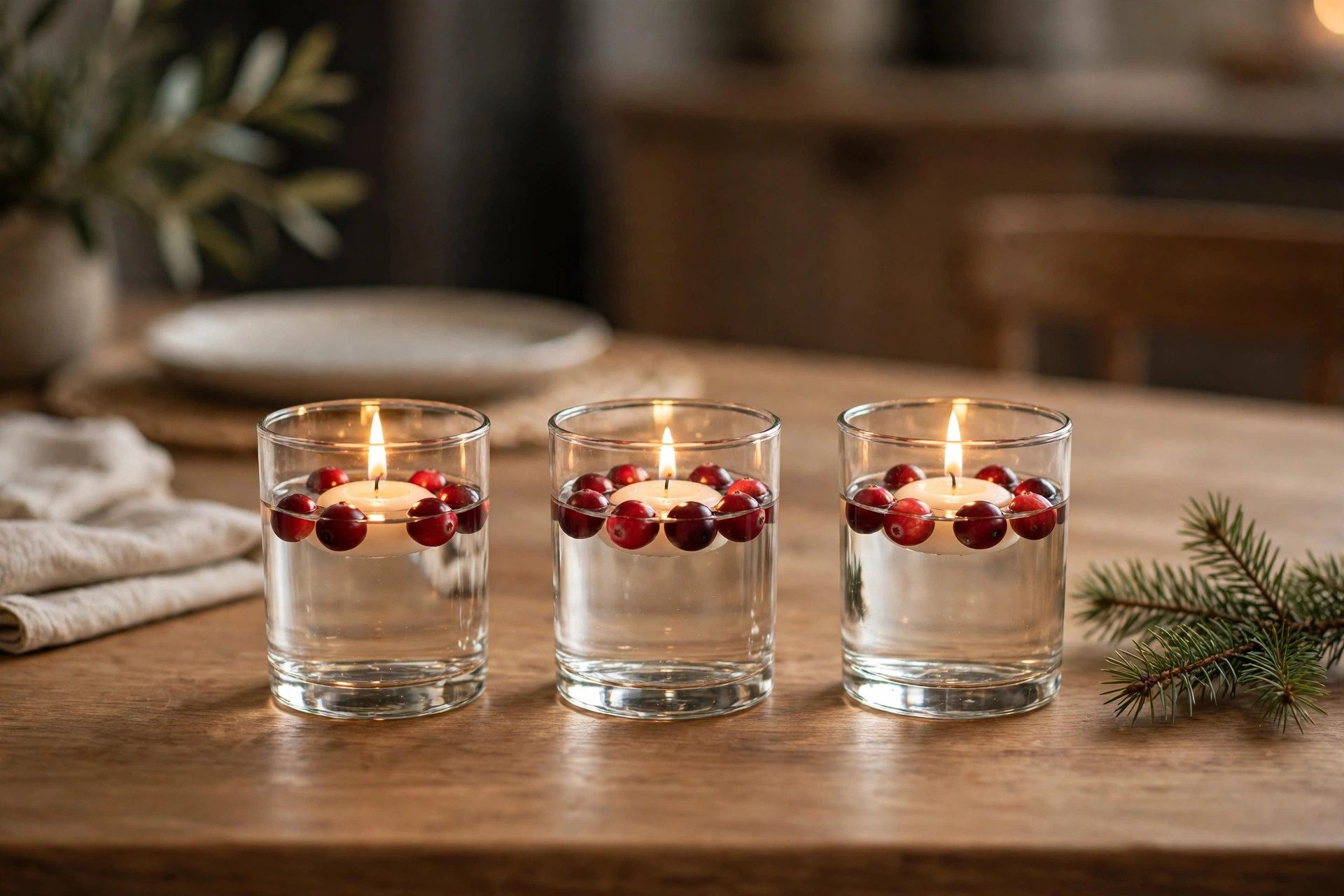
Glass vases filled with cranberries and water, with a floating candle on top, add color and light at the table ends. Fill each vase two-thirds full with cranberries, add water to near the top, and set the floating candle gently on the surface.
The red berries glow through the glass.
Place one vase at each table end, not down the center, so the runner and tapers keep the middle. Vases at the ends frame the table without blocking conversation. Check the water level an hour before dinner, topping up any vase that has settled.
Use fresh cranberries, which float and hold their color, rather than frozen ones, which sink and cloud the water. Replace the water if it clouds during a long evening. Two vases are enough for most tables, and a third starts to crowd the serving space.
12. Layer a Runner Over the Tablecloth
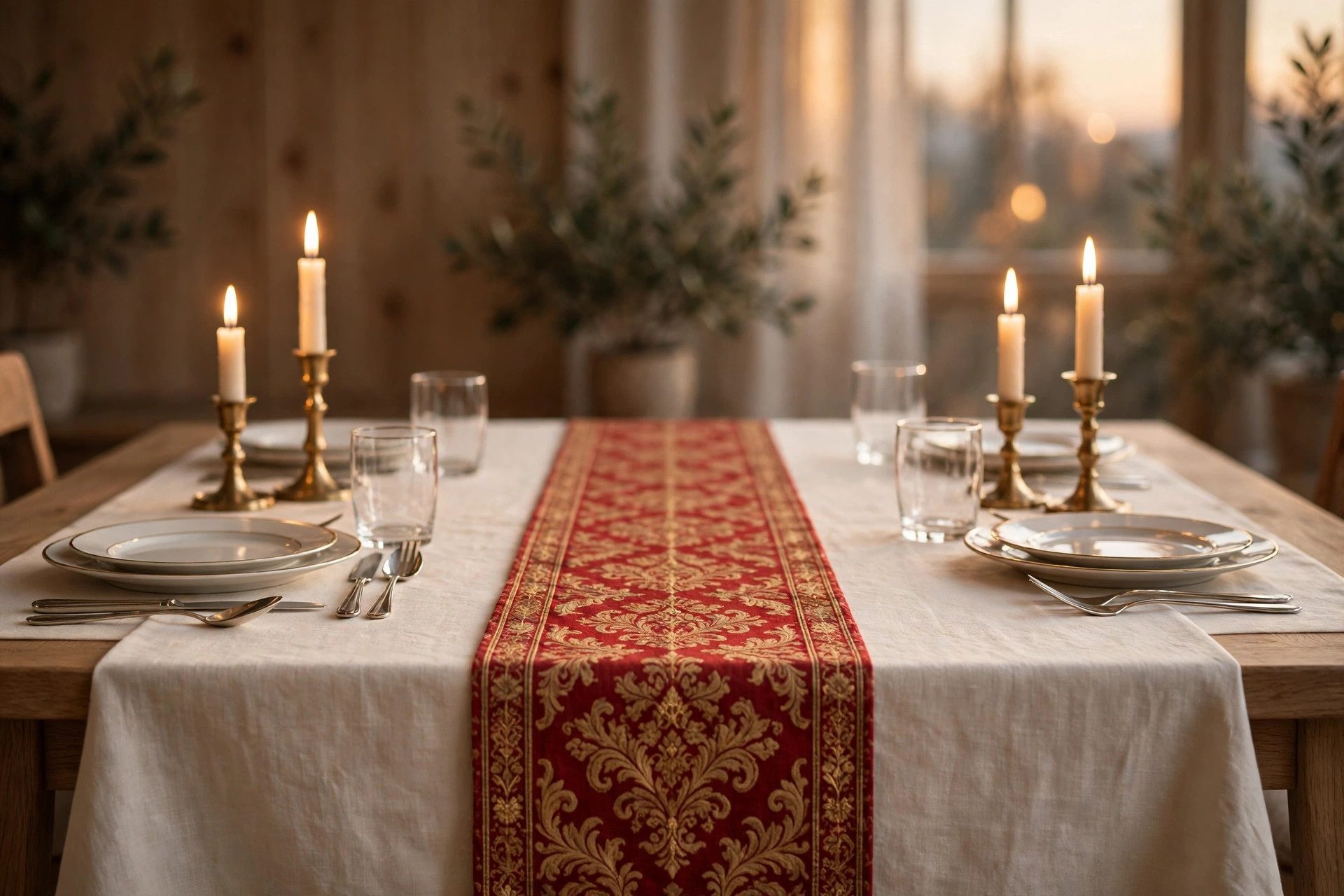
A runner layered over the tablecloth adds depth without a new tablecloth. Choose a runner in deep red or forest green, laid centered over a cream or white cloth, so the colors stack in calm layers.
The runner protects the cloth under the centerpiece, where wax and needles fall.
Press both layers before setting the table, since wrinkles show clearly in candlelight. Let the runner hang evenly over each table end, by the same amount, so the table looks balanced from both sides. A runner longer on one end looks like it slipped.
This layered look suits smaller dining rooms too, where one table must serve many jobs. See these apartment dining room ideas for tables that work in tight spaces. Keep the runner narrow enough that plates sit on the cloth, not on the runner edge.
13. Set a Mirrored Tray Under the Center Candles
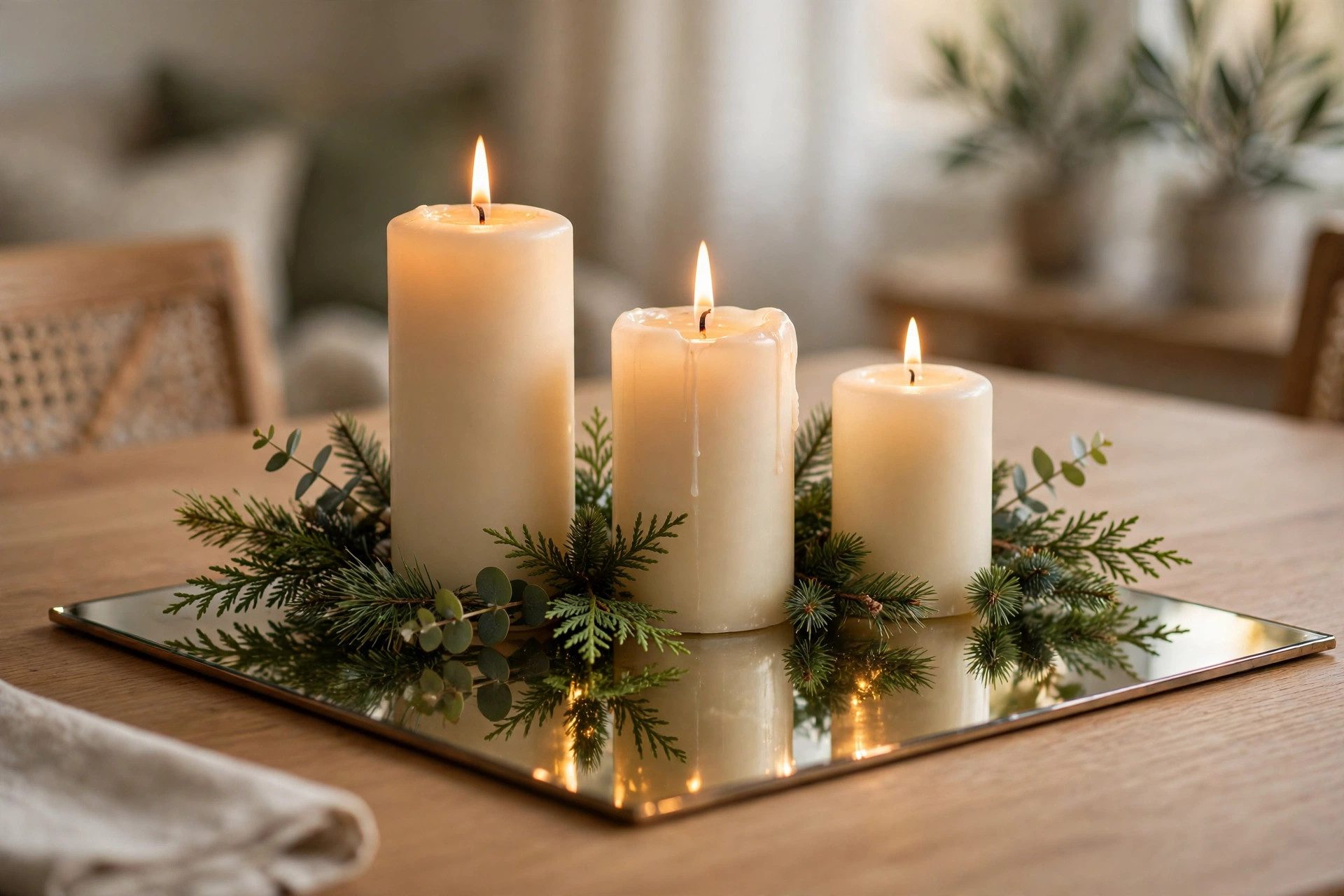
A mirrored tray under the center candles doubles the candlelight, since each flame reflects in the mirror. Place the tray under the middle group of candles on the runner, keeping the mirror clear of greenery. The reflection makes a modest candle group look generous.
Choose a tray with a raised edge, so candles cannot slide off if the table is bumped. Wipe the mirror before dinner, since dust dulls the reflection. A clean mirror doubles the light, while a dusty one merely doubles the clutter.
Keep the tray small, holding three to five candles, rather than the whole runner length. A full-length mirror under every candle looks like a stage, while a single mirrored tray reads as a jewel at the table center.
Guests notice the extra glow without knowing why.
14. Hang a Wreath on the Dining Room Wall
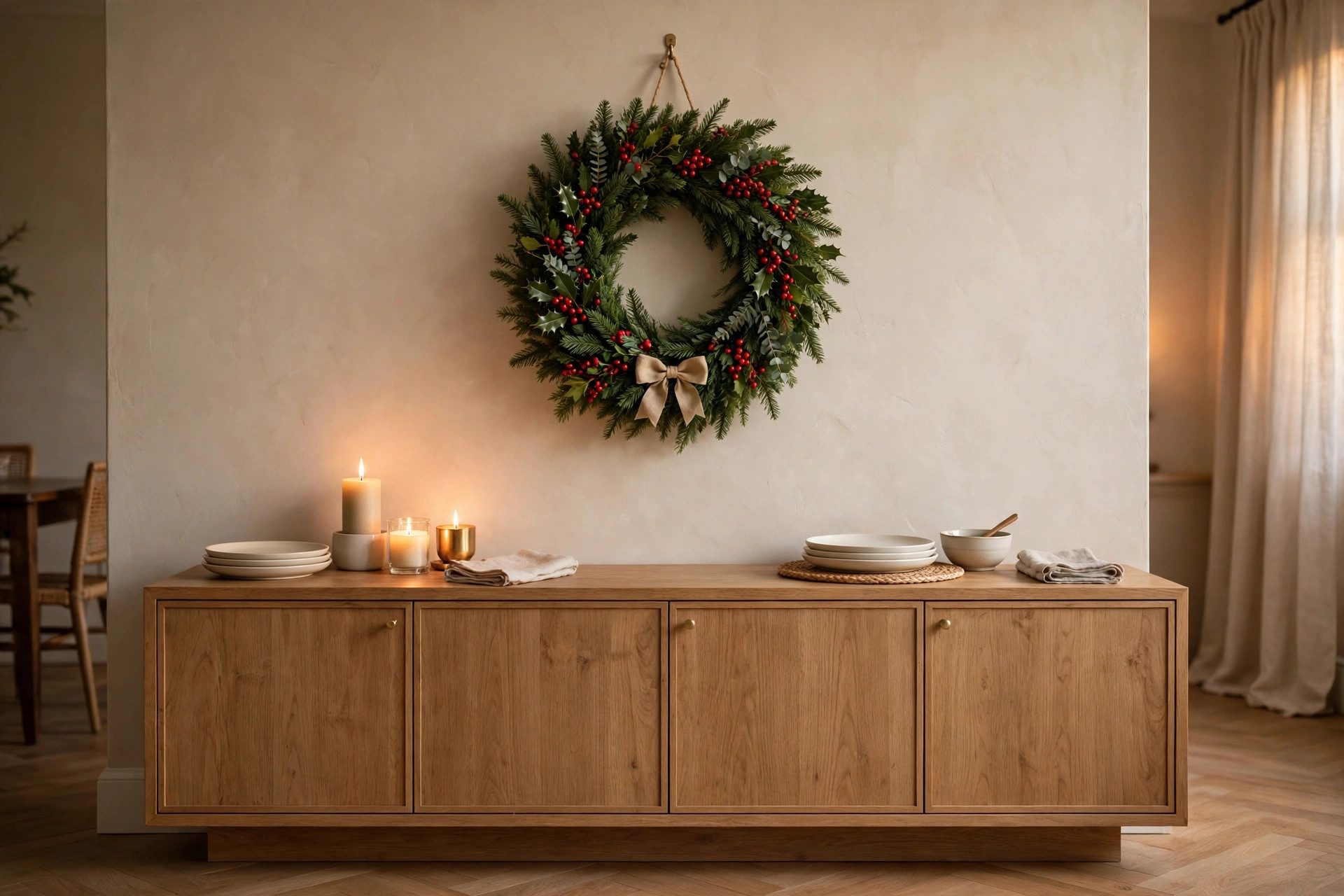
A wreath on the dining room wall, above the sideboard or on the largest blank wall, extends the festive feeling beyond the table. Choose a green wreath with red berries, matching the runner, and hang it centered at eye level.
The wall wreath ties the room together.
Hang the wreath with a picture hook, not adhesive strips, since a falling wreath during dinner startles guests. Check the hook weight rating against the wreath weight, including berries and bows.
A secure wreath stays put all season, while a weak hook fails at the worst moment.
Keep the wall wreath simpler than the front door wreath, since the dining room already has a runner, candles, and chair sprigs. One wreath, one bow, and no extra ornaments are enough here.
The dining room should feel rich, not crowded, and restraint keeps it that way.
If the dining room has a fireplace, the mantel can carry the same candle glow after dinner, as shown in our Christmas mantel ideas with pine, candles and stockings.
15. Keep a Soft Glow for After-Dinner Coffee
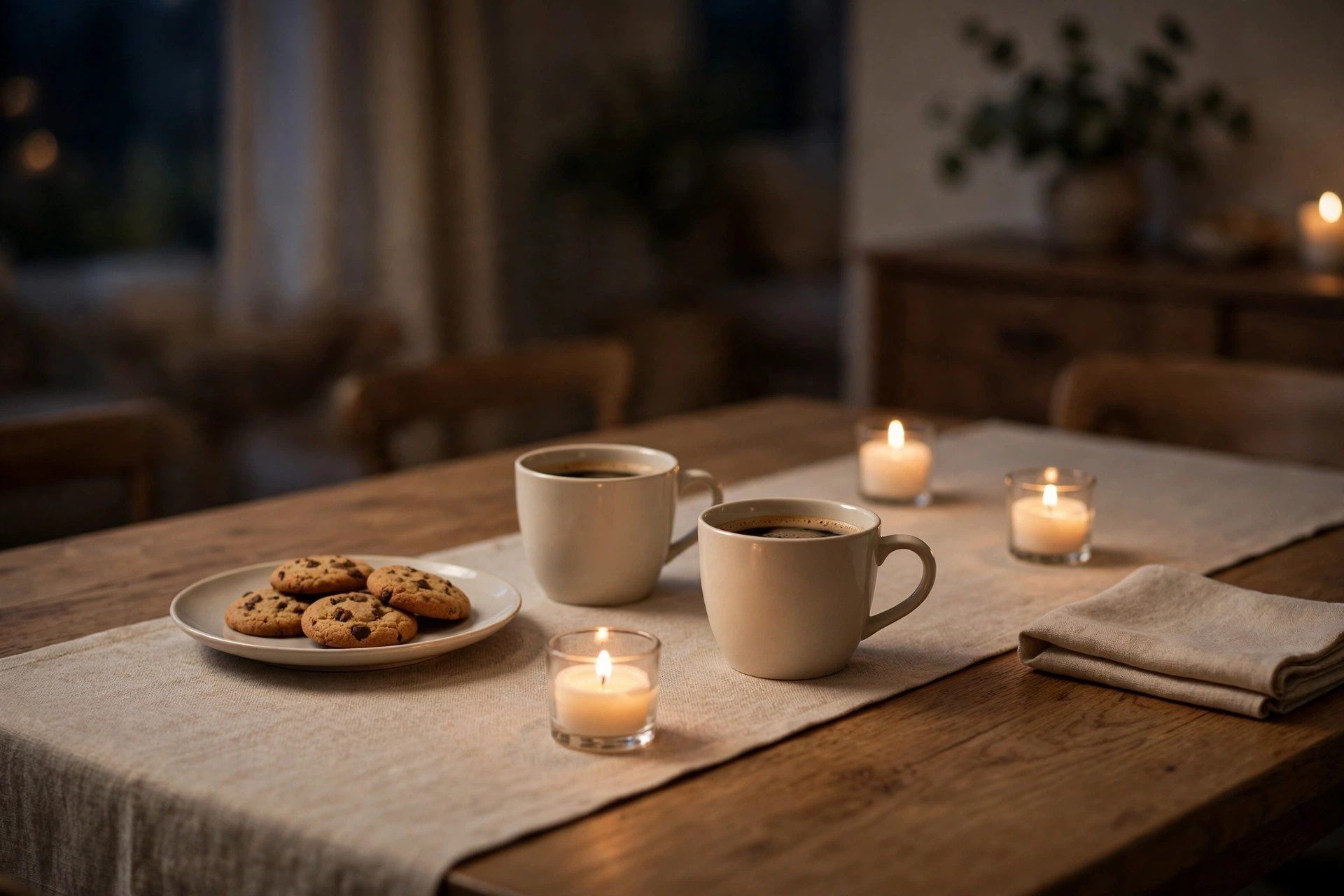
After dinner, guests linger, and the light should linger with them. Leave the sideboard candles burning, relight any table candles that went out, and bring coffee to the table in the same soft light.
The room shifts from dinner glow to conversation glow without a harsh change.
Clear the plates first, so the table has room for cups and the candles can be seen again. A table crowded with plates hides the candles that make the evening special.
Stack plates on the sideboard, out of the candle zone, and return to the table quickly.
The kitchen, where coffee is made, should carry the same warm light, so guests moving between rooms feel no jolt. Our Christmas kitchen ideas for festive baking season cheer keep that warmth going in the busiest room of the house.
For a table that also serves daily meals, see these small kitchen dining room combo ideas as well.
Start with the runner, the candles, and the dimmed light, since those three create the candlelit feeling on their own. Add the chargers, napkins, and chair sprigs next, then the sideboard and window light.
A candlelit room is built in layers, and each layer should be tested at dusk.
After the holiday, pack the runner and candles away, but keep the dimmer habit for winter dinners. Soft light suits every season, not just Christmas, and guests will notice the difference all year.
Save this list to your Christmas Decor Ideas board for your next festive dinner.


