

15 Blue Living Room Ideas for Families With Kids
A family living room has to handle much more than looking beautiful. It may be the place where children build forts, spread out toys, watch movies, read books, eat snacks, and race through the room while adults try to keep everything reasonably organized. Blue can be an excellent color for this kind of space because it works across a wide range of decorating styles and can be paired with practical materials without making the room feel overly childish.
The trick is to use blue thoughtfully. Mid-tone and darker blues can be forgiving around everyday family mess, while softer blues can keep the room feeling light and relaxed. Durable upholstery, washable rugs, closed storage, and furniture with rounded edges can make the room easier to live with. Current family-friendly design advice also emphasizes giving toys a designated home and maintaining clear pathways through the room.
Here are 15 blue living room ideas that combine a welcoming look with the practical needs of a busy family.
This post contains affiliate links. If you buy through them, we may earn a small commission at no extra cost to you. See our Affiliate Disclosure.
1. Choose a Durable Navy Sofa

Make the sofa the main blue feature of the room with a deep navy sectional or sofa. Navy provides plenty of color while working well with cream, beige, gray, natural wood, and warm white.
For a family with young children, pay attention to the upholstery as much as the color. Look for a performance fabric, washable slipcover, microfiber, leather, or another material designed for regular cleaning. Family-friendly design sources recommend stain-resistant and easy-care upholstery for spaces that experience spills and heavy daily use.
Keep the rest of the room relatively warm and simple. A textured cream rug, wooden coffee table, and a few patterned cushions can make the navy sofa feel comfortable rather than formal.
2. Put a Washable Blue Rug in the Play Area
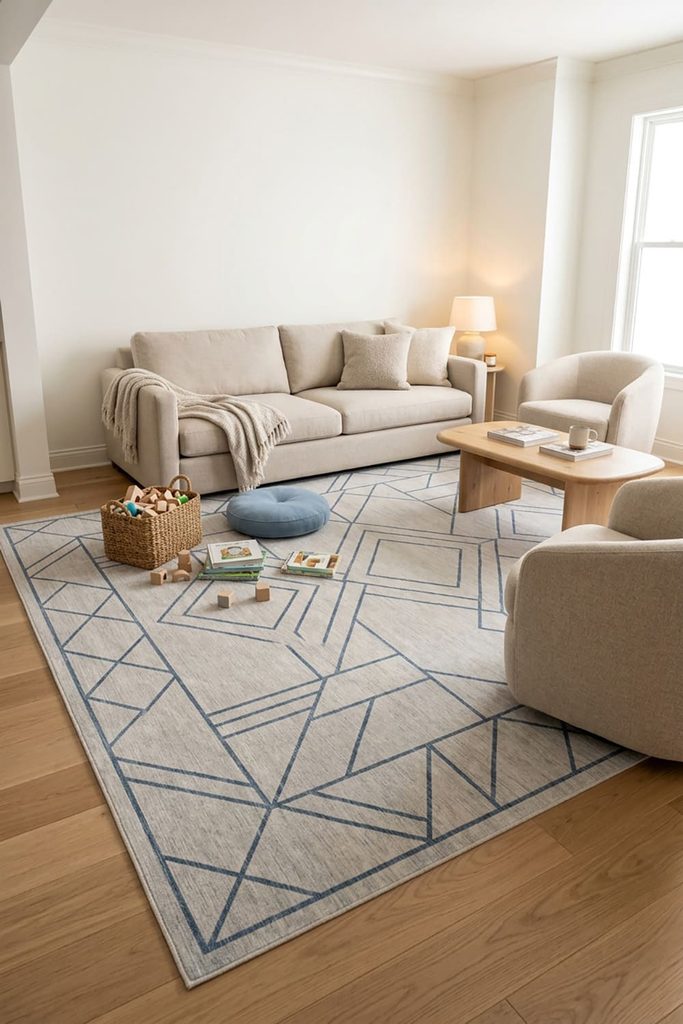
A blue rug can define the family area while giving children a comfortable surface for playing on the floor. Choose a low-pile or washable design in blue, cream, gray, or a subtle geometric pattern.
A slightly patterned rug can be especially useful because small crumbs and everyday marks are less noticeable than they would be on a completely plain pale surface. Washable and durable rugs are frequently recommended for family living spaces because they make cleaning easier without sacrificing comfort.
Position the rug so the main seating sits around it rather than leaving it floating in the middle of the room. Add a basket or soft ottoman nearby for toys so children have an easy place to put things away.
3. Pair Soft Blue Walls With Darker Furniture

If you are able to paint, consider using a soft powder, dusty, or muted blue on the walls. The lighter shade can create a relaxed backdrop while darker furniture gives the room enough contrast.
A navy sofa, medium wood coffee table, cream curtains, and natural accessories can work beautifully against pale blue walls. The combination feels grown-up but remains welcoming for children.
If painting is not practical, recreate the same effect with large blue curtains, artwork, a blue rug, and upholstered furniture. This lets you build a similar color story without changing the walls.
4. Create a Hidden Toy Storage Zone
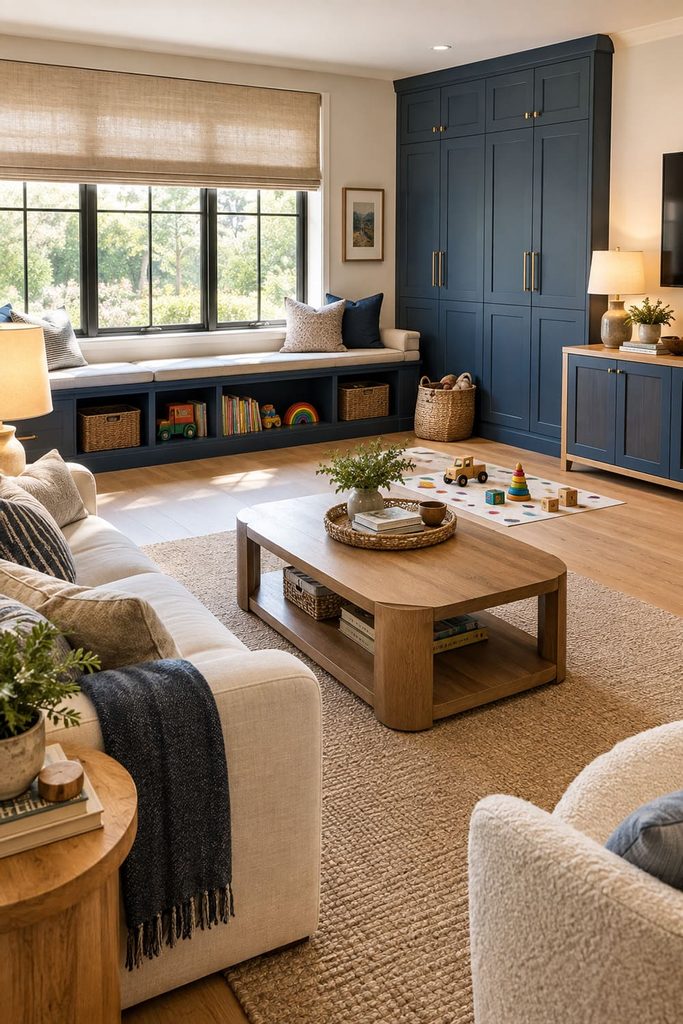
Use blue as part of a storage solution rather than scattering colorful toy bins throughout the room. A blue storage bench, navy cabinet, or blue-and-wood console can provide a designated home for toys while contributing to the room’s design.
Closed storage is particularly useful when you want the living room to look calm after the children finish playing. Current kid-friendly design guidance recommends giving toys a clear home instead of allowing them to spread across every surface.
For younger children, keep frequently used items in accessible baskets or low compartments. Reserve higher cabinets for objects that need to remain out of reach.
5. Add Rounded Blue Furniture

A blue accent chair, rounded ottoman, or curved sofa can introduce the color while making the furniture arrangement more family-friendly. Rounded edges are particularly useful around younger children because they reduce the number of sharp corners around active play areas.
Try a curved blue armchair beside a neutral sofa or use a large blue ottoman instead of a traditional coffee table. The ottoman can provide a place to put your feet, extra seating for children, and a softer surface around busy areas.
Choose sturdy construction and easy-care upholstery so the furniture can handle everyday use.
6. Mix Navy With Warm Wood
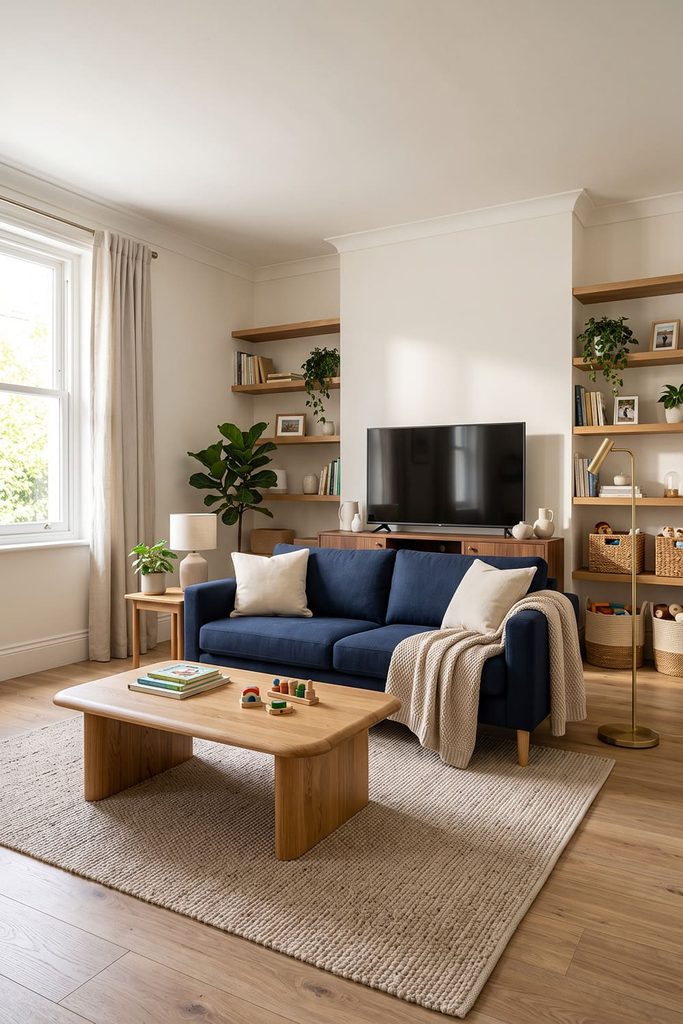
Blue can sometimes feel cool when surrounded by too much white or gray. Warm wood is an easy way to bring balance into a family living room.
Start with a navy sofa or blue rug, then add a wooden coffee table, shelving, side tables, or media console. Oak, walnut, and other warm wood tones can make the blue feel richer and more inviting.
Add cream cushions and a textured throw to soften the arrangement. A few woven baskets can provide additional storage while reinforcing the natural warmth of the wood.
This combination works particularly well for families because it feels sophisticated without relying on delicate decorative pieces.
7. Create a Blue-and-Cream Movie Night Corner
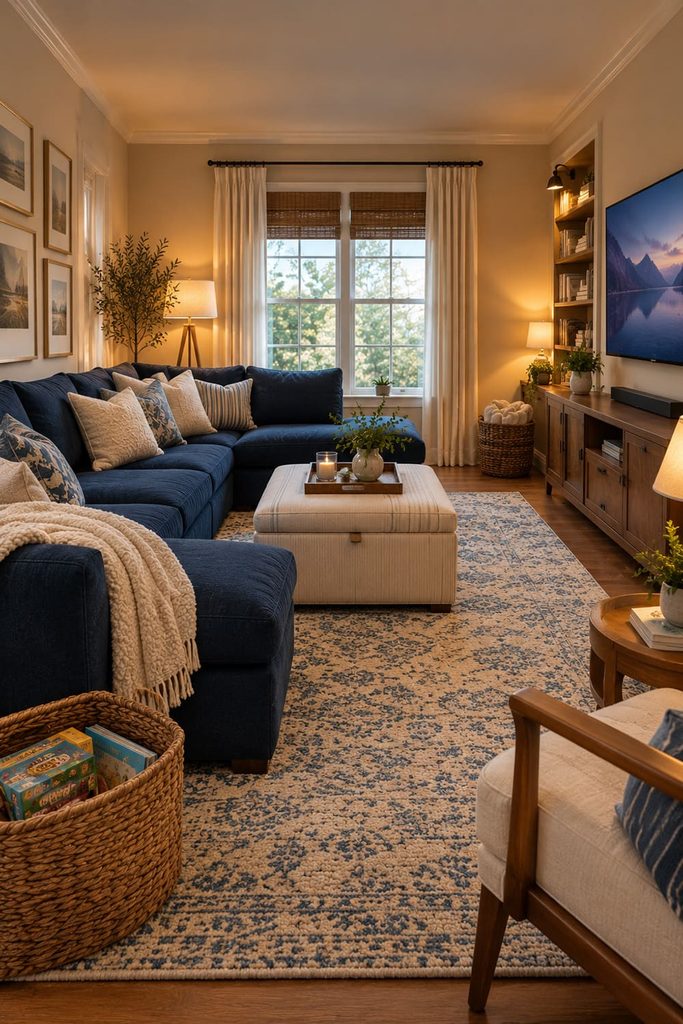
Make family movie nights more comfortable by creating a dedicated seating arrangement around the television. Use a blue sectional or sofa as the anchor, then add oversized cream cushions, soft throws, and a large rug.
Keep a woven basket beside the sofa for blankets so everyone can grab one easily. A storage ottoman can hold remote controls, games, and other small items when they are not being used.
The result can feel cozy without looking like a dedicated playroom. The goal is to make family activities part of the main living room rather than pushing children’s needs into a separate corner.
8. Use Blue Patterned Curtains
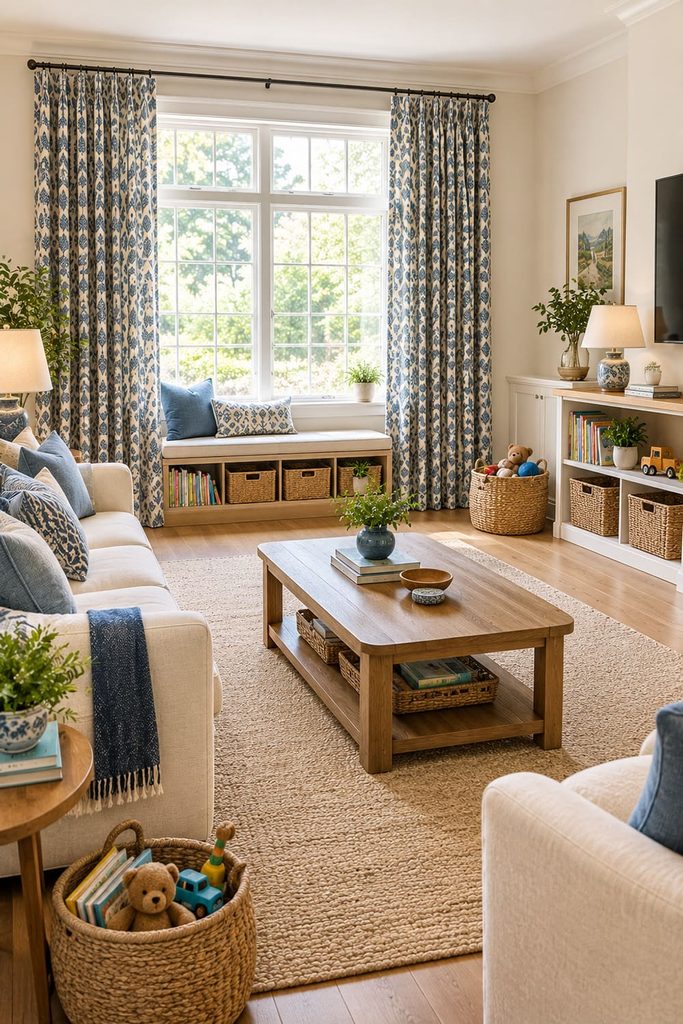
Blue curtains can add a large amount of color without requiring blue furniture. Choose a subtle stripe, botanical print, check, or small geometric pattern if you want the windows to become part of the room’s visual interest.
For a busy family home, avoid choosing a fabric solely because it looks delicate and beautiful. Consider how easily it can be cleaned and whether the material can handle regular use.
Repeat one color from the curtain pattern in cushions or artwork elsewhere in the room. This creates a connected palette without requiring every item to match.
9. Add a Blue Storage Ottoman
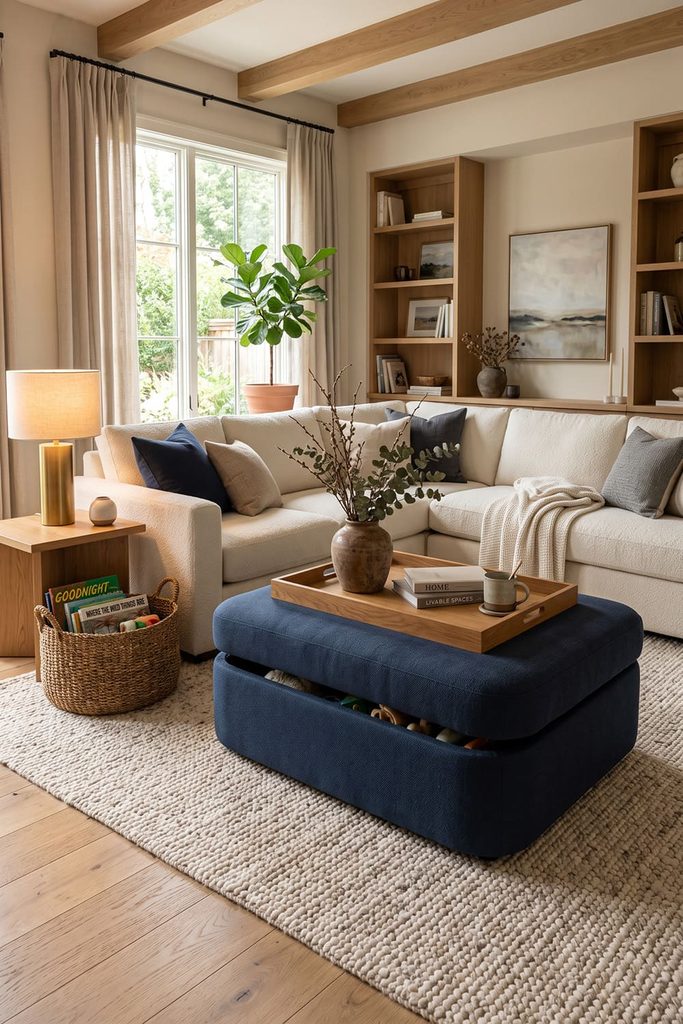
Replace a traditional coffee table with a large blue upholstered ottoman that has hidden storage. This single piece can solve several family-room problems at once.
Children can use it as an informal seat, adults can put their feet up, and the internal compartment can store blankets, toys, books, or board games. Choose a model with durable upholstery and a shape that does not create sharp corners around the seating area.
A navy or medium blue ottoman is particularly practical because it can become a substantial color feature without requiring an entire blue sofa. Keep a large tray on top when you need a firm surface for drinks or small decorative objects.
10. Create a Small Blue Reading Nook

Give children a designated place for books by turning one corner of the living room into a reading area. A small blue armchair, floor cushion, or upholstered bench can establish the zone.
Place a low bookshelf nearby so children can reach their favorite books independently. Add a washable rug and a soft lamp that provides comfortable reading light.
Keep the furniture scaled to the available space. The reading corner does not need to be large. Even a small area beside a window can become useful when it has a clear purpose. The blue seating can also become an attractive accent when the children are not using the space.
11. Combine Blue With Terracotta Accents

For a warmer family room, pair blue with small amounts of terracotta, rust, or warm orange. These colors provide contrast without making the room feel overly bright.
You might use a navy sofa, blue-and-cream rug, terracotta cushions, and a wooden coffee table. Keep the stronger warm color limited to a few accessories so the room remains balanced.
This combination works especially well when the living room already has warm wood flooring or beige walls. The blue provides depth while terracotta brings energy into the family space.
Choose washable cushion covers and easy-care throws whenever possible so the decorative elements remain practical.
12. Use Blue Baskets for Everyday Toy Cleanup

Turn toy storage into part of the color scheme with blue baskets. Use several baskets in different shades of blue, or combine navy with natural woven baskets.
Place them beneath a console, inside open shelving, beside the sofa, or under a storage bench. The idea is to make cleanup simple enough that children can participate.
Low, accessible storage is especially useful for everyday toys because children can retrieve and return their belongings without needing help. Family-friendly design guidance recommends accessible storage and clearly defined zones to make shared rooms easier to maintain.
Choose baskets with sturdy handles so they can easily be moved when the room needs to be reset.
13. Add Blue Through Family Artwork
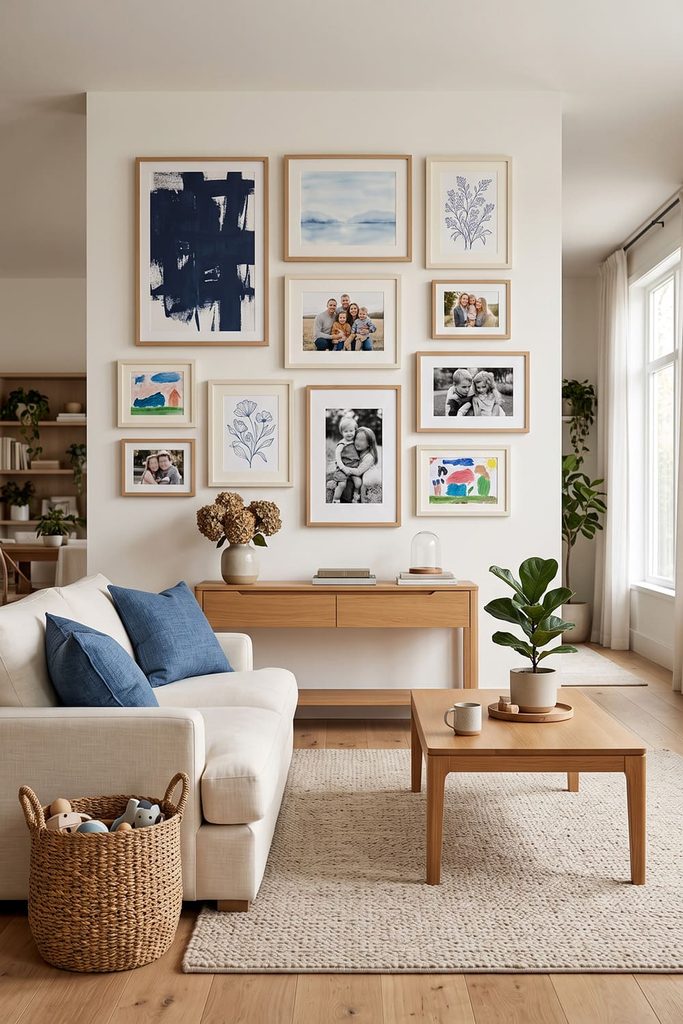
Instead of making the walls entirely blue, create a blue-themed display using family artwork, photographs, prints, and children’s creations.
Use a consistent frame style to keep the arrangement looking intentional. You can include artwork containing navy, sky blue, teal, or soft blue so the display has variety without becoming chaotic.
Give children’s artwork its own section rather than allowing it to take over every wall. This lets the kids feel represented while the overall room still has an adult-designed appearance.
A blue gallery wall can become a changing feature as children create new drawings and paintings.
14. Leave a Clear Floor Zone for Play

Sometimes the best family living room idea is simply leaving enough open space for children to move around. Instead of filling every corner with furniture, create a clear area beside or in front of the main seating.
Use a large blue rug to visually define the space without adding more furniture. Keep toy storage close enough that children can reach it but not directly in the main walking path.
Clear pathways are important in family rooms because children move quickly and unpredictably. Current kid-friendly layout guidance recommends maintaining open routes and securing rugs and furniture appropriately. This approach also makes the room feel less cluttered when the toys are put away.
15. Build the Room Around Blue and Natural Textures
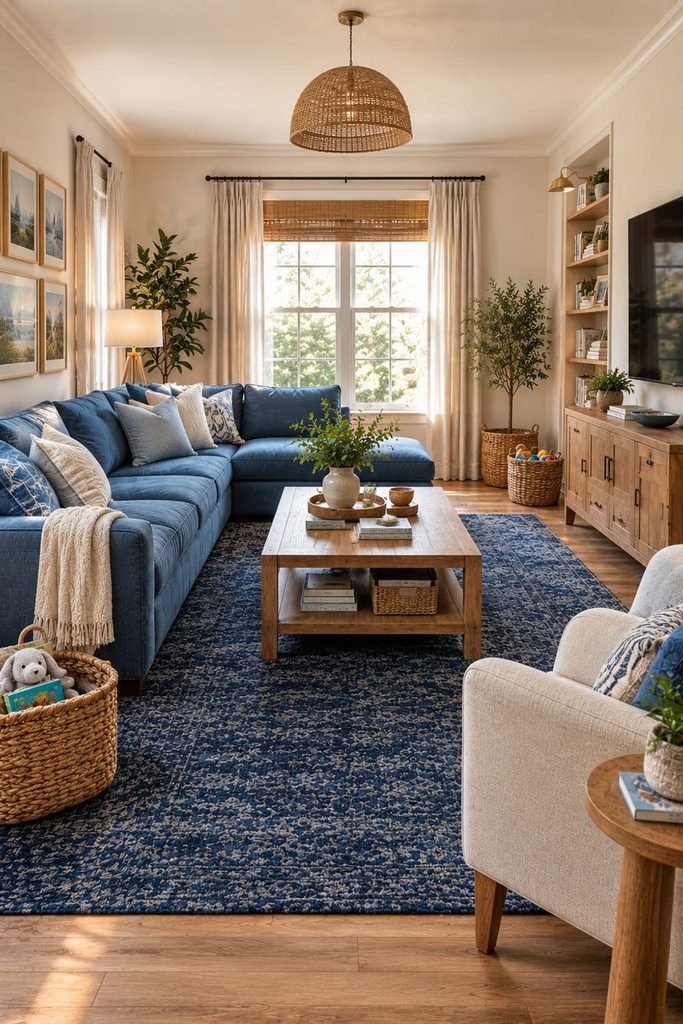
For a cozy family room, combine several blue shades with natural materials. Use a medium-blue sofa, a darker blue rug, cream cushions, a wooden coffee table, woven baskets, and a few plants.
The different textures prevent the blue palette from feeling flat. Wood adds warmth, woven materials provide visual softness, and plants introduce a natural element.
Keep the blue shades related but not identical. A faded denim blue can sit comfortably beside navy and pale blue when cream and natural wood are used between them. This gives you a room that feels layered and welcoming while still being practical enough for everyday family life.
How to Make a Blue Living Room Kid-Friendly?
The most important thing is to design around how your family actually uses the room. Choose upholstery that can tolerate spills, rugs that are practical to clean, and furniture that can handle everyday activity. Performance fabrics, leather, microfiber, washable covers, and durable woven materials are commonly recommended for busy family spaces.
Think about safety as well as appearance. Anchor tall furniture and televisions appropriately, manage cords, secure loose rugs, and avoid sharp-edged or glass furniture in areas where young children play.
Storage is equally important. A beautiful blue living room can quickly feel chaotic when toys have nowhere to go. Give books, blocks, games, blankets, and stuffed animals designated storage so the room can be reset quickly at the end of the day.
Common Mistakes to Avoid in a Family Blue Living Room
Most family rooms fail on practical details rather than color. The first is an unsecured rug: a thin rug on hard flooring will bunch and slide under running feet, so use a rug pad underneath, choose low pile that doors can clear, and size it so the front legs of the sofa sit on it — usually at least 8 by 10 feet. The second is sharp, hard furniture in the play zone. Swap a glass or sharp-cornered coffee table for a rounded wooden table or a storage ottoman, and keep 16 to 18 inches between it and the sofa so children are not squeezing past edges.
The third mistake is ignoring tip-over risk: tall bookcases, media units, and televisions should be anchored to the wall with straps or brackets, and heavy items belong on the lowest shelves. Fourth, avoid window treatments with looped cords within a child’s reach; choose cordless styles, and hem curtains to just below the sill or to the floor rather than letting them pool where small hands can pull. Finally, do not put everyday toy storage too high to use — low baskets and shelves children can reach themselves get tidied far more often. The same durability thinking helps in our brown living room ideas for families with kids and pets, and if you also have a dog or cat, see these blue living room ideas for pet owners.
Final Thoughts
A blue living room can work beautifully for a family with kids when the color is combined with materials and layouts that can handle real life. You do not have to choose between a stylish room and a practical one.
Start with a blue sofa, rug, curtains, or storage piece, then build around it with warm wood, cream, natural textures, and a few colorful accents. Choose washable and durable materials wherever possible, keep pathways open, and give children’s belongings a clear place to live.
The result should be a living room where kids can play comfortably, and adults can relax without feeling as though the entire space has become a playroom. That balance is what makes a family living room genuinely successful.


