

15 Bedroom Wall Art Ideas for a Little Boy’s Dream Bedroom
A little boy’s bedroom should feel like his own small world. It can be a place for sleeping, reading, building forts, displaying favorite toys, and dreaming up adventures. Wall art gives you an easy way to create that feeling without filling the room with furniture or committing to a theme that will quickly become outdated.
The best bedroom wall art ideas for a little boy can be playful without looking overly childish. Mountains, animals, airplanes, dinosaurs, stars, maps, vehicles, and simple illustrations can all bring personality to the walls while leaving plenty of room for the rest of the bedroom to evolve. Warm neutrals, muted greens, soft blues, natural wood, and small touches of stronger color can also create a room that feels cheerful without becoming visually overwhelming.
You do not need every wall to tell the same story. One large statement piece can become the focal point, while a small gallery, personalized print, or collection of illustrations can fill another area. Choosing artwork that can remain relevant as a child grows also means you can update bedding, toys, and accessories without having to completely redesign the walls.
Here are 15 bedroom wall art ideas for a little boy that combine imagination, personality, and practical design.
1. Adventure-Inspired Mountain Landscape
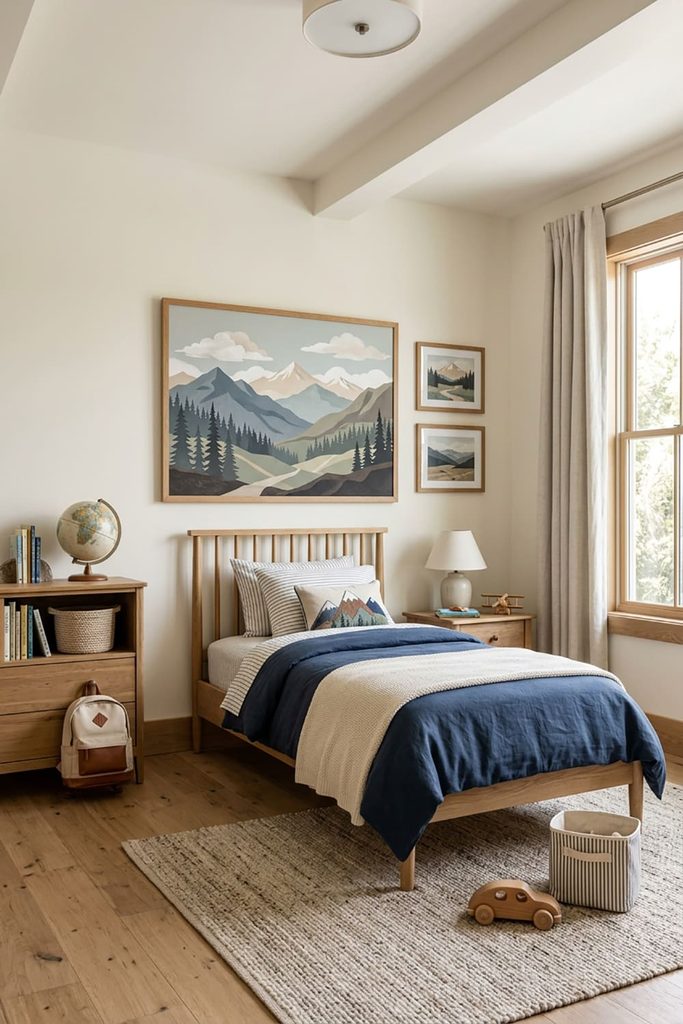
A mountain landscape can turn a little boy’s bedroom into a quiet adventure scene. Choose artwork showing layered mountains, pine trees, winding trails, clouds, or distant peaks. The style can be realistic, watercolor-inspired, or simplified into clean illustrated shapes.
Soft blue, sage green, beige, brown, and charcoal work particularly well for this idea. A large landscape above the bed or dresser can serve as the main focal point, while two smaller coordinating prints can extend the scene across the wall.
The beauty of a mountain theme is that it does not need to look specifically like nursery decor. The same artwork can remain attractive as the child gets older. Add wooden furniture, a neutral rug, and a few adventure-themed accessories to create a bedroom that feels imaginative without becoming overloaded with decorations.
2. Friendly Dinosaur Gallery
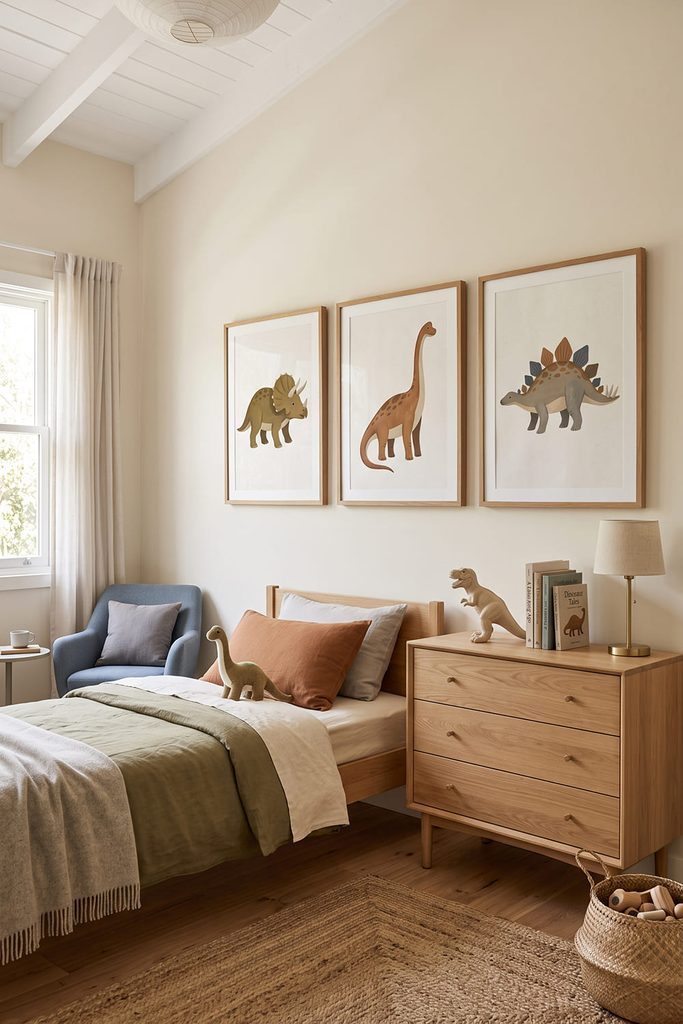
Dinosaurs are a natural choice for a little boy who loves prehistoric creatures, but the artwork does not have to look like a brightly colored cartoon.
Try a collection of illustrated dinosaurs in earthy shades such as olive, rust, cream, brown, muted blue, and warm gray. Display three or four different species in matching frames to create a simple gallery wall.
For a younger child, choose friendly illustrations with softer expressions. As he grows, the artwork can become more detailed and educational, introducing names or subtle scientific illustrations.
A dinosaur gallery works especially well above a reading corner or dresser. Keep the surrounding decor relatively simple so the collection remains the main feature. Natural wood frames can reinforce the earthy palette and make the room feel warmer.
3. Personalized Name and Initial Artwork
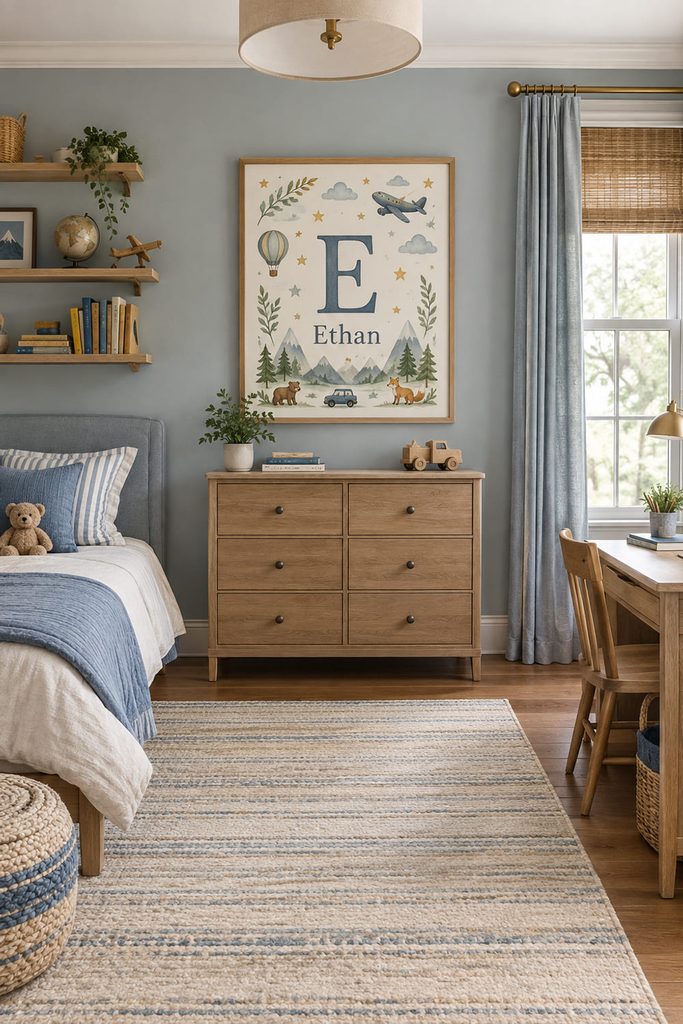
Personalized wall art can make a child’s bedroom feel genuinely his. Instead of using a large decorative sign that dominates the entire room, consider a carefully designed print featuring his first name or initial.
The name can be surrounded by small illustrations related to his interests. Stars, mountains, clouds, animals, airplanes, leaves, boats, or tiny vehicles can be incorporated without making the artwork too busy.
Choose typography that is easy to read and has a style appropriate for the room. A simple name print can work with modern, traditional, Scandinavian-inspired, rustic, or colorful bedroom designs.
Place it above a dresser, reading nook, or small desk rather than automatically putting it above the bed. This makes the artwork easier to keep as the furniture arrangement changes.
4. Vintage-Style World Map
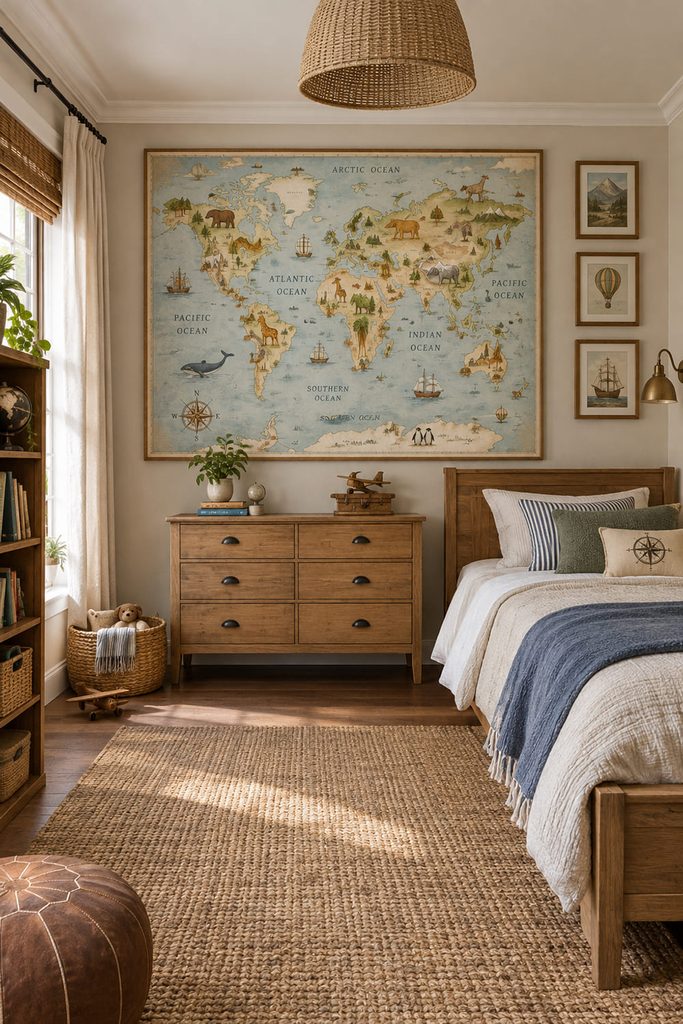
A world map can turn a blank bedroom wall into an opportunity for curiosity and exploration. Look for an illustrated map rather than a highly technical classroom-style map if you want the room to feel decorative.
Muted blue oceans with tan, cream, green, and brown land areas can work beautifully with natural wood furniture. A larger map can become the centerpiece of an otherwise simple bedroom.
For a younger child, choose a map featuring small illustrations of animals, landmarks, or natural features. These details give him things to discover as he looks at it.
A world map also has staying power. It can remain relevant as a child moves from early childhood into the school years, making it a useful choice when you want wall art that does not need to be replaced quickly.
5. Airplane and Aviation Prints
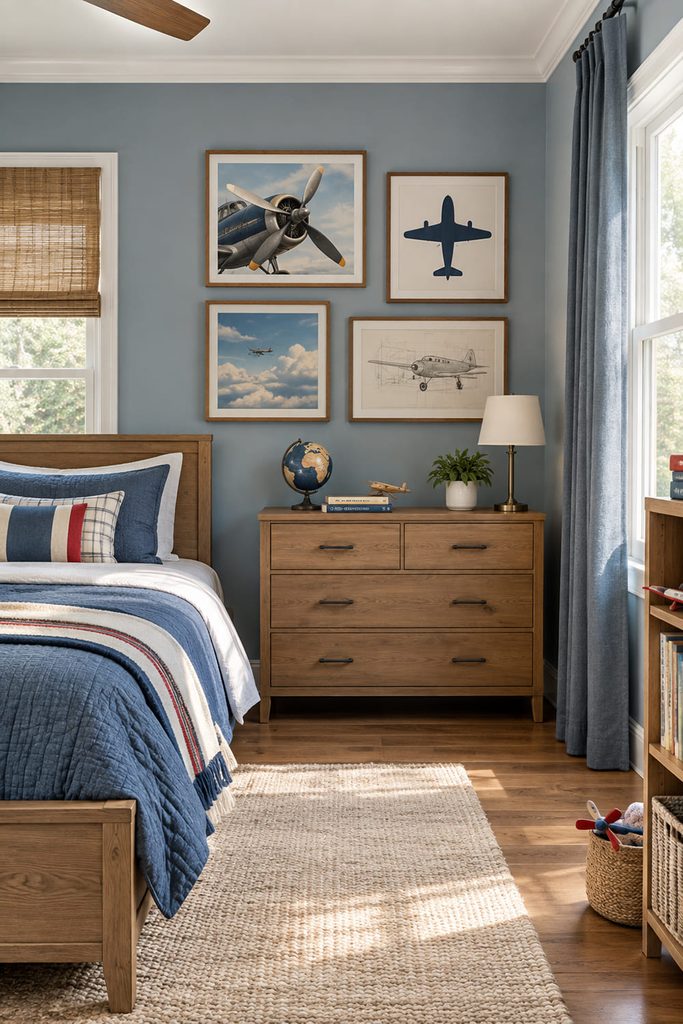
For a child fascinated by flying, a small collection of airplane illustrations can bring a strong sense of movement to the bedroom.
Instead of filling the walls with numerous colorful aircraft, choose three or four coordinated prints. They could feature a vintage propeller plane, a simple airplane silhouette, an illustrated sky scene, or different aircraft shown against pale backgrounds.
Blue, cream, gray, and muted red provide a classic aviation palette. Hang the prints horizontally above a dresser or reading bench, or arrange them vertically on a narrow wall.
This idea can be adapted as the child grows. Younger boys may enjoy colorful illustrated airplanes, while older children may prefer more detailed aircraft drawings. The basic theme remains useful without making the bedroom feel permanently designed for a toddler.
6. Woodland Animal Artwork
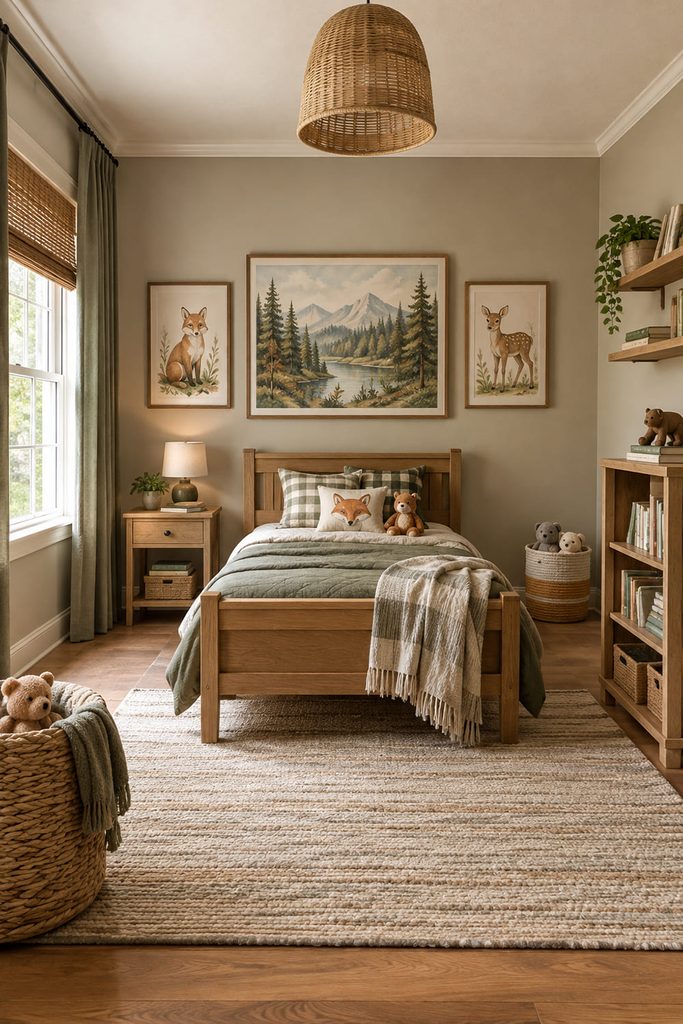
Woodland animals can create a warm and imaginative bedroom without relying on bright primary colors. Think foxes, bears, deer, rabbits, owls, or squirrels illustrated in a gentle artistic style.
A three-piece gallery can feature different animals, while a larger forest landscape can serve as the central piece. Use shades of sage, olive, warm beige, brown, cream, and muted blue to keep the room calm.
Woodland art works particularly well with natural materials. A wooden bed, woven basket, soft rug, and simple bedding can reinforce the nature-inspired theme.
The artwork can also grow with the child. Simple animal illustrations feel appropriate for a little boy but do not necessarily become childish when he gets older.
7. Space and Planet Gallery
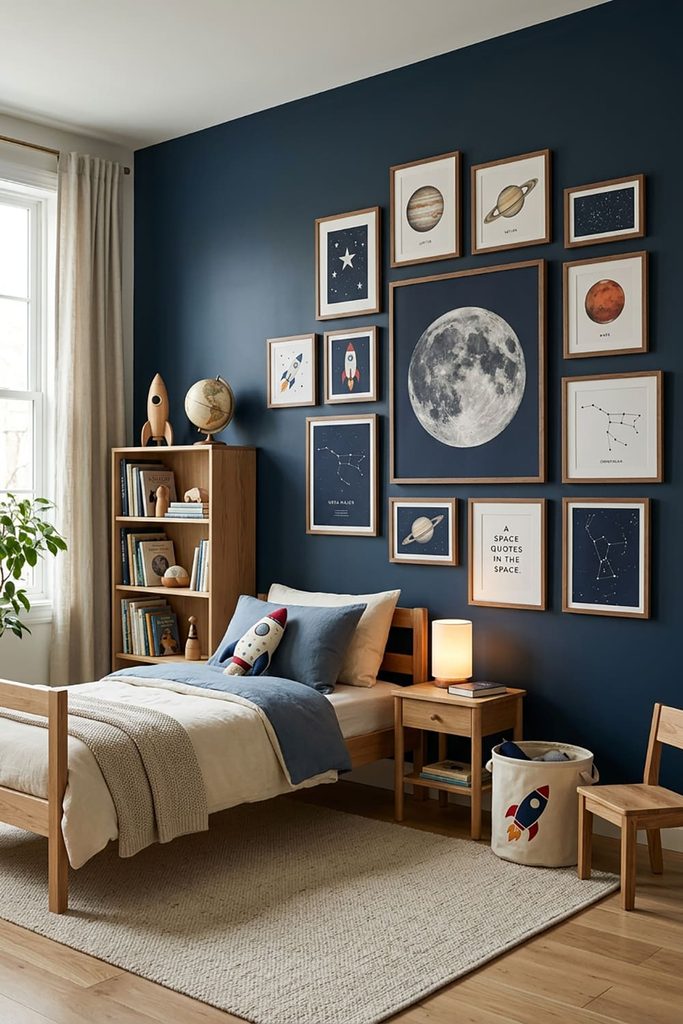
A space-themed wall can bring a sense of wonder to a little boy’s bedroom. Instead of covering the entire room with stars and planets, create one carefully designed gallery.
Combine illustrations of planets, the moon, stars, rockets, and constellations. Keep the colors coordinated so the collection feels intentional. Navy, deep blue, charcoal, cream, muted orange, and warm yellow can create a sophisticated space palette. A large moon print can become the focal point, with smaller planet illustrations surrounding it.
For a younger child, choose artwork with simple shapes and friendly illustrations. As he grows, more realistic astronomical artwork can be introduced without changing the basic theme. This approach allows the room to feel imaginative while still having a calm visual foundation.
8. Black-and-White Animal Sketches
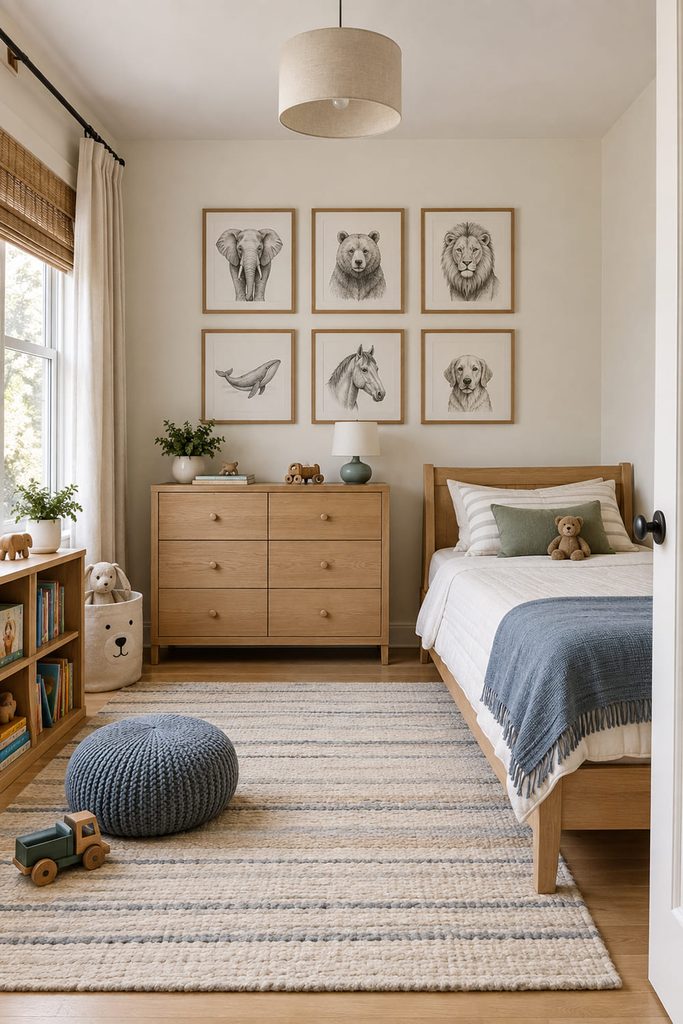
Black-and-white artwork can be a surprisingly stylish option for a little boy’s bedroom. Choose simple animal sketches, line drawings, or lightly detailed illustrations and arrange them in matching frames. Animals such as elephants, bears, lions, whales, horses, or dogs can all work.
The monochromatic artwork is particularly useful when the bedroom already contains colorful bedding, toys, or rugs. The wall art provides visual structure without adding another strong color.
For warmth, use natural wood frames instead of making everything stark black and white. You can also add one muted color through a single small print or accessory. This idea is excellent for a minimalist bedroom because the artwork provides personality without creating a busy appearance.
9. Ocean Adventure Artwork
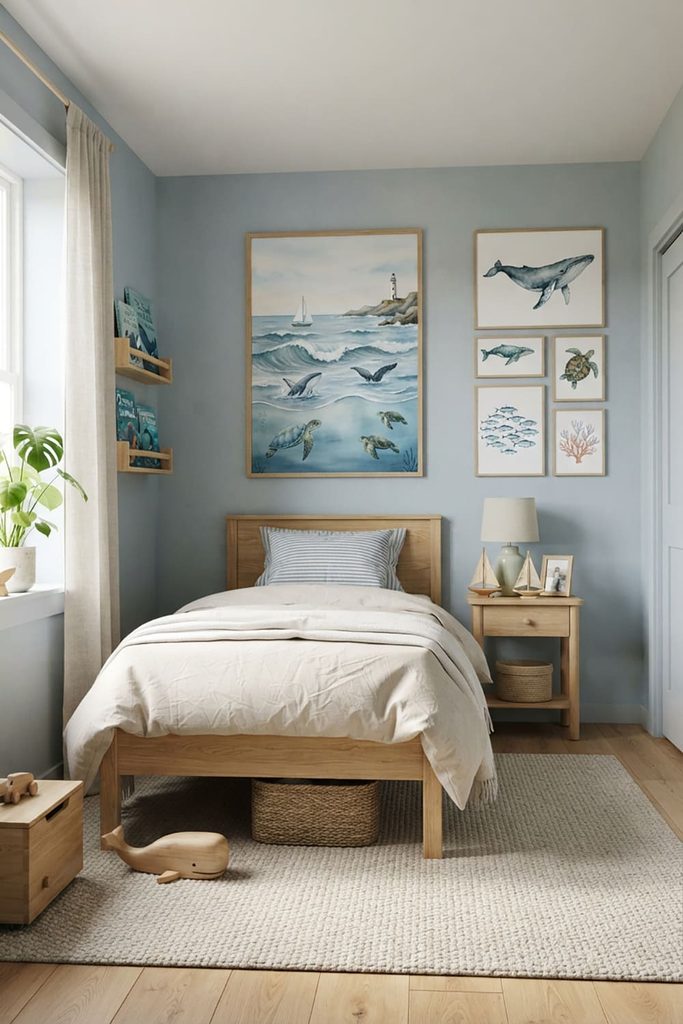
An ocean-inspired wall can create a peaceful but adventurous atmosphere. Instead of limiting the theme to fish, consider artwork showing waves, sailboats, whales, sea turtles, lighthouses, or underwater scenes.
Soft blue, sandy beige, white, and muted green create a relaxed palette. A large ocean landscape can sit above the bed, while smaller marine illustrations can decorate a nearby wall.
For a little boy who enjoys exploring, combine the artwork with a simple nautical detail such as a small wooden boat or a shelf displaying books about the sea.
Avoid covering every surface with anchors, ropes, and nautical symbols. A few carefully chosen pieces usually create a more sophisticated result. Ocean artwork also has the advantage of remaining relevant as the child grows.
10. Oversized Animal Portrait
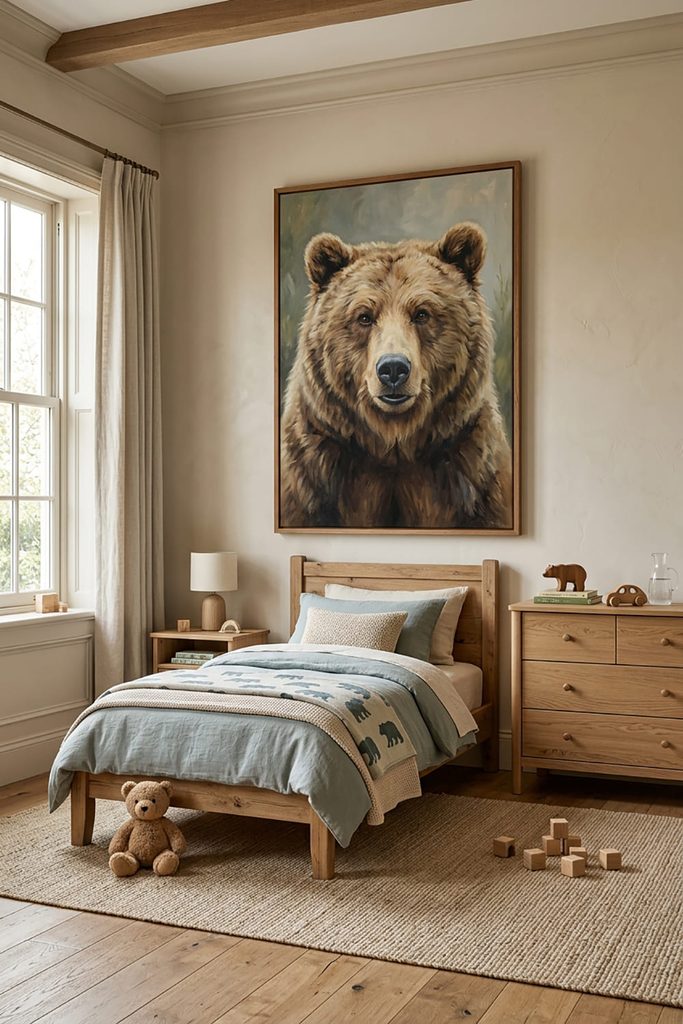
One large animal illustration can make a stronger statement than an entire wall of small decorations. Choose an animal that fits the child’s personality or interests. A bear, lion, elephant, tiger, wolf, horse, or even a favorite domestic animal can work beautifully.
The artwork can be realistic, painterly, graphic, or gently illustrated. Choose the style according to the rest of the room. A large portrait looks especially effective above a bed, dresser, or reading area where it has enough surrounding space to breathe.
Keep the remaining wall decor minimal. One oversized piece should feel intentional rather than competing with several other focal points.
For a younger bedroom, a friendly expression can make the artwork feel approachable. For an older child, a more detailed or dramatic illustration can provide a natural transition.
11. Transportation-Themed Gallery Wall
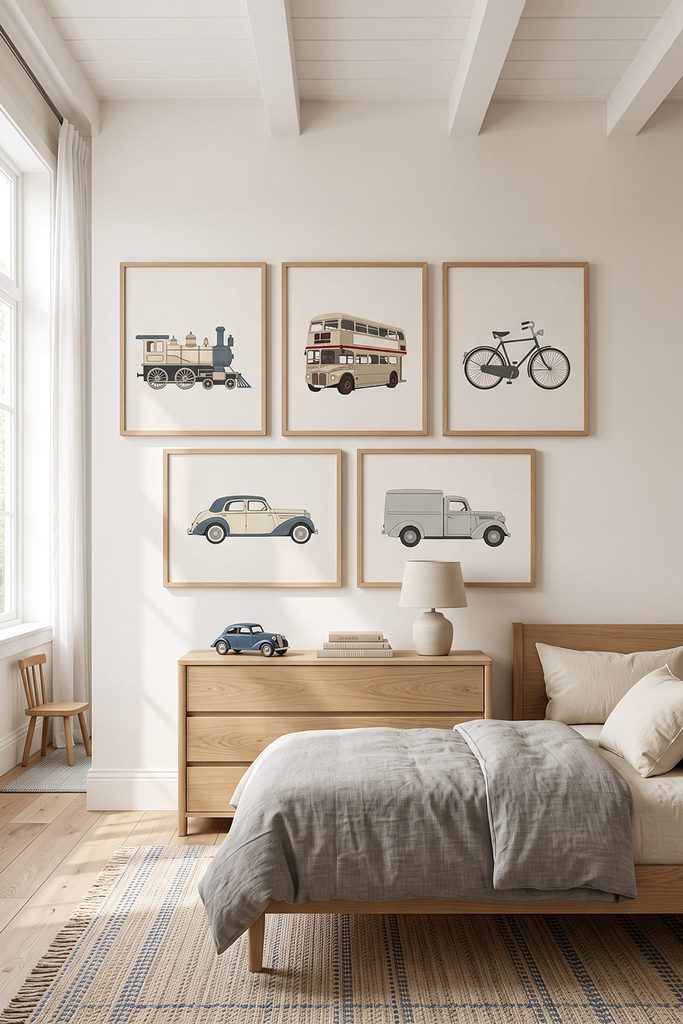
Cars, trains, buses, bicycles, trucks, and other forms of transportation can create an energetic wall without requiring an entire bedroom theme.
Choose three to five illustrations that share a visual style. For example, you could use vintage-inspired vehicle drawings with cream backgrounds, muted blue details, and small touches of red. Arrange them in a clean grid with equal spacing. Matching frames will make the collection look more polished.
If the child has a favorite type of vehicle, let that interest guide the collection. A train-loving child might have illustrations of locomotives and railway scenes, while another might prefer classic cars or construction vehicles.
The advantage of this approach is flexibility. Individual prints can be replaced as interests change without redesigning the entire wall.
12. Storybook-Inspired Forest Scene
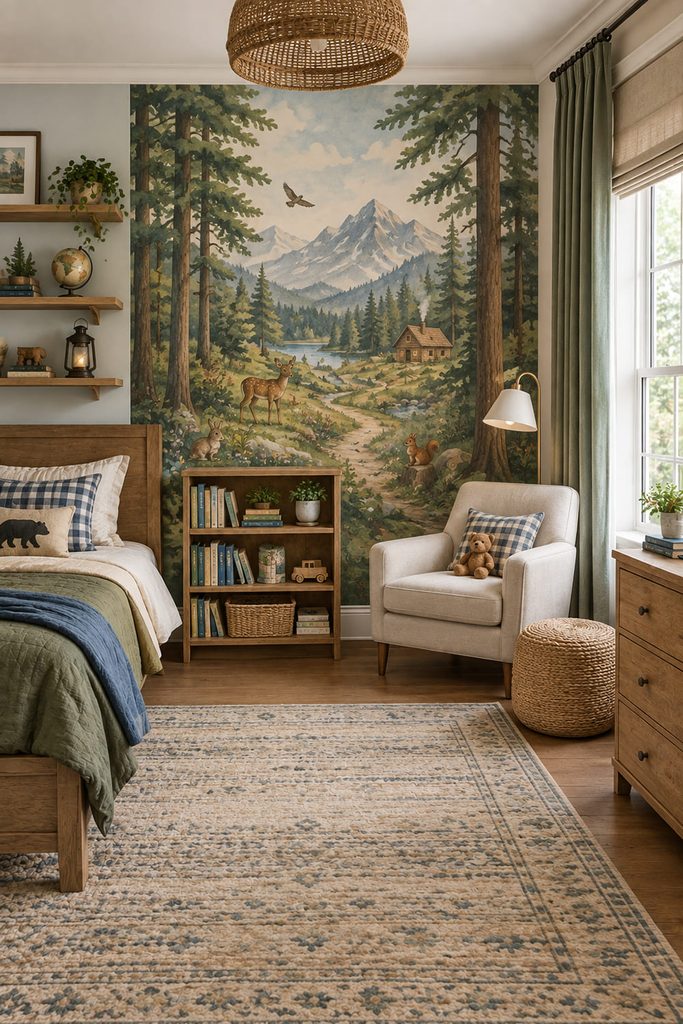
A large illustrated forest scene can make the bedroom feel like a page from a favorite adventure story. Look for artwork featuring trees, woodland paths, small animals, mountains, cabins, or distant scenery. The scene does not need to depict a specific story. The goal is to create a setting that encourages imagination.
A muted palette of green, brown, cream, blue, and soft gray works particularly well. Place the artwork behind a reading chair or next to a small bookshelf so the visual connection between books and imagination becomes stronger.
You can also use a panoramic landscape across a wider wall instead of one rectangular print. Keep the surrounding furniture simple so the artwork remains the room’s main storytelling element.
13. Growth Chart With Decorative Artwork
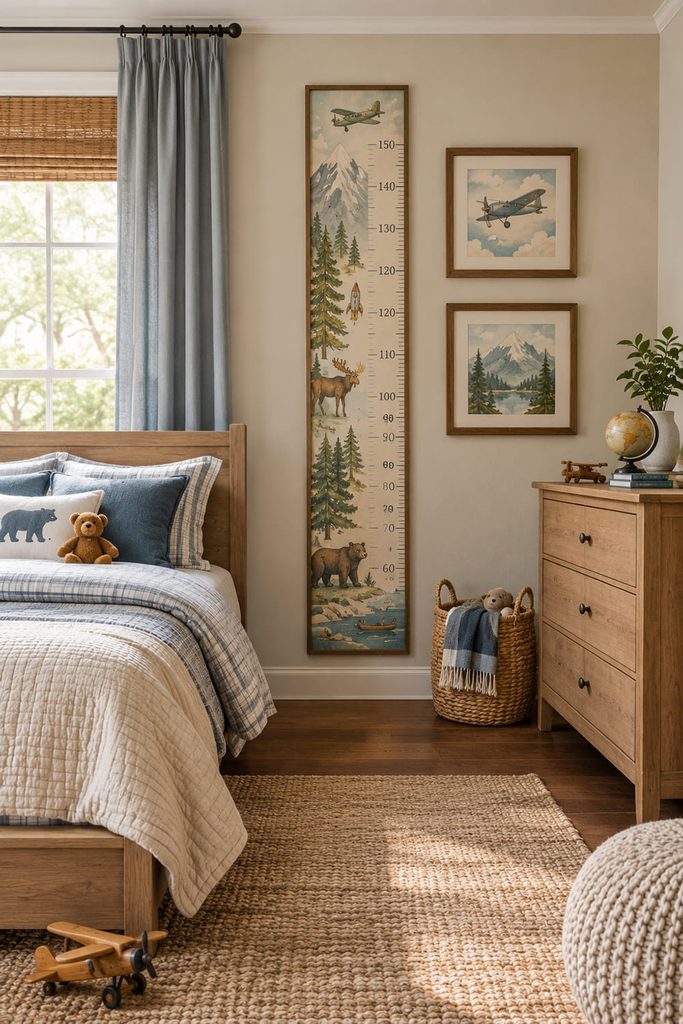
A growth chart can be both useful and decorative when designed as part of the bedroom’s overall wall art. Instead of choosing a purely functional chart, look for one that incorporates an illustrated theme. A mountain, tree, airplane, rocket, animal, or tall sailboat can provide the visual structure.
Position the growth chart somewhere that remains accessible as the child gets older. Avoid placing it behind furniture that will make measuring difficult. Pair it with two or three small coordinating prints to create a mini gallery.
This approach gives the wall a personal purpose. The markings become a record of the child’s growth, while the surrounding artwork keeps the area visually attractive. Choose a design that can move with the child if the bedroom furniture is rearranged later.
14. Colorful Geometric Wall Art
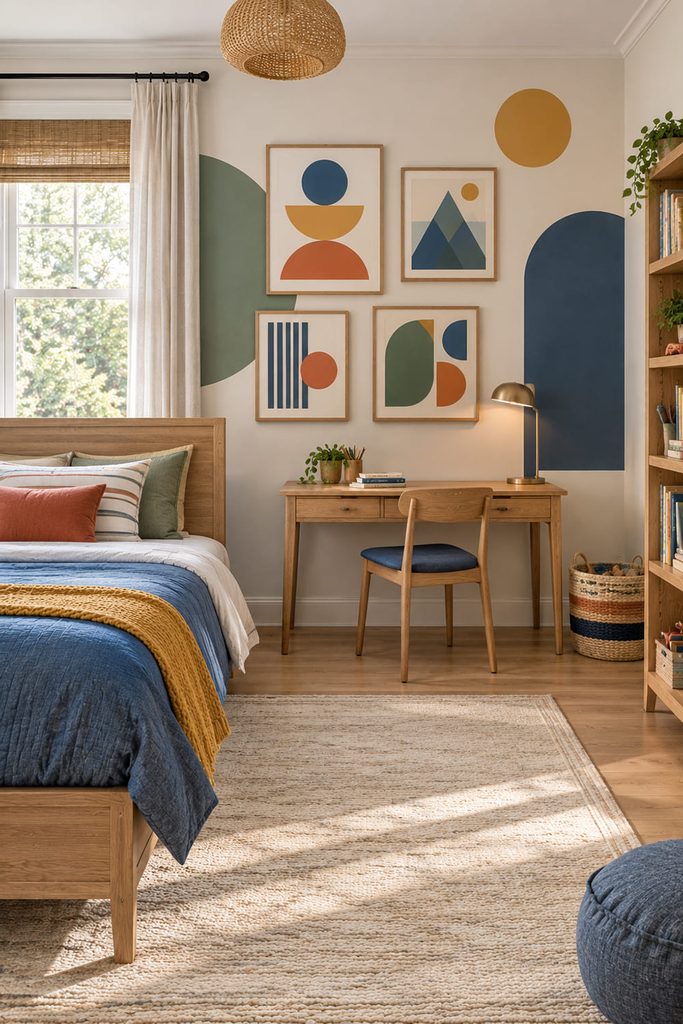
Geometric artwork can bring color and energy into a little boy’s bedroom without depending on a specific character or theme. Choose large circles, arches, triangles, rectangles, or abstract shapes in a coordinated palette. Navy, mustard, sage, terracotta, cream, and soft blue can work beautifully together.
You can use framed geometric prints, painted wall shapes, or a combination of both. If you prefer a flexible approach, framed artwork is easier to replace later.
A geometric gallery looks especially good above a simple desk or reading area. Keep the surrounding furniture relatively understated so the shapes remain easy to appreciate.
This is a particularly useful choice when you want a room that feels playful but modern. The artwork can remain appropriate well beyond the toddler years.
15. Personalized Adventure Gallery
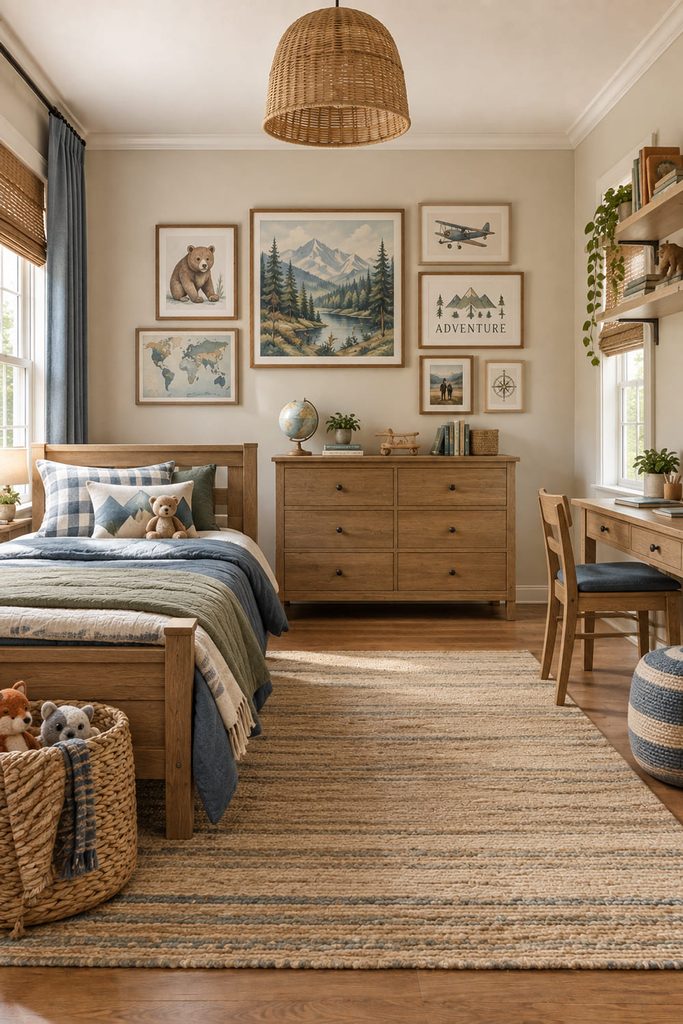
For the most personal approach, create a gallery based on the things the little boy actually enjoys. Instead of choosing one theme for every piece, combine several related interests. A favorite animal can sit beside a mountain landscape, a small airplane print, a personalized name piece, and a simple map.
The trick is to connect the artwork through color and framing. The individual images can be different, but they should share two or three colors so the wall feels intentional.
You can also include a small photograph, a drawing made by the child, or an illustration representing a memorable family trip. This type of gallery can evolve over time. Replace one or two pieces when interests change rather than redesigning the entire wall.
The result is more personal than a generic themed bedroom and gives the child a visual collection of things that matter to him.
How to Choose Wall Art for a Little Boy’s Bedroom
The best wall art should work with the room rather than compete with it. Start by looking at the colors already present in the bedding, rug, curtains, furniture, and accessories.
If the room already has strong colors, choose calmer artwork. If the furniture and walls are mostly neutral, artwork can provide the stronger color accents.
Scale is important too. A tiny print can disappear above a large dresser, while an oversized piece can overwhelm a narrow wall. Consider the furniture underneath the artwork and choose a size that feels proportionate to it.
You can also combine different sizes. A large central print with two smaller pieces on either side often creates a balanced arrangement. Most importantly, choose artwork that reflects the child’s interests without locking the room into a theme that he may quickly outgrow.
Choosing Artwork That Grows With Him
Little boys’ interests can change quickly. A child who loves dinosaurs today may become fascinated by space, sports, animals, or vehicles a year later. That does not mean every wall needs to be completely redesigned.
Nature scenes, animals, maps, landscapes, geometric art, transportation illustrations, and space artwork can often transition from early childhood into later years. The more specific and babyish the artwork, the more likely it is to need replacement.
A flexible room can keep the larger pieces relatively timeless and use smaller accessories for current interests. For example, a mountain landscape can remain on the wall while dinosaur toys, bedding, books, or smaller prints change around it. This approach saves effort and allows the bedroom to develop naturally with the child.
Creating a Gallery Wall Without Making the Room Feel Busy
A gallery wall does not need to cover an entire wall. Three carefully selected pieces can be enough. Start with the largest piece and use it as the anchor. Add smaller pieces around it while maintaining consistent spacing.
Matching frames create a more organized appearance, while different frames can create a collected, playful look. If the artwork itself is colorful, matching frames may help keep everything under control.
Try to repeat at least one color across the pieces. This small connection can make completely different illustrations feel like part of the same collection.
Leave some empty wall space around the gallery. A little breathing room helps each piece stand out and prevents the room from feeling visually crowded.
Wall Art Placement Ideas
The location of the artwork can change the entire effect.
Above the bed, one large horizontal piece can create a strong focal point. Above a dresser, a medium-sized artwork or three-piece arrangement usually works well. Near a reading corner, a small gallery can create a dedicated visual zone.
A narrow wall can accommodate vertically stacked prints, while a wide wall can support a horizontal arrangement. If the bedroom has a desk, artwork above the desk can help define the study area. A map, geometric print, or personalized artwork can work particularly well there.
Avoid filling every available section of wall. Some empty space allows the bedroom to feel calmer and gives future artwork room to be added as the child grows.
Safety and Practical Considerations
Wall art in a child’s bedroom should be installed securely. Choose appropriate hardware for the wall type and make sure frames and other mounted objects cannot easily fall.
Keep heavy artwork, shelves, and potentially breakable decorations away from areas where a child could pull them down or strike them. This is especially important around beds, cribs, and furniture that a child may eventually climb.
If the bedroom belongs to a younger child, lightweight artwork and securely mounted pieces can be preferable to heavy decorative objects.
Think about maintenance too. Children’s rooms can become dusty and messy, so artwork that can be easily cleaned or wiped around is often more practical than delicate pieces. A beautiful bedroom should still be easy to live in.
Conclusion
A little boy’s bedroom can be playful, imaginative, and full of personality without becoming overwhelmed by themed decorations. The right wall art can introduce his interests while giving the room a polished foundation that can evolve as he grows.
Mountain landscapes, dinosaurs, personalized artwork, world maps, airplanes, woodland animals, space scenes, ocean illustrations, transportation prints, geometric designs, and adventure galleries all offer different ways to make the walls feel special.
The most successful approach is to choose a few pieces with intention rather than filling every empty space. Combine artwork that reflects his current interests with designs that can remain relevant for years. Keep the colors connected to the rest of the room, consider the scale carefully, and leave enough empty space for the bedroom to change naturally.
A little boy’s room should ultimately feel like his space. Whether he dreams about exploring mountains, traveling into space, discovering dinosaurs, or building imaginary cities, thoughtful wall art can give those interests a place on the walls while creating a bedroom that feels warm, creative, and genuinely personal.


