

15 Wall Art Size Mistakes That Make a Bedroom Look Off
The same bedroom can look calm one day and oddly unfinished the next, with the same bed, the same paint, and the same art budget. Nothing moves except the size of the art above the bed.
A print that was lost on the wall comes down, a wider piece goes up, and the whole room suddenly sits right. The pillows line up, the headboard looks solid, and the wall stops feeling empty.
Most wall art size mistakes are not about taste at all. The color can be right and the frame can be lovely, yet the scale fights the furniture below it.
The good news is that size is easy to test with tape before you drill a single hole.
Work through the fifteen fixes below, measure your own wall once, and you will spot the problem in minutes.
Each fix names the size error, shows why it looks off, and gives the plain correction you can test today with tape, a tape measure, and a step back to the doorway.
This post contains affiliate links. If you buy through them, we may earn a small commission at no extra cost to you. See our Affiliate Disclosure.
Mistake 1: One small print floating alone above a king bed

A single 12 by 16 inch print centered above a king bed looks lost because the bed is about 76 inches wide and the art covers almost none of it.
The wall reads as mostly blank, so the eye keeps jumping from the tiny frame to the wide pillows below.
Swap that lone print for one wide piece or a close pair that spans about two thirds of the bed width, roughly 50 to 60 inches total.
In a real room, that wider span lets the art sit just above the headboard with the lamps framing both sides, and the bed finally looks anchored instead of topped with an afterthought.
A soft white duvet and two plain pillows keep the focus on that wider art, not on a lonely frame.
Mistake 2: One oversized piece overwhelming a small wall

Big art can work in a small bedroom, but one huge canvas that fills nearly the whole wall leaves no breathing room and makes the bed feel squeezed. The frame crowds the ceiling line and the corners, so the room feels smaller than it is.
A better fix is to size down one step and leave clear space on all sides, which is the calm approach shown in these oversized wall art ideas for a bedroom when they are scaled to the wall.
Pick a piece that covers about half to two thirds of the wall width, keep a few inches clear near the ceiling, and let a small plant or book stack on the nightstand balance the lower half.
Mistake 3: Art much narrower than the furniture below it

Use this quick check before you hang anything: stand at the doorway and compare the width of the art to the width of the furniture under it.
If a 24 inch print hangs over a 60 inch dresser, the dresser looks top heavy in reverse, wide at the bottom and pinched at the top.
Fix it by choosing art, or a grouped set, that reaches at least half the furniture width and ideally closer to two thirds. On a dresser, that usually means a 36 to 40 inch span.
Leave a small gap between the art edge and the dresser edge on each side, set a folded throw or tray below, and the two pieces start to read as one set.
Mistake 4: Two small prints spread too far apart above a wide headboard
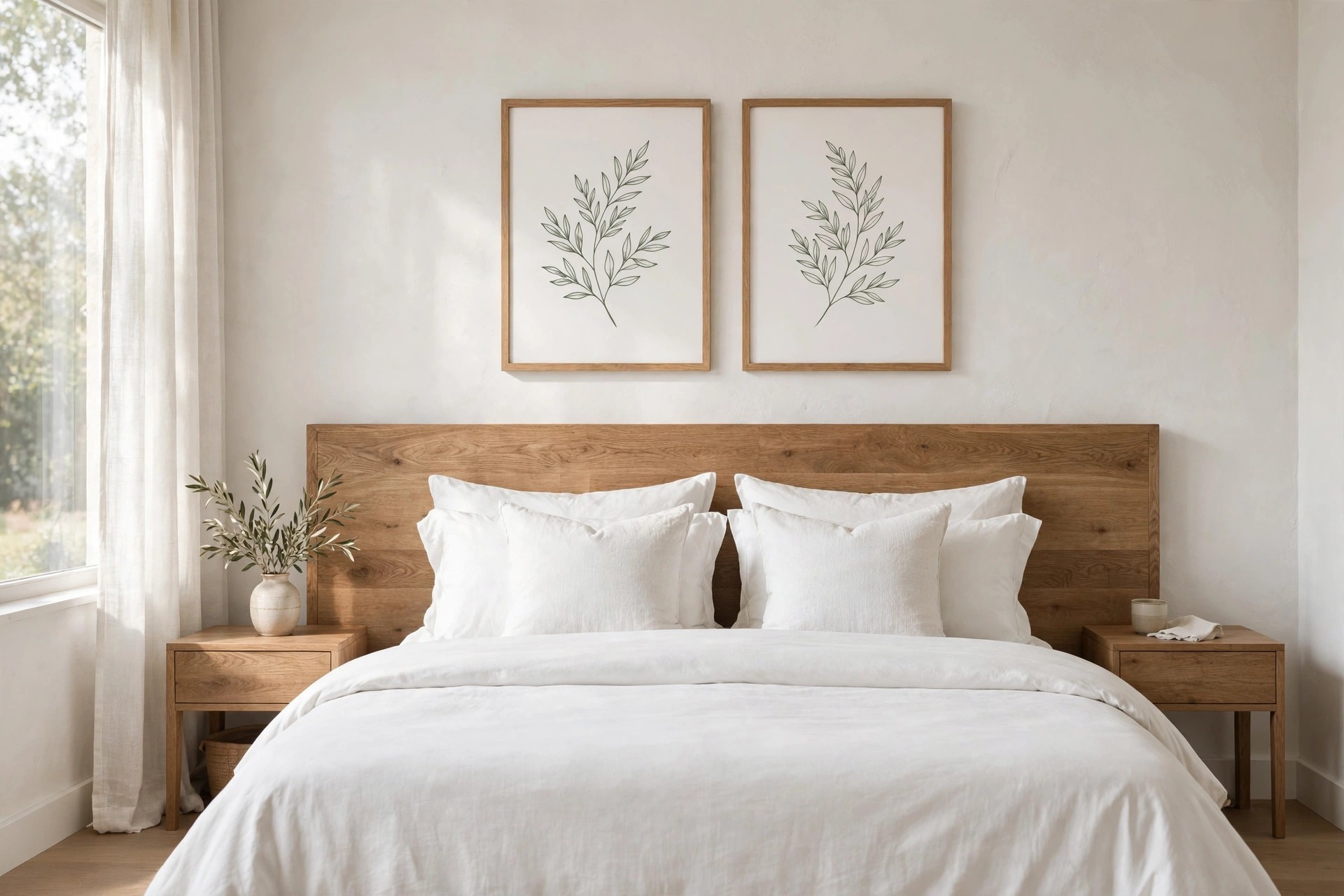
On Monday morning in a bright primary bedroom, two small prints hung ten inches apart can look like two separate thoughts instead of one pair. The wide headboard below holds them together at the bottom, but the big gap in the middle pulls them apart.
Bring the pair closer, about two to three inches apart, and center the pair as one unit over the bed. Together they should span roughly two thirds of the headboard width.
If each print is only 11 by 14 inches, go up a size or add a third print in the same frame style.
With white bedding and a wood headboard, that tighter grouping reads calm and finished from the doorway, even on a rushed weekday morning with the bed quickly made.
Mistake 5: A huge piece squeezed into a narrow wall between two windows
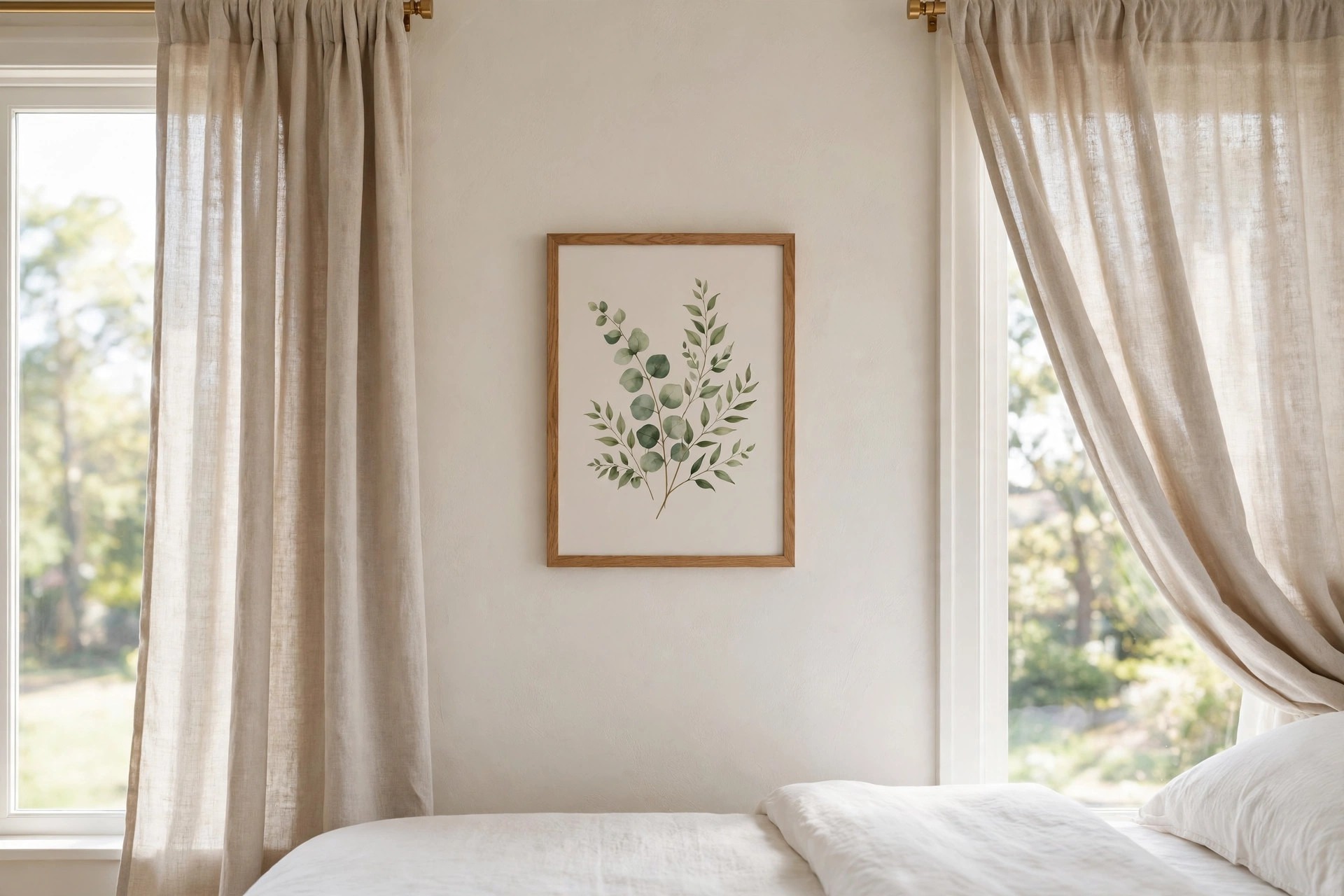
People often assume a narrow wall section needs the biggest art that will fit, edge to edge. That is a myth. A huge piece wedged between two window trims leaves no margin, fights the curtain rods, and makes the wall feel pinched.
Measure the flat space between the trims, then pick art at least four to six inches narrower in total, with clear space on both sides. In many bedrooms that means one medium vertical print instead of one wide canvas.
Rooms in this cozy small bedroom wall art collection show the same lesson: smaller, well spaced art keeps a tight wall calm. Let the curtains hang free and keep the frame clear of both trims, with daylight falling evenly across the glass on both sides.
Mistake 6: A gallery wall stretched edge to edge with no margin at the sides
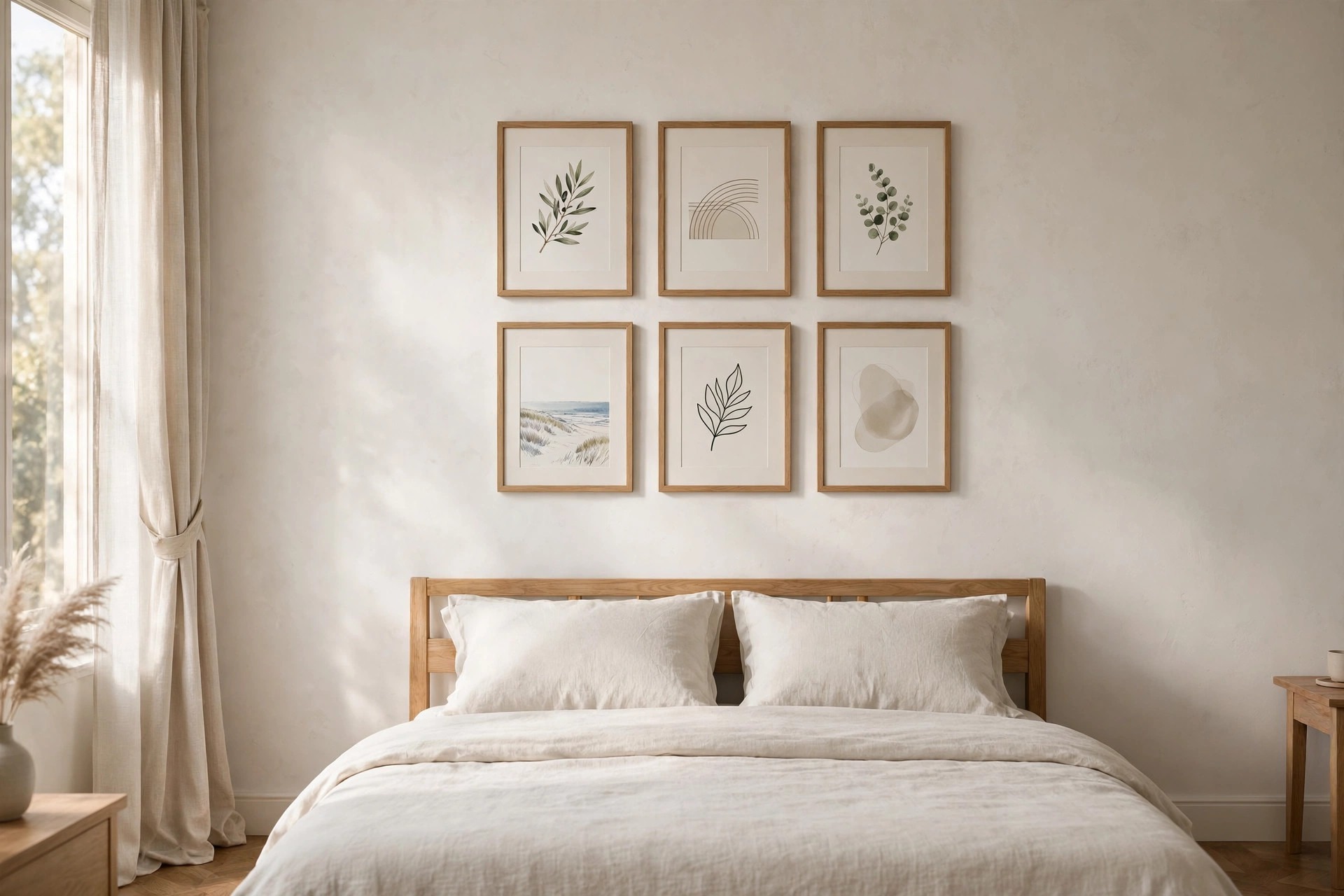
Frames marching from one corner of the wall to the other, with two inches left at each end, make a gallery wall feel tense. The group has no border, so it reads as clutter rather than one planned shape.
Pull the whole group in and leave a calm margin of at least six to twelve inches on each side, with the same clear space above the furniture below.
Lay the group on the bed first, keep gaps between frames at two to three inches, and check the outer shape before you hang.
The step by step layout help in this guide to building a bedroom gallery wall without measuring twice keeps that outer shape tidy, with clear wall showing all around the group like a frame of its own.
Mistake 7: Tiny art left alone on a tall wall where it gets lost

A tall wall needs height from the art, not just width. One tiny print hung at eye level on a nine or ten foot wall leaves a long empty stretch above it, and the print looks like it slid down the wall.
Fix the scale by going taller: choose one large vertical piece, or stack two prints in a column so the group fills more of the wall height.
These large canvas wall art ideas for a bedroom show how a taller piece holds a big wall without extra clutter.
In a room with a reading chair below, let the bottom of the art sit a few inches above the chair back, then fill upward from there, with the top still well below the ceiling line.
Mistake 8: A row of matching tiny frames where one statement piece was needed

Four tiny matching frames in a neat row can sound tidy on paper, yet on a wide wall above a bed they often read as a dotted line. Each frame is too small to hold its own, and together they still cover too little width.
Swap the row for one strong piece that spans about two thirds of the bed or dresser below it.
One larger print gives the eye a single calm place to land, which suits a main bedroom where you want rest, not a row of small details to scan.
Keep the old small frames for a hallway or a narrow nook, where their size fits the wall, and let the bedroom wall carry one clear focal point.
Mistake 9: Art wider than the dresser below it, hanging over both edges
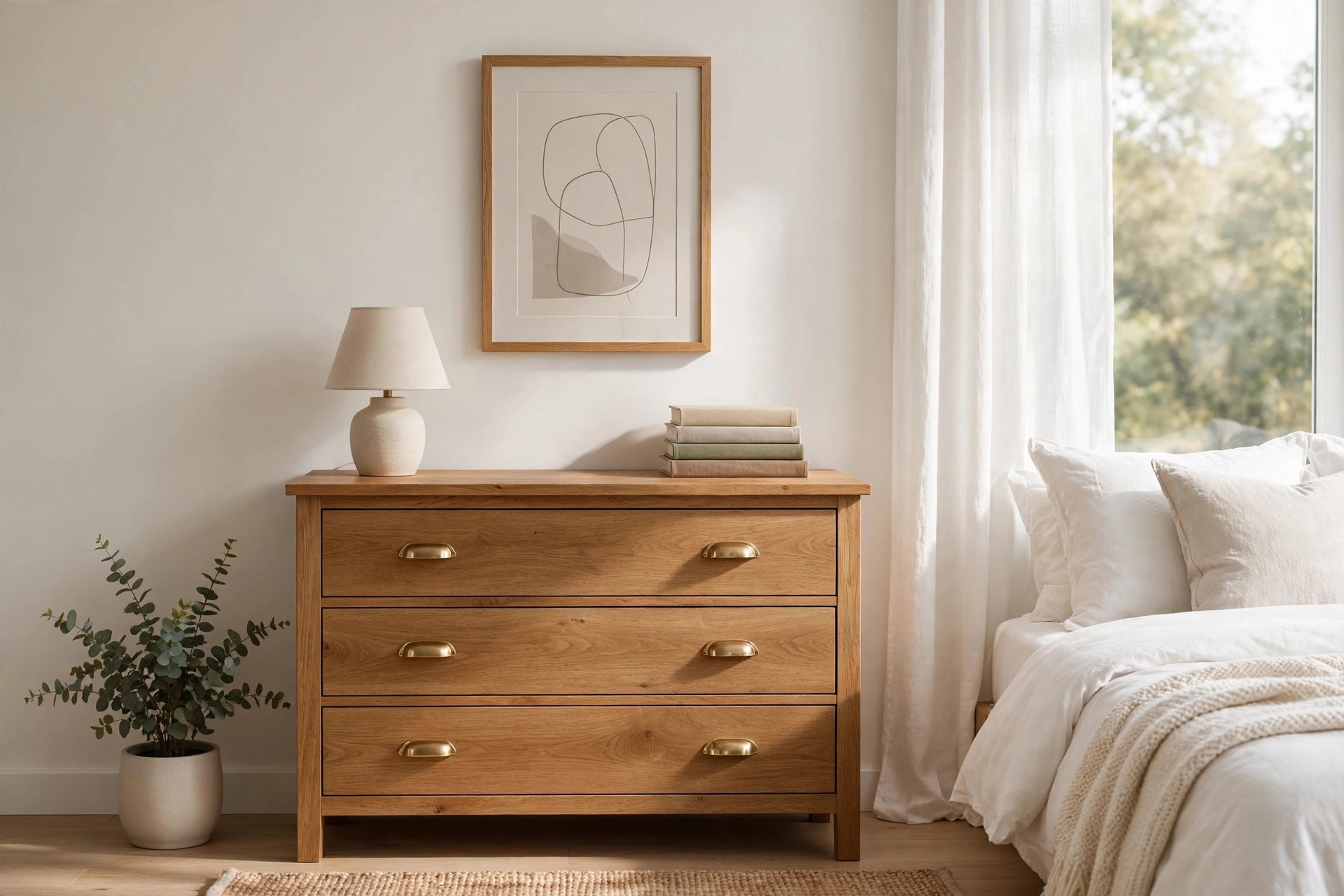
Art that runs past both ends of a dresser looks top heavy, even when the print itself is pretty. The frame hangs over open air on each side, while the dresser below looks too small to hold it up.
The fix is plain: keep the art narrower than the furniture, with a few inches of dresser showing on each side. For a 54 inch dresser, art around 36 to 42 inches wide usually sits well.
Set a small lamp on one side and a low stack of books on the other.
Keep the bottom of the frame about six to eight inches above the dresser top so bottles and a jewelry dish still have room, and the dresser top stays easy to dust and use each day.
Mistake 10: Ignoring the two-thirds rule between art width and furniture width
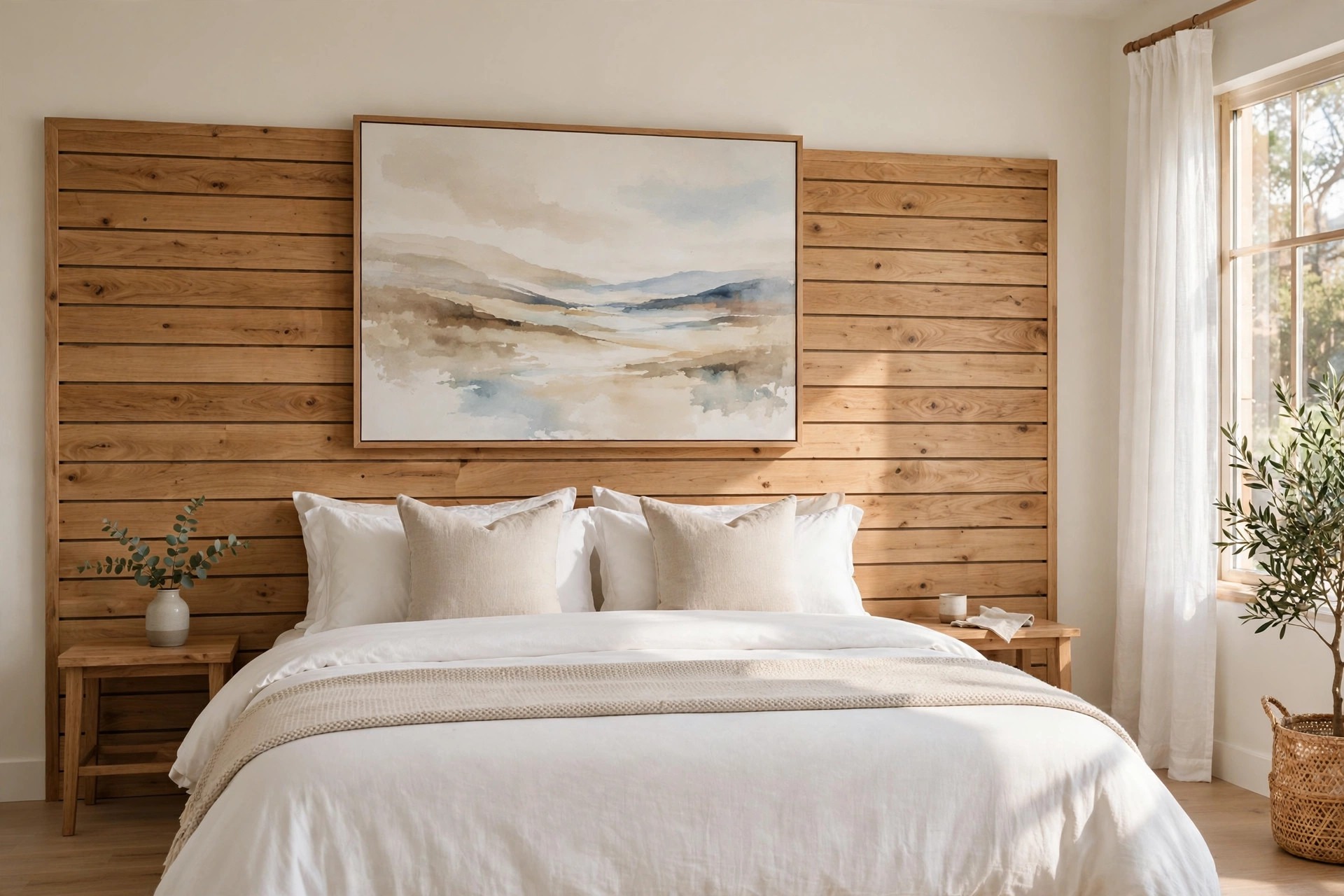
Here is the tiny rule that fixes half the walls in this list: art above furniture should be about two thirds as wide as the furniture below it. A 60 inch headboard pairs well with art near 40 inches wide.
A 72 inch dresser pairs well with art near 48 inches wide. The rule is a guide, not a law, so a little over or under still works.
What fails is a big miss in either direction, tiny art on wide furniture or wide art on a narrow piece. Tape the target width on the wall with painter tape, step back to the doorway, and check the balance before you shop or drill.
Keep the tape up for a day, and check it in morning and evening light.
Mistake 11: A neat grid of frames that is too small overall for its wall

A tidy grid can still be the wrong size. Six small frames arranged with care may cover only a small patch in the middle of a wide wall, leaving blank space all around that makes the grid look like a postage stamp.
Judge the grid by its outer edge, not by the count of frames. The full group should span about two thirds of the furniture or wall section below it.
If the group is too small, use larger frames, add one more row or column, or widen the gaps slightly to two or three inches.
On the bed below, plain pillows and a folded throw keep the focus on the grid instead of competing with it, and the grid finally holds the wall on its own.
Mistake 12: A short, wide piece on a high-ceiling wall that leaves a big empty band above

Short, wide art suits a low headboard wall, but on a high ceiling wall it can strand a big empty band above the frame. The lower half of the wall looks done, the upper half looks forgotten, and the room feels split in two.
Go taller instead: pick a piece with more height, stack a pair in a column, or raise the whole group only a little while adding height below with a taller headboard or layered pillows.
If you are unsure about placement, the clear height guidance in this post on hanging bedroom wall art at the right height helps you place the taller group so it connects with the bed instead of floating.
The headboard, pillows, and art read as one tall, connected group from the doorway.
Mistake 13: Oversized art pushed so high it crowds the ceiling
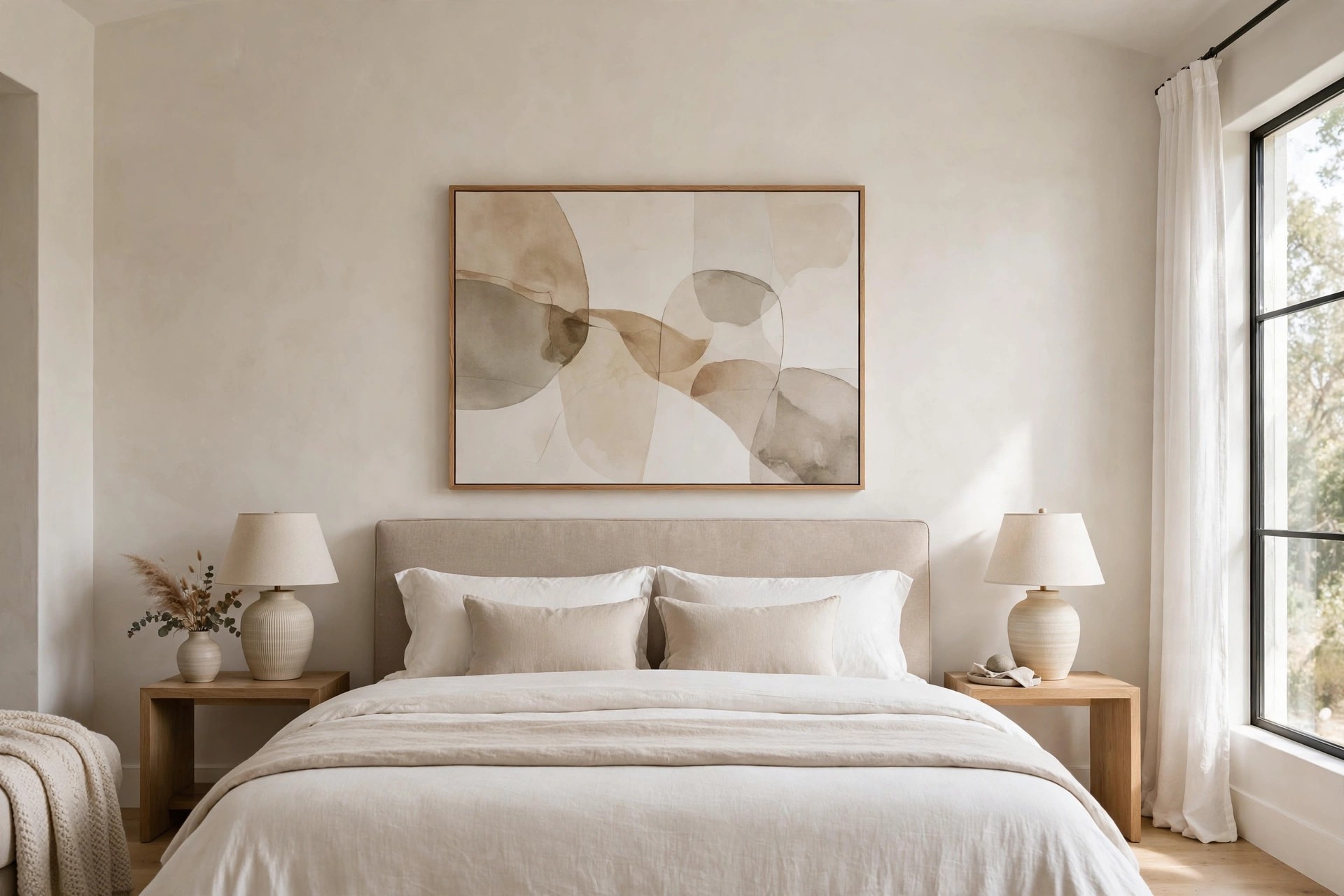
From the doorway, art shoved up near the ceiling is easy to spot: the top of the frame almost touches the trim, while a wide gap opens between the art and the bed below. The piece looks like it is trying to leave the room.
Bring it down so the bottom sits about six to eight inches above the headboard, and keep clear space between the top of the frame and the ceiling. That lower spot ties the art to the bed, where it belongs.
With bedside lamps on, the light should wash the lower wall and bedding, not leave the art stranded in shadow above everything else in the room. Lower art also stays easier to dust, straighten, and enjoy from the bed.
Mistake 14: Small art tucked above a tall headboard where pillows hide half of it

Tall headboards eat small art. A short print hung just above a high, padded headboard disappears the moment you stack sleeping pillows and a pair of shams in front of it. Half the frame hides, and what is left looks clipped.
Fix it in one of two ways: choose a taller piece that clears the pillow line with room to spare, or move the small art to a side wall where it can be seen in full.
Measure with the bed made, not stripped bare, because that is how the room lives each day. A folded throw across the foot of the bed adds color low down, so the wall art does not have to do all the work alone.
Mistake 15: Sizing art into a door swing or trim line so the layout always looks clipped

Open the bedroom door fully before you measure, because a layout that ignores the swing will always look clipped.
Art sized into that path sits half behind the open door, crowds the trim, or forces you to hang the group off center to dodge the handle. The plain fix is to treat the door swing and the trim as hard borders.
Measure only the clear wall that stays visible with the door open, center your art inside that clear zone, and leave a few inches between the frame and any trim.
In a room where the door opens against the main wall, a smaller group centered on the free section looks calm, while a wide group cut by the door never will.
Good size is quiet work. Once the art matches the bed, the dresser, and the clear wall around it, the room stops asking for attention and starts to rest.
Keep a tape measure and a roll of painter tape nearby, test the outline first, and trust the doorway view over a close up look.
If wall art size mistakes have been nagging at you in your own bedroom, pick the one fix that matches your wall and start there.
Save this post to your bedroom board for later, and check your measurements once more before the first nail goes in.


