

15 Tiny Kitchen Ideas for Studio Apartment Living
The kettle boils two steps from the foot of your bed, and last night’s dinner dishes sit in a sink you can reach without standing up.
That is studio cooking: a short run of cabinets along one wall, a two-burner cooktop, and a fridge that hums beside the sofa. There is no separate kitchen to retreat to, and no spare corner waiting for a pantry.
Good tiny kitchen ideas for studio apartment living start with that honest floor plan. Each idea below was picked for one room that has to cook, store, and still feel like home after dinner.
The same one-room thinking shapes our small kitchen and dining room combo ideas, where a single table has to earn its floor space twice over.
Work through the list in order, or jump to the fix your evenings need most. Every idea fits a standard studio layout, a renter’s lease, and a counter measured in inches, not feet.
This post contains affiliate links. If you buy through them, we may earn a small commission at no extra cost to you. See our Affiliate Disclosure.
Park a Rolling Cart by the Wall, Then Roll It Out to Cook
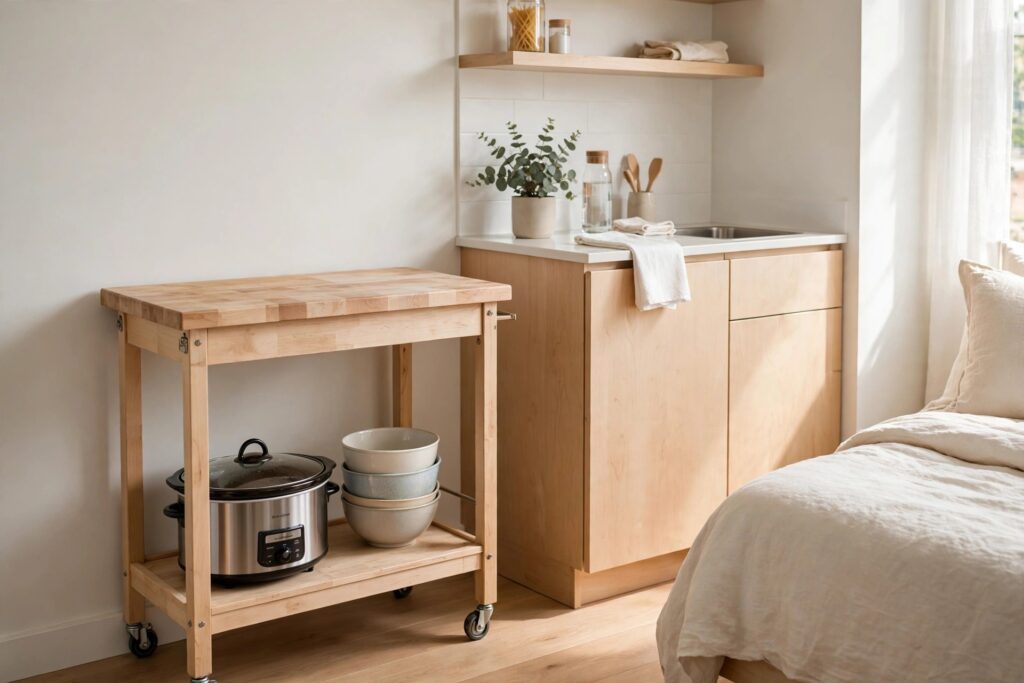
Dinner in a studio often stalls at the same point. The onions are chopped, the pan is hot, and there is nowhere left to set the cutting board down.
A slim rolling cart fixes the stall. Parked flat against the wall or beside the fridge, it takes up almost no floor. Rolled into the middle of the run, it becomes the island the floor plan forgot.
Pick a cart about a foot deep with a solid top you can chop on. Use the lower shelf for the slow cooker and mixing bowls, and choose casters that lock, because a cart that drifts mid-chop helps nobody.
Measure the gap before you buy, and the cart will earn its parking spot every single day of the week.
Lay a Board Over the Sink and Chop on Top of It
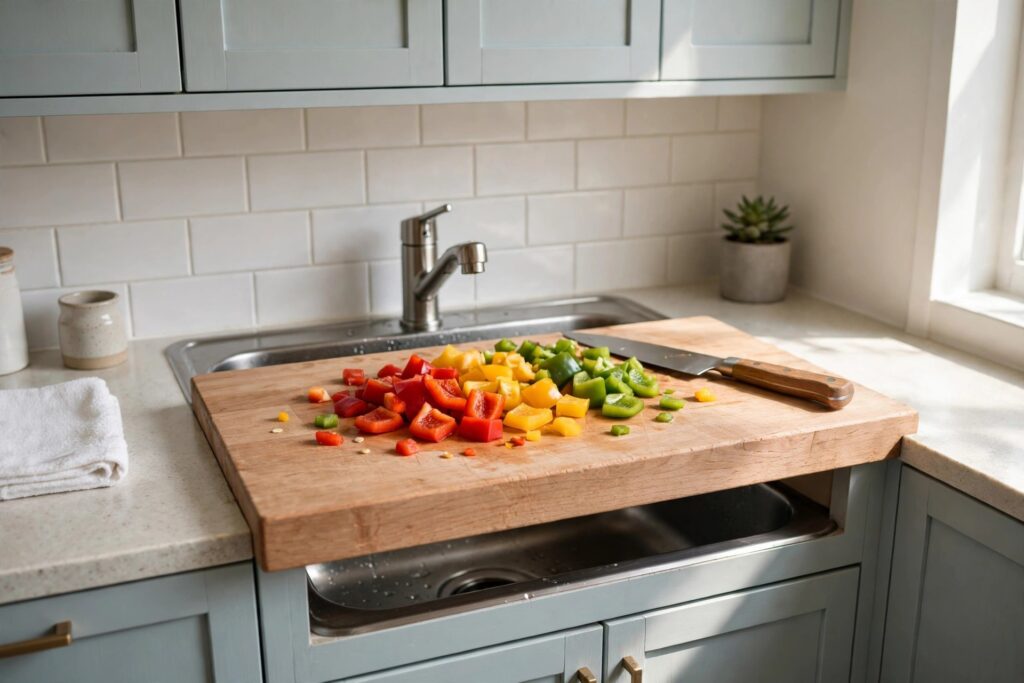
Measure the sink from front to back, then buy a thick board that rests on both rims with an inch to spare on each side. Beech and bamboo both handle daily knife work without splitting.
Set the board over the basin and the sink turns into prep space the counter never had. Scraps sweep straight down into the basin, and the board slides aside in one move when you need the tap.
Wash it, dry it standing upright, and rub in a little food-safe oil once a month. Stored on its edge behind the faucet, the board takes up less room than a dinner plate on the counter.
One board, cut to fit your sink, quietly does the job of a second counter you will never have.
Fold a Wall Table Down for Breakfast, Then Fold It Flat Again
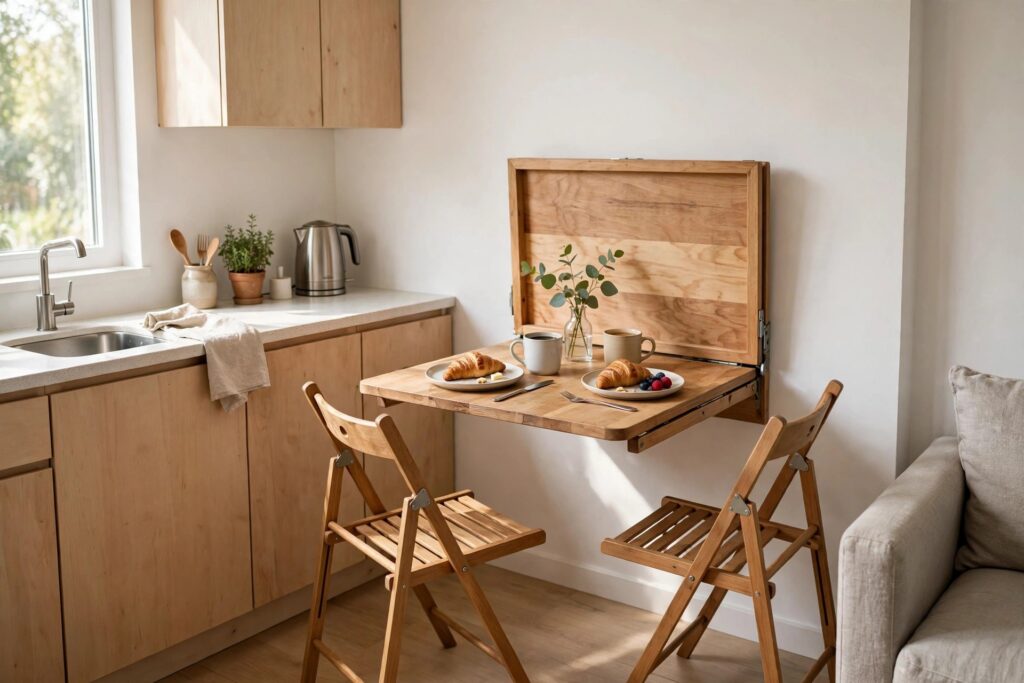
Saturday morning, coffee is poured, the table folds down from the wall, and two people eat breakfast at a real table instead of the edge of the bed or the arm of the sofa.
A hinged wall table mounts under a window or on the wall facing the kitchen run. Open, it seats two in comfort. Closed, it sits a few inches proud of the wall and gives the floor back.
The same surface works as overflow prep when the counter fills up during a bigger cook. Keep two folding chairs on hooks beside it, and the whole dining setup appears or vanishes in under a minute.
Breakfast at a table, however small, is the moment the studio stops feeling like one room with a bed in it.
Move Knives and Tools Onto the Wall and Keep the Counter Clear
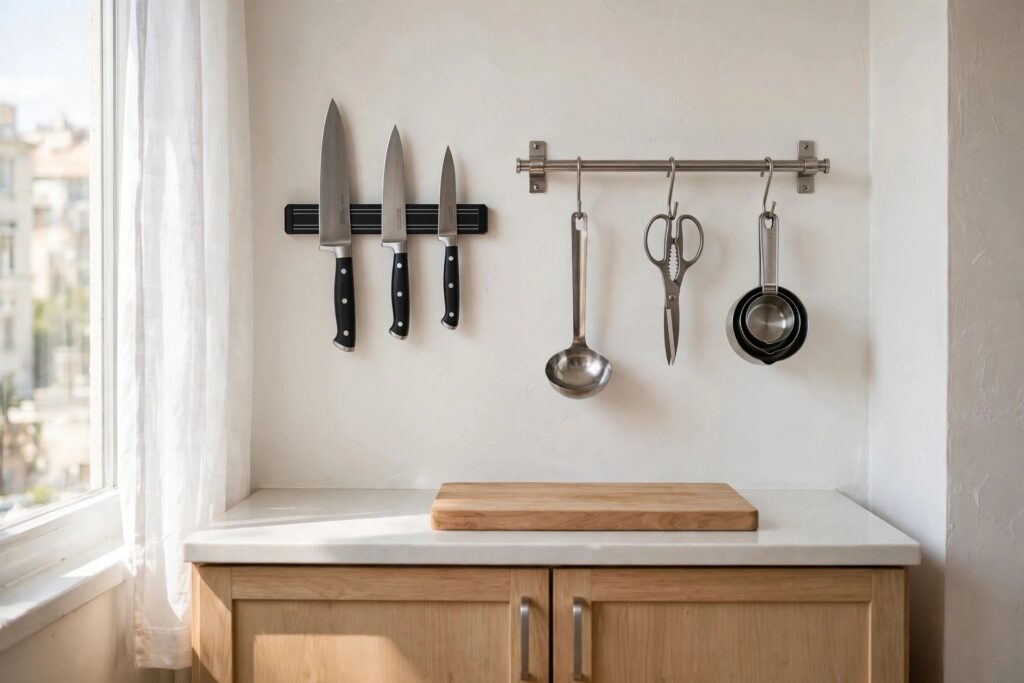
Every inch of a studio counter is prep space, and a knife block spends six of those inches doing a job the wall can do better. A magnetic strip holds the knives flat, visible, and off the work surface.
Mount the strip within easy reach of your board, clear of the sink’s splash zone. Beside it, a simple rail with hooks takes the ladle, scissors, tongs, and measuring cups that crowd most drawers.
The habit pays off at cleanup, too. Tools go back on the wall one-handed while the other hand holds the pan, and the counter wipes down in a single pass with nothing to lift out of the way.
Start with the strip and one rail, then add hooks only for tools you reach for every day.
Roll the Dish Rack Over the Sink, Then Roll It Away
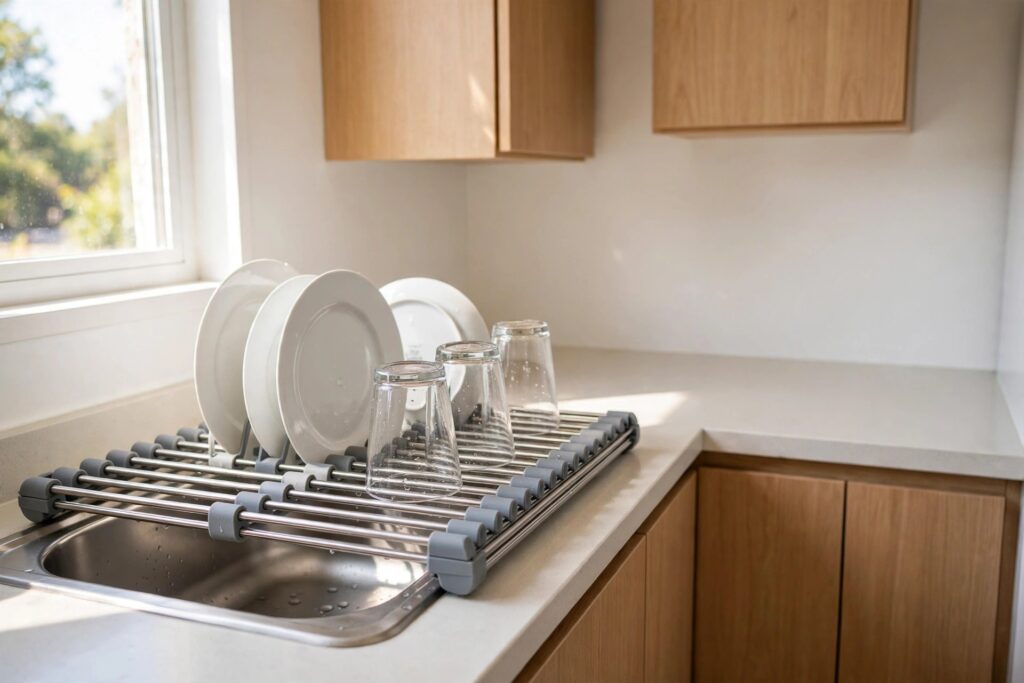
Hold one rule and a studio counter stays workable: nothing earns a permanent spot on it. A fixed dish rack breaks that rule all day, sitting there holding air long after the plates have dried.
A roll-up rack unrolls across the sink instead. Dishes drip straight into the basin, glasses dry upside down between the rods, and a hot pan can land on it straight from the cooktop without scorching anything.
When the last plate goes away, the rack rolls into a bundle the size of a rolling pin and drops into a drawer. The counter returns to full length, ready for the next meal.
It is a small purchase that hands you back counter space at every single wash, every single day.
Stand a Low Bookcase Between the Kitchen and the Bed
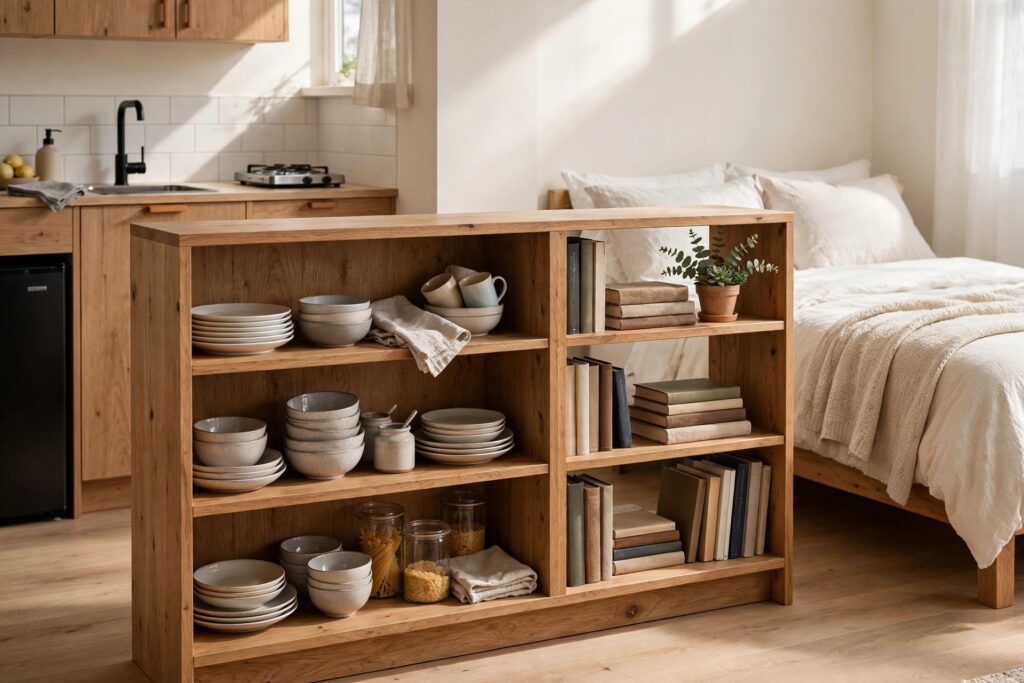
From the bed, the eye lands on stacked bowls, a row of cookbooks, and one small plant. The kitchen is right there, but the first thing the room shows you is a bookcase, not a sink.
A waist-high open bookcase draws the border without blocking light or air. Everyday dishes and dry goods face the kitchen side, while books, a lamp, and the plant face the sleeping side of the room.
Keep the top clear, or use it for one tray that moves between zones. Leave a clear walkway at one end, and pick a unit with a finished back so both sides look intentional.
A divider that stores dishes one side and books the other never feels like wasted floor, because it is not.
Draw the Kitchen Border With a Runner on the Floor
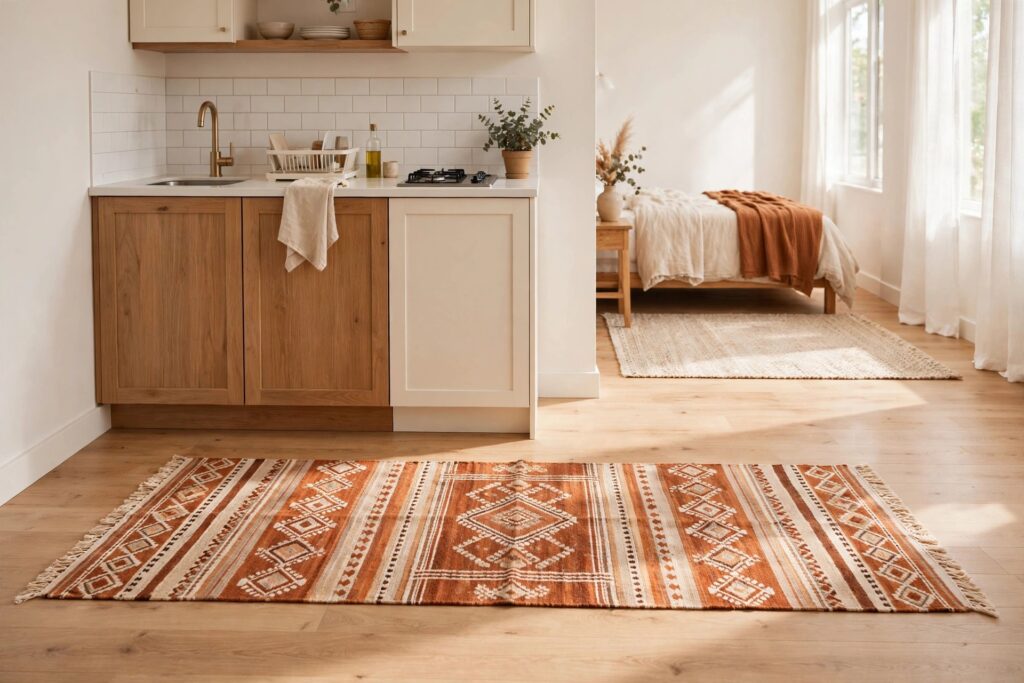
A runner sounds like pure decoration until you have lived with one in a studio. Stand on it and you are in the kitchen. Step off it and you are home for the evening.
Lay the runner the full length of the cabinet run, about two feet wide. It catches the drips and crumbs that land where you stand most, and it gives tired feet a softer spot during a long cook.
Choose a low, washable weave in a pattern with some depth to it. A darker ground hides the odd crumb between washes, and a non-slip pad underneath keeps the border from wandering across the floor.
Once the border is on the floor, guests read the room at once, and the kitchen stops apologizing for existing.
Quit Burying Food in Deep Cabinets and Go Tall and Shallow
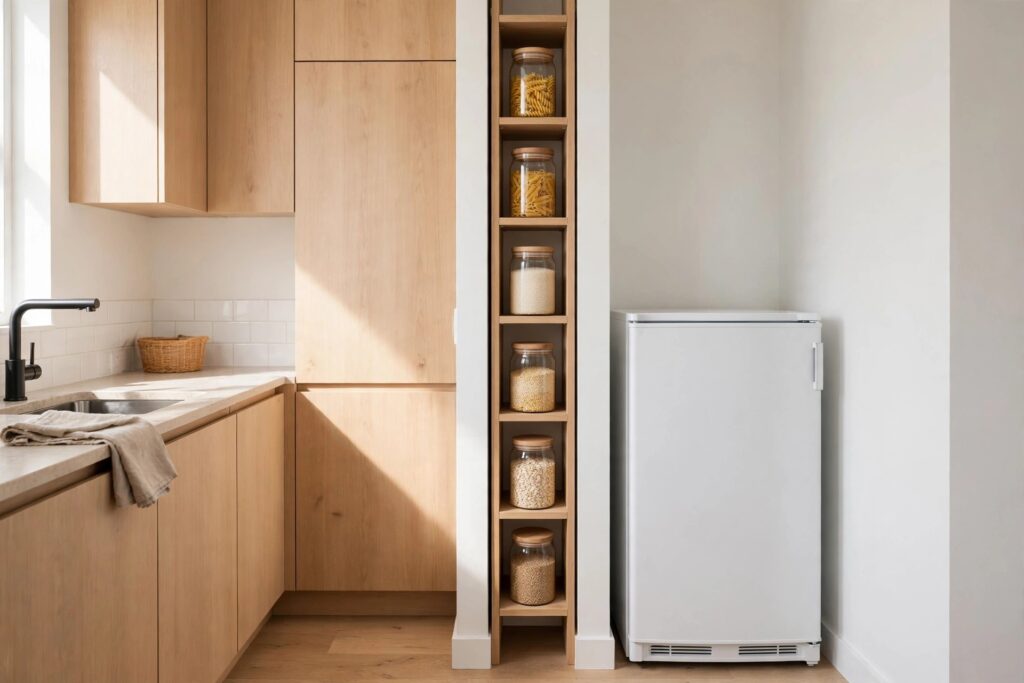
The classic studio mistake is treating a deep base cabinet as a pantry. Cans vanish into the dark back row, expire quietly, and get bought twice while the front row does all the work alone.
A tall tower, ten to twelve inches deep, fits the odd gap beside most fridges. Set one jar or can per spot, and the whole food store reads at a glance with nothing hidden behind anything else.
Decant pasta, rice, and oats into tall jars at the front of each shelf, and keep the heaviest tins at waist height. Our full system for kitchen storage in apartments with no pantry covers the cabinet side.
A ten-minute weekly glance down the tower replaces the surprise of finding three open jars of the same spice.
Buy Studio-Scale Appliances, Not Shrunken Full-Size Ones
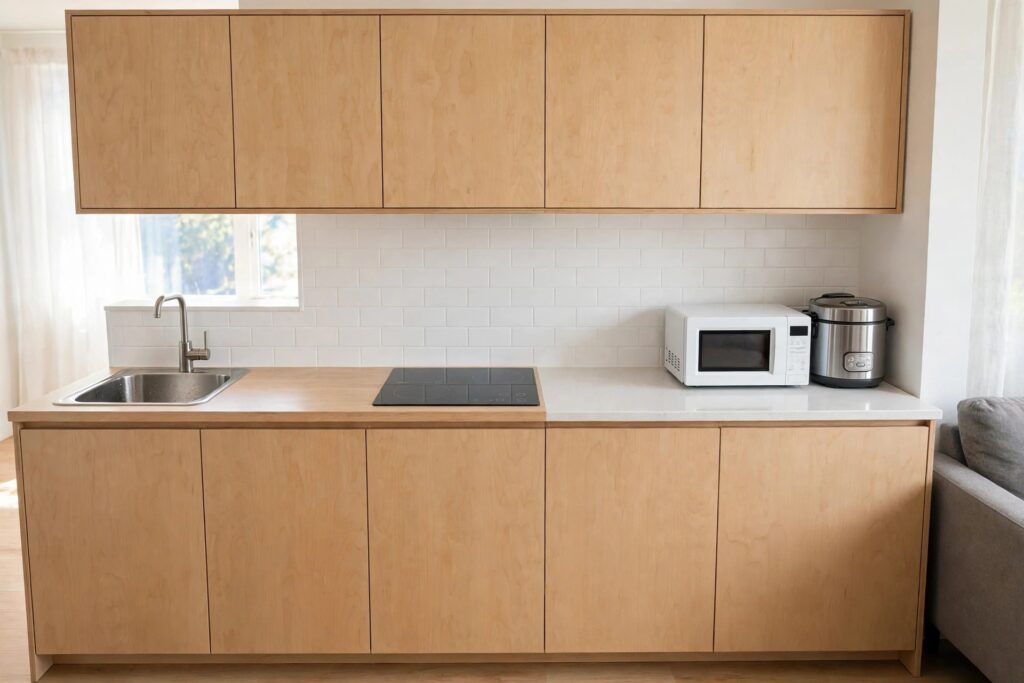
A full-size air fryer on a studio counter is a parked car in a bike lane. It fits, technically, while the room around it stops working. Studio-scale appliances are designed for the counter they will actually live on.
Start with a two-burner induction cooktop, a compact microwave, and one multi-cooker. That single cooker replaces a rice cooker, a slow cooker, and a steamer, which frees a whole cabinet shelf on its own.
Measure the counter depth before anything gets ordered, and protect one clear stretch beside the cooktop at all costs. Appliances should line the back edge in a neat row, not scatter across the middle.
Small machines also sip power and heat the room less, which matters when the sofa sits six feet away.
Nest the Bowls, Stack the Pans, File the Lids

Open the cabinet and count honestly. Most studio cooks reach for the same two pans and three bowls every week, while the rest of the set just takes turns blocking the door and rattling around.
Swap the mixed pile for a nesting set of mixing bowls with lids, and the bowls double as food storage in the fridge. Stack saucepans with a felt pad or cloth between them to save the surfaces.
Stand lids upright in a file-style holder or a slim rack inside the door. When every piece has one nested home, the cabinet closes without a shove and the right pan is in hand in seconds.
Keep a short list on the door of what lives where, and putting groceries away stops being a puzzle.
Fit a Light Strip Under the Cabinets and the Corner Glows on Its Own
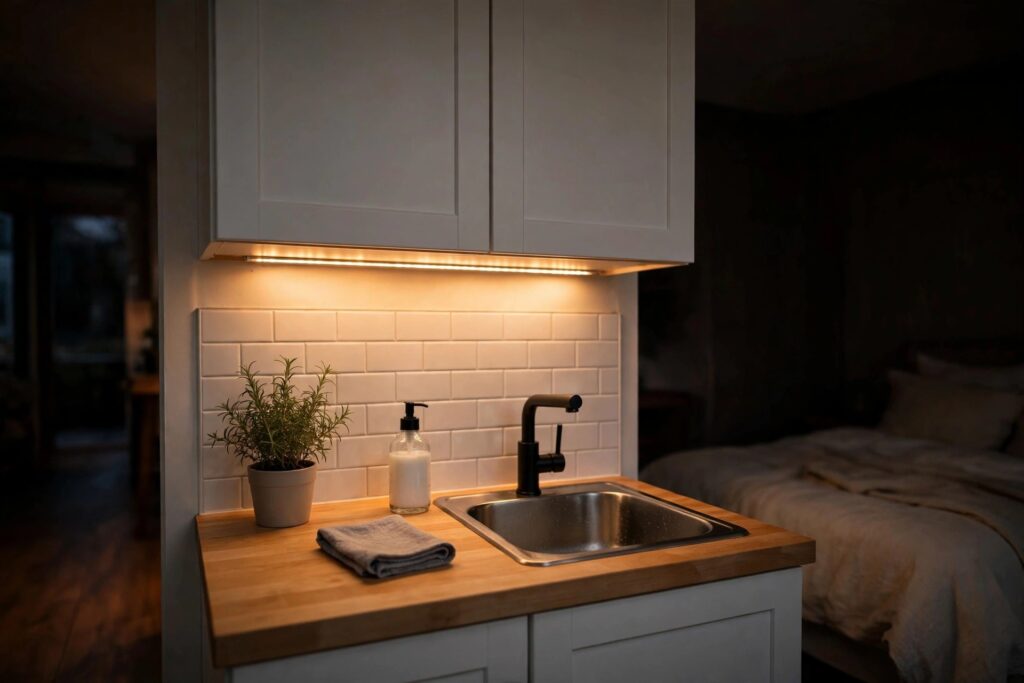
One ceiling bulb leaves a studio counter in shadow, right where the knife work happens. A warm light strip under the upper cabinets puts the light on the boards and pans instead of on your shoulders.
The strip does a second job after dinner. Left on low, it becomes the soft night light for the whole room, gentle enough to read by on the sofa and kind to sleep a few feet away.
Plug-in and battery strips both work, and a motion-sensor model means no switch hunting with wet hands. Pick a warm white bulb color, so the kitchen corner feels lit rather than inspected.
Guests usually notice the glow before the strip itself, which is exactly how task lighting should behave.
Keep Open Storage in One Family of Jars So It Reads as Decor

From the sofa, an open shelf tells the truth about a studio. Mixed boxes and bags read as clutter from six feet away, even when every single item on the shelf is sitting in its place.
Pour the daily staples into one family of containers, clear glass with wood lids or matte canisters in a single color. Coffee, oats, and pasta at the front earn their view; odd packets do not.
Give the odd-shaped leftovers one closed basket at the end of the shelf. The shelf then reads as one calm row from the bed, and guests rarely guess it is also the pantry.
When a jar empties, wash it and refill it the same day, and the row never loses its calm.
Use the Inside of Every Cabinet Door
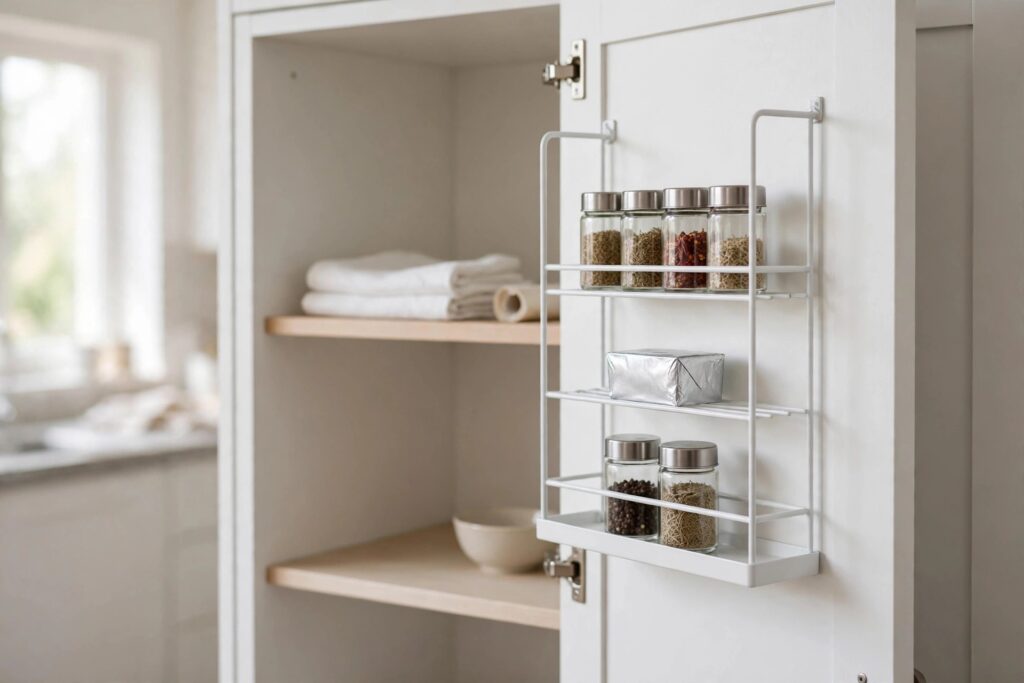
Spices migrate to whichever corner has space, foil hides behind the pans, and the front of each shelf stays half empty. In a studio, that wasted door space adds up to a whole missing cabinet.
Slim over-door racks claim it back. Spices, wraps, and lids line the inside of the doors in single rows, each one visible the moment the door opens, each one off the shelf for good.
Check the gap between door and shelf before ordering, and keep racks clear of shelf edges. Since most studios are rentals, pair these no-screw fixes with our small kitchen ideas for renters for more lease-safe changes.
Do the same trick on the bathroom cabinet door for toiletries, and the studio gains storage twice from one idea.
Keep Breakfast Together on One Tray in One Corner
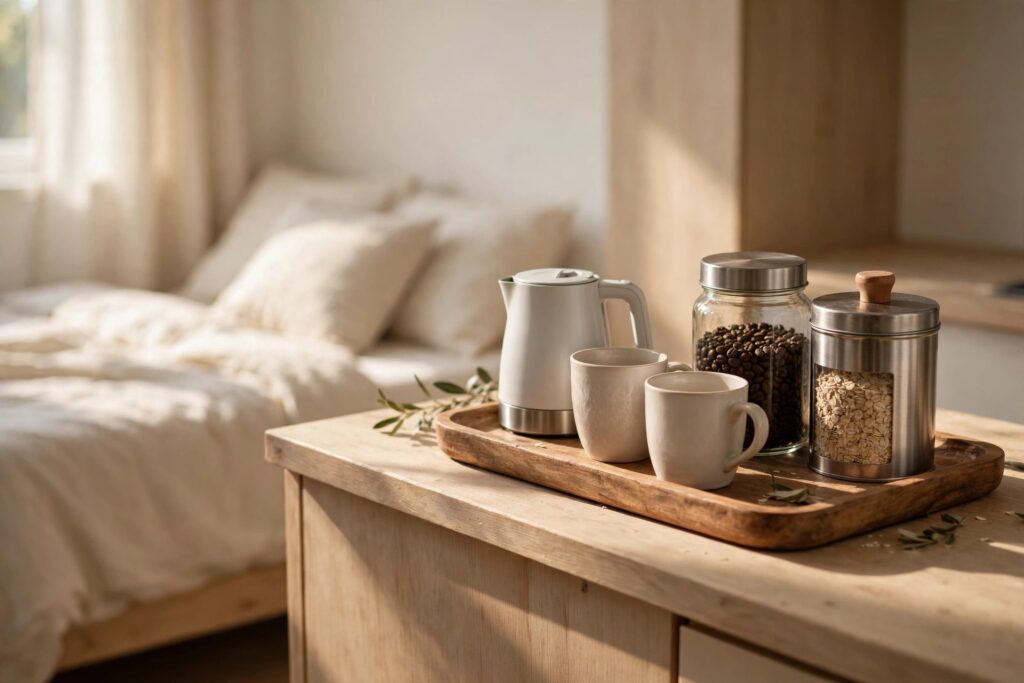
Mornings run smoother when breakfast lives in one spot. Kettle, mugs, coffee, and oats on a single tray at the end of the run means the day starts without opening four cabinets in a half-awake search.
The tray also draws a hard line around the clutter. Everything earns its place on the tray or it does not live on the counter, and crumbs stay on one washable surface instead of the whole run.
Best of all, the whole station lifts away in one move when a recipe needs the full counter. For a larger setup, our small kitchen coffee station ideas for apartments show how far one corner stretches.
On slow Sundays the tray travels to the sofa or the bed, and breakfast in bed needs no extra furniture.
Let the Kitchen Blend Into the Room When Dinner Ends
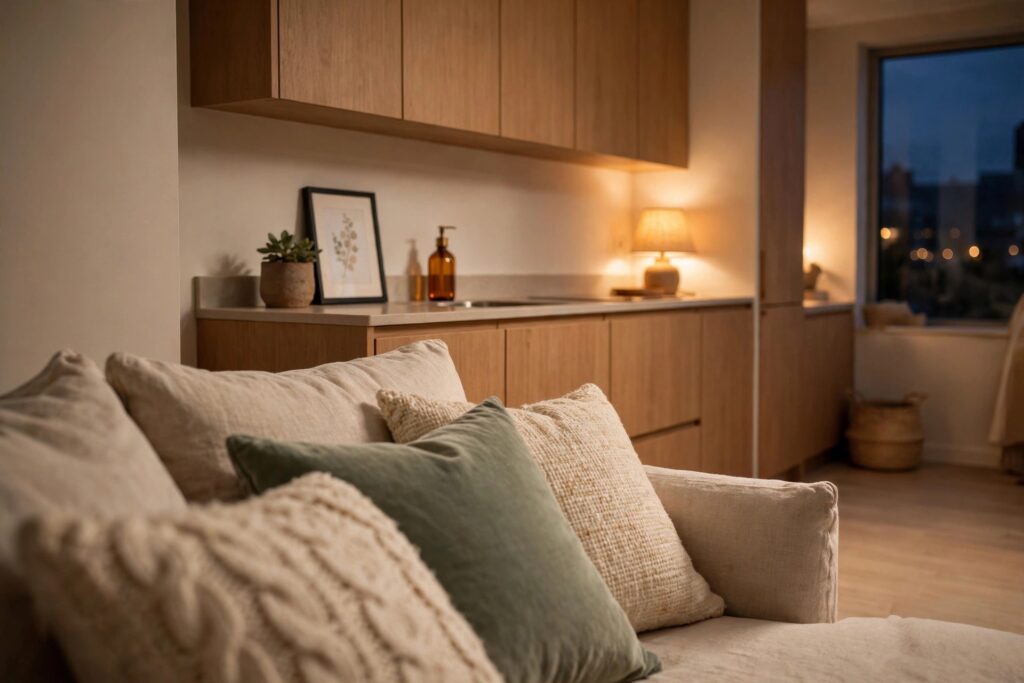
The myth says a kitchen should look like a kitchen at all hours. In a studio, that means falling asleep facing a dish rack and waking up to the cooktop, which wears thin fast.
Close every door and drawer, and the run reads as a sideboard. A small plant, one framed print, and a lamp at the counter’s end borrow the language of the living side and soften the whole wall.
Swap the branded dish soap bottle for a plain pump that matches the faucet, and hide sponges inside the sink. Our small condo kitchen ideas use the same blend-in rules for open-plan homes.
The room exhales, dinner is done, and nothing about the corner announces that a kitchen lives there at all.
None of this asks for a bigger home. Zone the floor, work the walls and doors, and give every hard-working piece a second job, and one room can cook dinner and still settle down for the night.
Start with the single change your evenings will feel first, then add one idea a week. Small steps suit tiny kitchen ideas for studio apartment living, because each one has to earn its place in the room.
Save this list to your small kitchen board for later, and tick the ideas off one by one as your studio settles into its rhythm.


