

15 Kitchen Storage Ideas for Apartments With No Pantry
No pantry sounds like a small detail until you actually try to cook. Bags of pasta slide off a crowded counter, tins disappear behind cereal boxes, and every meal starts with a hunt. In a small apartment kitchen, the problem is rarely that you own too much food — it is that the room was never given a proper place to put it.
The good news is that a pantry is a function, not a room. A tall shelf, a rolling cart, a cleared cupboard or even a hallway closet can do the same job if it is planned well and kept easy to reach. As with our freestanding kitchen nook ideas, the principle is simple: give everyday things a defined home outside the main cabinets, and the whole kitchen calms down.
Below are fifteen practical ways to create pantry storage where none exists. Start with the guide, choose one main storage zone first, then add the smaller helpers that suit the way you shop and cook. Done in that order, even a tiny kitchen can hold a weekly shop without spilling onto every surface.
This post contains affiliate links. If you buy through them, we may earn a small commission at no extra cost to you. See our Affiliate Disclosure.
How to Plan Pantry-Free Kitchen Storage, Step by Step
First, empty one area completely and sort what you actually store: dry staples, tins and jars, oils and spices, baking supplies, snacks, and bulky extras like pet food or spare rolls. Group them honestly by how often you use them, not by how you wish you cooked. Daily items need the easiest reach, weekly items can sit higher or deeper, and rare items can leave the kitchen altogether. Measure the spaces you could claim before buying anything — a shelf unit, the top of a cupboard, the back of a door, a spare corner, or a narrow gap beside the fridge. Write the width, depth and height down, because apartment storage succeeds or fails on a few centimetres.
Next, give each group one clear home and one container type. Shelves suit jars and tins you need to see, baskets hide packets, and drawers work best for heavy shapes. Keep an overflow rule: when a shelf or basket is full, something must be used or moved before more comes in. Finish by labelling plainly, dating decanted jars, and leaving a little empty space on purpose — that breathing room stops the system collapsing the first time you come home with full bags.
1. Turn a Freestanding Shelving Unit Into a Pantry Wall
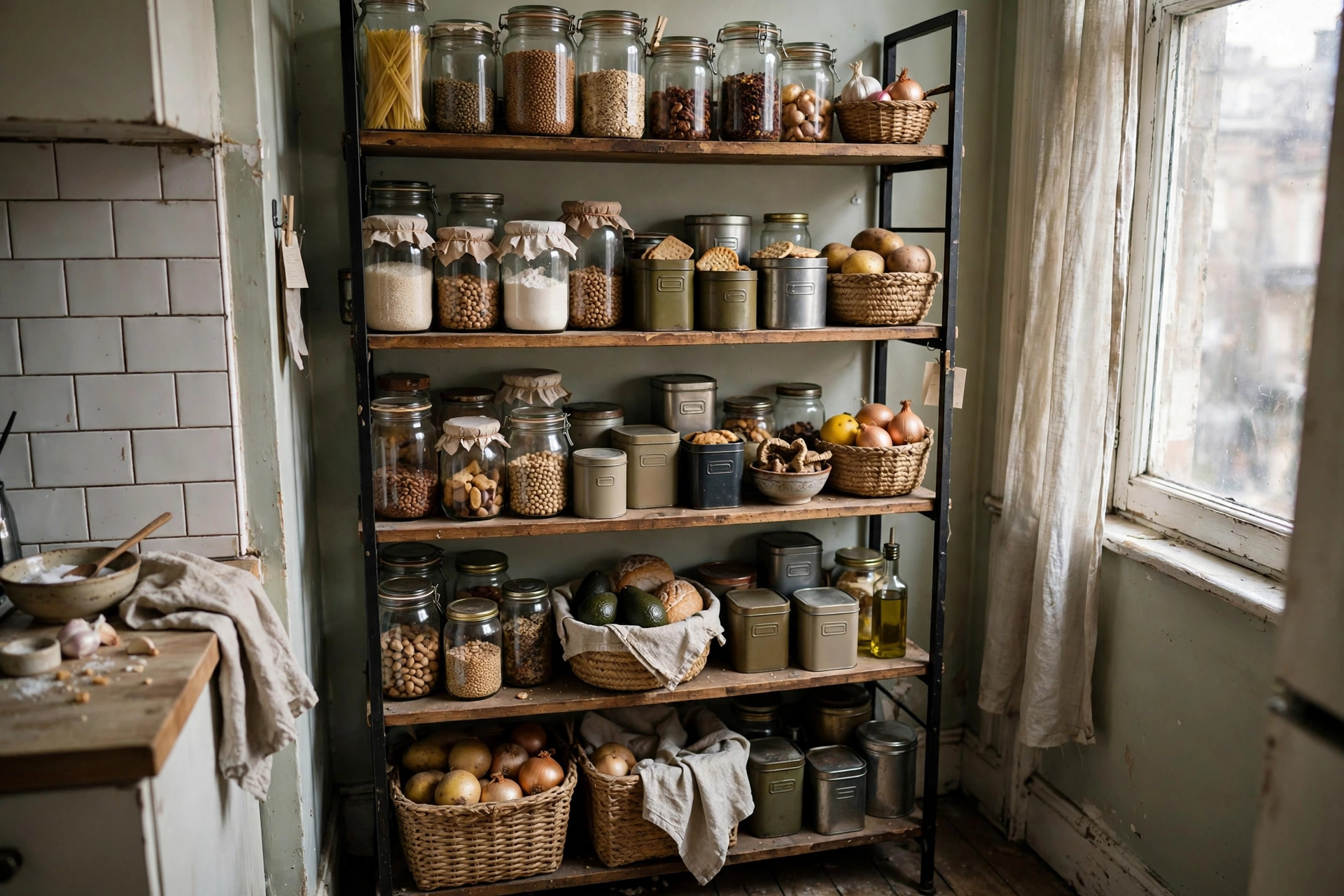
One sturdy freestanding shelving unit against a spare wall is the closest thing to a real pantry most apartments can manage. Choose open shelves deep enough for jars and baskets, and arrange by weight: heavy tins and bottles low, everyday staples at waist to eye level, light and rarely used items on top. Leave the front edge of each shelf visible so nothing hides at the back. Anchor the unit to the wall if your tenancy allows it, and keep a small step nearby if the top shelf becomes part of the system.
2. Use a Tall, Narrow Larder Cabinet in a Slim Gap
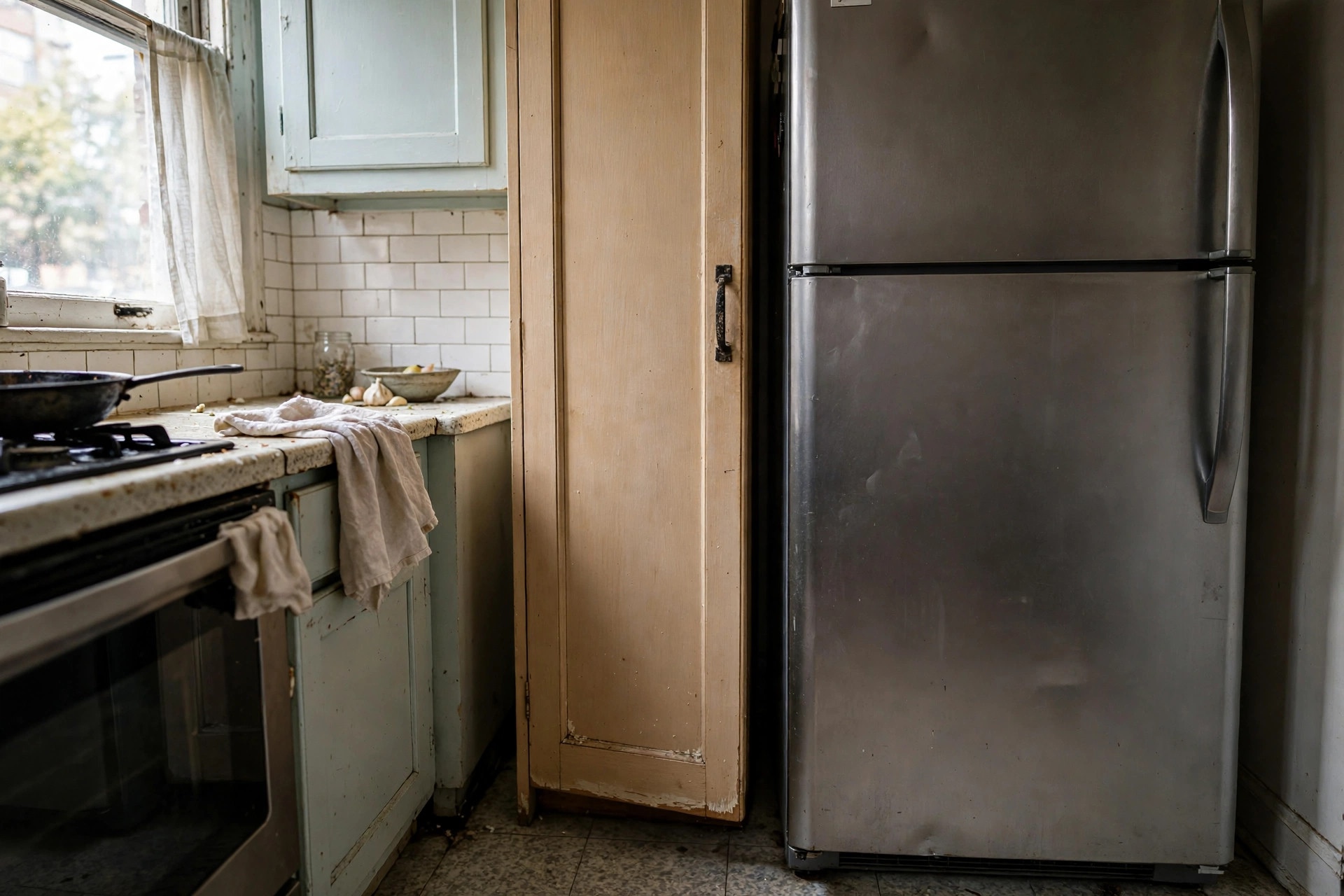
A tall, narrow cabinet turns wasted vertical space into serious storage. Look for slim gaps beside the fridge, at the end of a run of units, or on a short return wall. Pull-out or shallow shelves work especially well here, because in a narrow cabinet everything sits near the front and nothing gets buried. Use it for tall bottles, oils, sauces and baking supplies that are awkward in standard cupboards. Measure the gap twice, allow room for the door to open fully, and check that skirting boards will not stop the cabinet sitting flush.
3. Roll a Cart In as a Mobile Pantry
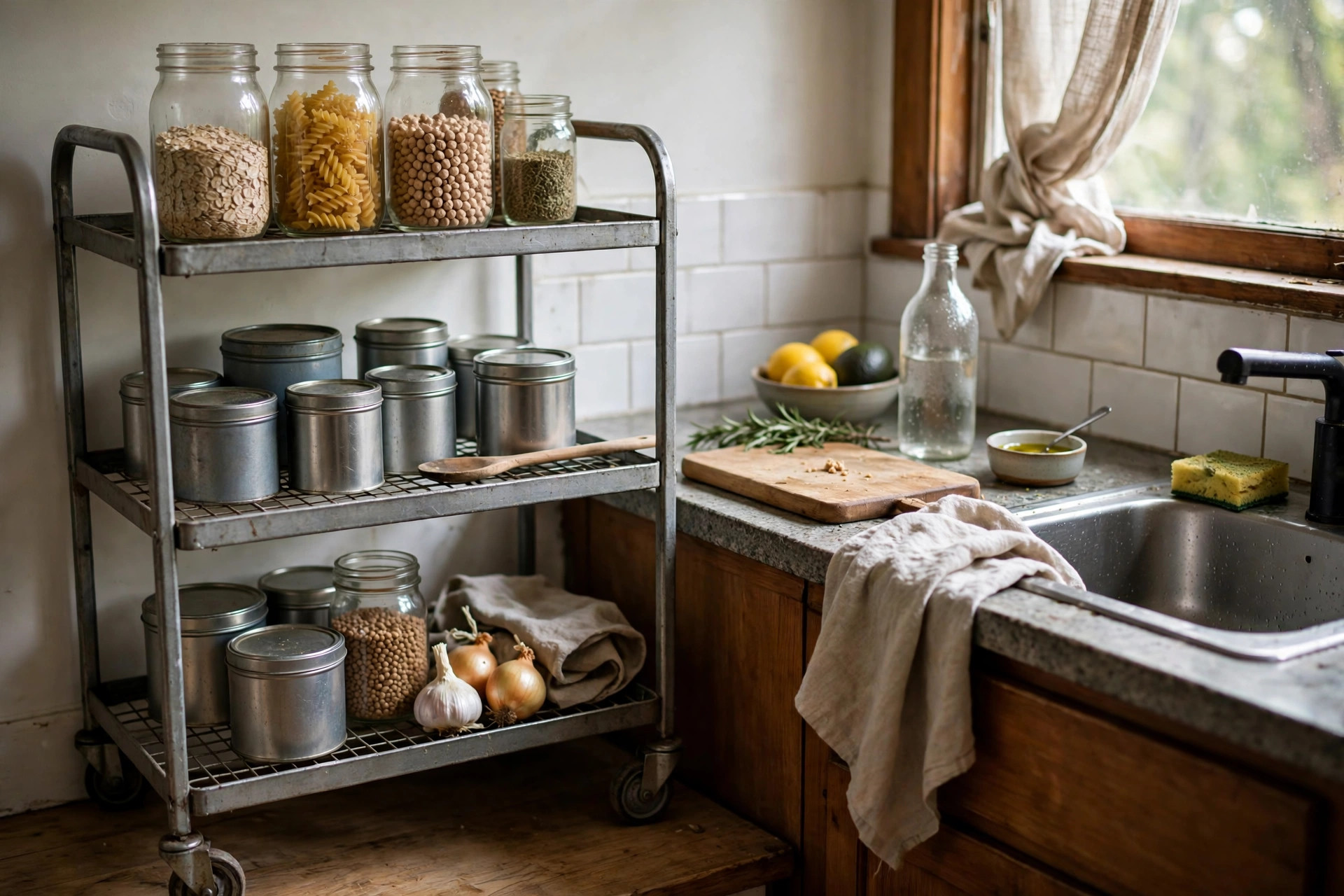
A rolling cart is the renter-friendly pantry: no fixing, no drilling, and it moves when you need the floor space. Park it beside the counter for tins, jars and produce, then wheel it out of the way for cleaning or guests. Choose a cart with raised edges or add small baskets so jars cannot slide when it moves. The same flexible thinking helps elsewhere in a tight home — a cart shelf can even hold bowls and supplies near the spot you use for pet feeding station ideas, keeping pet food sealed and off the kitchen floor.
4. Fit an Over-Door Rack on the Kitchen or Store Cupboard Door
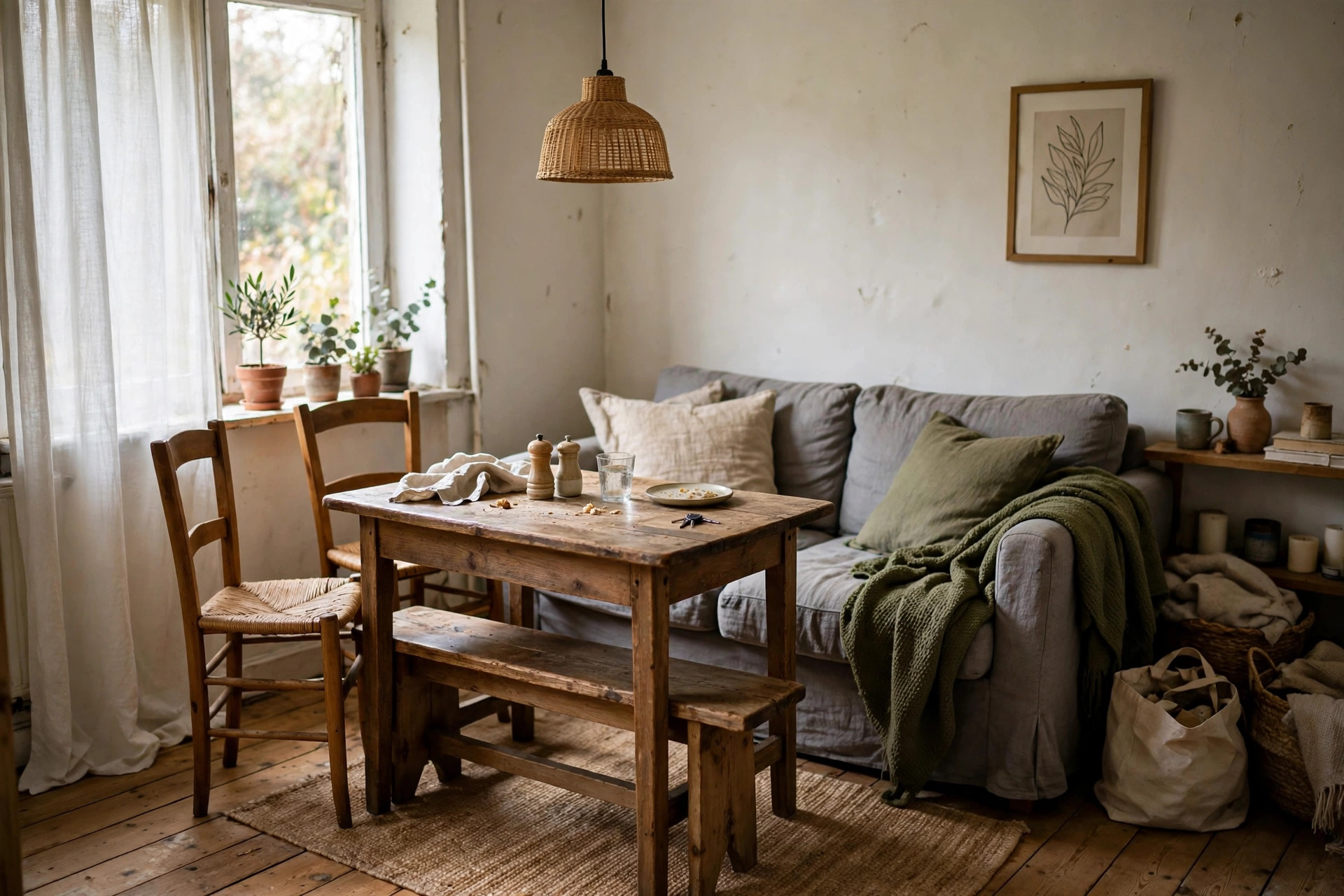
The back of a door is storage you already own. A sturdy over-door rack with shallow baskets holds spice jars, stock cubes, packets, wraps and small bottles that otherwise vanish inside deep cupboards. Keep the heaviest items low on the rack so the door still swings smoothly, and pad the hooks so they do not rattle or mark the paint in a rental. Test the door fully open and closed after fitting, and move anything that knocks against the frame. Used well, this one change frees a surprising amount of cupboard space.
5. Line Open Shelves With Baskets and Glass Jars
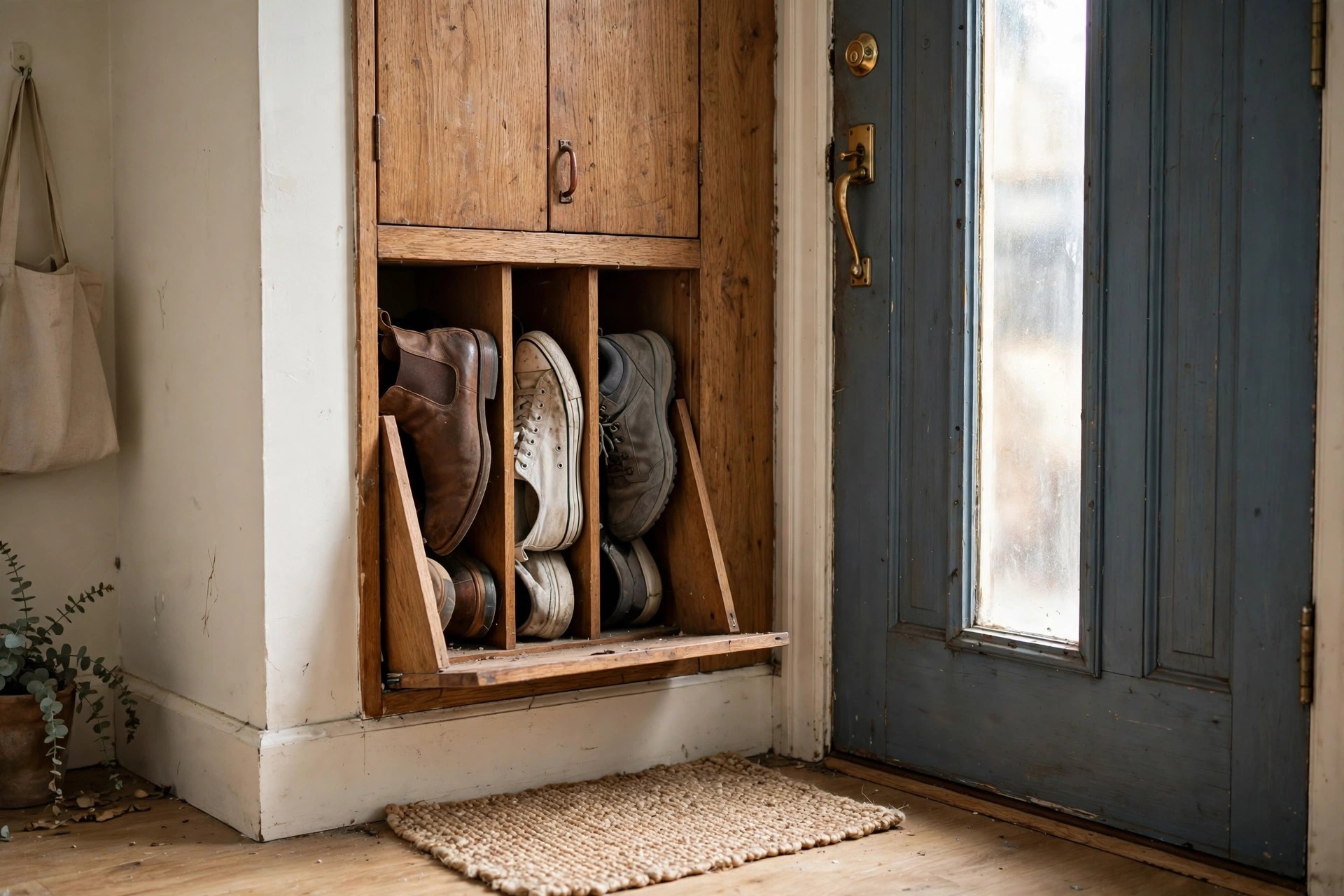
Open shelves only work as a pantry if what sits on them is contained. Decant flour, rice, pasta and lentils into clear glass jars so you can see levels at a glance, and corral packets, onions and spare items into woven or wire baskets. Group by meal or by type, not by what arrived together. Keep one basket deliberately half-empty for new shopping, so arrivals have somewhere to land. Wipe the shelf each week — open storage stays pleasant only with a quick dust.
6. Hang Baskets Under Shelves to Use the Empty Air
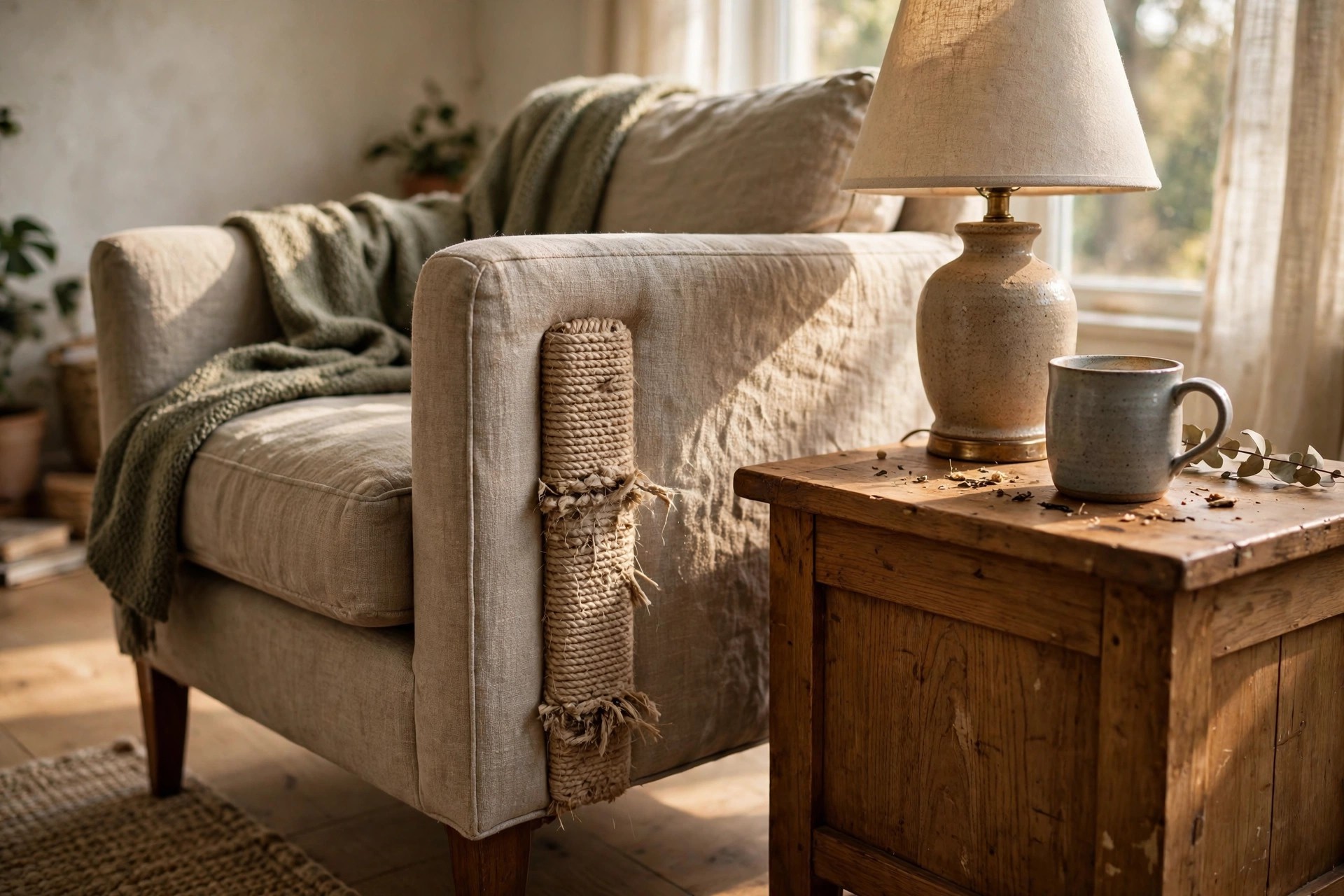
Most cupboards waste the air beneath each shelf. Clip-on under-shelf baskets slide onto the shelf above and create a second, shallow layer for packets, wraps, stock cubes, tea and coffee supplies, or a few pieces of produce. They are especially useful in tall cupboards where jars occupy only the bottom half of the space. Do not overload them — these baskets suit light, flat items best. Fit one, live with it for a week, and only add a second if reaching the items behind it still feels easy.
7. Add Organisers to the Inside of Cabinet Doors
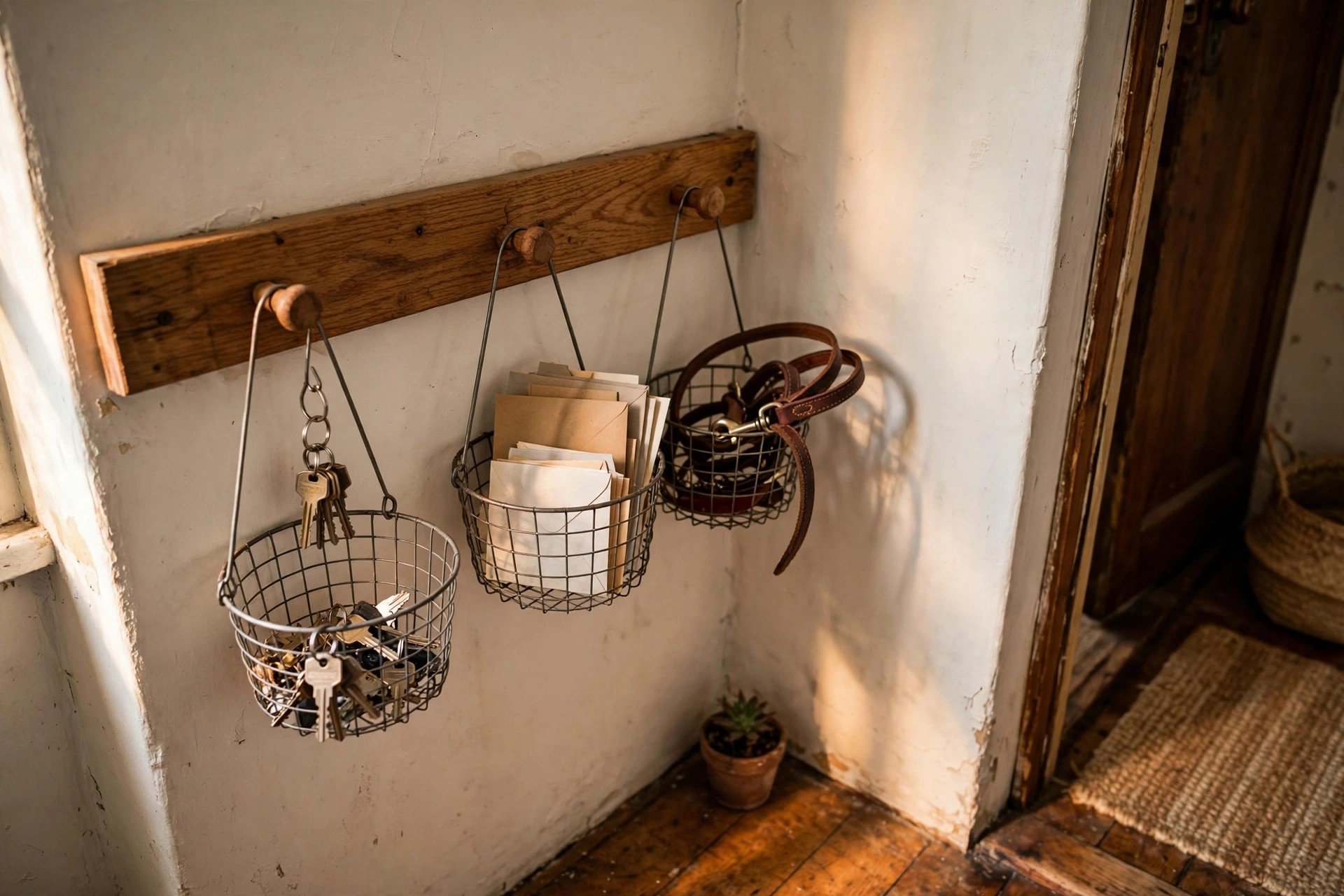
The inside of a cabinet door can hold far more than we give it credit for. Slim racks and clear pockets suit cling film, foil, baking paper, spice packets and small lids — the flat, fiddly things that tangle every drawer. Use adhesive or over-door fittings in a rental, and measure the gap between the door organiser and the shelf edge before fitting, so the door still closes cleanly. Keep only a handful of items here. This spot works because it is quick to scan, and it stops working the moment it becomes crowded.
8. Give Deep Drawers Dividers and a Food Job
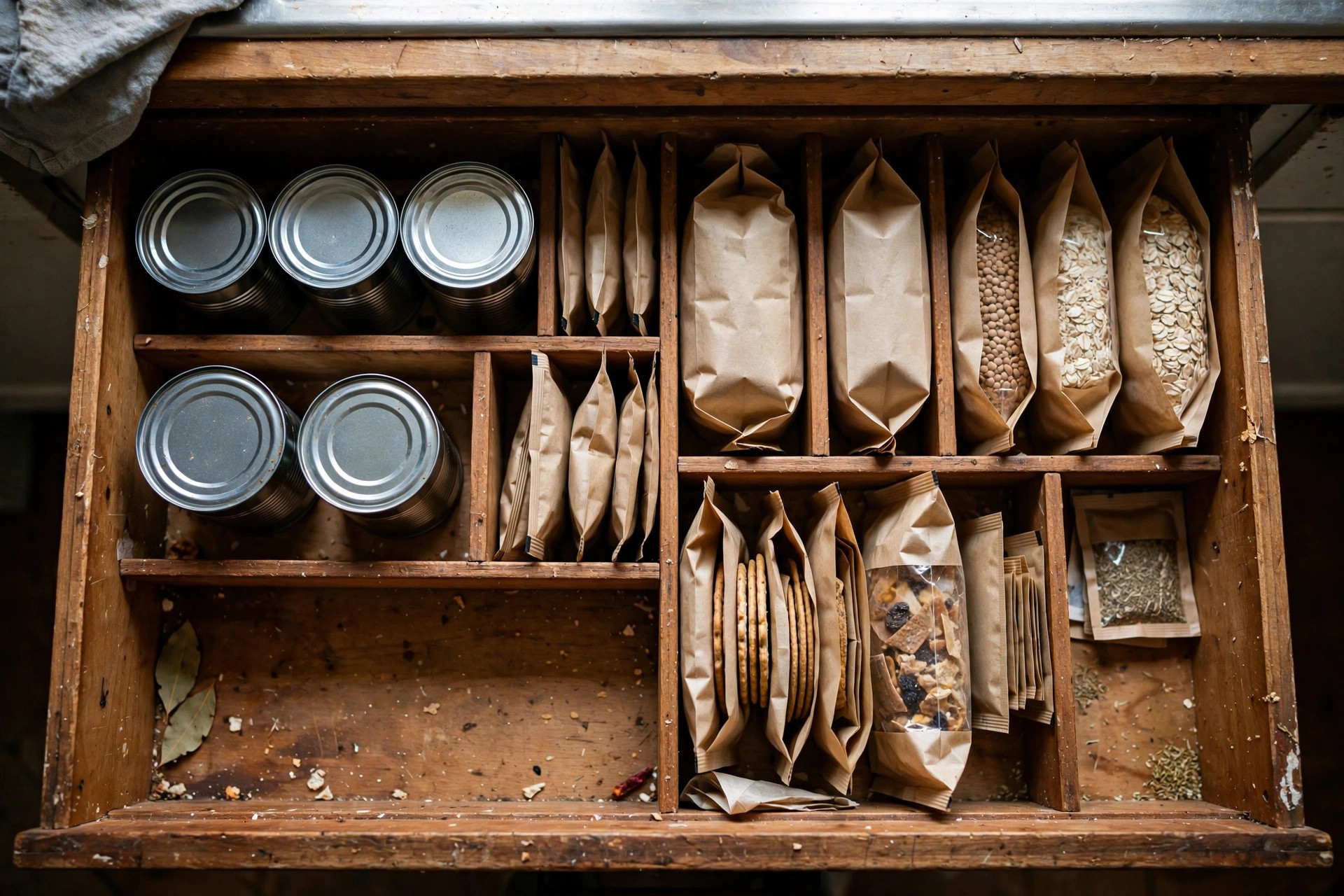
A deep drawer with simple dividers can outperform a cupboard, because you look down on everything instead of reaching behind. Assign one deep drawer entirely to food: tins standing upright so labels face up, packets in a divided section, and a small tray for opened items that need using first. Bamboo or adjustable dividers stop everything sliding into one corner when the drawer opens. Keep heavy items in the lowest drawer, and avoid stacking tins more than two high, or the drawer becomes the same buried problem in a different shape.
9. Convert a Nearby Coat Closet Into a Pantry
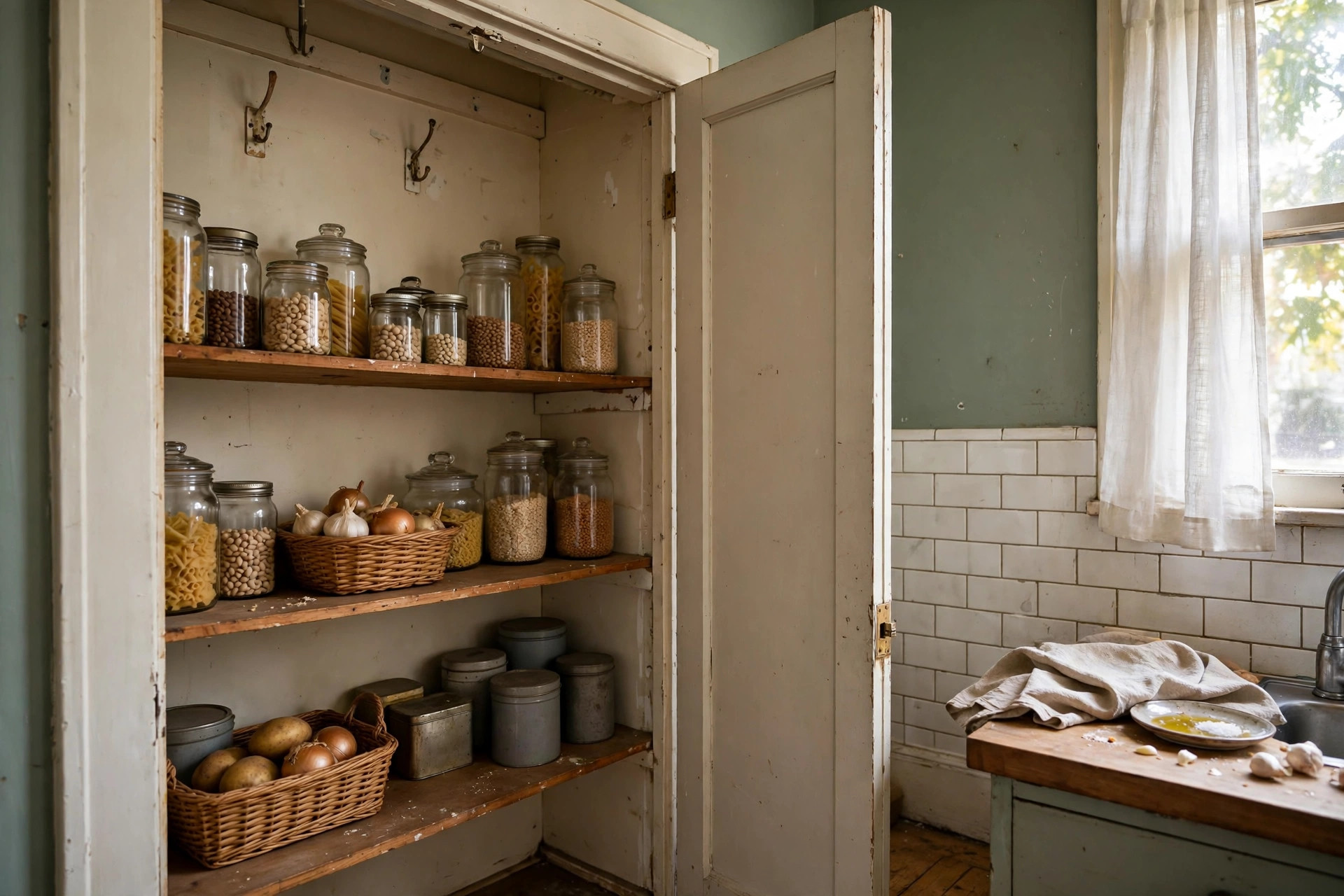
If the kitchen itself has no room left, look just outside it. A hallway coat closet, an under-stairs cupboard or a deep linen press near the kitchen can become an excellent pantry with a few added shelves and baskets. Keep daily cooking items in the kitchen itself, and use the closet for backups, bulk buys, tins and rarely used appliances. A shelf list taped inside the door helps everyone remember what lives there, and a small battery light makes the back of a deep closet usable instead of forgotten.
10. Repurpose a Bookcase as a Pantry
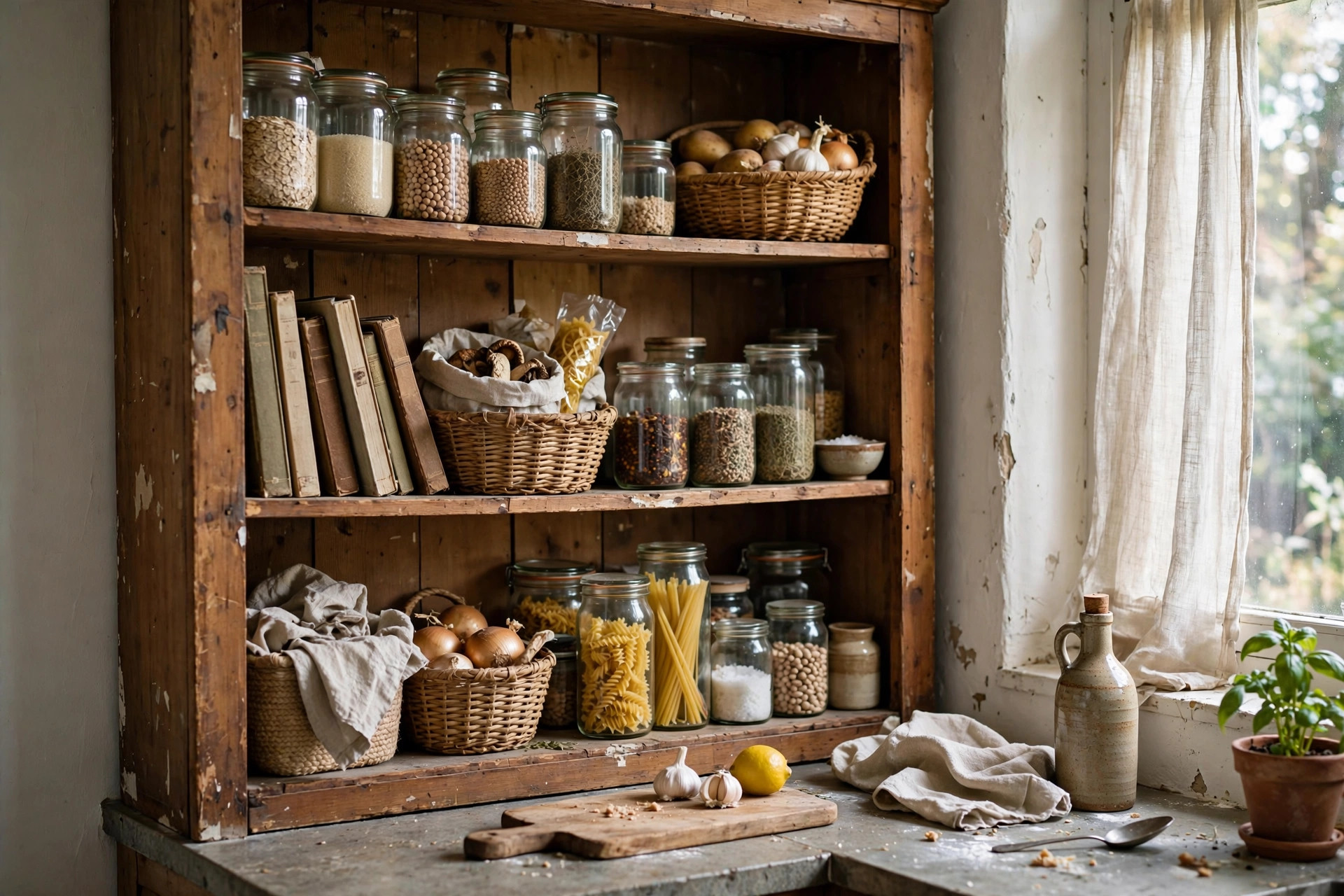
A bookcase is already a pantry in waiting: adjustable shelves, a small footprint and a height that suits jars and baskets perfectly. Place it on a kitchen wall, in a dining corner or along a hallway, and style it calmly so it reads as furniture, not overflow. Bottom shelves suit heavy jars and appliances, middle shelves hold everyday staples, and the top can mix cookbooks with spare baskets. If the bookcase sits beside a small eating area, the effect pairs neatly with relaxed kitchen nook ideas without a table, where storage and seating share one compact corner.
11. Add Tiered Risers and a Tension Rod Inside a Cabinet
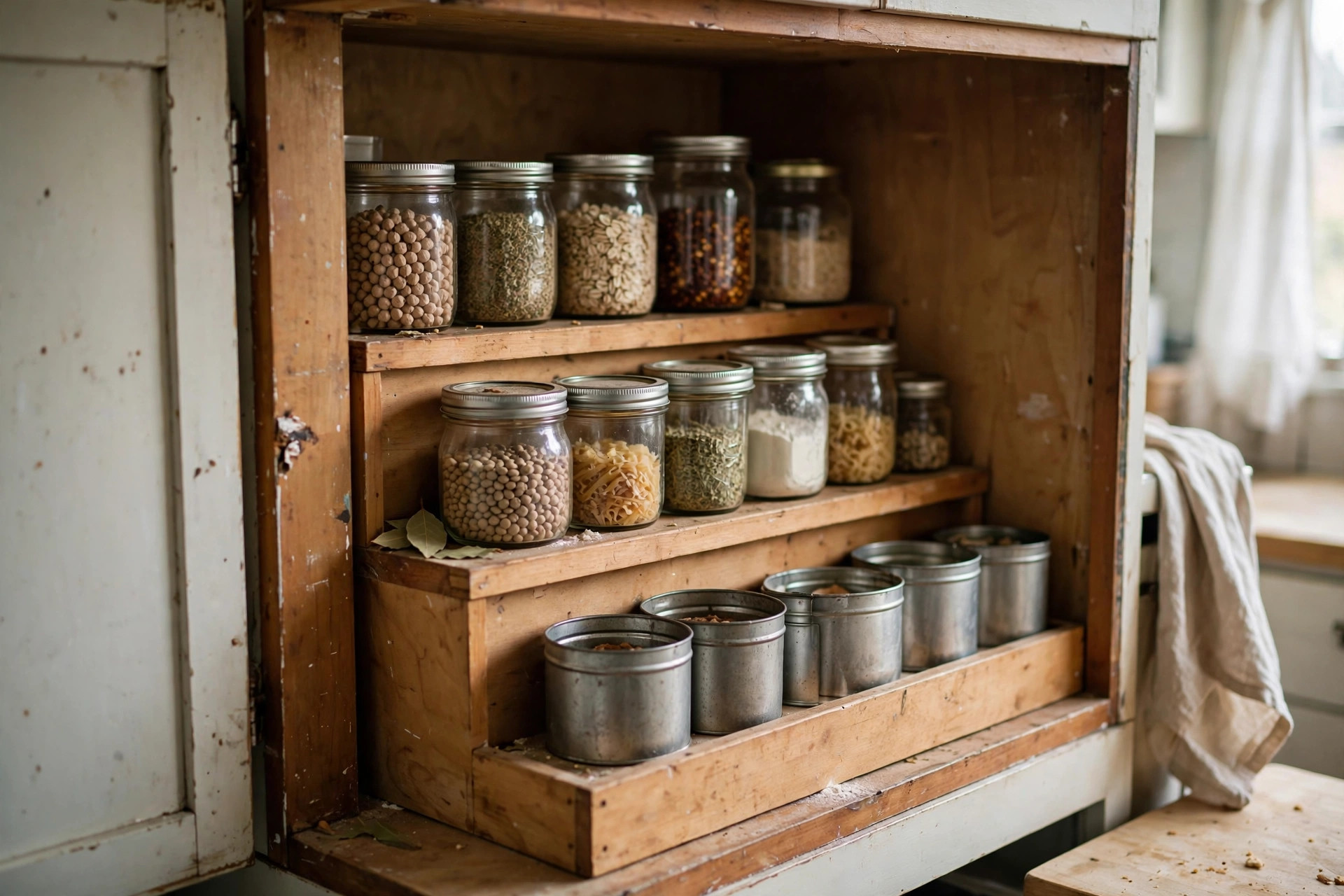
Inside a deep cabinet, tiered risers turn a single flat shelf into stadium seating for tins and jars, so the back row is finally visible. A simple stepped shelf at the back, with shorter items in front, ends the habit of buying duplicates of food you already own. A tension rod fitted near the front can hold baking trays upright, divide a section for packets, or stop lightweight items toppling forward. Measure the cabinet interior, not the door opening, and leave finger room at the front so jars lift out without knocking their neighbours.
12. Make a Magnetic Spice Wall on a Fridge Side or Rail
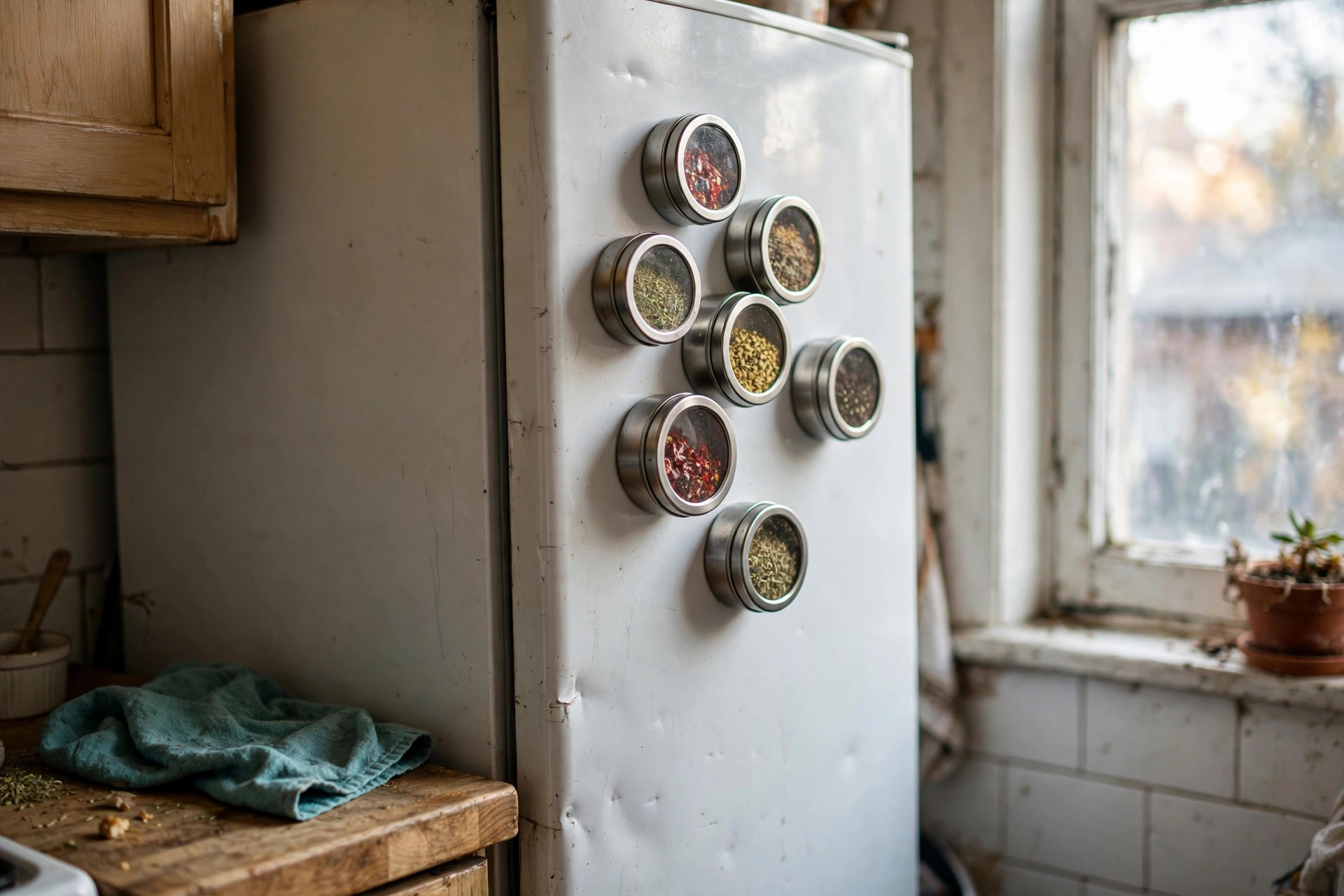
Spices take little space individually and a whole drawer collectively. Small magnetic tins on the side of the fridge, a metal board, or a rail free that drawer entirely and put flavouring within reach of the hob. Label the lids clearly, keep the tins away from direct steam and heat, and group them in an order that matches how you cook — everyday blends nearest, baking spices together. Refill from larger packets stored elsewhere, so the wall set stays small and fresh. A quick monthly wipe stops the tins sticking and keeps the labels readable.
13. Hang a Rail With Hooks for Produce Bags and Tools
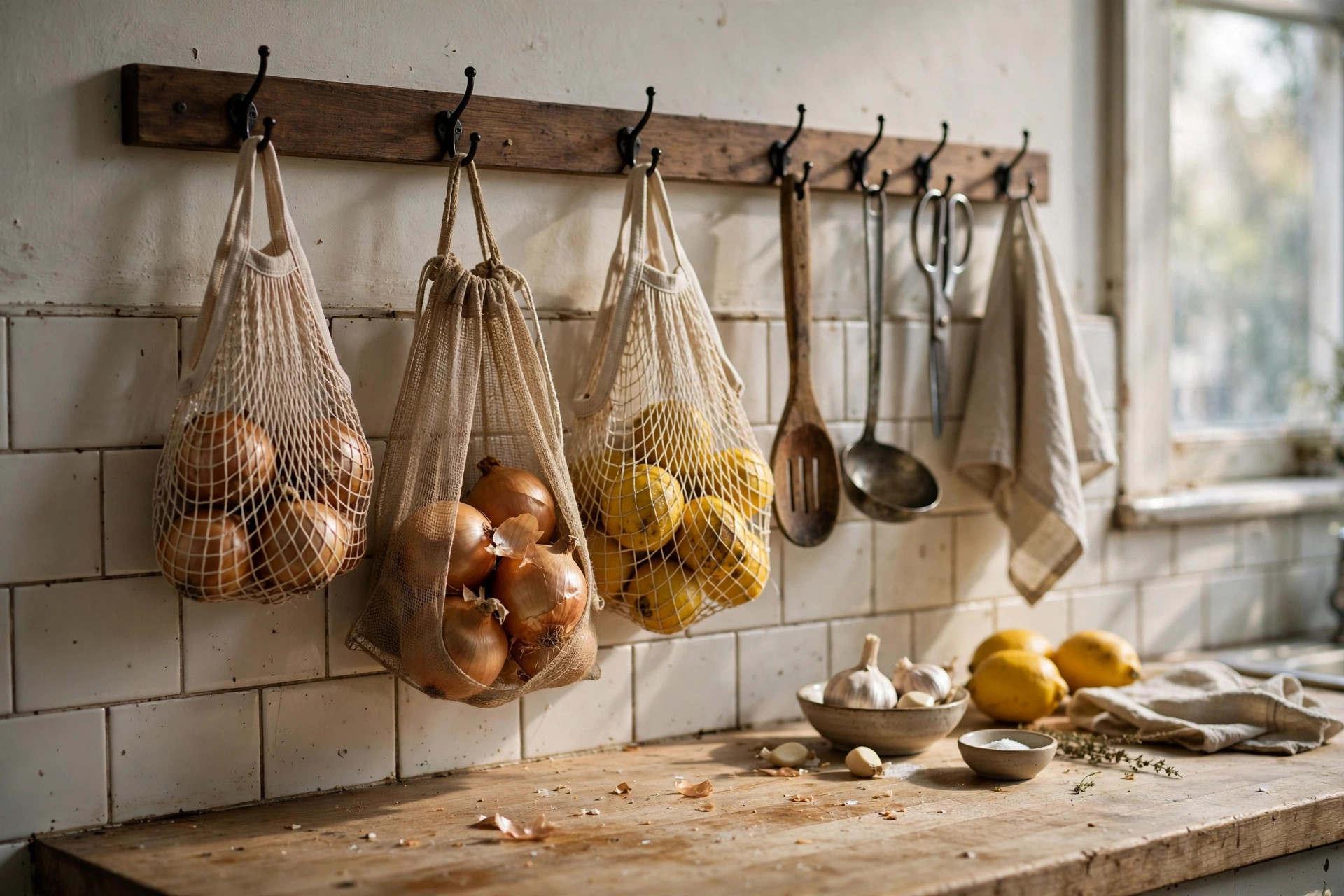
A simple wall rail with hooks uses vertical space that shelves cannot reach. Hang mesh bags of onions, garlic and lemons where air can circulate, add frequently used tools, and keep a small hanging basket for loose items that need a temporary home. Position the rail above a counter or beside the cooker, high enough that bags clear the work surface. This is also a chance to add warmth and texture to a plain rental wall — for moodier inspiration, our dark cottagecore kitchen ideas show how rails and natural materials soften a small, practical room.
14. Stack Crates in a Corner for Bulky Overflow
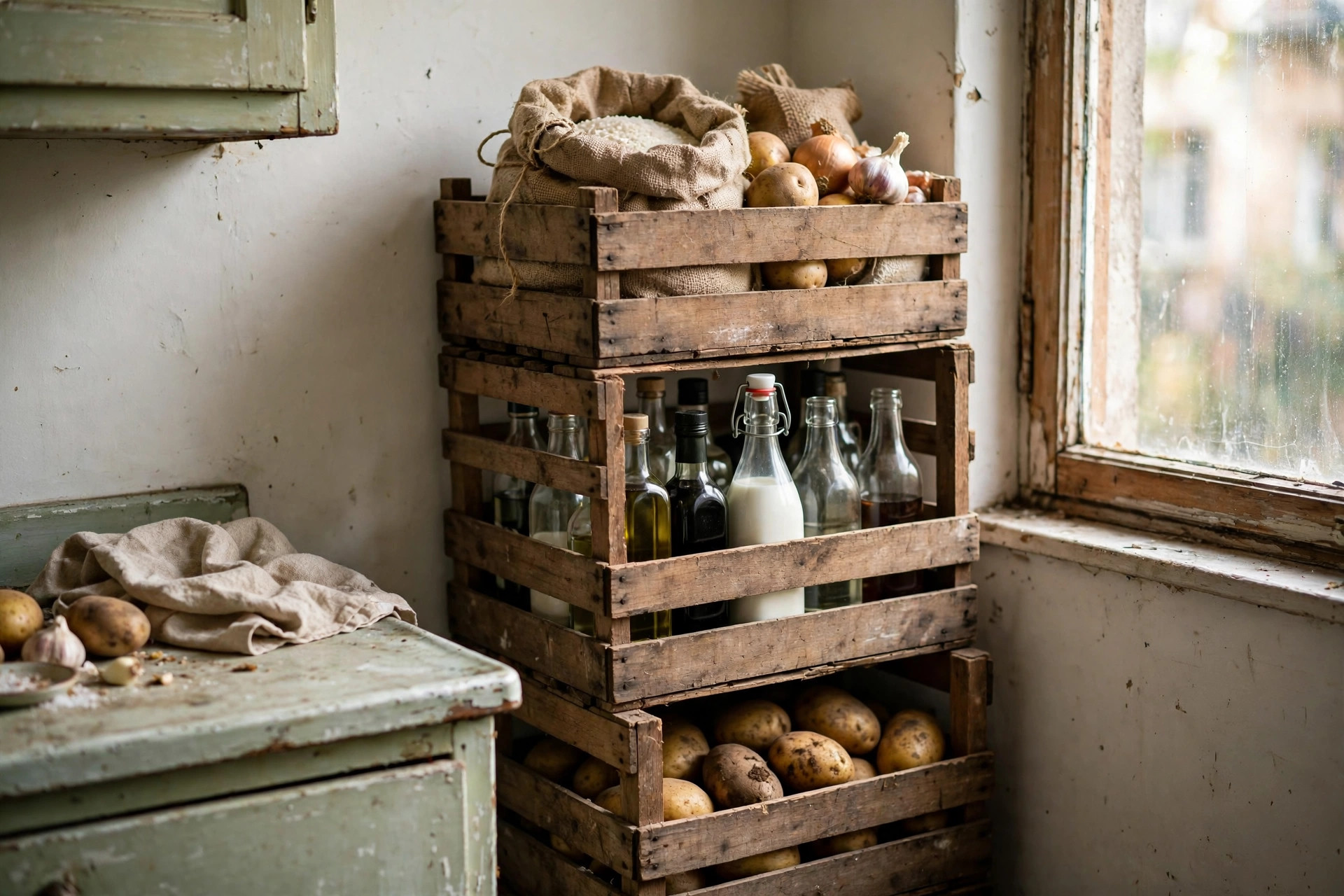
Every kitchen has bulky things that fit nowhere gracefully: potatoes, large bottles, spare drinks, pet food and cleaning backups. Stackable crates in an unused corner contain them honestly. Wooden or sturdy wire crates stack safely, let air move around produce, and can be rearranged when your shopping habits change. Keep the stack low and stable, put the heaviest crate at the bottom, and reserve the top crate for light, grab-and-go items. A crate system also moves easily on moving day, which makes it a sensible first purchase in a short tenancy.
15. Keep a Small, Labelled Canister Set on the Counter
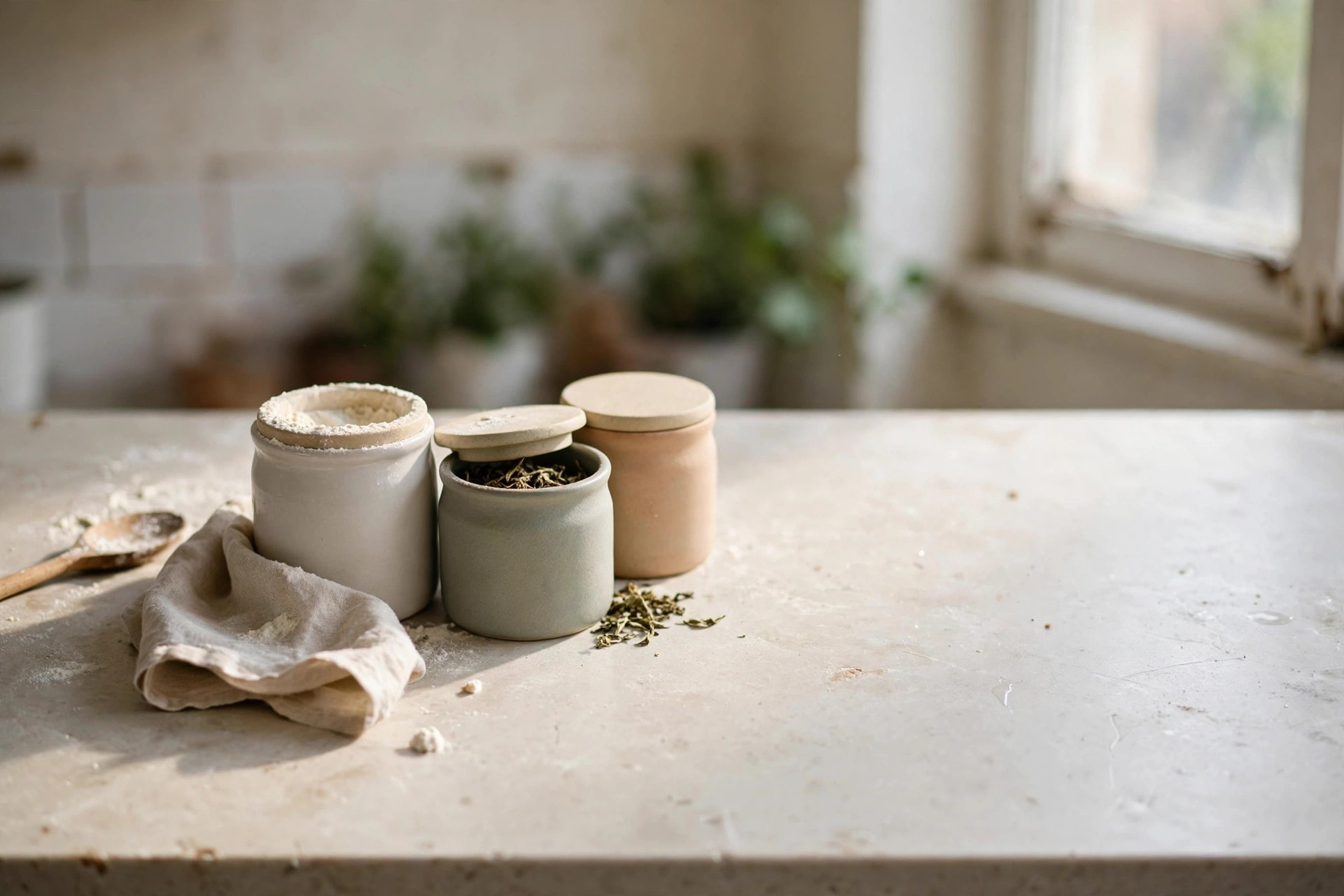
The counter should hold only the food you reach for every single day. A small set of labelled canisters — flour, sugar, tea, coffee, perhaps rice — earns its place because it saves cupboard trips constantly, not because it looks styled. Choose canisters that seal well, fit under your wall cabinets, and match in size so they sit calmly in one short row. Everything else belongs in your main storage zone. This discipline is the same one behind good small kitchen coffee station ideas for apartments: a tiny, clear station for daily drinks, and nothing extra crowding around it.
Common Mistakes to Avoid
1. Buying containers before choosing the storage zone. Pretty jars cannot fix a plan that has nowhere to live. Measure first, assign each food group a home, and only then buy shelves, baskets or canisters that fit that exact space.
2. Hiding food in too many different places. A few tins in a drawer, packets in a hallway and jars above the fridge guarantees forgotten duplicates and stale food. Keep one main pantry zone, one small daily zone, and a short list of anything stored elsewhere.
3. Filling every centimetre you create. A system packed edge to edge on day one has no room for a normal weekly shop. Leave visible empty space in each basket and on each shelf, so putting shopping away stays quick instead of becoming a puzzle.
Frequently Asked Questions
Where should I put food in a kitchen with no pantry?
Create one main zone first: a freestanding shelving unit, a bookcase, a tall narrow cabinet or a nearby closet with added shelves. Keep daily items there at easy reach, and use smaller helpers — door racks, under-shelf baskets and drawer dividers — for spices, wraps and packets.
How do I store food in a rental kitchen without drilling?
Use freestanding shelves, rolling carts, stackable crates, over-door racks and clip-on under-shelf baskets. Inside cupboards, tiered risers and tension rods add structure without fixings. Choose adhesive fittings carefully, test them with light items first, and keep heavier storage on furniture that stands on the floor.
What foods should not go on open shelves?
Keep oils, spices and anything sensitive to light and heat in a cupboard or a shaded spot away from the cooker. Open shelves suit tins, jars of dry staples, pasta, rice and items you use and replace often. Fresh produce belongs in baskets with air flow, not sealed in warm corners.
How do I stop a small pantry area looking cluttered?
Contain everything: jars for dry goods, baskets for packets, and one container type per shelf where you can. Label plainly, group by type, leave a little empty space, and keep the counter limited to a small daily canister set. A quick weekly tidy of one shelf at a time keeps the system calm.
Final Thoughts
A kitchen without a pantry is not a kitchen without storage — it just asks you to claim the storage deliberately. One strong main zone, a few well-chosen helpers, and the habit of leaving a little space spare will hold more food, more calmly, than a room full of improvised piles. Start with the shelf, cart or closet that fits your apartment best, live with it for a few shops, and adjust in small steps. Soon the hunt before every meal disappears.


