
15 Red Granite Kitchen Designs That Bring Bold, Timeless Warmth Home
There’s a reason red granite keeps pulling homeowners back in, even after they’ve paged through a hundred safer, quieter countertop options. It’s not just a color — it’s a mineral fingerprint, millions of years in the making, full of movement, depth, and flecks of mica that catch the light differently every time you walk past. Where quartz offers uniformity, red granite offers character: no two slabs are ever quite the same.
Paired thoughtfully with the right cabinetry, flooring, and metals, red granite can turn a kitchen from merely functional into the most memorable room in the house — warm enough for a rustic farmhouse, sharp enough for a modern industrial loft, and rich enough to anchor a traditional, old-world design. Below are 15 red granite kitchen designs to help you find the direction that fits your space.
1. Imperial Red Granite with Classic White Cabinetry
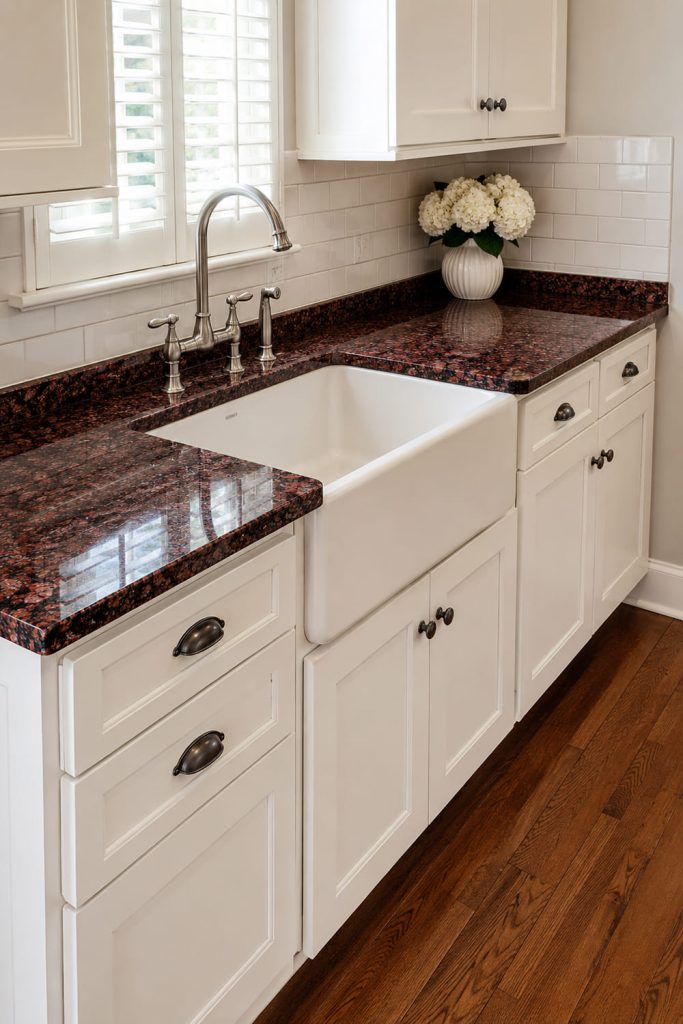
Few pairings feel as timeless as Imperial Red granite against crisp white shaker cabinets. The granite’s deep burgundy base, threaded with black and grey mineral veining, becomes the undeniable star of the room when it isn’t competing with a busy backdrop. This combination works beautifully in traditional and transitional kitchens alike, especially with brushed nickel or oil-rubbed bronze hardware to ground the palette. Add a white subway tile backsplash to keep the sightline clean, then let the countertop do the heavy lifting. It’s a classic-meets-bold look that photographs well and rarely goes out of style, making it a safe bet for resale value.
2. Ruby Red Granite Island
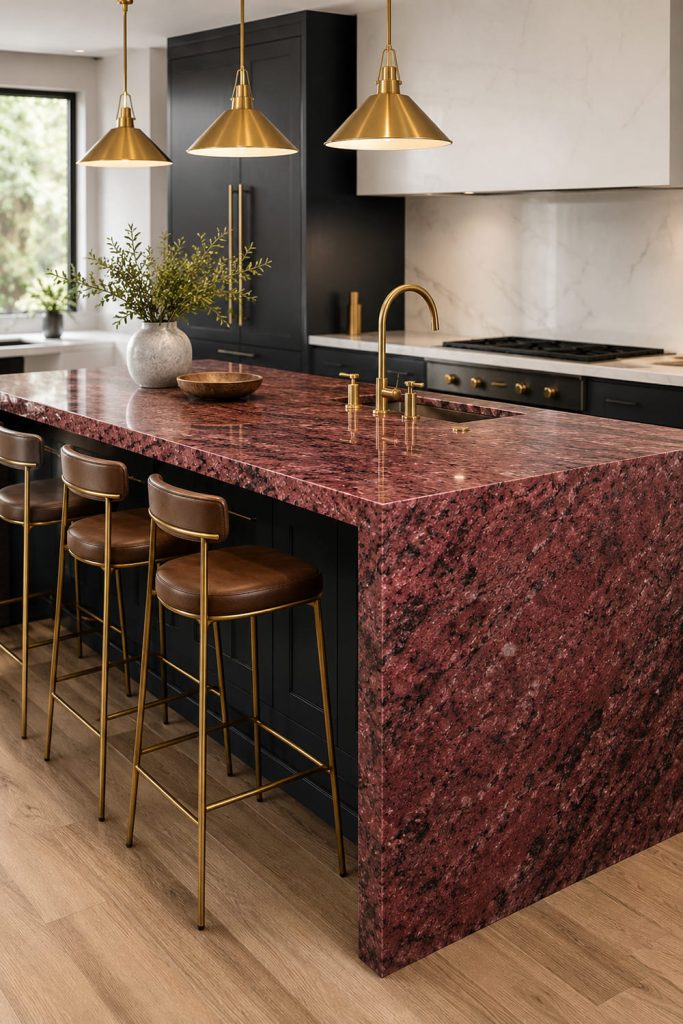
Rather than covering every surface in red granite, use it strategically on a single kitchen island. Ruby Red granite, with its pinkish-red undertones and fine crystalline sparkle, makes an eye-catching waterfall-edge island when the surrounding perimeter counters are done in a neutral quartz or soapstone. This approach lets the red granite command attention without overwhelming the room, and it gives guests a natural gathering point. Pair the island base in a deep charcoal or navy for contrast, and finish with brass pendant lighting overhead to pick up the warm undertones in the stone.
3. Rustic Farmhouse Kitchen with Lakha Red Granite

Lakha Red granite has a more uniform, less speckled surface than many of its red cousins, which makes it ideal for a rustic farmhouse setting where the goal is understated warmth rather than drama. Set against reclaimed wood beams, open wooden shelving, and a deep farmhouse sink, Lakha Red brings just enough color to feel intentional without fighting the room’s textured, lived-in character. Wrought iron light fixtures and a wood-plank floor complete the look. This pairing feels especially at home in kitchens with high ceilings and exposed structural beams.
4. Red Dragon Granite for Dramatic Modern Contrast
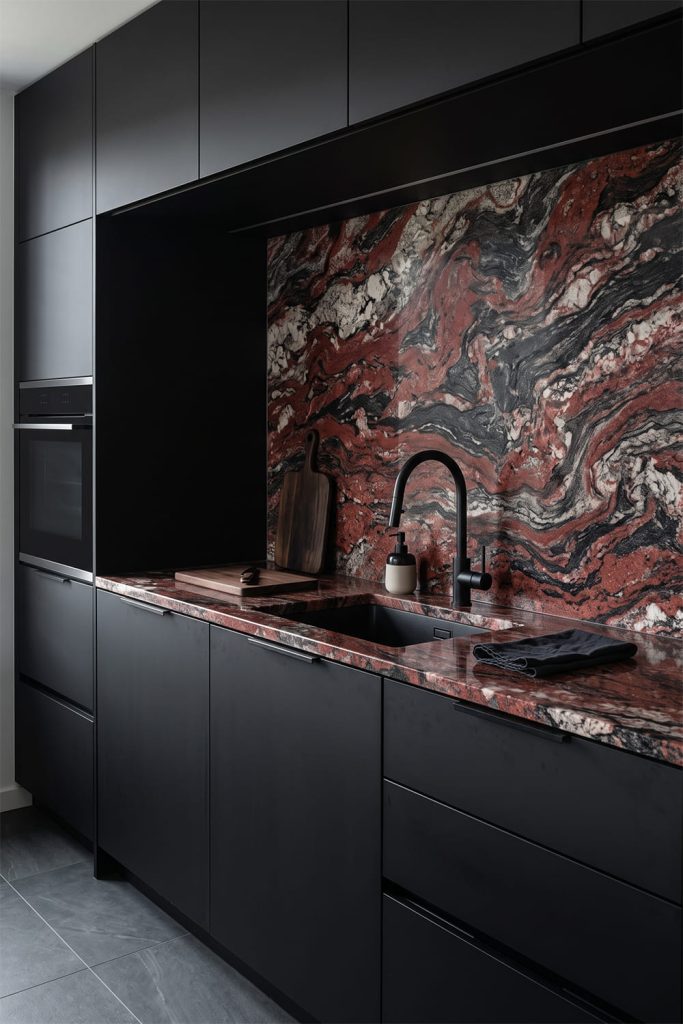
Red Dragon granite is prized for its swirling patterns of red, black, and white, and it thrives in modern kitchens built around bold contrast. Pair it with flat-panel black or charcoal cabinetry and matte black fixtures to let the granite’s movement take center stage against a dark, moody backdrop. Stainless steel appliances keep the space feeling current rather than heavy. Because the pattern is so dynamic, keep the backsplash simple — a plain slab or subtle large-format tile — so the countertop doesn’t have to compete for visual attention.
5. Red and Black Granite Duo for a Bold Two-Tone Kitchen

Designers increasingly pair red granite with black granite counters within the same kitchen — one on the island, the other on the perimeter — for a layered, intentional look. This two-tone approach adds depth without relying on paint or cabinet color to do the work. It suits warm wood cabinetry especially well, since the wood tones bridge the two stone colors. Bronze or copper hardware ties the palette together, while black granite absorbs visual weight so the red granite feels like a deliberate accent rather than an overwhelming statement.
6. Red Granite Countertops with Warm Wood Cabinetry
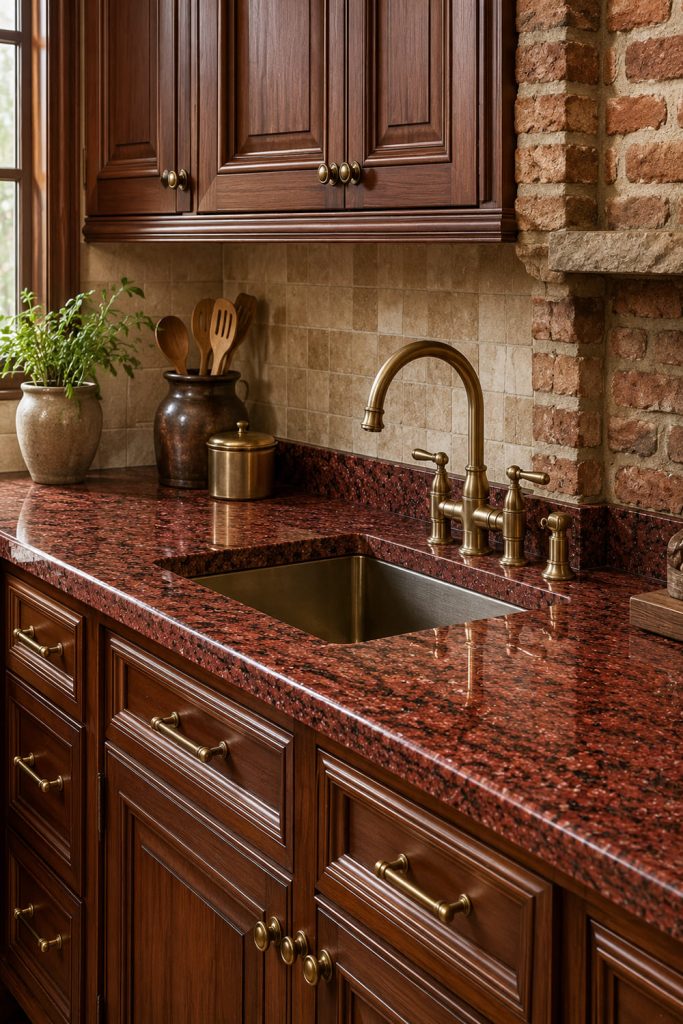
Medium and dark wood cabinets — cherry, mahogany, or walnut — bring out the deepest, richest undertones in red granite, since both materials share warm, earthy pigments. This pairing feels traditional and layered, especially in kitchens with raised-panel or beaded-inset cabinet doors. Brass or antique gold hardware enhances the warmth further, while a neutral stone or wood floor keeps the overall palette from feeling too saturated. This combination works particularly well in kitchens that also feature a stone fireplace or exposed brick, since the granite echoes those natural, textured surfaces.
7. Galley Kitchen with Red Granite and Polished Brass Accents

Narrow galley kitchens benefit from red granite’s ability to add richness without requiring extra square footage. A swirled red granite countertop paired with burgundy or deep red cabinetry, brightened by polished brass pendant lighting, turns a small, functional space into something genuinely elegant. Glass-front upper cabinets displaying curated dishware help the narrow walkway feel less closed-in. Because galley kitchens are viewed head-on rather than from multiple angles, red granite’s veining reads as a continuous, flowing pattern down the length of the counter.
8. Red Multicolor Granite for a Layered, Textured Look
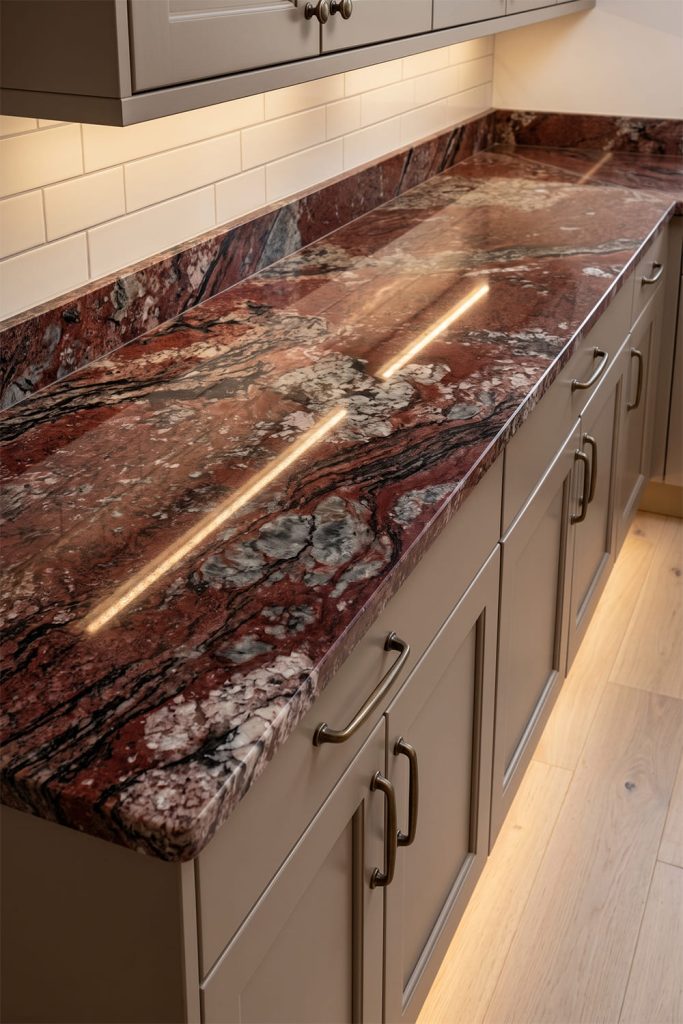
Red Multicolor granite blends a red background with black veining and cloudy mineral formations, giving it more visual complexity than single-tone reds. It’s a popular choice specifically for kitchen countertops because it hides daily wear — crumbs, water spots, and light scratches — better than more uniform stones. Use it with warm taupe or greige cabinetry to let its layered pattern read clearly, and add under-cabinet lighting to highlight the stone’s natural depth after dark. This option suits busy family kitchens where practicality matters as much as style.
9. Rosso Fiorentino Granite in a Mediterranean-Inspired Kitchen

Rosso Fiorentino’s vibrant red base flecked with black and white works beautifully in Mediterranean and Spanish Colonial-style kitchens. Pair it with hand-painted terracotta tile, wrought iron light fixtures, and arched cabinet openings for an old-world feel. White or cream cabinetry keeps the space from feeling too dark, while a mosaic tile backsplash in warm earth tones ties the granite’s colors back into the room. This design direction feels especially fitting in homes with stucco exteriors or Spanish architectural details throughout.
10. Red Granite with Matte Black Fixtures
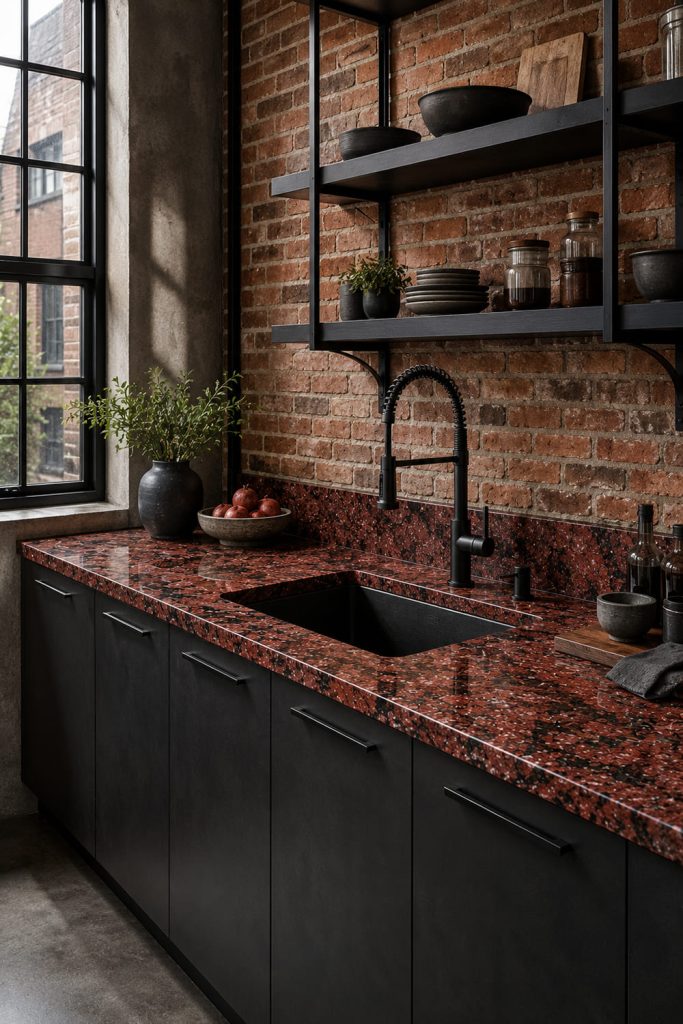
For a more contemporary, urban-loft feel, pair red granite with matte black faucets, black-framed windows, and open steel shelving. The industrial hardware keeps the kitchen feeling current and edgy, while the granite adds warmth to what could otherwise feel cold or clinical. Concrete-look flooring or dark hardwood grounds the space. This combination works particularly well in converted warehouse spaces or loft-style apartments, where exposed ductwork and brick already establish a raw, textural backdrop that red granite complements rather than competes with.
11. Havana Red Granite for a Warm, Sun-Baked Palette

Havana Red granite leans toward burnt-orange and terracotta undertones rather than a pure crimson, making it an excellent match for kitchens designed around a warm, sun-baked color story. Pair it with cream or butter-yellow cabinetry, woven pendant lights, and natural fiber rugs for a relaxed, California- or Southwestern-inspired kitchen. This pairing feels especially inviting in open-concept homes with plenty of natural light, since the warm undertones intensify beautifully at golden hour. Avoid cool-toned grays nearby, which can clash with Havana Red’s earthy warmth.
12. Two-Level Red Granite Peninsula
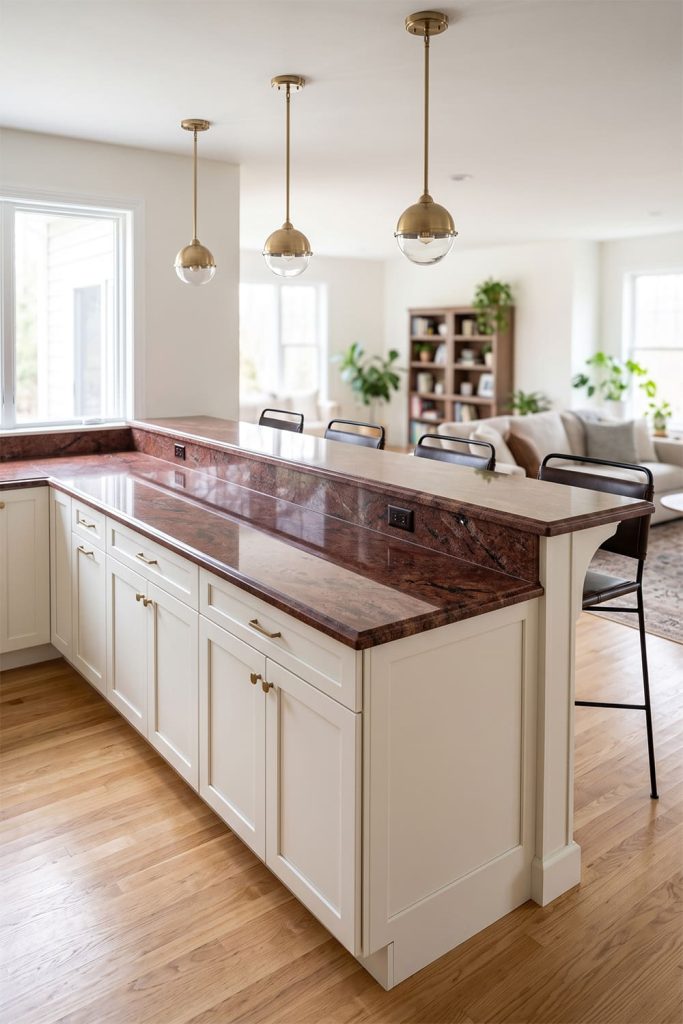
In open-concept homes, a raised red granite peninsula does double duty: it defines the kitchen zone while offering a casual seating ledge for the adjoining living space. Keep the lower work surface in the same stone for continuity, or introduce a contrasting quartz for the seating side to add subtle dimension. This layout is especially practical for households that use the kitchen as a hub for homework, conversation, and casual meals, since it keeps everyone facing the cook without cluttering the main prep surface.
13. Red Granite Backsplash to Match a Bold Countertop

Rather than stopping at the counter’s edge, extend red granite up the wall as a full-height slab backsplash. This creates a seamless, high-end look and eliminates grout lines that require maintenance. It’s a particularly strong choice behind a range, where the granite’s heat resistance is a genuine functional benefit, not just a visual one. Pair with simple, flat-panel cabinetry so the eye isn’t pulled in too many directions — let the continuous stone surface be the design statement from countertop to ceiling.
14. Cherry Red Granite Kitchen with Copper Details
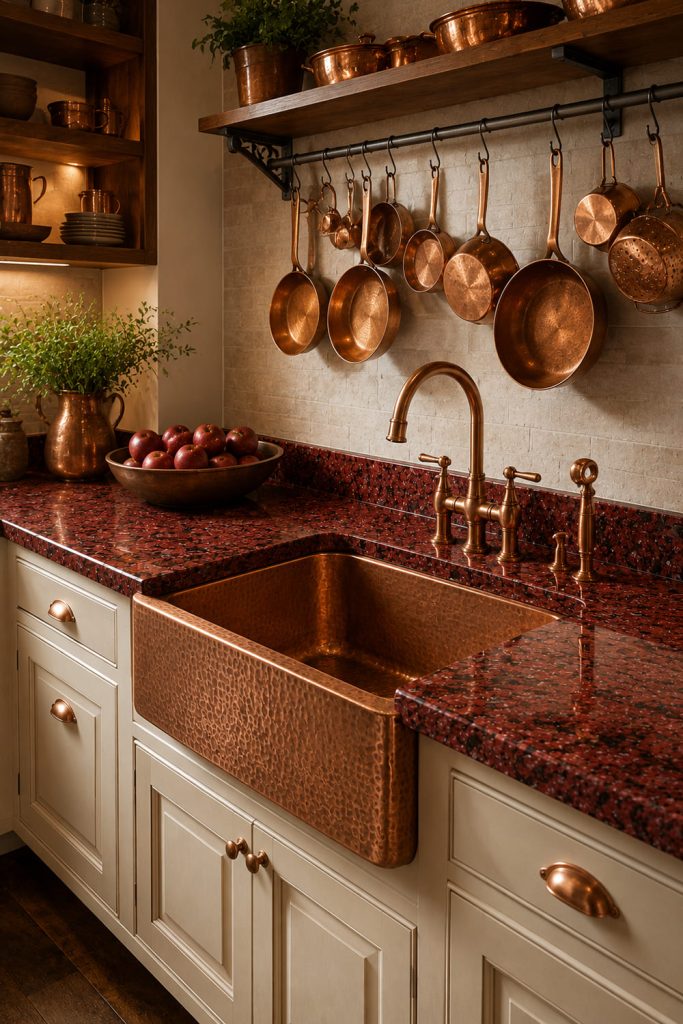
Cherry Red granite, slightly brighter and more saturated than deeper burgundy varieties, pairs beautifully with copper pot racks, copper sinks, and copper cabinet pulls. The warm metal tones amplify the granite’s brightness rather than muting it, creating a cohesive, jewel-toned kitchen that feels luxurious without veering into overly formal territory. This combination suits cooks who want their kitchen tools on display, since open shelving and hanging copper cookware become part of the decor rather than clutter to hide away.
15. Small Kitchen with a Red Granite Accent Wall Niche
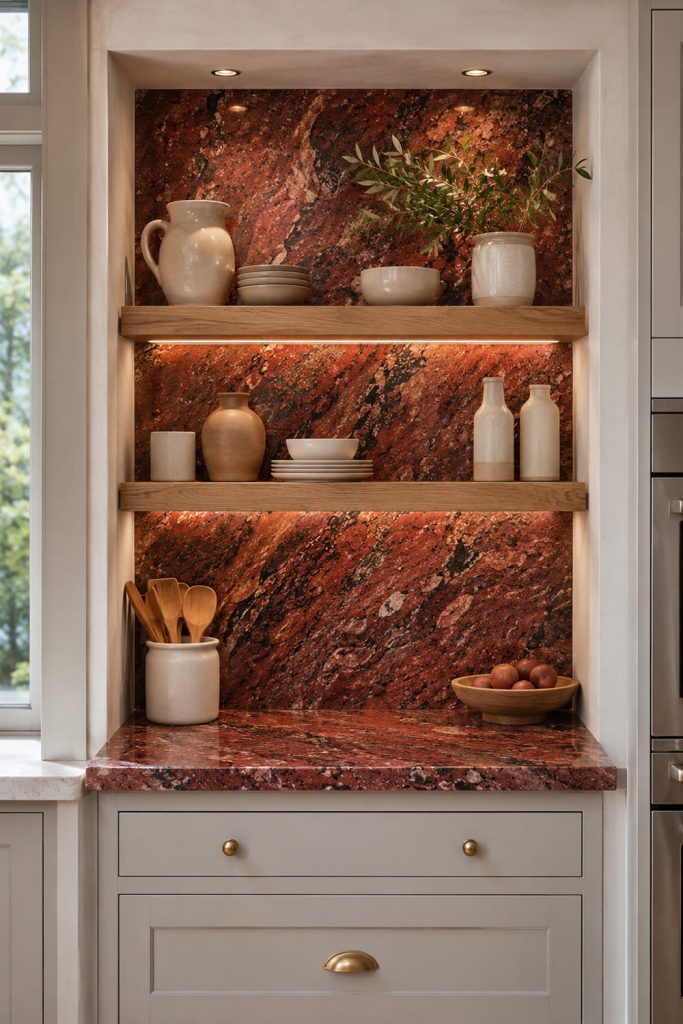
In compact kitchens where a full red granite countertop might feel overwhelming, consider using it in a smaller, contained way — as a niche backsplash behind open shelving, or as the surface of a small baking nook. This lets homeowners enjoy the drama of red granite’s pattern and color without committing an entire room to a bold stone. Surround the niche with white or soft grey walls so the granite reads as an intentional focal point rather than an afterthought, proving that red granite works at any scale.
Planning and Buying Guide: What to Know Before Choosing Red Granite
Understand the undertones first. Red granite ranges from pinkish Ruby Red to deep burgundy Imperial Red to orange-leaning Havana Red. Bring a physical slab sample home and view it under your kitchen’s actual lighting — both daylight and evening bulbs — before committing, since undertones shift dramatically between showroom and home lighting.
Match cabinetry carefully. Burgundy and maroon-leaning reds pair best with greys, off-whites, graphite, and warm wood tones. Brighter, pinker reds can clash with yellow-toned wood, so test swatches side by side rather than relying on memory or product photos alone.
Consider slab consistency versus movement. Lakha Red offers a more uniform, minimal-pattern surface, while Red Dragon and Red Multicolor bring dramatic veining and movement. Uniform stones suit minimalist kitchens; high-movement stones suit spaces built around a bold focal point.
Factor in durability and maintenance. Granite is heat- and scratch-resistant and holds up well in high-traffic kitchens, but it is porous and requires periodic sealing — typically once a year — to resist staining from oils, wine, and acidic foods.
Budget for rarity. Red and blue are among the rarer granite hues on the market, and pricing reflects that scarcity compared to more common browns, blacks, and whites. Request quotes for both the slab and fabrication, since waterfall edges, full-height backsplashes, and specialty cuts add to the total cost.
Order enough from a single lot. Because granite is a natural material, color and veining can vary between quarry lots. If your project spans multiple slabs — an island plus perimeter counters, for example — request slabs cut from the same block to avoid visible mismatches.
Conclusion
Red granite isn’t a trend that fades quietly into the background — it’s a material that asks a kitchen to commit to warmth, character, and a little bit of drama. Whether that means a single dramatic island, a full-height backsplash, or a quiet, uniform countertop tucked against white shaker cabinets, there’s a version of red granite suited to nearly every style, from rustic farmhouse to sleek industrial loft.
The key is choosing the right undertone, pairing it with complementary cabinetry and metals, and giving the stone room to be the focal point it was always meant to be. Done thoughtfully, a red granite kitchen doesn’t just look bold on install day — it stays timeless for decades.


