
15 Green and Red Kitchen Designs That Balance Bold Color With Everyday Livability
Green and red might be the color pairing everyone associates with the holidays, but used deliberately, it’s one of the most sophisticated combinations a kitchen can wear year-round. The trick is balance: red brings warmth, energy, and appetite appeal, while green brings calm, grounding, and a natural, organic feel.
Lean too far into either and the room can tip into gimmick territory — but get the ratio right, choosing one color to lead and the other to accent, and the result feels rich, layered, and unmistakably intentional. Below are 15 green and red kitchen designs, from subtle sage-and-terracotta pairings to bold jewel-toned statements, to help you find a version of this combination that fits your space.
1. Sage Green Cabinets with a Terracotta Backsplash

Sage green is soft enough to read as neutral, which makes it the easiest entry point into a green-and-red kitchen. Paired with a terracotta or warm brick-red tile backsplash, the combination feels earthy and collected rather than costume-like. Keep countertops in a light stone or butcher block so the two colors have room to breathe, and add brass or unlacquered brass hardware to tie the warm and cool tones together. This pairing suits farmhouse, cottage, and Mediterranean-leaning kitchens especially well, and it ages gracefully since both shades are muted rather than saturated.
2. Hunter Green Island with Red Brick Backsplash
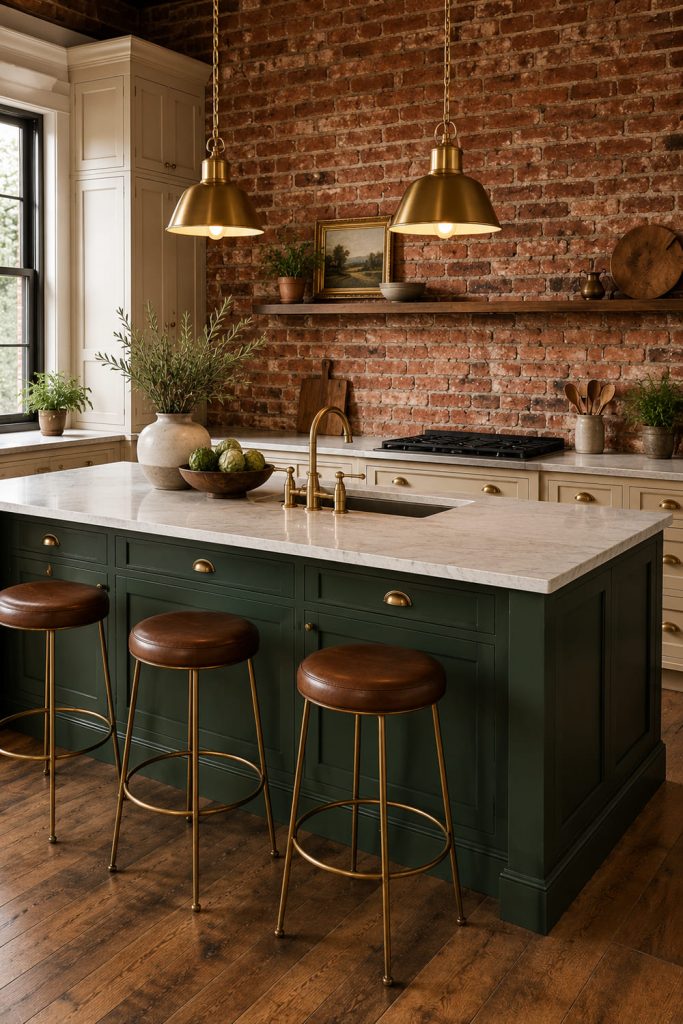
A deep hunter-green island paired with an exposed red brick backsplash creates an instant focal point without requiring red cabinetry at all. The brick’s texture softens the green’s formality, giving the kitchen an industrial-meets-traditional feel. White or cream perimeter cabinets keep the overall palette balanced, while gold or brass fixtures add polish. This layout works particularly well in older homes with existing exposed brick walls, letting the renovation lean into the architecture rather than covering it up.
3. Emerald Green Cabinetry with Red Accent Stools

For a bolder statement, pair glossy emerald-green cabinetry with a neutral white or marble countertop, then introduce red purely through accessories — bar stools, a runner rug, or open-shelf styling. This approach lets homeowners commit to a dramatic cabinet color while keeping red as an easily changeable accent. It’s a flexible design for anyone who wants the drama of a jewel-toned kitchen without permanently marrying two bold colors in fixed materials like tile or countertop stone.
4. Two-Tone Kitchen: Red Lower Cabinets, Green Uppers

Two-tone cabinetry is one of the most popular ways to combine red and green without overwhelming the room. Red lower cabinets ground the space visually, while lighter sage or mint-green upper cabinets keep the eye moving upward and prevent the kitchen from feeling heavy. A white or butcher-block countertop acts as a buffer between the two colors. This layout works in kitchens of nearly any size, since the visual weight stays low and the upper cabinetry reads as airy rather than closed-in.
5. Italian-Inspired Kitchen with Khaki Green and Terracotta Red
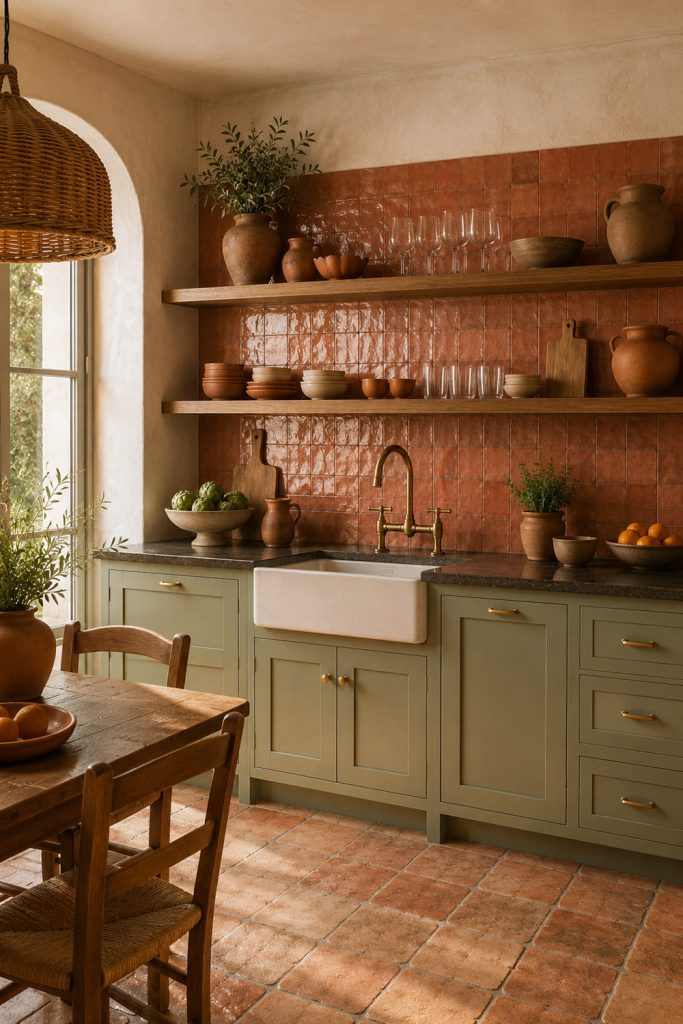
Italian-style kitchens lean on earthy, sun-washed versions of green and red — khaki or olive green paired with warm terracotta — rather than saturated primary tones. Add cream walls, dark wood or granite countertops, and open shelving displaying ceramics and glassware. This design direction favors warmth and texture over polish, making it a natural fit for kitchens that open onto a dining or living area and are meant to feel social and unfussy rather than showroom-perfect.
6. Green Herringbone Tile with a Red Tile Accent

A herringbone-laid backsplash in all-green tile, with a handful of red tiles worked randomly into the pattern, injects color without committing to painted cabinetry at all. This is one of the lowest-commitment ways to explore a green-and-red palette, since tile can be updated more easily than cabinets down the line. Pair with white or light wood cabinetry to keep the backsplash as the clear focal point, and use simple, unfussy hardware so nothing competes with the tile pattern.
7. Vintage-Inspired Kitchen with Mint Green and Cherry Red
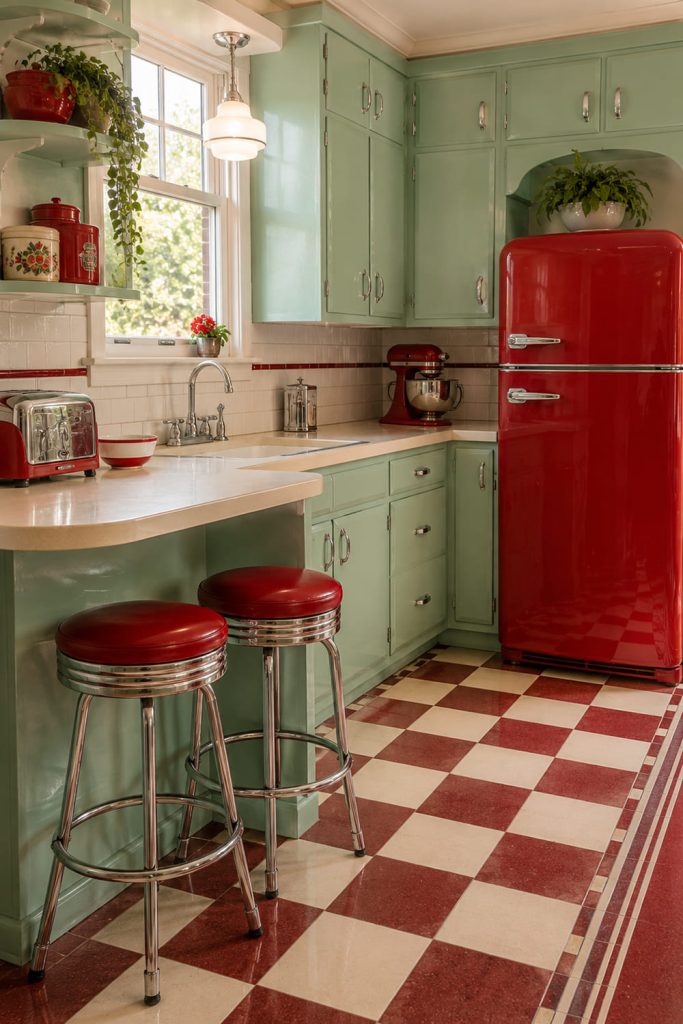
For a retro, 1950s-diner-inspired kitchen, pair soft mint-green cabinetry with cherry-red accents — a red refrigerator, red barstool cushions, or a red-and-white checkerboard floor. Chrome hardware and round-edged cabinet profiles reinforce the era-appropriate feel. This combination works best when treated playfully rather than seriously, making it a strong choice for homeowners who want a kitchen with personality and a bit of nostalgic charm rather than a strictly formal design.
8. Green Cabinets with a Bold Red Range
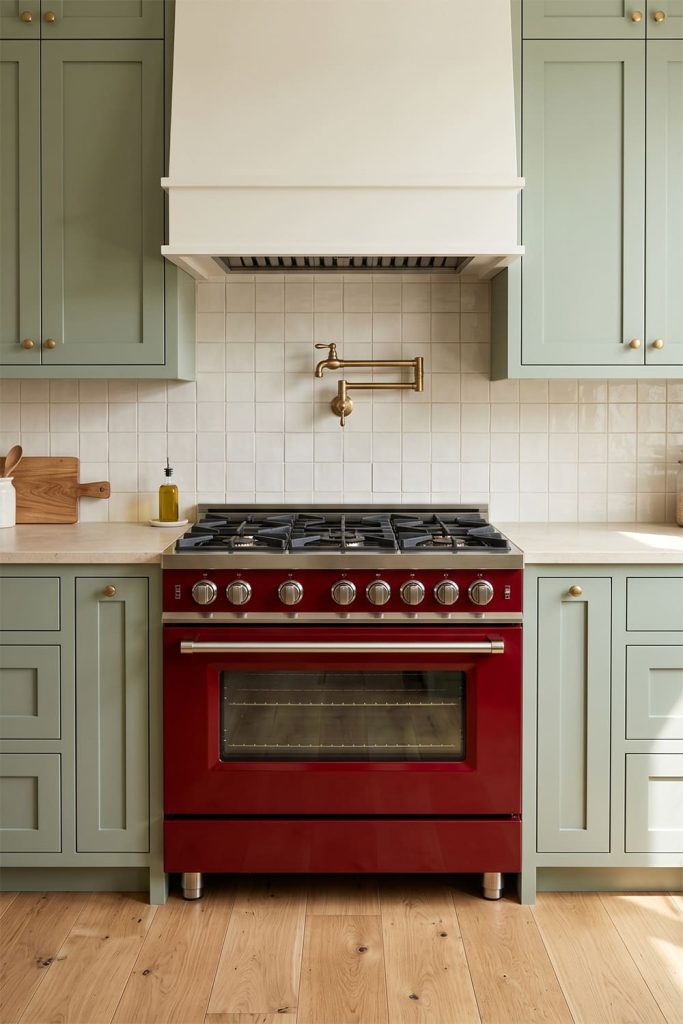
Sometimes the simplest way to combine the two colors is to let a red range or cooktop do all the work. Paired with soft or deep green cabinetry and neutral stone countertops, a red range becomes the kitchen’s obvious centerpiece without requiring red anywhere else in the room. This approach is ideal for anyone who loves the idea of a bold color moment but doesn’t want to commit to red cabinetry, tile, or countertops long-term.
9. Botanical Wallpaper to Blend Green and Red Seamlessly
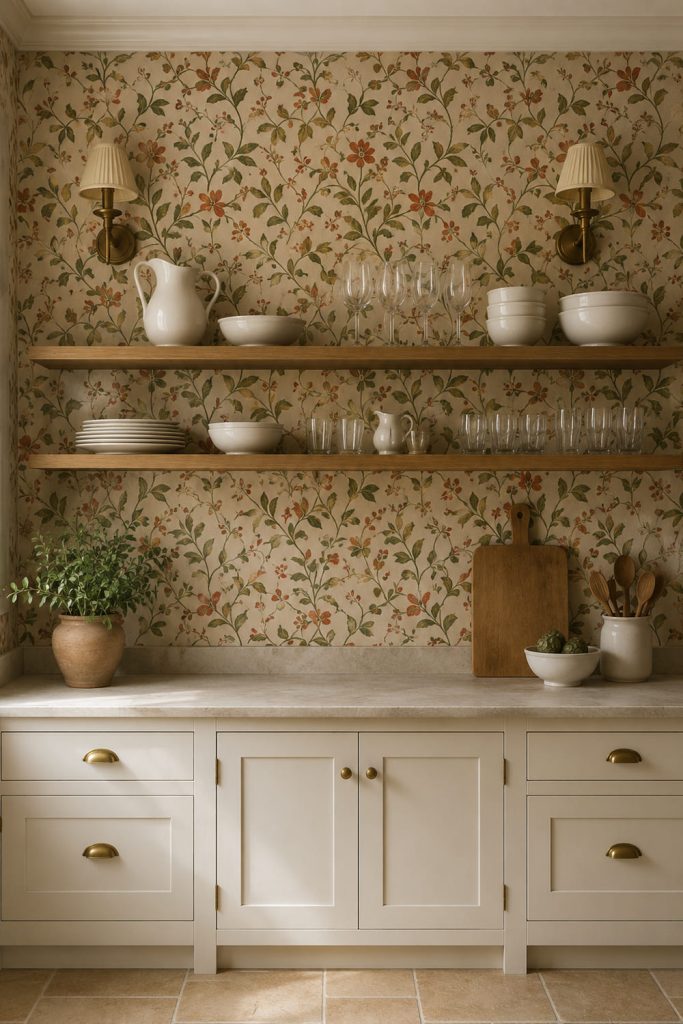
Patterned wallpaper — florals, botanicals, or a forest motif — is one of the most effective ways to merge green and red without hard color-blocking. Use it on a feature wall, inside glass-front cabinets, or along open shelving backs, then keep the surrounding cabinetry in a single neutral tone like white or cream. This softens the color pairing into something that reads as pattern first and color second, making it easier to live with over time.
10. Dark Academia Kitchen with Forest Green and Oxblood Red

For a moodier, more dramatic take, pair deep forest-green lower cabinetry with oxblood-red upper shelving or a lacquered red pantry door. Brass library-style sconces, dark wood open shelving, and leather-topped stools complete a rich, den-like atmosphere. This design suits kitchens that flow into a study or reading nook, and it favors matte and satin finishes over glossy ones to keep the overall mood warm rather than sharp.
11. Green Kitchen with a Red Tile Runner Floor

Instead of introducing red through cabinetry or backsplash, run a strip of red patterned tile down the center of the kitchen floor as a “runner,” framed by neutral tile on either side. Paired with sage or olive-green cabinetry, this creates a defined pathway through the kitchen and adds color at floor level, where it’s easy to overlook but highly effective. This works especially well in galley or single-wall kitchens, where the floor is one of the most visible surfaces.
12. Christmas-Proof Green and Red: Olive and Brick Tones

To avoid a kitchen that reads as seasonal decor, choose muted, dusty versions of both colors — olive green rather than kelly green, and brick or clay red rather than fire-engine red. This combination, paired with warm wood tones and brass fixtures, reads as sophisticated and grounded in any month of the year. It’s the safest route for homeowners who love the color pairing conceptually but worry about the kitchen feeling like a holiday display.
13. Green Cabinetry with a Red Farmhouse Sink
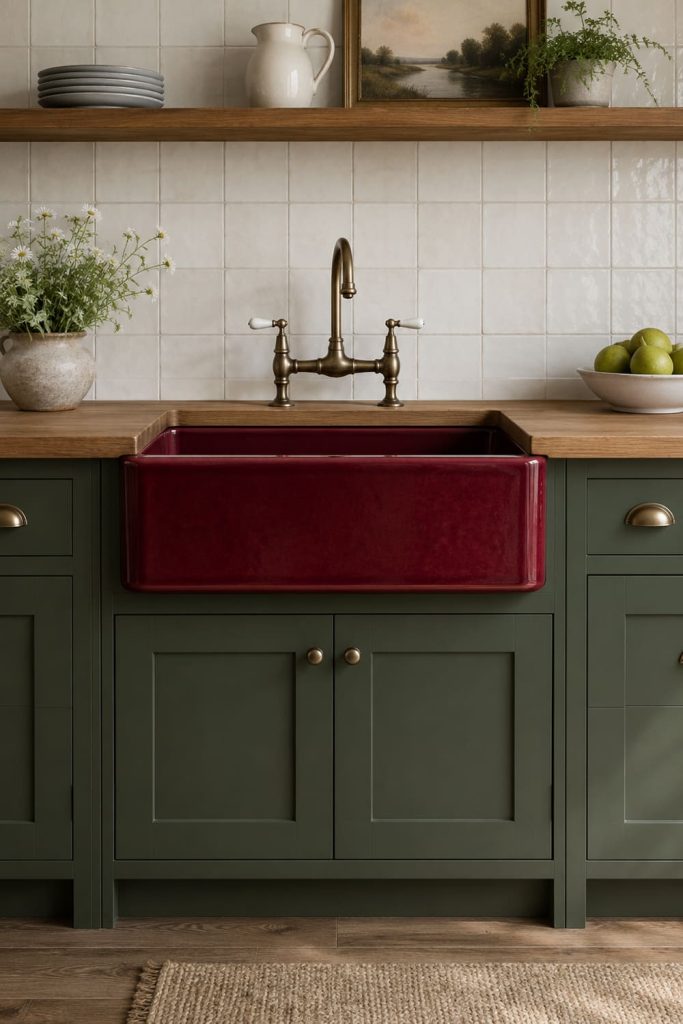
A red or oxblood farmhouse sink set into a sage or hunter-green cabinet base becomes an unexpected, charming focal point at the kitchen’s busiest workstation. Surround it with butcher-block or soapstone counters and simple bridge-style faucets in brass or matte black. Because the sink is a fixed but relatively small element, this is a lower-risk way to introduce red into an otherwise green kitchen without a major long-term commitment.
14. Open-Concept Kitchen with Green Island, Red Dining Chairs
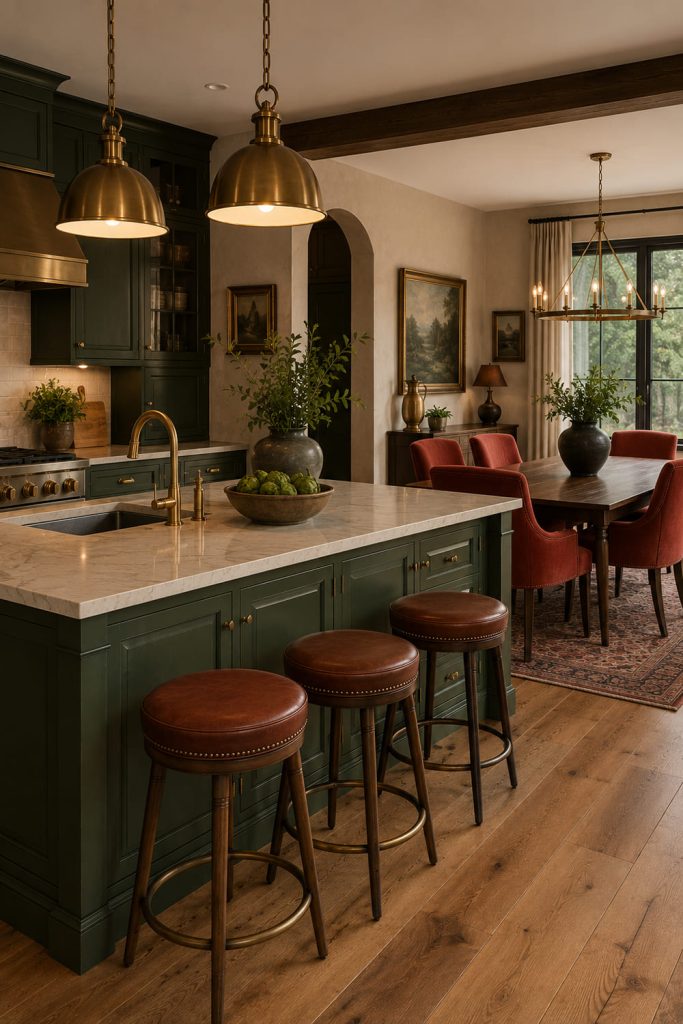
In open-concept homes, color-zoning is an easy way to combine green and red without cramming both into the kitchen itself. Keep kitchen cabinetry and the island in a calming sage or emerald green, then let the adjoining dining area carry red through upholstered chairs, artwork, or a statement light fixture. This creates a cohesive sightline between the two spaces while letting each zone maintain its own dominant color, avoiding visual competition.
15. Small Kitchen with Green Upper Shelving and Red Lower Cabinets

In compact kitchens, keep the heavier red tone low, on base cabinetry, and use open green shelving up top instead of closed upper cabinets. This layout keeps the room feeling airy while still delivering a strong two-color statement, and the open shelving doubles as display space for dishware, plants, or ceramics that can echo either color. It’s a practical solution for small kitchens that still want to make a bold design statement.
Planning and Design Guide: Making Green and Red Work Together
Choose one color to lead. The most successful green-and-red kitchens pick a dominant color — usually green, since it reads as more neutral and calming — and use the second color as an accent through tile, hardware, a single appliance, or textiles rather than splitting the room 50/50.
Mute at least one tone. Pairing two fully saturated primary colors (kelly green and fire-engine red) tends to read as seasonal or costume-like. Softening one or both — sage green with terracotta red, or olive green with oxblood red — keeps the combination sophisticated.
Use a neutral buffer. White, cream, or natural wood countertops and flooring give the eye a place to rest between the two bold colors, preventing the kitchen from feeling visually cluttered or competitive.
Test under real lighting. Both green and red shift noticeably under warm versus cool lighting. View paint chips, tile, and cabinet samples in your kitchen at different times of day before finalizing either color.
Introduce texture, not just color. Wood tones, brick, woven light fixtures, and stone countertops help ground a green-and-red palette in something tactile, so the room reads as designed rather than simply color-blocked.
Start small if you’re unsure. Wallpaper, a tile runner, bar stools, or a single statement appliance are all lower-commitment ways to test whether you genuinely love the pairing before investing in permanent cabinetry or countertops.
Conclusion
Green and red is a braver color pairing than most kitchens attempt, but when it’s built around the right undertones and a clear sense of which color leads, it results in a space that feels warm, grounded, and genuinely distinctive. From subtle sage-and-terracotta farmhouse kitchens to bold emerald-and-oxblood statement rooms, there’s a version of this combination for nearly every style and comfort level. The key is restraint in the right places — muted tones, a neutral buffer, and texture — so the kitchen reads as considered design rather than a holiday decoration that never came down.


