

15 Dark Hardwood Floor Living Room Ideas for a Cozy, Stylish Home
Dark hardwood floors can give a living room a rich architectural foundation. Deep walnut, espresso, chocolate brown, and near-black wood tones draw attention to the floor while making furniture, rugs, and wall colors stand out more clearly. They can work equally well in modern, traditional, transitional, rustic, and contemporary interiors.
The main consideration is balance. Because dark flooring carries considerable visual weight, lighter upholstery, warm neutrals, reflective surfaces, and thoughtful lighting can keep the room from feeling closed in.
A large rug can define the seating area while allowing some of the hardwood to remain visible around its edges. Layered lighting is equally useful, especially in rooms where the flooring absorbs a lot of natural and artificial light.
Here are 15 dark hardwood floor living room ideas that show how to make the flooring feel intentional and beautifully integrated into the rest of the room.
1. Dark Hardwood Floors With a Cream Sofa

A cream sofa creates an immediate contrast against deep brown hardwood flooring. Choose warm ivory, oatmeal, or soft cream rather than a stark blue-white if you want the room to feel inviting.
Place the sofa over a large textured rug in a slightly lighter neutral and add cushions in beige, camel, and muted brown. A natural wood coffee table can introduce another timber tone without needing to match the floor exactly.
Keep the walls light and let natural daylight remain unobstructed. The result is simple but visually effective because the pale upholstery breaks up the darker lower portion of the room while the hardwood remains visible around the seating arrangement.
2. Pair Dark Floors With a Light Gray Sofa
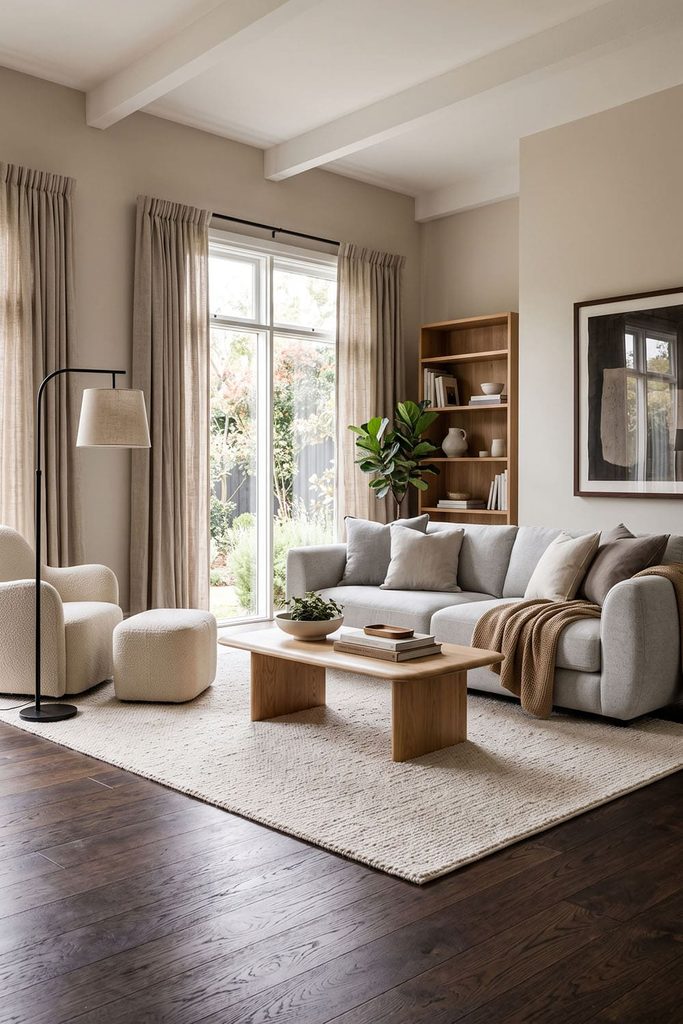
A light gray sofa gives dark hardwood floors a cleaner, contemporary appearance. This combination works particularly well when the flooring has cool espresso or charcoal undertones.
Use an ivory or pale gray rug underneath the seating area to create another layer between the sofa and floor. Add black metal lighting, soft gray cushions, and one or two warm wood accessories. If the room begins to feel too cool, introduce beige curtains or a camel throw.
Keeping the walls in a warm white or light greige can also soften the contrast. The result is modern without becoming stark, especially when the furniture has rounded shapes and tactile upholstery.
3. Create a Blue and Dark Wood Living Room

Dark hardwood and blue make a sophisticated combination. A navy or medium-blue sofa can become the focal point while cream walls and a pale rug prevent the room from becoming too dark.
For a softer approach, use blue-gray upholstery with warm beige accents. Natural wood, linen curtains, and woven accessories can bridge the cool blue and rich brown flooring.
A few brass details can provide additional warmth through lamps, picture frames, or a coffee-table base. The important part is keeping enough light around the blue furniture so the floor and sofa do not merge into one dark visual block.
4. Use a Large Light-Colored Area Rug

A large area rug is one of the simplest ways to change the appearance of a dark hardwood living room. Choose ivory, cream, beige, light gray, or a subtle patterned design.
The rug should be large enough to connect the main seating pieces rather than sitting as a small island underneath the coffee table. Current design guidance specifically recommends appropriately scaled rugs because undersized rugs can make furniture arrangements feel disconnected.
Leave a visible border of hardwood around the rug so the flooring remains part of the design. A textured wool, flat-weave, or softly patterned rug can add interest without competing with the natural grain of the wood.
5. Mix Dark Hardwood With Light Wood Furniture

There is no need to match every wood finish in the room. In fact, introducing lighter wood can make dark hardwood floors more interesting. Try a pale oak coffee table, ash side table, natural wood console, or light timber shelving.
The difference between the floor and furniture creates definition rather than making the room look mismatched. Keep upholstery relatively neutral so the various wood tones remain easy to read.
Cream, beige, soft gray, and muted green all work well. The contrast is particularly effective in contemporary rooms where clean furniture silhouettes allow the different grain patterns and tones to become part of the visual composition.
6. Build a Warm White Living Room Around the Floor

Warm white walls and furniture can make dark hardwood flooring look especially rich. Instead of using pure white throughout the room, combine ivory, cream, linen, and soft beige.
A warm white sofa, cream curtains, textured rug, and pale artwork can create a bright upper half while the hardwood grounds the lower half. Add one or two darker accessories to connect the furniture back to the floor.
This approach works well when you want the hardwood to become the strongest color in the room without making the overall space feel dark. It is also a useful choice for smaller living rooms where excessive dark furniture could visually reduce the space.
7. Add Cognac Leather Seating

Cognac leather creates a warm, classic relationship with dark hardwood. Use a cognac armchair, loveseat, or leather sofa as a focal piece against lighter walls. Because both the flooring and leather are relatively rich, introduce an ivory rug and cream or beige textiles for contrast.
Walnut or medium-tone wood accessories can connect the colors without making everything match. A black metal floor lamp can provide a sharper contemporary element.
This combination works particularly well in rooms inspired by mid-century, traditional, industrial, or modern masculine interiors. The key is allowing the cognac leather and dark floor to remain different brown tones rather than trying to find an exact color match.
8. Use Olive Green for an Earthy Palette
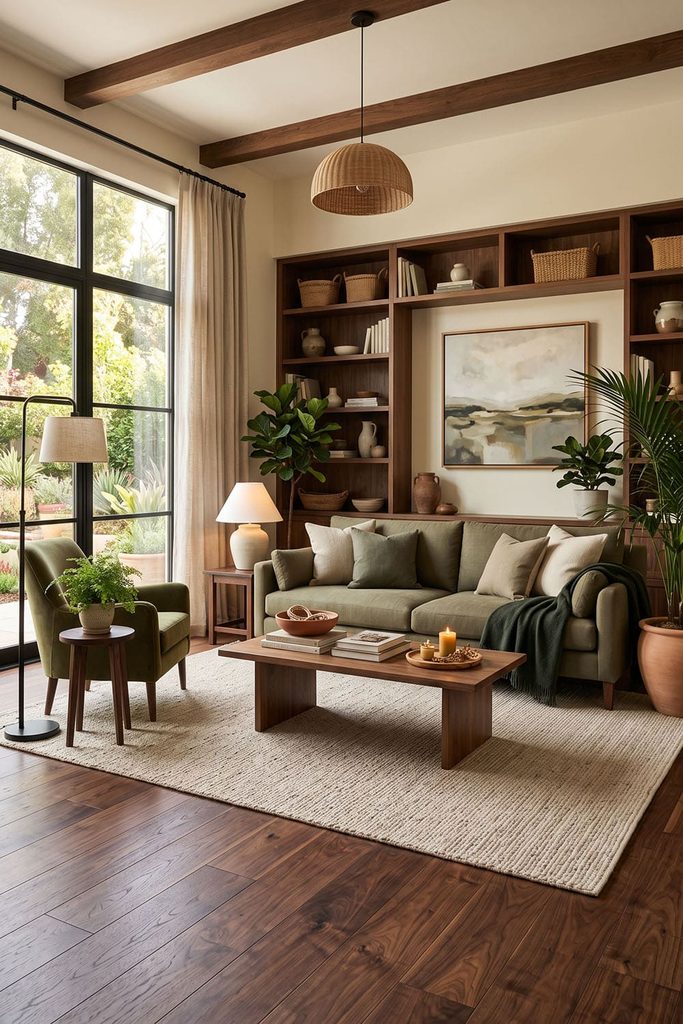
Olive green brings an organic quality to a dark hardwood living room. It can appear through an accent chair, sofa, cushions, curtains, artwork, or plants. Pair olive with cream walls and an oatmeal rug so the green and dark floor have enough breathing room.
A light or medium wood coffee table can add another natural layer. If you want a more dramatic room, use forest green instead of olive, but keep the remaining furnishings lighter.
This palette is particularly effective with walnut flooring because the warm brown and muted green share an earthy character. A few woven accessories can reinforce the natural feeling without adding more colors.
9. Create a Modern Black, Cream, and Wood Palette

Dark hardwood floors can work beautifully with black accents when cream is used to maintain contrast. Start with the dark floor and a cream sofa, then introduce black through a coffee-table frame, lighting, artwork frames, or a small accent chair.
Keep the walls warm white or pale beige. The result is crisp without becoming overly stark. Glass can also be useful because transparent surfaces allow more of the dark flooring to remain visible while reducing visual bulk. Choose furniture with clean lines and avoid using black on every major piece. A few repeated black details are enough to give the room structure.
10. Add a Soft Beige Sectional
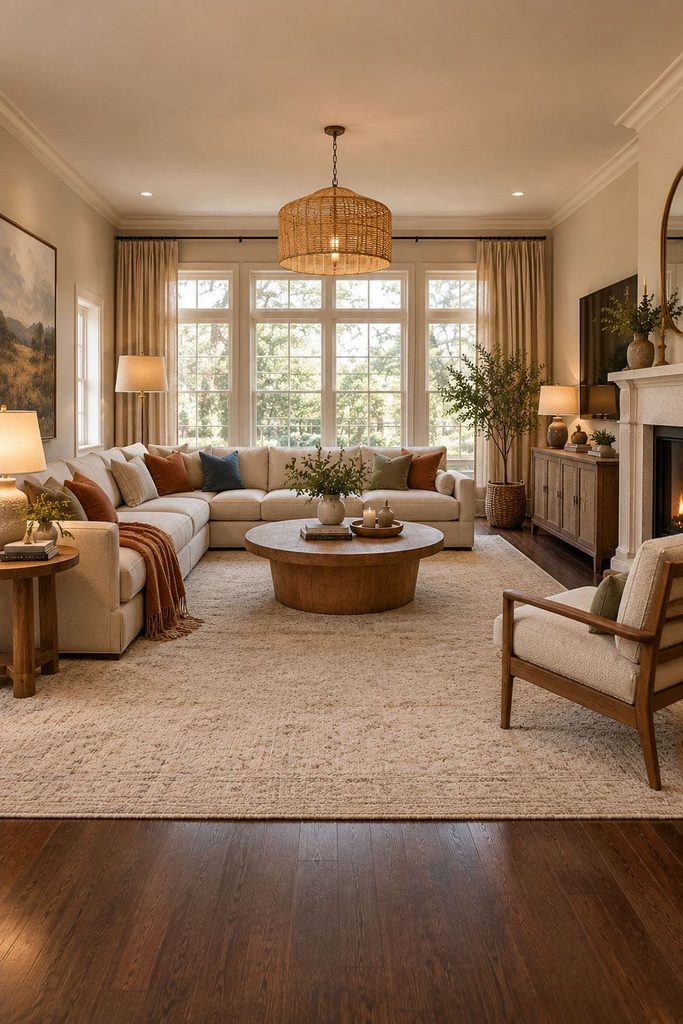
A beige sectional can soften the strong horizontal presence of dark hardwood flooring while providing plenty of seating. Choose a warm beige rather than a gray-beige if the flooring has reddish or chocolate undertones.
Place the sectional on a large ivory or oatmeal rug and add cushions in cream, rust, olive, or muted blue. A round coffee table can soften the large rectangular shape of the sectional and create a more relaxed arrangement.
Use floor lamps and table lamps around the room rather than relying entirely on a central ceiling fixture. Layered lighting is particularly important with dark flooring because multiple sources help prevent shadowy corners.
11. Make the Fireplace the Main Focal Point

Dark hardwood floors provide an excellent foundation for a fireplace feature wall. A white, cream, limestone, or light plaster fireplace creates strong contrast against the floor. Position a neutral sofa and two comfortable chairs around it to establish a clear conversation area.
A simple rug can visually connect the furniture while leaving a border of hardwood visible. For a more traditional room, add a wood mantel and classic artwork. For a modern space, keep the fireplace surround simple and architectural.
The contrast between the dark floor and lighter fireplace can naturally draw attention toward the center of the room without requiring a brightly colored accent wall.
12. Combine Dark Floors With Terracotta Accents

Terracotta introduces warmth without competing with the richness of dark hardwood. Use the color selectively through cushions, pottery, artwork, a throw, or one small accent chair. Pair it with cream upholstery and warm white walls so the room does not become dominated by brown and orange.
Natural woven materials can help soften the palette further. If your floor has reddish undertones, choose a muted terracotta that relates to the wood rather than a bright orange. For cooler espresso floors, a warmer rust or terracotta accent can provide a welcome contrast. A restrained amount of the color is usually enough to give the room personality.
13. Create a Moody Dark Hardwood Living Room
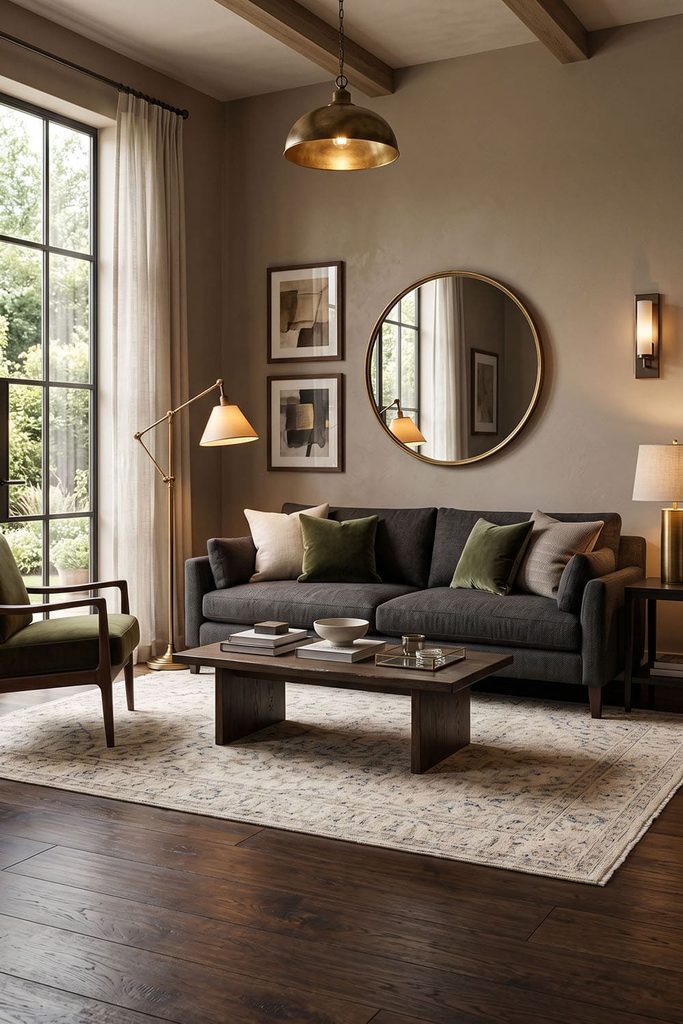
Dark hardwood does not always have to be contrasted with an extremely bright palette. You can embrace a moodier scheme by combining the floor with warm taupe walls, charcoal furniture, broad green accents, and carefully placed lighting.
The important part is avoiding a room where every surface has the same darkness. Introduce cream cushions, a lighter patterned rug, reflective artwork, or a brass lamp to create visual breaks.
Use table lamps, sconces, and floor lamps to illuminate specific areas rather than flooding the room with one harsh overhead source. Layered lighting is a key strategy for keeping darker interiors comfortable and functional.
14. Use Natural Materials to Soften the Hardwood

Dark flooring becomes more relaxed when surrounded by natural textures. Add linen curtains, a woven rug, rattan baskets, cane furniture, wool cushions, ceramic accessories, and plenty of greenery.
These materials create variation without requiring a complicated color palette. Keep the primary furniture in cream, beige, or warm gray and let the floor provide the strongest dark element. A light oak coffee table can provide another point of contrast.
Natural materials also help prevent the room from feeling overly polished or formal. The combination of tactile fabrics and wood grain creates a layered appearance that feels comfortable rather than overly coordinated.
15. Let the Dark Hardwood Become the Main Feature

Sometimes the best approach is to keep everything else simple. Choose a relatively neutral sofa, understated rug, light walls, minimal artwork, and a few carefully selected accessories so the flooring can remain visually prominent.
Furniture with raised or visible legs can allow more of the hardwood to remain visible, while a simple rug defines the seating zone. Keep window treatments light enough to allow plenty of daylight into the room.
This approach works especially well when the hardwood has beautiful grain, wide boards, or an interesting finish. Rather than covering the floor with furniture and decoration, treat it as one of the room’s architectural features.
How to Balance a Living Room With Dark Hardwood Floors?
The strongest dark hardwood living rooms usually have a deliberate contrast between the floor and the elements above it. Light walls and upholstery can provide visual relief, while rugs break up the large uninterrupted expanse of wood. Current flooring guidance also emphasizes natural daylight and multiple layers of artificial lighting because darker flooring can make a room feel visually heavier when illumination is limited.
You can also create balance through furniture scale. A large dark floor does not necessarily require large furniture. Pieces with visible legs can leave more of the floor exposed and help the room feel less crowded. In smaller rooms, lighter upholstery and fewer bulky pieces can be especially useful.
Do not feel obligated to match your furniture to the floor. Light oak, walnut, rattan, painted furniture, metal, glass, and upholstered pieces can all work alongside dark hardwood. Mixing materials often produces a more natural result than repeating the same dark wood finish throughout the room.
Colors That Work Well With Dark Hardwood
Several palettes consistently work well with dark flooring:
- Cream and ivory for a bright, warm contrast
- Beige and taupe for a soft neutral room
- Light gray for a contemporary look
- Olive and sage for an earthy atmosphere
- Navy and dusty blue for a richer palette
- Terracotta and rust for warmth
- Cognac leather for classic character
- Warm white and natural wood for a lighter modern room
- Black used sparingly for definition
The undertone of the hardwood matters as well. Warm reddish-brown floors generally pair naturally with cream, camel, terracotta, olive, and warm beige. Cooler espresso floors can work particularly well with soft gray, blue, ivory, and neutral shades.
Final Thoughts
Dark hardwood floors can make a living room feel grounded, substantial, and visually sophisticated. They do not require an entirely dark decorating scheme. In many cases, the most successful rooms use the flooring as the deepest layer and build upward with lighter furniture, warm neutrals, textured rugs, natural materials, and carefully distributed lighting.
Start with the element you already have, whether that is a dark walnut floor, espresso-stained oak, or nearly black hardwood. Then choose one strong contrast, such as a cream sofa or pale rug, and gradually add color and texture around it. This keeps the floor prominent while giving the living room enough warmth and variation to feel comfortable and lived in.


