

15 Brown Living Room Color Scheme Ideas
Brown is one of the most versatile colors for a living room because it brings warmth, depth, and a natural feeling to the space. From soft beige and cream combinations to richer palettes featuring green, blue, charcoal, or terracotta, brown can work with many different decorating styles.
The right color scheme depends on the atmosphere you want to create and the amount of natural light available. These 15 brown living room color scheme ideas show how different supporting colors can completely change the appearance of a brown-centered living room.
1. Brown and Cream Living Room
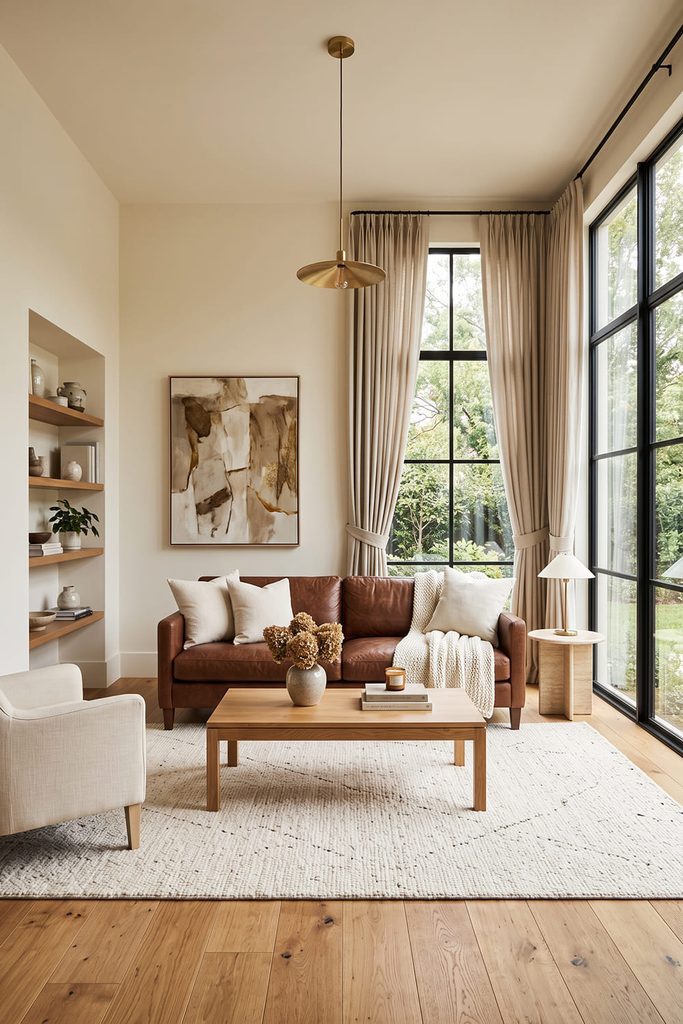
Brown and cream create one of the easiest color combinations for a warm and timeless living room. Use a brown sofa or wooden furniture as the foundation, then add cream walls, an ivory rug, beige curtains, and soft cream cushions to create contrast without introducing a harsh difference.
Natural wood accessories can tie the palette together, while warm lighting emphasizes the earthy character. This scheme works especially well when you want a comfortable room that feels elegant, relaxed, bright, and easy to decorate.
2. Brown and Beige Living Room

Brown and beige create a soft neutral palette that works beautifully in traditional, contemporary, and transitional interiors. Pair brown furniture with beige walls, curtains, cushions, or rugs, but use slightly different shades so the room doesn’t look flat.
Natural wood can add another layer of brown while cream accessories provide gentle contrast. Add texture through woven baskets, fabric cushions, and a patterned rug to create visual interest without relying on strong colors, making the space feel comfortable and sophisticated.
3. Brown and White Living Room
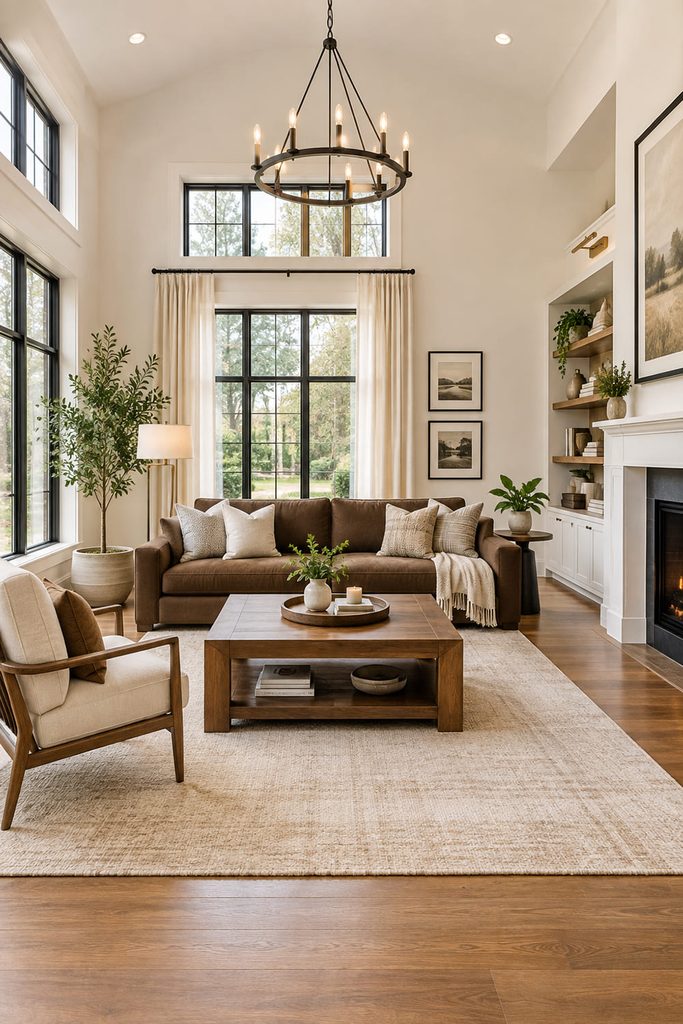
White can provide strong visual contrast against brown furniture while keeping the living room bright and fresh. Use white or warm-white walls with a brown sofa, wooden coffee table, and neutral rug, then add cream or beige accessories to soften the difference between the two colors.
Black details can provide additional definition through lighting or frames, while plants introduce natural color. This combination works especially well for modern homes where you want warmth without sacrificing a clean, uncluttered appearance.
4. Brown and Blue Living Room

Blue and brown create a balanced combination by bringing together cool and warm tones. Choose navy, muted blue, dusty blue, or blue-gray accessories for a brown sofa, then repeat the blue through cushions, artwork, curtains, or an accent chair. Keep larger surfaces such as walls and rugs relatively neutral so the colors do not compete.
Natural wood furniture works naturally with both shades, creating a living room that feels sophisticated, comfortable, welcoming, and suitable for contemporary or traditional decorating styles.
5. Brown and Sage Green Living Room
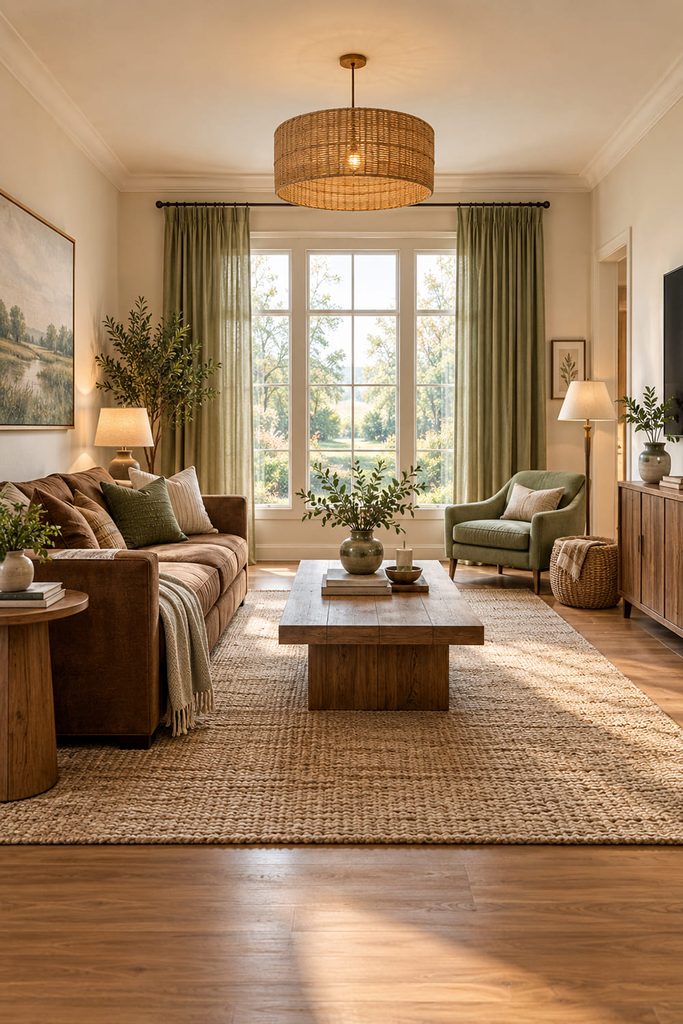
Sage green can bring a fresh, natural quality to a brown living room without creating overwhelming contrast. Use a brown sofa or wood furniture as the foundation, then introduce sage through cushions, curtains, artwork, plants, or a small accent chair.
Keep the walls cream, beige, or warm white so the palette remains light and balanced. Natural materials such as wood and woven textures can strengthen the earthy feeling, creating a calm living room that feels relaxed and connected to nature.
6. Brown and Gray Living Room
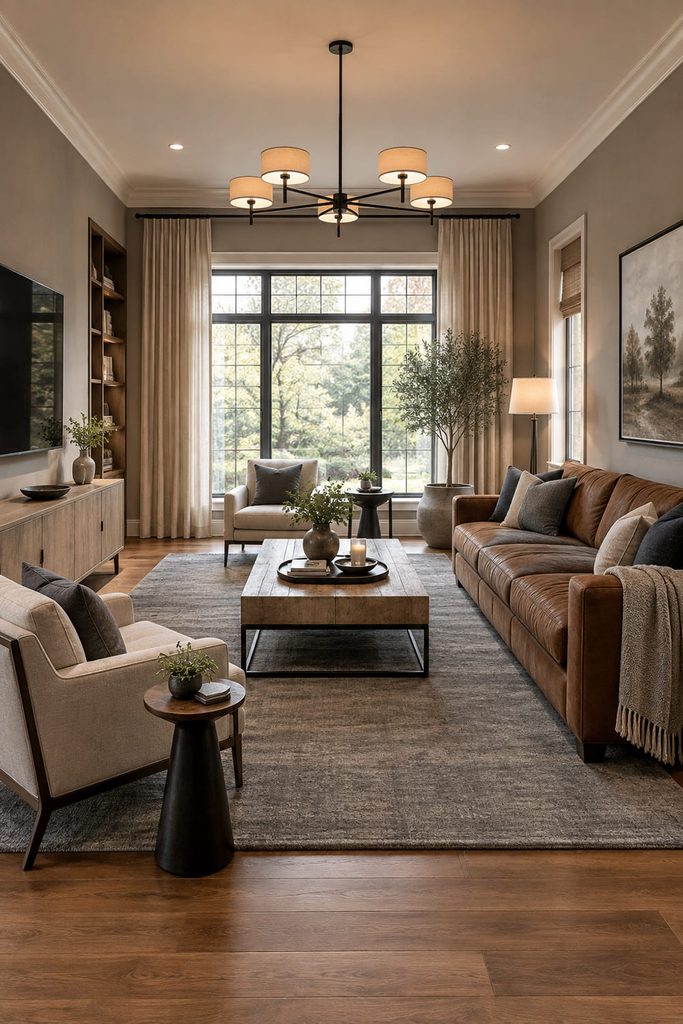
Brown and gray can create a modern color scheme by combining warm and cool neutrals. Use a brown sofa with gray walls, a gray rug, or charcoal cushions, then add cream textiles and natural wood to soften the contrast.
Avoid using only cool gray because it can make brown furniture appear disconnected; warm gray or greige often creates a smoother transition. Black lighting or frames can add modern definition, resulting in a sophisticated living room with comfortable visual balance.
7. Brown and Terracotta Living Room
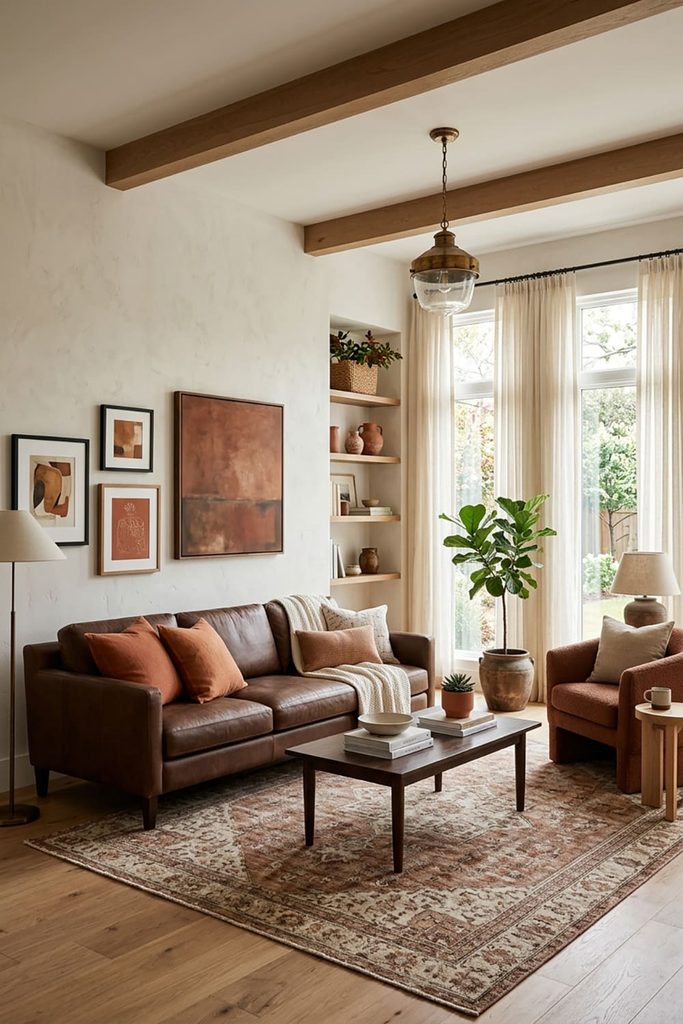
Terracotta can enhance the warmth of brown furniture while adding a subtle earthy color to the living room. Introduce terracotta through cushions, artwork, pottery, curtains, or a small accent chair, keeping the larger furniture and walls relatively neutral.
Cream, beige, and natural wood can balance the richer tones without competing for attention. Use terracotta selectively rather than covering large surfaces, creating a cozy palette that feels warm, grounded, welcoming, and particularly suitable for relaxed interiors.
8. Brown and Black Living Room
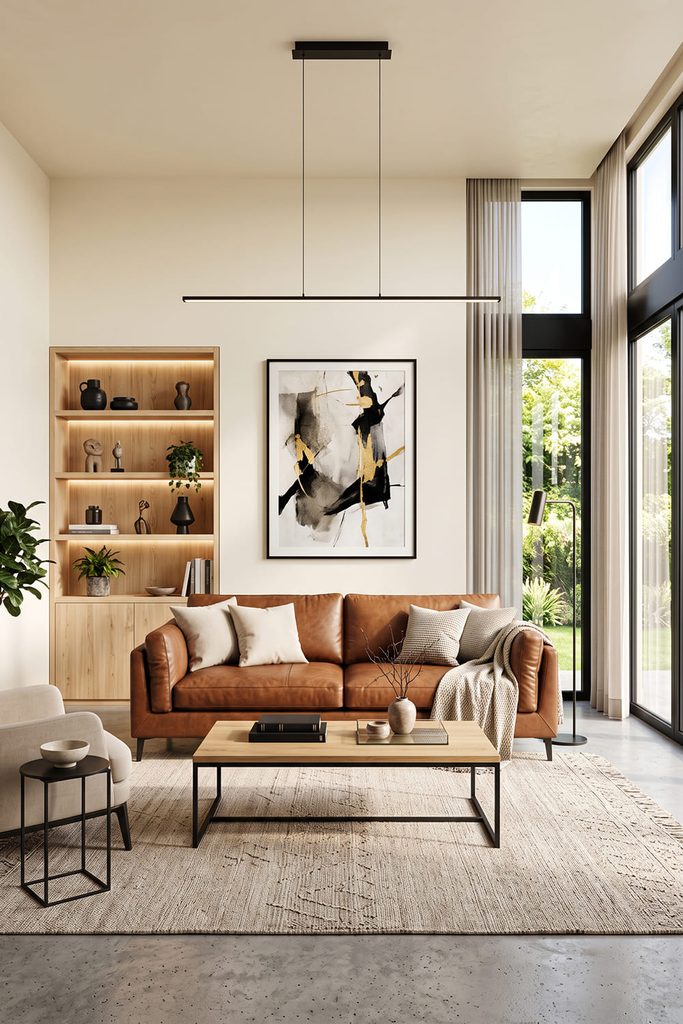
Black accents can give a brown living room a dramatic and contemporary appearance without requiring major changes to the existing furniture. Use black through lighting fixtures, picture frames, table legs, shelving, or small decorative objects while keeping the walls, rug, and larger textiles lighter.
Cream and beige can soften the combination, preventing the room from becoming too dark. Natural wood adds another warm element, creating a sophisticated color scheme that works especially well with modern furniture and simple silhouettes.
9. Brown and Olive Green Living Room

Olive green creates a deeper natural palette that works particularly well with medium and dark brown furniture. Add olive cushions, curtains, artwork, or an accent chair, then use cream or warm beige walls to maintain enough brightness.
Walnut or natural wood furniture can reinforce the earthy character, while brass or black accents provide subtle definition. Keep patterns restrained so the rich colors remain balanced, creating a mature living room that feels warm, grounded, comfortable, and visually sophisticated.
10. Brown and Navy Living Room
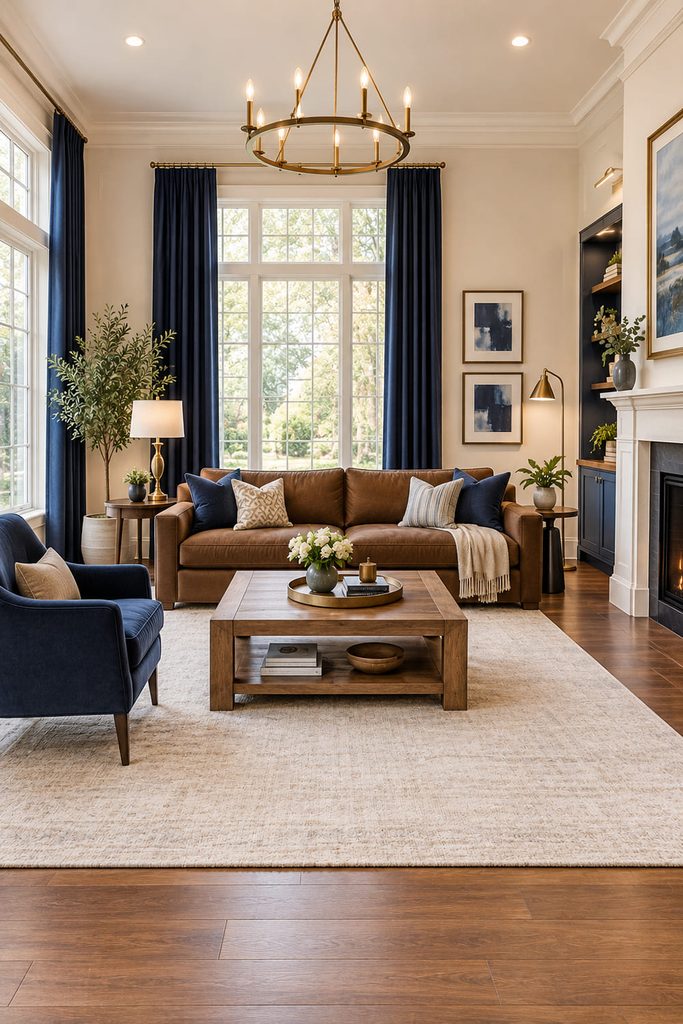
Navy blue can give a brown living room a polished appearance while adding depth and contrast. Pair a brown sofa with navy cushions, curtains, artwork, or an accent chair, then introduce cream walls and a lighter rug to prevent the combination from becoming too dark.
Natural wood can connect the colors and add warmth, while brass or black details can provide a refined finish. This scheme works particularly well when you want a living room that feels elegant without appearing overly formal.
11. Brown and Soft Pink Living Room
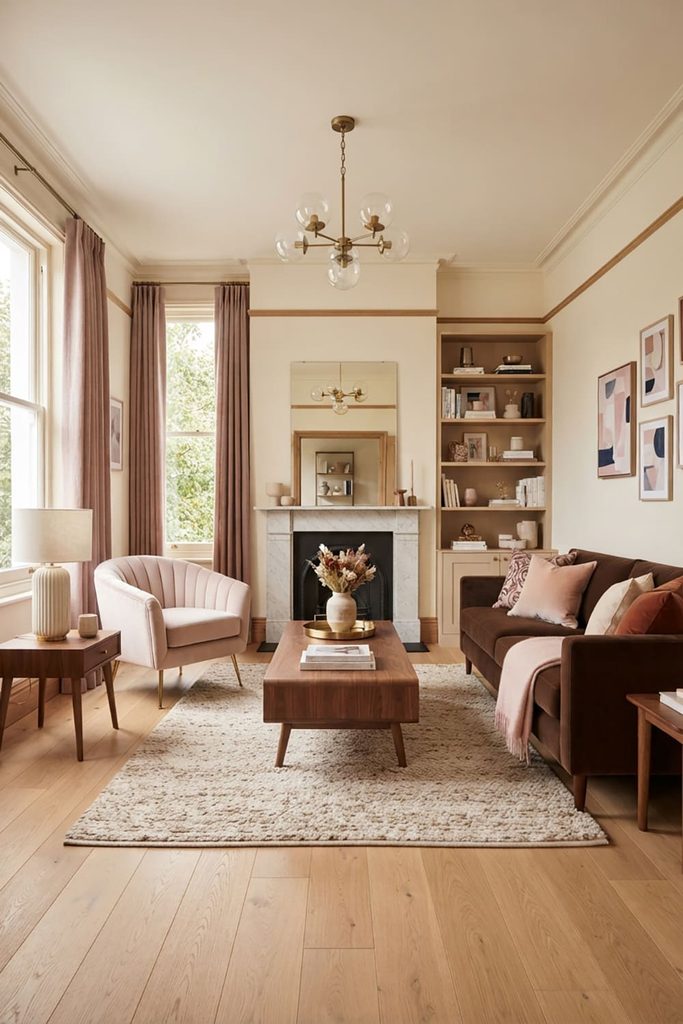
Soft pink can introduce a gentle contrast to brown furniture while keeping the overall living room warm and inviting. Choose dusty rose, blush, or muted pink through cushions, artwork, curtains, or a small accent chair, then balance it with cream walls and natural wood.
Avoid overly bright pink if you want a sophisticated appearance, and keep patterns relatively simple. The resulting palette feels warm and personal while giving a brown-centered room a softer, more contemporary character without becoming overly feminine.
12. Brown and Warm White Living Room
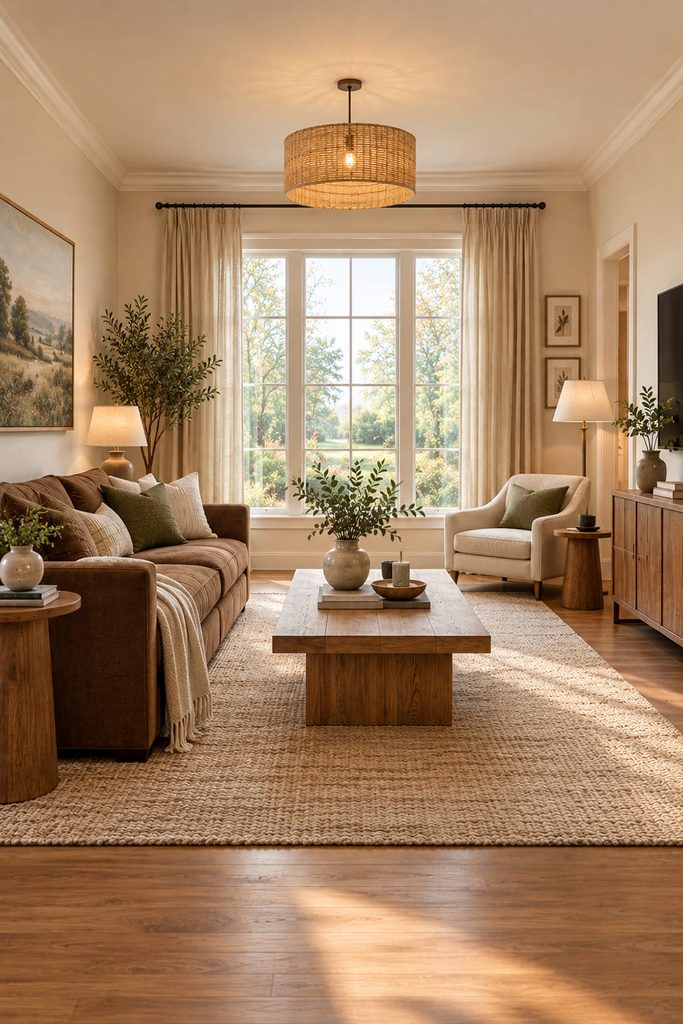
Warm white provides a softer alternative to bright white when decorating around brown furniture. Pair warm-white walls with a brown sofa, beige rug, natural wood coffee table, and cream textiles, then introduce small darker accessories for contrast.
Because warm white contains subtle warmth, it connects naturally with brown rather than creating a stark separation. This palette is particularly useful for creating a bright but comfortable living room that feels timeless, relaxed, clean, and easy to update.
13. Brown and Mustard Yellow Living Room

Mustard yellow can add energy and personality to a brown living room while maintaining an earthy appearance. Introduce mustard through cushions, artwork, a throw, or a small accent chair, keeping the larger furniture and walls neutral to prevent the color from becoming overwhelming.
Cream, beige, and natural wood can soften the stronger yellow tone, while black details provide definition. Used selectively, mustard can make a brown living room feel cheerful, warm, distinctive, and visually interesting without dominating the design.
14. Brown and Charcoal Living Room

Charcoal can create a dramatic modern palette when combined carefully with warm brown furniture. Use charcoal through a rug, accent wall, cushions, or artwork while keeping some larger surfaces lighter to maintain visual balance. Cream textiles and warm wood can soften the darker colors, while black lighting provides additional definition.
This combination works particularly well in rooms with plenty of natural light, creating a sophisticated atmosphere that feels modern, grounded, comfortable, and slightly dramatic without appearing unnecessarily heavy.
15. Brown, Cream, and Green Living Room
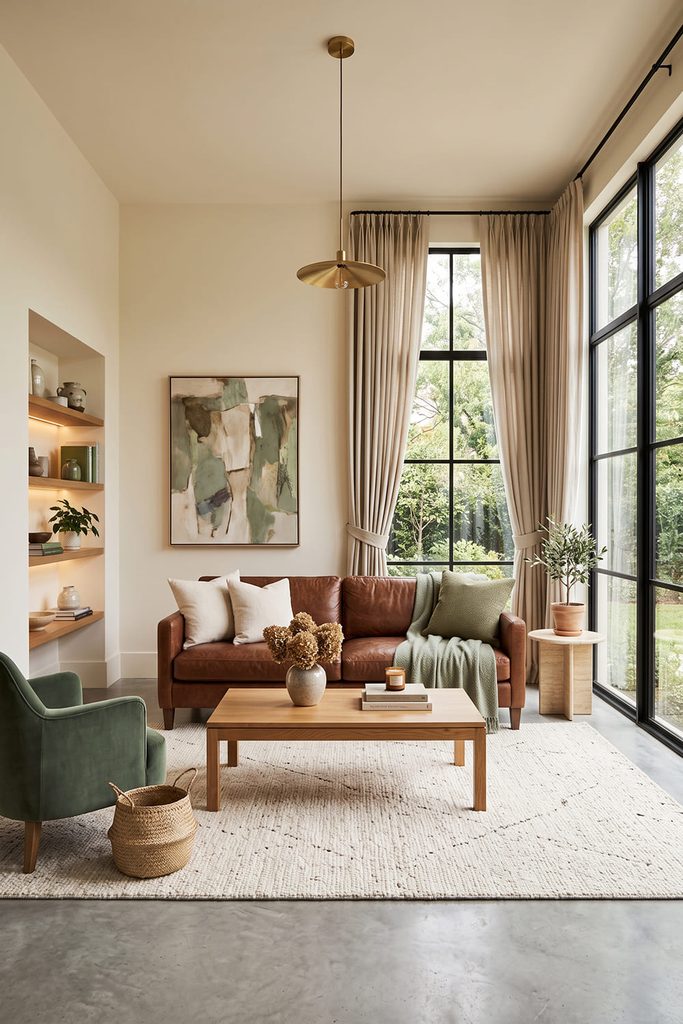
Combining brown, cream, and green creates a balanced palette that brings together warmth, brightness, and natural color. Use brown through the sofa or wood furniture, cream across walls and larger textiles, and muted green through cushions, plants, artwork, or an accent chair.
Keep the green relatively restrained so it complements rather than dominates the room. Natural materials can reinforce the connection between all three colors, resulting in a relaxed living room that feels welcoming, timeless, fresh, and comfortable.
Guide: How to Choose a Brown Living Room Color Scheme
Choosing colors for a brown living room becomes much easier when you first decide what role brown will play in the room.
Brown can appear through:
- A sofa
- Leather furniture
- Wooden flooring
- Coffee tables
- Cabinets
- Accent chairs
- Decorative accessories
Once you know where the brown is concentrated, you can choose supporting colors that either soften it or create contrast.
1. Start With the Shade of Brown
Not every brown works the same way.
Light tan and caramel create a relaxed, casual appearance, while chocolate and espresso brown provide more visual weight.
Medium walnut and warm brown tones can work well in traditional and contemporary rooms.
Look at the undertones of your furniture before choosing wall paint or textiles. A brown with warm red or golden undertones may work particularly well with cream, beige, terracotta, or warm white.
2. Consider Natural Light
Natural light can significantly change how colors appear.
A room with large windows can usually handle deeper colors more comfortably, while a darker room may benefit from lighter walls and rugs.
If the room receives limited daylight, consider:
- Warm white
- Cream
- Pale beige
- Light greige
- Soft muted colors
You can still use dark brown furniture, but balance it with lighter surrounding surfaces.
3. Choose One Main Accent Color
A common decorating mistake is introducing too many accent colors.
Instead, choose one primary accent color and repeat it throughout the room.
For example:
Brown + cream + blue
or
Brown + beige + sage green
or
Brown + warm white + terracotta
Repeating the same accent color through several small elements creates a stronger sense of coordination.
4. Use the 60-30-10 Approach as a Guide
A useful starting point is to divide the room’s colors approximately into three visual groups.
Around 60 percent can be your dominant color, such as cream or warm white walls.
Around 30 percent can be brown through furniture, flooring, or larger pieces.
Around 10 percent can be your accent color, such as blue, green, terracotta, or mustard.
This is only a guideline rather than a strict rule, but it can help prevent the room from becoming visually unbalanced.
5. Add Texture to Neutral Color Schemes
Brown, beige, cream, and white can sometimes look flat if every surface has the same texture.
Introduce variety through:
- Woven baskets
- Linen-style curtains
- Textured cushions
- Wood grain
- Area rugs
- Ceramic accessories
- Leather
- Knitted throws
Different textures can create visual depth without requiring additional colors.
6. Match the Color Scheme to Your Style
Different combinations can create very different moods.
For a modern room, consider brown, gray, cream, and black.
For a farmhouse room, try brown, cream, beige, and muted green.
For a cozy room, consider chocolate brown, warm white, terracotta, and beige.
For a sophisticated room, brown, navy, cream, and subtle metallic details can work beautifully.
Choose colors according to the atmosphere you want rather than simply following a trend.
7. Test Colors Before Painting
Paint colors can look different depending on the room’s natural and artificial lighting.
Before painting the entire room, test a small section of the wall and observe it at different times of day.
Check how the color looks:
- In morning daylight
- In afternoon light
- Under evening lighting
- Beside your brown furniture
- Beside your flooring
This simple step can prevent an expensive color mistake.
Final Thoughts
Brown gives you an excellent foundation for creating a warm and versatile living room, but the supporting colors determine much of the room’s personality. Cream and beige create softness, white adds brightness, blue introduces contrast, green brings a natural feeling, gray creates a contemporary appearance, while terracotta and mustard can add warmth and character.
The best brown living room color scheme does not need to include many colors. Choose a dominant neutral, a supporting brown tone, and one carefully selected accent color, then use texture, lighting, and natural materials to create a cohesive and comfortable space.


