

15 Wall Colors for Dark Brown Flooring to Create a Warm, Stylish Home
Dark brown flooring can give a room a rich, grounded appearance, but the wall color you choose will determine whether the space feels bright, cozy, modern, traditional, or dramatic. Deep walnut, espresso, chocolate, mahogany, and dark-stained oak floors already carry considerable visual weight, so the walls need to work with that depth rather than compete with it.
Light neutrals are an easy starting point because they create contrast and help dark floors remain a feature. Warm whites, creams, beige, taupe, and greige can make the room feel balanced without looking stark.
If you prefer more color, muted sage, dusty blue, olive, terracotta, and soft pink can bring personality while still complementing the richness of brown wood. Deeper shades such as navy, charcoal, and forest green can also work, especially in rooms with good natural light and a deliberately moody design.
Here are 15 wall colors to consider for dark brown flooring.
1. Warm White Walls

Warm white is one of the safest choices for dark brown flooring because it creates strong contrast without making the room feel cold. Look for whites with subtle cream, beige, or warm undertones rather than an icy blue-white.
The lighter walls allow the brown flooring to become a noticeable architectural feature while keeping the upper half of the room visually open. Warm white also gives you considerable freedom with furniture colors.
Cream sofas, beige upholstery, natural wood, olive accents, brass, black, and muted blue can all work against this backdrop. If the room receives limited daylight, a warmer white can be particularly useful because it avoids the sterile quality that some cool whites develop under artificial lighting.
2. Soft Cream Walls
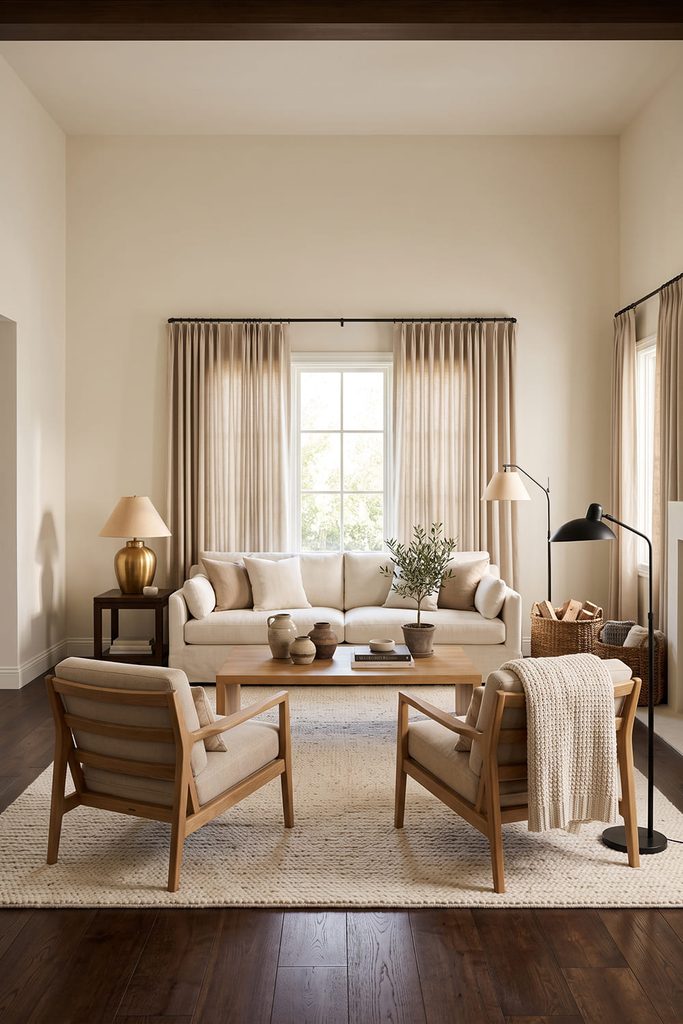
Cream walls create a warmer transition between dark brown floors and the rest of the room. Rather than producing the crisp contrast of white, cream creates a softer relationship that works beautifully in traditional, rustic, transitional, and cozy interiors.
Pair the walls with an ivory sofa, beige curtains, woven accessories, and a lighter area rug. You can then introduce darker furniture or black accents without making the room feel visually disconnected.
Cream is particularly effective when the flooring has warm red, orange, or golden undertones because the wall color reinforces those warmer qualities. Choose a relatively subdued cream rather than a strongly yellow paint if you want the room to maintain a contemporary appearance.
3. Warm Greige Walls
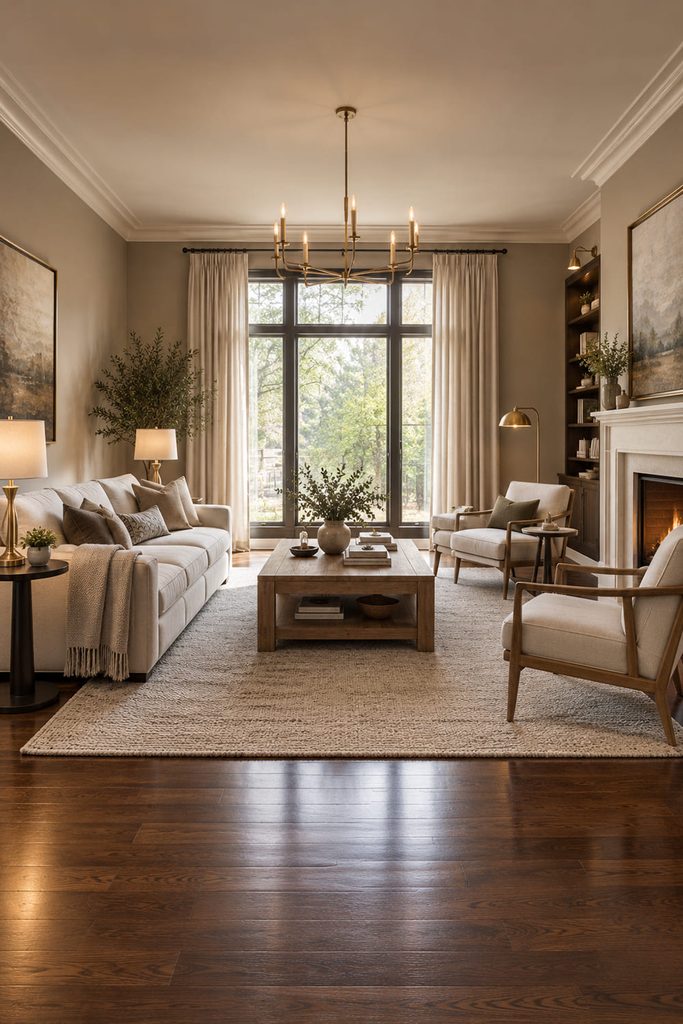
Greige sits between gray and beige, making it useful when you want something more sophisticated than plain beige. A warm greige wall can soften the contrast between dark brown flooring and light furniture while maintaining a contemporary appearance.
It works particularly well with walnut and espresso floors because its muted quality does not compete with the grain of the wood. Add cream upholstery, black accents, warm metal, or natural wood furniture to complete the palette.
The exact undertone matters, so compare samples against the floor rather than selecting a greige based solely on how it looks on a small paint card. Warm greiges can appear considerably different under morning, afternoon, and evening light.
4. Light Taupe Walls

Light taupe gives dark brown floors a sophisticated, slightly warmer alternative to gray. Because taupe contains both brown and gray qualities, it can visually connect the wall to the flooring without making the two surfaces look identical.
Use it throughout the room for a calm tonal scheme or place it behind a cream sofa to create subtle contrast. Light taupe works particularly well with walnut, espresso, and chocolate-brown floors.
Add ivory textiles, natural linen, aged brass, and medium-tone wood for a layered look. If your room is small, choose a relatively light taupe so the walls still reflect enough light. The result is softer than white but brighter than a deeper brown or charcoal wall.
5. Soft Beige Walls
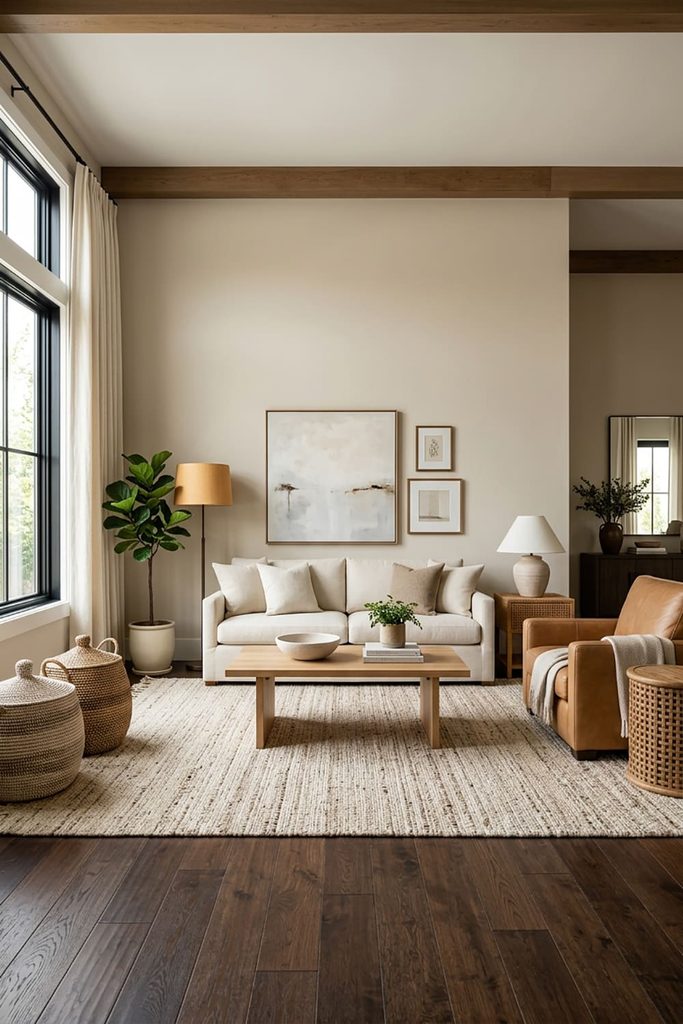
Soft beige remains a reliable choice for dark brown flooring because both colors have warm, earthy qualities. The important distinction is to choose a beige with enough lightness to contrast with the floor.
A beige wall paired with a dark chocolate floor can create a welcoming backdrop for cream furniture, tan leather, natural wood, and woven materials. Avoid choosing an overly yellow beige if the floor already has strong golden or orange undertones.
A more balanced beige will give you greater flexibility with furniture and accessories. This palette works particularly well for living rooms, family rooms, and open-plan spaces where you want the flooring to feel warm without making the entire room dark.
6. Pale Gray Walls
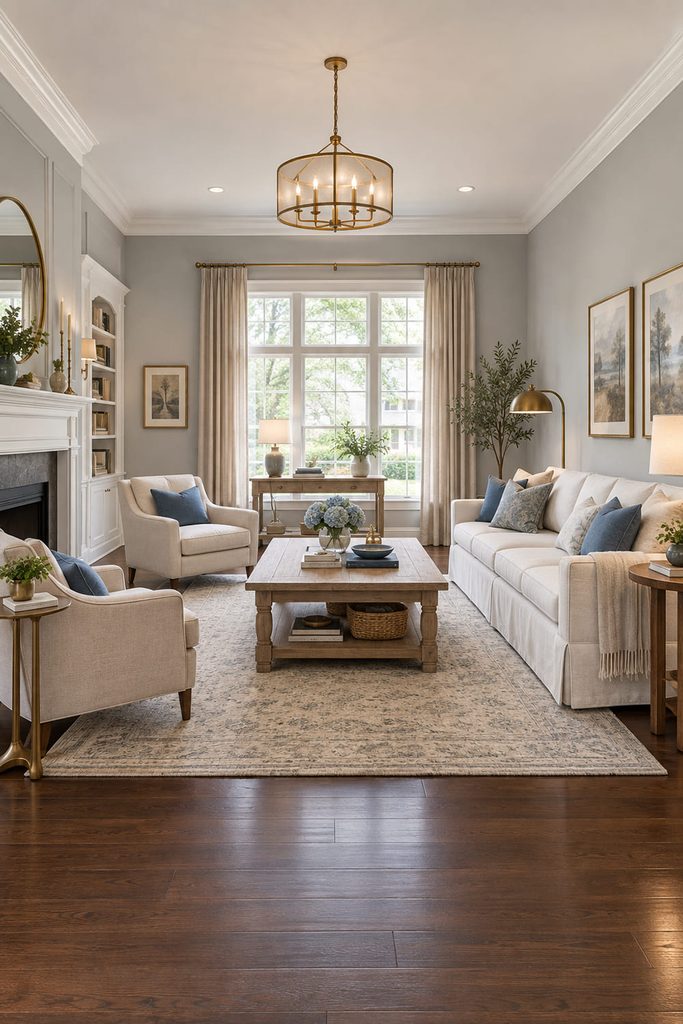
Pale gray can give dark brown flooring a cleaner, more contemporary appearance. The contrast between the cool wall and warm wood can make the flooring look especially rich. Choose a soft gray rather than an extremely icy shade if you want the room to remain comfortable.
Add cream upholstery, natural wood, muted blue, or warm metal accents to bridge the temperature difference. This option can be particularly attractive with espresso flooring that already has relatively neutral or gray undertones.
If your floor has strong reddish or golden qualities, test the gray carefully because an overly cool gray can make the wood appear more orange by comparison. Matching the undertones is important when combining wood and paint.
7. Sage Green Walls
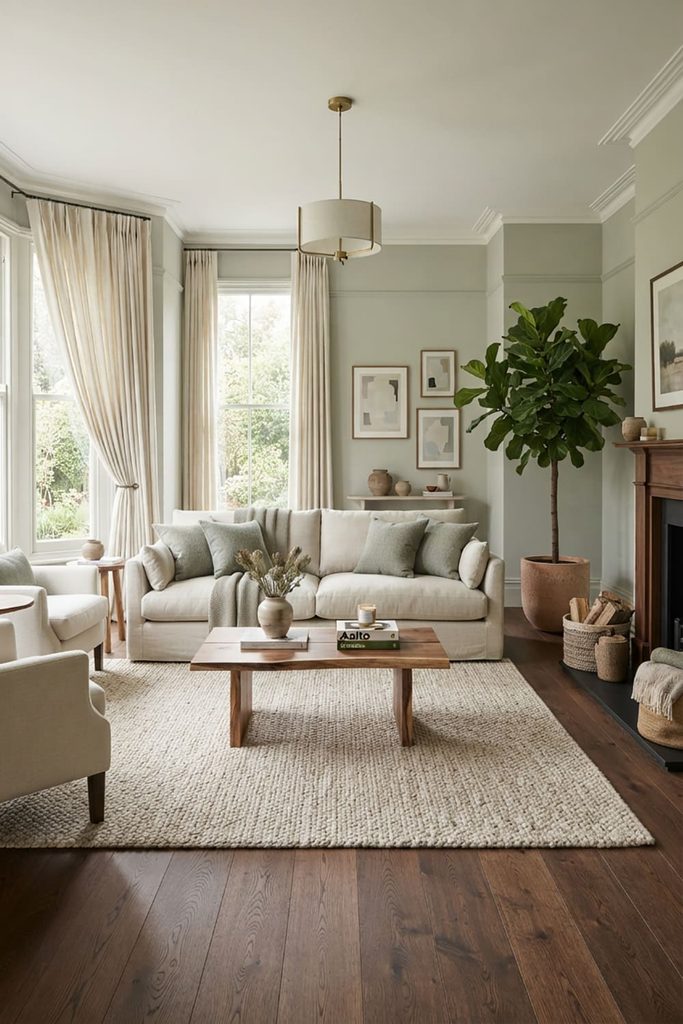
Sage green brings a natural, muted color to rooms with dark brown flooring. The combination works because both the wood and green have earthy qualities, but they are different enough to create visual interest.
Use a pale sage for a brighter room or a medium muted sage when you want more depth. Cream curtains, an oatmeal sofa, natural wood furniture, and woven textures complement the palette beautifully.
Avoid highly saturated green if you want a relaxed appearance. Current color direction also continues to favor softer sage and subdued green shades for interiors, reinforcing their usefulness as alternatives to traditional neutrals.
8. Muted Olive Green Walls

Olive green gives dark brown floors a deeper and more sophisticated natural character than pale sage. It works especially well with walnut and reddish-brown flooring. Because both colors are relatively strong, use lighter furniture and textiles to keep the room balanced.
An ivory sofa, beige rug, cream curtains, and brass lighting can provide enough contrast against olive walls and dark flooring. Olive is also a useful option when you want the room to feel cozy rather than bright and minimalist.
Use a muted, grayish olive instead of a vivid green for a more refined result. The color can work across traditional, modern, rustic, and transitional interiors.
9. Dusty Blue Walls

Dusty blue creates a refreshing contrast with dark brown flooring. Unlike a vivid blue, a muted version contains enough gray to feel sophisticated and easy to live with. It can work particularly well with espresso and walnut floors because the cool wall color offsets the warmth of the wood.
Add cream upholstery, beige curtains, and natural wood furniture to connect the two sides of the palette. Dusty blue is especially attractive in living rooms and bedrooms where you want a calmer atmosphere.
If the room receives limited natural light, choose a lighter dusty blue rather than a deep blue so the walls do not become visually heavy. Muted blue is among the recommended cooler options for dark flooring.
10. Pale Blue-Gray Walls

Pale blue-gray is a good choice when you want the freshness of blue with the restraint of a neutral. Against dark brown flooring, it produces noticeable but gentle contrast. Use the color with a cream sofa, light rug, white or ivory curtains, and warm wood furniture.
The blue-gray walls can also make dark flooring feel less dominant in a room where there is plenty of natural daylight. Be careful with strongly blue or icy gray paint, particularly if the room already has cool lighting.
A slightly muted shade with a gray base will generally feel more integrated. This is a particularly useful palette for contemporary, coastal-inspired, and transitional rooms.
11. Muted Terracotta Walls
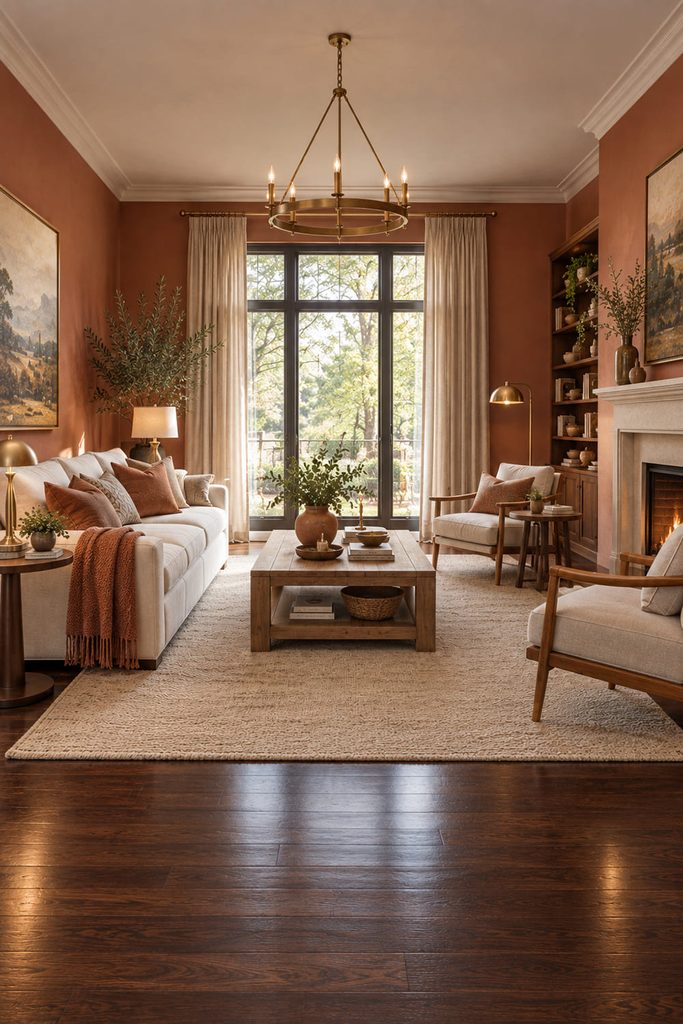
For a warmer and more expressive room, muted terracotta can look beautiful with dark brown flooring. Rather than choosing a bright orange, look for a dusty clay shade containing brown or muted red undertones.
This allows the wall color to relate naturally to the flooring while still being visibly different. Use cream or ivory furniture to provide contrast and introduce natural linen, woven textures, and aged brass.
Terracotta works especially well in rooms with plenty of daylight because sunlight can bring out the earthy qualities of the paint. If your dark brown floor is already strongly red-toned, choose a softer neutral terracotta so the room does not become overly warm.
12. Dusty Rose Walls

Dusty rose is an unexpected option for dark brown flooring, but its muted quality makes the combination surprisingly sophisticated. Choose a soft, earthy pink rather than a bright candy shade.
The warmth of the floor gives the pink more depth, while the wall color prevents the brown from feeling overly masculine or heavy. Pair dusty rose walls with cream furniture, walnut accents, beige textiles, and aged brass.
This palette can work particularly well in living rooms that combine vintage furniture with contemporary pieces. Earthy pinks are also increasingly being treated as versatile neutrals rather than colors restricted to traditionally feminine spaces.
13. Deep Navy Walls
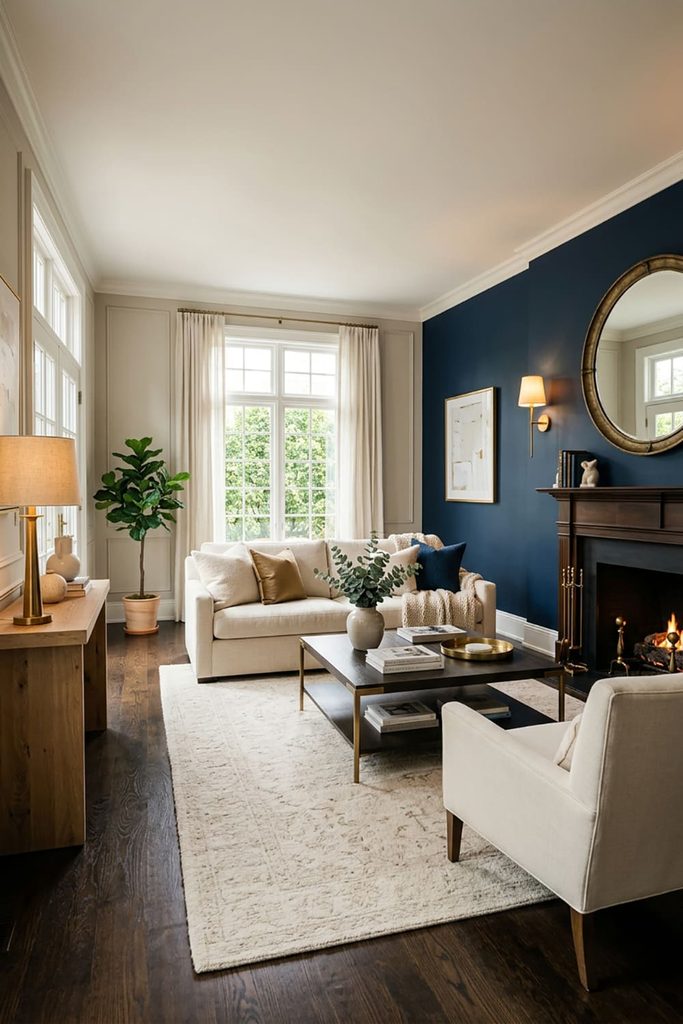
Deep navy can create a dramatic living room when paired with dark brown flooring. This is a low-contrast approach, so it works best when the room has sufficient natural light or a well-planned artificial lighting scheme.
Use cream furniture, a pale rug, brass lighting, and lighter artwork to prevent the room from becoming visually flat. Navy walls can look particularly impressive behind a cream sofa or a large piece of artwork.
If all four walls feel too dark, use navy on a single feature wall and keep the remaining walls warm white or greige. Deeper wall colors can create an enveloping atmosphere with dark floors, but proportion and lighting become more important as the palette gets darker.
14. Forest Green Walls

Forest green produces a rich, dramatic combination with dark brown flooring. The two colors share an earthy character, making the room feel grounded rather than artificially contrasted.
Because both are deep shades, use lighter furniture and accessories throughout the space. A cream sofa, ivory rug, natural linen curtains, and warm brass lighting can provide enough visual relief.
Forest green is particularly effective in larger rooms, studies, libraries, and traditional living spaces, but it can also work in a smaller room if the lighting is strong and the furniture remains relatively light. A slightly muted forest green is generally easier to coordinate than a highly saturated emerald.
15. Charcoal Gray Walls
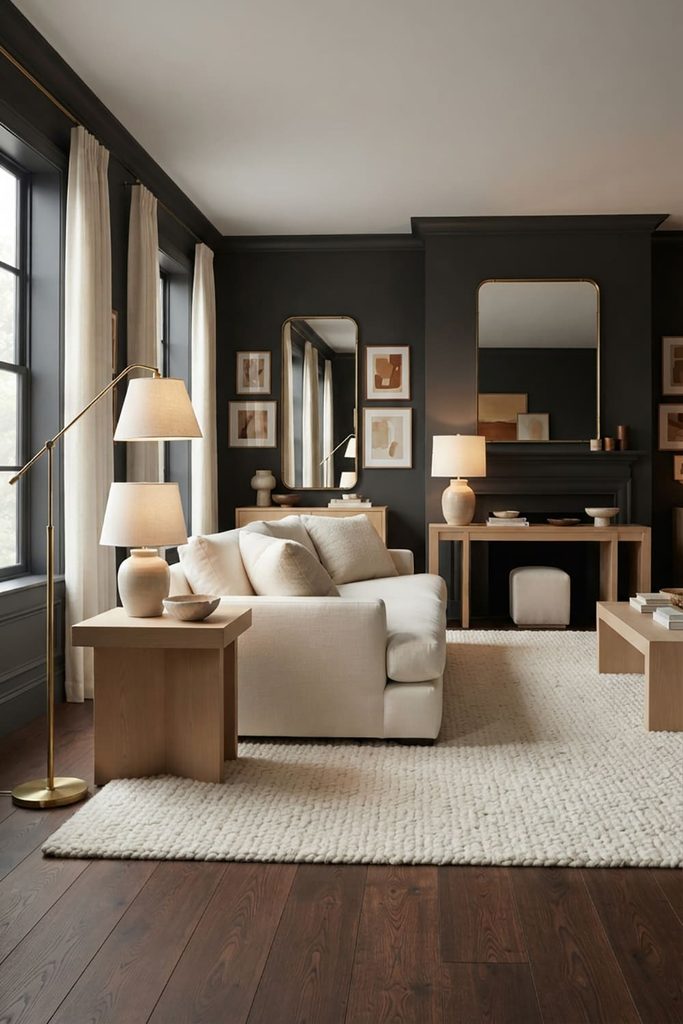
Charcoal gray is for those who want a sophisticated, moody interior. When used with dark brown flooring, it creates a tonal room with relatively little contrast between the walls and floor. This can look extremely elegant when balanced with lighter furniture, strong artwork, warm lighting, and reflective materials.
Try a cream sofa, ivory rug, brass floor lamp, and large mirror against charcoal walls and dark hardwood. Avoid filling the entire room with additional black or dark brown furniture unless you deliberately want an extremely dramatic scheme.
Charcoal is best suited to rooms where you can control lighting and introduce enough lighter surfaces to prevent the space from becoming visually compressed.
How to Choose the Right Wall Color for Dark Brown Flooring
Start by looking at the undertone of your flooring. Dark brown floors are not all the same. Some contain red or orange undertones, while others lean toward gray, black, or neutral brown. The wall color should either harmonize with those undertones or deliberately provide controlled contrast.
For warm brown flooring, cream, warm white, beige, taupe, muted terracotta, and earthy green are strong starting points. For cooler espresso or gray-brown flooring, soft gray, pale blue-gray, muted sage, and balanced whites can work particularly well. Paint manufacturers also recommend considering whether the floor and wall colors share warm or cool undertones rather than choosing colors based only on their surface appearance.
Room lighting matters just as much. A color that looks creamy in a bright showroom may appear noticeably darker in a north-facing or poorly lit room. Likewise, a gray that looks neutral during daylight can develop a blue or green cast under artificial lighting.
Should You Choose Light or Dark Walls?
Light walls are generally the easier option when the goal is to make dark brown flooring stand out. Warm white, cream, beige, and light greige create more visual separation and can help a room feel open.
Dark walls can work beautifully when you specifically want a moody, intimate atmosphere. Navy, charcoal, forest green, and deep olive can create a sophisticated room, but they require more attention to lighting and furniture contrast. A large light-colored rug, cream upholstery, mirrors, and warm lamps can prevent the combination from becoming overwhelming.
Test the Paint Before Painting the Entire Room
Do not choose a wall color from a tiny paint chip alone. Paint large samples on more than one wall and observe them at different times of day. Natural daylight, shadows, warm bulbs, and surrounding furniture can all influence how the color appears. Current designer advice continues to emphasize sampling multiple areas because some paint colors can look dramatically different once they are exposed to the actual lighting conditions of a room.
Place the sample close to the dark flooring as well. This makes it easier to see whether the undertones work together.
Final Thoughts
Dark brown flooring gives you a surprisingly wide range of wall-color options. Warm white and cream create a bright contrast, beige and taupe produce a softer transition, while sage, olive, and dusty blue introduce color without overwhelming the wood. Terracotta and dusty rose bring warmth and personality, while navy, forest green, and charcoal create a more dramatic atmosphere.
The best choice depends on three things: the undertone of your flooring, the amount of natural light in the room, and the mood you want to create. If you want the safest starting point, try a warm white, soft cream, light greige, or beige. If you want more character, move toward muted green, dusty blue, or terracotta. For a deeper designer-style room, navy, forest green, or charcoal can work beautifully when balanced with lighter furniture and thoughtful lighting.


