

15 Blue Living Room Ideas for Small Living Rooms
A small living room can still have plenty of personality. Blue is especially useful because it can shift from airy and subtle to rich and dramatic depending on the shade, lighting, and amount used. The trick is choosing a blue that works with the room’s natural light and then balancing it with furniture and materials that keep the space from feeling crowded.
For a compact room, color is only part of the design. Furniture scale, open floor space, lighting, mirrors, storage, and the arrangement of seating all affect how spacious the room feels. Designers continue to recommend keeping pathways clear, allowing some visual breathing room, and choosing furniture that does not make the floor feel completely covered.
Blue also offers plenty of flexibility. Soft powder blue can create an airy backdrop, navy can add depth, and muted blue-green shades can bring warmth and character. Current 2026 color guidance from Dulux includes several blue palettes ranging from airy blues to deeper indigo tones, showing how differently the color can work depending on the desired mood.
Here are 15 blue living room ideas designed specifically for small spaces, with practical ways to make each look work without overwhelming the room.
1. Soft Powder Blue Walls With a Cream Sofa

Soft powder blue walls can give a small living room a light, open feeling without leaving it completely white. Pair the walls with a compact cream or ivory sofa to create gentle contrast while keeping the overall palette bright.
Choose furniture with visible legs so more of the floor remains exposed. A small round wood coffee table can add warmth without taking up as much visual space as a bulky rectangular table.
Keep the curtains light and relatively simple. Add a few blue cushions to connect the sofa with the walls, then introduce natural wood through shelves, frames, or a side table. This combination works especially well in rooms with good daylight because the pale blue can change subtly throughout the day.
2. Navy Accent Wall Behind the Sofa
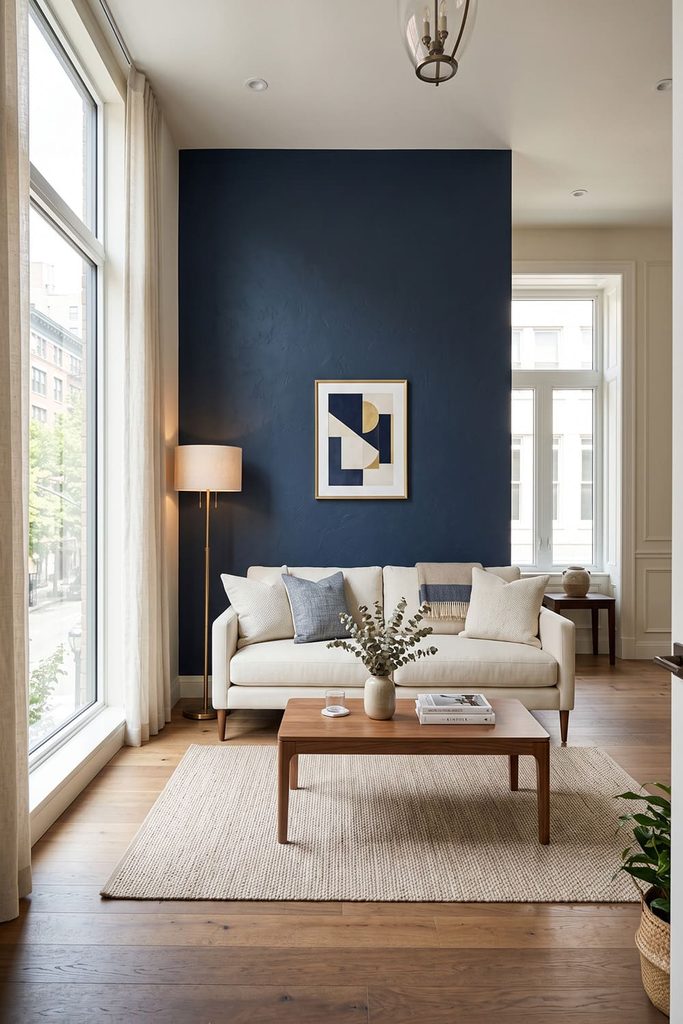
You do not need to paint an entire small living room navy to enjoy the drama of a dark blue. Instead, use navy on the wall behind the sofa and keep the remaining walls warm white or pale neutral.
The accent wall gives the room a strong focal point without surrounding the entire space with a dark color. Choose a compact sofa in cream, beige, or light gray to provide contrast.
A wooden coffee table can soften the navy while brass or aged-metal lighting adds a small amount of warmth.
If the room receives limited daylight, test the paint color at different times before committing. Current design guidance notes that darker blue shades can feel heavier in rooms without enough supporting light.
3. Blue Sofa With Warm White Walls

If painting the walls feels like too much of a commitment, make the sofa your main blue statement. A compact blue loveseat or apartment-sized sofa can bring color into the room while keeping the walls bright.
Choose a medium blue rather than an extremely dark navy if the room is particularly small. Pair it with warm white walls, a light rug, and pale wood furniture. Use cushions in cream, muted blue, and one warmer accent such as rust or terracotta. Warm accents can prevent blue from feeling overly cool.
This approach is also easy to change later. If you eventually want a different color scheme, you can replace or reupholster the sofa without repainting the entire room.
4. Light Blue and Natural Wood Living Room

Combine pale blue walls with natural oak, ash, or light walnut furniture for a relaxed and welcoming look. Wood is particularly useful with blue because its warm undertones can counterbalance the cooler qualities of many blue shades.
Choose a small wood coffee table with an open base instead of a solid cabinet-style design. Add a compact sofa in cream or oatmeal and use blue cushions to reinforce the wall color.
A woven basket, linen curtain, or jute-style rug can add texture without introducing too many colors. Keep the accessories restrained. In a small room, a few larger, useful pieces often look better than many tiny decorations competing for attention.
5. Blue and White Coastal-Inspired Small Living Room
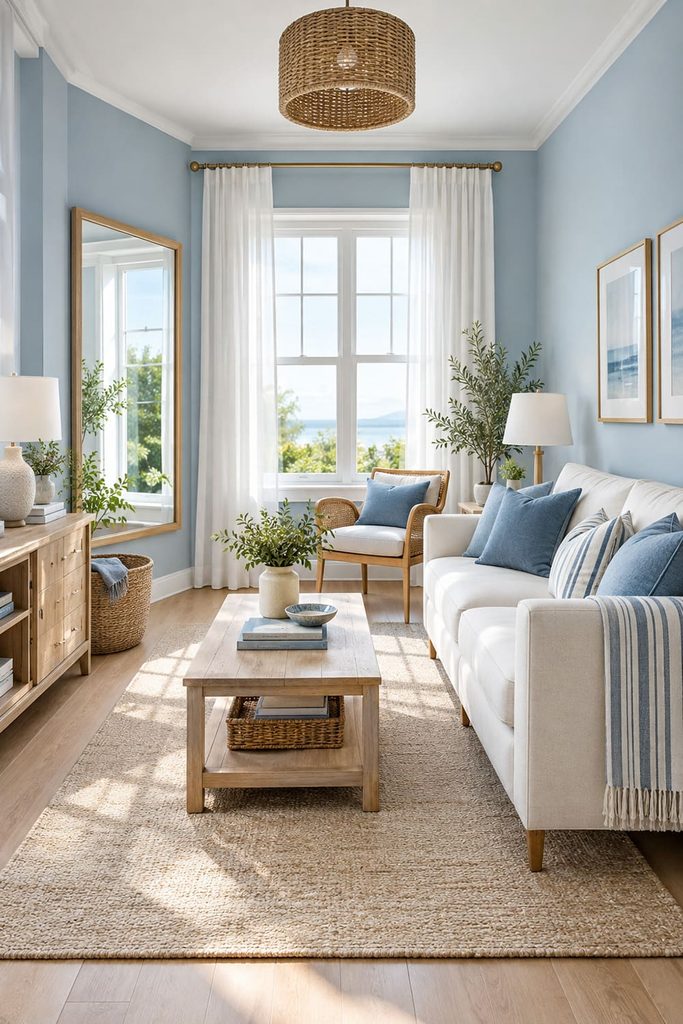
A coastal-inspired blue and white scheme can make a compact living room feel fresh without relying on obvious nautical decorations. Use soft blue walls with an off-white sofa, then add medium-blue cushions and one or two striped textiles. Introduce pale wood through the coffee table or side tables.
Avoid filling the room with seashells, anchors, and other themed accessories. Instead, let the colors and natural textures create the coastal character.
Sheer or lightweight curtains can help maintain a bright appearance during the day. A mirror positioned where it can reflect natural light can also make the room feel more open. The finished space should feel relaxed rather than themed.
6. Moody Blue With a Light Ceiling

A small living room can handle a deeper blue if you balance it carefully. Paint the walls in a rich navy, indigo, or blue-green shade while keeping the ceiling noticeably lighter.
Use a light-colored sofa to break up the darker walls. Cream, oatmeal, pale gray, or soft beige upholstery can provide enough contrast. Choose one or two warm elements such as a wood coffee table or brass floor lamp. These details prevent the darker palette from feeling flat.
Keep the floor relatively visible and avoid oversized furniture. A deep color can create an intimate atmosphere, but too many visually heavy pieces can make a compact room feel crowded. The goal is cozy depth rather than darkness everywhere.
7. Blue-Green Walls With Cream Furniture

Blue-green is an excellent option if traditional blue feels too cool. A muted teal, dusty aqua, or blue-green shade can introduce more warmth while retaining the calm character associated with blue.
Pair the walls with a cream sofa and warm wood furniture. Keep the curtains close to the wall color or choose a soft neutral so the windows do not become another competing feature.
Use cushions in muted green, beige, and blue rather than adding several unrelated colors.
This palette works especially well when the room already contains natural materials. A wooden floor, woven basket, rattan lamp, or leafy plant can help the colors feel connected to the rest of the home.
8. Small Blue Living Room With a Large Mirror

A mirror can become both decoration and a practical visual tool in a compact blue living room. Place a generously sized mirror opposite or near a window where it can reflect available daylight.
Use soft blue walls as the backdrop and keep the surrounding furniture relatively simple. A cream loveseat, narrow coffee table, and slim floor lamp can provide everything the room needs.
Avoid surrounding the mirror with too many small decorative objects. Let it remain a strong visual feature.
Current small-room design guidance consistently highlights mirrors, reflected light, open floor areas, and low-visual-weight furniture as useful ways to make compact spaces feel more open.
Choose a frame that complements your room, such as natural wood for a relaxed look or simple black for a modern interior.
9. Blue Accent Chairs Instead of a Blue Sofa
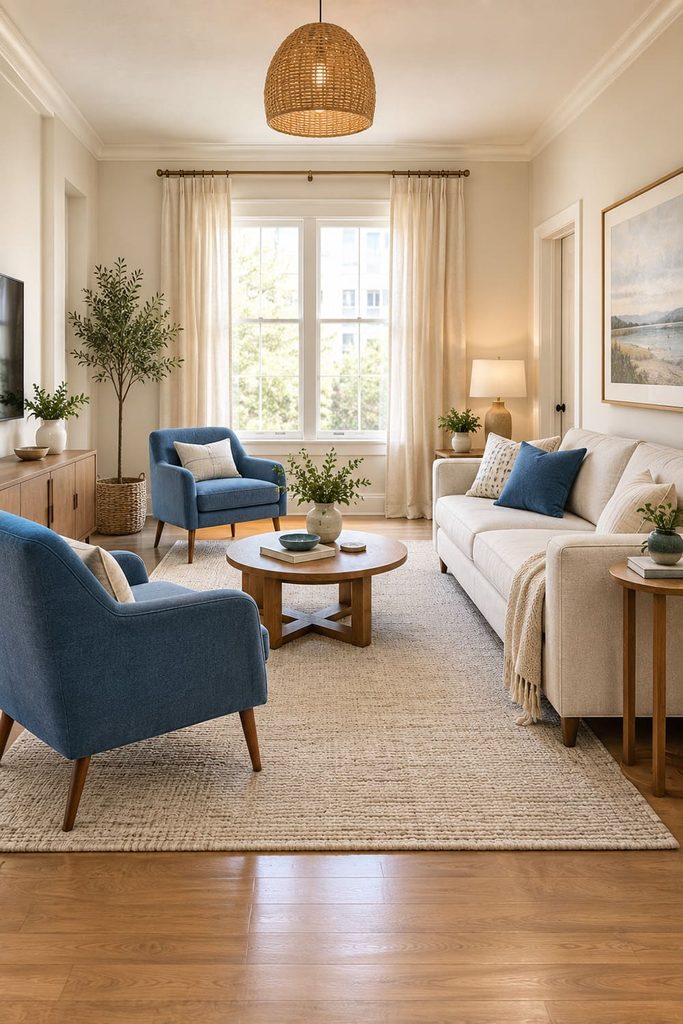
A small living room does not always have enough space for a large sectional or substantial blue sofa. Instead, introduce blue through one or two compact accent chairs.
Keep the main sofa neutral, then position a blue chair beside it to create contrast. Two smaller chairs can sometimes provide more flexible seating than one bulky armchair.
Choose chairs with exposed legs and relatively slim arms. This allows the floor to remain visible and makes the seating arrangement feel lighter. Add a blue cushion to the sofa so the accent chair does not look disconnected.
This is also a useful approach for renters because you can introduce a strong color without painting the walls.
10. Pale Blue Monochromatic Living Room

Using several related shades of blue can create a cohesive small living room without making it visually complicated. Start with pale blue walls, then introduce slightly deeper blue through the sofa, cushions, rug, or artwork.
The shades should be related rather than identical. For example, combine misty blue walls with medium-blue upholstery and a deeper blue decorative cushion. Keep the major furniture pieces simple so the color layering remains the main feature.
Add cream or warm white to break up the blue and prevent the room from feeling overly cool. Dulux’s current blue palettes also demonstrate how several shades from the same color family can be layered to create different moods while maintaining visual continuity.
11. Blue Sofa With Terracotta Accents

Blue and terracotta create a warm contrast that can make a small living room feel more inviting. Start with a compact blue sofa against a warm white or beige wall.
Then introduce terracotta through one cushion, ceramic vase, artwork, or small throw. Keep the accent color controlled rather than repeating it throughout every accessory.
Natural wood works beautifully between the two colors. A medium-toned wood coffee table can act as a visual bridge between the cool blue and warm terracotta.
Use cream or oatmeal for the rug and curtains so the room does not become overly colorful. This palette is especially effective when you want a blue living room that feels warm and comfortable rather than coastal or cool.
12. Blue Walls With Floating Furniture

Furniture that sits directly on the floor can make a small room feel visually dense. Try a compact sofa or media console with visible legs instead. Pair the furniture with muted blue walls and a light-colored rug.
The exposed floor beneath the furniture creates small areas of visual breathing room. A narrow floating shelf can provide display space without taking up floor area. Keep only a few items on it so the wall remains relatively open.
If you have a television, consider mounting it on the wall rather than placing it on a large entertainment unit. The goal is not to eliminate furniture but to reduce the amount of solid visual mass sitting on the floor.
13. Blue and Beige Small Living Room

Blue becomes warmer and more sophisticated when combined with beige. Use a muted blue on the walls or sofa, then introduce beige through upholstery, curtains, a rug, and cushions.
Choose a warm beige rather than a grayish beige if the room receives cool northern light. In a sunny room, either warm or neutral beige can work depending on the existing flooring and furniture.
Wooden furniture adds another warm layer without requiring another strong color. Keep the shapes simple. A small sofa, round coffee table, narrow side table, and one floor lamp may be all the room needs. The restrained palette allows the small room to feel decorated without looking overloaded.
14. Blue Color-Blocked Small Living Room
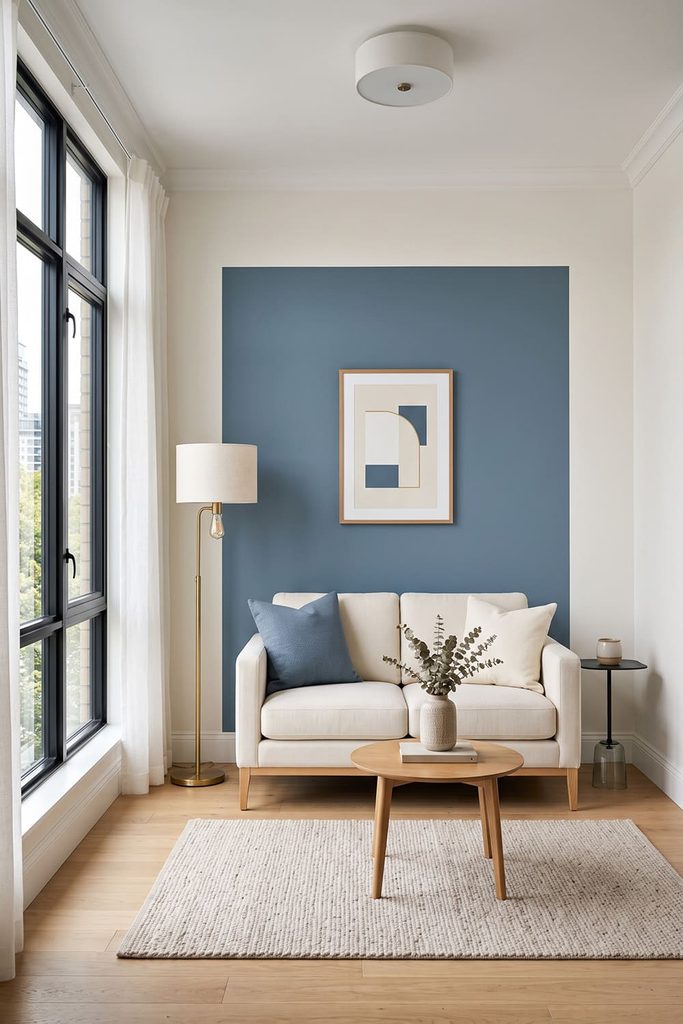
For something more contemporary, use blue as part of a simple color-blocked wall. Instead of painting an entire room, create a blue rectangular section behind the sofa or around a small architectural feature.
Keep the remaining wall a warm white or soft neutral. Repeat the blue through one cushion, artwork, or small accessory. This creates a focal point without requiring extensive furniture or decoration.
If the room has an awkward corner, color blocking can also help visually define a seating area. Current 2026 color guidance from Dulux includes color blocking as one way to connect different areas and create visual continuity.
Keep the shapes clean and avoid adding too many additional patterns.
15. Small Blue Living Room With Layered Lighting
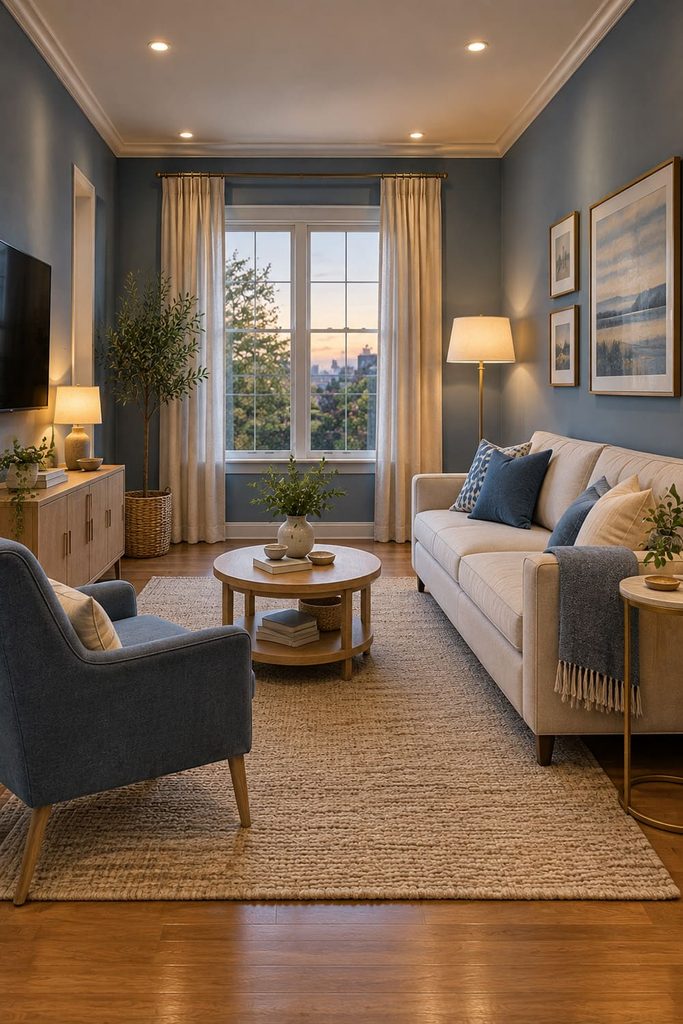
Good lighting can completely change how blue looks in a small living room. Instead of depending on one ceiling fixture, combine several smaller sources.
Use a floor lamp beside the sofa, a table lamp on a console or side table, and warm ceiling lighting when needed. This creates different levels of illumination and prevents the blue walls or furniture from appearing flat.
For a deeper blue room, warm lighting can add softness. For pale blue walls, a mixture of daylight and warm evening lamps can create a more layered appearance.
Keep lamps relatively slim so they do not consume valuable floor space. Current small-room decorating guidance recommends layered lighting as a relatively simple way to refresh a living room without major structural changes.
How to Make a Blue Living Room Feel Bigger
The right blue shade helps, but the room’s layout matters just as much. Start by keeping the main walking path clear. A small living room should not require you to squeeze around the coffee table or move furniture whenever someone enters the room.
Choose furniture that is appropriately scaled. A compact sofa with visible legs can often feel lighter than a large sofa with a solid base. If you need additional seating, consider an ottoman or small accent chair instead of another oversized piece.
Use mirrors strategically, particularly where they can reflect daylight. Keep window treatments relatively light if the room needs more natural brightness.
Color can also help. Pale and muted blues generally feel more airy, while deep navy and saturated blue create more visual weight. That does not mean dark blue is off limits. It simply means the room needs enough contrast, light, and visual breathing space to support it.
Finally, avoid filling every empty corner. Current interior designers continue to emphasize the value of leaving some areas visually quiet rather than treating every available surface as a decorating opportunity.
Conclusion
A small living room can look beautiful in blue without feeling cramped or overly dark. The key is to decide how much blue the room can comfortably handle and then balance it with lighter surfaces, warm materials, appropriate furniture, and good lighting.
Soft powder blue works beautifully when you want an airy backdrop, while navy or indigo can create a dramatic focal point when used selectively. Blue sofas, accent chairs, rugs, artwork, and accessories offer alternatives if you do not want to paint the walls.
For the best results, pay as much attention to layout as color. Keep pathways open, choose furniture that suits the room’s actual scale, allow some floor to remain visible, and use mirrors and layered lighting where they can make a genuine difference.
The most successful small blue living rooms are not the ones with the most decoration. They are the ones where every major piece has enough room to breathe.


