

How to Pair Accent Colors With a Blue Living Room?
Blue gives a living room a strong foundation, but the right accent colors are what make the space feel finished. A blue sofa, blue walls, or even a blue rug can look very different depending on what surrounds it. Warm terracotta can make blue feel inviting, soft cream can keep it calm, while green creates a natural connection between the room and the outdoors.
Yellow, pink, rust, brown, and brass can also work beautifully when used in controlled amounts. The easiest approach is to let blue remain the dominant color and introduce one main accent through cushions, artwork, curtains, chairs, rugs, or smaller decorative pieces.
Designers often recommend avoiding equal amounts of two strong colors because the room can quickly become visually busy. Softer versions of contrasting colors are generally easier to live with, especially when the blue itself is rich or highly saturated.
Here are 15 practical ways to pair accent colors with a blue living room without making the palette feel forced.
1. Warm Terracotta With Deep Blue
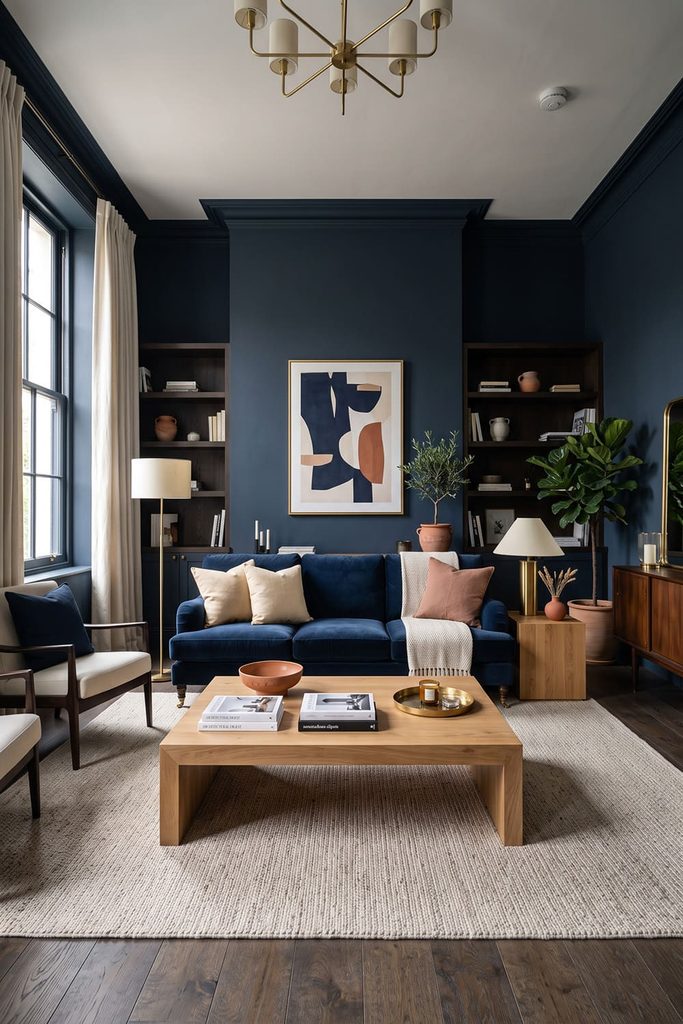
Terracotta is one of the easiest ways to warm up a blue living room. Deep navy, cobalt, or blue-gray can sometimes feel cool, particularly in rooms with limited natural light. Introduce terracotta through cushions, a ceramic vase, artwork, a patterned rug, or a small upholstered chair. The earthy orange-red quality creates noticeable contrast without requiring a large amount of color.
For a sophisticated result, choose muted terracotta rather than bright orange. A navy sofa with cream cushions, terracotta pillows, warm wood, and a woven rug creates a balanced palette with both cool and warm elements. Blue and orange sit opposite each other on the traditional color wheel, which explains the natural contrast between them.
2. Cream Accents for a Softer Blue Room
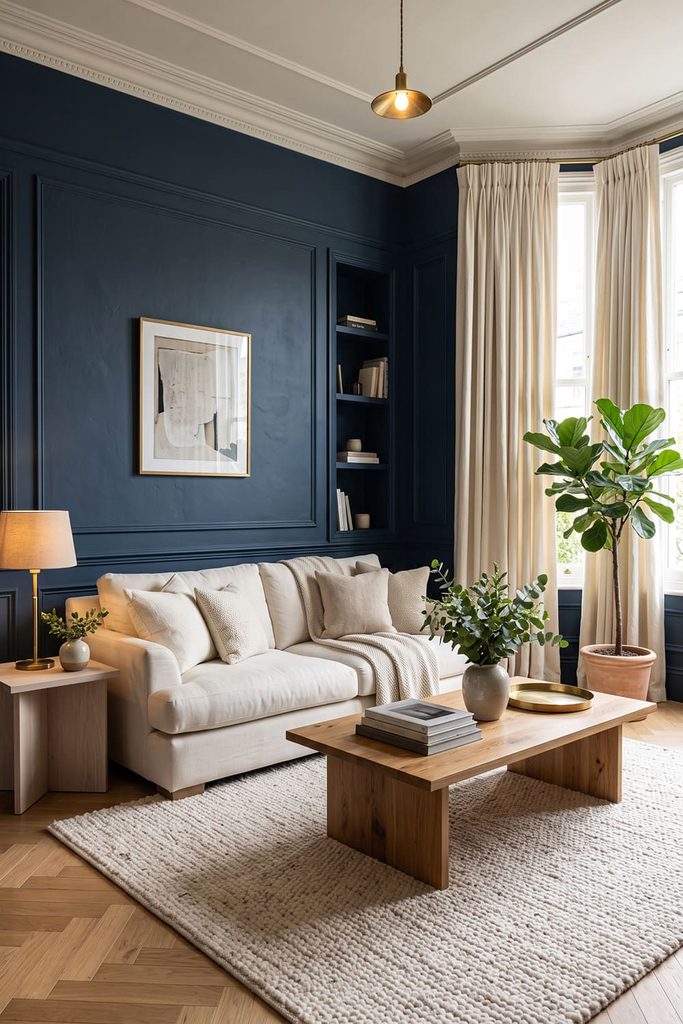
Cream is useful when you want blue to remain the star without introducing another strong color. Use warm ivory or creamy white on curtains, sofas, cushions, rugs, lampshades, or occasional chairs. This works particularly well with navy and medium blue because the warmer neutral prevents the room from looking overly cold.
Try navy walls with a cream sofa, blue cushions, natural wood furniture, and an ivory rug. If your blue is pale, cream can create a gentle layered look instead of the sharper contrast produced by bright white. Designers also note that warmer cream can soften blue more effectively than stark white.
3. Add Sage Green for a Natural Feel
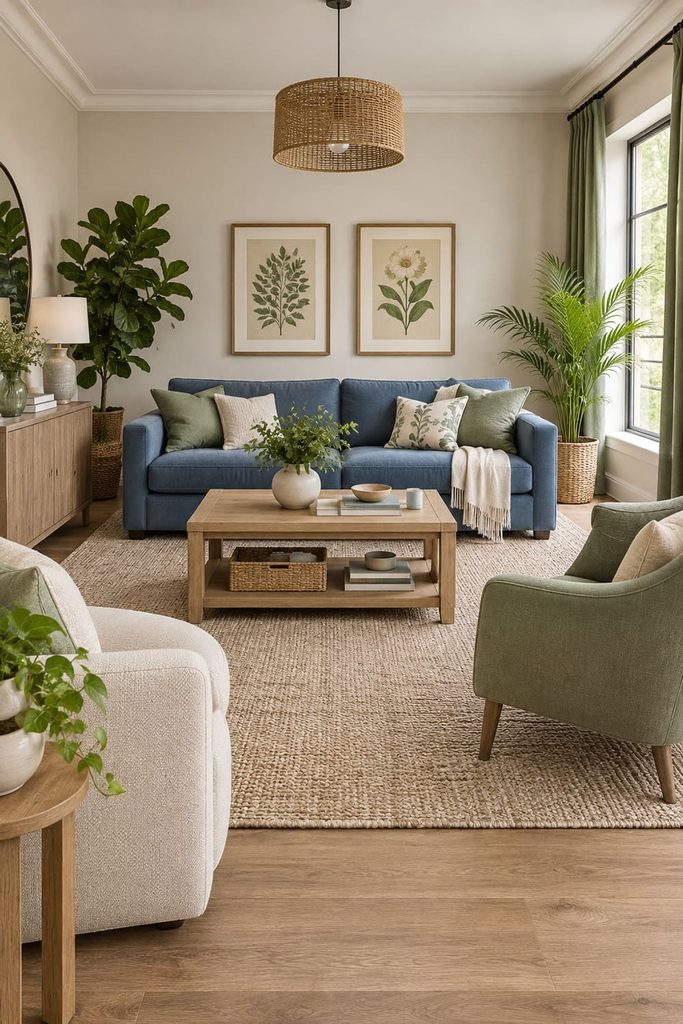
Sage green and blue create an especially relaxed combination. Because both colors appear frequently in nature, they can share a room without feeling overly coordinated. Use a blue sofa as the main feature and bring in sage through cushions, curtains, painted shelving, artwork, or a small accent chair.
Pale blue works beautifully with soft sage, while navy can handle a deeper olive or forest green. Keep the remaining elements relatively neutral with cream upholstery, light wood, woven materials, and simple ceramics. Blue and green are adjacent colors on the color wheel, making this approach particularly useful when you want harmony rather than dramatic contrast.
4. Bring in Mustard Yellow

Mustard yellow gives a blue living room more energy without making it feel overly bright. It works particularly well with navy, denim blue, and muted blue-gray. Instead of spreading yellow throughout the room, choose two or three small locations.
For example, place mustard cushions on a blue sofa, add a yellow-toned artwork above it, and repeat the shade in a small decorative object. Warm wood and cream can sit between the two colors and soften the contrast. A muted mustard usually feels more sophisticated than a vivid primary yellow, especially in traditional, modern classic, or transitional rooms.
5. Use Cognac Brown for Warmth

Cognac brown is a strong choice when your blue living room needs warmth but you do not want another obvious color. A cognac leather chair, ottoman, side table, or leather cushions can give navy and darker blue shades a richer appearance. Add cream upholstery and natural wood to bridge the colors.
This combination is particularly effective in rooms with dark blue walls because the brown introduces a warm material as well as a warm color. Keep the blue dominant and allow the cognac piece to act as the visual counterpoint. The result feels comfortable and mature rather than highly colorful.
6. Try Rust Instead of Bright Orange
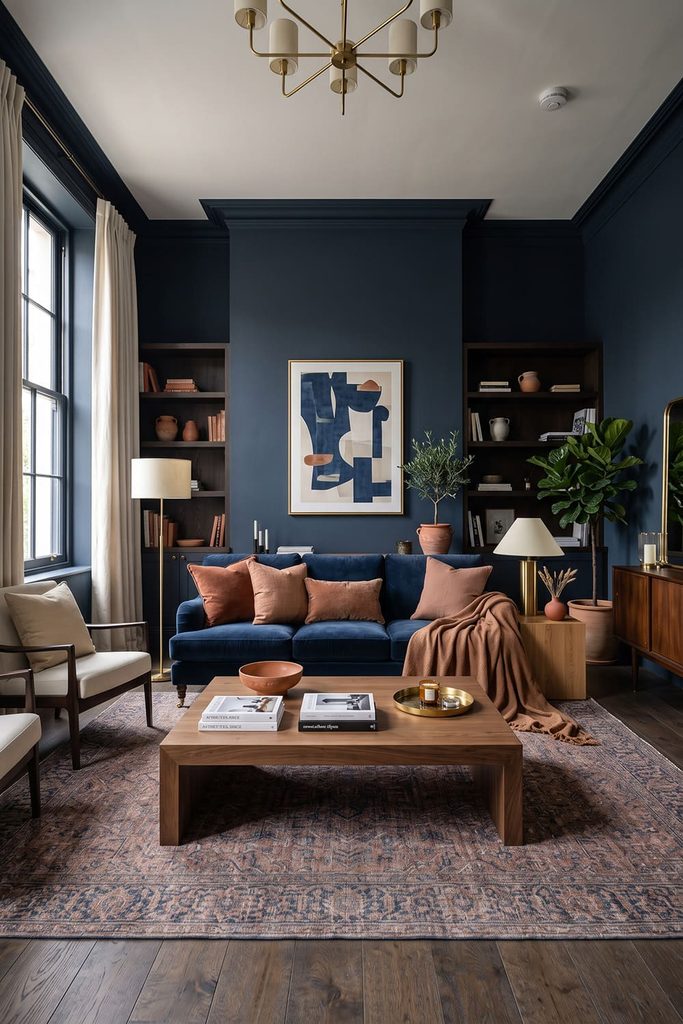
If traditional orange feels too intense, use rust. Rust has the warmth of orange but includes earthy brown and red undertones, making it easier to blend into a sophisticated living room. A rust-colored throw over a blue sofa, rust cushions, a patterned rug, or an abstract artwork can provide just enough contrast.
This combination works especially well with navy and dusty blue. Add beige, oatmeal, walnut, or aged wood to keep the palette grounded. Current interior design guidance also favors earthy, muted versions of complementary colors when a more relaxed result is desired.
7. Pair Powder Blue With Soft Peach
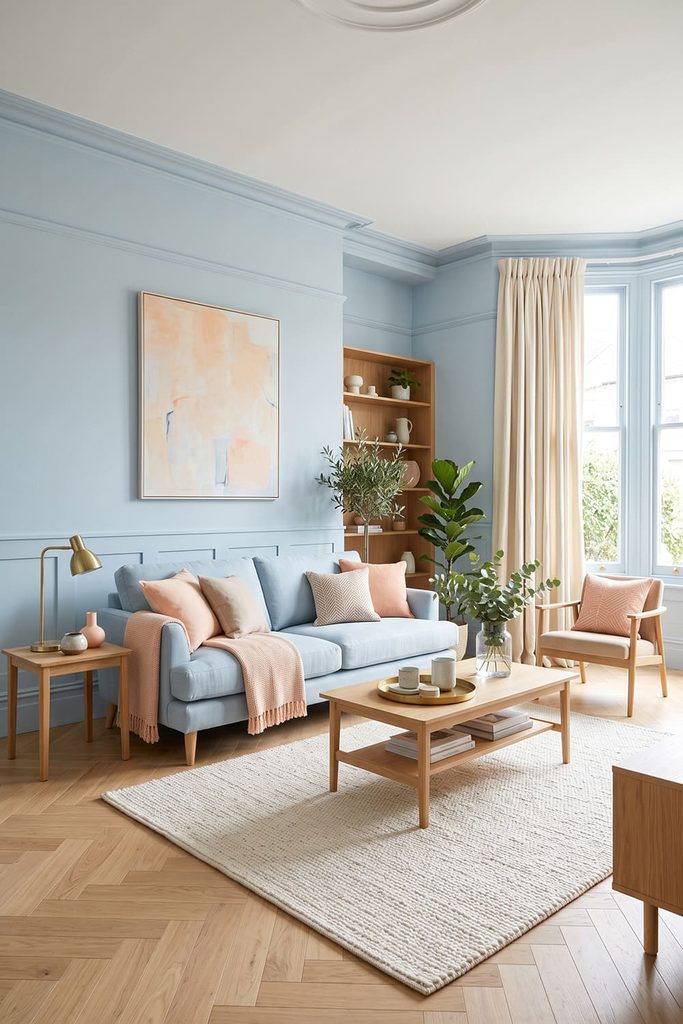
Pale blue does not need to remain within a blue-and-white palette. Soft peach can give a powder blue living room a warmer, more contemporary character. Try a pale blue sofa with peach cushions, a peach-toned artwork, cream curtains, and light natural wood. Keep both colors relatively muted so neither dominates the room.
This works particularly well in bright rooms where sunlight can bring out the softness of both shades. The blue provides a cool foundation while peach introduces warmth without the visual strength of saturated orange. Soft blue and peach are also an example of using gentler versions of complementary colors for a more approachable scheme.
8. Use Olive Green With Navy
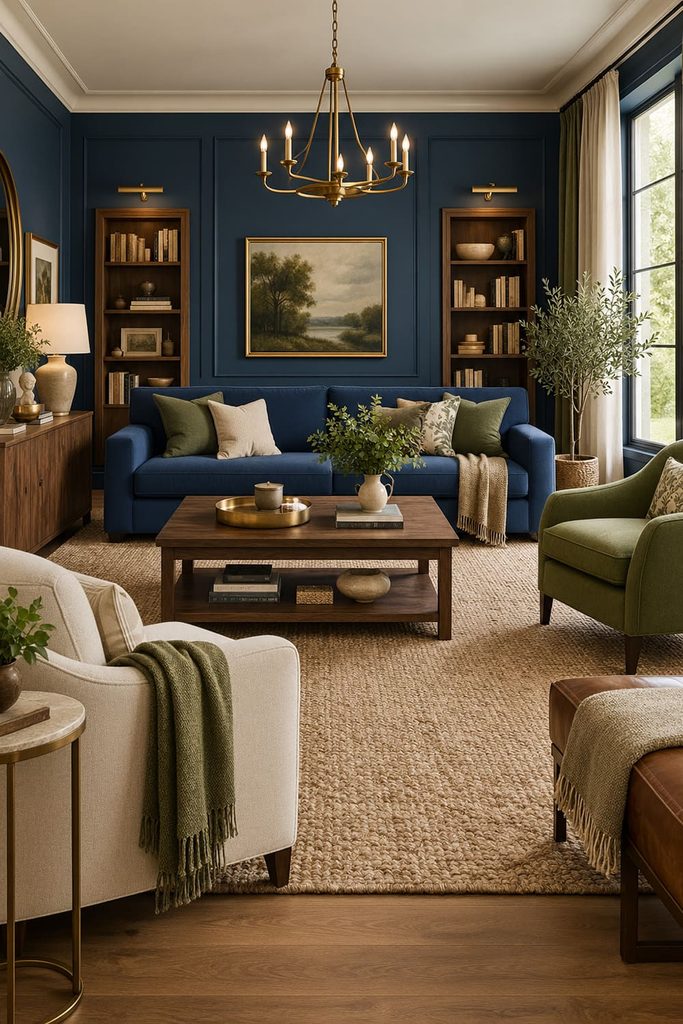
Navy and olive create a deeper, more grounded living room palette. This combination suits rooms with walnut furniture, leather seating, woven rugs, antique-style pieces, or natural stone. Use navy as the main color and introduce olive through cushions, an accent chair, curtains, artwork, or a small ottoman.
Cream and warm beige should occupy some of the remaining surfaces to keep the room from becoming too dark. Olive is particularly useful when you want green to feel earthy rather than fresh and coastal. Add brass or aged metal sparingly for another warm layer.
9. Add Blush Pink for a Gentle Contrast
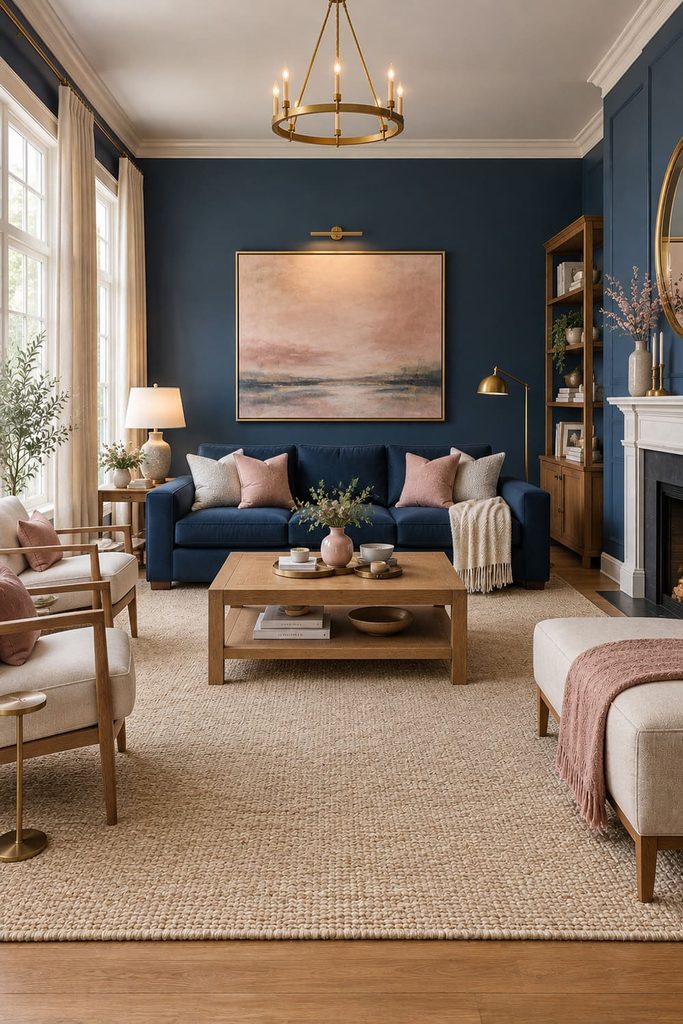
Blush pink can soften a blue living room without making the space feel overly feminine. The trick is to choose dusty or muted pink rather than an extremely bright shade. Pair a navy sofa with blush cushions, a soft pink artwork, cream curtains, and warm wood. You can also introduce pink through a patterned rug containing several related shades.
Keep the pink limited to accessories and textiles if the blue is already dominant. The result can feel sophisticated because the cool blue provides structure while the muted pink adds softness and warmth. This is particularly effective in contemporary and classic living rooms.
10. Bring in Natural Beige and Sand
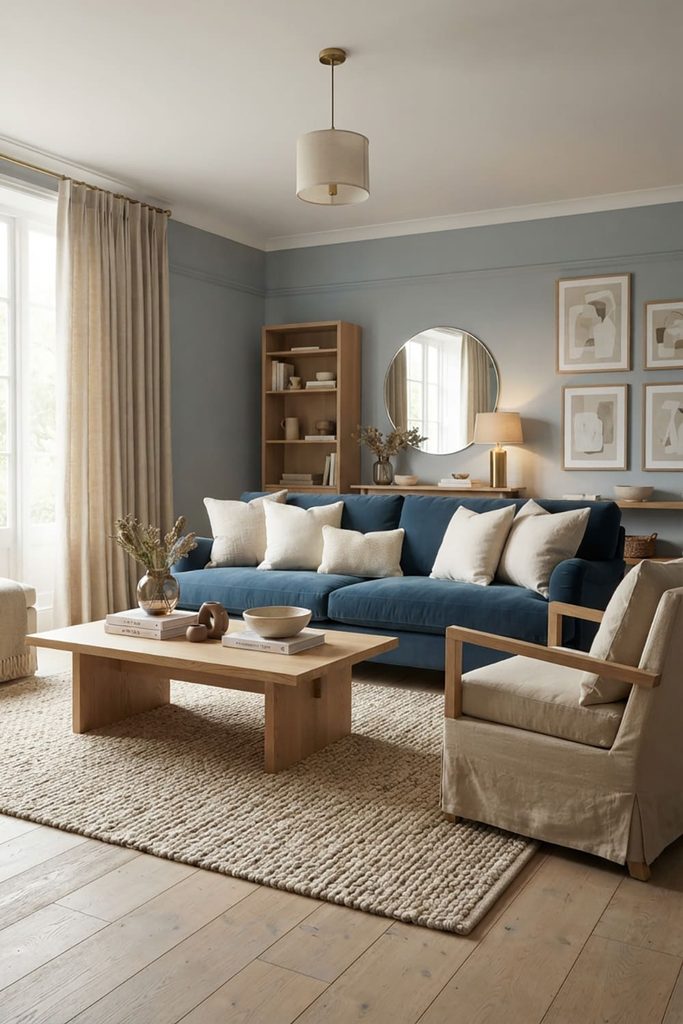
Beige and sand tones are excellent when you want a blue living room to feel relaxed and timeless. Instead of treating beige as an afterthought, repeat it across several surfaces. A blue sofa can sit on a beige rug with sand-colored curtains, cream cushions, and light oak furniture.
Small variations between beige, oatmeal, ivory, and warm taupe prevent the neutral areas from appearing flat. This combination is especially useful for coastal, modern, minimalist, and Scandinavian-inspired rooms. If the blue is very dark, lighter beige elements also help distribute visual weight throughout the room.
11. Use Brass as a Small Accent

Brass works best when treated as a finishing detail rather than a major color. Against navy or deep blue, its warm golden quality immediately stands out. Try brass in a floor lamp, coffee-table frame, mirror, curtain hardware, cabinet handles, or small decorative objects. You do not need brass everywhere.
Two or three repeated touches are usually enough to connect the room. Pair the metal with cream, walnut, cognac leather, or warm beige for a cohesive result. The combination of deep blue and warm metallic accents can give a living room a more polished appearance without adding another large block of color.
12. Combine Blue With Warm White and One Strong Accent
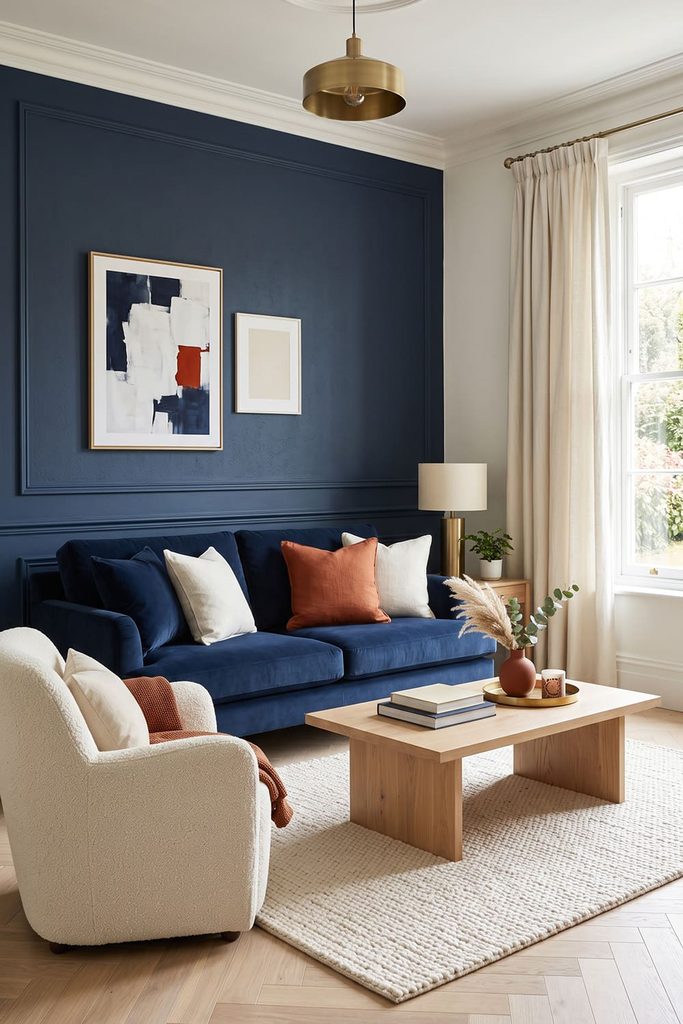
If you are unsure about mixing several colors, use a simple three-part formula: blue, warm white, and one accent color. For example, use a navy sofa, warm white walls, and rust accessories. Another option is pale blue walls, cream furniture, and olive accents.
This keeps the palette easy to control because the neutral creates breathing room between the blue and accent color. Designers frequently recommend using stronger contrasting colors in smaller quantities rather than allowing two saturated shades to compete equally.
13. Try Blue With Chocolate Brown
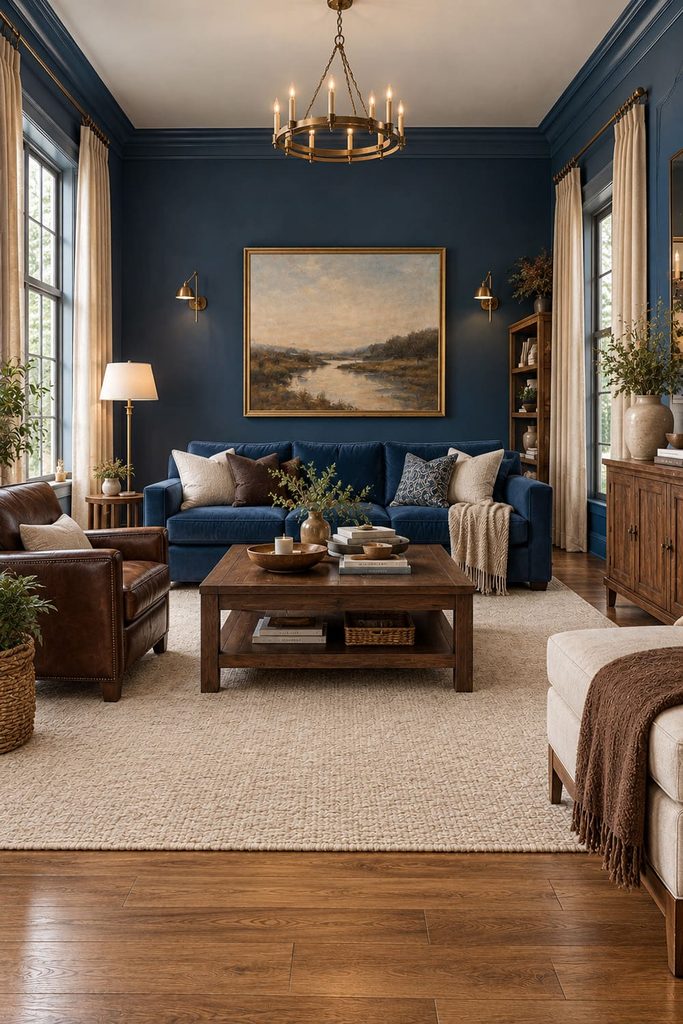
Chocolate brown can make a blue living room feel warmer and more substantial. This pairing is particularly attractive with dark navy, dusty blue, or blue-gray. Introduce chocolate through a leather sofa or chair, dark wood coffee table, woven baskets, or brown-toned artwork.
Keep the larger surfaces lighter if the room is small. For example, combine a blue sofa with a chocolate brown coffee table, cream rug, beige curtains, and natural wood accessories. The brown anchors the blue while the lighter neutrals prevent the combination from becoming visually heavy.
14. Use Coral in Small Doses
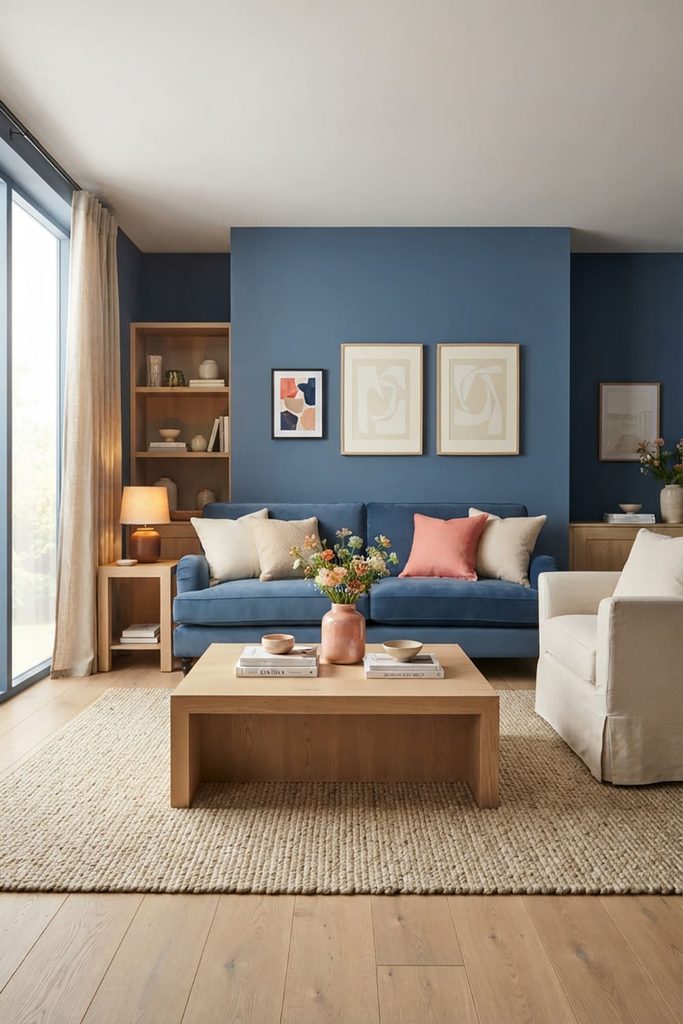
Coral is a lively option when your blue living room needs more personality. Instead of using a large coral sofa or wall, bring it in through cushions, artwork, ceramics, flowers, or one small occasional chair. Coral can work particularly well with medium and navy blues because its warm undertones create contrast.
Keep the rest of the room restrained with cream, beige, light wood, or white. If the blue is already very saturated, choose a softer coral so the two colors do not compete. This follows the broader principle of using a strong accent in controlled amounts rather than dividing the room equally between two intense colors.
15. Layer Several Warm Neutrals Around Blue
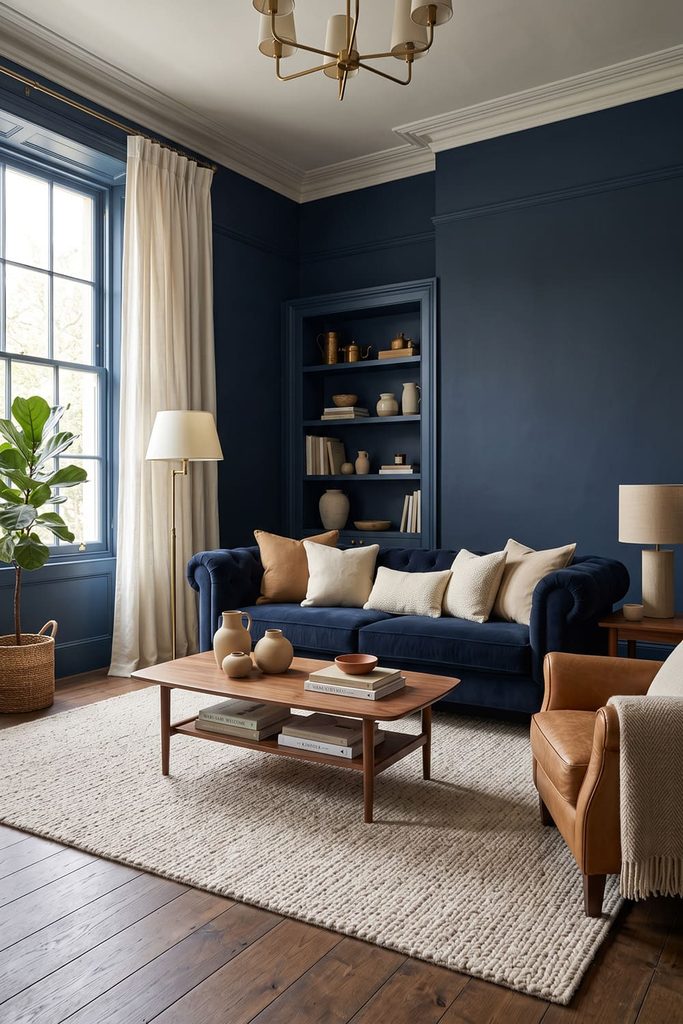
You do not always need a second obvious color. A blue living room can gain considerable depth from several warm neutrals used together. Combine blue with ivory, beige, camel, walnut, tan leather, and oatmeal textiles. Each neutral contributes a slightly different temperature and texture while allowing blue to remain the main color.
For example, place a navy sofa over an oatmeal rug, add camel cushions, use a walnut coffee table, and finish with cream curtains. Natural wood, leather, linen, wool, and woven materials can make the palette feel richer without adding visual clutter. Layering materials and warm neutrals is also a useful way to prevent a predominantly blue room from feeling cold.
How to Choose the Right Accent Color for Your Blue Living Room?
Start by identifying the blue you already have. Pale blue generally works well with soft peach, blush, cream, beige, sage, and light wood. Medium blue can handle terracotta, mustard, olive, coral, and warm neutrals. Navy and other deep blues can support stronger accents such as rust, cognac, mustard, olive, brass, and chocolate brown.
Next, decide how much contrast you want. For a calm room, stay close to blue on the color wheel with greens and blue-green shades. For more visual energy, choose a warm complementary accent such as terracotta or orange. Blue and orange are traditionally complementary, but using muted versions or keeping the warm color to smaller accessories can make the combination considerably easier to live with.
It also helps to repeat your accent color in at least two or three places. A rust cushion by itself can look random. Rust cushions combined with a small artwork and a ceramic vase create a clearer connection. The repetitions do not need to match exactly. Similar undertones are usually enough.
A Simple Color Formula That Works
For an easy starting point, use blue as the dominant color, a warm neutral as the supporting color, and one accent shade for contrast.
A navy living room could use:
- 60% warm cream, beige, or natural wood
- 30% blue through walls, sofa, curtains, or rug
- 10% terracotta, rust, mustard, olive, or another warm accent
The exact percentages do not need to be measured. The point is simply to prevent the accent from becoming as visually dominant as the main blue. A restrained accent usually looks more intentional than scattering several unrelated bright colors throughout the room.
Final Thoughts
The best accent color for a blue living room depends on the mood you want to create. Terracotta and rust bring warmth, sage and olive create a natural feeling, cream and beige keep things calm, mustard adds energy, blush brings softness, while cognac and chocolate brown give darker blue rooms more depth.
If you are uncertain, start with one accent rather than several. Choose a few cushions, one artwork, a throw, or a small chair in that color and see how it looks at different times of day. Once the palette feels right, repeat the accent in small amounts around the room. This approach keeps blue as the visual foundation while giving the living room enough contrast, warmth, and personality to feel complete.


