

15 Blue Living Room Ideas for a Formal Living Room
A formal living room needs a little more structure than an everyday family space, but that does not mean it has to feel stiff or overly traditional. Blue is an especially versatile choice because it can create anything from a quiet, elegant backdrop to a dramatic entertaining space. Deep navy and blue-green shades can bring richness and intimacy, while softer blue-gray tones keep the room brighter and more understated.
The secret is in what you place around the blue. Warm wood, brass, cream upholstery, marble, velvet, tailored curtains, and carefully selected artwork can make the color feel polished and intentional. Formal rooms also benefit from balanced furniture arrangements, symmetrical details, and layered lighting rather than relying on one central fixture.
These blue living room ideas focus on creating a refined space that feels appropriate for hosting guests, having conversations, displaying artwork, or simply enjoying a quieter part of the home.
1. Pair Navy Walls With Cream Furniture

Create an elegant contrast by covering the walls in a deep navy and furnishing the room with cream or ivory seating. The lighter upholstery prevents the dark walls from making the room feel excessively heavy, while the navy creates a dramatic backdrop.
Add a traditional wood coffee table, cream curtains, and a patterned area rug containing small touches of blue. Keep the trim in a warm white rather than an extremely stark shade. Deep blue paired with soft neutrals is a well-established approach for creating a sophisticated and harmonious living room.
2. Make a Blue Velvet Sofa the Centerpiece

For a formal room with a luxurious feel, choose a substantial blue velvet sofa as the main focal point. Navy, sapphire, or deep petrol blue can work beautifully depending on the amount of natural light. Surround the sofa with two matching armchairs rather than filling the room with unrelated seating.
Add a marble or wood coffee table in the center and place everything on a large traditional-style rug. Velvet provides visual richness without requiring elaborate decoration. A blue upholstered statement sofa is also a proven way to introduce navy into a formal living room without painting the walls.
3. Add Brass Details Against Deep Blue

Warm brass can give a blue formal living room a refined finishing layer. Use it through table lamps, picture frames, curtain hardware, a chandelier, or the base of a coffee table. Against navy or another deep blue, brass provides a subtle glow and helps keep the palette from feeling too cool.
Avoid using metallic finishes on every object. A few repeated brass details are enough to establish a visual connection throughout the room. Pair them with cream upholstery and dark wood for a classic combination, or introduce black accents for a more contemporary interpretation.
4. Create a Blue Accent Wall Behind the Fireplace

If your formal living room has a fireplace, make the wall around it the main blue feature. A deep blue paint can emphasize the fireplace and give the architectural centerpiece greater visual weight. Keep the surrounding walls lighter so the blue area feels deliberate rather than overwhelming.
Place a large mirror or artwork above the mantel and repeat the blue through one or two cushions or decorative objects. Dark blue can work particularly well around fireplaces because it creates an intimate backdrop for evening entertaining.
5. Use Blue and Walnut for a Traditional Look

Combine blue upholstery or walls with rich walnut furniture for a room that feels established and elegant. A navy sofa, walnut side tables, and a large wood-framed mirror can form the foundation. Add cream curtains and a muted patterned rug to soften the darker elements.
Walnut’s warm brown undertones provide a natural counterpoint to blue and keep the room from feeling too cool. You can make the arrangement more traditional with turned furniture legs and framed artwork, or keep the silhouettes simple for a cleaner contemporary formal room.
6. Choose Blue-Gray for a Softer Formal Room
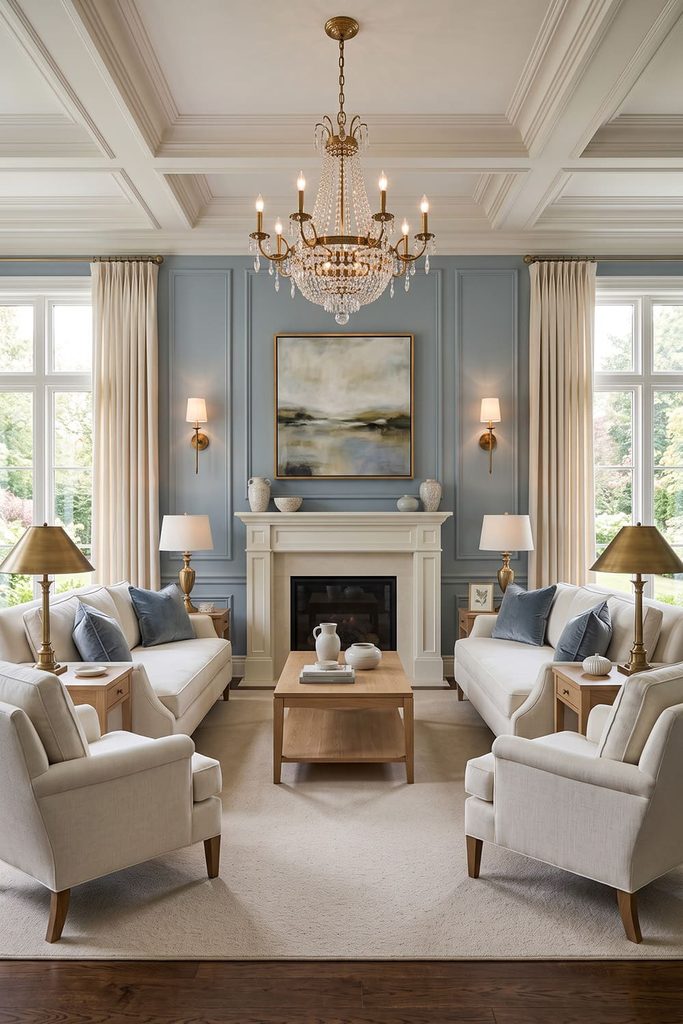
If navy feels too dramatic, consider a sophisticated blue-gray instead. This shade can provide color while maintaining the quiet character expected in a formal sitting room. Use blue-gray on the walls and combine it with ivory seating, light oak, aged brass, and soft beige textiles.
The result feels polished without becoming imposing. Blue-gray is particularly useful in rooms with limited natural light because it can provide color without the visual weight of a very dark navy. Current paint guidance also highlights softer, more neutralized blue tones as an increasingly easy-to-live-with direction.
7. Frame the Windows With Blue Curtains

Keep the walls neutral and introduce blue through substantial curtains. Floor-to-ceiling navy or muted blue drapes can frame the windows and give the room a more finished appearance. Choose a fabric with enough weight to create elegant folds, such as velvet, linen, or a tailored woven material.
Repeat the curtain color in cushions, artwork, or a small accent chair so the blue does not appear isolated. This approach is particularly useful when you want a formal atmosphere without making a permanent change to the walls.
8. Create a Blue and Gold Art Gallery

Use a deep blue wall as a backdrop for a collection of framed artwork. Navy can help brighter colors within paintings stand out, particularly warm reds, ochres, creams, and golds. Choose frames in one or two finishes to keep the arrangement organized.
A large central painting can anchor the composition, with smaller works positioned around it. Keep the furniture relatively quiet so the artwork remains the star. This approach works especially well in formal living rooms because it gives the space an intentional, collected quality without relying on excessive decorative objects.
9. Use a Blue and Ivory Monochromatic Palette

Create a refined tonal scheme by combining several shades of blue with ivory rather than introducing many unrelated colors. Start with a medium or deep blue sofa, then add pale blue cushions, a blue-gray rug, and blue artwork. Use ivory walls or curtains as the visual break between the different blue tones.
Mixing shades keeps a monochromatic room from looking flat, while variations in fabric provide additional depth. This approach feels especially elegant when the furniture silhouettes are simple, and the room has strong architectural details.
10. Add a Statement Chandelier Above the Seating Area
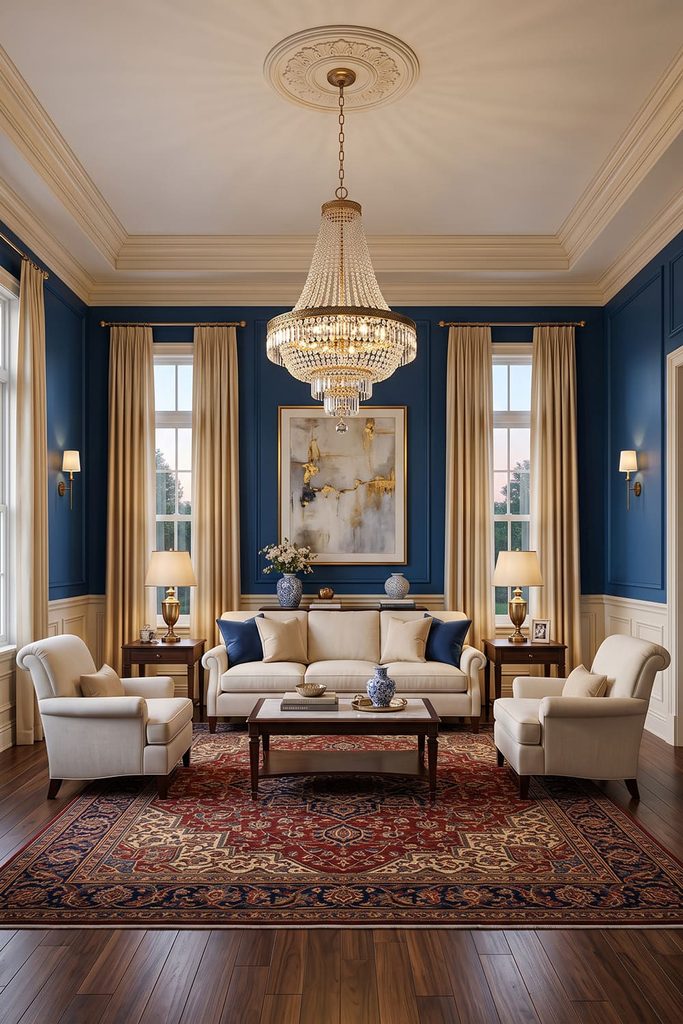
A formal living room deserves lighting that contributes to the design rather than simply illuminating it. Hang a substantial chandelier over the main seating arrangement, choosing a style that complements the blue palette. Crystal can emphasize a traditional room, while brass or sculptural metal works well in a more contemporary setting.
Add table lamps and wall sconces so the chandelier is not the only source of illumination. Layered lighting creates a more adaptable atmosphere and allows the room to feel intimate in the evening rather than brightly lit from one central point.
11. Combine Navy With Soft Beige

For a formal room that feels warm rather than dramatic, combine navy with beige, camel, and cream. Use navy for the sofa or curtains, then introduce beige through upholstered chairs and a large rug. A natural wood coffee table can connect the colors while adding warmth.
This palette is particularly effective if you want the room to feel sophisticated but still comfortable enough for everyday use. Navy acts almost like a neutral in this combination, giving the room structure while the warmer colors keep the overall scheme relaxed.
12. Introduce Blue Through Patterned Wallpaper

Give the room a more decorative character with wallpaper featuring a blue background and a restrained botanical, geometric, or traditional pattern. Use it on all four walls if the room has enough natural light, or reserve it for one architectural section.
Keep the furniture fabrics relatively quiet so the wallpaper has room to breathe. Blue wallpaper can be particularly effective in a formal room because it introduces color and pattern simultaneously. Houzz examples show how navy-patterned walls can provide a strong backdrop while allowing selected colors from the pattern to be repeated in accessories.
13. Pair Blue With Dark Wood and Leather
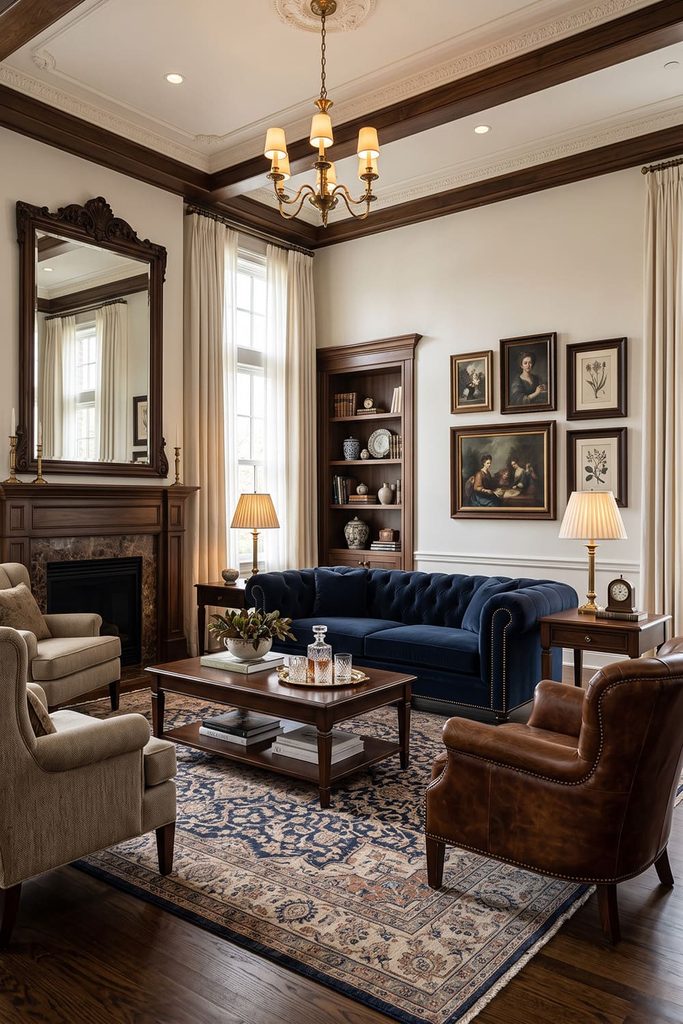
Give the formal living room a richer, more traditional character by combining blue with dark wood and a small amount of leather. A navy sofa can be accompanied by walnut side tables and one brown leather chair. Add a traditional rug with muted blue, beige, and rust tones to connect the materials.
Keep the leather limited to one or two pieces so the room does not become visually heavy. The combination works because the warmth of brown leather and wood offsets blue’s cooler character while preserving the sophisticated atmosphere expected from a formal space.
14. Use a Blue Ceiling for a Dramatic Finish

For a room with strong architectural details, consider carrying the blue onto the ceiling. A ceiling painted in the same deep blue as the walls can create an enveloping, sophisticated effect, while a blue ceiling over lighter walls can make the feature feel more unexpected.
If you choose a dark ceiling, balance it with generous warm lighting, light upholstery, and reflective details. Designers have used matching blue ceilings with statement sofas to create a dramatic formal living room while using warm white elsewhere to maintain balance.
15. Build a Refined Blue and Marble Seating Area

For a distinctly elegant finish, combine blue upholstery with marble and warm metal. Place a navy sofa and two blue or neutral armchairs around a marble coffee table. Add brass or bronze lighting and a soft cream rug underneath. Keep the decorative objects minimal, perhaps using a ceramic vase, a few books, and one sculptural centerpiece.
The contrast between smooth stone, soft upholstery, and metallic details gives the room visual richness without requiring a large amount of decoration. This combination works particularly well when the goal is a formal room that feels luxurious but still comfortable.
How to Make a Blue Formal Living Room Feel Elegant
Start by deciding where the blue should have the greatest visual weight. A dark blue wall, statement sofa, curtains, rug, or ceiling can each create a different effect. Using one major blue element and repeating the color in smaller details usually produces a more cohesive result than scattering unrelated shades throughout the room.
Material choice matters just as much as color. Velvet, wool, linen, wood, marble, leather, and brass can make a blue room feel layered and substantial. If the blue is very dark, add cream, ivory, beige, or warm wood to keep the room balanced. Blue also works well with warm accents such as rust, mustard, and terracotta when you want stronger contrast.
For a formal setting, furniture placement should feel deliberate. Arrange seating so people can comfortably converse rather than pushing every piece against the walls. Finish the room with layered lighting, substantial window treatments, and artwork that reflects your taste.
Final Thoughts
A formal blue living room can be traditional, contemporary, dramatic, or quietly elegant depending on the shade and materials you choose. Navy with cream creates timeless contrast, blue with walnut feels warm and established, while blue velvet with brass introduces a more luxurious character.
The strongest designs usually give blue a clear role and then support it with complementary materials. Choose one major feature, repeat the color thoughtfully, and allow comfortable furniture, beautiful lighting, artwork, and texture to complete the room. The result can feel formal enough for entertaining while remaining inviting enough to enjoy every day.


