

15 Formal Living Room Ideas for an Elegant and Timeless Home
Formal living room ideas are perfect for creating a polished space where guests can gather, conversations feel natural, and the room looks beautifully finished. A formal living room does not have to feel stiff or outdated. The best designs combine elegant furniture, thoughtful symmetry, layered lighting, rich fabrics, classic details, comfortable seating, and curated decor.
A formal living room can be traditional, modern, transitional, glamorous, vintage-inspired, or quietly luxurious. The key is to make the room feel refined but still welcoming. These ideas will help you design a formal living room that feels stylish, comfortable, sophisticated, and timeless.
This post contains affiliate links. If you buy through them, we may earn a small commission at no extra cost to you. See our Affiliate Disclosure.
1. Symmetrical Sofa and Armchair Layout
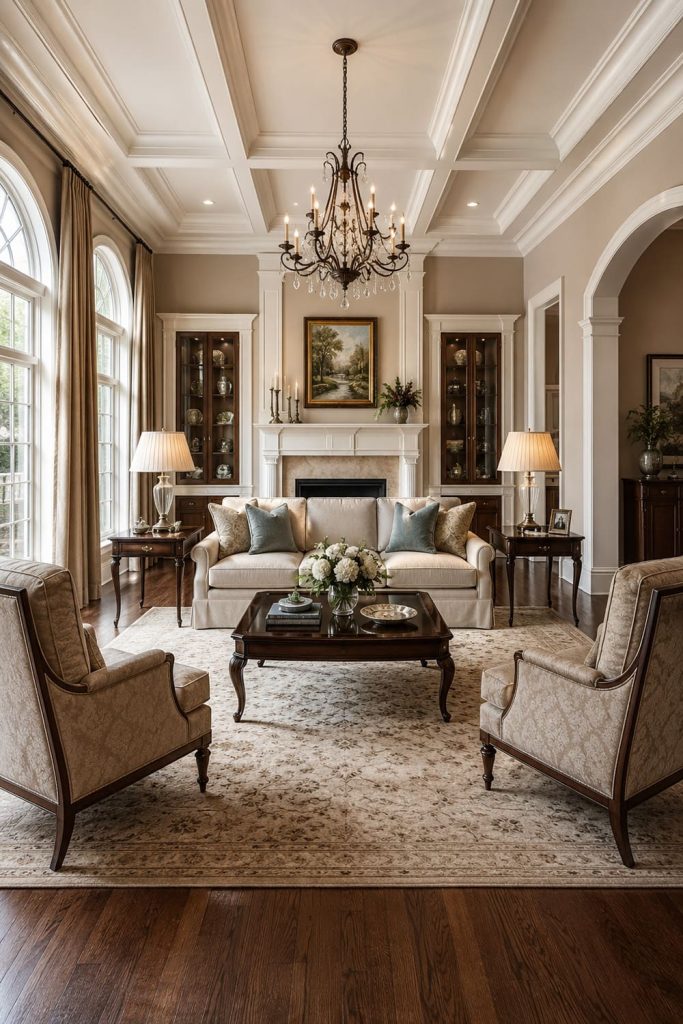
A symmetrical layout is one of the easiest ways to make a formal living room feel elegant. Place a sofa opposite two matching armchairs, or use two sofas facing each other with a coffee table in the center. Symmetry creates balance and makes the room feel intentional. Add matching side tables, table lamps, and a centered rug to complete the look. This type of layout is perfect for conversation because seats face each other instead of only facing a TV. Keep the furniture comfortable, not too stiff, so the room feels formal but still inviting for guests.
2. Statement Fireplace
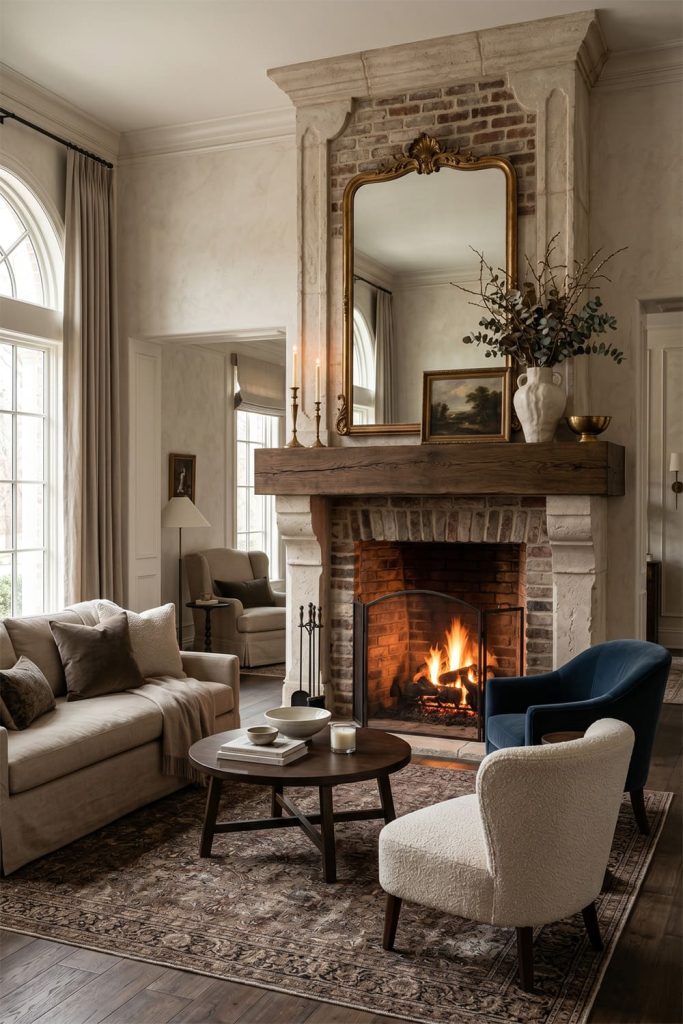
A fireplace can become the natural focal point of a formal living room. Style the mantel with a large mirror, framed artwork, candles, sculptural vases, or simple greenery. Marble, stone, brick, plaster, limestone, or wood fireplace surrounds all work beautifully, depending on the style of the room. Arrange seating around the fireplace to create a warm conversation area. For a polished look, keep the mantel decor balanced and avoid overcrowding it. A statement fireplace adds architecture, warmth, and timeless charm, making the room feel more finished and luxurious even without too many decorations.
3. Elegant Neutral Color Palette
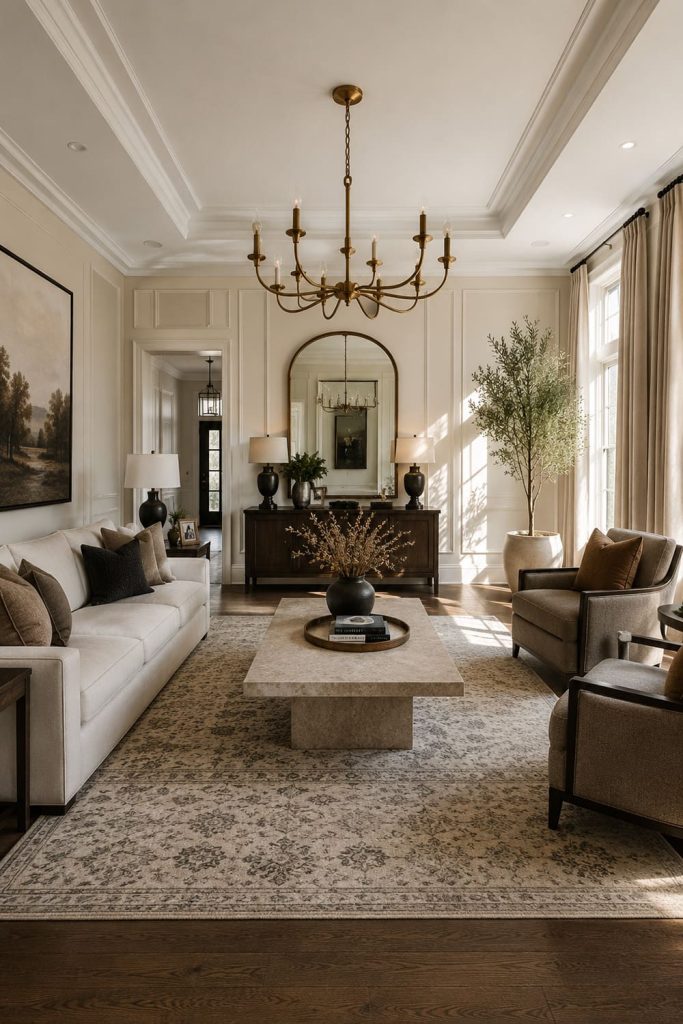
An elegant neutral color palette creates a calm and sophisticated formal living room. Use warm white, ivory, cream, beige, greige, taupe, soft gray, camel, mushroom, or warm brown as the main colors. These shades make the room feel refined and easy to decorate. Add depth with dark wood furniture, black accents, brass lighting, stone tables, velvet pillows, or patterned rugs. Neutral rooms look best when texture is layered through linen, wool, boucle, silk, velvet, rattan, marble, and wood. A neutral formal living room feels timeless because it does not depend on loud colors to feel beautiful.
4. Matching Twin Armchairs

Twin armchairs bring instant structure and elegance to a formal living room. Place two matching chairs across from a sofa, beside a fireplace, or near a window for a balanced seating arrangement. Choose velvet chairs, linen chairs, leather chairs, boucle chairs, cane chairs, or classic rolled-arm chairs, depending on the mood you want. Matching chairs make the room feel designed, while their fabric and shape add character. Add a small table between them for books, flowers, or drinks. This idea works especially well in rooms where you want a polished, conversational layout without adding another large sofa.
5. Large Area Rug to Ground the Room
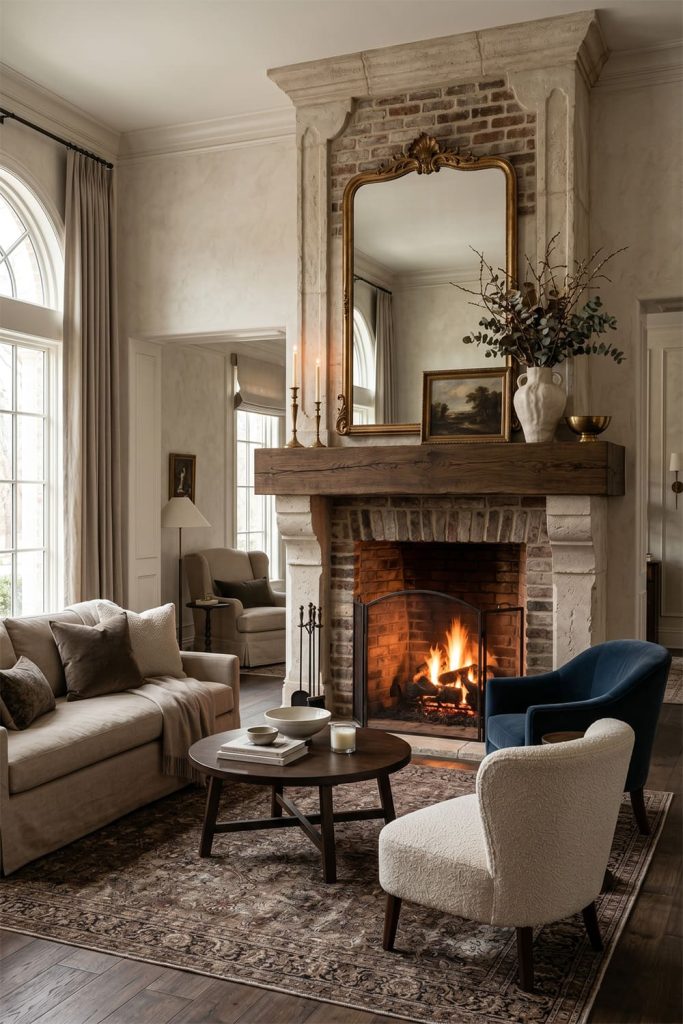
A large area rug can make a formal living room feel complete and well-proportioned. Choose a rug large enough for at least the front legs of the sofa and chairs to sit on it. Persian-style rugs, vintage-inspired rugs, neutral wool rugs, subtle patterned rugs, jute blends, and muted floral rugs all work beautifully. The rug should connect the seating pieces and help define the conversation area. A rug also adds softness, sound control, and warmth. In a formal living room, the right rug can bring color, pattern, texture, and elegance without making the room feel cluttered.
6. Layered Lighting With Lamps and Chandeliers
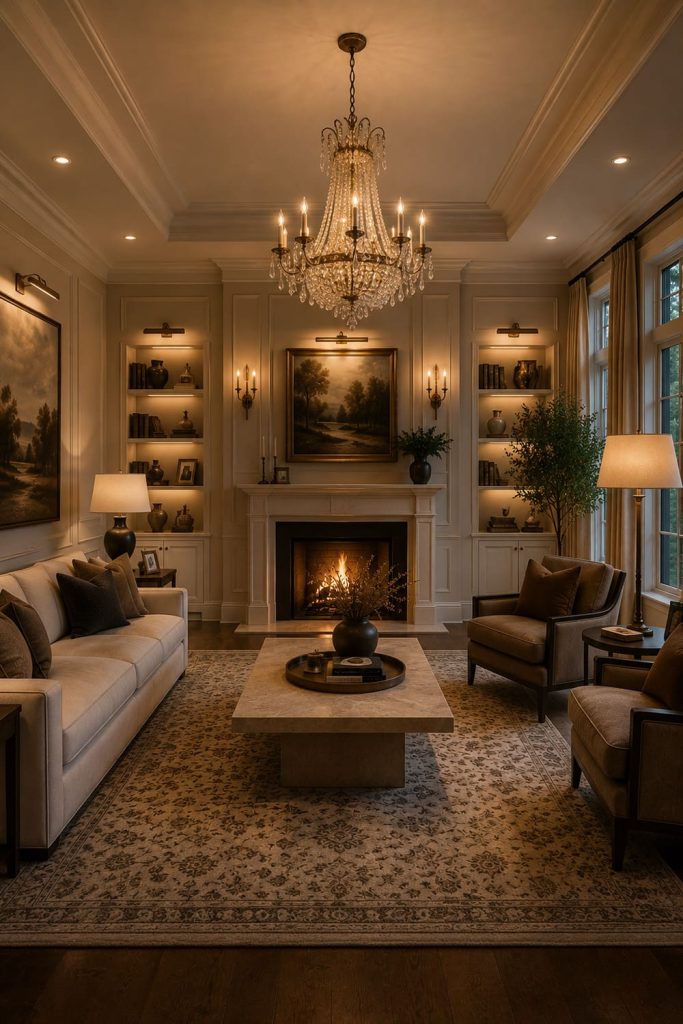
Formal living rooms need more than one light source. A chandelier or pendant light can create drama, but table lamps, floor lamps, picture lights, and wall sconces make the space feel warm and usable. Use warm white bulbs for a soft glow. Brass lamps feel classic, black lamps add contrast, crystal chandeliers feel glamorous, and ceramic lamps bring texture. Layered lighting helps the room look beautiful during the day and cozy at night. It also highlights artwork, bookshelves, mantel decor, and fabric textures. Good lighting makes a living room feel expensive and thoughtfully designed.
7. Built-In Bookcases and Display Shelves
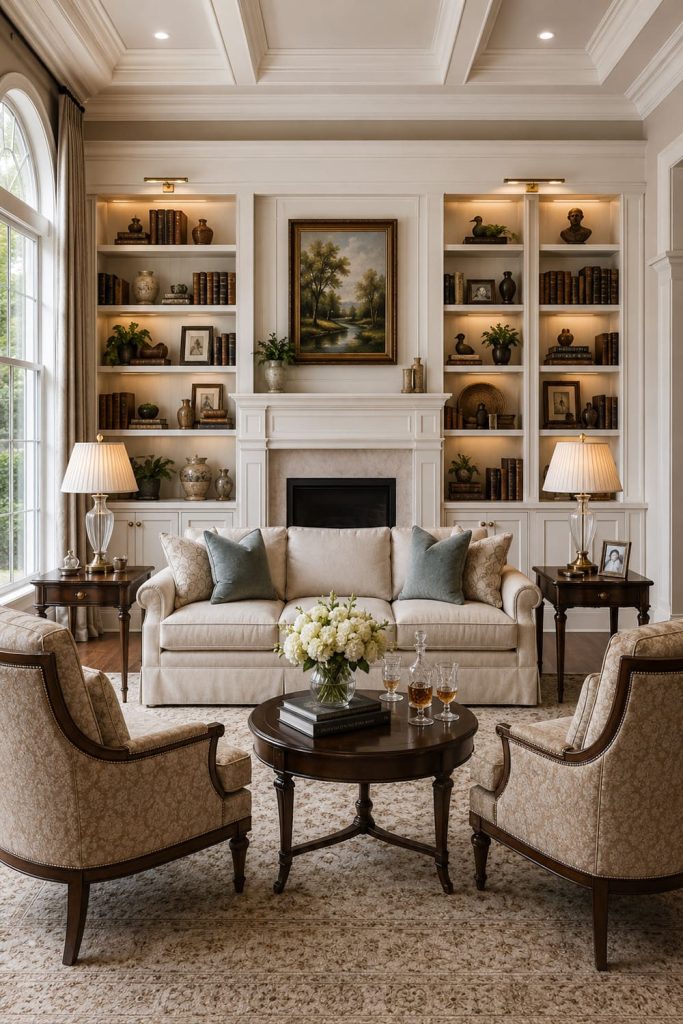
Built-in bookcases add character, storage, and a traditional, formal feeling to a living room. Style shelves with books, framed photos, pottery, art objects, small sculptures, baskets, and greenery. Keep the arrangement balanced but not too perfect so it feels collected rather than staged. Painted built-ins in white, cream, navy, dark green, charcoal, or warm beige can add personality. Add library lights or picture lights above shelves for a high-end finish. Built-ins are perfect for formal living rooms because they create a strong architectural backdrop while giving the room warmth, depth, and personal meaning.
8. Classic Wall Molding

Wall molding can instantly make a formal living room look more elegant. Picture-frame molding, panel molding, crown molding, chair rails, wainscoting, or box trim adds architectural detail to plain walls. Paint the molding the same color as the wall for a subtle look, or use a slightly deeper tone for contrast. This detail works beautifully behind a sofa, around a fireplace, or throughout the whole room. Pair wall molding with elegant artwork, sconces, and soft drapes for a refined finish. Classic molding gives the room structure and makes even simple furniture feel more sophisticated.
9. Velvet Sofa or Accent Chairs
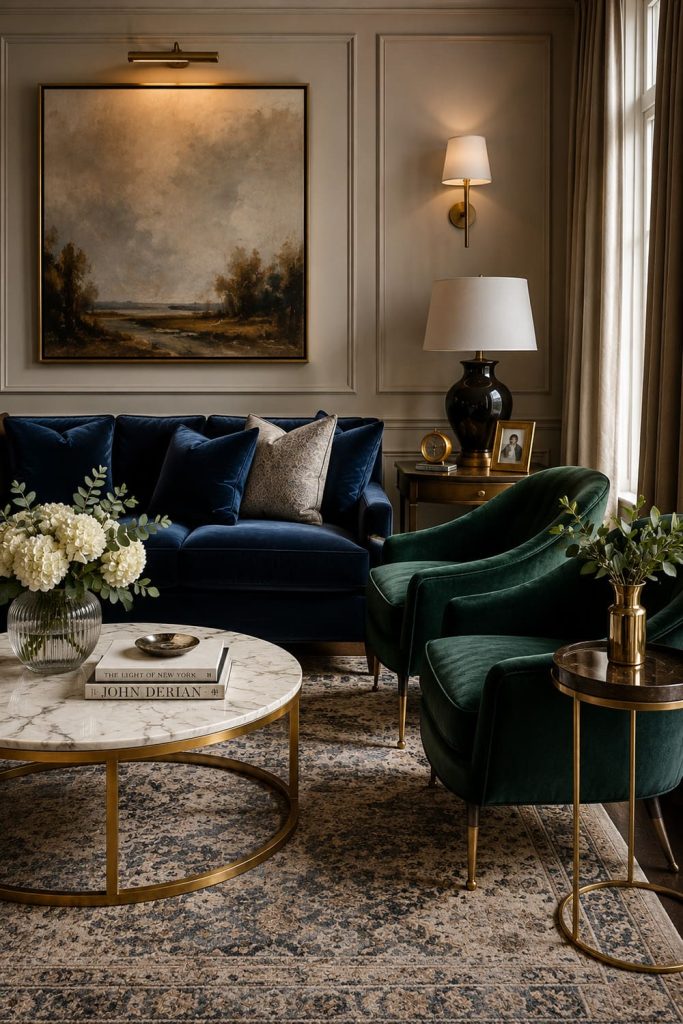
Velvet adds softness, depth, and a luxurious feel to a formal living room. A velvet sofa in navy, emerald green, charcoal, taupe, rust, cream, or deep blue can become the main statement piece. If you prefer a quieter look, use velvet only on accent chairs, pillows, or ottomans. Velvet reflects light beautifully, which makes the room feel rich and layered. Pair it with brass, marble, dark wood, glass, or patterned rugs for extra elegance. A formal living room with velvet feels polished but also comfortable, making it perfect for both entertaining and relaxing.
10. Formal Coffee Table Styling
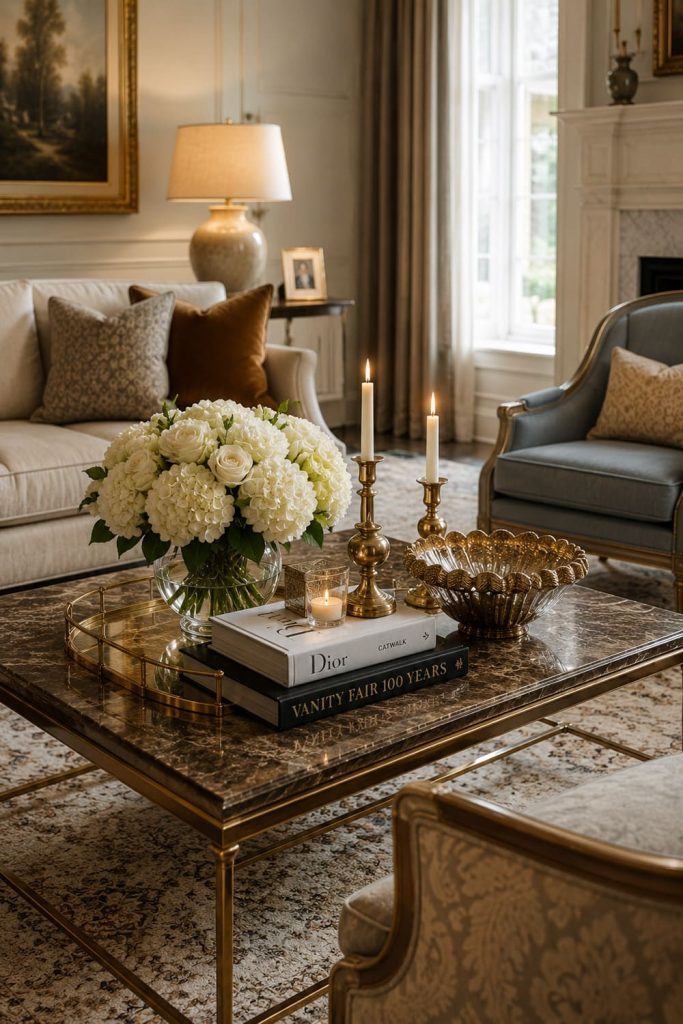
A coffee table is often the center of a formal living room, so the styling should feel thoughtful. Use a tray, coffee table books, candles, a floral arrangement, a sculptural bowl, or a small stack of decorative boxes. Keep the arrangement low enough so guests can see across the table. Marble, glass, wood, brass, or upholstered coffee tables all work, depending on the style. The goal is to make the table look curated but still usable. Formal coffee table styling adds beauty, order, and a finished designer look without needing too many accessories.
11. Floor-to-Ceiling Curtains

Floor-to-ceiling curtains can make a formal living room look taller, softer, and more luxurious. Hang curtain rods high and wide so the windows feel larger. Choose linen, velvet, silk-look fabric, cotton, or textured panels in ivory, beige, taupe, soft gray, champagne, navy, or warm brown. Layering sheer curtains with heavier drapes creates depth and light control. Curtains soften the room, frame the windows, and add movement. In a formal living room, long curtains are especially important because they make the space feel more polished, intentional, and elegant.
12. Marble and Stone Details
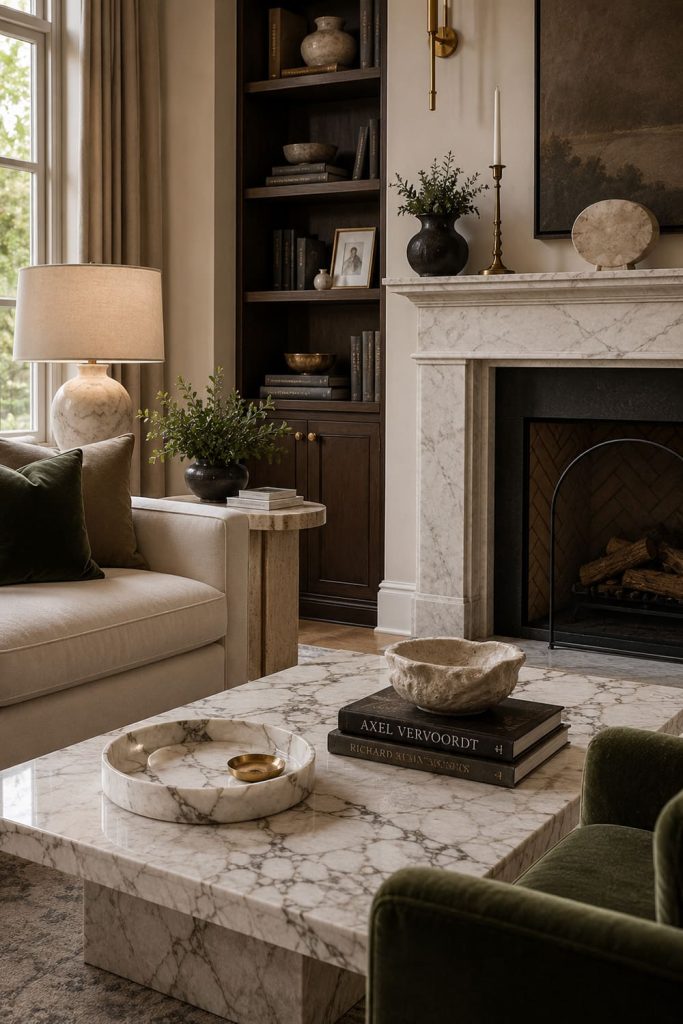
Marble and stone details bring timeless luxury into a formal living room. Use a marble coffee table, stone fireplace, travertine side table, marble tray, alabaster lamp, stone bowl, or limestone mantel. These materials add natural pattern, weight, and refinement. Stone works beautifully with wood, velvet, brass, linen, and neutral upholstery. It also helps a room feel elegant without relying on shiny decor. A formal living room with marble or stone details feels grounded, high-end, and classic. Even one stone can make the whole room feel more expensive and carefully designed.
13. Artwork Above the Sofa

A large artwork above the sofa can give a formal living room a clear focal point. Choose an abstract painting, landscape art, portrait, botanical print, framed textile, or a pair of matching prints. The artwork should fit the scale of the sofa and leave enough space around the frame. For a formal look, choose quality framing in wood, black, brass, or antique gold. Artwork adds personality and makes the room feel complete. It also helps set the color palette for pillows, curtains, rugs, and accessories. A well-chosen piece of art can elevate the entire living room.
14. Curated Antique and Vintage Pieces
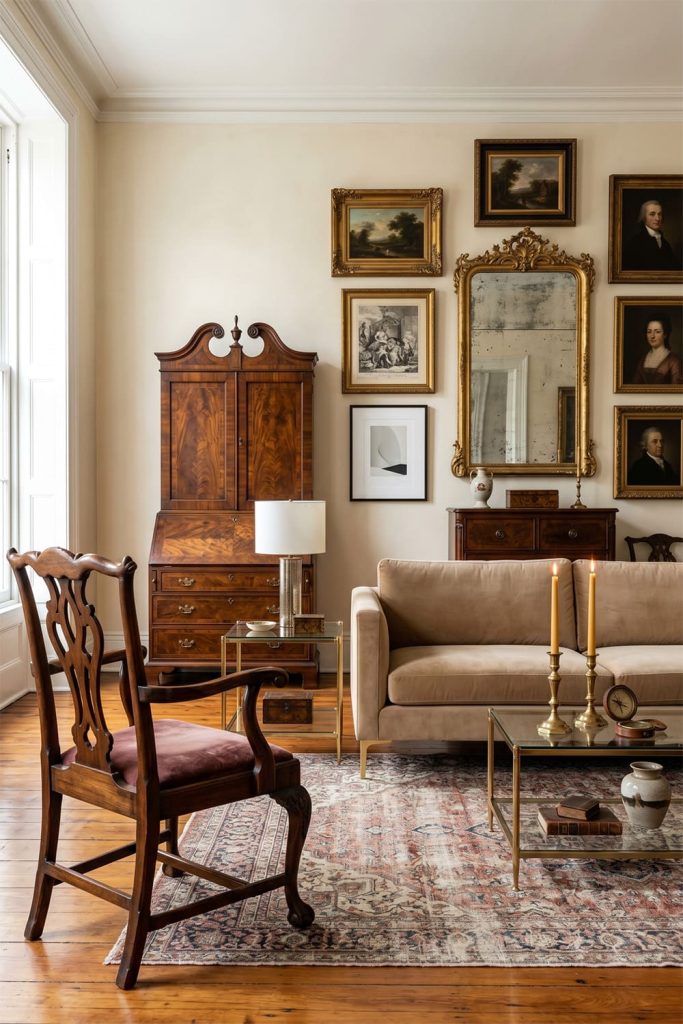
Antique and vintage pieces add depth to a formal living room because they make the space feel collected over time. Use a vintage mirror, antique side table, traditional cabinet, carved wood chair, old framed art, brass candlesticks, or a classic rug. Mix these pieces with modern upholstery or clean-lined tables so the room does not feel outdated. The key is balance. One or two vintage details can bring history and charm, while modern pieces keep the room fresh. A curated mix makes the formal living room feel more personal, timeless, and interesting.
15. Elegant Conversation Area Without a TV

A formal living room often looks best when the seating is arranged for conversation rather than television. Create a layout with sofas and chairs facing each other around a coffee table, fireplace, or center ottoman. Add side tables, lamps, books, flowers, and comfortable pillows so the room feels useful. Without a TV as the main focus, the design can highlight architecture, artwork, windows, or a fireplace. This idea creates a truly entertaining space where guests can sit comfortably and talk. A TV-free formal living room feels calm, polished, and intentionally designed for connection.
Conclusion
Formal living room ideas should feel elegant, comfortable, and timeless. A beautiful formal room can include symmetrical seating, a fireplace focal point, neutral colors, twin armchairs, a large rug, layered lighting, built-in shelves, wall molding, velvet furniture, curated coffee table styling, long curtains, marble details, artwork, vintage pieces, and a conversation-focused layout. The best formal living rooms are polished without feeling cold. They have structure, softness, texture, and personality. By combining classic design details with modern comfort, you can create a formal living room that feels refined, welcoming, and ready for guests.


