

15 Small Living Room Ideas Using Every Corner: No Wasted Space
Most small living rooms do not fail in the middle of the room. They fail in the corners, where a chair will not quite fit and an empty patch of floor collects dust. Together, those spots add up to room you already pay for.
This list works corner by corner, so you can fix one spot at a time. Each idea names one corner, one job for it, and one simple way to set it up. You do not need a new sofa or a rebuild to start.
These small living room ideas using every corner no wasted space are for rooms that must work hard, with seating, storage, light, and a clear path through the middle. Pick the corner that bugs you most, and try that idea first.
For a wider look at small rooms in general, see these small living room ideas for apartments, then come back here for the corner work. The rest of this list stays on corners only, one spot at a time.
This post contains affiliate links. If you buy through them, we may earn a small commission at no extra cost to you. See our Affiliate Disclosure.
1. Turn a Window Corner Into a Reading Chair Spot
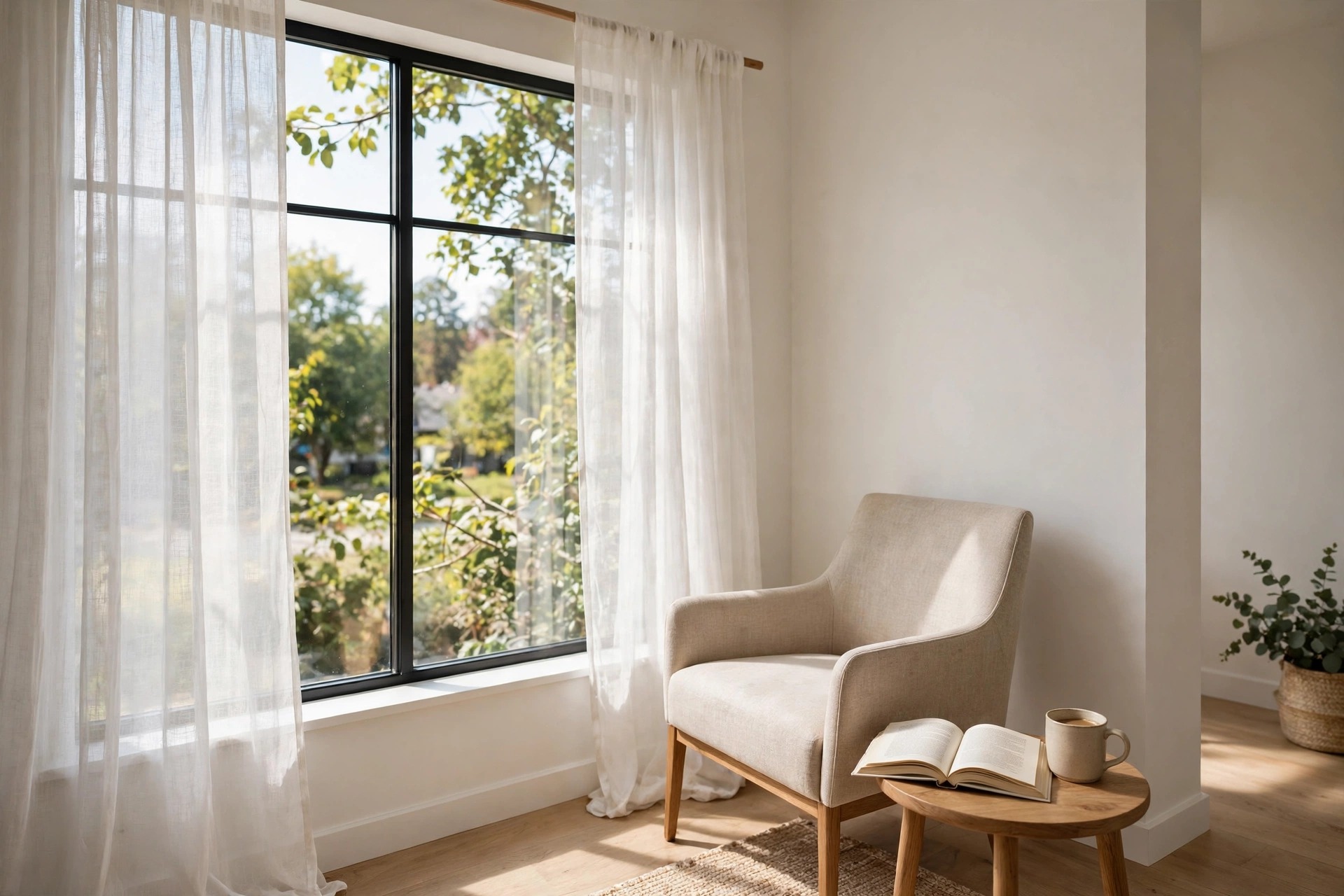
A window corner is often left bare because a full sofa would block the light. A single chair fits it much better, and it gives you a seat with daylight for reading. Choose a chair with slim arms, so it leaves room for your legs.
Set the chair at a slight angle, facing into the room, not flat against the glass. That angle makes the corner feel like a planned seat, not a chair pushed out of the way. Add a small round table for a book and a drink.
Keep the window clear above the chair back, so light still falls into the room. A short floor lamp behind the chair helps on dark evenings. Sit down with a book and check that you can reach the table without standing up.
2. Push a Small Sectional Into the Main Corner

The main corner, where two long walls meet, can hold the biggest seat in the room. A small sectional that fits that corner leaves the middle of the floor open, which matters more than one extra seat in a tight room.
Measure both walls before you shop, and note where doors and vents sit. A sectional that is even a few inches too long will block a door swing or cover a vent, and then the corner starts to cause trouble.
Keep one end short, so people can walk past it without squeezing sideways. Before you buy, tape the shape on the floor and walk the path to the door. If the tape forces a sidestep, pick a shorter return.
3. Fit Tall Shelves Into a Bare Wall Corner

A bare corner near the sofa often ends up as a dumping spot for bags and mail. Tall, narrow shelves give that corner a job without taking much floor space, since the storage goes up the wall.
Put heavy books low, where the shelf is most stable, and lighter items higher up. Leave one shelf partly empty, so the unit looks calm and you have room for a new book or a small plant later.
Keep the shelf depth shallow, about the width of a paperback plus a little room to spare. Deep shelves in a corner invite clutter. In a long room, this upright storage works well, as shown in these rectangle living room ideas.
4. Slide a Slim Console Behind the Sofa
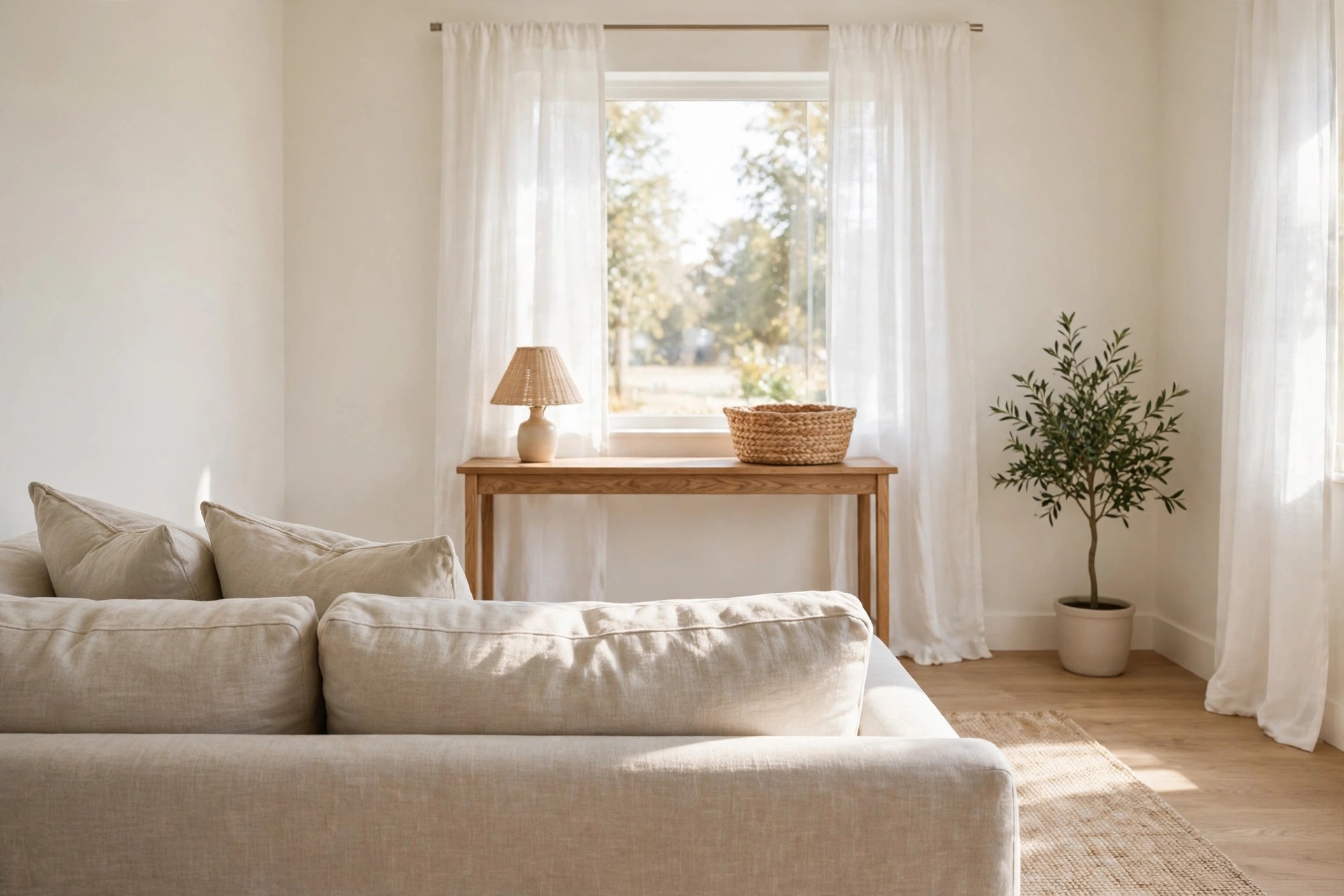
The gap behind a sofa that floats off the wall is a classic wasted strip. A slim console table fills it, and it gives you a place for a lamp, a phone charger, and a small basket for remotes.
Pick a console no deeper than the gap you truly have, and check that the sofa back still clears it when someone leans back. A table that wobbles each time the sofa moves will not last long in daily use.
Use a lower shelf, if it has one, for books or a lidded box. That keeps small items out of sight, while the top stays clear for the lamp. Guests then see a finished table, not the plain back of a sofa.
5. Make a Drop Zone in the Door Corner

The corner just inside the door is where keys, bags, and coats pile up, and then the pile creeps into the seating area. Give that corner its own drop zone, so the mess has a set home and a clear edge.
Hang two or three hooks at different heights, so coats, bags, and a dog lead each have a spot. A small basket below catches shoes, and a tiny tray on a wall shelf holds keys and mail.
Keep the zone narrow, so the door can still swing fully open without hitting a hook or a basket. The test is simple: come home, hang your coat, drop your keys, and sit down without stepping around a pile.
6. Angle a Chair Into the Fireplace Corner

A fireplace corner can feel hard to use, since the hearth sticks out and the wall angles feel odd. An angled chair turns that spot into a warm seat, close to the fire but not blocking the mantel.
Set the chair so it faces both the fire and the main sofa, at a soft diagonal. That angle lets two people talk without turning their heads too far, and it leaves a clear path past the hearth.
Add a small side table on the side away from the hearth, where a mug will not sit too close to heat. Keep fabric, paper, and baskets well back from the fire opening, and leave the hearth clear so you can tend the fire safely.
7. Run Floating Shelves Into the High Corners

High corners, up near the ceiling, are easy to ignore, yet they hold a lot of useful space. Two or three short floating shelves in a high corner can hold books and keepsakes without using any floor at all.
Start the lowest shelf at a height you can reach with a small step stool, not a tall ladder. If you cannot reach the shelf with ease, you will stop using it, and it will just gather dust.
Keep the items light and few, since high shelves look heavy fast when they are packed tight. One plant, a row of books, and one framed photo per shelf is plenty.
Plan each spot to support the seating plan, as in this guide on how to arrange a small living room.
8. Build a Tiny Desk Nook in a Spare Corner
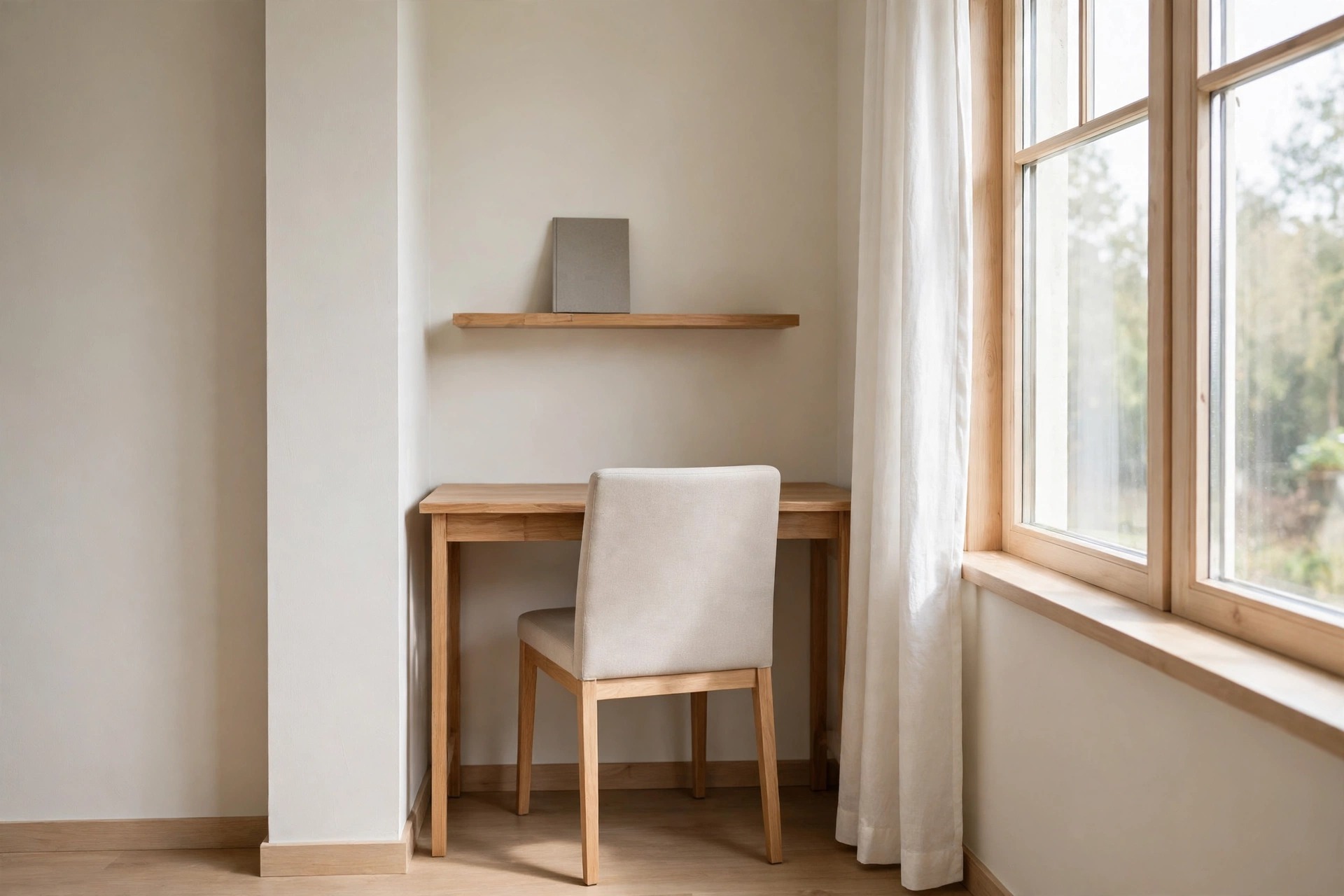
A spare corner near a window or a quiet wall can hold a small desk, even when the room has no space for a home office. A narrow desk and a chair that tucks right under it keep the nook from taking over the room.
Face the desk toward the wall, not into the seating area, so work papers stay out of the main view. A small shelf above the desk holds a notebook and a pen cup, and it keeps the desk top clear.
Pick a chair with no arms for this spot, since armrests often catch on the desk edge in a tight corner. When work ends, papers go in one tray and the chair goes back under the desk, so the corner stays neat.
9. Group Tall Plants in a Light Corner
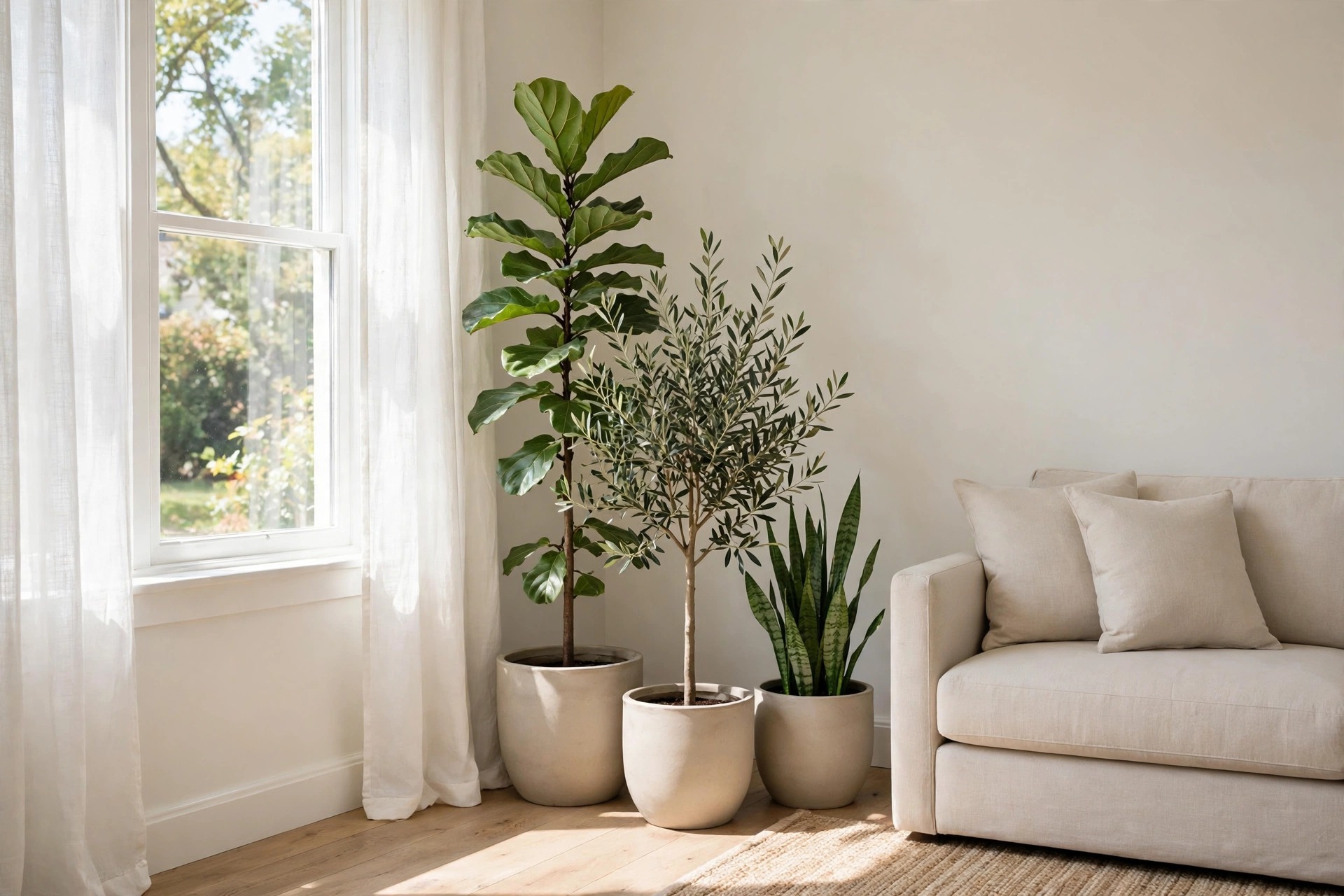
A bright corner by a window is a natural home for plants, and a group of them fills the space better than one small pot lost in a big corner. Use three plants of different heights, so the group looks full from the sofa.
Put the tallest plant at the back, close to the wall, and the shorter ones in front. That stepped shape lets light reach each plant, and it stops the group from looking like a single dark block.
Use pots in one color family, so the group reads as one calm cluster, not a row of odd pots. A tray under the pots catches water. Check the light first, and pick plants that suit sun or shade in that corner.
10. Mount the TV in a Corner With a Corner Console

When no wall is wide enough for a TV, the corner itself can be the TV wall. A corner mount or a triangular console lets the screen face the sofa at an angle, and it frees the long walls for seating and storage.
Mount the screen so the middle of it sits near eye level when you sit down. A screen set too high will strain your neck, and one set too low will get blocked by the coffee table.
Hide cords with a cord cover that runs down the corner seam, where it blends in better than on a flat wall.
This angled setup suits long rooms well, as noted in these narrow living room layout ideas. Check the view from each seat first.
11. Set a Corner Table for Meals and Games

A corner that fits two chairs and a small round table can serve as a meal spot, a game spot, and a coffee spot in turn.
A round table works best here, since it has no sharp corners to catch your hip in a tight pass.
Push one side of the table close to the wall, and leave just enough room to pull out the chairs. If the chairs scrape the wall each time, move the table out by a few inches and accept a slightly wider footprint.
Keep a small basket nearby for game pieces, cards, or placemats, so the table can change jobs fast. When dinner ends, the game box goes back in the basket and the table is clear again. Two chairs are enough for most weeknights.
12. Place a Storage Bench Under a Window Corner
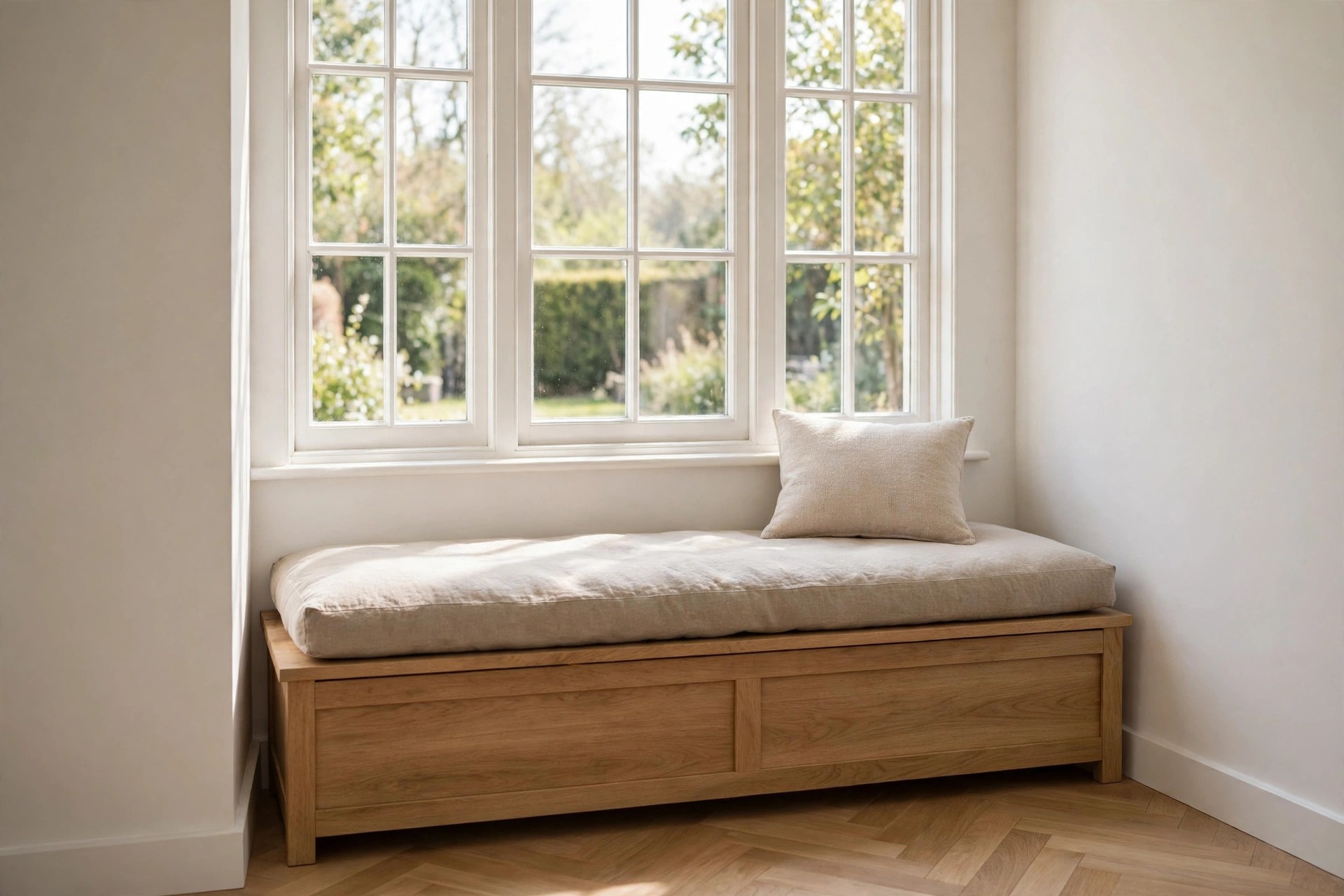
The low wall under a window corner often stays empty, yet it is just the right height for a bench. A storage bench there gives you a seat, a place for blankets, and a perch with a view, all in one piece.
Check the bench height against the window sill before you buy, so the bench does not block the window latch or the lower frame. You should still be able to open the window with ease.
Use the inside for items you use often but want out of sight, like throws, board games, or spare cushions. Add one cushion on top and a small pillow at one end, so the bench invites sitting, not just storage.
13. Lean a Mirror and Art Into an Awkward Corner

Some corners are too narrow for furniture but too bare to leave blank. A tall mirror leaned in the corner, with one framed print beside it, fills the space with light and color without a single piece of furniture.
Lean the mirror so it reflects a window or a light wall, not a dark corner of the room. That reflected light makes the corner feel wider, and it draws the eye past the narrow shape of the spot.
Secure the top of the mirror to the wall, even if it looks stable on its own. A leaned mirror in a busy walk path can slip, and a small wall anchor stops that risk with little effort. Keep the floor in front clear.
14. Light a Dark Corner With a Floor Lamp and a Basket

Dark corners make a small room feel smaller, since the eye stops at the shadow. A floor lamp in that corner pushes light up and out, and a basket beside it gives blankets a home close to the sofa.
Pick a lamp with a shade that sends light both up and down, so the corner glows without a harsh spot on the wall. A lamp that only lights the ceiling can leave the seat below it still dim.
Place the basket on the side away from the walk path, so no one trips over it in the dark. Fold the blankets neatly.
Test the corner at night with the main ceiling light off. If it still looks dark, move the lamp out a little.
15. Tuck a Storage Ottoman Into the Last Dead Corner

Every small room seems to have one last corner that fits nothing well, too small for a chair and too odd for a shelf. A storage ottoman fits that spot, since it is low, soft, and easy to move when you need the space.
Use it as a footrest by day, an extra seat when guests visit, and a box for throws or games the rest of the time. That triple job is what makes an ottoman worth its floor space in a tight room.
Pick a size that leaves a clear walk path around it, and check that it does not block a vent or a door swing. When guests leave, the ottoman goes back to its corner, the lid closes, and the room looks tidy again fast.
Start with the corner that annoys you most, not the one that looks best in photos. One chair, one shelf, or one lamp in the right spot can change how the whole room feels, and it costs far less than a new layout.
These small living room ideas using every corner no wasted space work best when you leave the middle of the room clear and let each corner do one job well.
Save this to your small living room board for later, and try the next corner when you are ready.
If a corner still feels tight, read these small living room mistakes that make it feel smaller to spot what may be crowding it.


