

15 Coastal Blue Living Room Ideas for a Relaxed and Timeless Home
Blue is one of the easiest colors to use in a coastal living room, but creating a convincing coastal space takes more than adding a blue sofa and a few seashell decorations. The most inviting rooms combine ocean-inspired shades with warm whites, sandy neutrals, natural wood, woven materials, and comfortable furniture. Current coastal interiors are also moving away from obvious nautical themes and toward rooms that feel refined, relaxed, and connected to natural surroundings.
Soft powder blue, faded denim, dusty blue, blue-gray, and deeper ocean shades can all create different moods. The right choice depends on how much color you want and how much natural light enters the room. Natural materials such as rattan, jute, linen, and weathered wood are especially useful because they add warmth and texture to blue-and-white rooms without making the space feel overly decorated.
These 15 coastal blue living room ideas explore different ways to use blue through sofas, walls, rugs, curtains, artwork, furniture, and smaller accents. Each idea can be adapted to a beach house, apartment, family home, or inland living room that simply needs a relaxed coastal character.
1. Soft Blue Sofa With Warm White Walls

A soft blue sofa can become the main color feature in a coastal living room without making the space feel heavily themed. Choose a muted shade such as powder blue, dusty blue, chambray, or a gentle blue-gray rather than an intensely saturated tone.
Keep the walls warm white or creamy ivory so the room feels light and open. Add a natural wood coffee table, woven baskets, and a jute or sisal-style rug to introduce organic texture.
Cream cushions with one or two darker blue pillows can connect the sofa to the rest of the room. Linen curtains and simple coastal artwork complete the look. This approach works particularly well when you want the room to feel coastal without making blue the only noticeable color.
2. Navy Blue Accent Wall With Cream Furniture
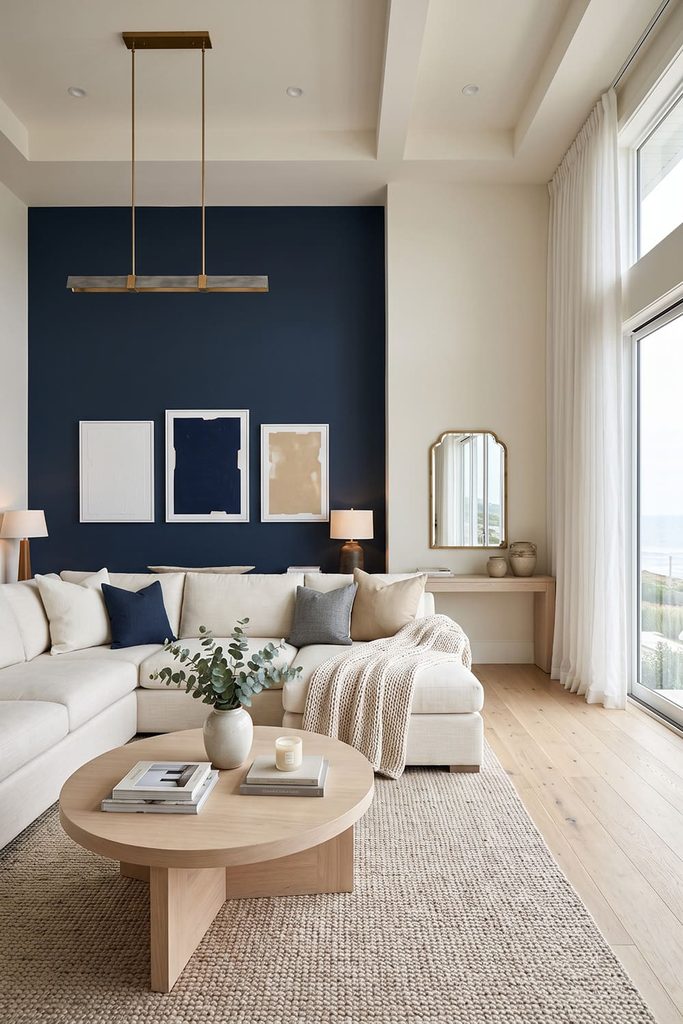
Deep navy can give a coastal living room considerably more depth while still working with a seaside-inspired palette. Instead of painting every wall dark, use navy on the wall behind the sofa or fireplace.
Balance the strong blue with cream upholstery, pale wood, and warm neutral accessories. A large cream sofa against a navy wall creates an especially striking contrast.
Add a natural woven rug and light-colored curtains to keep the room from feeling too heavy. Brass or aged-metal lighting can introduce warmth, while simple artwork in white, blue, and sandy tones ties everything together.
This version of coastal style works well for rooms that receive plenty of natural light because the darker wall becomes a deliberate architectural feature rather than making the entire space feel closed in.
3. Blue and White Striped Sofa

Stripes remain one of the easiest ways to introduce a coastal reference, but they do not need to dominate the room. A blue-and-white striped sofa or upholstered chair can provide a subtle seaside connection while the rest of the furnishings remain relatively simple.
Choose a classic ticking stripe, narrow vertical stripe, or wider relaxed pattern. Pair it with warm white walls and a natural wood coffee table.
A woven pendant light, jute rug, and linen curtains reinforce the coastal materials without requiring additional nautical accessories. Keep the surrounding cushions mostly solid so the stripe remains distinctive.
For a more contemporary result, mix the striped furniture with modern lighting and simple sculptural decor rather than traditional beach-themed pieces.
4. Blue Sectional With Natural Wood Furniture
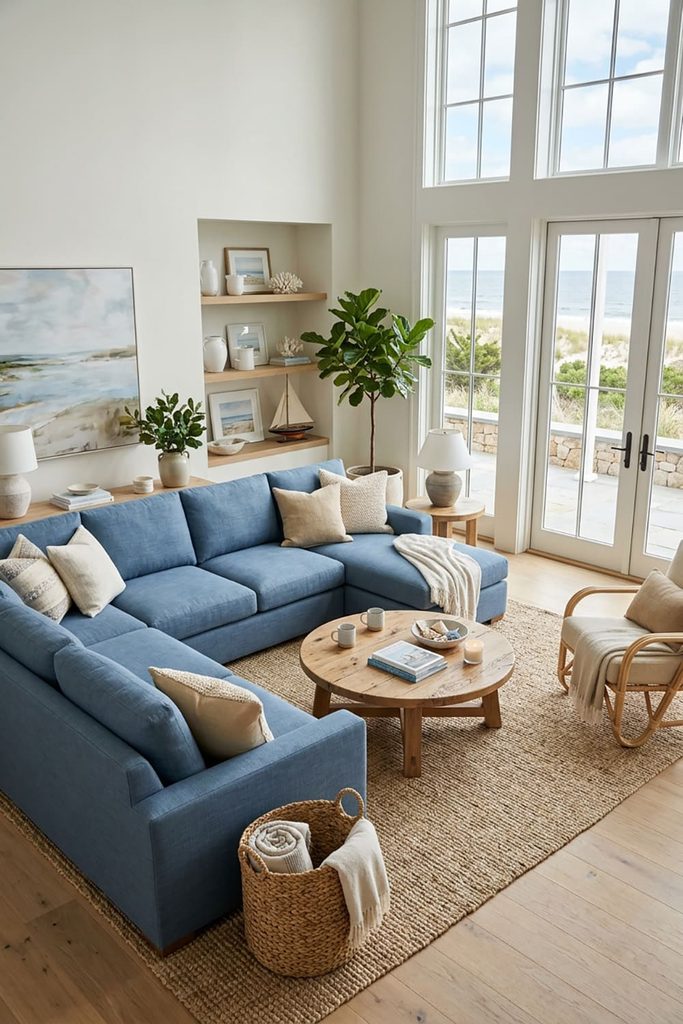
A blue sectional can work beautifully in a larger coastal living room because it provides plenty of comfortable seating while establishing a strong color foundation.
Choose a muted medium blue rather than an extremely bright navy if you want the room to feel relaxed. Surround it with warm oak, teak, or another natural wood finish.
A large woven rug can visually anchor the seating area, while a round wood coffee table softens the geometry of the sectional. Add cream and sandy-beige pillows with different textures rather than using several matching blue cushions.
Natural wood and woven textures are central to contemporary coastal interiors because they add warmth and tactile depth to otherwise light palettes.
5. Pale Blue Walls With a White Sofa
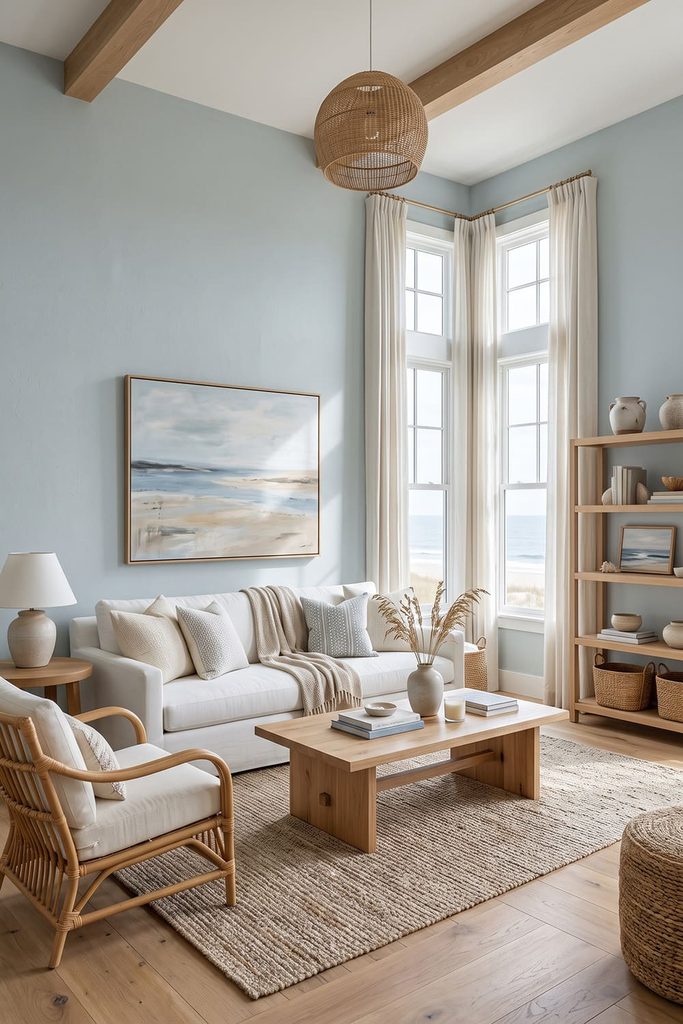
For a softer interpretation of coastal blue, use the walls rather than the furniture as the main color feature. A pale blue with gray or green undertones can create a calm background without becoming visually intense.
Place a white or ivory sofa against the blue wall and introduce warm wood through the coffee table, side tables, or shelving.
Layer in cream cushions, a textured neutral rug, and woven accessories. If the room has large windows, use lightweight curtains so natural light remains part of the design. This approach is especially effective in smaller living rooms because pale walls can provide color without creating the visual weight of a large dark sofa or accent wall.
6. Faded Blue Sofa With Sandy Beige Accents

For a warmer coastal room, combine a faded blue sofa with sandy beige, oatmeal, and natural tan. The result resembles the colors of weathered shoreline materials rather than a traditional blue-and-white beach palette.
Choose a sofa in washed denim, dusty blue, or muted slate. Add a beige textured rug, natural wood coffee table, and woven baskets. Use cream rather than bright white for the smaller accessories. Linen, cotton, jute, cane, and rattan can provide the texture needed to keep the neutral palette interesting.
This combination is particularly useful if you like coastal design but find traditional white-and-blue rooms too cool. Warm neutrals help soften blue and create a more comfortable year-round atmosphere.
7. Coastal Blue Rug With Neutral Furniture

You do not need a blue sofa or blue walls to create a coastal blue living room. A large blue area rug can establish the color palette while allowing the main furniture to remain neutral.
Choose a rug featuring faded blue, cream, and subtle beige rather than a highly contrasting pattern. Place a cream sofa and natural wood coffee table over it. Repeat the blue in a few cushions, a ceramic vase, or artwork. Keeping the color concentrated near the floor gives the room a grounded appearance while leaving the walls bright.
This is also a practical option for renters because a rug can introduce substantial color without requiring permanent changes to the walls or built-in features.
8. Blue Curtains With a Cream and Wood Palette
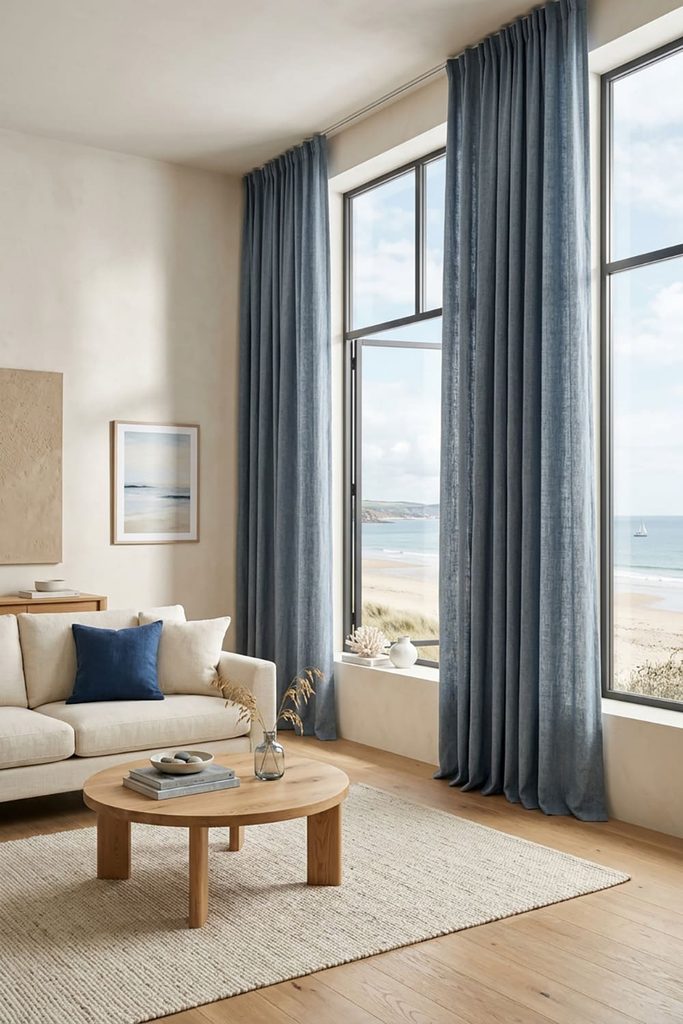
Blue curtains can provide a surprisingly strong coastal effect, particularly when the walls and furniture remain neutral. Choose linen or linen-look panels in a soft blue, faded denim, or blue-gray shade.
Pair them with a cream sofa, pale rug, and warm wood furniture. The curtains frame the windows and naturally draw attention toward daylight, which is particularly appropriate for a coastal-inspired room. Keep the remaining blue accents restrained. One or two cushions or a piece of artwork may be enough.
For a polished result, hang curtains high and allow them to reach the floor. Current interior design guidance also emphasizes properly scaled window treatments as an important part of creating a finished room.
9. Blue Fireplace Wall With Natural Textures

A fireplace can become the architectural center of a coastal blue living room. Instead of decorating the mantel with numerous beach accessories, use blue on the surrounding wall.
A dusty navy, blue-gray, or muted ocean shade can provide depth behind a pale fireplace surround. Add a natural wood mantel or simple light-toned styling if the architecture allows it.
Keep the seating neutral with cream or oatmeal upholstery. A woven rug, rattan chair, and natural wood side table can soften the stronger wall color.
Finish the mantel with one large piece of coastal-inspired artwork, a ceramic vessel, or a simple arrangement of branches. The goal is to reference the shoreline through color and material rather than turning the fireplace into a themed display.
10. Layered Blue Cushions on a Neutral Sofa

If you want an easy coastal update, start with the sofa you already own. A cream, beige, or light-gray sofa can become the foundation for a layered blue palette.
Mix several shades rather than using identical cushions. Combine pale blue, dusty blue, medium denim, and a small amount of navy. Vary the textures with linen, cotton, woven fabric, and subtle patterns.
Add a natural wood coffee table and a neutral rug underneath. A few blue accents elsewhere in the room can connect the arrangement without requiring a major furniture purchase. Layering different blue tones is a common approach in blue-and-white coastal rooms because it creates depth while keeping the palette visually connected.
11. Blue Accent Chairs With a White Sofa

A white or cream sofa paired with two blue accent chairs creates a balanced seating arrangement while keeping the main furniture light.
Choose chairs in a different blue from the cushions or rug so the room does not look overly matched. For example, pair a soft blue sofa with deeper blue chairs, or use navy chairs against a white sofa.
Natural wood legs, rattan details, or woven upholstery can strengthen the coastal connection. Place a round coffee table between the seating pieces to soften the arrangement. This setup works particularly well in rooms where you want blue to appear as a repeated accent rather than one large block of color.
12. Blue and Natural Rattan Living Room

Rattan and other woven materials are natural partners for coastal blue. Their warm tan tones prevent blue and white from becoming too cool.
Start with a cream sofa and introduce a blue accent chair, blue cushions, or a blue rug. Then add rattan through side chairs, baskets, a pendant light, or small furniture pieces. Use pale or medium natural wood for the coffee table and shelving. Keep the walls warm white or very pale blue.
The contrast between blue upholstery and warm woven materials gives the room texture without relying on obvious nautical decorations. Natural textures such as rattan, jute, and woven fibers are long-established elements of coastal interior design.
13. Moody Blue Coastal Living Room

Coastal rooms do not have to be completely pale. A deeper, moodier blue can create a sophisticated living room when balanced with enough warm and light elements.
Try deep blue walls with cream seating, pale wood, and natural woven accessories. Instead of adding more dark colors, use warm ivory, sand, and light oak to keep the room from becoming visually heavy.
A large mirror can help reflect available light, while layered lamps provide warmth after sunset. Simple coastal artwork in muted blue, cream, and beige can connect the room to the seaside without creating a literal beach theme.
This style is particularly appealing if you enjoy coastal design but want something more dramatic than a traditional airy blue-and-white room.
14. Blue Artwork Above a Neutral Sofa

Artwork can become the easiest way to introduce coastal blue without committing to colorful furniture or walls. Choose one large abstract piece featuring shades of blue, cream, sand, and muted gray.
Hang it above a neutral sofa and repeat one or two colors from the artwork in the cushions or rug. Add warm wood furniture to prevent the arrangement from feeling too cool.
Look for artwork inspired by water, sky, coastline, or abstract movement rather than relying exclusively on obvious beach photographs. Contemporary coastal design is increasingly moving toward more refined and less literal references to the sea. The result can feel personal and sophisticated while still clearly drawing inspiration from the coast.
15. Blue, Cream, and Weathered Wood Coastal Palette
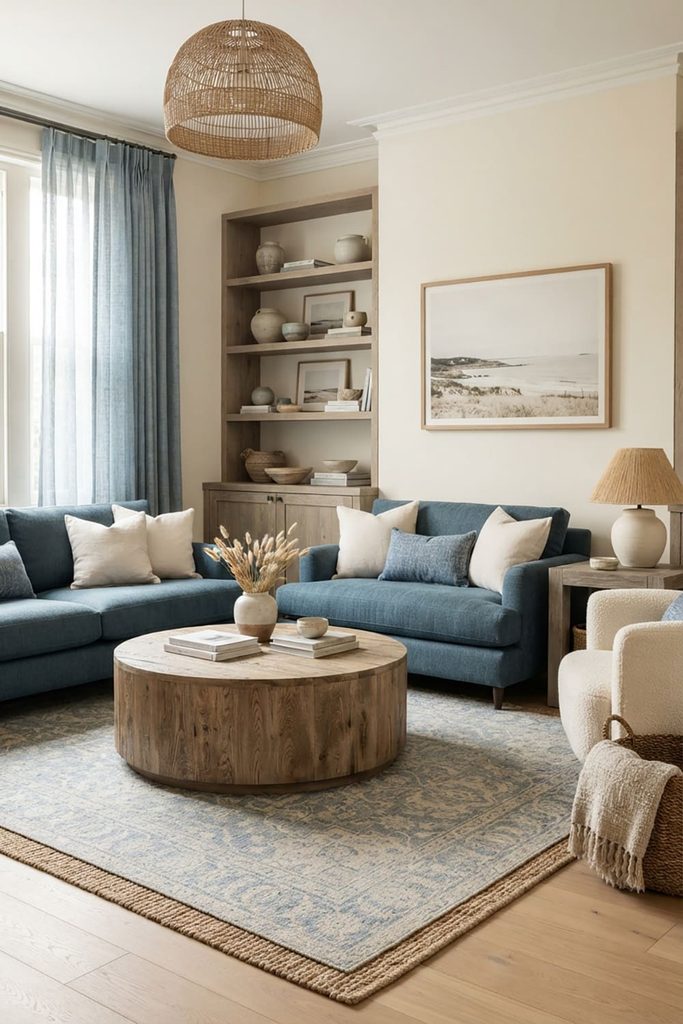
For a timeless coastal living room, combine three primary elements: blue, warm cream, and weathered natural wood.
Use blue through the sofa, rug, curtains, or cushions. Keep larger surfaces such as walls and upholstery light where possible, then introduce weathered oak, reclaimed wood, or another naturally textured finish through the coffee table and storage furniture.
Layer cream linen, woven baskets, textured throws, and understated artwork. Avoid adding every possible coastal symbol. The room should feel like a comfortable home influenced by the sea rather than a themed beach house.
This restrained approach reflects the direction of contemporary coastal interiors, which increasingly emphasize natural materials, texture, light, and personal character over obvious nautical motifs.
How to Create a Coastal Blue Living Room
Start with the largest elements first. A warm white or creamy base gives blue room to stand out without taking over the space. From there, select one dominant blue shade and add one or two related tones through smaller pieces.
Natural materials are equally important. Wood, linen, rattan, jute, wicker, and other woven textures add warmth and keep a blue-and-white room from feeling flat. Architectural Digest identifies natural wood, rattan, jute, sisal, linen, and slipcovered furniture among the established elements associated with coastal interiors.
It is also worth resisting the temptation to add too many nautical objects. Current coastal design is moving toward subtler references, with designers favoring natural materials, architectural details, thoughtful color, and handcrafted or personal pieces over heavily themed decorations.
For a room that feels warm rather than stark, consider using cream, sand, beige, or natural wood alongside blue instead of relying entirely on bright white. This gives the palette more depth and makes the living room feel comfortable beyond the summer months.
Final Thoughts
Coastal blue living rooms can be bright and airy, warm and rustic, sophisticated and moody, or relaxed and casual. The common thread is not a particular shade of blue, but the way blue is combined with light neutrals, natural materials, comfortable furniture, and plenty of texture.
A blue sofa makes a strong statement, while blue curtains, artwork, cushions, or a rug offer easier ways to introduce the color gradually. If you want a more dramatic result, consider a navy accent wall or deeper blue upholstery balanced with cream and natural wood.
The most current coastal interiors also show that you do not need anchors, shells, or overt nautical decorations to create the feeling. Blue, warm neutrals, natural textures, thoughtful lighting, and a relaxed arrangement can communicate the coastal inspiration in a much more timeless way.


