

15 Blue Living Room Ideas on a Budget for a Stylish Home
A beautiful blue living room does not require a new sofa, expensive furniture, or a complete renovation. Blue can be introduced gradually through paint, cushions, curtains, artwork, rugs, and small furniture pieces, allowing you to control both the look and the cost. The key is choosing a few changes that have a strong visual effect rather than buying everything at once.
Blue also gives you plenty of flexibility. Pale blue can make a room feel airy, while navy creates depth and drama. Mid-tone blues work especially well with cream, beige, white, natural wood, and warm lighting. Current decorating advice increasingly favors layered, personalized rooms rather than spaces filled with matching pieces, which makes a budget approach even easier.
These 15 blue living room ideas show how to create a welcoming, polished room while keeping expensive purchases to a minimum.
1. Paint One Wall Blue
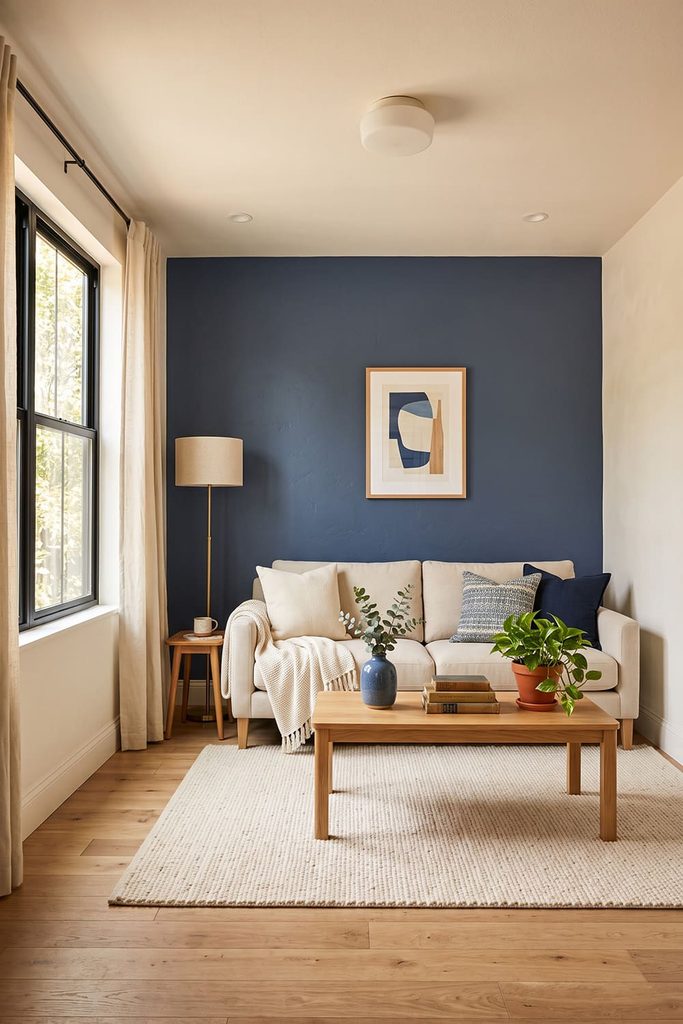
A single painted wall can make a bigger difference than several small decorations. Choose the wall behind your sofa, fireplace, or television and give it a rich navy, muted blue, or dusty blue finish. Keeping the remaining walls neutral prevents the color from overwhelming the room.
You can then repeat the same shade through a cushion, vase, artwork, or throw so the accent wall feels connected to the rest of the space. An accent wall also requires considerably less paint than repainting the entire room, making it one of the simplest ways to create a noticeable change on a limited budget.
2. Style a Neutral Sofa With Blue Cushions

If your existing sofa is beige, cream, gray, white, or even brown, there is no reason to replace it. Use blue cushions to introduce the color instead. Combine two or three shades, such as navy, dusty blue, and medium blue, rather than buying a matching set.
Varying the textures makes inexpensive cushions look more considered. Add one blue throw casually over the arm or back of the sofa. This approach lets the sofa remain the main neutral foundation while blue becomes the accent color that gives the room its personality.
3. Choose a Small Blue Accent Chair
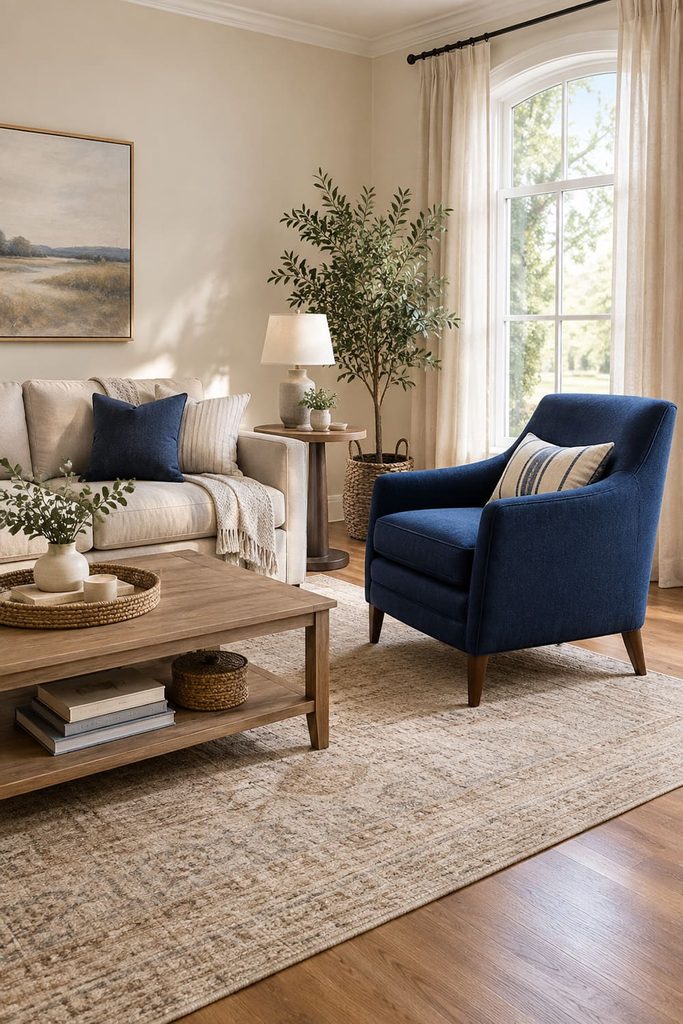
A complete blue sofa can be expensive, but a single accent chair may be much more affordable. Look for a secondhand, clearance, or simple upholstered chair in navy, denim blue, teal, or muted blue. Place it beside the sofa to create a small conversation area.
If the chair has a dated wooden frame, repainting or refinishing the frame can give it a fresher appearance. Keep the surrounding furniture neutral so the chair stands out. A single blue chair can introduce enough color to make the room feel intentionally designed without requiring a complete furniture replacement.
4. Use a Blue Area Rug
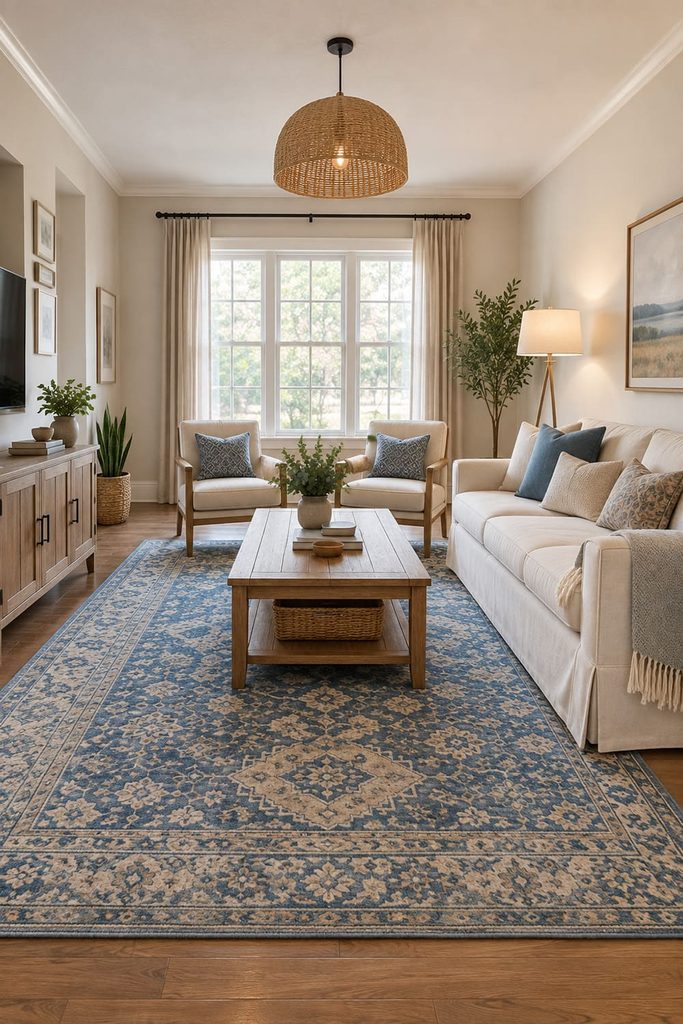
A blue rug can visually anchor the seating arrangement while introducing color across a large portion of the room. If a large rug is outside your budget, look for a smaller design that fits beneath the front legs of the sofa and chairs.
Geometric patterns, faded traditional designs, subtle stripes, and abstract blue patterns can all work well. Choose a rug containing another existing room color, such as cream, beige, gray, or brown. That connection makes the rug feel integrated instead of looking like an unrelated purchase.
5. Create a Blue and Natural Wood Combination

Natural wood is an inexpensive-looking room saver because its warmth balances the cooler character of blue. Keep your existing wooden coffee table, shelves, side tables, or cabinets and introduce blue around them.
Navy cushions against a wooden coffee table, a blue lamp beside a timber cabinet, or blue artwork above a wood console can create an attractive contrast. You do not need to buy matching wooden furniture. Mixing existing wood pieces with affordable blue accessories often creates a more personal room than purchasing an entire furniture collection at once.
6. Make a DIY Blue Gallery Wall

Artwork can become expensive when you buy several large framed pieces, so create a gallery wall gradually. Start with inexpensive prints, personal photographs, thrifted frames, postcards, or simple blue abstract artwork. Keep blue as the connecting color while allowing the frames and images to vary.
You can also print a large abstract design yourself and place it in an inexpensive frame. Arrange the pieces above the sofa or along a narrow wall. The result can feel collected and personal without requiring a large decorating budget.
7. Add Blue Curtains to a Neutral Room

Curtains provide a substantial block of color without changing your furniture. Soft blue curtains work particularly well with white, cream, beige, and light gray walls. For a more dramatic room, choose navy curtains and balance them with lighter furniture.
Hang the curtain rod high and allow the fabric to fall close to the floor for a more finished appearance. If your current curtains are still useful, keep them and introduce blue somewhere else instead. Budget decorating works best when you improve what you already own rather than replacing functional items unnecessarily.
8. Refresh a Thrifted Coffee Table With Blue

A secondhand coffee table can become a useful focal point with a little preparation and paint. Look for a sturdy wooden table with a shape you like, then consider painting the base or entire piece in a deep blue. Keep the tabletop natural if you want some wood texture to remain visible.
Style it with a small tray, books, a candle, or a ceramic bowl. The contrast between blue paint and natural materials can make an inexpensive piece look intentional. This approach is especially useful when you need furniture but want to avoid buying a complete matching set.
9. Use Blue Artwork Instead of Blue Furniture
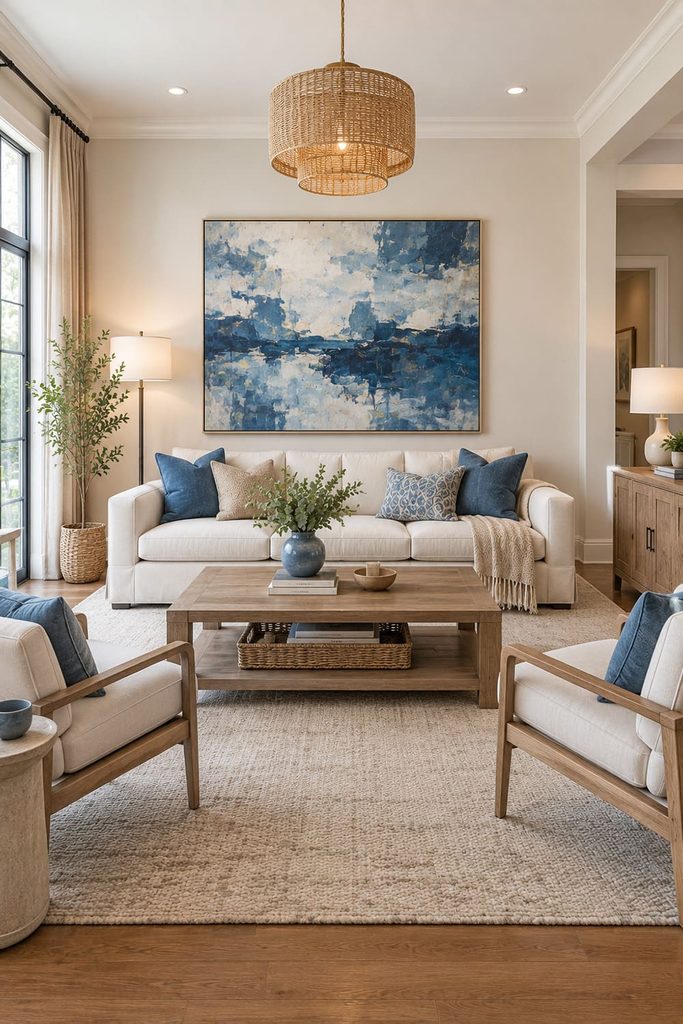
You can create a blue living room without purchasing a blue sofa or chair. A large blue artwork above the sofa can provide the main color statement while keeping the rest of the furniture neutral. Look for abstract prints, ocean-inspired artwork, landscapes, geometric designs, or simple blue-and-white compositions.
If large artwork is expensive, combine several smaller prints in inexpensive frames. Repeat one or two colors from the artwork in cushions or a small decorative object so the room feels connected.
10. Layer Different Shades of Blue
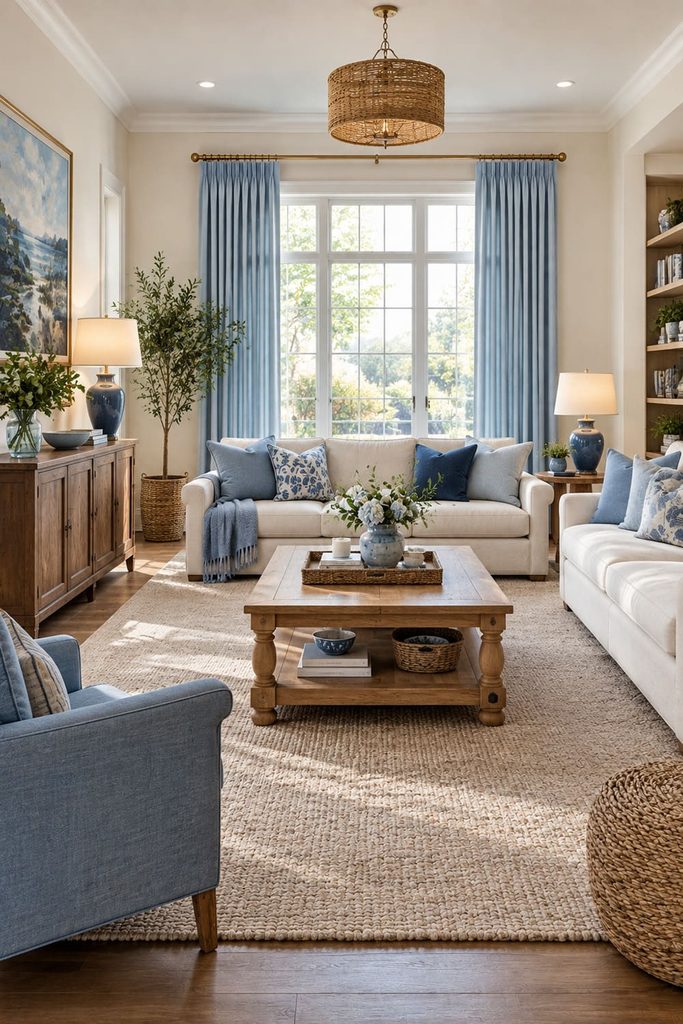
Using several blue shades can make a budget room look richer because you do not need every item to match. Try pale blue curtains, medium-blue cushions, and one dark navy accent. The differences create depth while keeping the overall palette cohesive.
Dulux’s living-room guidance also highlights using multiple blues together and adjusting their proportions to change the mood of the room. The trick is to let one shade dominate and use the others in smaller amounts. This prevents the room from becoming visually busy.
11. Turn a Plain Bookshelf Into a Blue Feature

Instead of buying a new storage unit, give an existing bookshelf more character. Paint the back panels blue while leaving the shelves and frame white, wood, or another neutral color. This uses far less paint than covering an entire wall and creates a noticeable color accent.
Style the shelves with books, small plants, baskets, framed photographs, and a few neutral accessories. Leaving some open space between objects is important because an overloaded shelf can make an inexpensive room feel cluttered rather than thoughtfully decorated.
12. Add a Blue Throw to the Sofa

A single throw can introduce blue for very little money. Choose a textured knitted, cotton, woven, or lightweight blanket and drape it naturally across one side of the sofa. If the sofa is neutral, almost any blue shade can work.
For a darker sofa, try a lighter dusty or powder blue for contrast. You can also switch the throw seasonally instead of purchasing permanent decor. This is one of the easiest ideas for renters or anyone who wants to experiment with blue before committing to a larger decorating change.
13. Use Blue and Beige for a Warm Budget Palette

Blue can sometimes feel cool when surrounded by too much white and gray. Beige helps soften it without requiring expensive furniture. Keep your existing beige sofa, wooden furniture, or neutral rug and introduce blue through cushions, artwork, curtains, or one small chair.
Warm beige and natural wood create a comfortable foundation for navy, denim, muted blue, or dusty blue accents. This combination is especially useful if you want a blue living room that feels relaxed rather than strongly coastal or overly themed.
14. Create a Blue Reading Corner

You do not have to decorate the entire living room at once. Start with one small corner. Place an affordable blue accent chair beside a floor lamp and a small side table. Add a blue cushion and perhaps a small plant.
The rest of the living room can remain neutral while this corner becomes a defined feature. Focusing on one functional area at a time is also a practical approach to budget decorating because it prevents unnecessary purchases and gives you time to decide what the room actually needs.
15. Use Blue Accessories With Existing Furniture
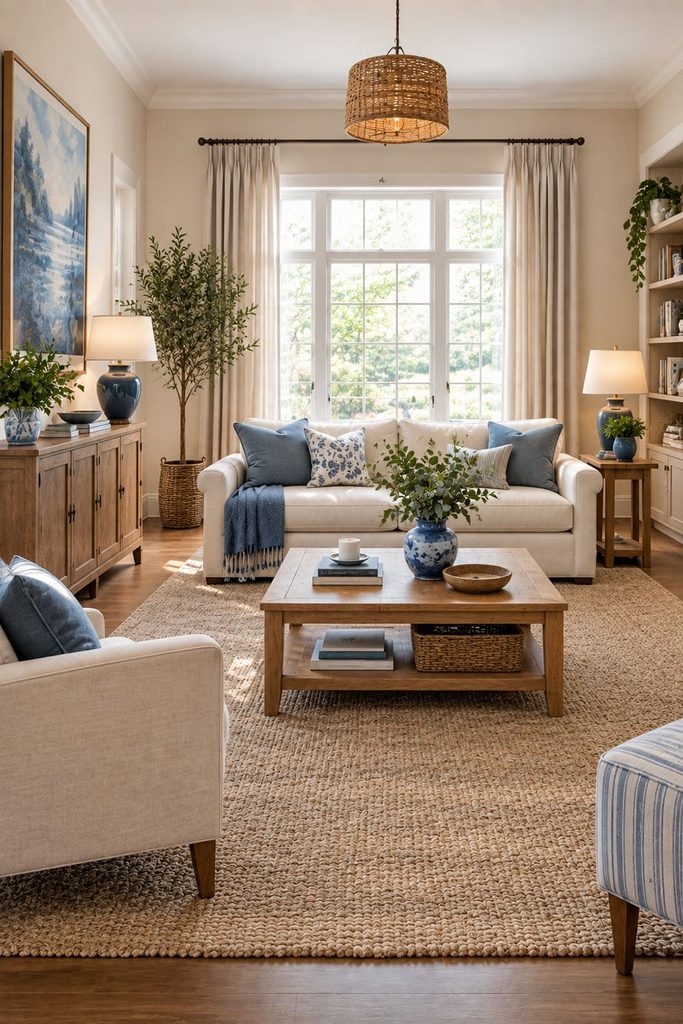
The most affordable blue living room may be the one where you buy almost no furniture at all. Shop your home first and look for objects that can be rearranged. A blue vase from another room, a framed print, a ceramic bowl, a blanket, books, or even a painted plant pot can introduce the color. Combine those pieces with one or two inexpensive additions rather than starting from scratch.
Keeping larger furniture neutral also makes future decorating changes easier because you can replace small accessories when your preferred color palette changes. Budget decorating advice consistently favors these smaller, high-impact updates over unnecessary major renovations.
How to Make a Blue Living Room Look Expensive on a Small Budget
Start with what you already have. A neutral sofa, existing wood furniture, and simple walls can provide an excellent foundation. Then choose one main blue element, such as a painted wall, rug, curtains, or accent chair, and repeat the color in smaller accessories.
Mix textures instead of buying more objects. A woven throw, smooth ceramic vase, soft cushion, wooden table, and framed artwork can create visual variety without filling every surface. Also pay attention to lighting.
Moving a floor lamp, changing a lampshade, or adding a small table lamp can make blue tones feel warmer and more inviting. Budget designers frequently recommend paint, textiles, lighting, rearranging furniture, and accessories because these changes can refresh a room without major construction.
Most importantly, avoid trying to make every item blue. A few well-placed blue elements surrounded by warm neutrals usually look more intentional than a room filled with inexpensive blue decorations.
Conclusion
Creating a blue living room on a budget is mostly about choosing where the color will have the greatest impact. A painted accent wall, blue cushions, a thrifted chair, inexpensive artwork, curtains, or even one carefully chosen throw can change the character of the room without replacing everything you own.
For the warmest result, combine blue with cream, beige, natural wood, soft lighting, and a few textured fabrics. Layering different blue shades can add depth, while keeping the larger furniture neutral gives you flexibility as your style changes. Current decorating trends also favor more personal, layered interiors, so a room assembled gradually from useful pieces and meaningful finds can feel more authentic than a perfectly matched furniture set.


