

15 Modern Blue Living Room Ideas for a Stylish Home
Blue can make a living room feel sophisticated, calm, dramatic, or fresh depending on the shade and what surrounds it. For a modern interior, the goal is not simply to add blue furniture and accessories. The stronger approach is to control the palette, mix contemporary shapes with tactile materials, and use warm elements to keep cooler blue tones from feeling flat.
The current color direction is giving blue plenty of room to stand out, with designers and paint brands highlighting everything from airy blue shades to rich indigo and navy. Layering related blues is also being used to create more depth instead of relying on one exact shade throughout a room.
These modern blue living room ideas focus on clean layouts, thoughtful color combinations, natural materials, and details that can make an ordinary room feel much more intentional.
1. Deep Blue Walls With a Cream Sofa
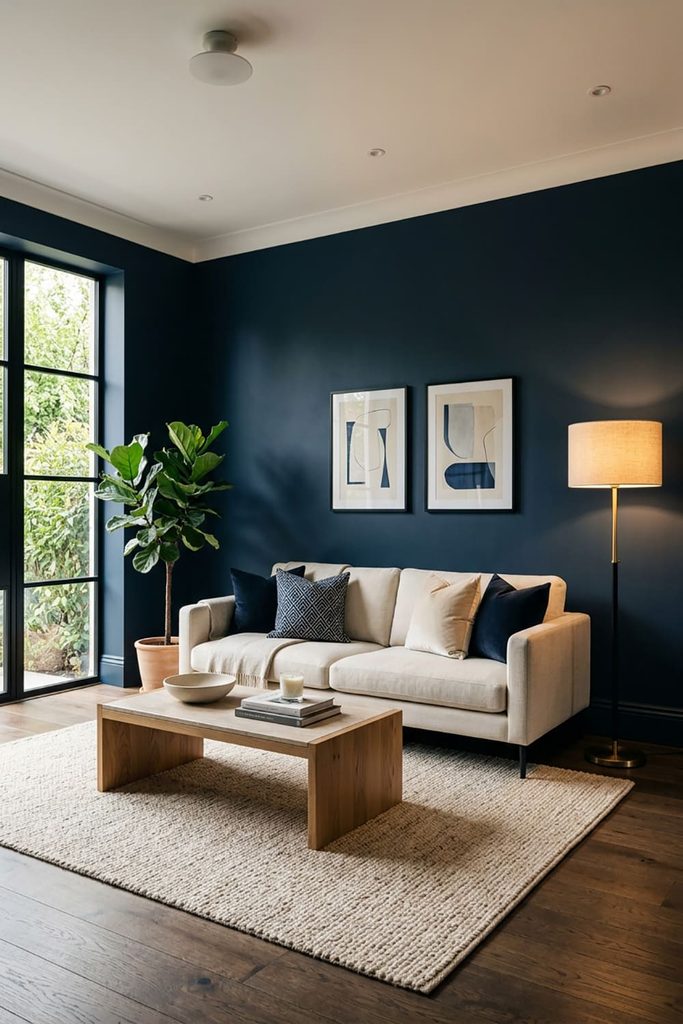
Use a deep navy or indigo blue across the main walls and place a soft cream sofa against the darker background. The contrast immediately gives the room a modern, sophisticated appearance without requiring complicated decoration. Keep the coffee table simple, perhaps choosing natural wood or a low-profile stone design.
Add cream cushions with one or two darker blue accents to connect the furniture with the walls. Warm floor lamps and subtle artwork can soften the strong wall color. This approach works particularly well when you want a dramatic room but still want the seating area to feel bright and comfortable.
2. Modern Blue Sofa With Warm White Walls

A blue sofa can become the main architectural feature of a living room when everything around it remains restrained. Choose a contemporary sofa with clean lines in navy, cobalt, denim, or muted blue. Surround it with warm white walls, a pale rug, and simple wood furniture.
Avoid filling the sofa with too many matching cushions. Instead, use two or three neutral and textured pillows to keep the silhouette visible. A large piece of artwork above the sofa can provide another small amount of color. The result feels modern because the furniture has visual simplicity while the blue provides enough character.
3. Layer Several Shades of Blue
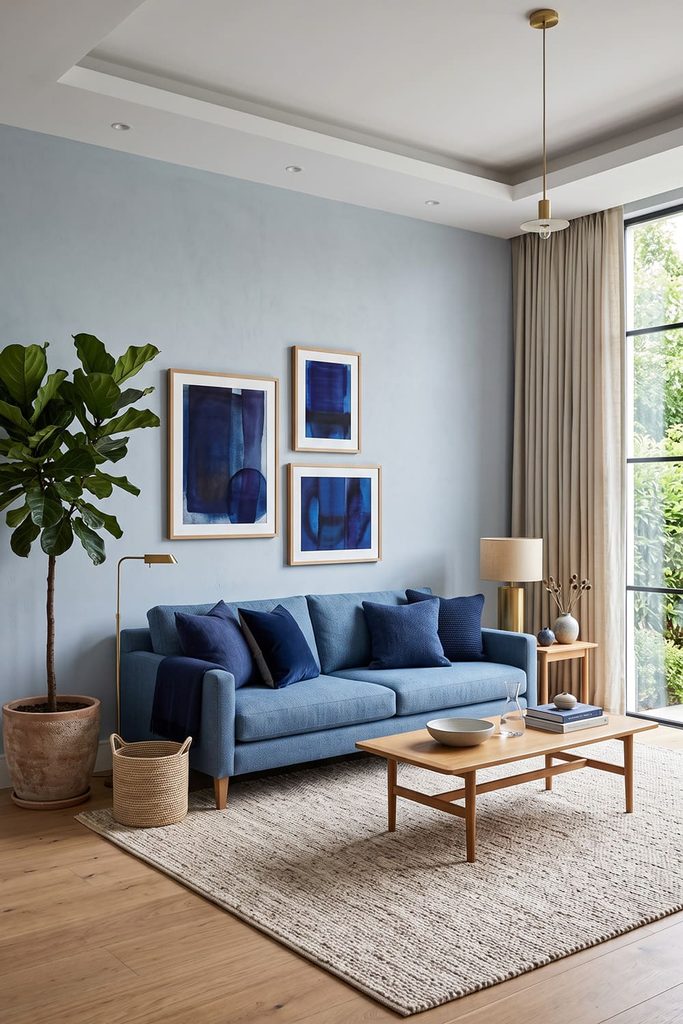
Instead of choosing one blue and repeating it everywhere, build the room around several related shades. For example, use a soft blue-gray wall, a medium blue sofa, navy cushions, and a deeper blue artwork. Keeping the undertones compatible prevents the room from looking random. Dulux’s blue palettes specifically emphasize using different blues together and adjusting their proportions to change the atmosphere of a living room.
Keep the floor, curtains, and larger accessories neutral so the layered blue remains the central visual story. This is a particularly effective option for a modern room that needs depth without lots of patterns.
4. Blue Sofa With Natural Wood Furniture

Pairing blue with natural wood gives a modern living room warmth and texture. A navy or medium-blue sofa can sit alongside a simple oak, walnut, or natural-finish coffee table. Add a wooden console, floating shelves, or a small side table if the room needs more storage. Keep the walls neutral and choose a lightly textured rug underneath the seating.
The contrast between the saturated blue upholstery and warm wood prevents the space from feeling overly cool. Contemporary rooms often benefit from mixing finishes rather than buying every piece from the same collection, which also gives the interior a more personal appearance.
5. Blue Color Blocking Behind the Sofa
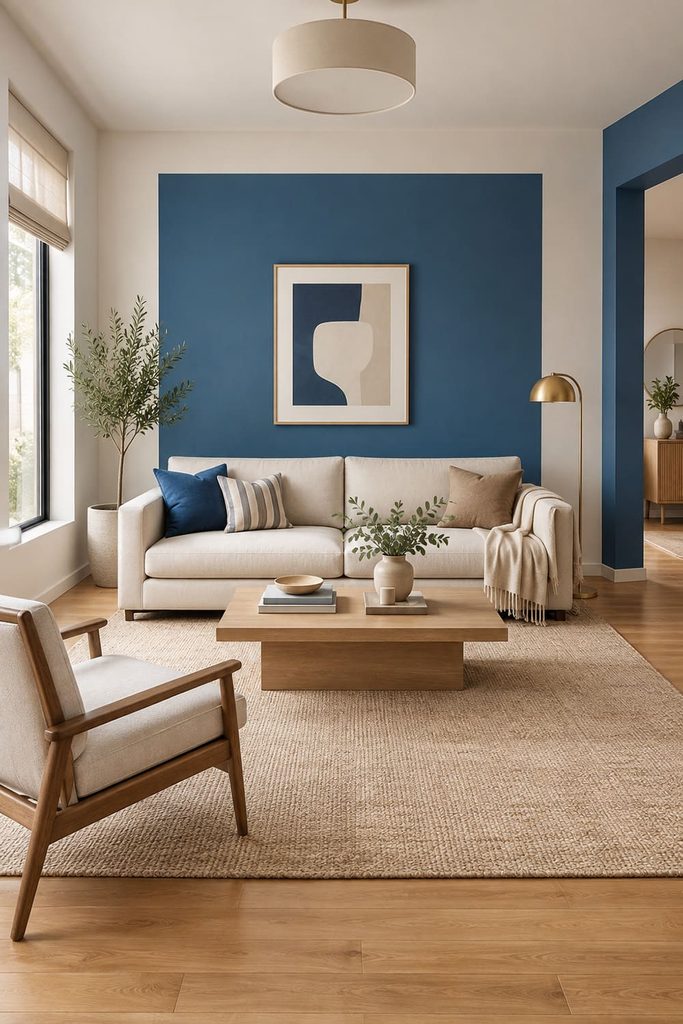
Give the living room a distinctly modern look by using blue as a geometric wall treatment. Instead of painting the entire wall, create a large rectangular or architectural color block behind the sofa. Choose a medium or deep blue and leave the surrounding wall warm white, beige, or pale gray.
Keep the furniture simple so the painted shape remains the focus. You can extend the same blue onto a nearby architectural section or doorway to create visual continuity. Color blocking is also among the approaches highlighted in Dulux’s living-room schemes, where stronger blues are used to connect different areas of a home.
6. Navy Sectional With Soft Neutral Accents

A large navy sectional can anchor a modern living room beautifully, particularly in an open-plan space. Choose a design with a low profile and relatively clean edges rather than an overly ornate shape. Surround it with a large cream or light beige rug, a simple coffee table, and neutral curtains. Add a few pillows in pale blue, oatmeal, and textured white.
Because the sectional already provides substantial color and visual weight, the rest of the room can remain quiet. This creates a strong focal point while preserving the spacious appearance associated with contemporary interiors.
7. Pale Blue Walls With Contemporary Furniture

For a lighter interpretation of modern blue, paint the walls in a soft blue-gray or airy blue. Then introduce furniture with clean silhouettes in cream, beige, light gray, or natural wood. A low-profile sofa, rounded coffee table, and simple floor lamp can give the room a distinctly contemporary character.
Pale blue is especially useful when you want color without making the room visually heavy. Dulux’s current blue palettes also position airy blue as a way to create a lighter, open feeling when paired with warm neutrals.
8. Moody Blue Room With Warm Lighting

A modern living room does not have to be bright white. Cover the walls in a rich blue and use warm layered lighting to create a sophisticated evening atmosphere. Combine a ceiling fixture with a floor lamp and one or two table lamps rather than depending entirely on overhead lighting.
Choose furniture in cream, camel, warm gray, or medium wood to prevent the room from becoming too dark. A few reflective surfaces, such as glass or brushed metal, can bounce light around the space. The contrast between deep blue walls and warm illumination gives the room depth without making it feel gloomy.
9. Blue and Black for a Sharp Modern Look

For a stronger contemporary palette, combine deep blue with controlled amounts of black. A navy sofa can work with a black metal coffee table, black window frames, or slim black lighting. Keep the walls either soft white or blue, depending on how dramatic you want the room to feel.
Add cream or light beige textiles to break up the darker colors. The key is to use black as a structural accent rather than covering every surface. Slim black legs, frames, lighting fixtures, and hardware can define the space while blue remains the dominant color.
10. Blue Velvet Sofa With Minimal Decor

A blue velvet sofa can provide enough visual richness that the rest of the room needs very little decoration. Choose a streamlined contemporary sofa rather than a heavily ornamented traditional shape. Place it against a neutral wall and pair it with a simple stone, glass, or wood coffee table.
A large neutral rug can ground the seating arrangement while one oversized artwork creates a focal point behind the sofa. Velvet naturally catches changing light, giving the blue upholstery subtle tonal variation throughout the day. Keep accessories restrained so the sofa remains the centerpiece rather than competing with a crowded collection of decor.
11. Blue and Beige With Sculptural Furniture

Modern design can become more interesting when simple color combinations are paired with unusual furniture shapes. Combine a medium or dark blue sofa with beige walls, a rounded coffee table, and a sculptural accent chair. Add a curved floor lamp or rounded ceramic objects to repeat the softer forms.
Beige prevents the blue from feeling too cold, while curved furniture keeps the room from looking overly rigid. You do not need many decorative objects because the shapes themselves create visual interest. This approach is especially effective when you want a contemporary living room that feels polished but still comfortable.
12. Blue Accent Chairs Around a Neutral Sofa

Instead of making the sofa blue, use two blue accent chairs to frame a neutral seating arrangement. Choose chairs with a contemporary silhouette and position them opposite or perpendicular to the main sofa. A cream, beige, or light-gray sofa provides a calm foundation, while the blue chairs establish a clear focal area.
Keep the coffee table simple and repeat the chair color in one small artwork or cushion. This arrangement works well in larger rooms because the chairs can visually define the conversation area without creating a heavy block of color.
13. Blue and Warm Terracotta Accents

Warm terracotta can make a blue living room feel more contemporary and inviting. Start with a navy or dusty blue sofa and introduce terracotta through one cushion, ceramic vase, artwork, or small accent chair. Keep the remaining colors restrained with cream, beige, and natural wood.
The warm orange-red undertones create contrast against blue without requiring a large amount of color. This combination works particularly well in rooms with plenty of natural light because the blue provides depth while terracotta adds warmth. A textured rug and natural materials can complete the palette without making the room feel themed.
14. Blue TV Wall With Floating Furniture

Create a sleek modern focal point by using blue on the television wall. Paint the wall a deep blue or use a blue-toned textured finish behind a wall-mounted television. Install a simple floating console underneath rather than a bulky entertainment unit. Choose light wood, warm white, or matte neutral cabinetry to balance the dark background.
Keep visible cables hidden and limit the number of objects on the console. A large plant or one sculptural accessory can soften the technology-focused wall. The result is particularly effective in contemporary homes because the blue background visually organizes the media area without requiring extensive decoration.
15. Monochromatic Blue With Warm Neutral Layers

For a sophisticated modern look, make blue the dominant color throughout the room while using warm neutrals to keep it balanced. Start with a medium or deep blue wall, then introduce a slightly different blue sofa, darker cushions, and blue artwork. Use cream curtains, beige upholstery, a natural wood table, and an ivory rug to interrupt the blue.
The goal is variation rather than exact matching. Different blue tones create depth, while the neutral materials prevent the room from becoming visually overwhelming. The current decorating direction is also moving toward richer, more personalized spaces, making layered monochromatic color especially relevant for contemporary interiors.
How to Make a Blue Living Room Look Modern
The modern appearance comes from more than the color itself. Start with a clear furniture arrangement and avoid filling every wall or surface. Choose a defined blue shade, then balance it with warm neutrals, natural wood, stone, or black accents.
Lighting is particularly important. A room with only one overhead fixture can make blue walls or upholstery look harsh at night. Layering ceiling, floor, and table lighting creates more dimension and warmth. Designers also recommend paying attention to rug proportions, window treatments, and furniture scale because these details have a major effect on how finished a living room feels.
For a cleaner modern result, let one or two blue elements dominate instead of decorating every surface in the same color. A blue sofa with neutral surroundings can look more contemporary than a room where the walls, curtains, cushions, rug, and accessories are all blue.
Conclusion
Modern blue living rooms can range from soft and airy to dark and dramatic, but the strongest designs usually have one thing in common: blue is used intentionally. A navy sectional, pale blue walls, a blue color-blocked wall, velvet seating, or a monochromatic palette can each create a completely different result.
Warm wood, cream, beige, terracotta, black, and carefully layered lighting can help blue feel sophisticated rather than cold. Mixing different materials and furniture shapes also gives the room depth without requiring excessive decoration.
If you are planning a modern living room makeover, start by choosing the blue element you want to notice first. Build the rest of the room around that decision, keeping larger supporting pieces simple and adding smaller details gradually. This makes it easier to create a modern blue living room that feels cohesive, comfortable, and genuinely personal.


