

15 Small Living Room Mistakes That Make It Feel Smaller
Your living room may not be as tiny as it looks. In many small rooms, the size is fine and the choices around it are doing the damage.
These are the small living room mistakes that make it feel smaller, and each one has a plain fix you can try this weekend. You do not need a new room or a big budget to see a change.
Work through the list one mistake at a time. Start with the one that bothers you most, then check the next. Small rooms reward small, clear changes more than a full redo.
If your room is long and thin, the layout ideas in our narrow living room layout ideas can help you place the fixes below in a shape that suits your room.
This post contains affiliate links. If you buy through them, we may earn a small commission at no extra cost to you. See our Affiliate Disclosure.
1. Buying a Sofa That Is Too Big for the Room

A sofa that looks right in a large store can take over a small room at home. It eats the walkway, crowds the coffee table, and leaves no space for a side chair or a lamp.
Measure the wall first, then leave room to walk past each end of the sofa. A shorter sofa with slim arms often seats the same number of people and leaves far more floor showing.
Check the depth too, not just the length. A deep seat pushes you far from the table and the television. Sit on it, stand up, and walk around it before you decide.
Test the size with painter’s tape on the floor before you order. Tape the sofa outline, walk around it for a day, and see if the room still feels easy to use.
2. Pushing Every Piece Against the Walls
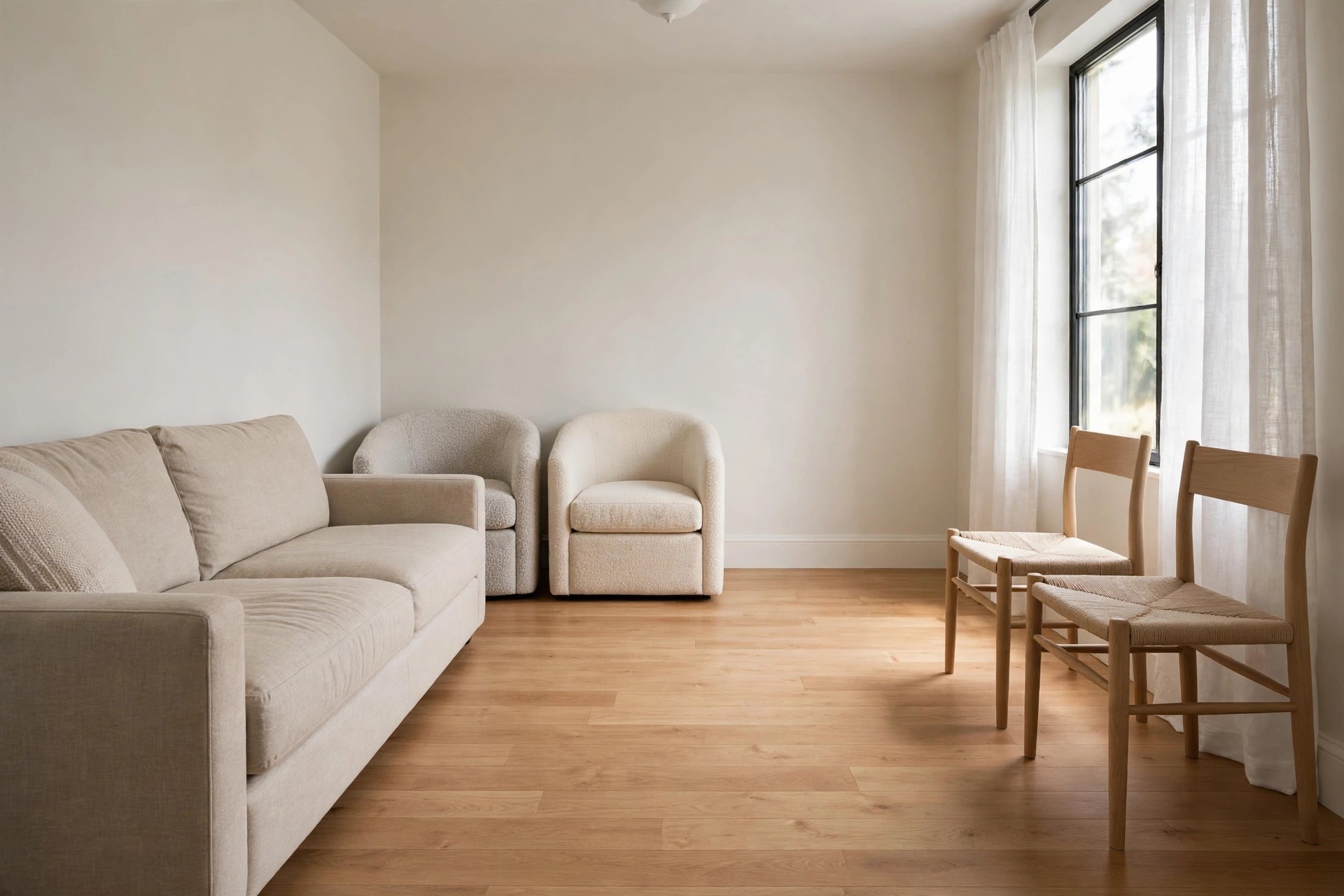
It feels logical to push all the furniture to the edges and keep the middle clear. In a small room, that plan often backfires and makes the space feel like a waiting area.
Pull the sofa a few inches off the wall and let the chairs angle in toward it. A clear seating group feels lived in, while a ring of furniture around an empty center feels stiff.
You do not need to float everything. Move one or two pieces, keep a clear path to the door, and let the rug hold the group together.
Try the change for one evening before you judge it. Sit, read, and watch television from the new spots, and notice if talking feels easier than before.
3. Choosing a Rug That Is Too Small
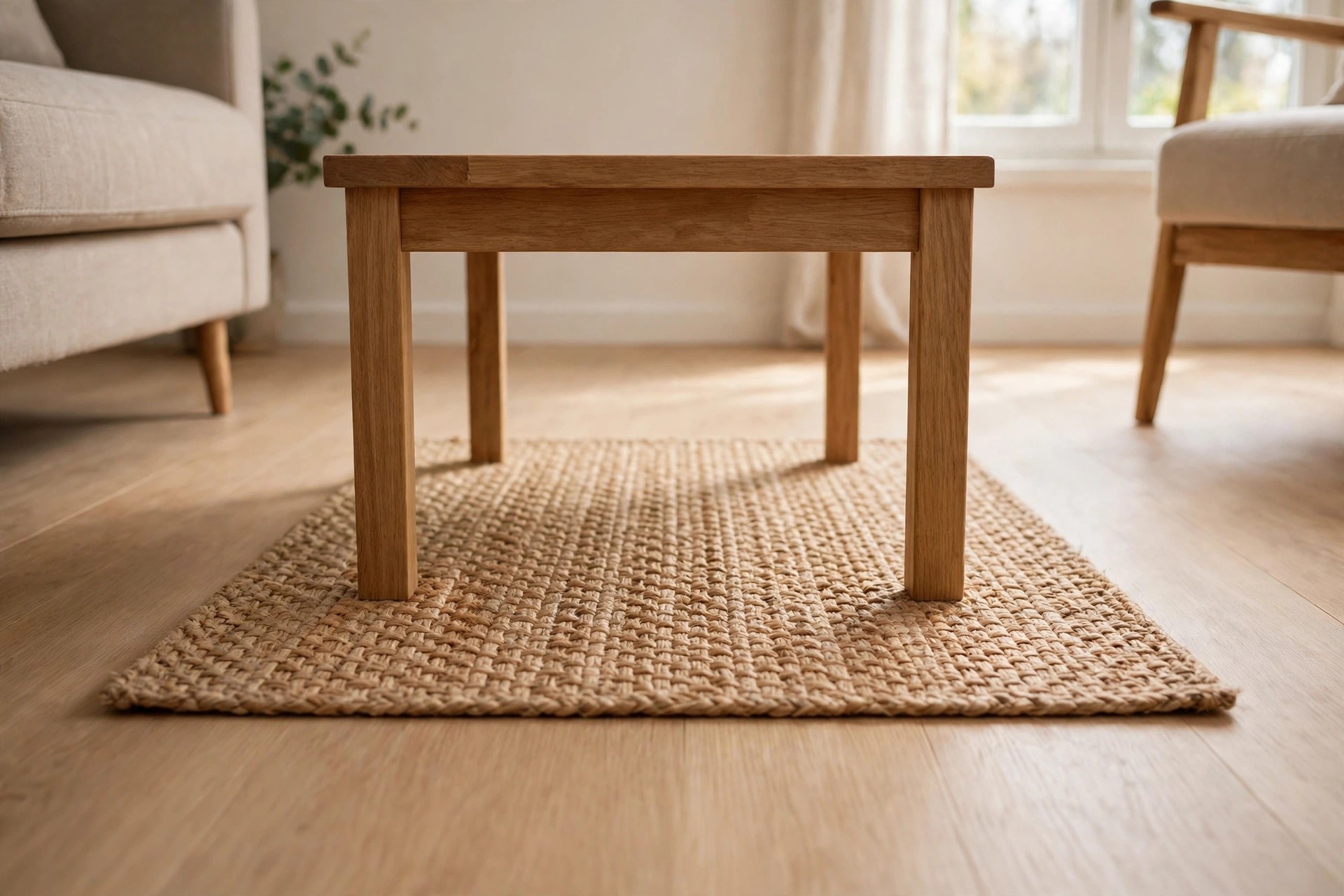
A tiny rug under only the coffee table chops the floor into small pieces. The seating looks scattered, and the room feels broken up instead of pulled together as one space.
Pick a rug that sits under the front legs of the sofa and the chairs. That one change links the seating group and makes the floor read as a single, larger area.
If a full size rug is out of reach for now, layer a larger plain rug under a smaller patterned one. Our guide to rug size mistakes in small living rooms, fixed walks through the sizes that work best.
Measure from the sofa front to the far chair legs before you shop. Write the numbers down, and take them with you so you do not guess in the store.
4. Hanging Curtains Low and Letting Them Block the Light
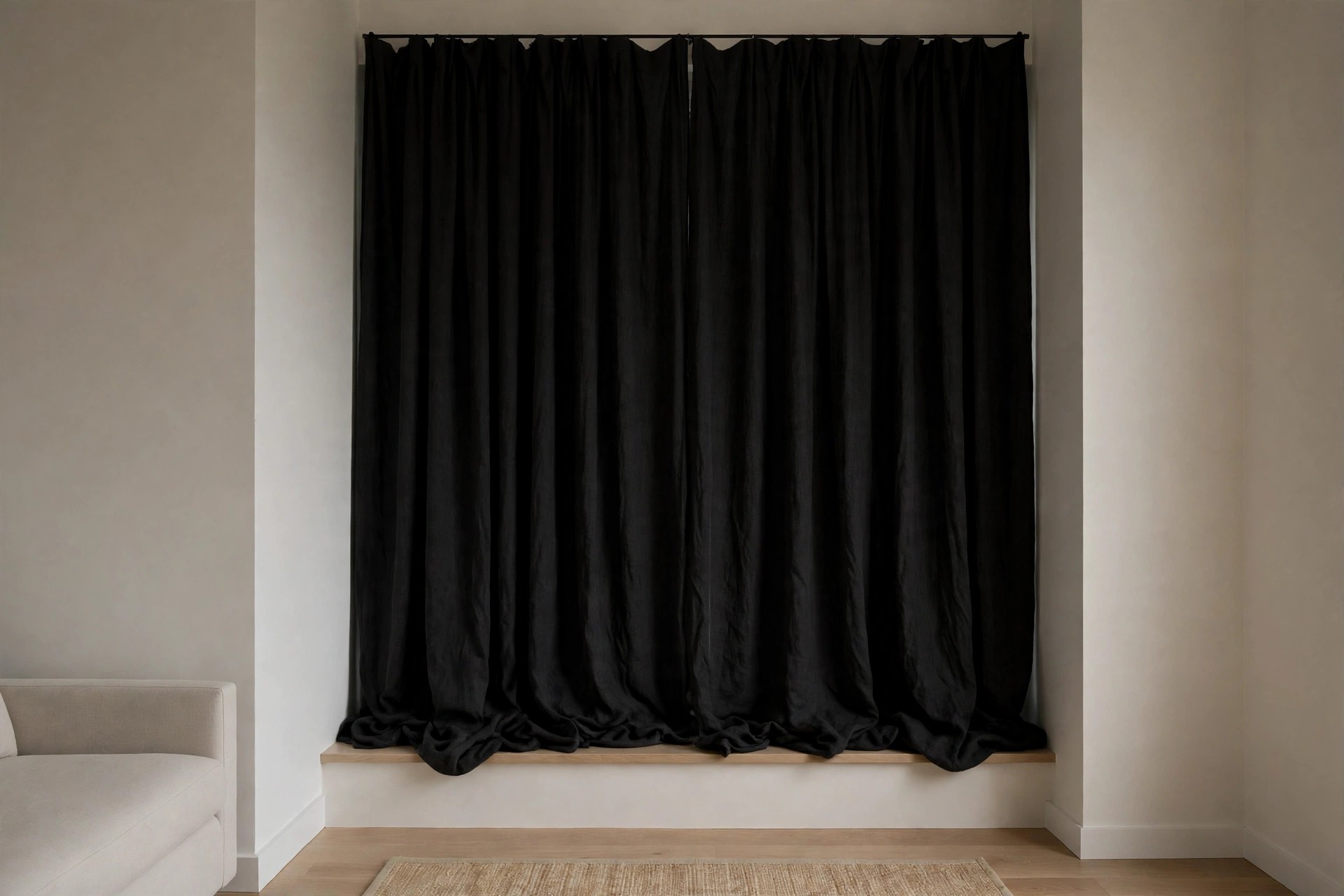
Heavy curtains hung just above the window frame cut the window down to size. They block daylight at the edges and make the wall feel shorter than it really is.
Hang the rod close to the ceiling and wider than the window. When the curtains open, they should clear the glass so the full window lets light into the room.
Pick a light fabric that lets some daylight through. You can add a simple blind behind it for privacy at night without losing the daytime brightness.
Open the curtains fully each morning for a week and notice the change. If the room still feels dark, the fabric may be too heavy for the window size.
5. Filling the Room With Too Many Small Pieces

Small chairs, small tables, and small stools sound like a safe choice for a small room. Too many of them, though, turn the floor into an obstacle course of legs and corners.
Keep one or two solid anchor pieces, such as the sofa and a coffee table, and cut the rest. Fewer pieces with clear space between them look calmer than a crowd of small ones.
Before you buy another small stool or side table, take one piece out for a week. If no one misses it, it was only adding visual noise to the room.
Count the pieces you can see from the door. If the count is over ten, the room likely needs fewer pieces rather than smaller ones.
6. Painting Every Wall and Big Piece Dark

Dark color can look rich in a small room, but dark walls plus a dark sofa plus dark shelves close the room in fast. Light has nowhere to bounce, and the walls seem to move closer.
Keep the large surfaces light and use dark tones in smaller doses. Dark cushions, a dark frame, or one dark chair give depth without weighing the whole room down.
If you love a dark wall, try it on one wall only and keep the rest light. That contrast adds character while the light walls keep the room feeling open.
Paint a large board in the dark color first and lean it on the wall. Live with it for a few days before you commit paint to the whole room.
7. Relying on One Ceiling Light Alone

One bright ceiling light leaves the corners dark and the center harsh. The room feels flat, and the dark corners make the space seem smaller than it is at night.
Add light at three heights: a floor lamp by the sofa, a table lamp on a side table, and the ceiling light on a dimmer if you have one. Each pool of light opens up its own corner.
Use warm bulbs in the lamps so the room feels soft in the evening. A lamp with a shade spreads light gently, while a bare bulb throws hard shadows on the walls.
Turn off the ceiling light one evening and use only the lamps. You will quickly see which corner still needs light and which lamp is doing nothing.
8. Blocking the Walkway Through the Room
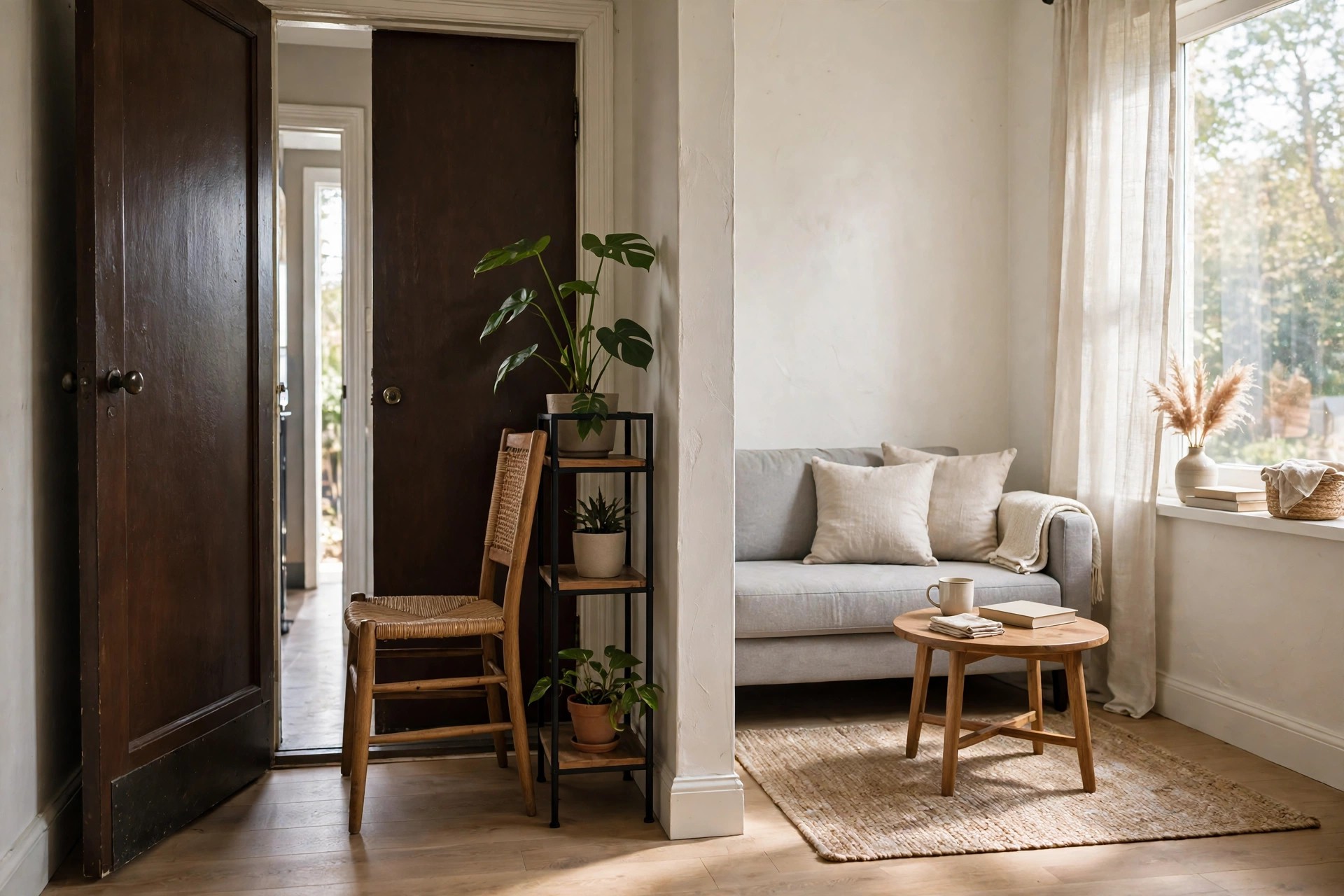
A coffee table, a chair, or a plant stand in the main path forces everyone to squeeze past. Even a pretty room feels cramped when you have to turn sideways to cross it.
Walk the path from the door to the sofa and to the window. Move anything that makes you step around it, and keep that route clear even if it means shifting the seating group.
In a room shared with a dining area, the path matters even more. Our living room dining room combo ideas for small apartments show how to keep both zones clear without crowding either one.
Ask a guest to walk the path without guidance. If they pause or sidestep, the route needs more room, even if it looks clear to you.
9. Covering Every Surface With Small Decor

A shelf full of tiny frames, candles, and trinkets reads as clutter from across the room. Your eye finds no place to rest, so the room feels busy and full.
Take half the small items off each surface and group what stays on a tray. One tray with three items looks planned, while ten loose items look like they landed there by chance.
Leave some empty space on every shelf and table. That blank space is what makes the pieces you keep stand out, and it gives the room room to breathe.
Take a photo of each shelf before you edit it. The photo shows clutter more clearly than standing in the room, and it helps you choose what to remove.
10. Hanging Art Too Small and Too High

A tiny frame lost on a big wall, or a row of small frames hung near the ceiling, chops the wall into bits. The wall feels broken up, and the art feels like an afterthought.
Hang one larger piece at eye level above the sofa, about two thirds as wide as the sofa. It anchors the wall and gives the seating group a clear focal point.
If you prefer a group of frames, keep them close together in one block. A tight group reads as one piece of art, while frames spread far apart read as scattered clutter.
Cut paper to the size of the art you plan to buy and tape it up first. Step back to the door and check if it looks balanced above the sofa.
11. Picking a Coffee Table That Is Too Bulky

A thick, solid coffee table in the middle of a small room blocks knees, shins, and sightlines. It can feel like a wall between you and the people sitting across from you.
Choose a table with slim legs and some open space under it, or a round table with soft edges. Seeing floor under the table makes the center of the room feel lighter.
Leave a comfortable gap between the table and the sofa so you can sit down without shifting the table. If you keep bumping it, it is too big for the space.
Place a tray on the table for a week and see how it is used. If drinks and books still crowd the edges, a smaller table may serve you better.
12. Ignoring the Walls Above Eye Level

When all the furniture sits low and the walls stay bare above it, the room feels squat. The eye stops at sofa height, and the upper half of the room goes to waste.
Use tall shelves, a tall plant, or art hung higher in one spot to draw the eye upward. Vertical lines make the ceiling feel higher without any building work.
Keep the tall pieces slim and close to the wall so they do not eat floor space. A narrow bookcase holds a lot and still leaves the walkway clear below it.
Stand at the door and look up. If the top third of the walls is empty all around, the room will feel lower than a room with one tall feature.
13. Choosing a Television That Fights the Room

A television that is too large for the viewing distance dominates the wall and strains your eyes. Mounted too high, it also pulls the whole seating plan out of shape.
Mount it at eye level from your usual seat, with the center of the screen near seated eye height. That one fix improves both comfort and how the wall looks.
Keep the media unit slim and close to the wall. A deep cabinet under a large screen pushes the seating back and steals the floor space you need to walk past.
Sit in your usual seat and look straight ahead. Your eyes should meet the middle of the screen without tilting your head up or down.
14. Mixing Too Many Patterns and Colors at Once

Striped cushions, a patterned rug, bold curtains, and a busy throw can each be lovely alone. Together in a small room, they compete for attention and the room feels noisy.
Pick one pattern to lead, such as the rug, and keep the rest calm. Solid cushions in two or three close colors tie the room together without adding more noise.
Repeat one color in small doses around the room, on a cushion, a throw, and a piece of art. Repetition feels planned, while a new color on every piece feels random.
Remove one patterned piece at a time and step back each time. Stop when the room feels calm, and you will know which pattern was doing the damage.
15. Keeping Everything Out on Show

When blankets, chargers, games, and remotes all live on open surfaces, the room never looks at rest. Open storage shows every item, so the room always reads as full.
Give everyday items a closed home: a lidded basket for throws, a drawer for chargers, a box for games. Closed storage hides the small stuff and leaves the surfaces calm.
Before you buy new storage, check what you already own. An ottoman with a lid or a coffee table with a shelf can hold the same items without adding another piece.
Do a five-minute reset each evening: put throws in the basket and remotes in the drawer. A short daily habit keeps the room calm without a big clean.
Fixing small living room mistakes that make it feel smaller is mostly about giving the room space to breathe. Lighter large surfaces, a rug that fits, clear walkways, and lamps at more than one height do most of the work.
You do not need to fix all fifteen at once. Pick the mistake that stands out each time you walk in, fix it, and live with the change for a few days before you move on.
For more layout help, see our rectangle living room ideas for shaping a longer room. Save this to your small living room board for later, so the fixes are there when you are ready to try the next one.


