

How to Arrange a Small Living Room: 5 Layouts That Work
Most small living rooms feel crowded before you sit down. The sofa blocks the door path, the coffee table sits too far to reach, and the chairs face the wall instead of each other.
In this guide, you will learn how to arrange a small living room 5 layouts that work. You do not need new furniture. You need a clear order, one main piece at a time, and a path you can walk without turning sideways.
Each shape below has three moves: place the big piece first, add the second seat, then finish with a table or lamp. For a long, thin room, the narrow living room layout ideas on this site can help you pick a shape.
Pick one shape and try it first. You can move a chair a few inches, live with it for a day, and shift it again. A good layout feels calm on the first walk through the door.
This post contains affiliate links. If you buy through them, we may earn a small commission at no extra cost to you. See our Affiliate Disclosure.
1. Measure the Room and Tape Out the Walkways First

Start with a tape measure, not with the sofa. Measure each wall, each door swing, and the gap from the door to the far wall. Write the numbers on a scrap of paper you can keep in your pocket.
Next, tape the walkways on the floor with painter tape. Leave a path from the door to the seats, and a second path to the window or the next room. Walk both paths with a mug in your hand.
If you bump a tape line, the path is too tight. Shift the line, not your body. This one slow step stops the most common error: a sofa that looks right, then blocks every trip across the room.
Tape the door swing too, so an opening door does not hit the sofa.
2. Set the Sofa on the Long Wall and Leave the Middle Open

The long wall shape is the safest place to start. Put the sofa flat against the longest clear wall, with space at each end so it does not touch the side walls. The middle of the room stays open.
Check the sofa size before you push it into place. A sofa that is too long will crowd the corners and leave no room for a side table.
Read the how to choose a sofa for a small living room guide if your current sofa feels too big for the wall.
Stand in the doorway and look in. You should see floor, rug, and sofa in that order, with no piece jutting into the path. That open middle is what makes a small room feel calm.
3. Finish the Long Wall Shape With a Slim Chair and a Round Table

Once the sofa is set, add only one slim chair. Angle it at one end of the sofa, turned slightly toward the seats. A slim chair gives you one more seat without closing off the room.
Put a small round side table between the sofa and the chair. A round top has no sharp corners to catch your hip, and it holds a mug, a book, and a phone with room to spare.
The lived in test is simple. Sit in the chair, reach for your mug, and stand up again. If you have to move the table first, pull the chair back a few inches and try again.
Keep the chair light enough to pull out for guests, then slide back when they leave.
4. Face the Sofa Toward the Window for Light and a View

The window shape works best when the view is the best part of the room. Put the sofa with its back to the room and its front toward the glass, so daylight falls on the seats.
Keep the sofa a short step away from the window wall. That gap lets curtains hang free, lets you clean behind the sofa, and stops the back cushions from blocking light.
Watch the glare at the time you sit down most. If sun hits your eyes in the late afternoon, shift the sofa a few inches to one side. The view stays, and your eyes get a break.
If the window has a wide sill, keep it clear for a plant or a book, not for storage boxes.
5. Float Two Small Chairs Near the Window for Morning Coffee

Two small chairs by the window make a quiet second spot. Face them slightly toward each other, with a tiny table between them. The pair works for coffee, reading, or a short chat.
Keep the chairs light and easy to move. On a busy night, you can pull one chair into the main seating group, then slide it back by the window in the morning.
Watch the cord problem here. A lamp cord that never reaches the outlet will sit across the floor and trip you. Pick a spot near an outlet, or skip the lamp and use daylight.
Sit in both chairs before you settle the pair, and check that neither chair blocks the window light for the person across from you.
6. Keep the Window Shape Light With Low and Clear Pieces

A window shape fails when tall, dark pieces block the glass. Choose a low sofa back, a clear side table, and sheer curtains that let light pass through the room.
A clear table almost disappears in daylight. You still have a place for a mug, but your eye travels past it to the window. That trick helps a lot in a room with one good window.
Hang sheer curtains on a rod that clears the window frame, so the fabric does not bunch over the glass.
If your room is a plain box with four straight walls, the rectangle living room ideas on this site show how a low, light setup keeps that shape from feeling like a hallway.
7. Build an L Shape in the Corner for the Most Seats

The L shape gives you the most seats from the least floor. Push one long sofa section along the wall, and let the short section turn into the corner. The corner seat becomes the cozy spot.
Test the corner before you commit to it. Sit in the corner seat and put your feet up. If your knees hit the coffee table, move the table out a few inches or pick a smaller one.
Leave the short section open at its end. That open end is your way in and out, and it stops the L shape from feeling like a closed box.
Keep the corner seat free of bags and coats, so it stays a seat and not a storage pile.
8. Anchor the L Shape With a Rug and a Corner Lamp
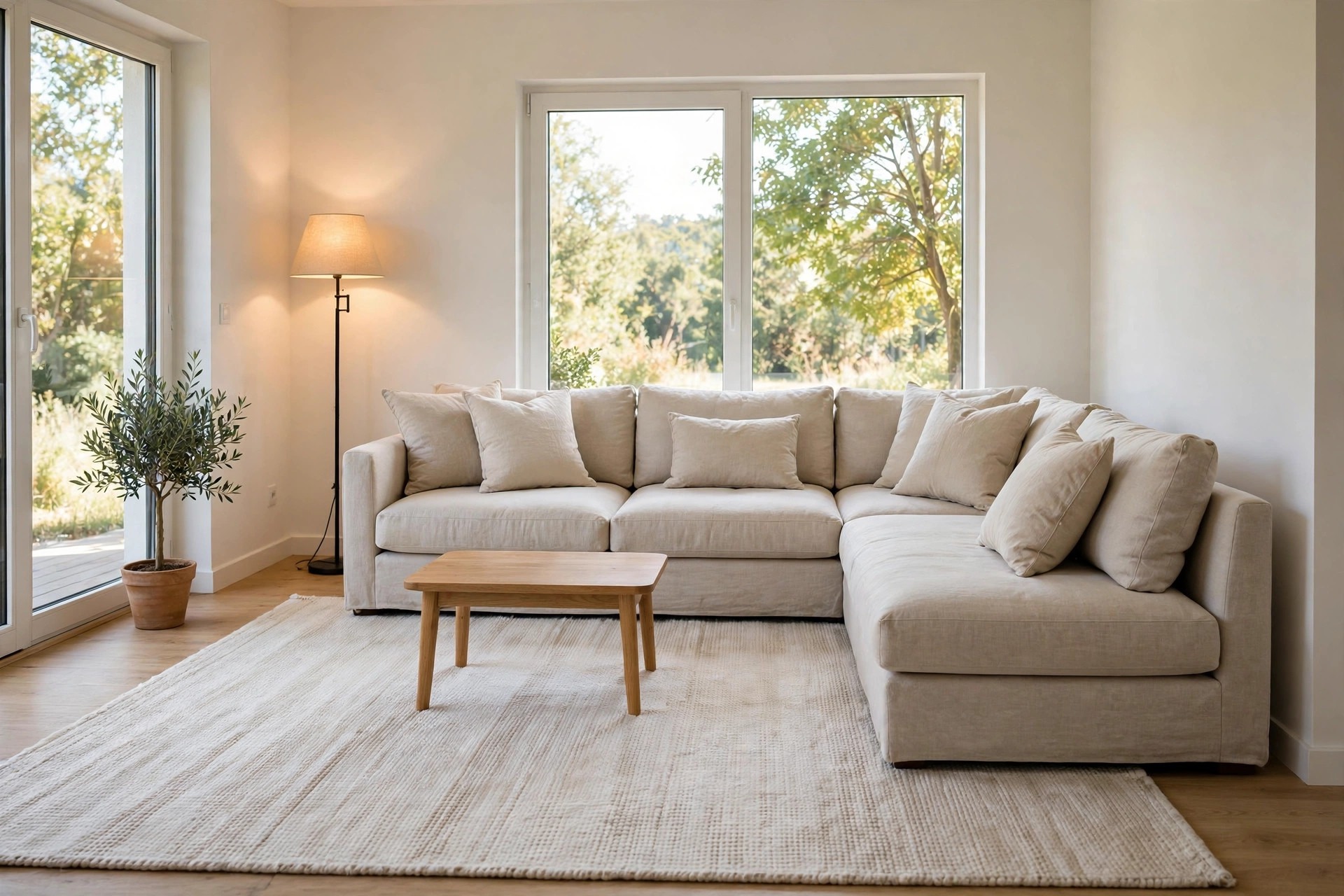
An L shape can look like two sofas that just met. A rug under the front legs pulls the shape together into one seating zone that your eye reads at once.
Put a floor lamp in the corner behind the sofa turn. The lamp gives the corner seat its own light for reading, and it stops the corner from looking dark at night.
Check the rug at night, not just in daylight. A rug that slides on a wood floor will bunch up under your feet. A thin rug pad under it keeps the whole shape steady.
Add one small cushion to the corner seat, but keep the rest of the sofa plain so the shape stays calm.
9. Leave the Open Side of the L Shape Clear for Traffic

Here is the mistake that ruins a good L shape. A chair, a plant stand, or a basket lands on the open side, and the path to the door closes. Keep that side clear.
Walk the path with a laundry basket in your hands. If you have to turn sideways, move the blocking piece to a wall. The open side is a path first, and a decor spot second.
If the path must cross the rug, keep the rug flat and low, so no one catches a toe on its edge.
Many of the small living room mistakes that shrink a room start right here, with one extra piece in a path that used to work fine.
10. Pair Two Chairs Across From the Sofa for Talk

The talk pair shape puts talk first, not the screen. Place two chairs across from the sofa, facing it, with a small table between the sofa and the chairs.
Keep the gap close enough for a normal voice. You should be able to talk without raising your voice, and pass a snack without standing up from your seat.
Angle each chair in just a little, toward the middle of the rug. That small angle turns two chairs in a row into a group, and guests stop feeling like they sit in a line.
Keep a small side table near one chair, so a guest with a mug does not have to reach across the rug to the main table.
11. Use a Small Ottoman as the Table in the Talk Pair

A hard coffee table can bruise shins in a tight talk pair. A soft ottoman with a tray on top gives you a table that is kind to knees, and it doubles as an extra seat.
Pick an ottoman you can lift with one hand. On a game night, you can push it aside for more leg room, then slide it back when the game ends.
Keep the tray small and flat. A tray that is too large slides off when someone bumps it, and a book on top will slide with it. One tray, one book, and room for two mugs works.
Use a tray with a low rim, so mugs stay put when someone lifts the ottoman to move it.
12. Turn the Talk Pair Toward the Door So Guests Feel Welcome

Walk in your own front door and notice what you face first. If you face the back of a sofa, the room feels closed. Turn the talk pair so guests see open seats.
You do not need to move the whole room. Shift the chairs a few inches toward the door, and leave the path from the door to the first chair clear.
The first seat a guest sees should look easy to reach. If a guest has to walk around a table and a chair to sit down, that seat will stay empty all night.
Leave a small table or hook near the door, so coats and keys do not land on the first chair.
13. Tuck the TV in the Corner to Free the Long Wall

The TV corner shape solves a common small room fight. The TV wants the long wall, the sofa wants the long wall, and both cannot win. Give the TV the corner instead.
Put the TV on a small console in the corner, angled slightly into the room. The long wall stays free for the sofa, for art, or for a shelf that does not fight the screen.
Check the glare from the window before you fix the TV in place. A TV that faces the glass will wash out in daylight, and you will close the curtains just to watch a show.
Hide the TV cables behind the console, so the corner looks tidy from the sofa and from the door.
14. Angle the Sofa Toward the TV Corner for Easy Viewing
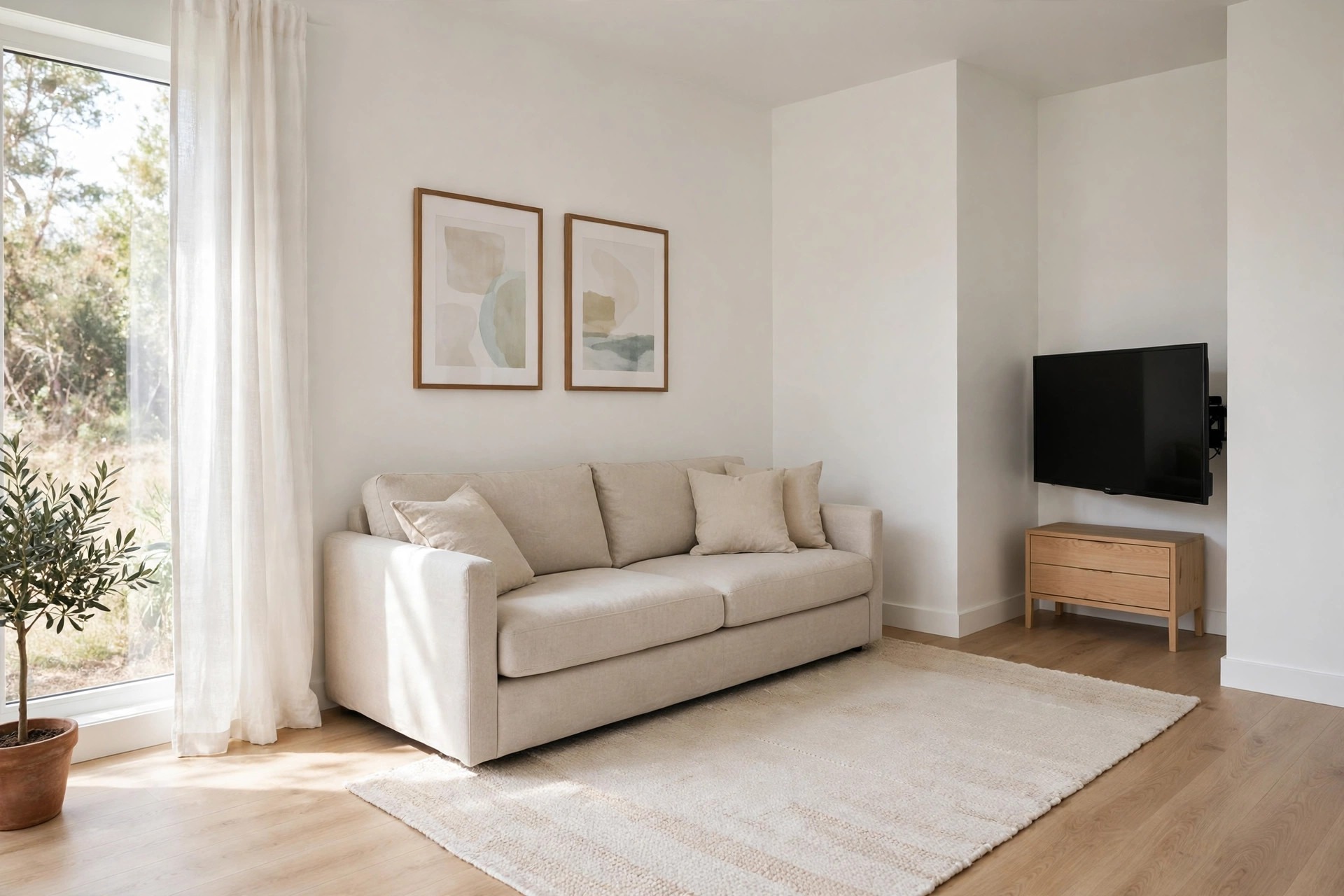
Once the TV sits in the corner, angle the sofa toward it. You do not need a sharp angle. A slight turn, just enough to face the screen, is plenty for a small room.
Sit down and watch for ten minutes. If your neck turns to one side the whole time, the angle is too sharp. Pull the sofa back toward straight, and shift the TV a little instead.
Put a small table within reach of the sofa end. A mug left on the floor will get kicked, and a remote left on the sofa will slide down the cushion gap.
Keep the remote in one small dish on the table, so it does not vanish between the sofa cushions.
15. Test the Whole Layout for a Week and Shift One Piece at a Time

A layout that looks good in a photo can still fail on a normal Tuesday. Live with your pick for a full week, and note what annoys you: the chair you bump, the lamp you never switch on.
Change only one piece at a time. Move the chair, wait a day, then judge it. If you move three pieces at once, you will never know which move fixed the problem.
Keep a note on your phone: what worked, what did not, and what you moved. That note is gold the next time you change the room, because you will not repeat the same failed move.
For more room ideas in the same small space spirit, browse the small living room ideas for apartments on this site before your next move.
Start with the shape that fits how you live, not the shape that looks best in a photo. A talk pair suits a house full of guests, while a window shape suits a quiet reader.
Measure first, place the sofa second, and keep one path clear at all times. Those three habits do more for a small room than any new piece of furniture can do.
To learn how to arrange a small living room 5 layouts that work in your own home, pick one shape from this list today and try it tonight.
Save this to your small living room board for later, so you can find it when you move the next chair.


