

15 Small Living Room Ideas With Bold Color on One Wall
One bold wall can make a small living room feel planned, not loud. The trick is not the color itself. It is where you put it, how deep you go, and what you keep calm around it.
Many small rooms go wrong when the bold color spreads. It lands on two walls, then on cushions, then on a rug.
Soon the room has no place for the eye to rest. These small living room ideas with bold color on one wall keep the color in one clear spot.
Each idea below names the wall to paint, the depth that works, and the calm pieces that let it breathe. Pick one idea, not five. A small room rewards a single clear choice.
If you want a wider tour of small rooms first, read these small living room ideas for apartments before you choose a wall here. Start there, then come back here and pick just one wall to paint.
This post contains affiliate links. If you buy through them, we may earn a small commission at no extra cost to you. See our Affiliate Disclosure.
1. Put Deep Navy Behind the Sofa

The sofa wall is the safest first pick. Your sofa already anchors the room, so a deep navy wall behind it looks planned from the door.
Keep the sofa light, in cream or pale grey, and leave the other walls white. A wood coffee table and a woven rug warm the navy without adding a second strong color.
Test the navy at night too. A lamp beside the sofa can turn a rich navy soft, while a dark corner can make it look almost black. For more blue room ideas, see these blue living room ideas for small living rooms.
Keep the navy paint in a flat or eggshell finish. A shiny finish will catch every lamp glare, while a flat finish keeps the wall soft behind the sofa.
2. Give the TV Wall a Forest Green Backdrop
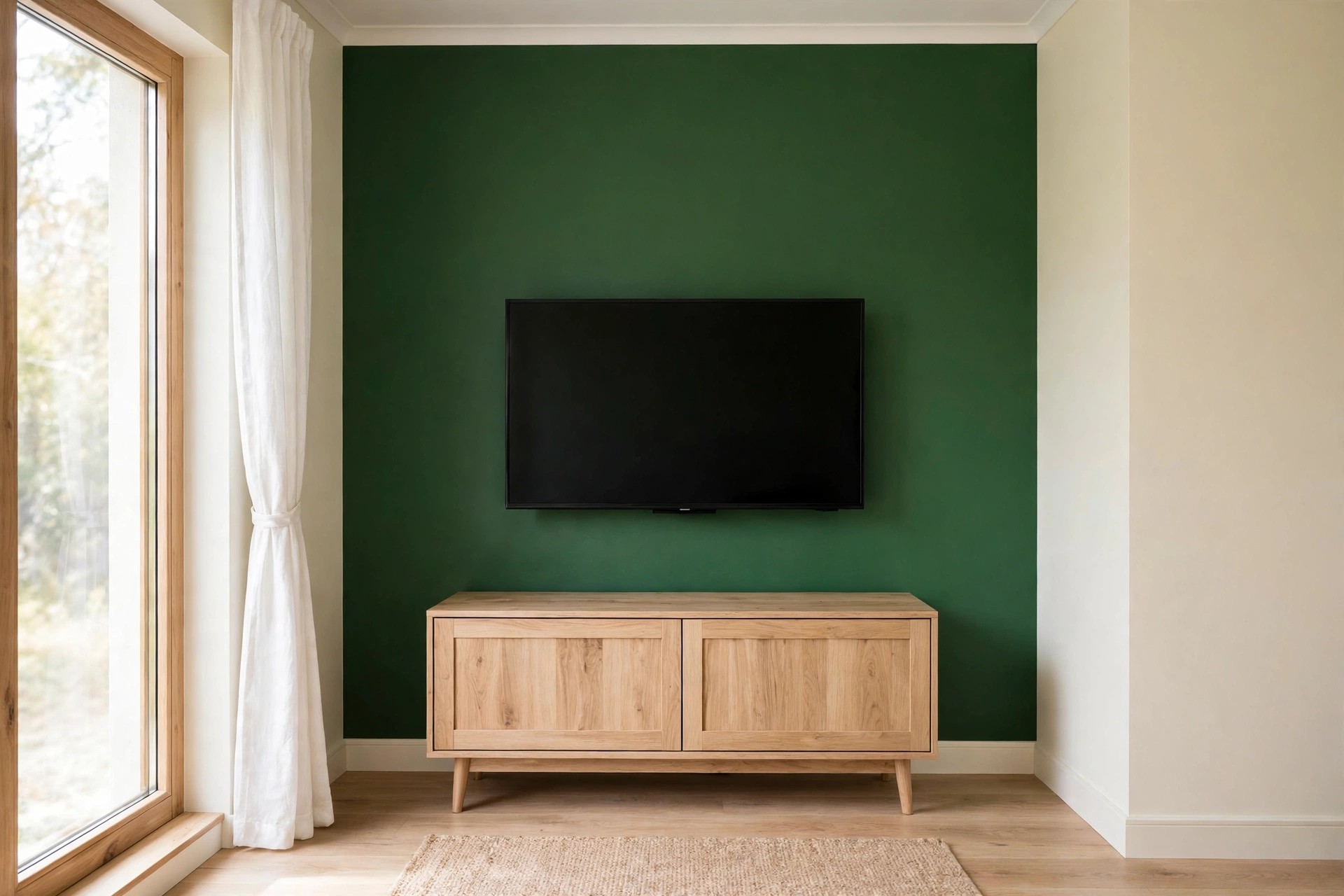
A TV can look like a black hole on a white wall. A forest green wall behind it gives the screen a frame and makes the whole corner feel finished.
Use a low, light wood console and skip a busy gallery wall here. The screen, the console, and one small plant are enough, and the green does the rest of the work.
Hide cords before you paint, not after. A cord that hangs down a bold wall draws the eye straight to it, and a small cord cover in the wall color fixes it fast.
Place the TV at seated eye level, not high on the green wall. A screen hung too high strains your neck and pulls focus away from the calm console below.
3. Let Terracotta Warm the Window Wall

The window wall is a good pick when your room gets strong sun. Terracotta glows in daylight and feels warm at dusk, without shouting across the room.
Keep curtains sheer and white, and keep the sofa in a plain cream linen. Heavy drapes or a patterned sofa would fight the warm wall for attention.
Watch the wall at midday before you commit. Sun can wash a soft terracotta pale, so pick a shade one step deeper than the swatch you first liked.
Use a pale rug under the sofa, not a dark one. A dark rug next to terracotta can make the floor feel heavy, while a pale rug keeps the room light.
4. Paint the Short End Wall Mustard in a Long Room

A long, narrow room can feel like a hallway. A mustard wall on the short end pulls that end closer and gives the room a clear stopping point.
Face the sofa toward the mustard wall and keep the long side walls white. A light rug that runs across the room, not along it, helps the space feel wider.
This is a layout move first and a color move second. If you need help placing the sofa and rug, read how to arrange a small living room and sketch the plan before you paint.
Stop the mustard at the corners, clean and square. Paint that creeps onto the long side wall will undo the whole trick and stretch the room again.
5. Back Open Shelves With Charcoal

Open shelves can look busy on a white wall. A charcoal wall behind pale wood shelves turns books and plants into a calm display, not clutter.
Leave space on each shelf. A shelf packed edge to edge will still look full, even against charcoal, so keep one open gap on each row.
Choose book spines in muted tones for the front row if you can. Bright jackets in every color will compete with the wall, and the shelves will lose their quiet frame.
Dust the shelves with a dry cloth once a week. Charcoal shows dust fast, and a quick wipe keeps the shelves looking neat instead of grey and tired.
6. Paint the First Wall You See From the Door Teal
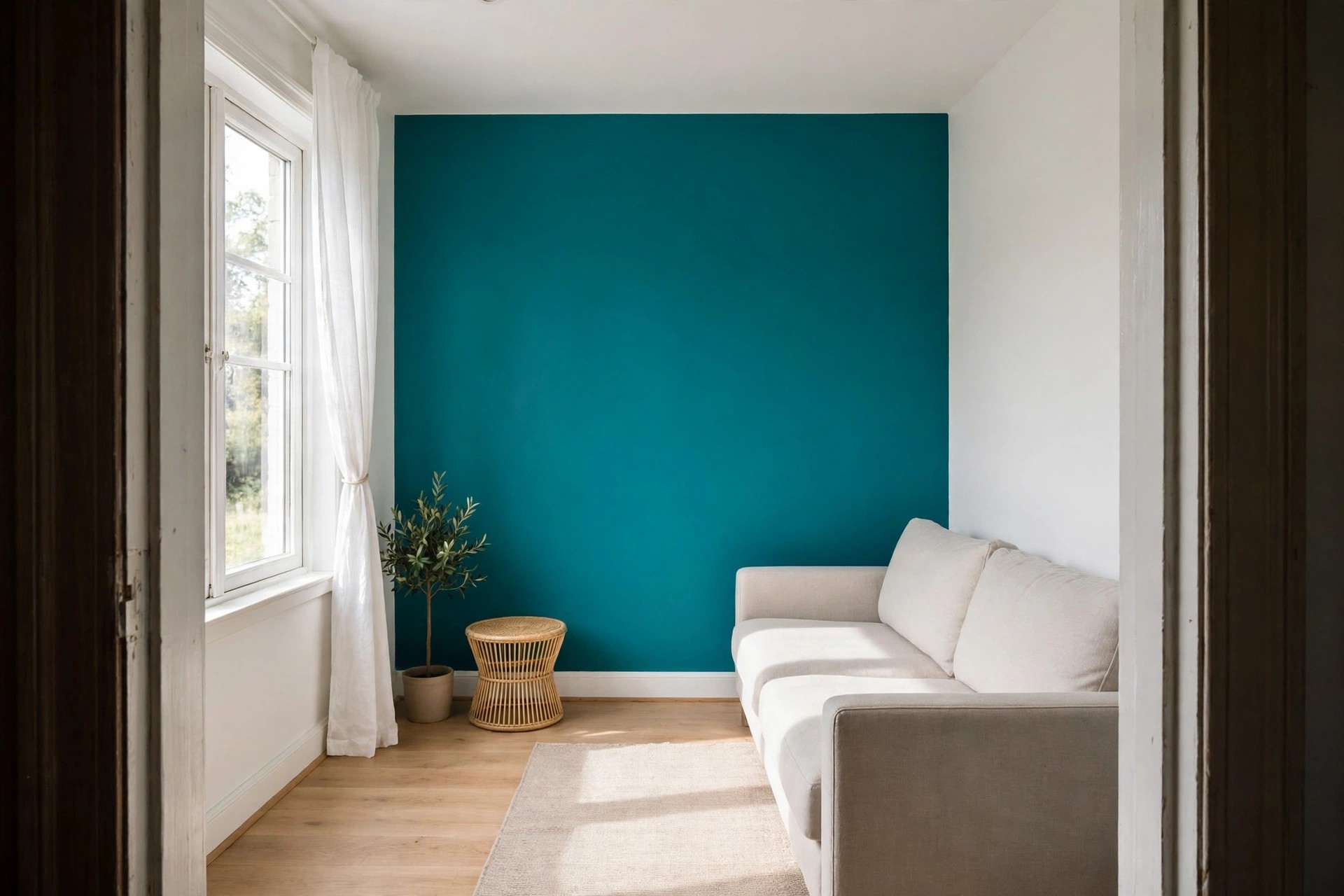
Stand in your doorway and look in. The wall your eyes land on first is your welcome wall, and teal there makes a small room feel bright on entry.
Keep that wall mostly bare. A small side table and one plant are fine, but a tall bookcase there would block the color and crowd the door path.
Check the view from the hall at night. A teal wall with no lamp near it can look flat, so add a small lamp on a side table close by.
Leave the teal wall free of hooks and keys by the door. Small clutter there will fight the welcome color, so put keys in a small dish nearby.
7. Turn a Corner Into a Plum Reading Nook

You do not need a whole wall for a bold color to work. A short corner wall in plum can mark a reading spot inside a larger living room.
Angle one armchair toward the light, add a small side table, and keep the throw in cream. The plum then reads as a nook, not as a second room.
Keep the lamp cord tidy here. A cord that trails across the floor will trip you in a tight corner, so run it along the baseboard to the nearest outlet.
Keep a small basket for books beside the chair. A tidy basket stops books from piling on the side table and crowding the small plum corner.
8. Use Deep Red to Mark the Dining Edge

In a room that holds both a sofa and a small table, one deep red wall can mark where eating ends and lounging begins.
Put the small round table against the red wall and keep the sofa on a white wall. That split keeps each zone clear without a screen or a rug border.
Keep table chairs light and simple. Dark chairs against a deep red wall can blur into one dark block, and the table will lose its shape.
Use plain placemats in cream on the table. A busy tablecloth against deep red can make meals feel loud, while plain mats keep the zone calm.
9. Paint Wall Panels Emerald, Not Just Flat Paint
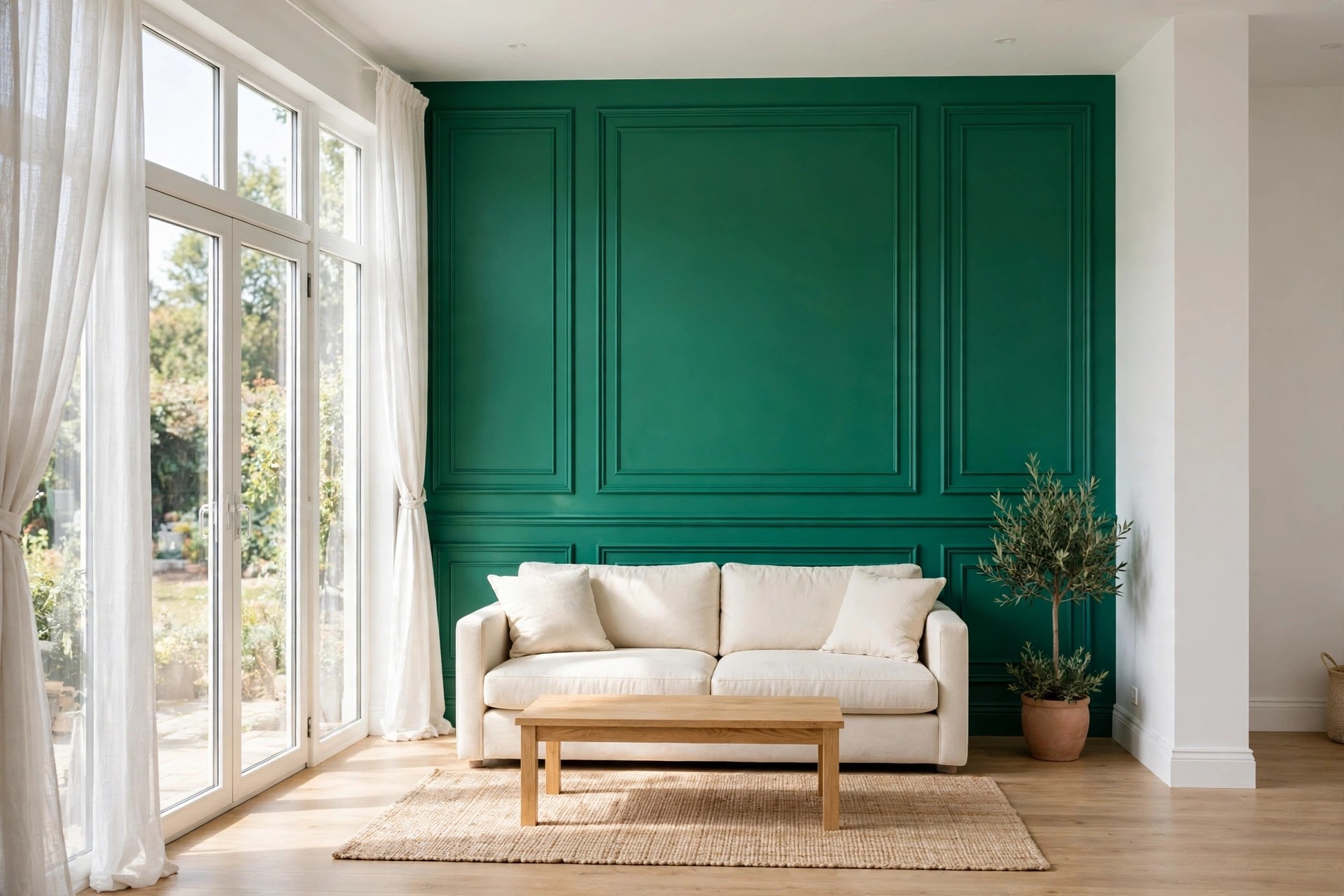
If a flat bold wall feels too plain, add simple wall panels and paint them the same emerald as the wall. The shape adds interest without a new color.
Keep the sofa cream and the coffee table light wood. The panels already give the eye plenty to follow, so the furniture should stay quiet.
Measure the panels so they line up with the sofa width. Panels that run far past the sofa can make a small wall feel chopped up instead of framed.
Paint the panels with a small roller, not a large one. A small roller fits the panel edges better and leaves fewer drips on the flat wall between panels.
10. Hang One Large Print on a Midnight Blue Wall
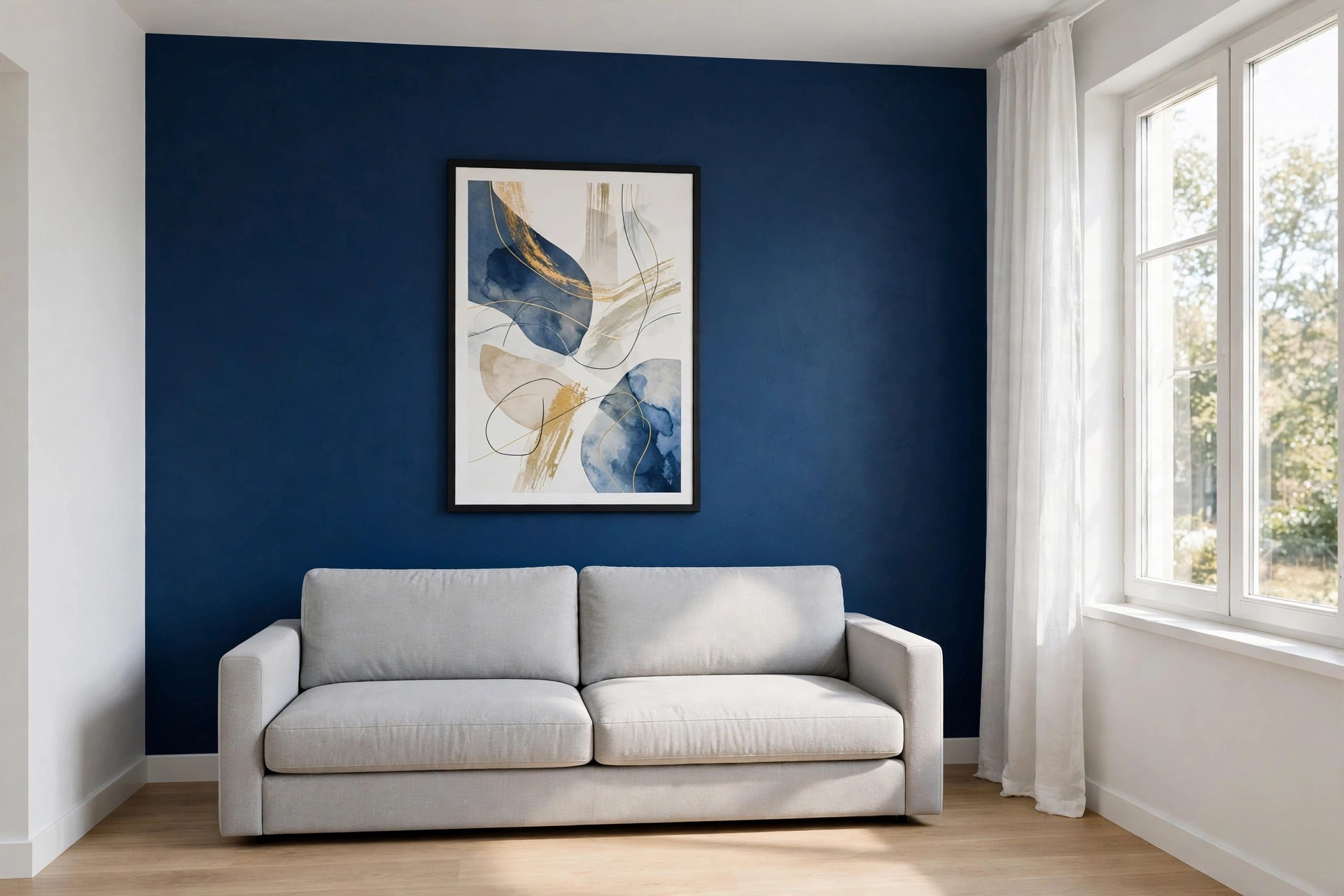
One large print beats six small frames on a bold wall. The print gets room to breathe, and the midnight blue wall stays the main feature.
Hang the print at eye level above the sofa, with a clear gap between the sofa back and the frame. A print hung too high will float away from the seating.
Pick a print with white, cream, or pale blue in it. Those light tones will lift off the dark wall, while a very dark print can vanish into it.
Use a frame with a wide white mount around the print. The white mount gives the art a pause from the dark blue and helps it stand out clearly.
11. Soften Rust With Rattan and Plants

Rust can feel hot in a small room, but rattan and green plants cool it down. The natural textures break up the flat color and make it feel lived in.
Use a cream sofa, a rattan chair, and two or three plants of different heights. Keep pots simple, in clay or cream, so the plants stay the focus.
Water plants over a tray, not over the rug. A damp rug edge in a small room smells fast, and a tray keeps the seating area fresh and dry.
Shake cushions back into shape each morning. A flat cushion on a cream sofa shows fast, and a quick plump keeps the rust wall looking fresh.
12. Go Near Black, but Add Two Warm Lamps
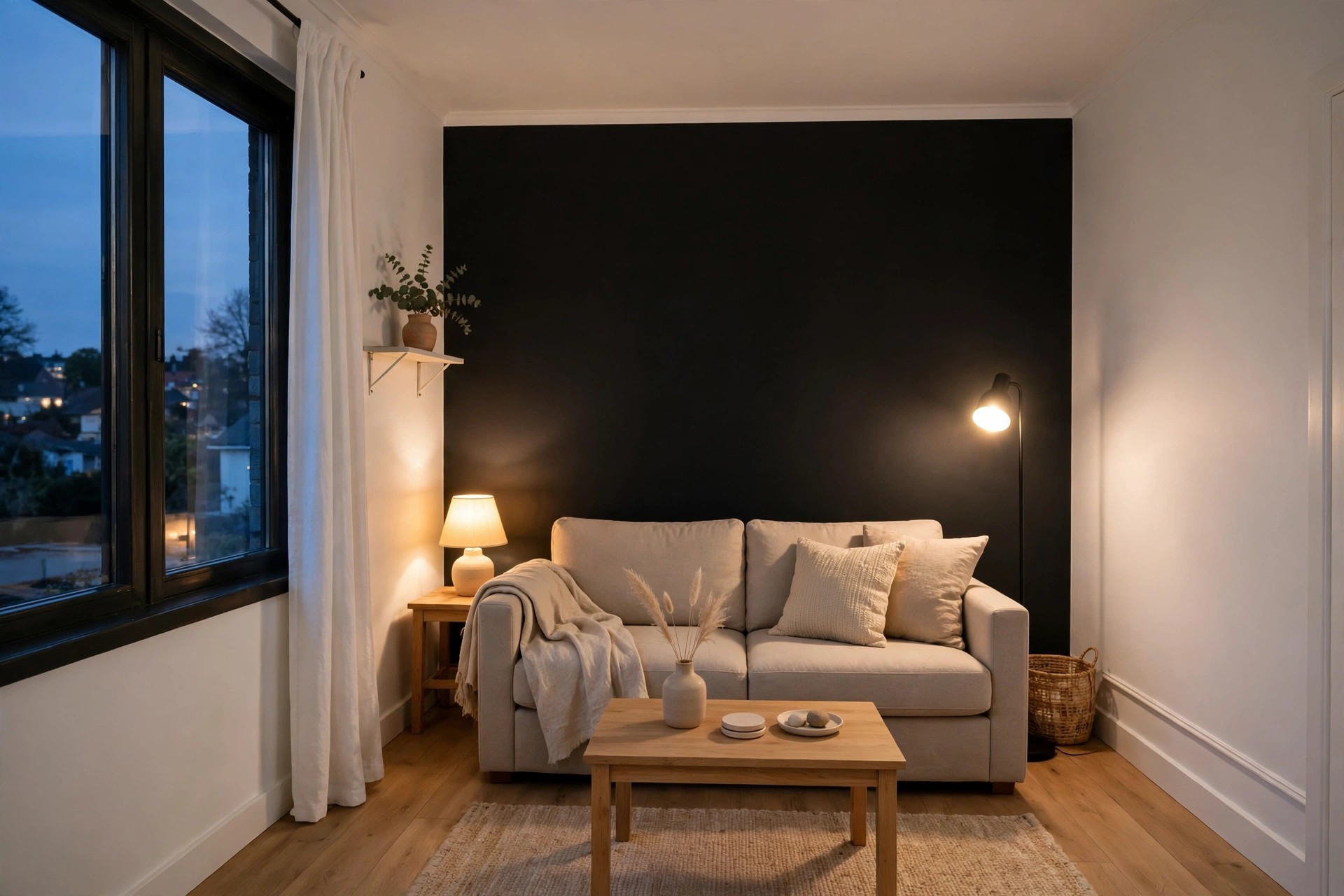
A near black wall can make a small room feel cozy at night, but only if you light it well. Two warm lamps, one each side of the sofa, are the fix.
Keep the sofa beige and the other walls white, as in these beige living room ideas. The pale sofa stops the dark wall from closing the room in.
Use warm bulbs, not bright white ones. Cool light on a black wall can feel cold, while warm light makes the same wall feel soft and calm.
Keep a dimmer or a low lamp by the sofa if you can. You can then soften the black wall for reading and brighten it when friends come over.
13. Try Coral Only in a Bright Room
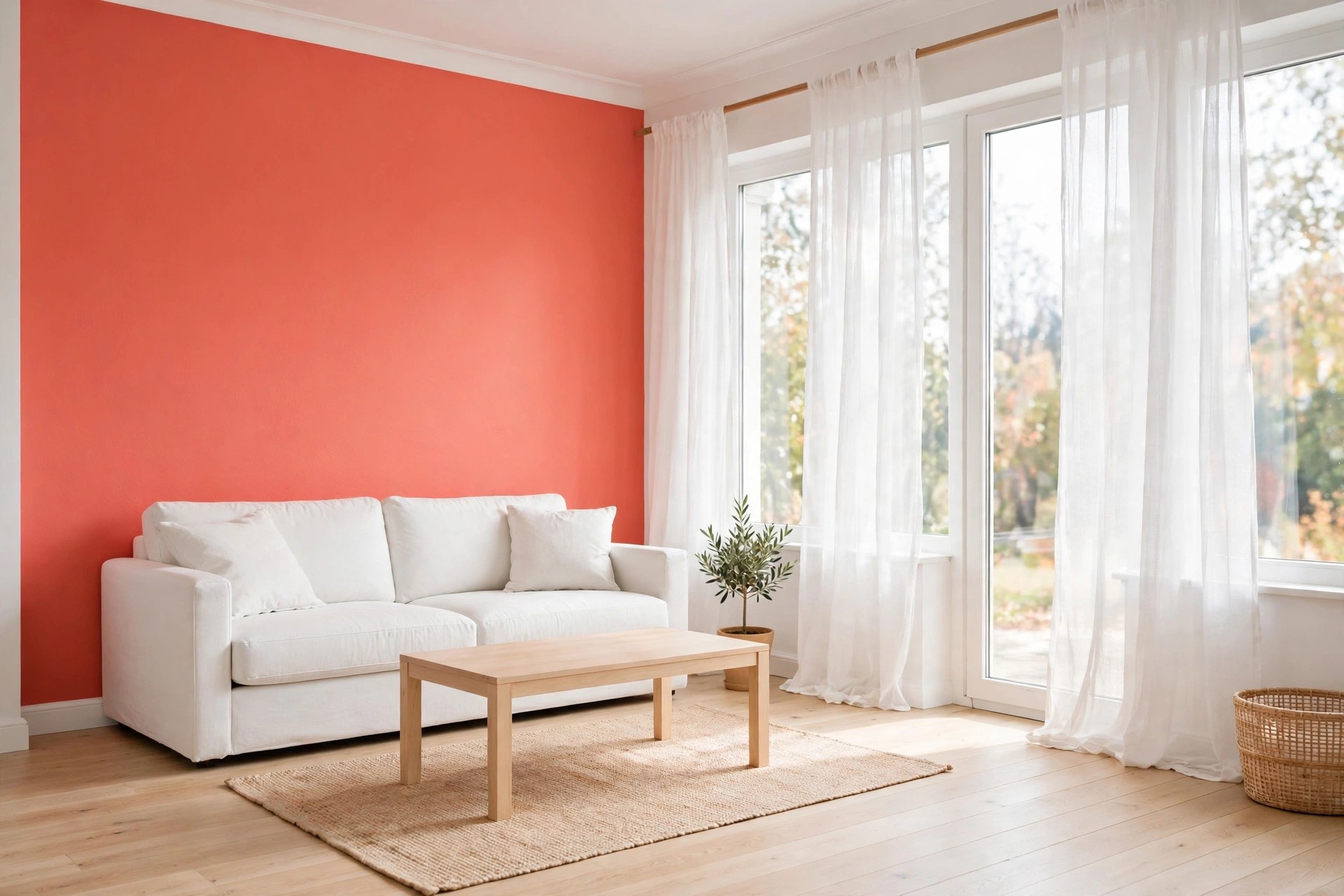
Coral needs light. In a bright room with large windows, it looks fresh and warm, but in a dim room it can turn pink and muddy by evening.
Pair it with a white sofa, sheer curtains, and a light wood floor. Those pale surfaces bounce light back and keep the coral from feeling heavy.
Skip coral cushions on the sofa. The wall already gives you the color, so cushions in cream or pale grey will let the room stay balanced.
Open the curtains fully on a sunny day before you judge coral. If the room still feels bright with the color, it will work on grey days too.
14. Paint Only the Lower Part of One Wall Teal

If a full bold wall feels too much, paint only the lower part. A deep teal band with white above gives color at sofa level and air above it.
Run the color line at about the height of a door handle, and keep it level with tape and a long level. A wavy line will show at once on a plain wall.
Keep art above the line to a minimum. One small frame is fine, but a row of frames crossing the color line will break the clean split.
Paint the teal band before you move the sofa back. That way you can check the line from across the room without furniture in the way.
15. Test Three Swatches Before You Paint the Whole Wall

The cheapest way to get a bold wall right is to test first. Tape three large swatches on a white wall and live with them for a few days.
Look at them in morning light, in evening lamp light, and next to your sofa fabric. A color that looks rich at noon can look dull by night.
Check all three times before you buy paint. This kind of check also helps you avoid the small living room mistakes that make it feel smaller.
When you pick a winner, repeat that color in just two small spots, like a cushion and a throw. That echo ties the wall to the room without a second bold wall.
Store leftover paint with the color name on the lid. A small labeled can makes touch ups easy and stops a second bold wall by mistake.
Small living room ideas with bold color on one wall work when the rest of the room stays calm. Choose the wall with a job, pick a depth you can live with at night, and keep the sofa, rug, and curtains quiet.
Start with swatches, paint one wall, and step back before you add anything else. If the room still feels calm, you have the right wall and the right depth.
Save this to your small living room board for later, and note the wall and color you picked. That note will save you a second paint trip when you shop for cushions or art.


