

15 Small Living Room Ideas for Couples Who Both Work From Home
At 9 a.m., both laptops open, both calls start, and the sofa you bought for lazy Sundays suddenly has to act like an office for two adults. The room is small, the work is real, and there is no spare room to hide in.
That squeeze is exactly what these small living room ideas for couples who both work from home are built for.
Each idea gives two people a place to work, a way to take calls without talking over each other, and a room that still feels like home at night.
You do not need a big rebuild or a new room.
You need clear zones, chairs that tuck away, cords that stay out of sight, and a simple switch that ends the workday. Start with one idea, live with it for a week, then add the next.
Good narrow living room layouts teach the same lesson this room needs: keep a clear path, put big pieces against walls, and let each zone do one job well.
This post contains affiliate links. If you buy through them, we may earn a small commission at no extra cost to you. See our Affiliate Disclosure.
1. Put Both Desks on One Long Wall

Two small desks on one wall beat one long shared desk in a tight room. Each person gets a clear edge, a chair that pulls out without bumping the other, and a side they can keep their own way.
Leave a small gap or a tray between the desks so papers and cups do not drift into the next station. A shared lamp in the middle can work, but two small lamps give each person control over their own light.
Keep the wall above the desks for shelves, not for piles. When the desk tops stay clear, the whole wall reads as one tidy work zone, and the sofa side of the room still feels like a living room.
Measure first, and leave room for the door to swing clear.
2. Try Back-to-Back Desks in the Middle of the Room
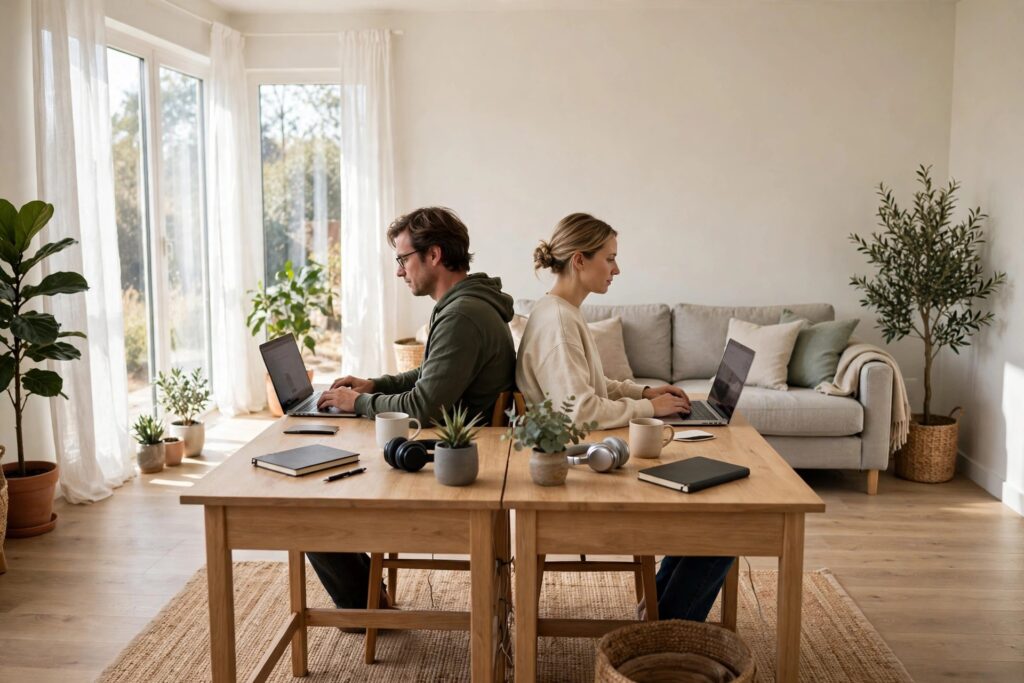
When no wall is long enough, put two desks back to back and let them form a small island. Each person faces out toward the room, so neither one stares at the back of a screen all day.
A low shelf or a row of plants on top of the desks gives a soft break between the two sides. It blocks the view of cords and screens without building a wall in the middle of your home.
This shape needs a clear walkway on both sides, so measure the chairs first. If a chair cannot pull out with ease, the island will feel cramped, and one person will end up working from the sofa.
Test the island for a day before you fix it in place.
3. Split the Room Into a Bright Side and a Quiet Side
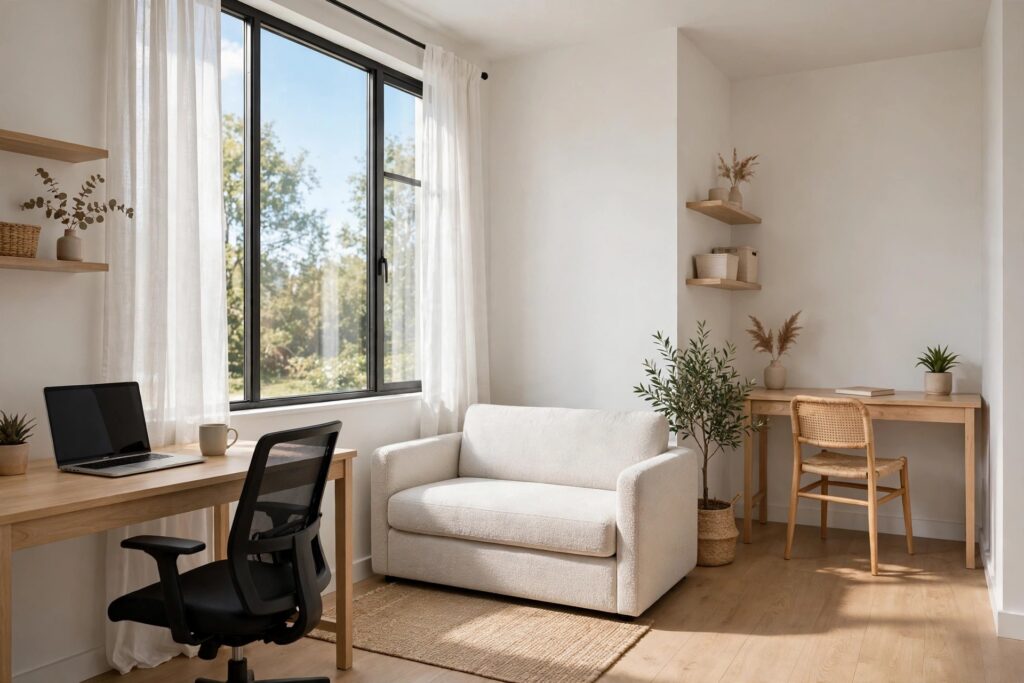
Not every job needs the same light or the same quiet. Give the person who loves daylight the desk by the window, and give the person on more calls the desk in the far, quiet corner.
This split stops the daily fight over the best spot. It also helps with calls, since the loudest voice sits farthest from the sofa, where the other person might rest or read.
Use a rug or a floor lamp to mark where each zone starts. The same care that shapes narrow living room ideas for long rooms helps here too: a clear path down the middle keeps both zones easy to reach.
Walk the middle path with both chairs pulled out. If you must turn sideways, shift a desk before you settle in.
4. Turn the Back of the Sofa Into a Second Desk

Pull the sofa a step away from the wall and slide a narrow console behind it. That console becomes a desk for one person, while the other person keeps the main desk by the wall.
Chairs must tuck fully under the console when work ends, or the walkway behind the sofa will vanish. Pick a console deep enough for a laptop and a notebook, and no deeper, so it does not eat the room.
At night, clear the console back to a lamp and a book. The sofa side then looks like a normal living room again, and no guest has to sit next to a pile of work gear.
Check the console height against your chair. A top that sits too high will ache your shoulders by lunch.
5. Use Fold-Down Desks That Close at Night

Two fold-down desks on one wall can vanish when the workday ends. Open, they hold a laptop and a notebook. Closed, they look like plain wall cabinets, and the room gets its evening back.
Check the wall before you buy, since these desks need solid fixing and a flat surface. A wobbly desk will ruin every call, and a desk that sags will soon stay shut for good.
Keep only daily items inside each desk so closing it takes seconds. If you must clear three shelves first, the desk will stay open all night, and the room will never stop feeling like an office.
Mount a small light above each desk so evening work stays easy. A dark corner desk will soon go unused.
6. Share One L-Shaped Desk, One Arm Each
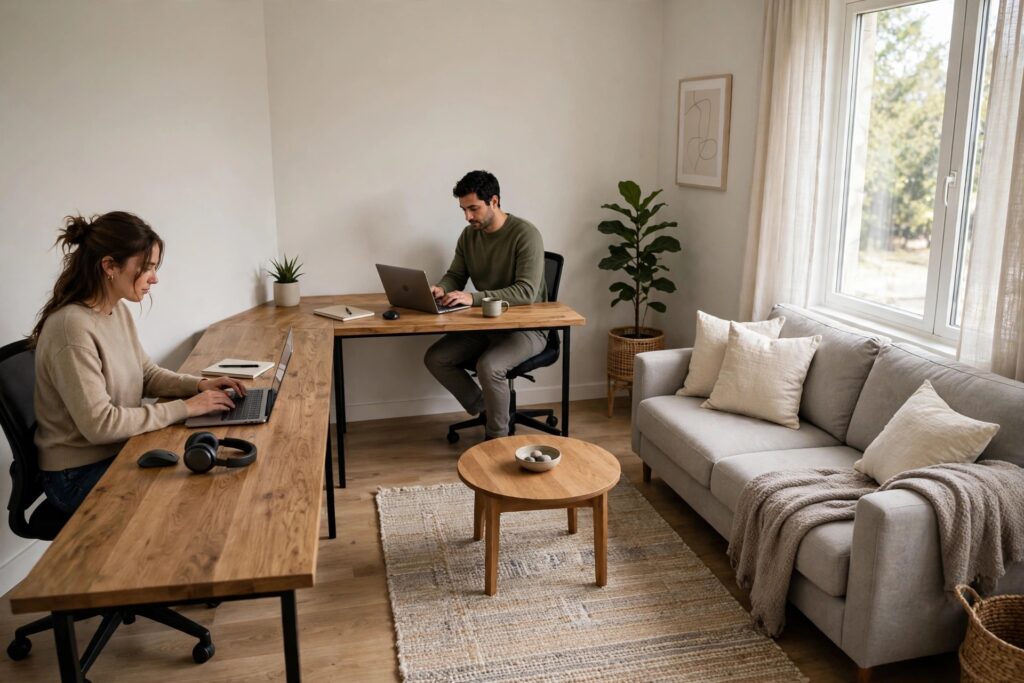
An L-shaped desk in a corner gives two people their own arm and a shared corner for a printer or a charger. You sit at a right angle, close enough to talk, far enough not to share a screen.
This shape suits couples who pass papers or ask quick questions through the day. It suits them less if both people take calls at the same time, since the corner carries sound well.
Put the corner to work for shared gear only, not for storage. Once the corner fills with boxes, both arms shrink, and the desk that looked large starts to feel like two small tables.
Keep a shared tray in the corner for pens and chargers. It stops small gear from creeping onto both work surfaces.
7. Divide Calls With a Low Bookcase, Not a Wall

A low, open bookcase between two desks cuts sightlines and softens sound without darkening the room. Books and baskets on its shelves break up noise better than a bare board ever will.
Keep the bookcase low enough to see over when you need to talk. A tall unit turns two partners into two strangers, and it can block light from the window to the desk behind it.
Use the side facing each desk for that person’s own books and gear. When each side has a clear owner, the bookcase stops being a shared dump and starts acting like a real divider.
Add a small plant on top for softness, but keep it low. Tall stems will block the view you wanted to keep.
8. Give Every Cord One Home

Two workstations mean twice the chargers, and in a small room every cord shows. Run both desks to one power strip, then hide that strip in a basket or a tray under the desks.
Label each cord with a small tag so you can unplug the right one in the dark. That tiny step stops the nightly tug on the wrong plug and keeps the printer from losing power by mistake.
Route cords along the wall or under the desk, never across the walkway. A cord across the floor is a trip risk, and it makes even a tidy room look rushed and unfinished.
Check the basket each Friday and pull out dead chargers. Old cords pile up fast when two people share one room.
9. Light Each Desk on Its Own

One ceiling light rarely suits two desks at once. One person may face glare on a screen while the other sits in shadow, and both will blame the room instead of the light.
Give each desk its own small task lamp with a warm bulb. Aim the light at the desk, not at the screen, and keep the lamp low so it does not shine into the other person’s eyes.
Use daylight first where you can, then add lamp light as the day fades. A room with two soft pools of light feels calm at 5 p.m., while one harsh overhead light makes work feel endless.
Keep spare bulbs in the cabinet so a dead lamp never leaves one desk dark. Small fixes keep the room calm.
10. Keep Shared Gear in One Closed Cabinet

A printer, spare paper, and chargers do not need to live on a desk. One closed cabinet near both desks holds them all, and its doors hide the clutter that makes a small room feel busy.
Pick a cabinet tall and narrow rather than wide and low. It uses wall space, not floor space, and it leaves room for a chair to slide past without a squeeze.
Agree on what lives inside and what does not, since a shared cabinet fills fast. The same small-room thinking behind small room makeovers applies here: one clear change, done well, beats five half-done ones.
Label one shelf per person inside the cabinet. Clear labels stop the shared space from turning into a mystery pile.
11. Build a Work-to-Evening Switch You Both Use

The hardest part of sharing a living room office is not the desks. It is the feeling that work never ends, because the screens stay out and the papers stay where you left them.
Make a short closing routine and do it together. Close the laptops, roll up the desk mats, drop pens and notes into a basket each, and put the chairs back under the desks.
That five-minute switch tells your brains the day is done. For low-cost ways to refresh the same room, see these makeover ideas under $500 and pick one change that makes evenings feel new again.
Put the baskets where you can reach them without standing. A routine you must hunt for will soon be skipped.
12. Agree on Call Signals Before Calls Collide
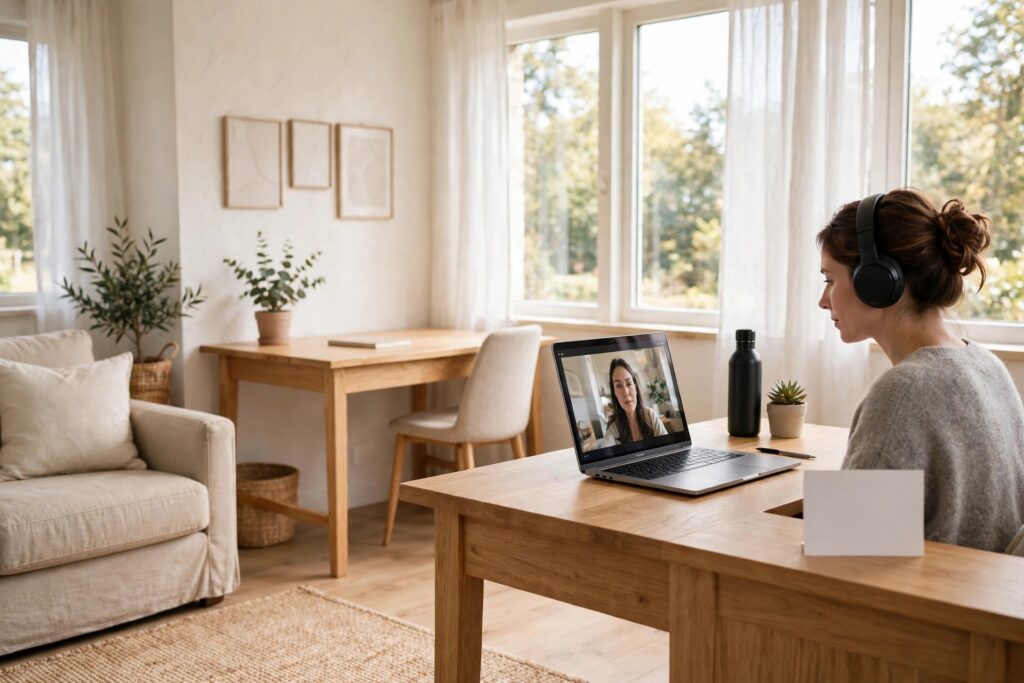
Two calls at once is the real test of a shared room. Without a plan, both voices rise, both calls suffer, and the sofa becomes the only quiet spot left in the house.
Set simple signals that cost nothing. A small sign on a desk, headphones on, or a closed door to the hall can mean one thing: please keep it down until this call ends.
Share your call times each morning over coffee, and move one call to another spot when they clash. A short note on the fridge beats a loud surprise at 10 a.m. every time.
Keep the signals kind and simple each day. A quiet room works best when both people feel heard, not policed.
13. Choose Chairs That Tuck Fully Under the Desks

Big office chairs look fine in a photo and eat a small room alive. Wide arms and high backs block walkways, bump the sofa, and make the room feel half its true size.
Pick slim chairs with no arms, or arms low enough to slide under the desk top. When work ends, push both chairs in, and the floor opens up for evening life again.
Test comfort for a full workday, not just a quick sit in a shop. A chair that hurts by lunch will push one person to the sofa, and the whole two-desk plan will fall apart.
Roll the chairs out each morning and check the floor. Crumbs and cords hide under desks more than you think.
14. Go Up the Walls for Storage, Not Out Into the Room

Floor space is the scarcest thing in a small living room, so stop adding boxes to it. Shelves above each desk hold books, plants, and work gear without taking a single step of floor.
Give each person their own shelf row so items do not mix. A shared shelf soon becomes a pile, while two clear rows stay tidy with far less effort each week.
Keep shelves at arm’s reach and leave one shelf partly empty. That empty space is not waste. It is room for the next book, the next charger, and the next busy week.
Dust the shelves once a week with the desks. Clean shelves stay useful, while dusty ones soon become ignored clutter fast.
15. Protect the Sofa as a No-Work Zone

When desks fill up, laptops drift to the sofa, and soon no seat in the room feels like rest. That drift is quiet at first, then one day the whole room feels like work.
Make a simple rule and keep it: laptops stay at the desks, and the sofa stays for rest, reading, and evening talks. A rule this plain is easy to recall on a tired day.
End each day by fluffing the cushions and switching on a soft lamp. That small reset marks the sofa as home again, and it gives both of you a place to land after work.
Keep a throw on the sofa arm for evening rest. It marks the seat as home, not as a spare desk.
Two desks in one small living room can work well when each person has a clear zone, a chair that fits, and a closing routine you both keep.
Pick the idea that solves your worst clash first, whether that is calls, cords, or chairs that block the path. Fix that one thing this week.
For a wider look, browse these small living room ideas for apartments and save the ones that fit your home.
These small living room ideas for couples who both work from home work best when you save this to your small living room board for later and try them one at a time.


