

15 Small Living Room Layout Ideas With a TV and a Sofa That Fit
The sofa arrived first, the TV followed, and suddenly the room felt full before anyone sat down. That order is the problem in most small living rooms, and it is easy to fix once you measure before you shop.
These small living room layout ideas with a tv and a sofa that fit start with space, not style. Check wall length, seat distance, and walk space first. Then pick sizes that leave room to move, sit, and open a door.
Each idea below solves one fit problem. One idea sets the sofa length. Another sets the screen size. A later idea fixes the walk path or the rug edge that keeps tripping you up.
Work through them in order if your room is empty, or jump to the problem that bugs you most. Either way, bring a tape measure, and trust the numbers on your floor more than a photo of a much larger room.
This post contains affiliate links. If you buy through them, we may earn a small commission at no extra cost to you. See our Affiliate Disclosure.
1. Tape the Sofa and TV Outlines on the Floor
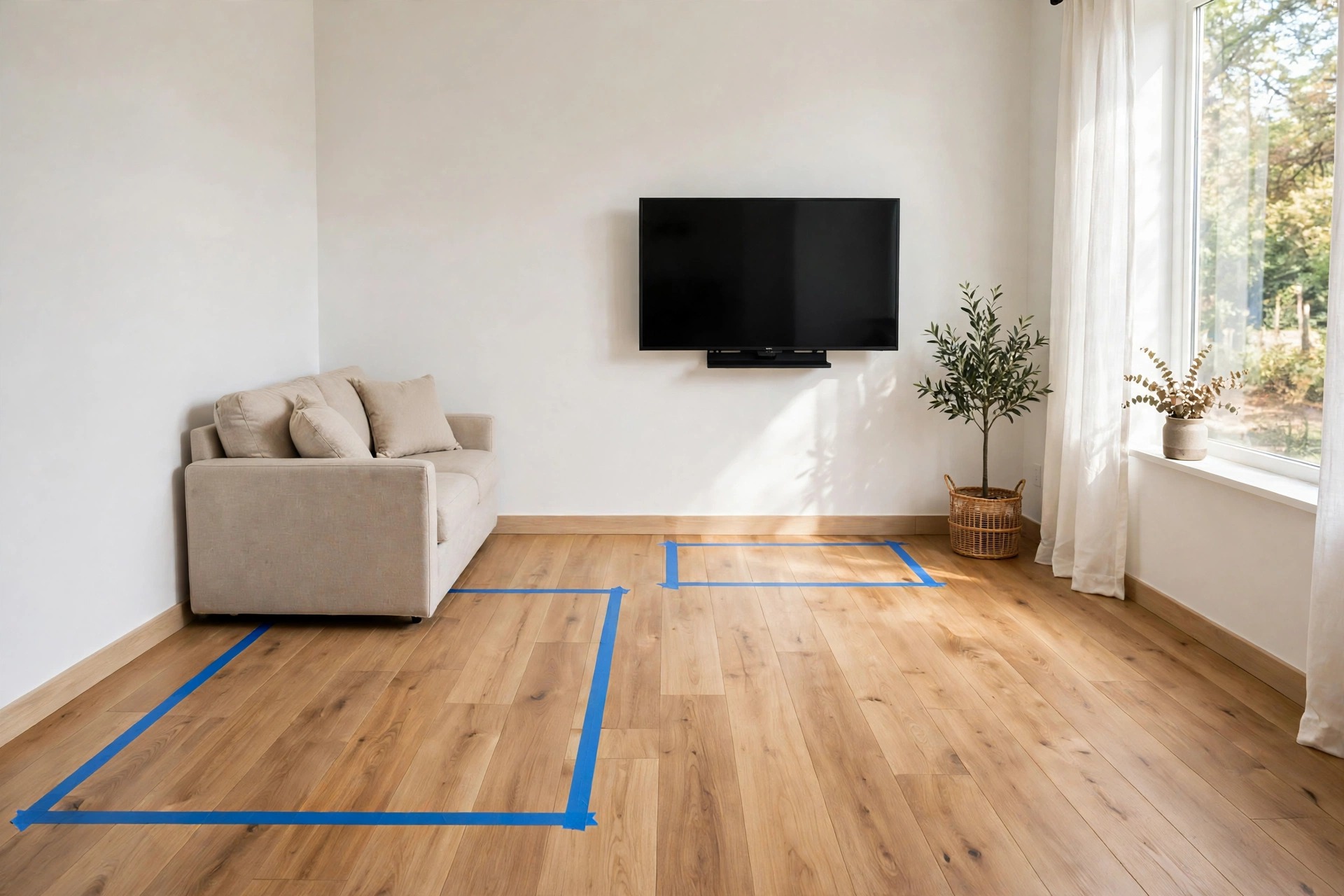
Start with painter tape, not a shopping cart. Mark the sofa length and depth on the floor, then mark the TV wall and the stand depth across from it. Walk the room as if guests were already there.
You will spot the tight spots at once. A door may swing into the tape. A walk path may shrink to a sideways shuffle. A side table may sit where your knee needs to go. Check the view from the kitchen door as well.
Leave the tape down for a day if you can. Sit in a chair at the marked sofa spot and look at the marked screen spot. That plain test beats a guess, and it costs nothing to redo. Keep the tape for shopping day.
2. Let the Wall Set the Sofa Length

Measure the sofa wall from end to end, then subtract space for a walk path at one end. Leave a gap for a floor lamp. The number left is your true sofa length, even if a longer sofa looks fine in a store.
A sofa that runs wall to wall leaves no place for a lamp, a side table, or a hand to reach a light switch. It also makes the room read as one solid block, with no breathing space at the edges.
Write the max length on your phone before you shop. When a sofa is even a few inches too long, skip it. A short sofa can still seat three in comfort. The right length will feel calm the day it arrives.
3. Pick the Seat Spot Before the Screen Size
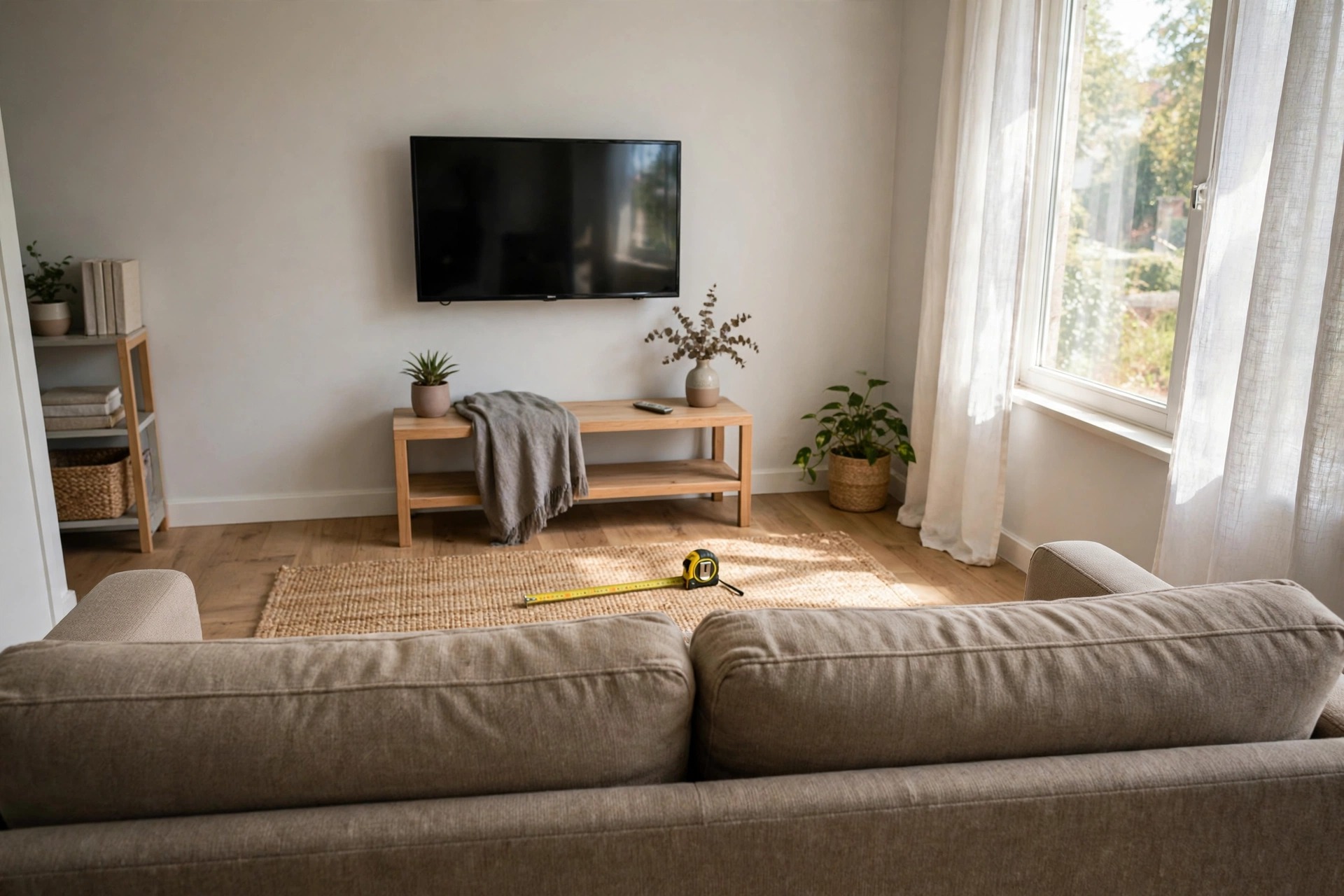
Decide where you will sit first, then measure from that seat to the TV wall. That distance should guide the screen size, not the other way around. A screen that is too large for a short room can feel hard to watch.
Sit in the spot and hold your hands at the width you find easy to take in at a glance. If the screen would run far past that width, it will pull your eyes from edge to edge all evening.
Note the distance in feet and inches, and take it with you when you compare screens. A smaller screen at the right distance often looks better than a large screen squeezed into a short room. A tape measure beats a hopeful guess.
4. Wall Mount the TV to Win Back Floor Depth

A TV stand can eat a full foot of floor depth, and in a small room that foot matters. A wall mount puts the screen close to the wall and leaves the floor clear for feet, a rug, and a walk path.
Mount it so the center sits near seated eye height, not high above a shelf. Test the height by sitting down and looking straight ahead. Your neck should stay relaxed, with no tilt up or down.
Keep cables tidy with a simple cord cover that matches the wall color. Keep the remote spot close to your seat. For styling once the mount is set, see these TV wall decor ideas, which stay separate from the fit math here.
5. Choose a Low, Slim Console, Not a Deep Cabinet
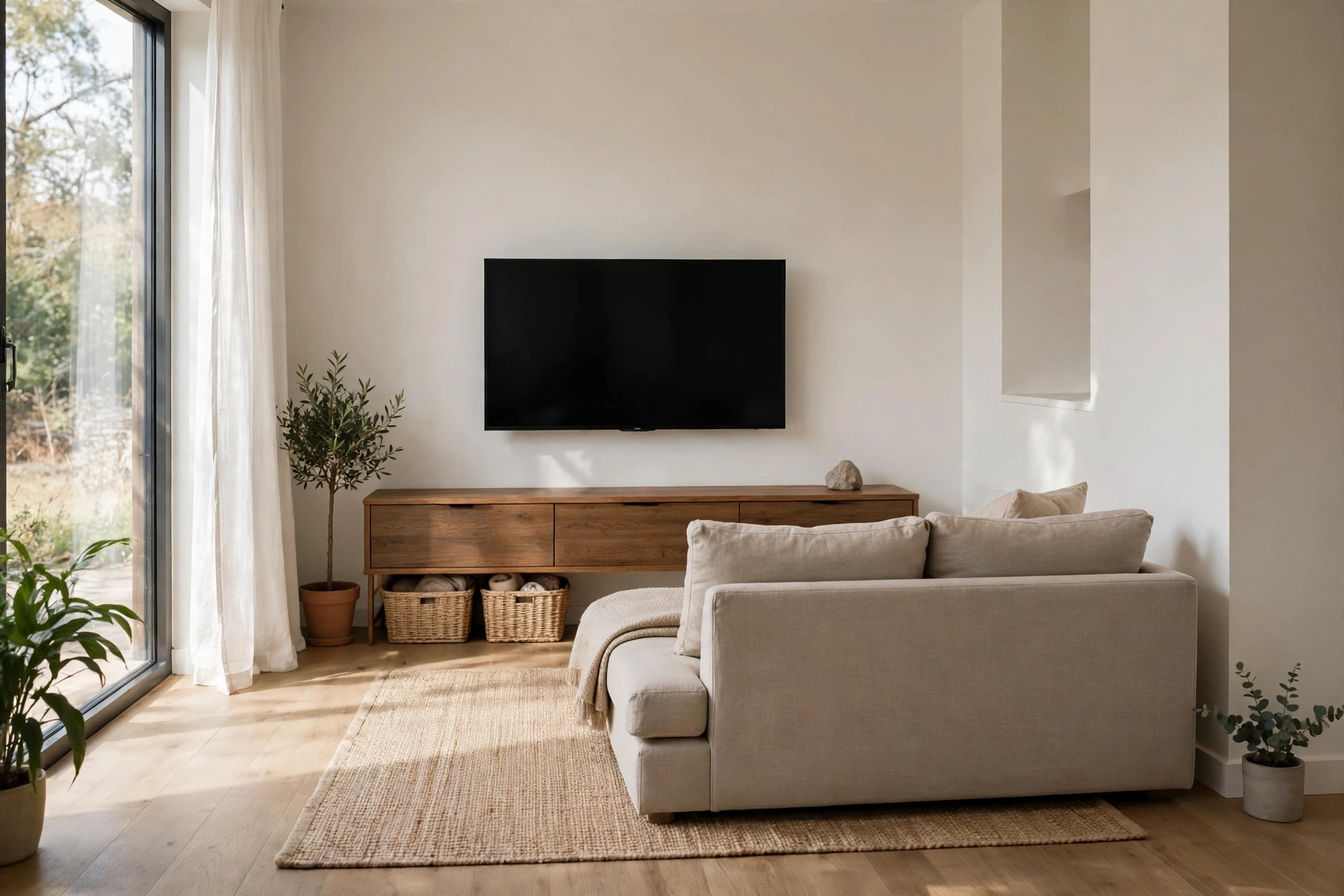
If you need a stand, pick one that is low and slim. A deep cabinet pushes the screen closer to you and steals the space where a coffee table or your feet should go. Low also keeps the screen height in check.
Check the depth with a tape measure, not by eye. A stand that looks slim in a large store can still jut out too far in a ten foot room. Aim for the shallowest stand that still holds your gear safely.
Use closed doors or baskets inside for remotes, game gear, and chargers. A tidy front helps the whole wall read as one calm unit, and you will not lose the remote in an open pile. Label the baskets so guests find remotes fast.
6. Face the Sofa Straight at the Screen

A straight facing layout gives every seat a fair view, and it uses the room width well. Angle the sofa across a corner and you lose wall space, floor space, and a clean walk path in one move.
Center the sofa on the screen, or as close to center as doors and windows allow. A small shift of a few inches can still work, but a sharp angle will leave one end of the sofa staring at a blank wall.
If a window sits on the TV wall, try the screen on the next wall instead of fighting glare all day. Straight does not mean stiff. It means the main seat and the main screen line up. A straight line also suits a small rug.
7. Swap a Big Sectional for a Loveseat and a Chair
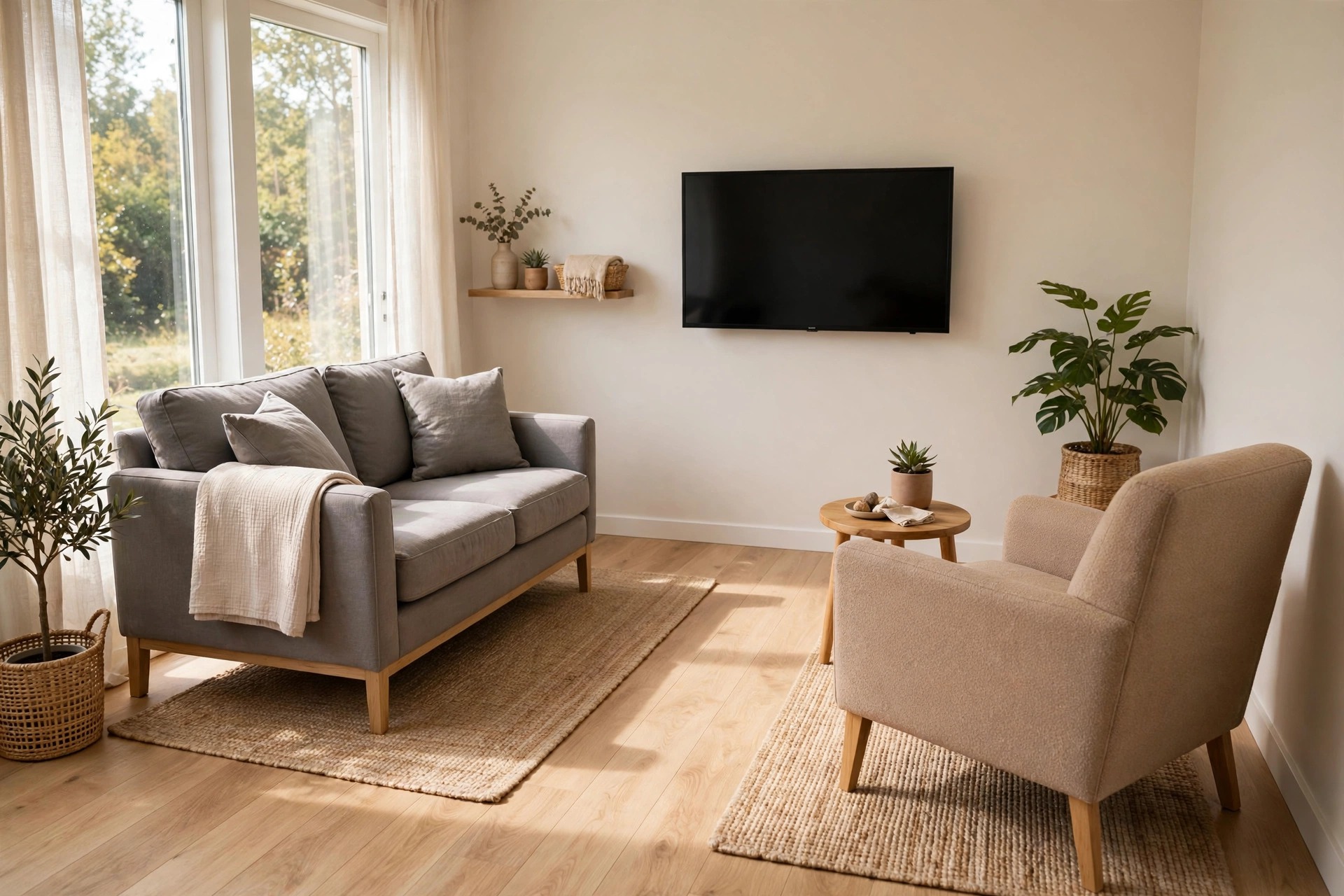
A large sectional can look tempting, but its return arm often blocks the only walk path in a small room. Two pieces beat one long block. A loveseat plus one chair seats three people and leaves gaps you can actually walk through.
Place the chair at a slight angle toward the screen, not flat against a side wall. That angle gives the chair a real view and keeps the middle of the room open for a small table or a rug edge.
This split also helps when plans change. You can move the chair near a window for reading, or pull it closer for a film night, without dragging a heavy sectional across the floor. One chair also costs less to move later.
8. Try a Short Chaise Sectional With the Chaise on the Short Side
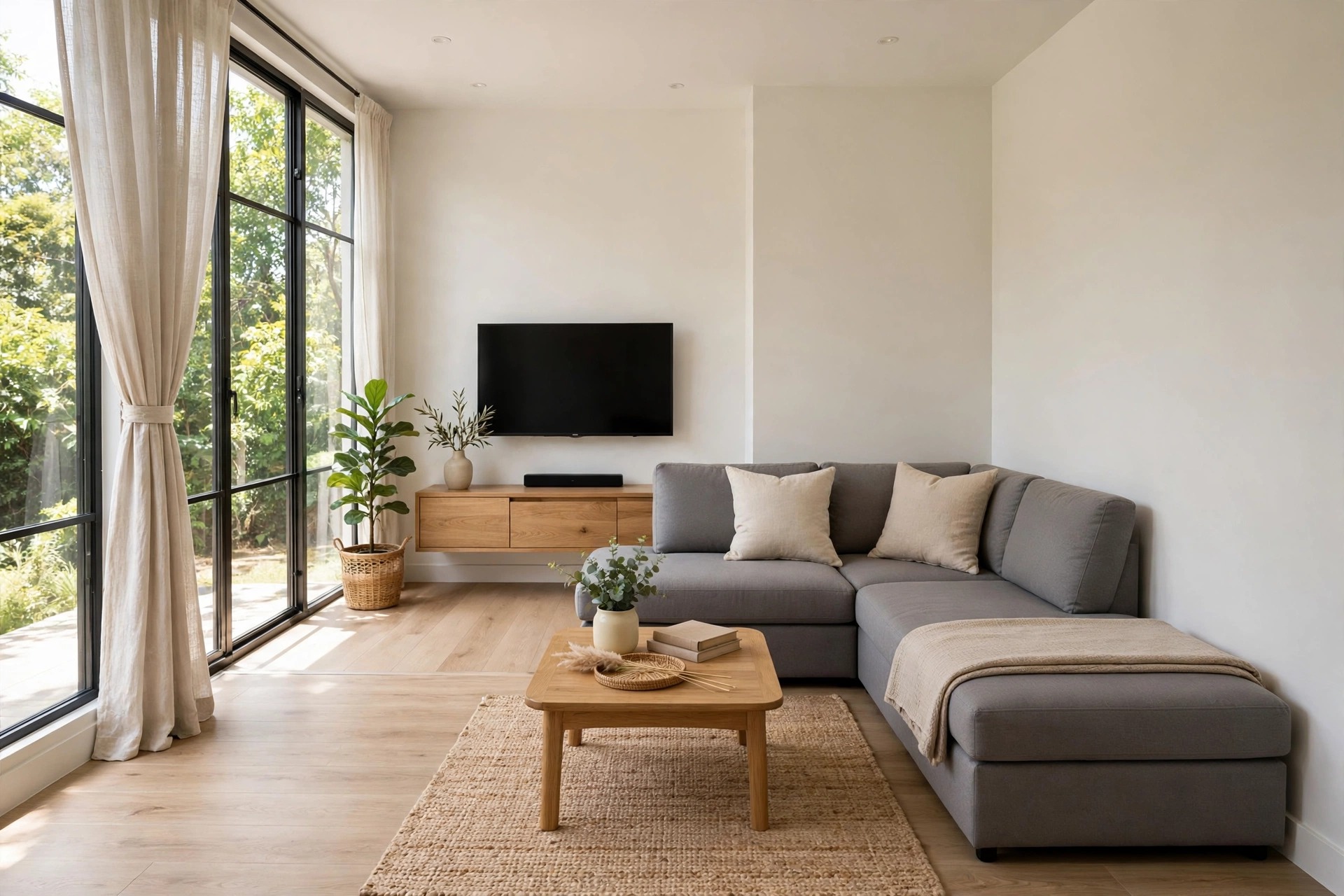
If you love to stretch out, a small chaise sectional can still work. Stretch room matters more than extra seats. Put the chaise on the short side of the room, where it will not cut across the main walk path or block a door.
Measure the full chaise length, not just the sofa length. Many people measure the back and forget the extra seat depth that sticks out into the room. Count the chaise depth twice before ordering. That extra depth is where the trouble starts.
Keep the chaise end clear of the coffee table. You need room to swing your legs around and stand up without shuffling sideways past a table corner each time. Keep a clear step from chaise to door.
9. Float the Sofa in a Long Room to Make Two Clear Zones

In a long room, pushing all seats to the walls can leave a dead strip in the middle. Float the sofa a short way out from the back wall, with its back toward the far end of the room.
That gap behind the sofa becomes a walk path, and the front becomes a true TV zone with a rug and a table. The back view should still look tidy. The room stops feeling like a hallway and starts feeling like two useful spaces.
Check the gap first. You need room to walk behind the sofa without brushing it. A slim console behind it can hold a lamp. For long rooms in general, see these narrow living room ideas for long townhouse rooms.
10. Put the TV in a Corner When the Walls Are Full of Doors

Some rooms have a door on nearly every wall, so no flat wall is free for a screen. A corner mount or a corner stand can solve that problem without forcing the sofa into a strange angle. Check each door swing before you mount.
Angle the sofa to face the corner, but keep the angle gentle. The goal is a clear view from the main seat, not a perfect diagonal that wastes both side walls. A gentle angle keeps both side walls usable.
Fill the wall space beside the corner with a tall plant or a slim shelf, not a second seat. That keeps the corner zone tidy and stops the room from feeling crowded on both sides at once.
11. Use the Short Wall for the TV and the Long Wall for the Sofa
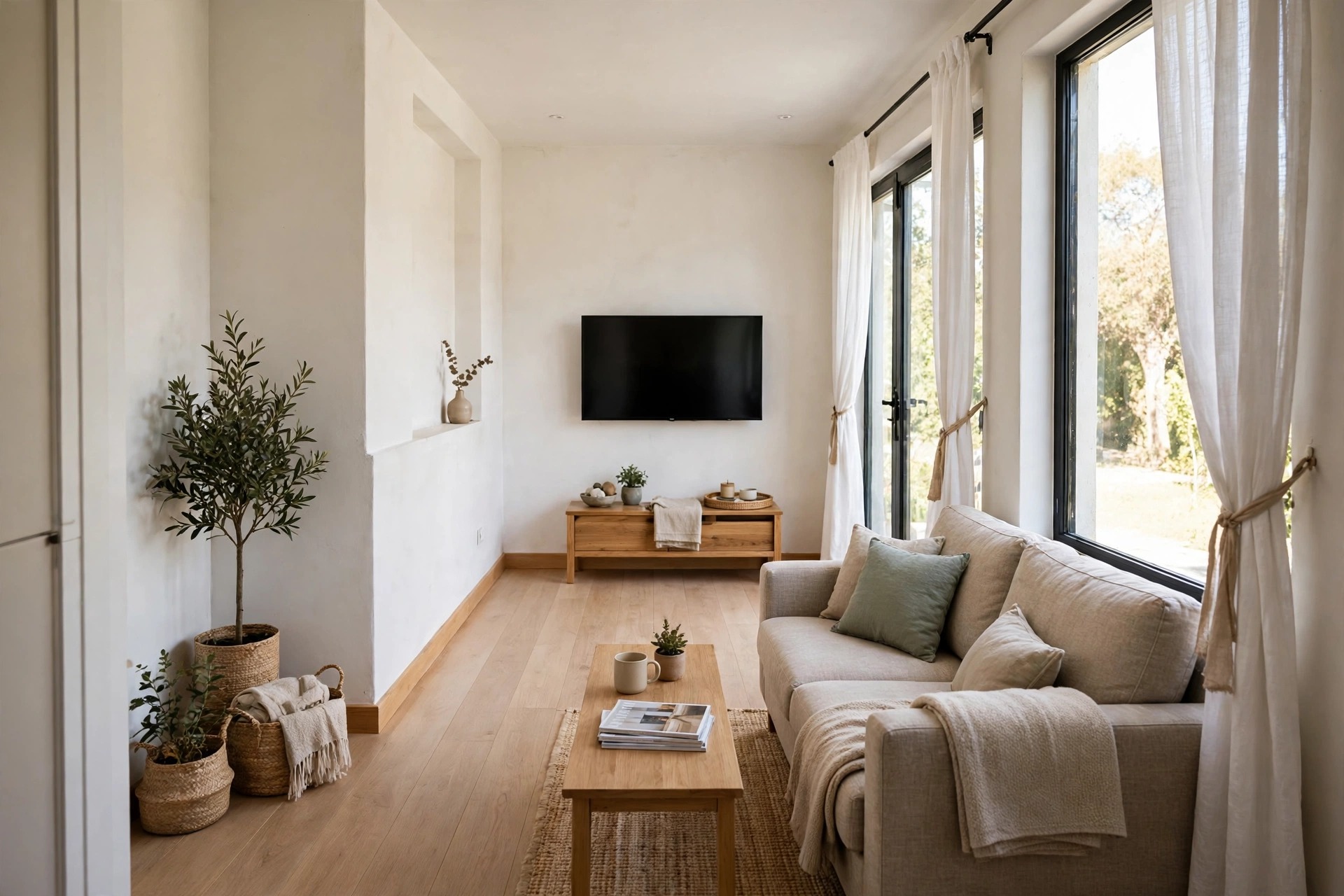
When a room is longer than it is wide, the short wall is often the best TV wall. The sofa then gets the long wall, which gives it room to breathe and leaves a straight path down the room. Doors still need a clear swing.
This layout also helps the viewing distance. The long room gives you more feet between seat and screen, so a mid size screen can feel right without crowding the seats. More distance also eases eye strain at night.
Watch the door swing on the long wall, and leave a gap at one end of the sofa for entry. For more long room shapes, these narrow living room layout ideas show how the same rule plays out in different rooms.
12. Keep the Table Slim and the Walk Path Clear

A wide coffee table can break an otherwise good layout. It sits right where you need to cross from the sofa to the TV side, and it forces a tight squeeze at both ends. A table corner at knee height hurts daily.
Pick a slim table or a soft ottoman that you can nudge aside with one hand. Leave a clear gap between table and sofa so you can stand up, set down a mug, and step past without turning sideways.
If the gap still feels tight, drop the table and use a side table at each end of the sofa instead. You lose a little surface, but you gain a room you can move through with ease. Side tables suit mugs and books well.
13. Let One Rug Anchor the Sofa and the TV Zone
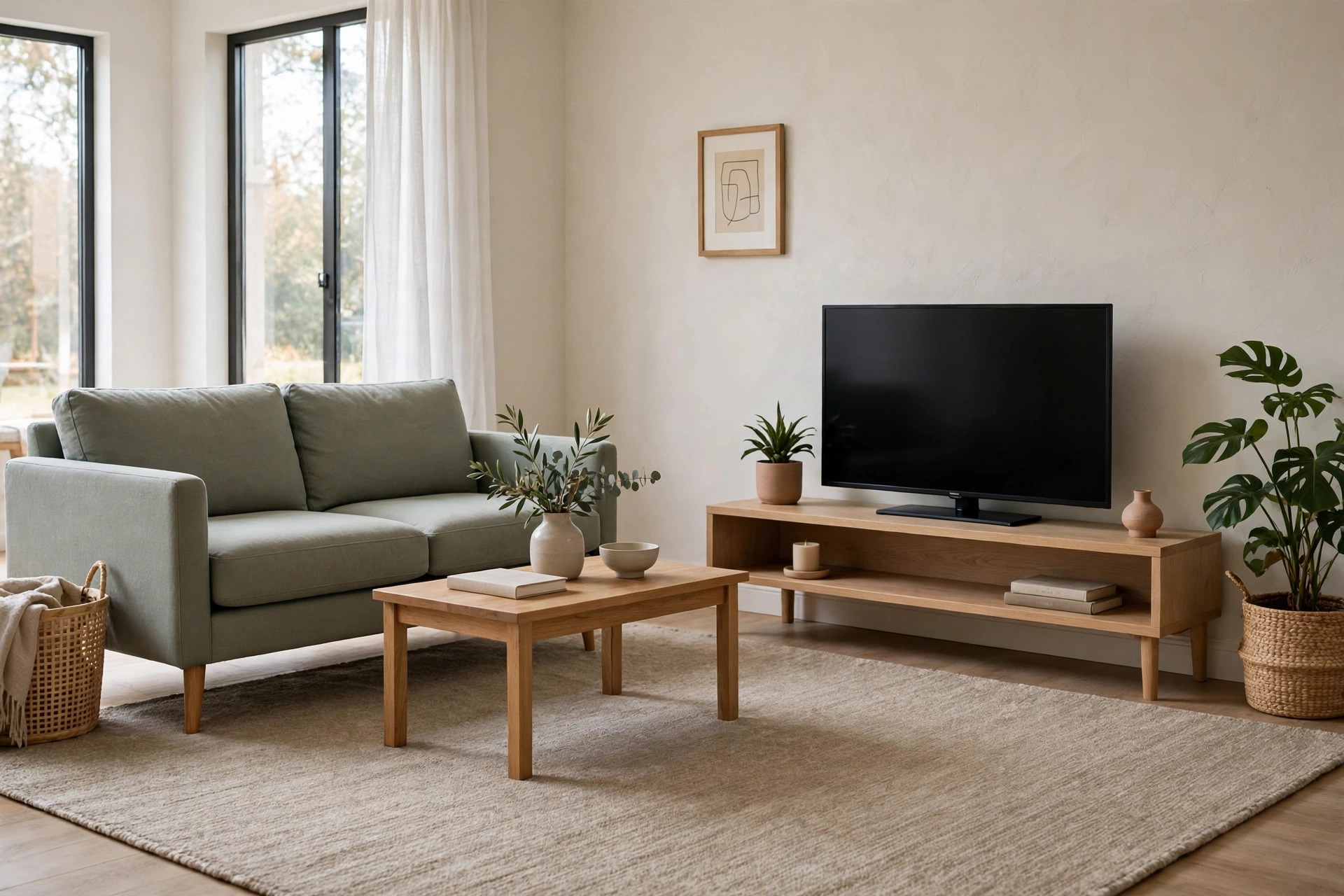
A rug that is too small will make the sofa and the TV look like strangers in the same room. A rug that reaches under the front legs of the sofa ties the seats and the screen into one zone.
Measure from the sofa front to just past the TV stand, then pick a rug that covers that span without curling at the edges. A flat, low pile rug is easier to walk on and less likely to slide. Flat edges stop trips.
Add a rug pad if the rug slips on a wood floor. A rug that creeps a few inches each week will slowly eat your walk path, and you will not notice until the layout feels off again.
14. Set the Screen at Seated Eye Height
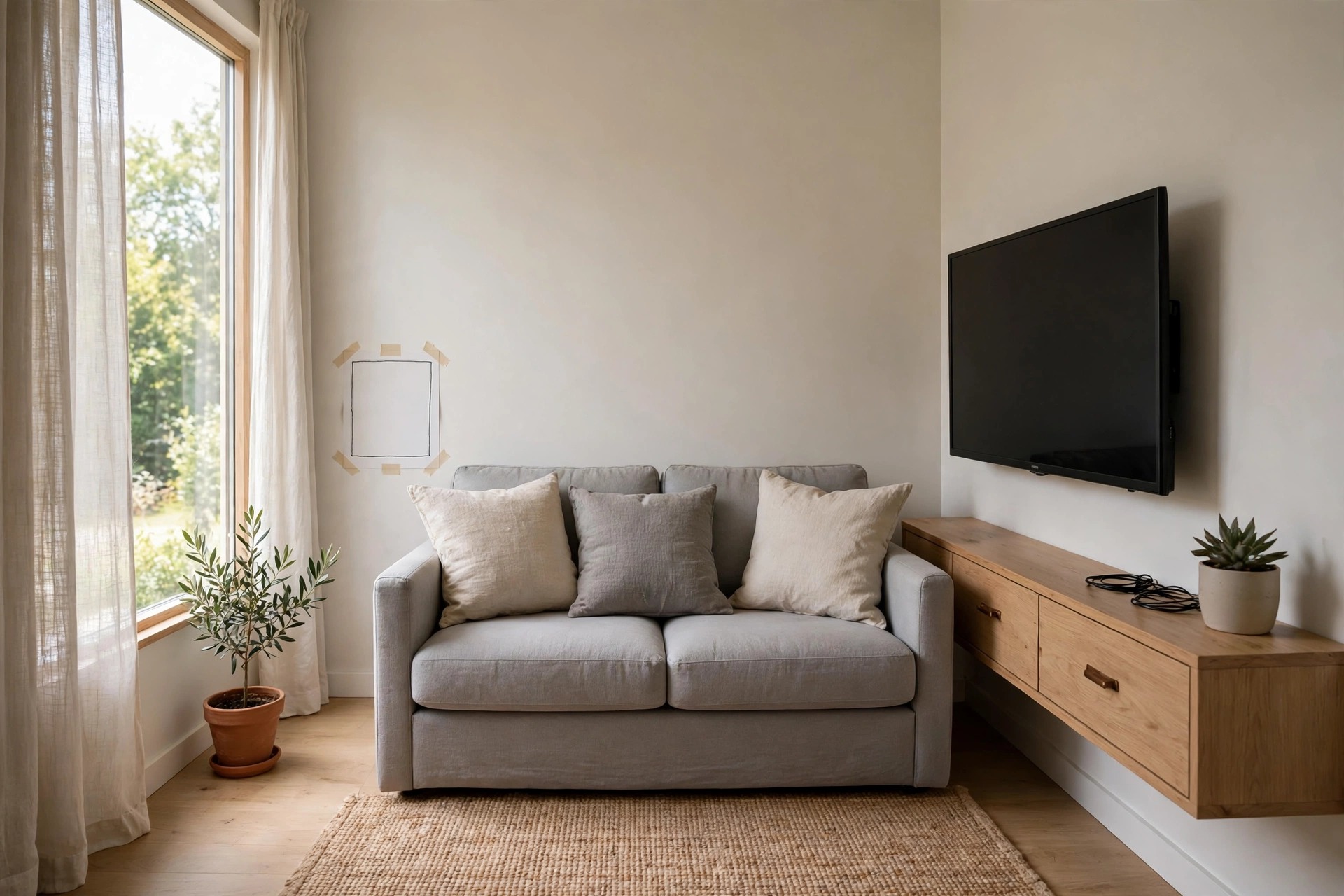
Screen height is a fit issue, not just a style choice. A screen hung too high forces your neck up for a whole film, and a screen set too low makes you hunch down to see past a table. Neck comfort matters most here.
Sit on your sofa, look straight ahead, and note where your eyes land on the wall. Aim for the middle of the screen to sit near that point, with a small shift up or down to suit your seat height.
Test it with a paper outline taped to the wall before you drill or mount. A ten minute test can save you from a mount hole in the wrong spot and a sore neck all winter. A paper test costs almost nothing.
15. Angle One Chair and Keep the Main Path Open

Extra seats help, but a second sofa often blocks the path from the door to the TV zone. A clear path also helps with vacuuming. One angled chair adds a seat, keeps a view of the screen, and leaves the main path clear.
Place the chair where it does not block a door, a radiator, or the walk to the kitchen. A chair that forces a detour will soon become a coat rack, not a seat anyone picks. A chair near light suits reading too.
For a room that must also sleep, work, or host guests in one space, see these tiny living room ideas for studio apartments. A rectangle room needs the same care, as these rectangle living room ideas show, with the path kept first.
Start with one tape test this week, and let the room tell you what fits.
These small living room layout ideas with a tv and a sofa that fit point to a simple set of wins: a sofa that leaves a walk path, a screen at eye height, and a rug that ties the zone together.
Save this to your small living room board for later, so the measurements are close at hand when you shop. Your next sofa and screen can then fit the room you have, not the room in the photo.


