

15 Small Living Room Ideas for Renters in Older Buildings
The first night in my old building, the sofa rocked every time I sat down. The floor dipped near the window, the radiator clanked at midnight, and the walls were plaster I did not dare drill into.
Old buildings give renters a strange deal. You get tall windows, deep sills, and rooms with real character, but you also get rules about holes, paint, and anything fixed to the wall.
These small living room ideas for renters in older buildings work with those quirks instead of fighting them. Every idea is removable, so you can hand the keys back with the walls intact. For the renter basics, our renter-friendly living room ideas cover it.
Start with the floor and the heat, then move to walls and light. Each change below costs little, needs no landlord permission in most leases, and comes down clean on moving day. Pick the three that fix your biggest daily annoyance first.
This post contains affiliate links. If you buy through them, we may earn a small commission at no extra cost to you. See our Affiliate Disclosure.
1. Level wobbly furniture on uneven floors
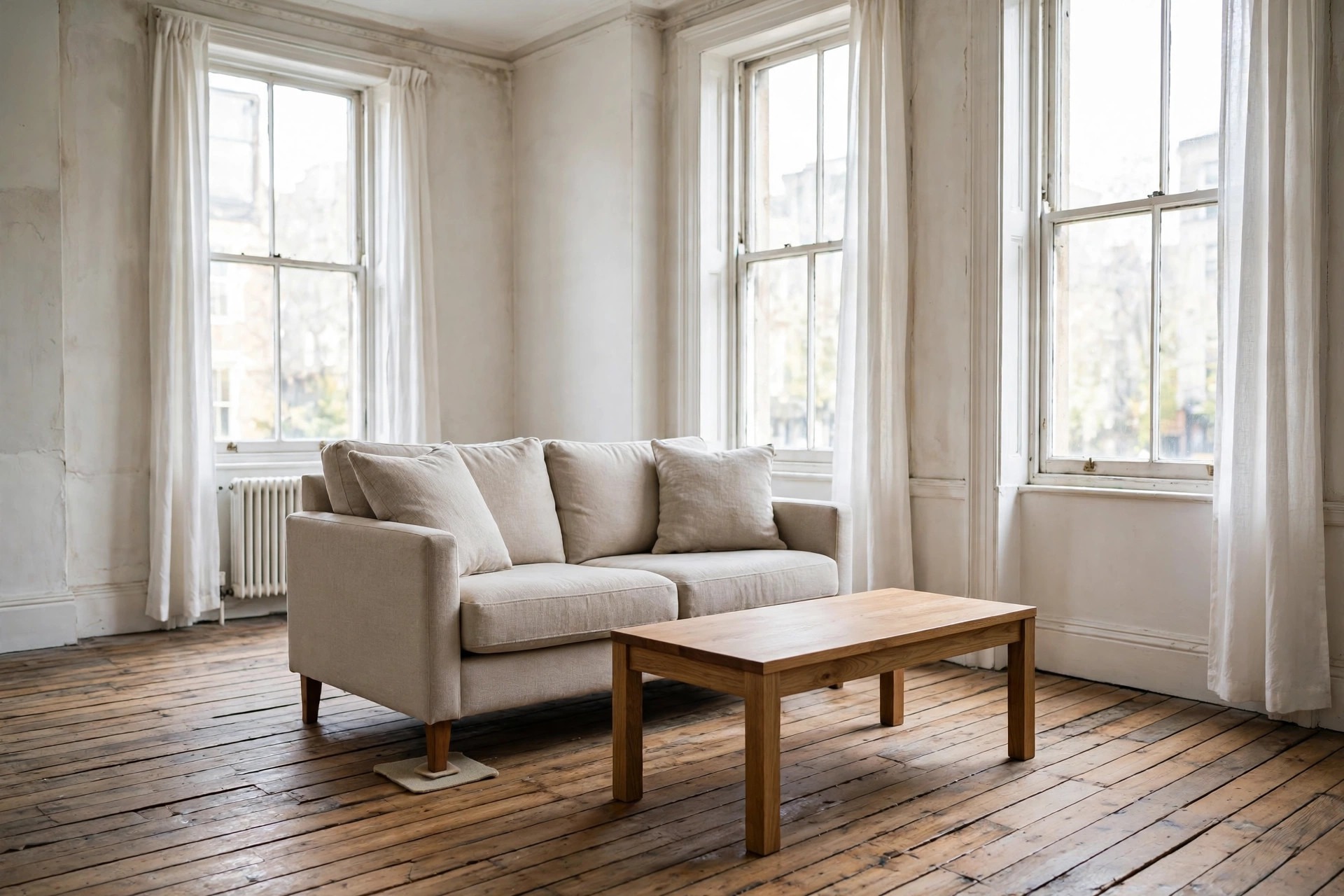
Old wood floors rarely sit flat. A sofa leg drops into a dip, a table rocks, and every wobble slowly drives you mad. The fix is small and cheap: adjustable feet, stick-on felt pads, or a thin shim under the shortest leg.
Test each piece before you decorate around it. Sit on the sofa, lean on the table, and rock the bookcase gently. Mark the leg that floats, then build it up a little at a time until the piece sits still.
Use felt pads on the bottom of every shim so the floor stays safe. Check again after a week, since wood floors shift with damp and heat, and a pad that worked in autumn may need a tweak in winter.
2. Give the radiator room to breathe
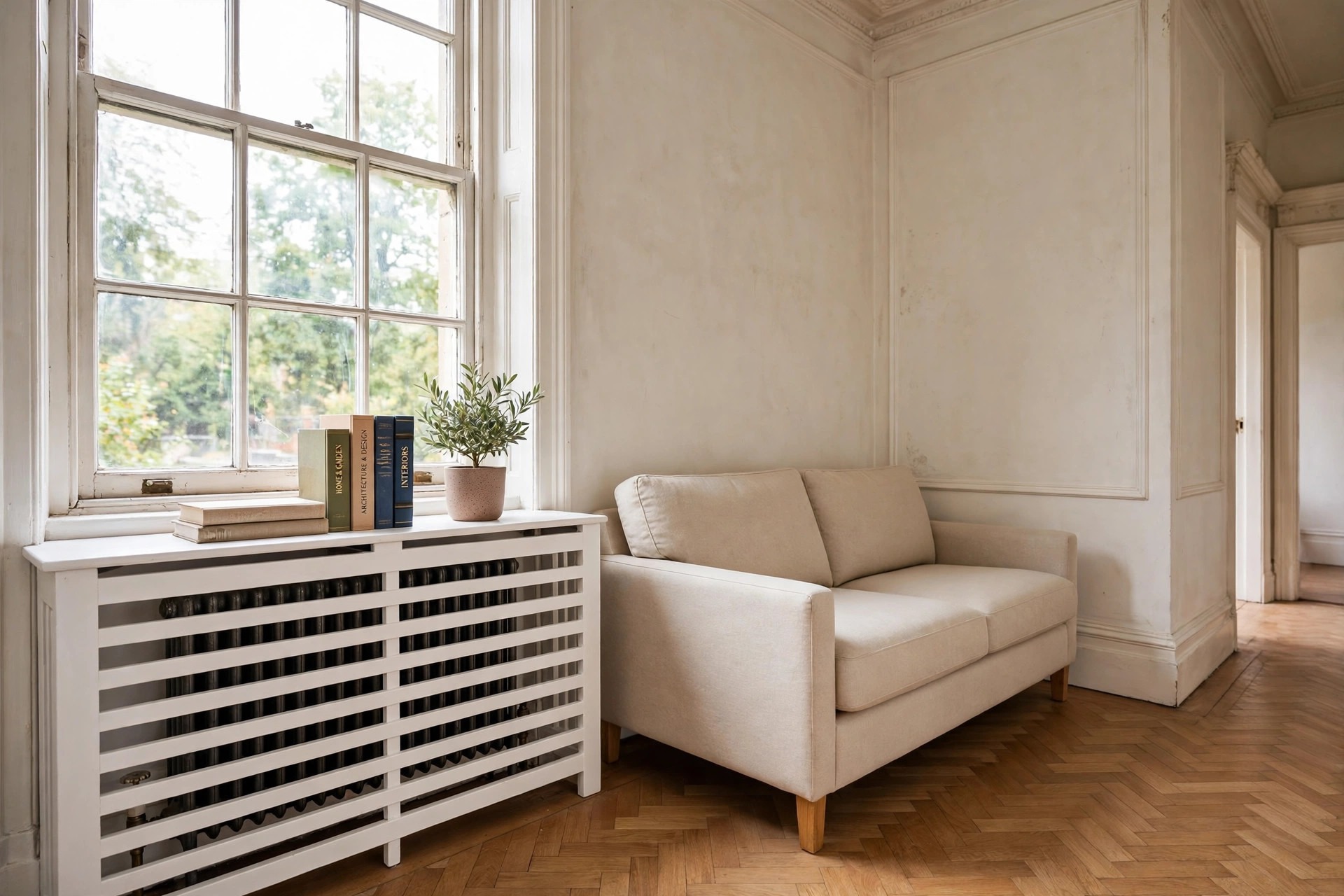
A cast iron radiator is the loudest feature in many old living rooms. Pushing a sofa tight against it blocks heat, dries out fabric, and wastes the warmth you pay for. Pull seating forward and let air move around the unit.
A slatted wood cover can calm the look without choking the heat. The gaps let warm air rise, and the flat top gives you a shelf for books or a plant. Keep cushions, throws, and paper well clear of the hot metal.
Leave the valves and bleed key easy to reach. If the cover lifts off or slides forward, you can still bleed the radiator in autumn without pulling the whole room apart. Heat first, styling second, always.
3. Hang art from the picture rail
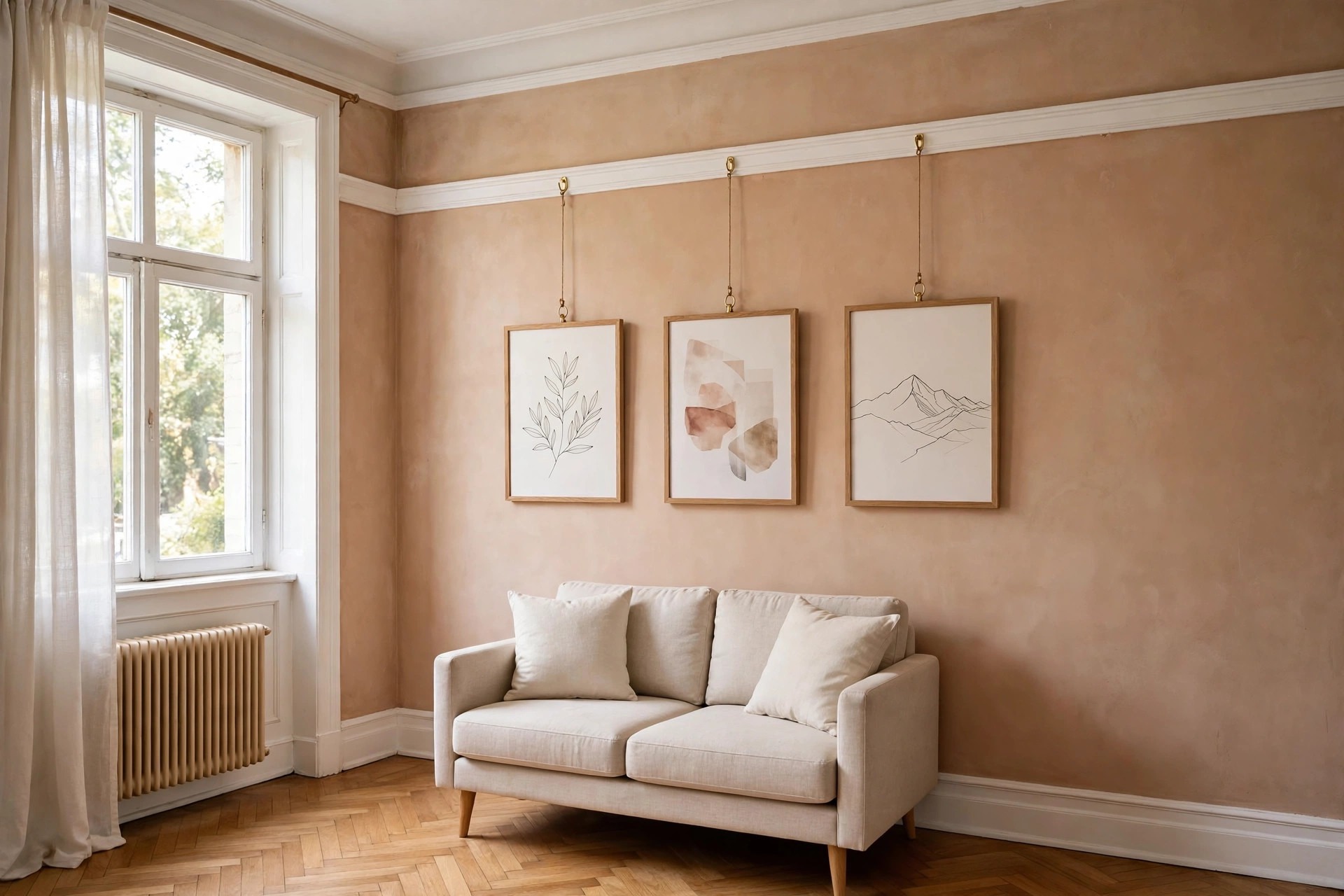
Many old rooms still have a picture rail near the ceiling. It was built for hanging art, so use it. Rail hooks and thin wire or cord hold framed prints with no holes, no plugs, and no plaster dust.
Hang the frame so its center sits near eye level when you sit down. Two hooks spread the weight better than one, and a small felt pad behind the frame stops it from scuffing the wall when doors slam.
Try a row of three small frames first. The rail makes it easy to swap prints with the seasons, and you can take the whole display down in minutes when the lease ends.
4. Fit tension rods to tall old windows
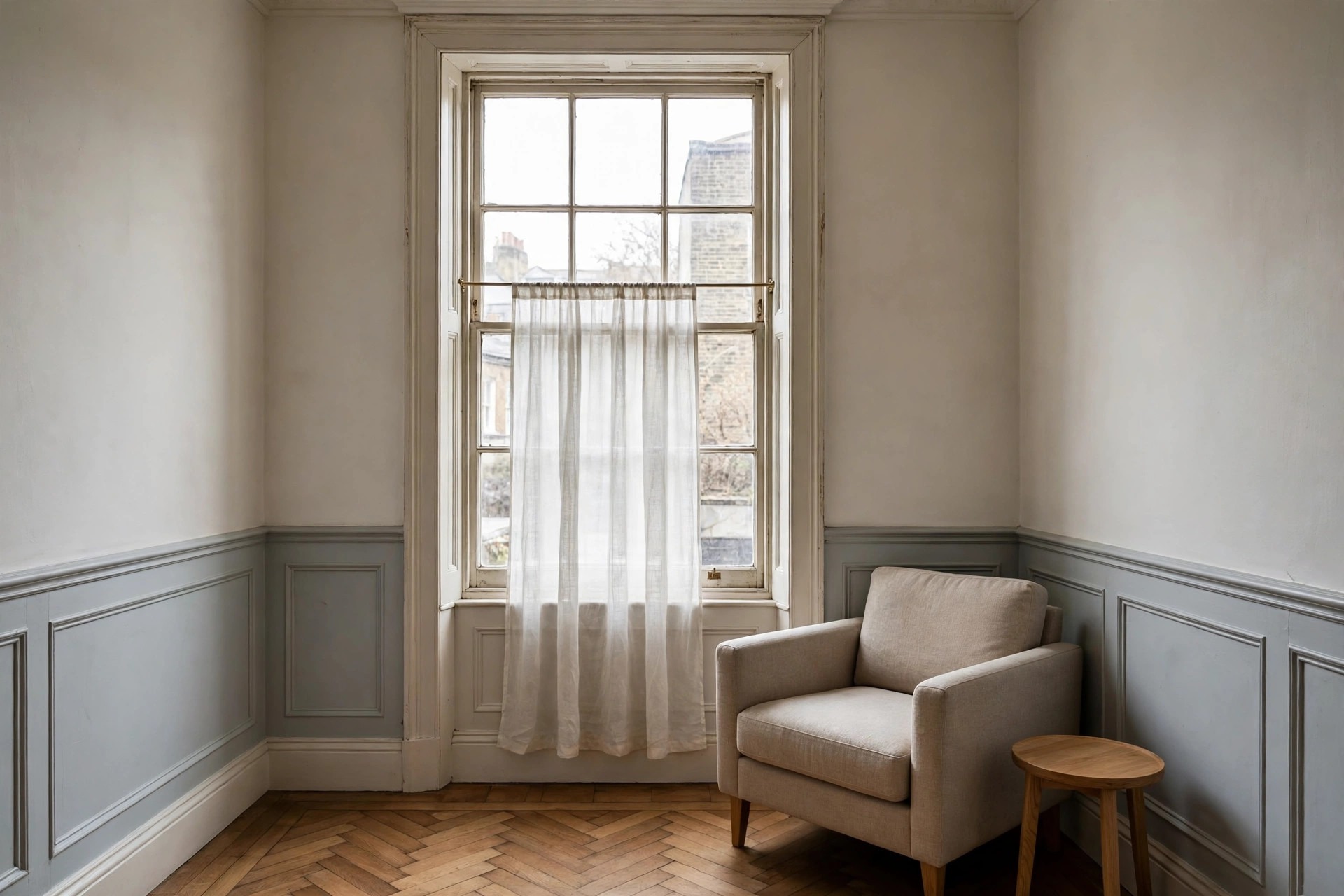
Tall sash windows are a gift, but their frames often forbid screws. A tension rod wedges inside the frame and holds a light curtain with no drilling at all. Measure the inside width twice, since old frames are rarely square.
Pick a rod rated for more weight than your curtain needs. A rod that just barely holds will creep down over weeks, while a snug one stays put. Twist it tight, then tug it hard before you hang anything on it.
Hang the curtain high inside the frame to keep the full window visible. Sheer fabric softens harsh sun without hiding the tall glass, and you can pull the rod out clean when you move.
5. Add pattern with peel and stick wallpaper on one wall
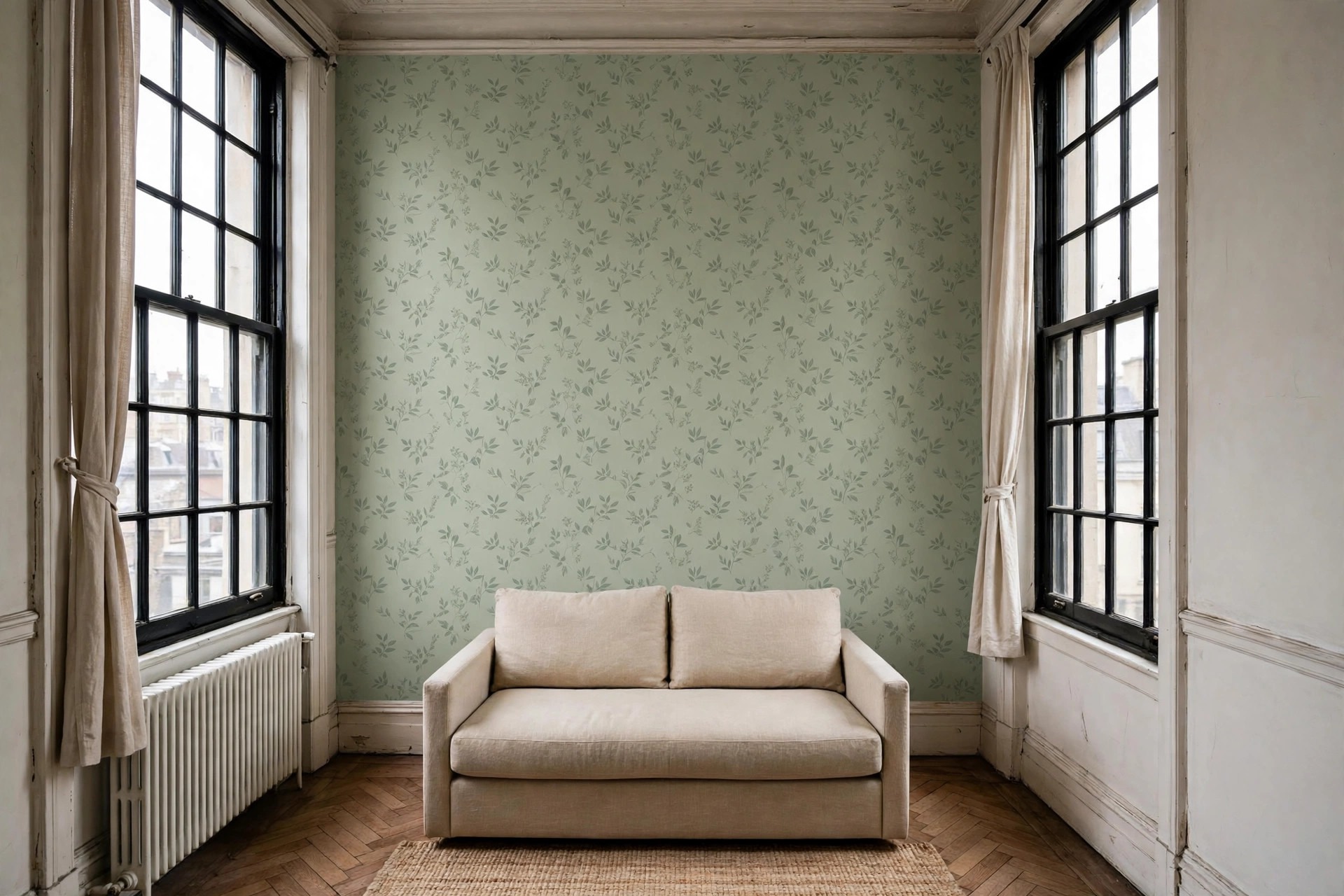
Old plaster walls often carry dents, patches, and uneven paint. One wall of peel and stick wallpaper hides a lot of that history and adds color without a paintbrush. Pick one wall, usually the sofa wall, and leave the rest plain.
Clean the wall first with a dry cloth, since dust stops the paper from gripping. Line the first strip up with a level, not with the skirting board, because old boards slope. Smooth each strip down as you go.
Test a small corner for a week before you commit to the full wall. If it peels clean from your plaster, you have a safe win. If it grips too hard, that wall is better left to fabric and art.
6. Stop rugs sliding on old wood floors
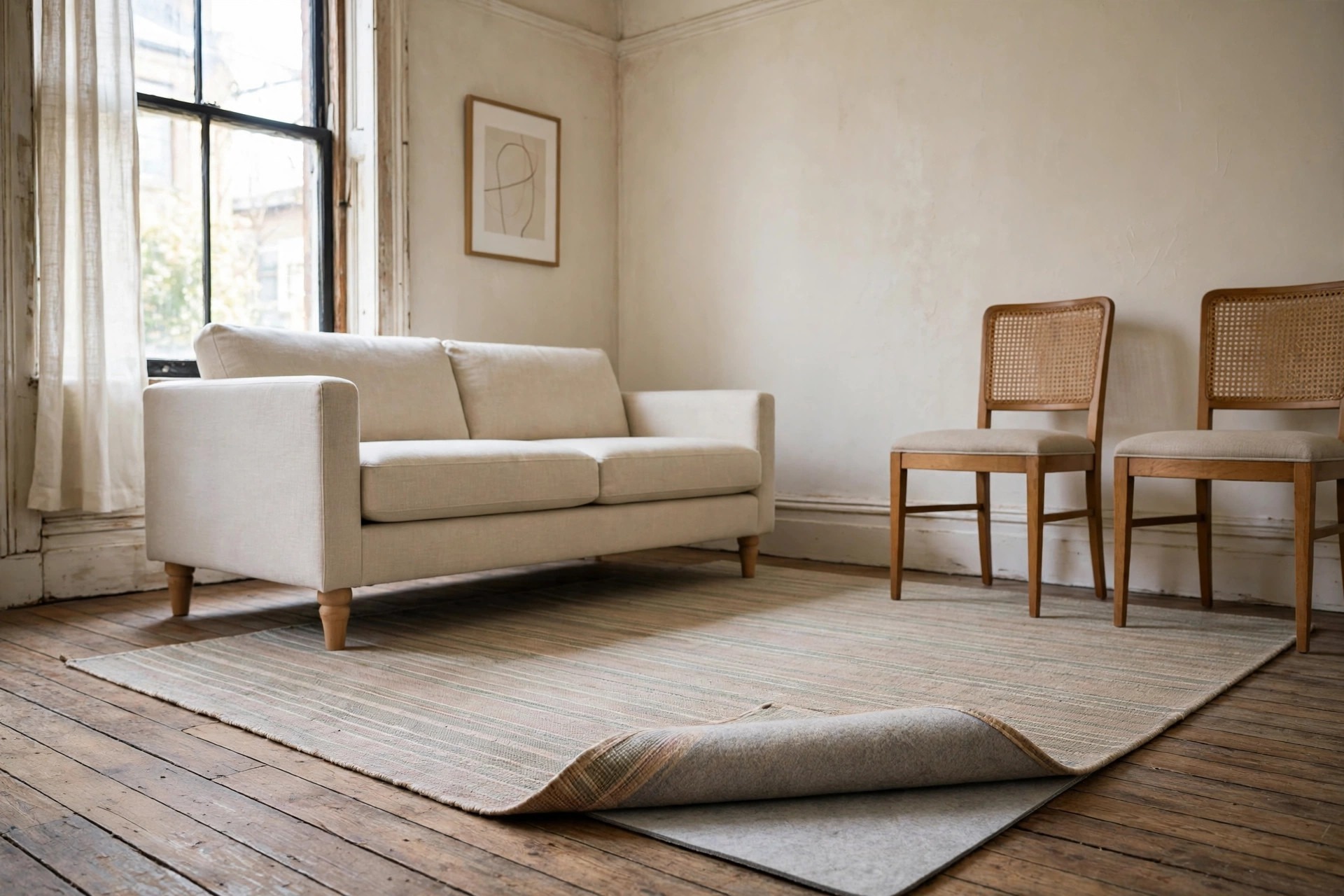
A rug on polished old boards will travel. It bunches under the coffee table, creeps toward the door, and trips you in socks. A thin rug pad underneath grips both the rug and the floor and stops the drift.
Size the pad slightly smaller than the rug so no edge peeks out. Put the front legs of the sofa and chairs on the rug, which anchors it further and ties the seating group together in one clear zone.
Flat weave rugs suit uneven floors better than thick pile, which rocks on dips. If your room still feels scattered, our small living room ideas for apartments show how one large rug can ground a whole small room.
7. Lean shelves against the wall for a built-in look
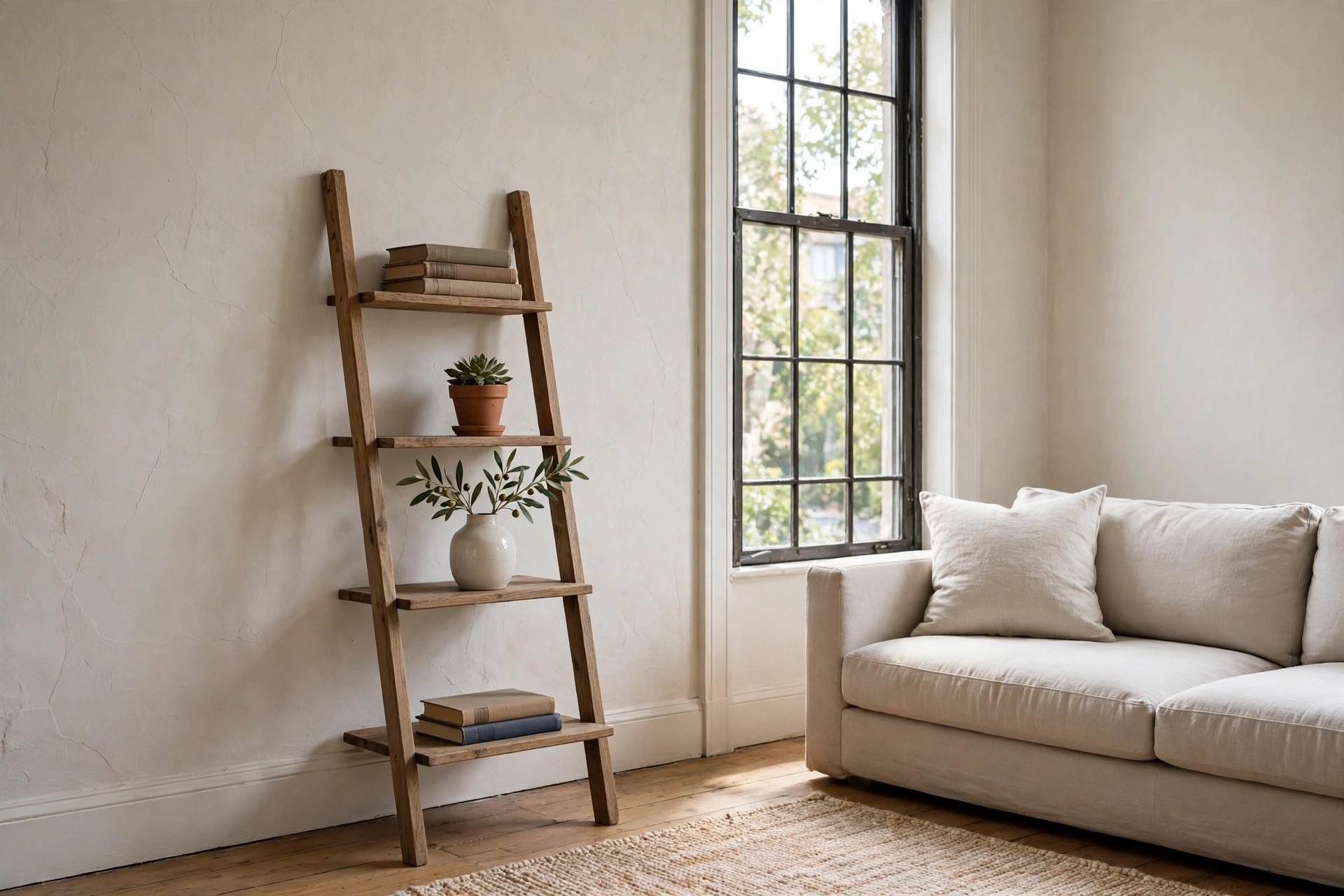
Wall mounted shelves are risky on old plaster, which can crumble around plugs. A leaning ladder shelf or a tall freestanding bookcase gives you the same vertical storage with no holes at all. It simply rests against the wall.
Keep heavy books low and light objects high so the unit stays stable. A small felt pad where the top rail meets the wall stops scuffs, and a bookend keeps the top shelf from looking bare.
Two narrow units flanking a window read like built-ins and use wall space a sofa cannot. When you move, they walk out with you, which beats patching a dozen holes in plaster.
8. Use plug-in sconces where outlets are scarce
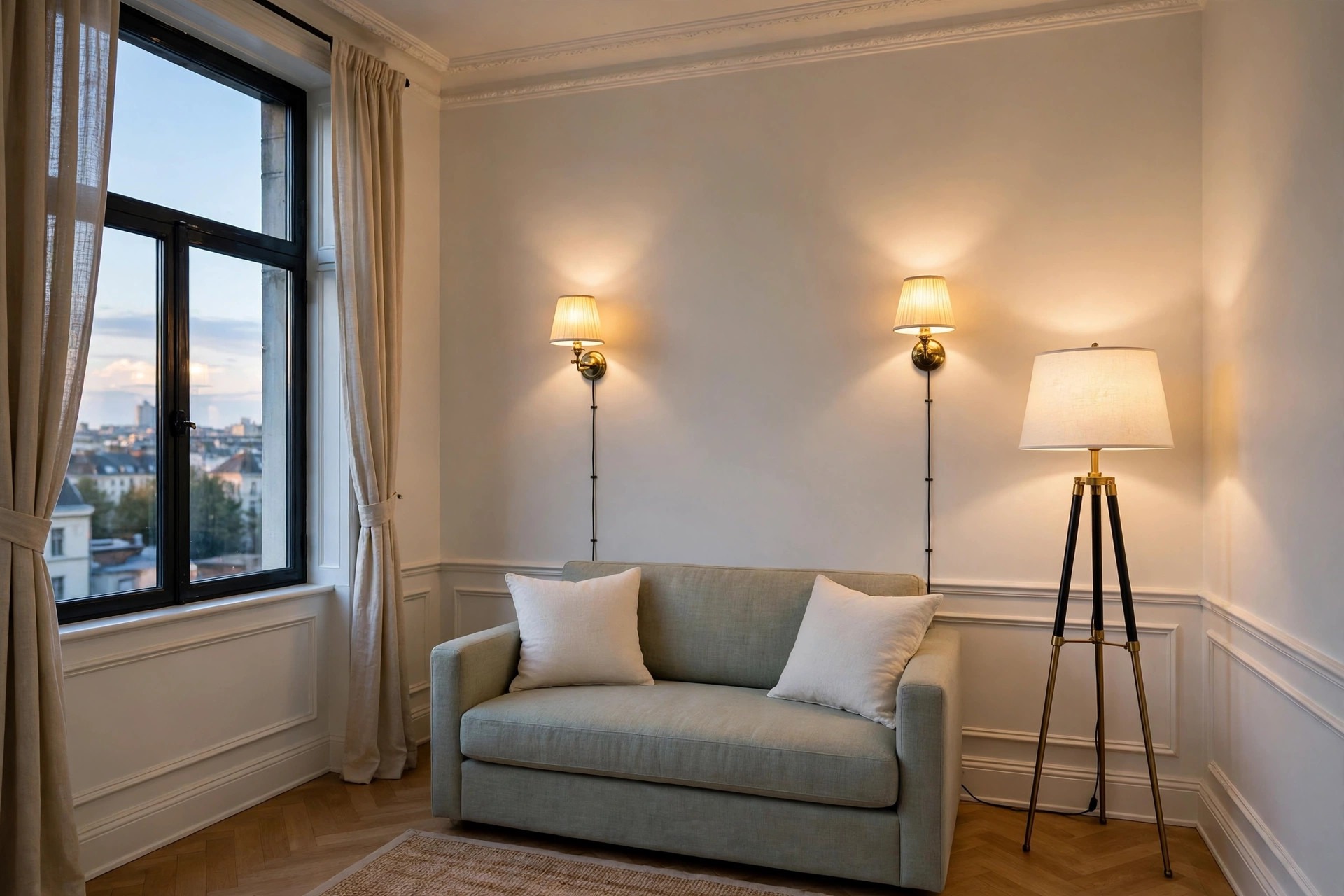
Old rooms often have one outlet per wall, and it sits behind the sofa. Plug-in wall sconces solve the dark corner problem without an electrician. They screw to the wall with small hooks or adhesive mounts and plug into the nearest outlet.
Run the cord straight down and hide it with a slim cord cover painted to match the wall, or tuck it behind furniture. A pair flanking the sofa gives even light for reading and makes the room feel planned.
Choose warm bulbs that match your lamps so the room glows in one tone. Mixed bulb colors make a small room look restless, while one warm tone pulls it together after dark.
9. Tame cords without touching the wiring
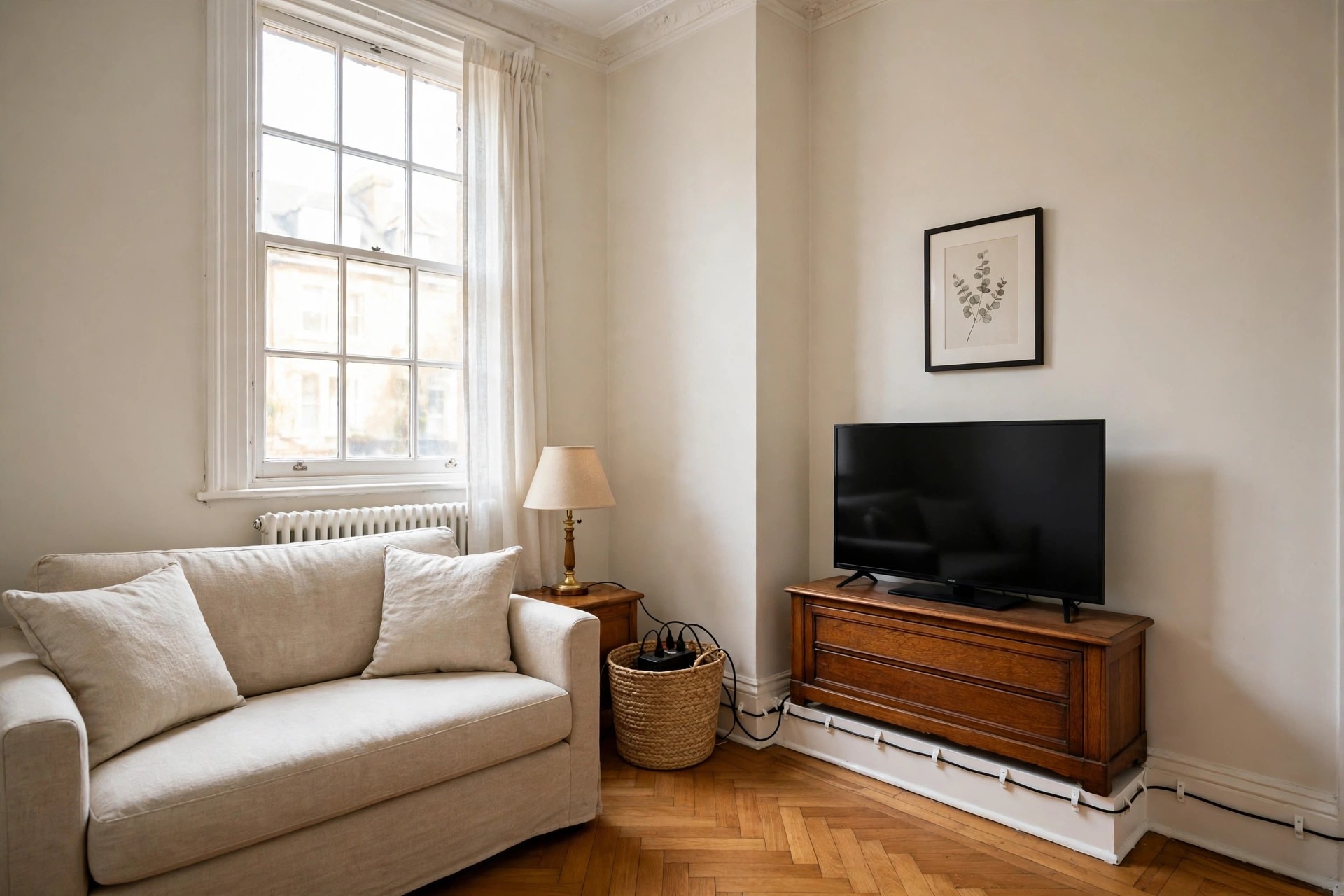
Old wiring means few outlets in odd spots, so cords snake across the floor to lamps, chargers, and the television. That is a trip hazard and it looks messy. Start by moving lamps closer to outlets instead of running long cords.
A slim power strip behind the sofa or inside a basket keeps chargers in one place. Cord clips along the skirting board guide the rest, and a fabric cord cover hides the final stretch across open floor.
Label each plug with a small tag. When a lamp stops working, you will find its plug in seconds instead of crawling behind furniture and unplugging the wrong thing in the dark.
10. Turn deep window sills into usable surfaces
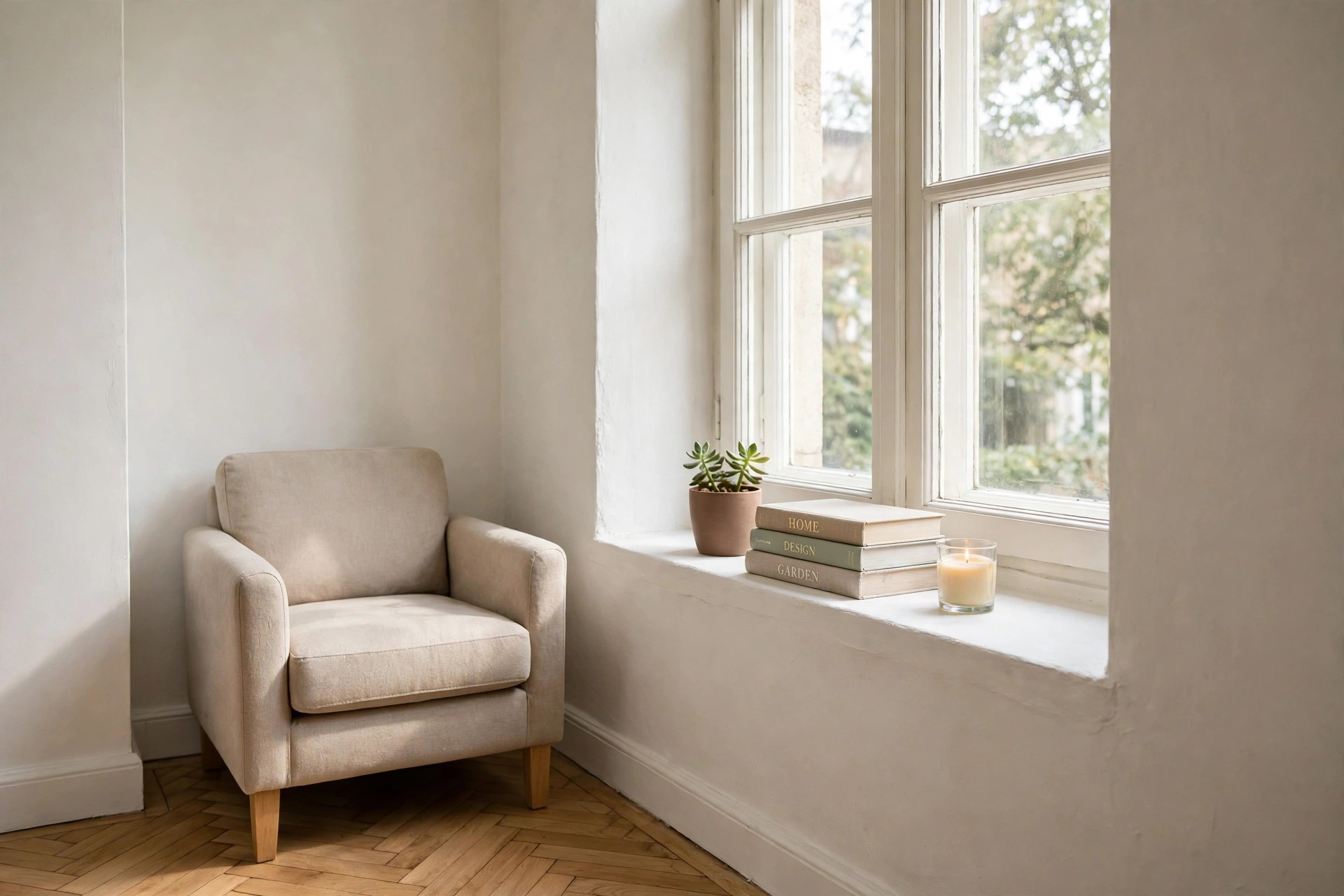
Thick old walls mean deep window sills, sometimes wide enough for a row of books. Treat each sill as a free shelf. A small plant, a stack of books, and a candle fit neatly without crowding the room.
Keep the sill near a radiator clear of anything that blocks heat or melts. Plants that like bright light do well here, but check the sill stays dry, since old windows can weep in rain.
One styled sill beats three cluttered ones. Pick the sunniest window for plants, keep the rest nearly bare, and the room gains storage without a single new piece of furniture.
11. Block drafts with heavy curtains
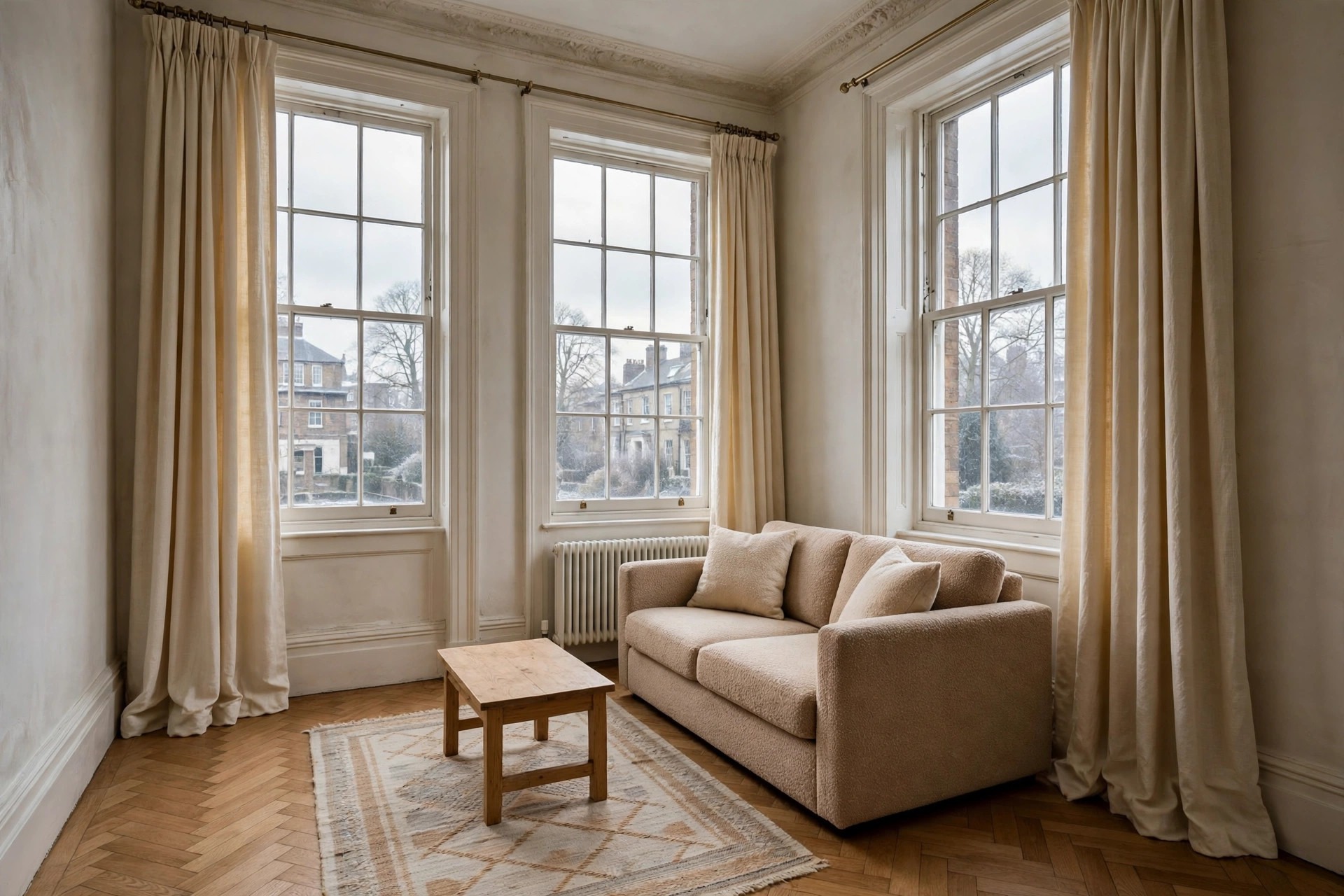
Old sash windows leak air even when shut. Heavy curtains hung close to the wall cut the chill in winter and make the room feel warmer at once. Lined cotton or wool blends hang well and block more draft than thin fabric.
Let the curtain fall past the sill and pool just above the floor. A draft stopper along the bottom of the door to the hall helps too, since cold air often enters from the corridor, not the window.
Open the curtains fully on sunny winter days. Free heat from the sun warms the room, and you close them at dusk to trap it. Small habits like this cost nothing and change how the room feels.
12. Add color with textiles, not paint
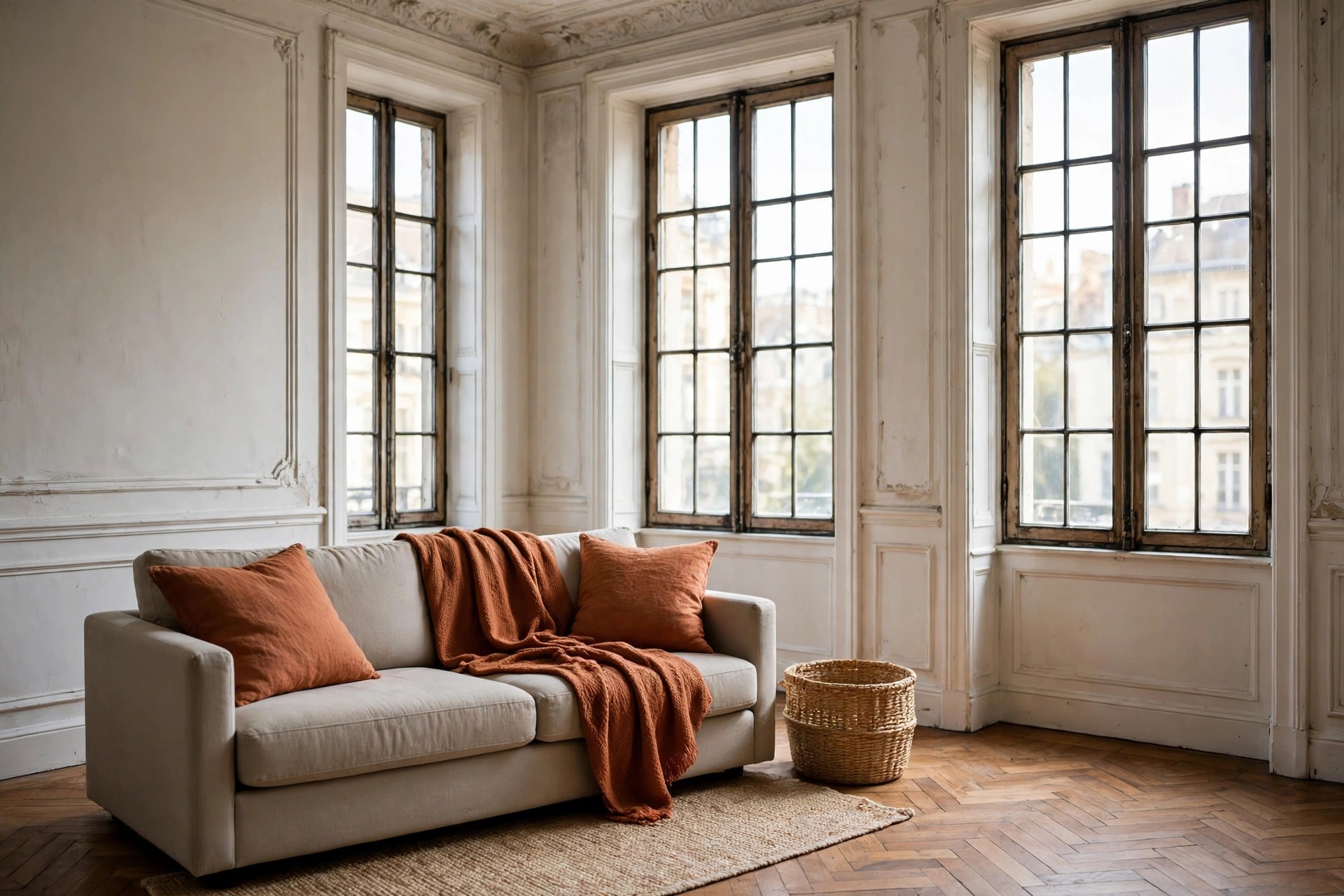
Many leases ban paint, and old plaster often rejects it anyway. Textiles carry the color instead. A warm throw, two cushion covers, and a woven basket can shift a beige room toward rust, ochre, or deep green.
Pick one lead color and repeat it three times around the room. A rust cushion, a rust throw, and a rust print on the picture rail look planned, while five unrelated colors look like a sale bin.
Swap covers with the seasons instead of buying new cushions. Covers fold flat for storage, cost little, and let you test a bold color for a month before you commit to it anywhere else.
13. Fit freestanding storage into odd alcoves
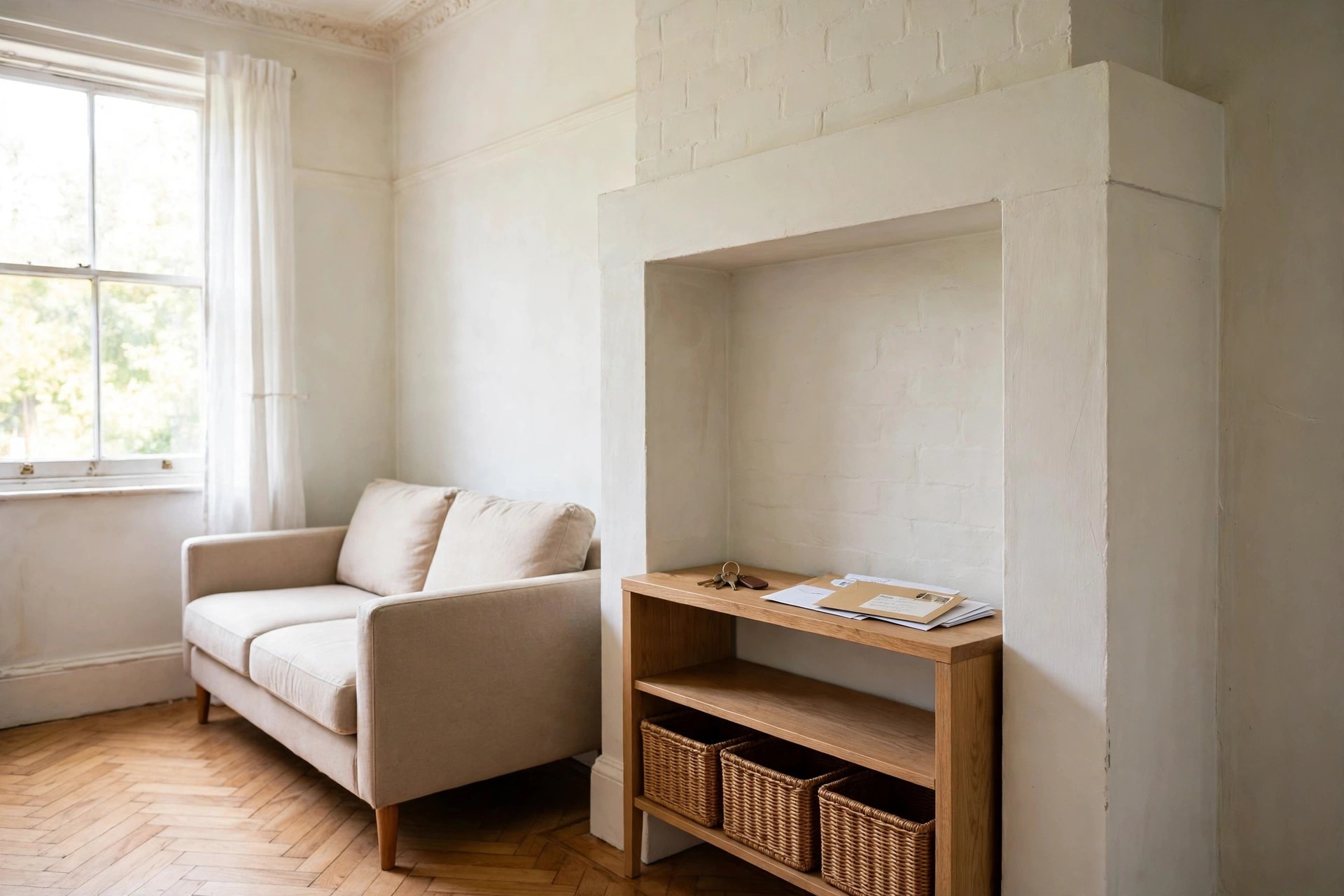
Old rooms have odd corners: a shallow alcove beside the chimney breast, a nook by the door, a gap too narrow for a bookcase. Measure each one, then hunt for a slim cabinet or stack of baskets that fits it exactly.
A narrow console in the alcove holds keys, mail, and chargers near the door. Baskets below hide games, throws, and cables, so the room stays tidy even when the storage itself is small.
Leave a finger width of air on each side. Alcove walls are rarely straight, and a unit wedged tight will jam when damp swells the wood. A small gap also lets you pull it out for cleaning.
14. Bounce light into dark corners with a mirror
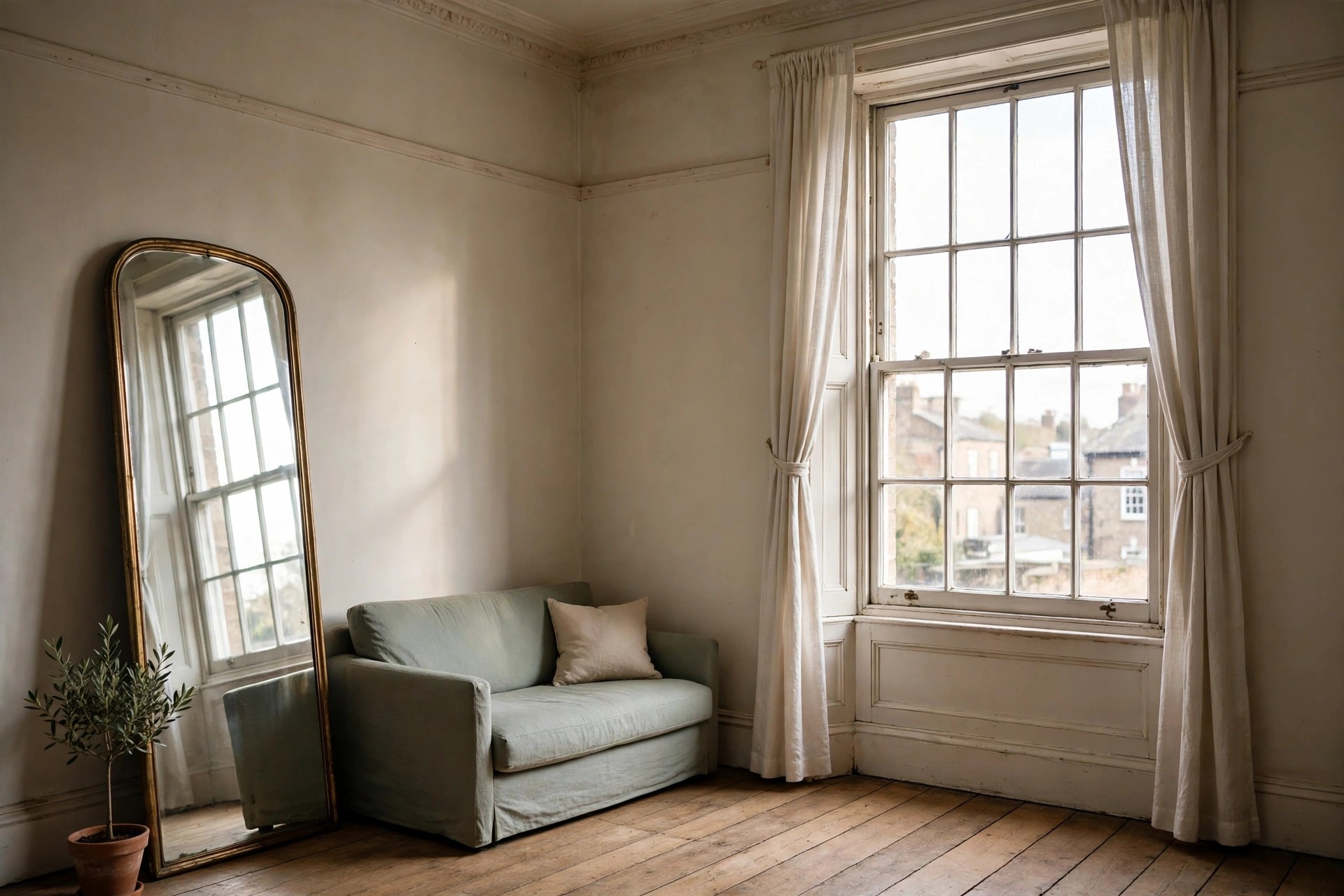
Old rooms often have one bright window and one dark corner that never sees sun. A large mirror on the wall opposite the window throws daylight back into that corner and doubles the sense of space.
Lean a tall mirror against the wall if hanging feels risky. It needs no fixings, it moves with you, and it reflects the window view straight into the seating area. Secure the top with a small adhesive pad for safety.
If your old living room runs long and narrow, our narrow living room layout ideas pair well with this trick. One mirror at the far end can make a tunnel shaped room feel wider.
15. Keep a move-out record from day one
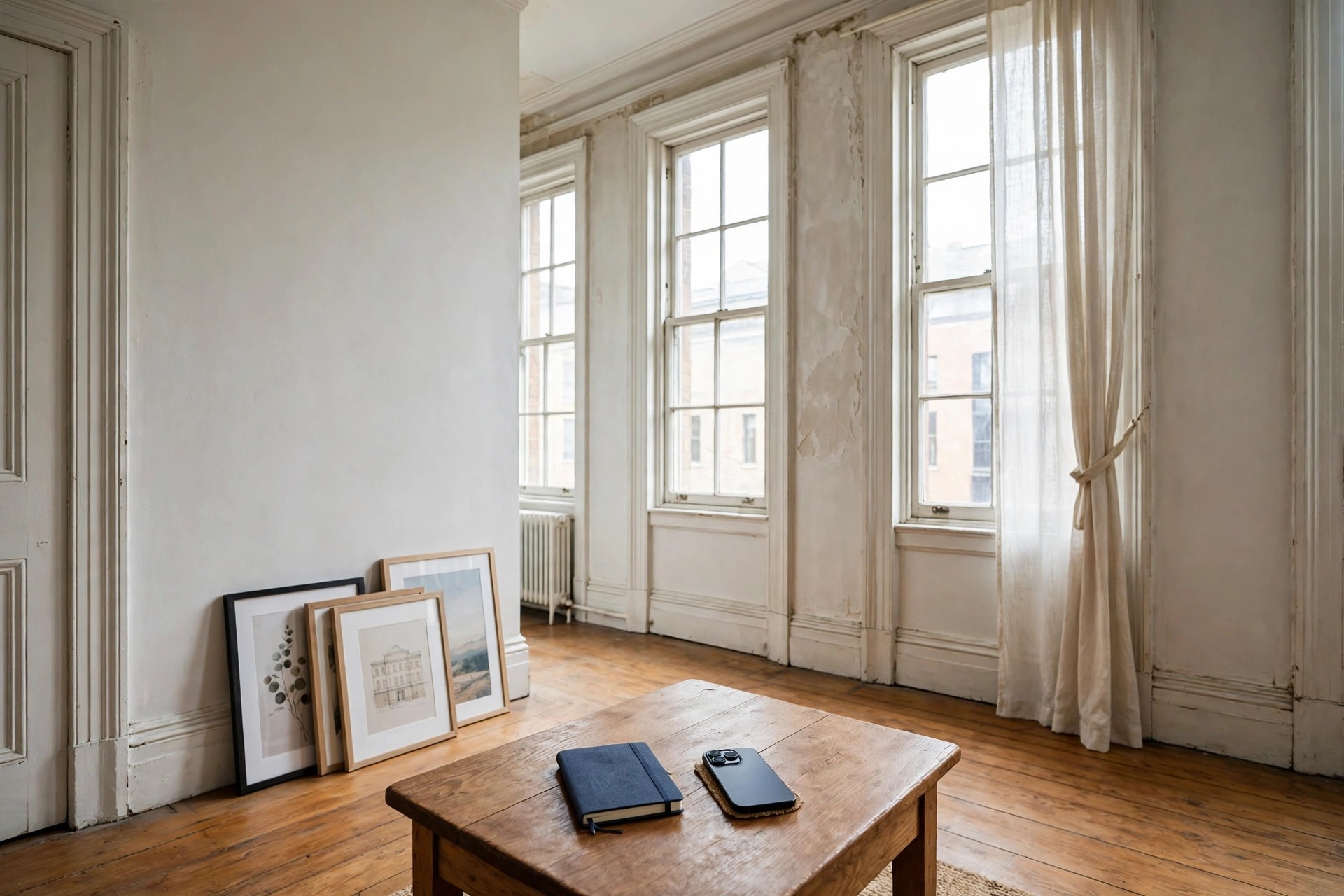
The best renter trick is boring: a record. On moving day, photograph every wall, floor, and window, and note the cracks and marks that were already there. Store the photos somewhere you will find them later.
Keep a short list of every hook, pad, and strip you used, and where each one sits. When you move out, you can remove them in order, check each spot, and wipe away any marks before the final inspection.
This habit protects your deposit and your nerves. Old buildings hide old damage, and a dated photo set proves which marks were yours and which ones were there before you arrived.
Old buildings reward renters who work with the room. Level the floor, respect the radiator, and hang from the rail.
Let textiles carry the color. Small living room ideas for renters in older buildings like these keep the character and skip the damage.
If your place is also a single room, our tiny living room ideas for studio apartments cover one room zoning. If it runs long and narrow, our narrow living room ideas for long townhouse rooms tackle that shape next.
Save this to your small living room board for later, and start with the fix that annoys you most. One level sofa leg or one hung print can make an old room feel like yours by tonight.


