

15 Renter-Friendly Living Room Ideas — No Drilling, No Painting, Deposit Safe
A rental living room comes with rules: no drilling, no painting over the landlord’s magnolia, and every change reversible before the deposit inspection. Those rules limit your tools, but they do not limit the result. The most personal living rooms are built from exactly the things renters are allowed — furniture, fabric, light and art that rests or sticks instead of screwing in.
The trick is to think in layers you own. The walls and floor belong to the landlord; everything you place in front of them belongs to you. A big rug redraws the floor, freestanding shelves redraw the walls, and textiles carry the colour paint would provide. If the neutral backdrop feels bland, our beige living room ideas show how much warmth a pale base can hold once texture is layered in.
Below are fifteen renter friendly living room ideas that need no drill, no paint and no permission slips beyond a careful read of your lease. Each one undoes in minutes at move-out, and together they build a room that feels chosen, not temporary.
1. Hang Art With Adhesive Strips, Done Safely

Adhesive hanging strips are the renter’s picture hook, but they only protect your deposit when you use them properly. Weigh each frame first and choose strips rated well above that weight, using two pairs on larger pieces so the load is shared. Clean the wall, press each strip firmly for thirty seconds, and leave the frame off for an hour while the adhesive bonds. Keep strips for sound paintwork only — flaking or fresh paint can still let go. When you leave, pull the tab slowly straight down, never outwards, and the strip releases without taking paint with it.
2. Lean Tall Pieces Instead of Fixing Them

A leaning bookcase, mirror or oversized print gives you the height of a fixed piece with none of the holes. Set tall furniture at a slight angle, base a hand’s width out from the wall, with felt pads where wood meets paint so nothing scuffs. Mirrors are the classic lean: a full-length mirror leant beside the sofa bounces light around and reads as deliberate styling, not a compromise. Keep leaning pieces out of walkways, and in homes with children or large dogs, add a removable adhesive safety strap at the top for peace of mind.
3. Hang Curtains From a Tension Rod

Curtains soften a rental faster than almost anything, and a tension rod means you never touch a bracket. The rod wedges inside the window frame or between two walls, held by spring pressure and rubber ends that leave no marks. Match the rod to the job: slim rods carry sheers, while wider, sturdier rods manage lined curtains. Let panels fall to the sill or just above the floor, and choose washable fabrics you can launder before you move. Layer a sheer behind a heavier drape and the window looks dressed all day.
4. Try Peel-and-Stick Only Where Your Lease Allows
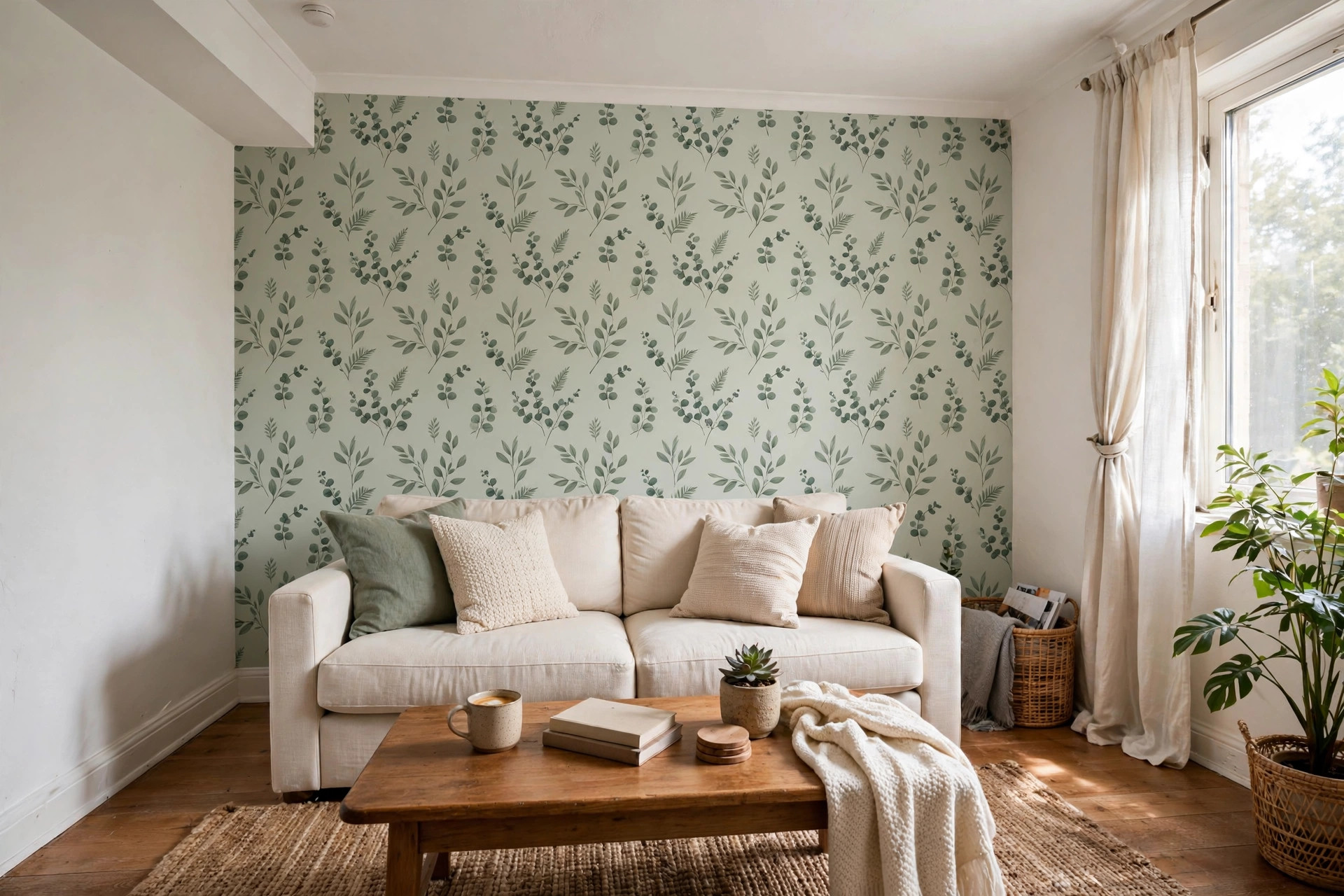
Removable wallpaper and peel-and-stick tiles promise a transformation, but removable is a claim, not a guarantee. Read your lease, then ask your landlord or agent in writing first — some leases ban adhesives outright, however gentle the marketing sounds. If you get the go-ahead, test one sheet in a hidden corner for a few weeks, then peel it back to check the paint beneath. Work on smooth, clean walls, keep spare sheets and backing paper, and lift panels slowly with gentle heat at move-out. One feature wall behind the sofa is usually all a living room needs.
5. Lay a Large Rug Over Rental Carpet or Worn Floors
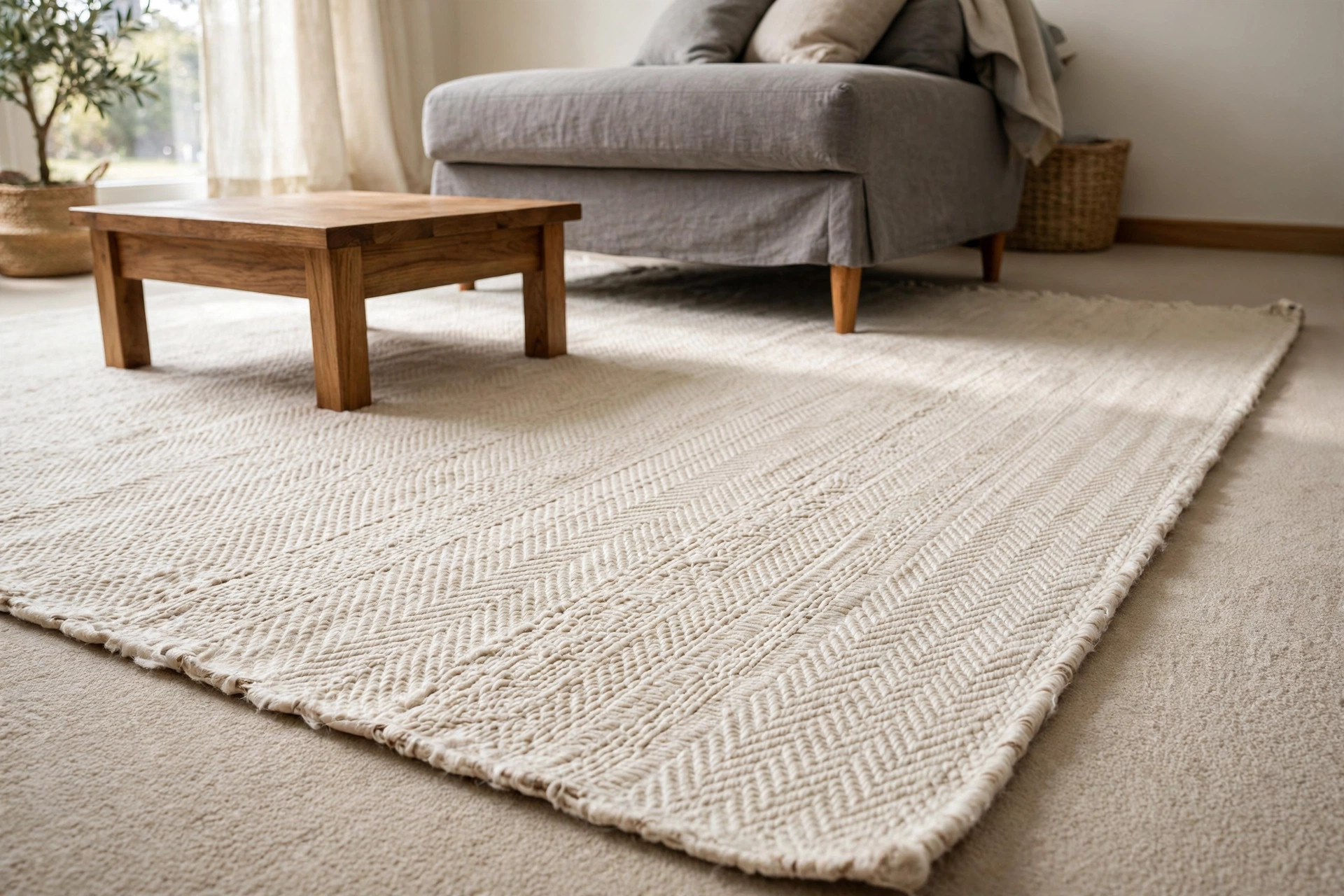
A generous rug is the renter’s flooring renovation: it covers tired carpet, scuffed boards and the landlord’s colour choices in one move, then rolls up and leaves with you. Size up so the front legs of the sofa and chairs sit on it, which anchors the seating instead of leaving it adrift. Over existing carpet, choose a low, flat weave and a waffle-style pad made for carpet-to-carpet grip, so edges stay flat. The same trick rescues compact rentals — these small apartment living room ideas lean on rugs to zone tiny rooms without a single fixed fitting.
6. Plug In Your Lighting Instead of Wiring It

Rental lighting usually means one harsh ceiling pendant and little else, but plug-in fittings rewrite the mood without an electrician. Plug-in wall sconces mount with a single small bracket or even adhesive pads, and their cords can run neatly inside a paintable cord cover down to the socket. Add an arc floor lamp behind the sofa, rechargeable picture lights above your art, and warm bulbs in every fitting you own. Layered, low light hides a multitude of rental sins — scuffed paint and tired flooring fade once the eye follows lamplight instead.
7. Divide Open Space With Freestanding Pieces

Open-plan rentals blur living, dining and sleeping into one echoing box, and freestanding dividers hand the boundaries back. A low open bookcase set perpendicular to the wall marks the living zone while keeping light and air moving through the shelves. Folding screens add height and pattern, angle around a desk corner, and fold flat when guests arrive. Even the sofa itself can divide: pull it off the wall, float it across the room, and set a narrow console or bench behind it. Every divider here simply lifts away at move-out, leaving the floor plan exactly as you found it.
8. Choose Furniture That Moves With You
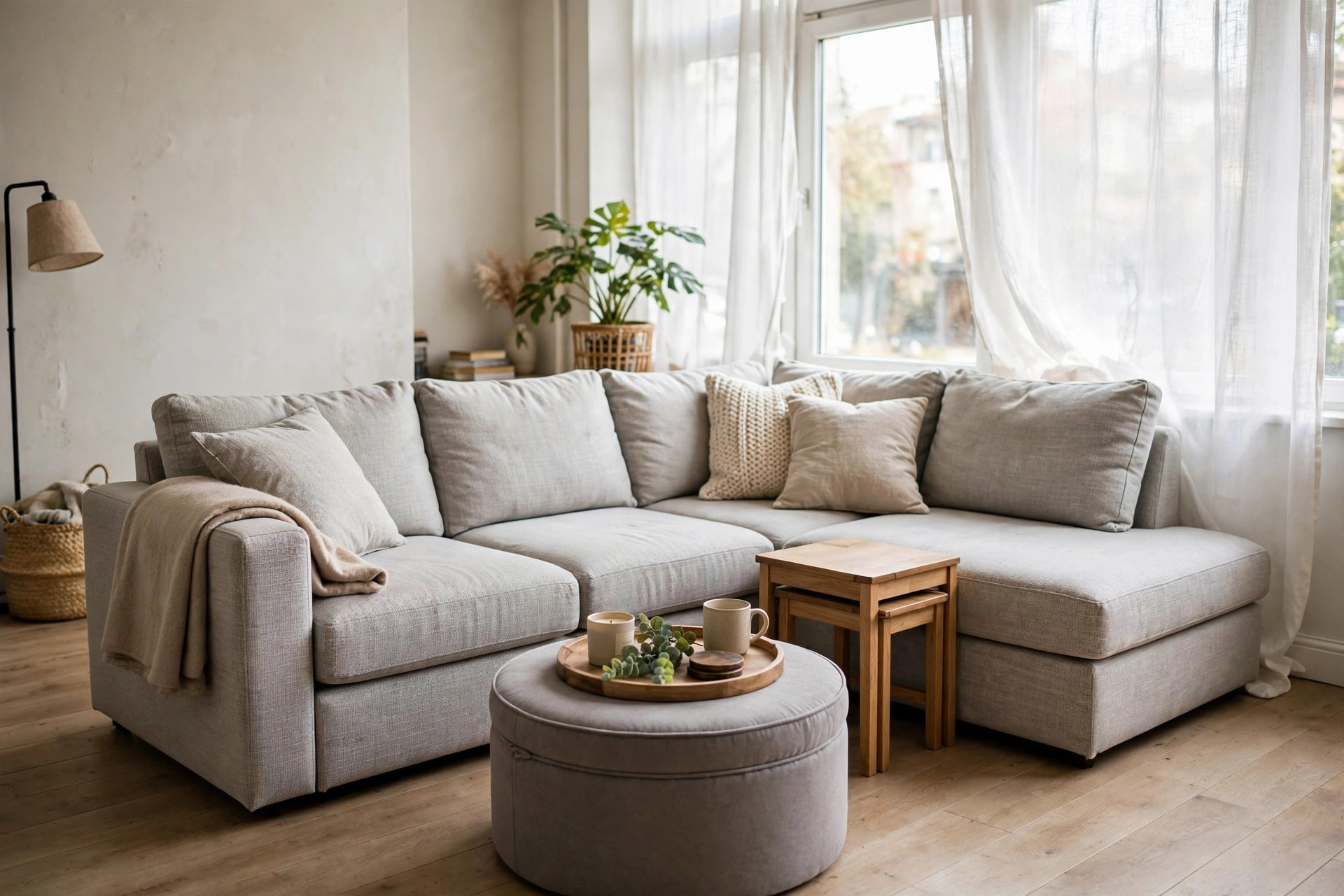
Furnish a rental with pieces that earn their place twice: beautiful now, painless to move later. Modular sofas split into liftable sections, nesting tables spread out for guests, and a storage ottoman works as footrest, coffee table and blanket box in one. Drop-leaf and folding tables handle dining for two or six. Before buying anything bulky, measure the stairwell, lift and tightest doorway turn — and think about layout the way these narrow living room layout ideas do, because furniture that can reconfigure beats furniture that only fits one room, in this home and the next.
9. Carry the Colour in Textiles You Take With You

When the walls must stay white or cream, colour has to travel in fabric. Build your palette from cushions, a throw or two, curtains and the rug, keeping two main colours and one accent so the room feels designed rather than random. Swap cushion covers seasonally and the whole mood shifts for the price of a laundry load. Choose natural, textured fabrics — linen, washed cotton, a knitted throw — because texture adds the depth that flat rental walls lack. Everything folds into a box when you move, and your colour scheme simply unpacks into the next living room.
10. Disguise a Dated Sofa With a Washable Slipcover

The landlord’s sofa — or a tired second-hand one — can anchor your style instead of fighting it, once it wears a well-fitted slipcover. Stretch covers with separate cushion pieces follow the shape best; measure length, depth and arm style before ordering. Tuck excess fabric deep into the seams, use the foam grips if included, and steam the cover once fitted to settle it. Pick a washable fabric in a colour you would have chosen yourself, then style over it with your cushions and throw. At move-out the cover washes, folds and travels, and the original upholstery emerges untouched.
11. Hide Cords, Radiators and the Usual Eyesores
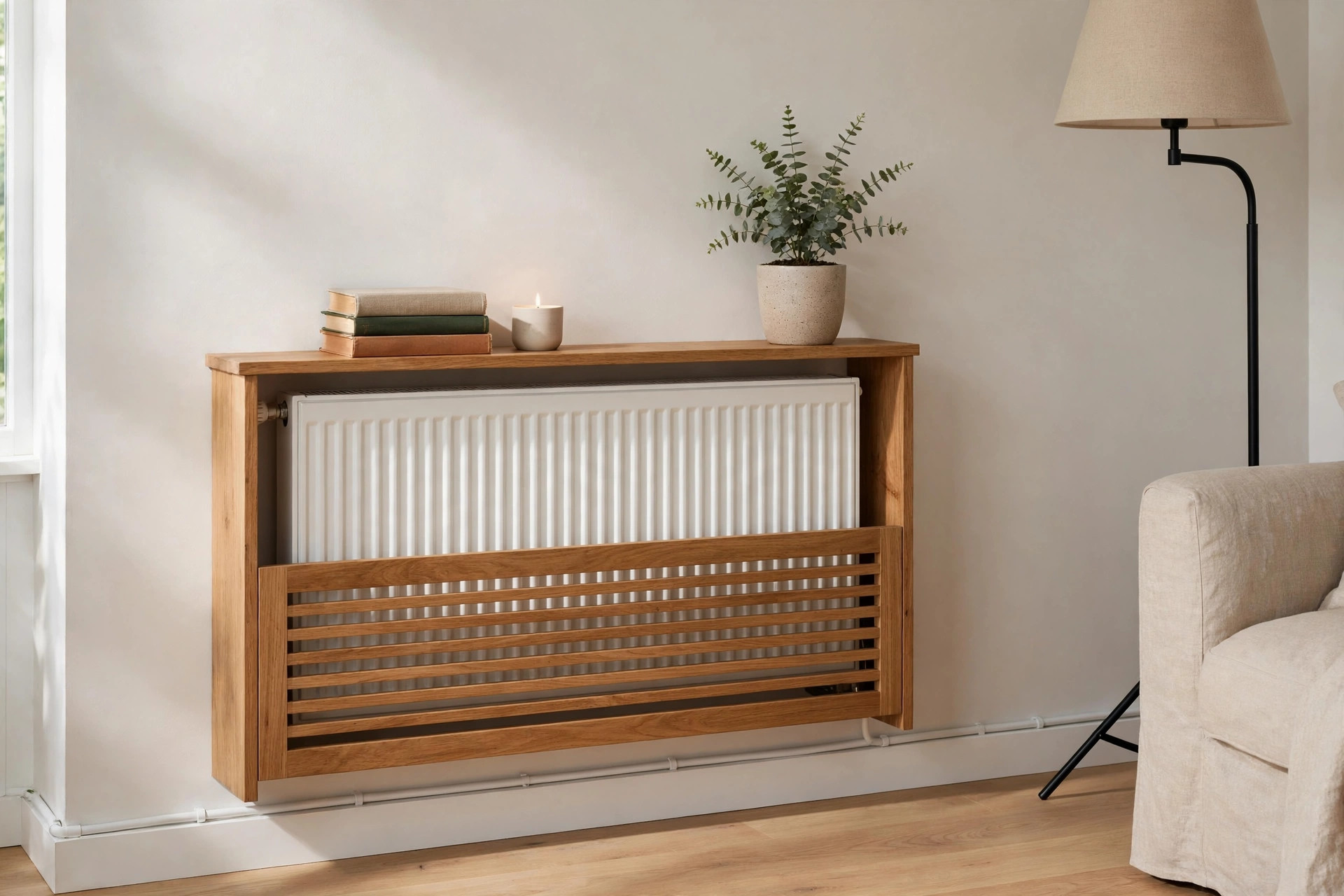
Rentals come with visual clutter you cannot remove — but you can usher it out of sight. Run lamp and TV cords inside paintable channels along the skirting board, and bundle the rest in a cable box behind the media unit. A freestanding radiator shelf or cover adds a styling surface while softening the radiator’s glare, as long as heat can still circulate freely. Position a tall plant, a screen or the bookcase to mask meter boxes and router corners. None of it is fixed, all of it lifts away, and the room finally looks intentional.
12. Style Freestanding Shelves for Storage and Display

A bookcase is the renter’s built-in: storage, display and wall interest in one unfixed piece. Mix the practical with the pretty — books stacked both ways, baskets hiding chargers and remotes, a plant trailing from the top shelf, and small art leant at the back of a shelf instead of hung. Leave breathing room on every shelf; a third left empty keeps it styled rather than stored. Ladder shelves and cube units suit small rooms, and two matching bookcases flanking the sofa give the symmetry of fitted joinery with none of the permanence.
13. Bring the Room to Life With Plants on Stands

Plants forgive a rental almost everything: they soften white boxes, fill dead corners and add the one colour no landlord can object to. Raise them on stands, stools and plant ladders so the display has height without a single ceiling hook, and use a floor-to-ceiling tension pole stand near the window for trailing plants that would normally hang. Group plants in odd numbers at different heights, in pots that match your textile palette, and favour forgiving varieties in poor light. A woven basket hides a plain nursery pot and moves to the sink for watering in seconds.
14. Store the Landlord’s Originals Safely

Every swap you make creates an original that must survive until move-out: the landlord’s curtains, lampshades, blind or even an unloved armchair. Photograph each item before you touch it, note any existing marks in writing, and store pieces clean, dry and labelled — lampshades nested with tissue, curtains folded in a breathable bag, small fittings bagged and taped to the item they belong to. Keep them somewhere safe, not a damp garage corner. This quiet habit, plus dated photos of walls, floors and corners on day one, is what turns a deposit dispute into a short conversation.
15. Plan the Move-Out Reset From the Very Start

The deposit-safe room is designed backwards: everything in it has a known exit. Keep a small reset kit from day one — spare adhesive strips, the backing paper from any peel-and-stick, cleaning supplies, and a note of where originals are stored. Photograph each wall as you finish decorating it, so reinstating blinds, shades and curtains is a matching exercise, not a memory test. Allow a full unhurried day at the end to peel, lift, roll and clean, not a panicked evening. Done this way, the room returns to blank-canvas condition and the deposit follows you home.
How to Make a Rental Living Room Yours Without Risking the Deposit, Step by Step
Start with the paperwork, not the shopping. Read your lease for clauses on adhesives, picture hooks and floor coverings, and email your landlord or agent about anything unclear — a written yes protects you far better than an assumption. For a worked example of the deposit-first mindset, see how these brown living room ideas for renters build a whole scheme around reversible changes. Then photograph every wall, corner, floor and window, plus any existing marks, and save the dated set somewhere safe.
Decorate in reversible layers, biggest first. Lay the rug and settle the layout, then bring in freestanding storage and dividers, then hang art with strips and lean what strips cannot hold. Add textiles for colour, plug in your lighting, and finish with plants and small styling. If you are refreshing on a budget, these living room makeovers under $500-style changes — paint-free, textile-led and layout-led — prove how far layered, removable pieces can go. Store originals as they come off, keep your reset kit stocked, and the room is yours for the tenancy and neutral again in a day.
Common Mistakes to Avoid
1. Guessing what the lease allows. Assuming that ‘removable’ on a packet means ‘permitted’ in your contract is the fastest route to a deduction. Leases differ, agents differ, and a friendly verbal chat is worth little at inspection time. Read the clauses, ask in writing, keep the reply — ten minutes that protects everything else you do.
2. Hanging heavy pieces on strips rated for less. A mirror that tears off the wall at 3 a.m. takes paint, plaster and your deposit with it. Match strip ratings to the true weight, use extra pairs on anything large, and lean the heaviest pieces instead. If a frame matters enough to hang, it matters enough to weigh.
3. Making ‘small’ permanent changes anyway. One drilled hole for the shelf, one wall painted in a near-enough shade, the landlord’s blind quietly thrown away — inspections are built to catch exactly these. Every change here reverses cleanly, so there is no need to gamble. If a change cannot be undone in an afternoon, it does not belong in a rental.
Frequently Asked Questions
What is the safest way to hang pictures in a rental?
Match the method to the weight: adhesive strips rated well above the frame’s weight for light and medium pieces, and leaning for anything large or valuable. Existing picture rails are better still — hooks and wire leave walls completely untouched.
Can I use peel-and-stick wallpaper or tiles in a rental?
Only with your landlord’s written agreement, and only after a patch test in a hidden spot. Products vary in how cleanly they release, and some lift paint despite the removable label. One feature wall, quality product, spare sheets kept — that is the low-risk version.
How do I add colour when I cannot paint?
Build it from everything removable: rug, curtains, cushions, throws, art and even plant pots. Two main colours plus one accent, repeated around the room, reads as intentional as any paint scheme — and it all moves with you.
How do I make sure I get my full deposit back?
Document the room with dated photos on day one, store originals safely, get permissions in writing, and reverse each change carefully at move-out — slow strip removal, gentle lifting, a proper clean. Landlords deduct for surprises; leave none.
Final Thoughts
Renting asks you to decorate with one hand tied, but the knot is looser than it looks. Rugs redraw floors, freestanding pieces redraw walls, textiles carry the colour, and strips and tension do the work of screws. Build in layers you own, document and store as you go, and the room stops feeling borrowed — while your deposit stays where it belongs: on its way back to you.


