

15 Living Room Makeovers Under $500 — Paint, Textiles & Layout Only
The most honest thing anyone can tell you about living room makeovers under $500 is this: the money is not the hard part. Rooms rarely look tired because the sofa is old — they look tired because the walls have faded into the background, the curtains hang too low, and everything ended up there by accident rather than by choice.
So here is the deal this makeover makes with you. One weekend, no builders, no trades, no new sofa — just paint, textiles and layout, spent in the right order. Paint changes what the light touches, textiles change everything at sitting height, and layout costs nothing at all. It is the same thinking behind our modern brown living room ideas: warm, neutral bones first, then personality on top.
Below are fifteen changes that earn their place in a $500 budget. Start with the free ones, spend where the whole room feels it, and keep a little back for finishing touches.
1. Paint One Wall a Colour With Courage
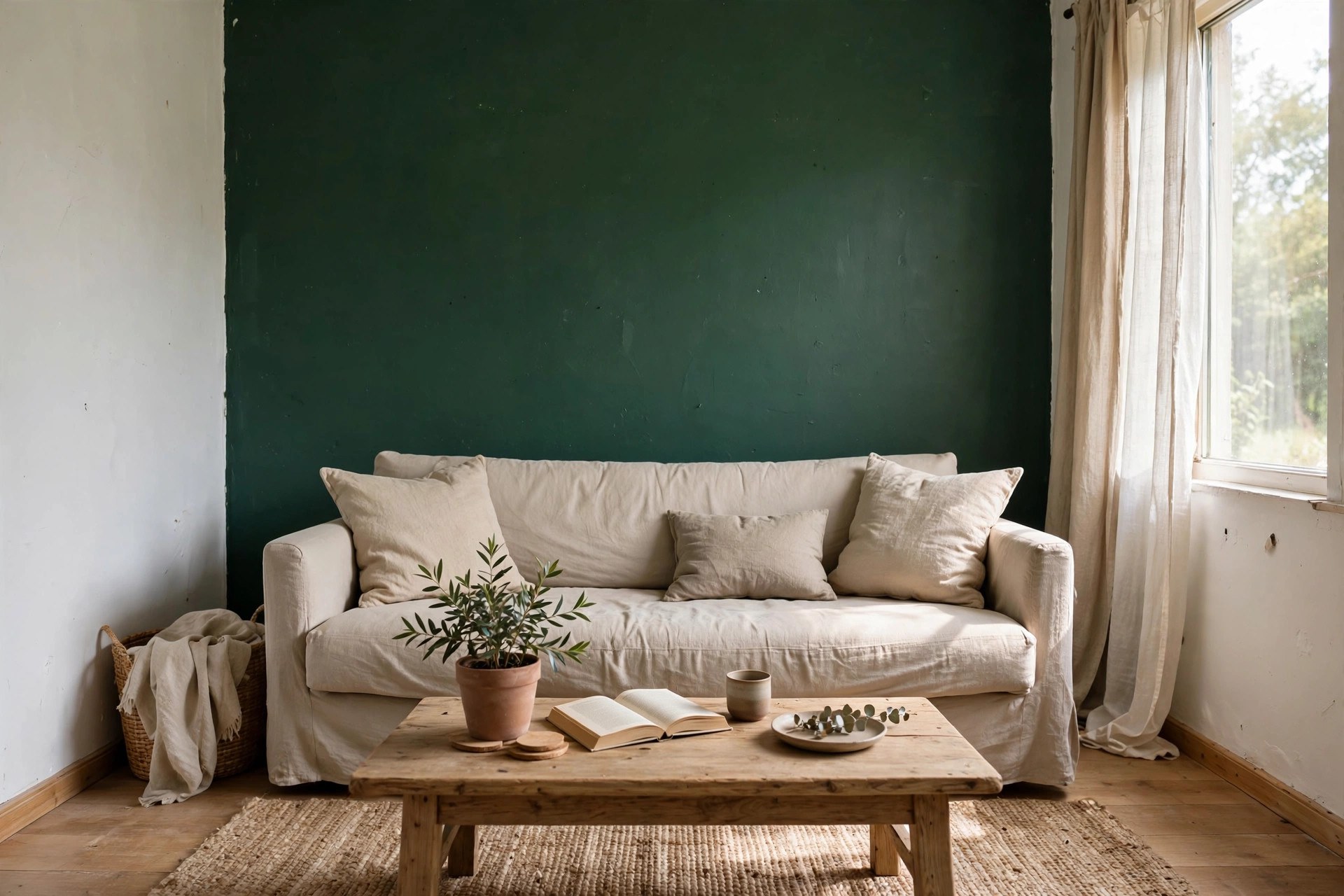
A single painted wall is the hardest-working money in any budget makeover. Choose the wall your sofa already sits against, so the colour becomes the backdrop for the whole seating area, and pick a shade with depth — deep green, warm terracotta, inky blue or rich clay. One wall uses little paint, which stretches your budget to a better-quality tin. Paint it corner to corner so it reads as a decision, not an accident, and live with a large test patch through a full day of light before committing. Everything else can stay exactly as it is; the colour does the talking.
2. Paint the Ceiling — the Fifth Wall
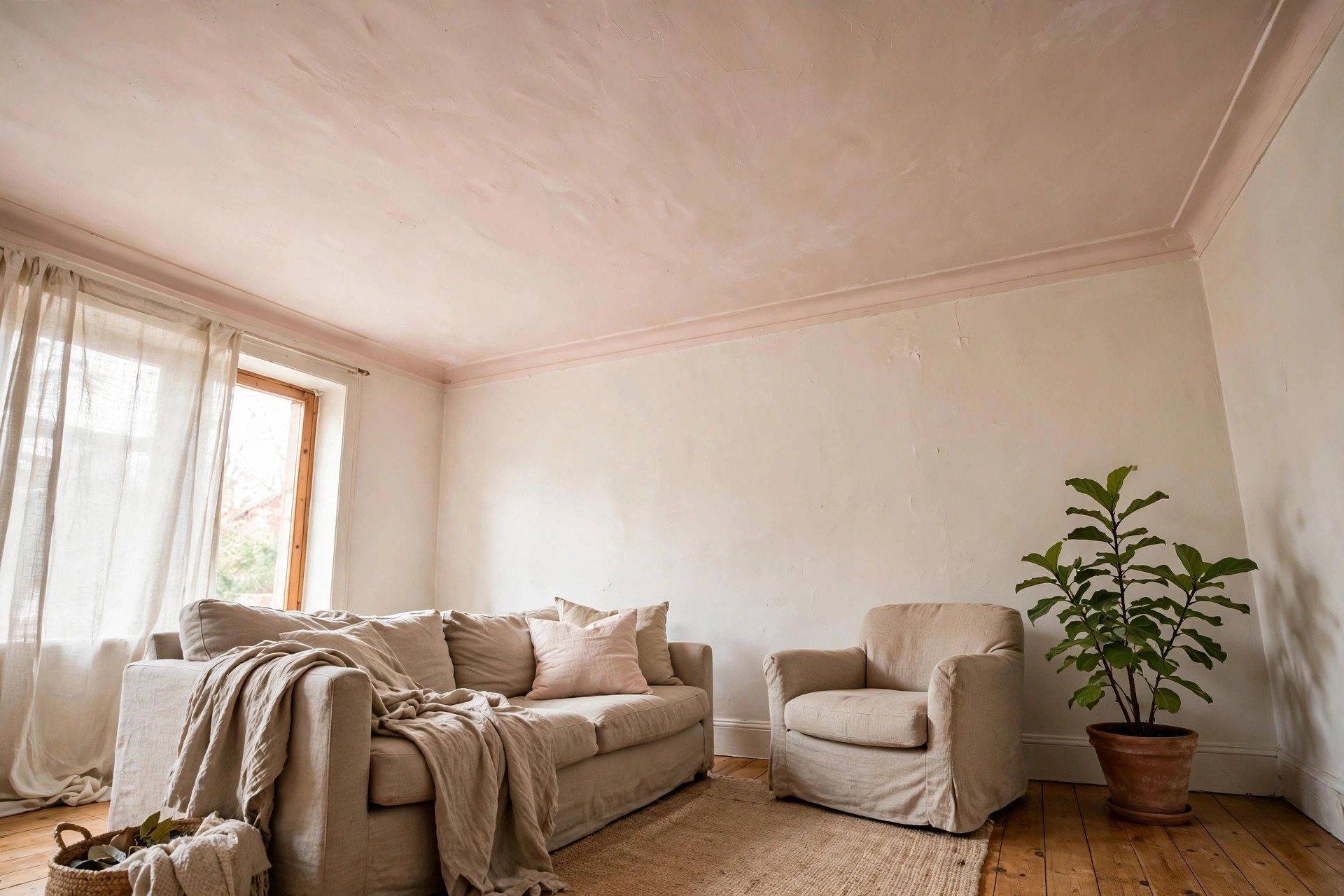
The ceiling is the largest untouched surface in most living rooms, and painting it is the change guests feel without being able to name. Brilliant white can look stark and slightly blue against warm walls, so consider a soft warm white or the palest tint of your wall colour. In a low room, keep the ceiling lighter than the walls so it lifts rather than presses down; in a tall, echoey room, bringing the wall colour up and over creates a deliberate cocoon. An extension pole saves your neck, and careful edging matters more than speed.
3. Rearrange the Layout Before You Spend a Penny

Before any money moves, move the furniture. Pull the sofa away from the wall, angle the armchairs toward each other instead of the television, and group seating around the rug so the room is arranged for conversation first. Try the sofa on a different wall entirely — the layout you inherited from moving day is rarely the best one. Our narrow living room layout ideas prove how much difference arrangement alone can make. Photograph each version, live with the best for a day, then decide what the room actually needs — half the list usually proves unnecessary.
4. Slipcover the Sofa You Already Own

A tired sofa is usually a fabric problem, not a frame problem. If the cushions hold their shape and the frame does not creak, a washable slipcover in a natural linen-look fabric gives you what feels like a new sofa for a fraction of replacement cost. Measure carefully — seat depth and arm width are where covers fail — and tuck the excess fabric deep into the creases; a rolled magazine in the gaps keeps it in place. Choose a calm neutral so cushions and throws can carry the colour. A throw over the most worn arm finishes the disguise.
5. Hang Curtains Higher and Wider

Nothing dates a room faster than curtains hung just above the window frame. Fix the rod close to the ceiling instead, and extend it well beyond the window on both sides, so the panels hang mostly against the wall and leave every bit of glass uncovered. The window looks taller, the room grander, and far more daylight gets in. Simple linen-look panels read far more expensive than they are. Let them just kiss the floor or pool slightly — the hovering length above the skirting board is what makes curtains look apologetic.
6. Layer a Rug Over the One You Have
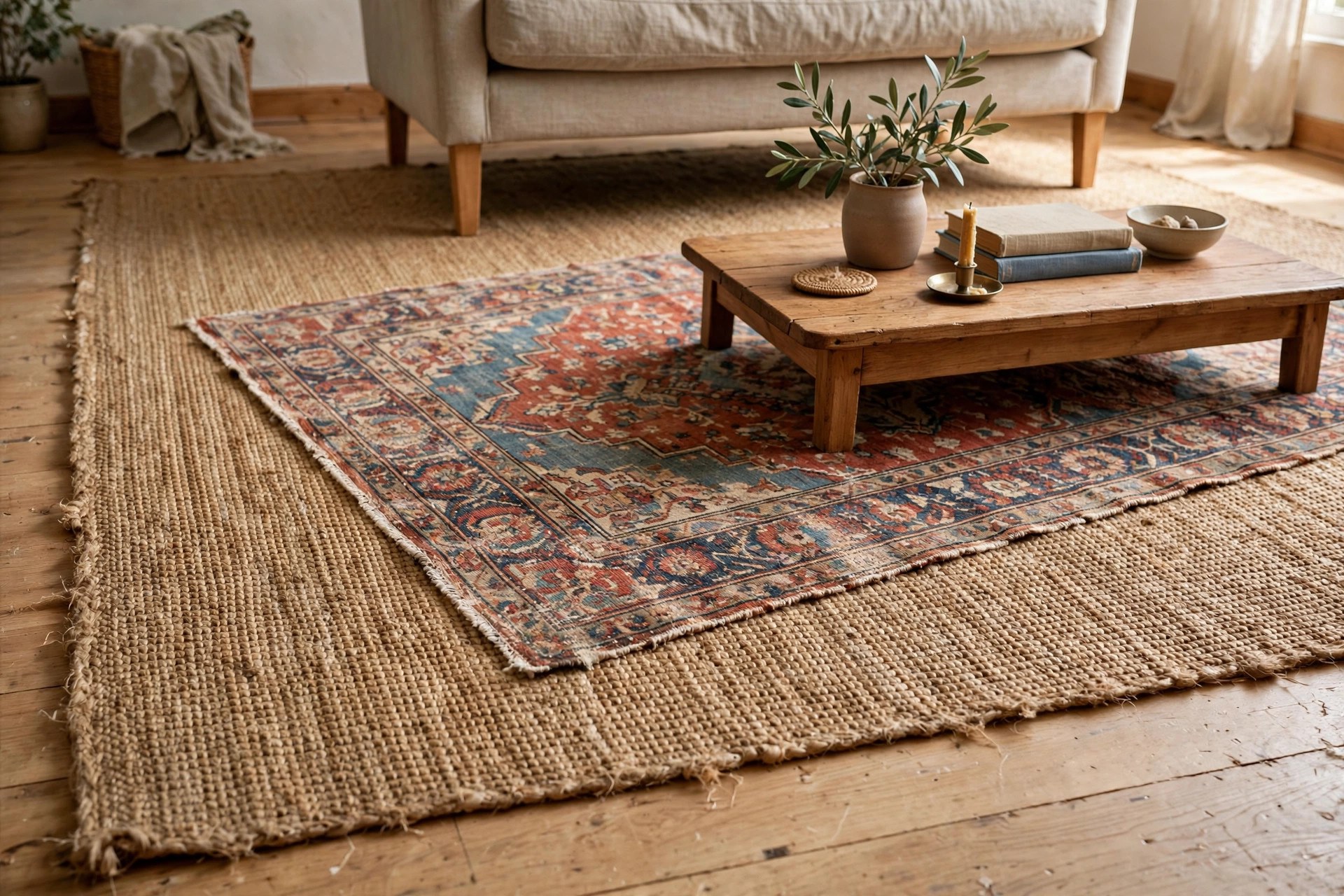
One big, beautiful rug can eat half this budget in a single purchase, so cheat: layer a smaller patterned rug over a large, plain one you already own or can find second-hand. The plain base gives you the generous size that makes seating look anchored, while the patterned layer brings colour and hides wear where feet actually land. Keep the front legs of the sofa and chairs on the rug — that single rule makes a seating area look gathered rather than scattered. Clean second-hand finds thoroughly, and let pattern do the forgiving in busy family spaces.
7. Build a Gallery Wall From Second-Hand Frames

Charity shops are full of good frames wearing tired pictures. Buy the frames, ignore the art, and paint them all one colour — matt black, warm wood, or your accent-wall shade. Fill them with things that cost nothing: postcards, pages from a damaged old book, fabric offcuts, pressed leaves, your own photographs. Arrange it all on the floor first, then tape paper templates to the wall before a single hole is made. Hung at eye level above the sofa, a gallery like this pulls a calm scheme together — the same trick that anchors many beige living room ideas.
8. Swap the Lighting, Not the Furniture

Rooms often feel tired at night because one harsh ceiling light is doing all the work. Fix the layers instead: a softer shade on the main light, a second-hand floor lamp beside the reading chair, and a small lamp on a shelf so light exists at three heights. Match the warmth of every bulb — a mix of blue-white and warm makes even a freshly painted room feel unsettled. A new shade on an existing lamp is one of the cheapest transformations there is, and moving a lamp from another room costs nothing. Test the room after dark before spending anything more.
9. Use the Two-Plus-One Cushion Formula

When cushions look chaotic, the problem is rarely the cushions — it is the lack of a system. Try this one: two large covers in your base colour, two in a pattern or texture drawn from your rug or artwork, and one small accent in the strongest colour in the room. Buy covers only and keep the inserts you have; a cover swap is one of the smallest spends on this list. Natural textures earn their keep — linen, a woven stripe, one velvet for contrast. Pull the palette from something already fixed in the room, and choose zip-off covers that can go in the wash.
10. Paint the Furniture You Already Own

The bookcase, side table or media unit you are bored of is a can of paint away from looking bespoke. Preparation is the entire job: clean off grease and dust, sand lightly so the paint grips, and prime if the surface is shiny or very dark. Two thin coats always beat one thick one, and a foam roller leaves the smoothest finish on flat surfaces. A bookcase painted in a deep colour, shelves restyled, becomes a focal point instead of storage you apologise for. Test the colour on the back first, and paint the existing knobs too if replacements would break the budget.
11. Give Every Textile One Colour Story
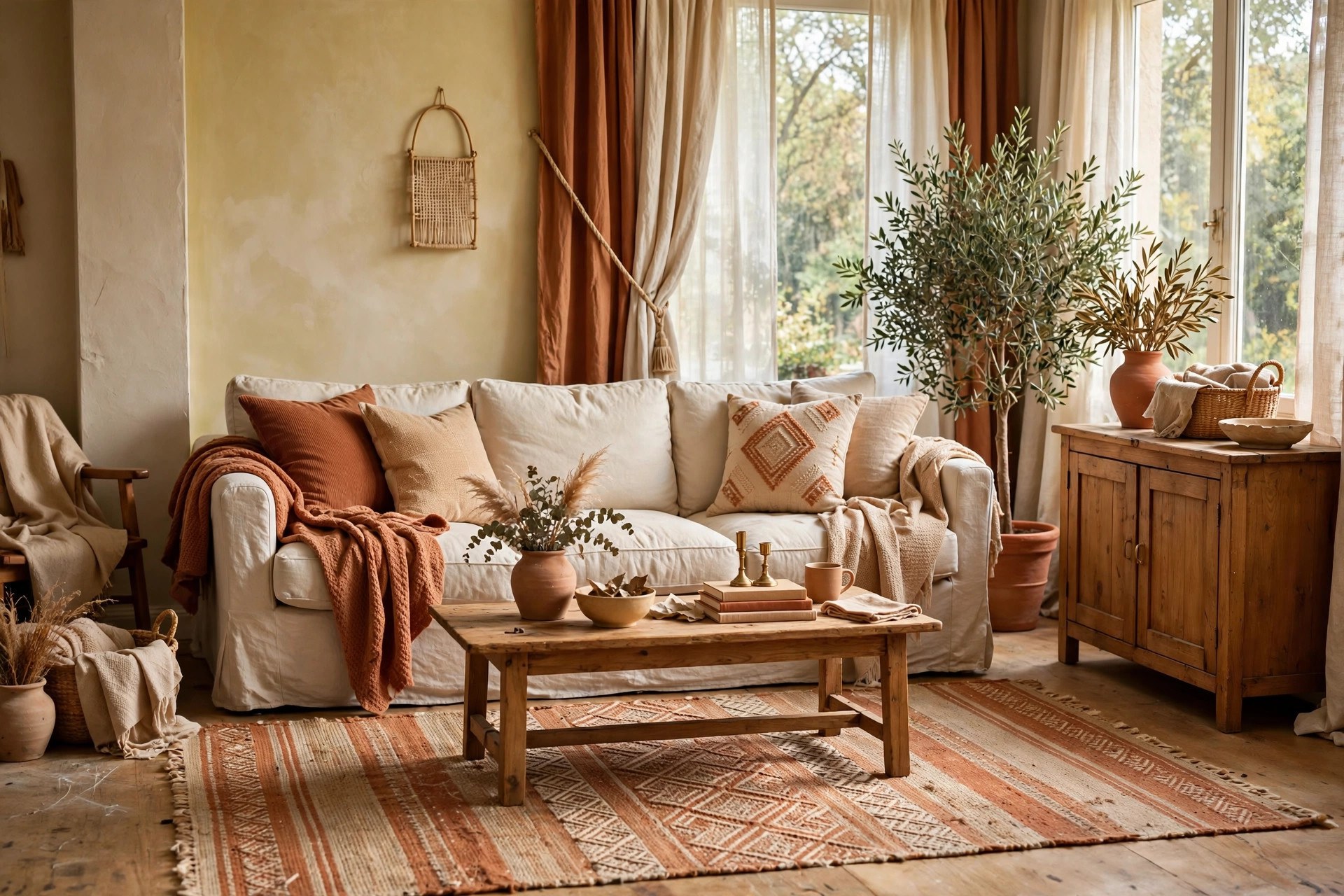
When every textile tells a different story, the room looks accidental however much you spend. Gather every soft thing in the room and sort honestly: keep the pieces that belong to one colour family — warm neutrals with a single accent, say — and move the rest to other rooms before buying anything. A throw borrowed from the bedroom may be exactly what the sofa needed. Then buy only the missing pieces; usually one throw and two covers are enough. Repeat your accent colour in at least three places around the room, so the eye reads it as a plan.
12. Shop Your Home and Restyle the Surfaces

Clear every surface in the room — shelves, coffee table, mantel, side tables — clean them properly, then put back only about a third of what was there, arranged with intention: a tray holding books and a candle, a stack of large books doing duty as a side table, one bowl with nothing in it. The pieces you bought for the makeover look twice as deliberate against this edited backdrop. Store what you removed and rotate it in next season; the room feels new again without a single purchase. Editing is the only decorating that pays you back in calm.
13. Add Height and Something Green

Most living rooms are decorated entirely below waist height, which is why they can feel flat even after painting. One tall plant in an empty corner pulls the eye upward, makes new paint colours look richer, and fills the awkward space no furniture fits. If the budget is nearly spent, the free version works almost as well: tall cut branches — forsythia, olive, willow, whatever the garden can spare — in the biggest vase or jug you own. It is the same principle that gives vibey apartment living room ideas their personality: height, texture and something alive.
14. Hang One Large Second-Hand Mirror

A big mirror is the oldest small-room trick there is, and second-hand ones are everywhere. Position it opposite or beside a window so it catches daylight and throws it back into the room’s darkest corner — your new paint colours will look noticeably fresher for it. If drilling is a worry, lean a genuinely large mirror against the wall on top of a low bookcase or console; the casual lean looks deliberate, not temporary. A dated frame is no obstacle: paint it to match your gallery frames and two second-hand finds become a planned pair.
15. Finish With the Edit: Clean Lines, Clear Floors
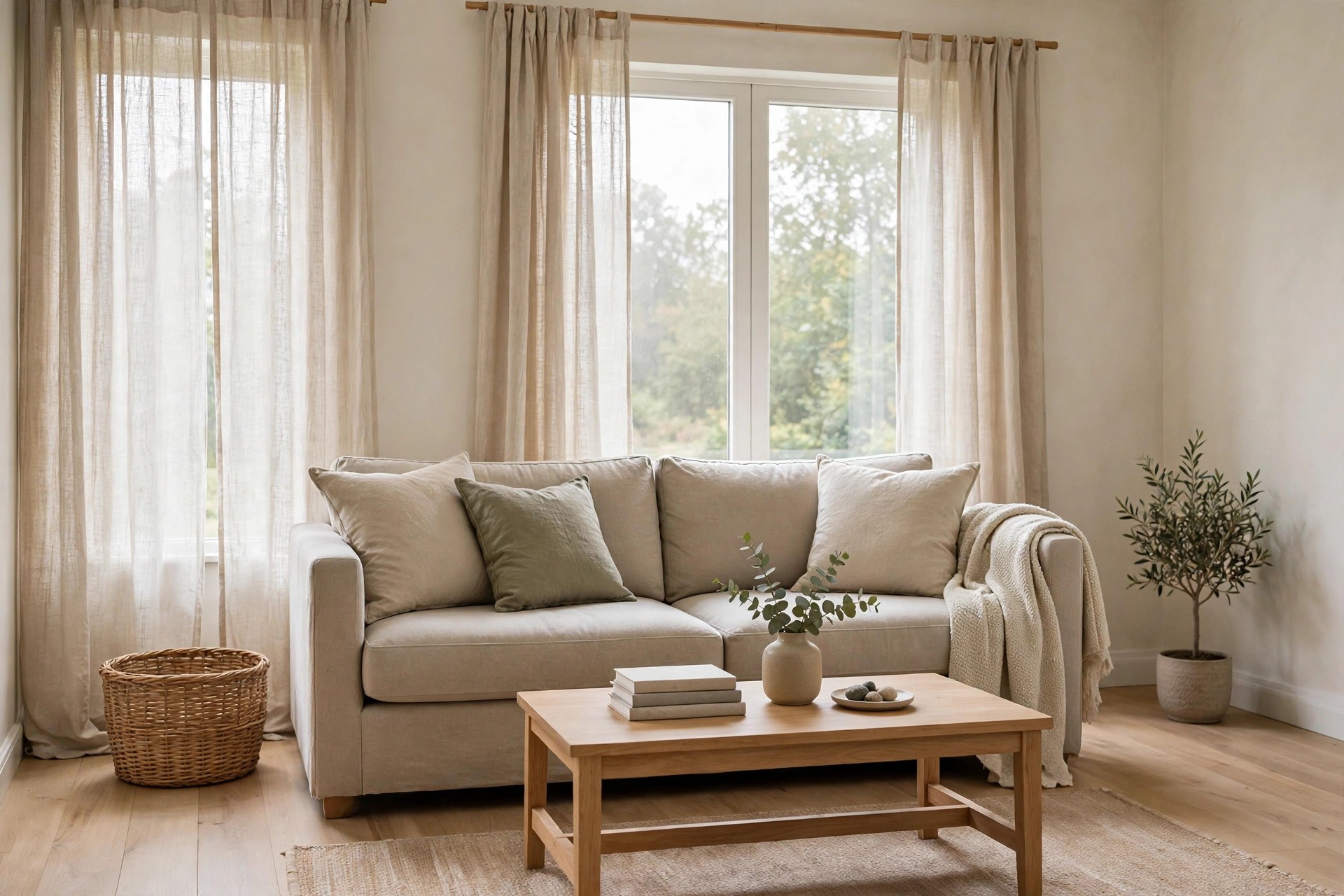
The last stage of every makeover photograph you have ever admired is not a purchase — it is an edit. Wash the cushion covers, clean the rug, dust the lampshades, and clear the floor of everything that does not belong there: shoes, chargers, the pile waiting for a home. Coil visible cables into a basket or box behind the furniture. Adopt a one-clear-surface rule so the room resets in five minutes flat. This costs a couple of hours, and it is the difference between a room decorated once and a room that looks decorated every day. Do it last, then stop.
How to Spend a $500 Living Room Makeover Budget, Step by Step
Order matters more than the amount. Start free: rearrange the layout, edit surfaces, shop your own home for textiles and lamps, deep clean. Live with the room a few days — the free changes show what it genuinely still needs, always less than you feared. Next comes paint, which deserves the largest share because it changes every surface the light touches: walls first, then the ceiling, then a small second tin for the furniture pieces that need it.
Textiles come third — curtains, cushion covers, a throw, and a slipcover if the sofa needs one — because fabric is what you see and touch at sitting height. Spend what remains on lighting, frames and something green, shopping second-hand before new for all three. Keep a small reserve for mid-project discoveries: an extra roller, filler, picture hooks, one more test pot. Track spending as you go, and when the money is gone, stop. That constraint is what makes the room look designed rather than accumulated.
Common Mistakes to Avoid
1. Spending on accessories before paint. Cushions, ornaments and new lamps cannot rescue walls that make the whole room feel dull — they just decorate the problem. Paint is the change everything else is judged against, so it goes first and takes the biggest share. Accessories bought early also lock in colours before the walls have had their say.
2. Buying everything new. A $500 budget spent entirely on new buys very little, and it all arrives looking samey. Second-hand frames, lamps, rugs and mirrors are where this budget multiplies itself — older pieces bring the texture and variation that make a room feel collected rather than kitted out.
3. Choosing colours from a screen or a tiny swatch. A colour on a phone screen or a two-inch card tells you little about how it behaves across a whole wall in your light. Paint a large test patch, look at it in morning sun and lamplight, and live with it overnight. One test pot is the cheapest insurance in the entire makeover.
Frequently Asked Questions
Can you really make over a living room for under $500?
Yes, if the makeover is honestly scoped: paint, textiles and layout change the largest surfaces and everything at eye level. It will not replace a worn-out sofa or fix flooring — if those need doing, treat this as the refresh that keeps the room enjoyable while you save.
What should I buy first if my budget is even smaller?
Paint, without hesitation. Do the free work — layout, editing, restyling — then put whatever you have into paint for the walls, because colour changes every other thing in the room. Textiles can follow one piece at a time, starting with cushion covers.
Does painted furniture actually last?
It does, when preparation is done properly: cleaned, lightly sanded, primed where needed, two thin coats dried fully between coats. Painted pieces in daily use may pick up the odd knock, but touch-ups take minutes — keep the tin, labelled, for exactly that reason.
What if I rent and cannot paint the walls?
Skip the wall paint and put the same budget into the reversible layers: curtains hung high, layered rugs, cushion covers, a large leaning mirror, and lighting. Our brown living room ideas for renters show how far deposit-safe changes can go — and one repaintable wall is often negotiable with a landlord.
Final Thoughts
A small budget is not a smaller makeover — it is a more disciplined one. Paint where the light lands, textiles where life happens, layout before shopping, and the honesty to stop when the money runs out. Do those things in that order and $500 stops sounding like a limitation. It starts sounding like a plan.


