

15 Small Living Room Ideas for a Christmas Tree in a Tight Corner
The tree box comes out of storage, and the room suddenly feels smaller than you remembered. The sofa, the coffee table, and the door all need their space, and the only spot left is a corner that looks too tight to hold anything tall.
That corner can still work. The trick is to match the tree to the corner, not the other way around. A slim shape, a raised base, or a wall plan can give you a full holiday look without blocking the path across the room.
This guide covers small living room ideas for christmas tree in a tight corner, one placement at a time. Each idea keeps the walkway clear, the sofa usable, and the lights where you can enjoy them from your seat.
Once the tree is placed, color can come next. The brown and gold Christmas living room ideas on this site pair well with a slim tree and a small room.
This post contains affiliate links. If you buy through them, we may earn a small commission at no extra cost to you. See our Affiliate Disclosure.
1. Start With a Pencil Tree in the Corner by the Window
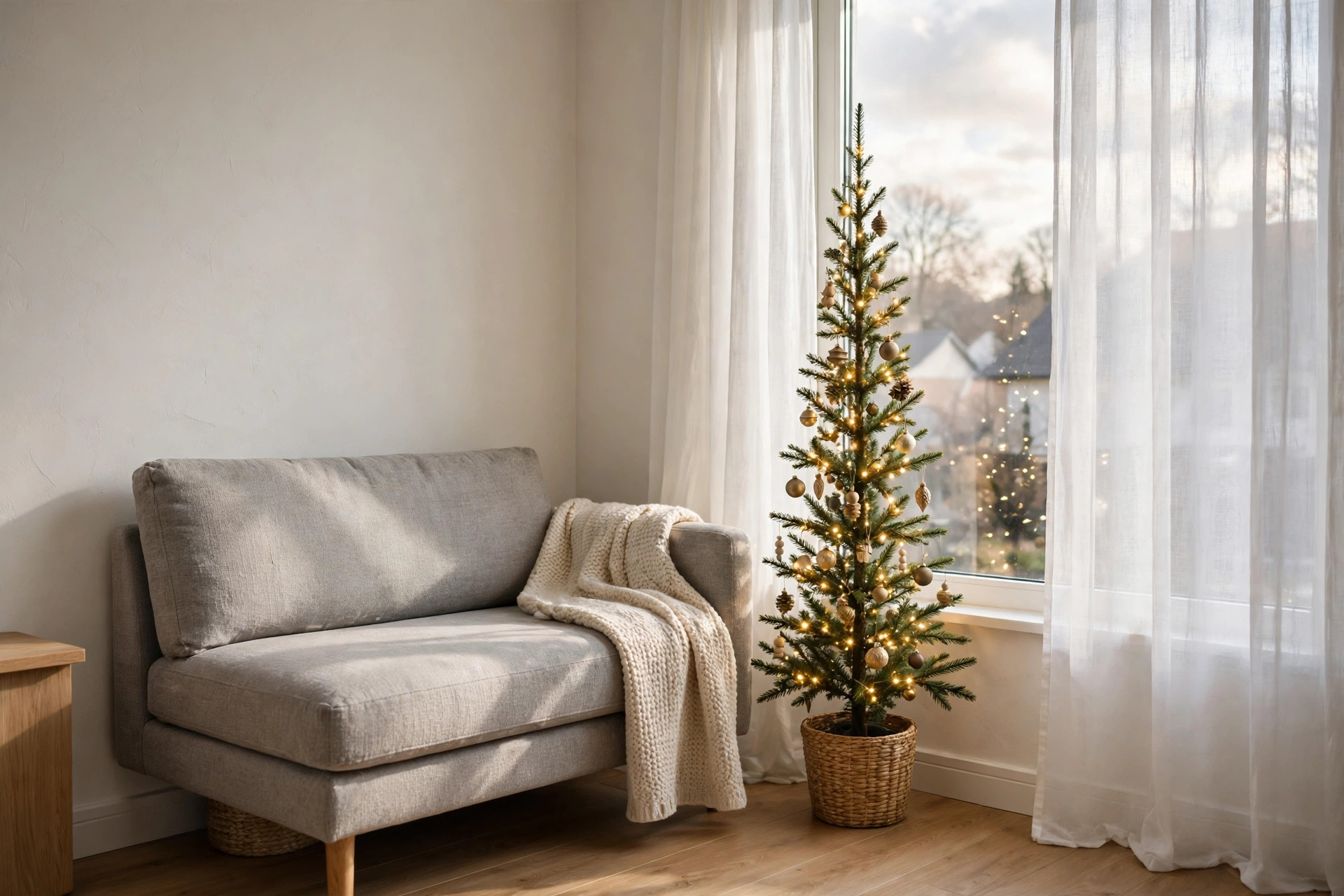
A pencil tree is the easiest fix for a tight corner. It rises tall but stays narrow, so it slips into the gap beside a window without pushing the sofa out of place.
Set it where the window light hits it during the day. The glass behind it makes the lights glow after dark, and guests see it from outside too.
Keep the curtain panel on the far side of the window so the branches do not catch on fabric.
Use small ornaments and one short string of lights. Large baubles crowd a slim tree fast, and they make the branches droop toward the wall. A few well spaced pieces look calm, and the tree keeps its neat shape all season.
2. Choose a Tree That Sits Flat to the Wall
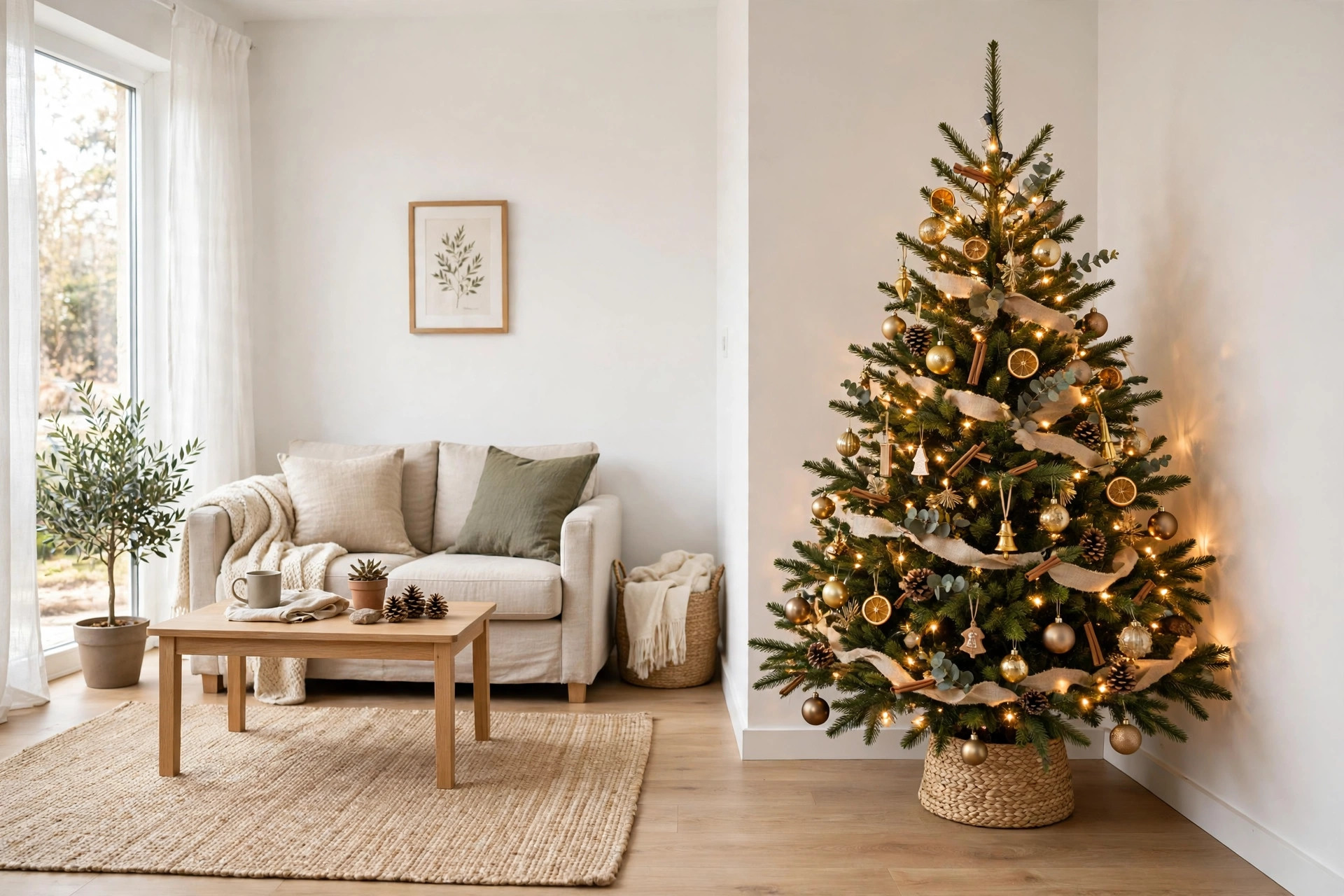
Some trees are built with a flat back, made to sit flush against a wall. From the front, the tree looks full and round.
From the side, it takes up only half the depth of a standard tree, which is a real gain in a small room.
Push it right into the corner so no gap sits behind it. That dead space behind a round tree collects dust and lost ornaments, and it steals floor room you need. A flat back turns that wasted gap into open floor.
Hang ornaments only where you can see them, on the front and sides. The back stays bare against the wall, so you need fewer pieces to make it look done.
3. Put a Tabletop Tree on a Console You Already Own
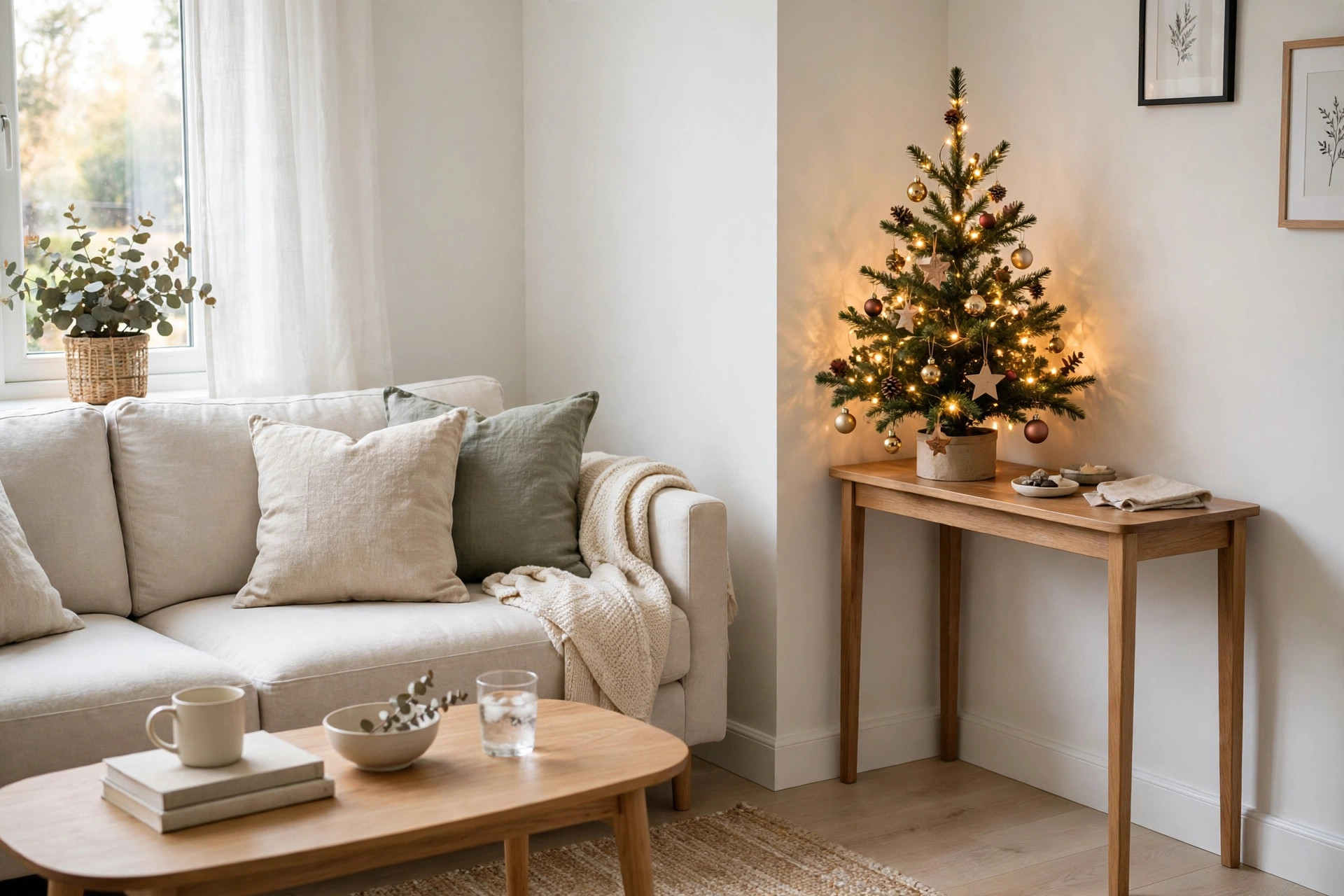
No floor space at all? Use a surface you already have. A small tree on a console table, a bookshelf top, or a sideboard gives you a tree at eye level without moving a single piece of furniture.
Pick a table that sits in or near the corner, and clear just enough room for the base. The tree should sit back from the edge so no one brushes it when they walk past.
A tray under the pot catches loose needles and keeps the wood safe.
Scale the ornaments down to match the tree. Tiny baubles and a short light string suit a tabletop tree, while full size pieces overwhelm it. The result feels like a real tree, just sized for the room you actually live in.
4. Raise a Short Tree on a Sturdy Crate
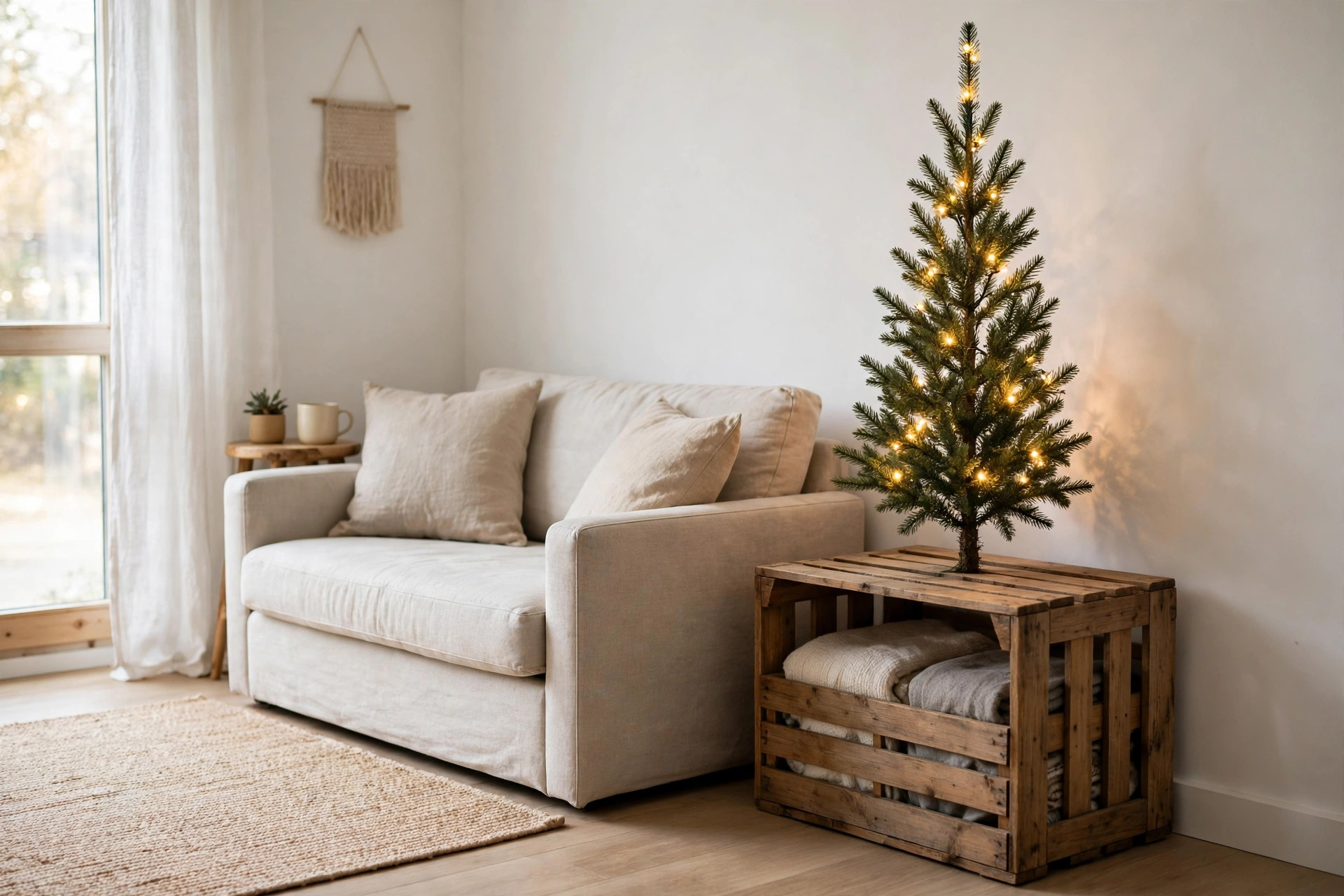
A short tree can look lost in a corner, sunk below the sofa back and hidden from view. Raising it on a sturdy wooden crate lifts it to eye level and gives it presence without buying a taller tree.
Choose a crate that is wide, solid, and level, and test it before you decorate. Press down on each corner to check for wobble, and put a non slip mat under it on hard floors.
The crate must hold the tree steady, not just look nice.
The crate earns its floor space twice over. Use it to store wrapped gifts, spare lights, or the ornament box during the season. In January it goes back to holding books or blankets, so nothing you bought serves only one month.
5. Anchor the Tree to the Wall So It Cannot Tip
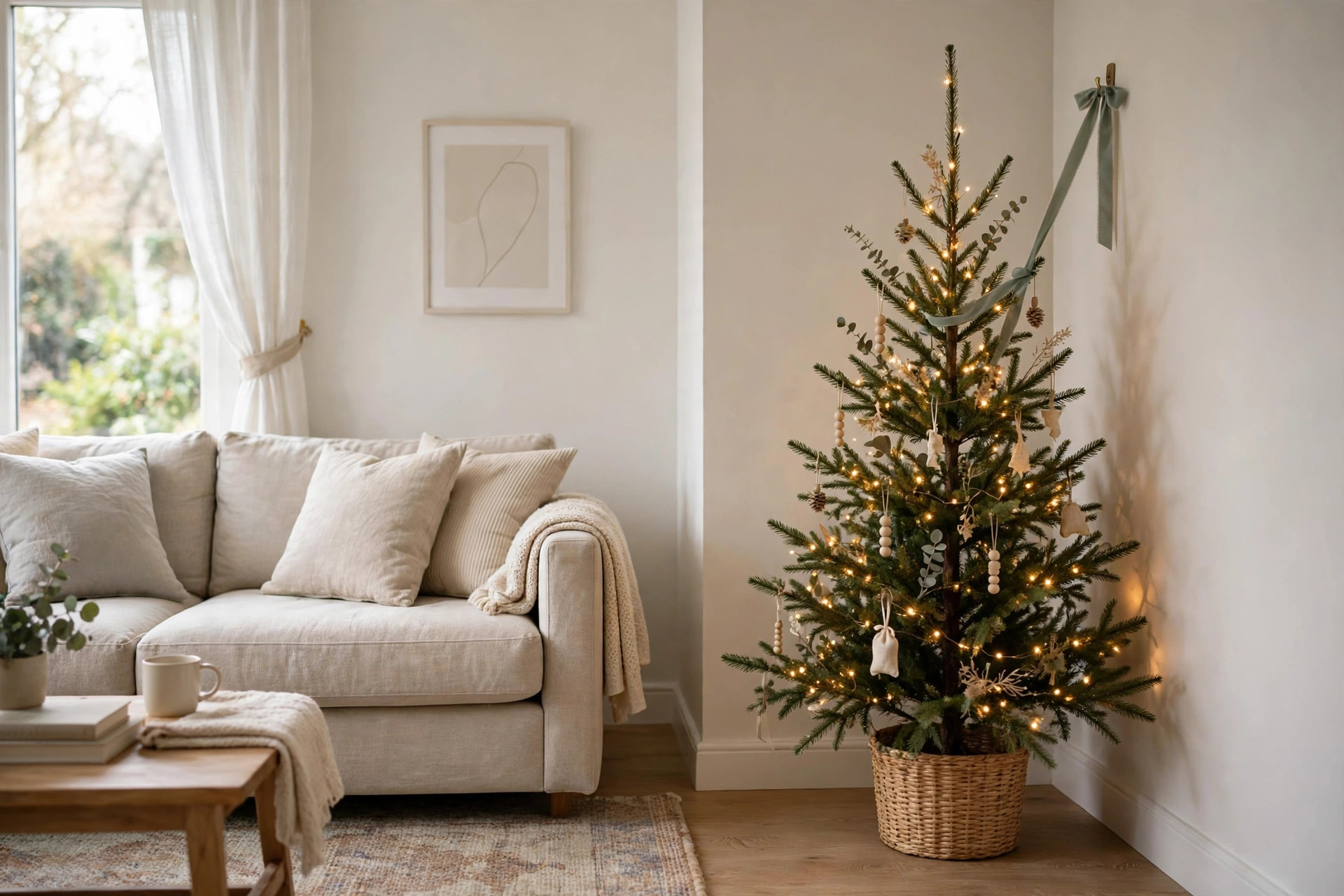
A tree in a tight corner gets bumped more than one in an open room. Every pass with a laundry basket or a dog on a lead can nudge it, and a fall means broken ornaments and a mess across the rug.
A small wall hook and a short length of ribbon solve the problem. Tie the ribbon around the trunk, about two thirds of the way up, and loop it over the hook.
The tie stays hidden behind branches, and the tree cannot lean away from the wall.
This step matters most if kids or pets share the room. A tied tree still needs care, but it will not topple from one careless brush past the corner.
6. Slide the Tree Beside the Sofa Arm, Not in Front of It
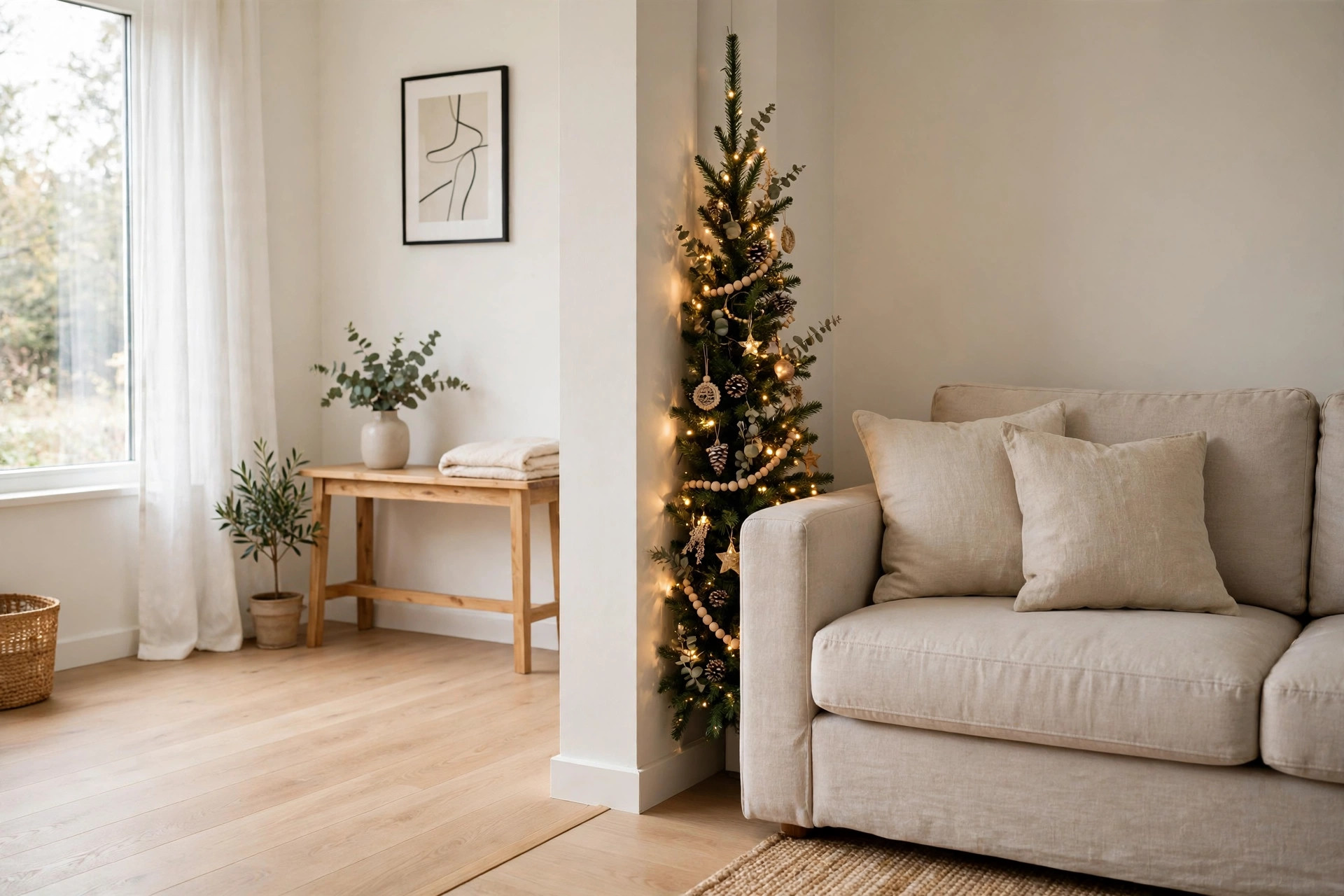
Many people push the tree in front of the sofa, then wonder why the seat feels blocked. The better spot is beside the sofa arm, in the narrow strip of floor between the sofa and the wall.
That strip is often empty anyway, too narrow for a chair and too awkward for storage. A slim tree fills it without changing how you sit, watch television, or reach the side table. The arm even shields the lower branches from passing feet.
Watch the branch spread at seat height. Trim back any branch that pokes over the armrest, or it will snag sleeves and blankets all season. A tree that shares space with the sofa should never fight the person sitting next to it.
7. Use the Dead Corner Between the Bookshelf and the Window
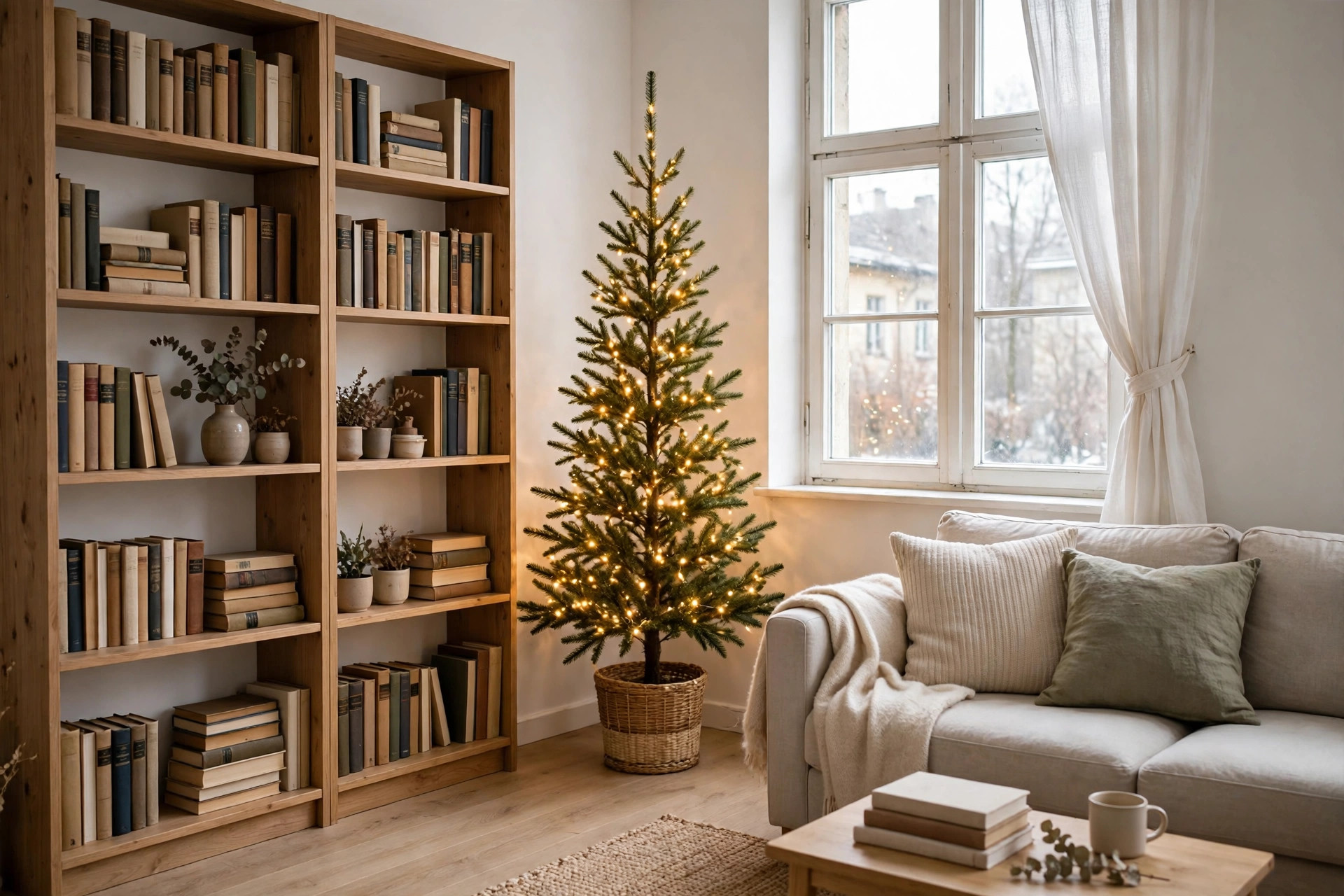
Look for the corner you never use: the gap between the bookshelf and the window, or between a tall cabinet and the wall. It holds nothing now, and it will hold a slim tree with room to spare.
Measure the gap before you shop, at floor level and at branch height. Bookshelves often lean or sit unevenly, and a tree that fits at the base may press against a shelf higher up. A tape measure now saves a return trip later.
Keep the bookshelf side clear of hanging ornaments. Branches that brush book spines will pull books out of line, and paper edges snag on hooks. Face the decorated side toward the room, and let the plain side rest near the shelf.
8. Build a Wall Tree With Lights When Floor Space Is Zero
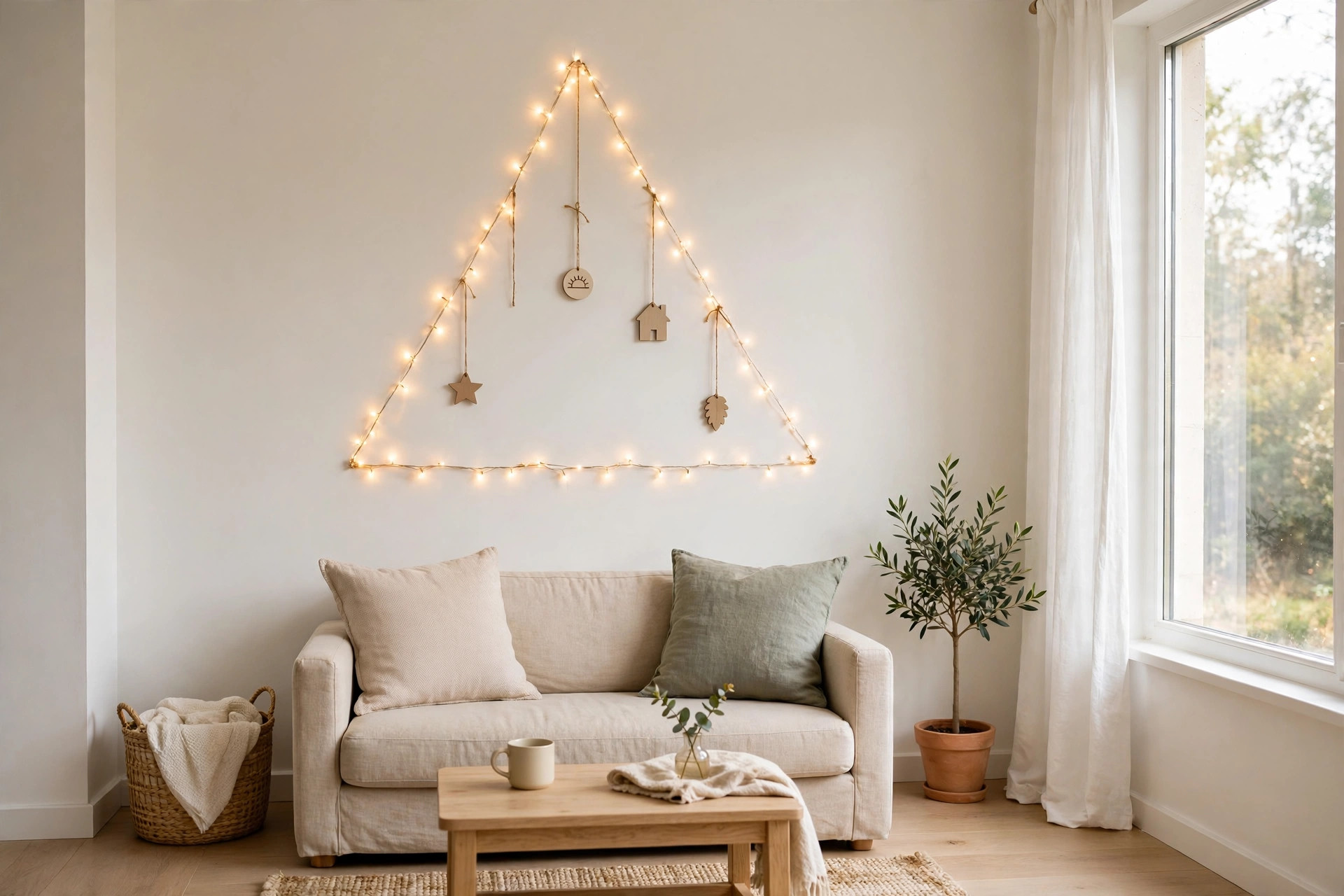
Some corners truly hold nothing, not even a slim tree. A wall tree fixes that. Arrange a string of lights in a wide triangle on the wall, add a few flat ornaments, and you have the shape of a tree with zero floor use.
Start the triangle high and keep the base wide, so the shape reads as a tree from across the room. Small removable hooks hold the lights without marks, which matters if you rent.
This plan suits renters and very small rooms best, and it pairs well with a small potted pine on a shelf nearby. The wall gives the outline, the plant gives the scent and green, and the floor stays fully open for daily life.
9. Roll a Small Tree Into the Corner on a Cart
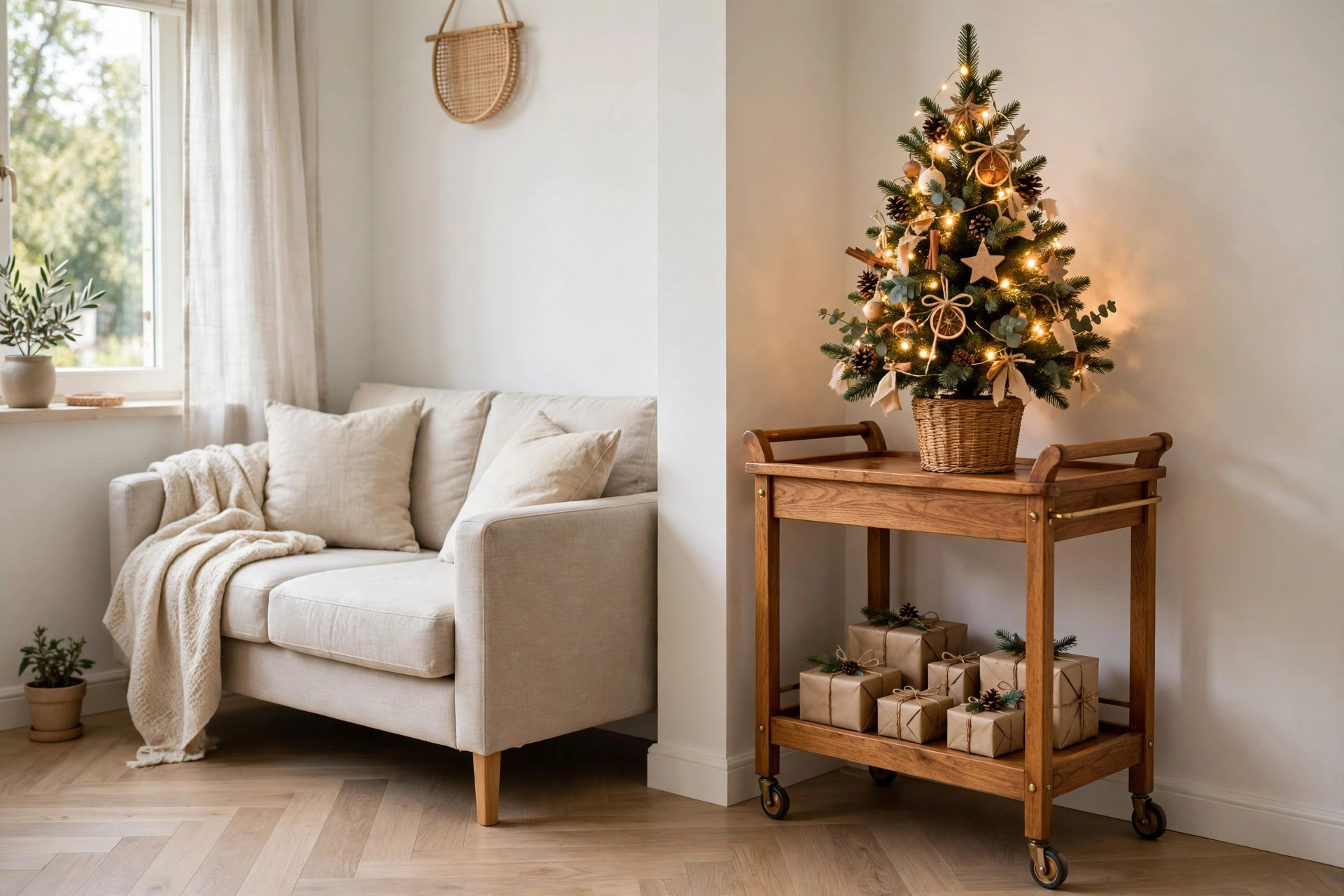
A rolling cart turns a tight corner into a flexible spot. Set a small tree on a sturdy cart, roll it into the corner for the season, and roll it out when you need the space for guests or a game night.
Lock the wheels once the cart is placed, and check that it cannot roll on its own. A cart that drifts will pull the tree away from the wall and into the walkway.
The lock is a small step, but it keeps the whole plan safe.
Use the lower shelf of the cart for gifts or the ornament box, so the cart works as storage too. When the season ends, the same cart can hold plants or books, which means the corner stays useful all year round.
10. Balance the Tree Beside the TV Stand
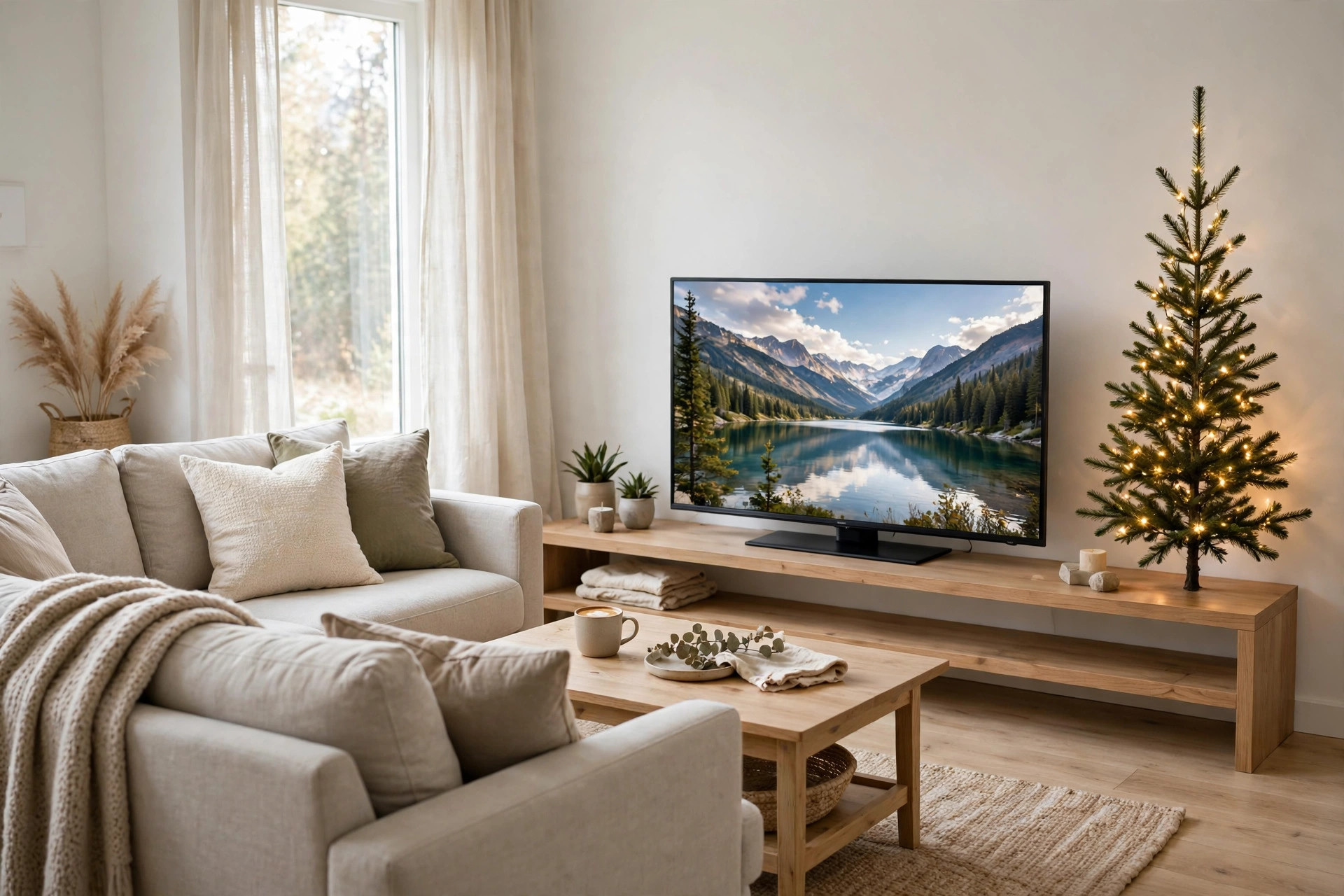
The corner beside the TV stand is a natural tree spot, since eyes already travel there. But balance matters: a tall tree next to a low stand can look lopsided, and lights can glare on the screen.
Keep the tree to the side of the screen, never behind it. Branches behind the television block the view and catch dust on warm vents. A slim tree at the end of the stand frames the screen instead of fighting it.
Point the brightest lights away from the screen, toward the room. Warm white lights angled outward glow on the wall and the sofa, while the screen stays clear. Test it at night, when glare shows up most, before you call the setup done.
11. Swap the Tree Skirt for a Basket Base
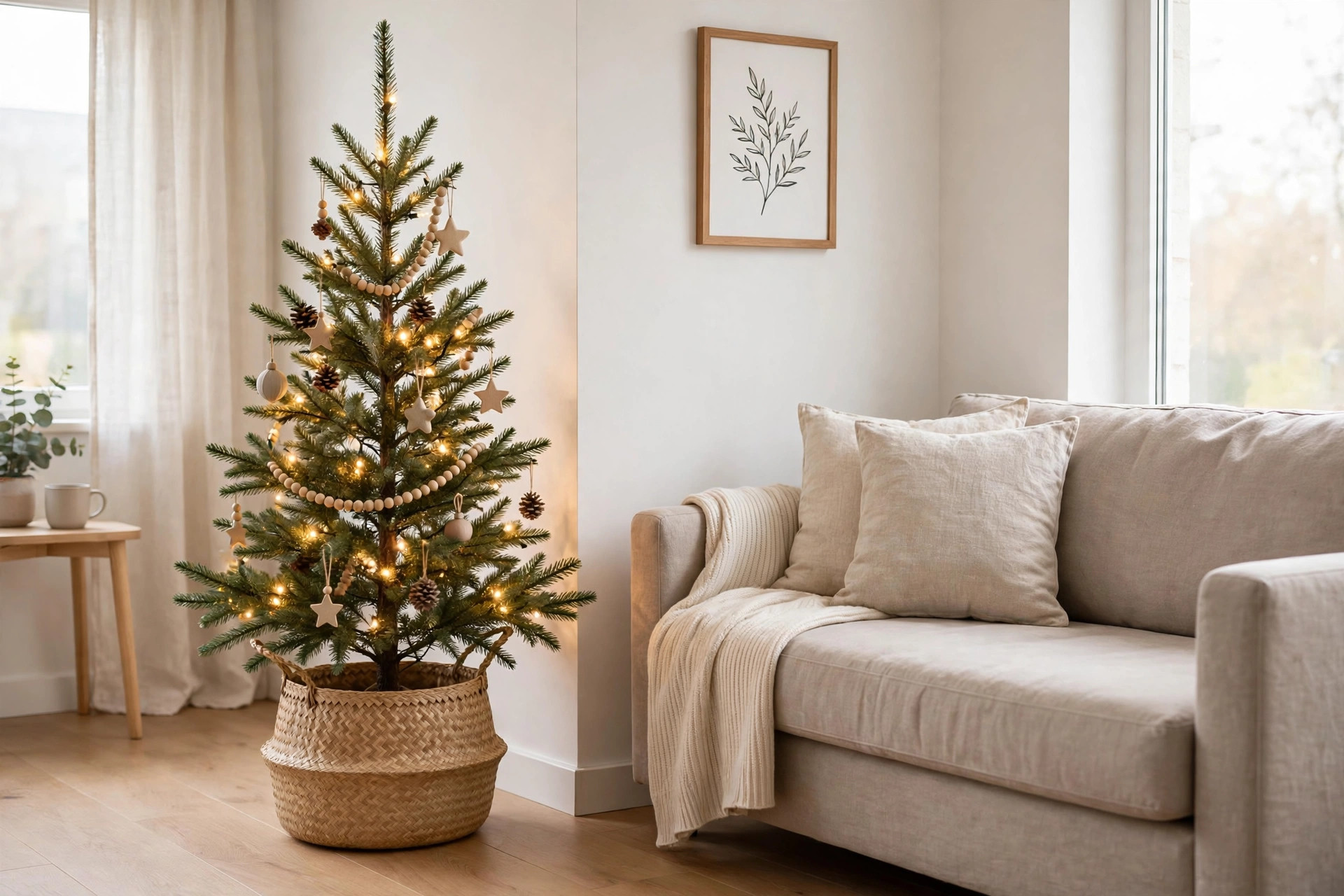
A tree skirt spreads wide on the floor, and in a tight corner that spread eats the very space you are trying to save. A basket base holds the same tree in a much smaller footprint.
Set the tree stand inside a sturdy woven basket, and tuck the edges of a cloth around the stand to hide it. The basket looks finished on its own, and it keeps the base tidy without fabric pooling onto the walkway.
Choose a basket wider than the stand but narrower than the lowest branches. Too small, and the tree wobbles. Too large, and you are back to the skirt problem. The right size holds firm and leaves the floor around it clear.
12. Measure and Guard a Clear Walkway
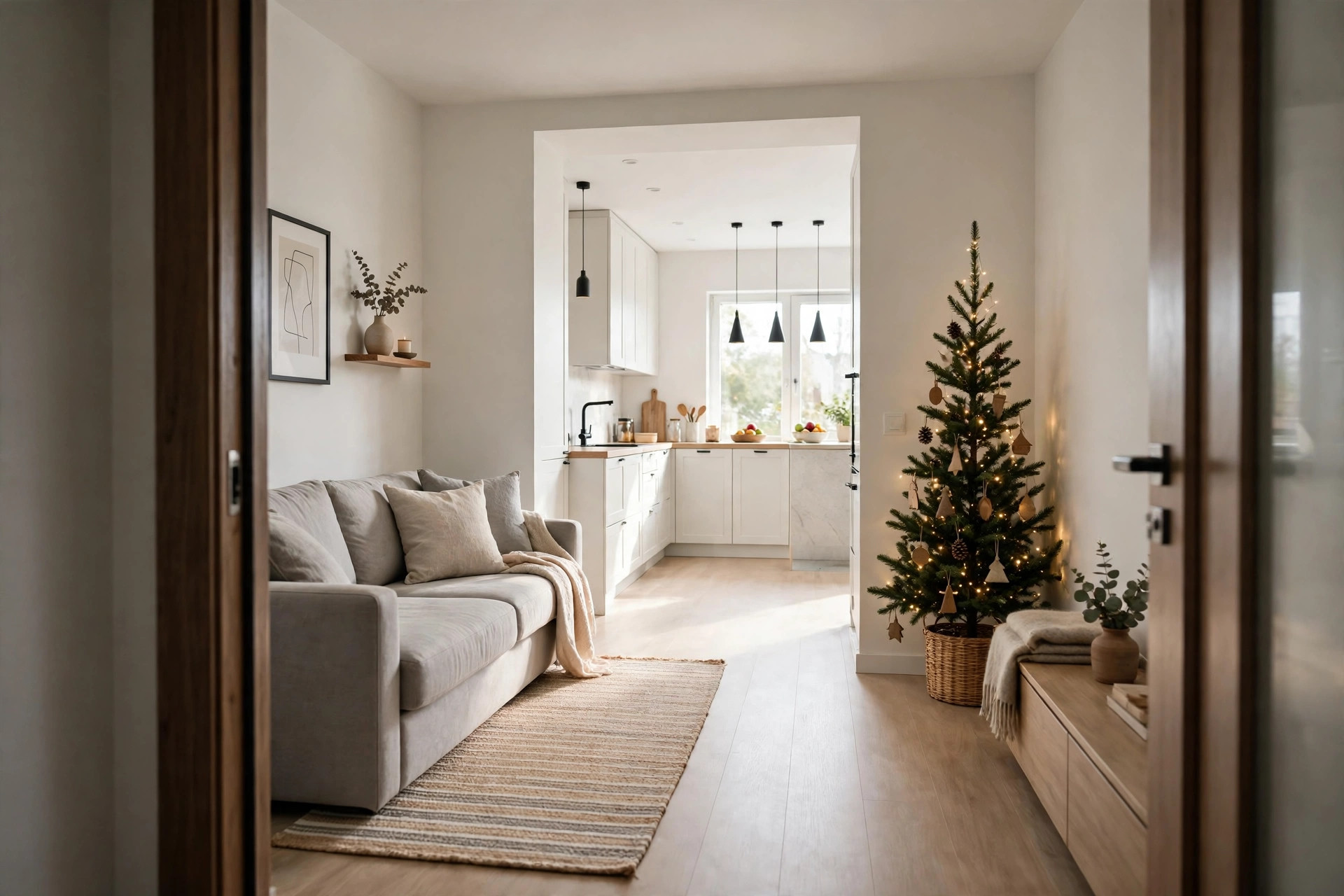
A tree that looks great on day one can still fail if it blocks the path to the kitchen or the door. Branches grow wider once ornaments go on, and a blocked path gets annoying fast.
Before you decorate, walk the route you use every day: from the sofa to the kitchen, from the door to the bedroom. Leave that path open, and push branches back where they cross it.
If you must step around the tree, it sits too far out. The narrow living room layout ideas on this site show more ways to keep a tight room easy to move through.
Once you stop noticing the tree in your path, the placement works. A clear walkway is what makes a tight corner tree livable, not just pretty.
13. Light a Dark Corner With a Flocked Slim Tree

Dark corners swallow a green tree. The branches blend into the shadow, and the whole corner looks dim even with lights on. A flocked slim tree solves this, since its pale branches catch and reflect light.
Place it in the corner that gets the least daylight, often the one far from the window. Warm white lights on pale branches glow softly, and the corner stops feeling like a hole in the room. It becomes a focal point instead.
Keep ornaments light in color here: gold, cream, and soft silver show up well on flocking. Dark ornaments vanish against pale branches, so save them for a green tree where they can stand out.
The cozy fall small living room ideas on this site show a similar warm palette for small rooms.
14. Claim the Entry Corner So Guests See It First
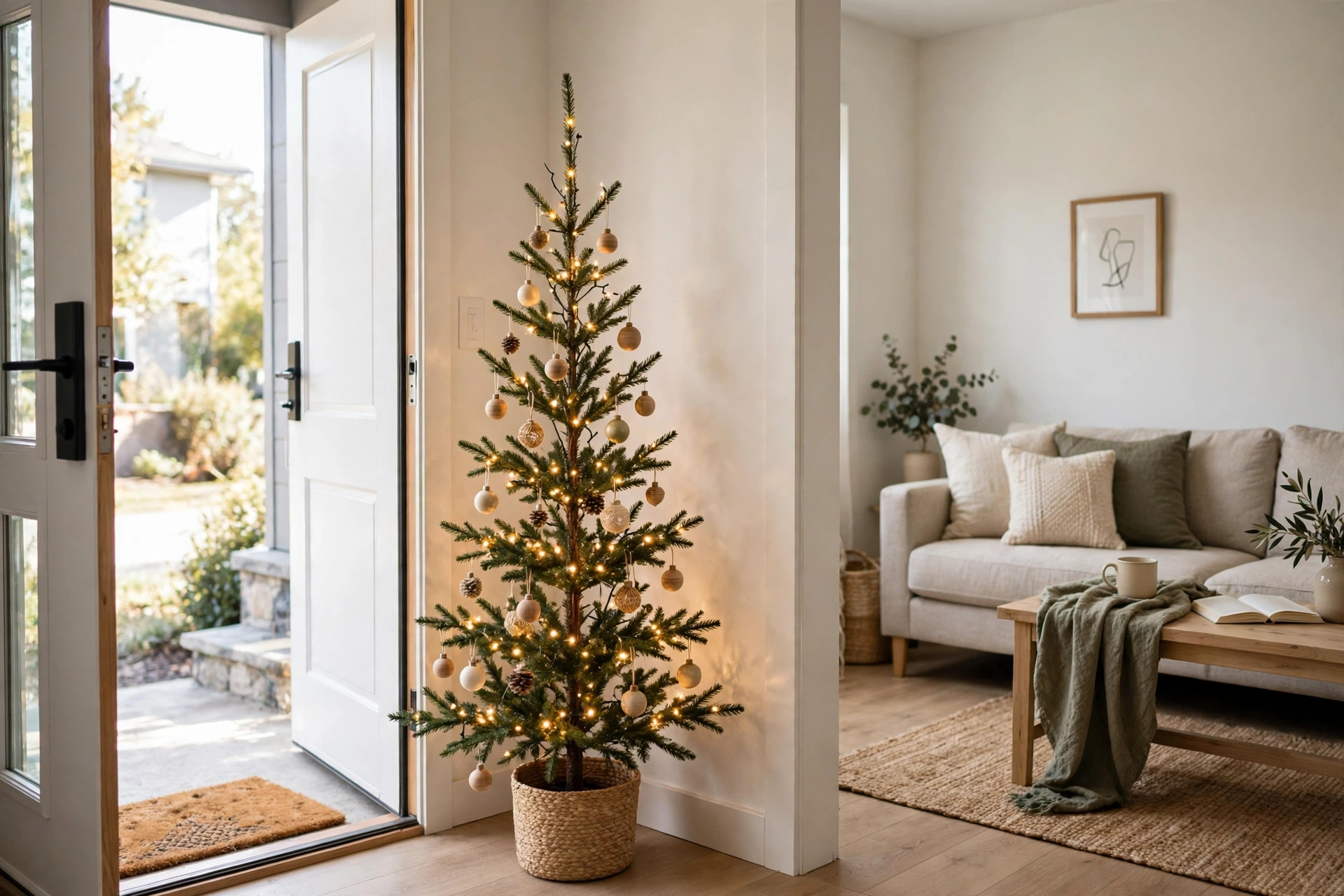
The corner just inside the living room door is prime tree real estate. Guests see it the moment they walk in, and it sets a festive tone before they even sit down.
This corner must stay out of the door swing, so check the arc before you place anything. Open the door fully and mark where it ends. The tree sits beyond that line, close enough to greet but never in the way of the door.
Keep this tree simple, since it gets seen up close by everyone who enters. A few neat ornaments and one light color look calm and welcoming. A crowded entry tree feels busy, and guests will brush it as they come in.
15. Plan the Corner for January, Not Just December
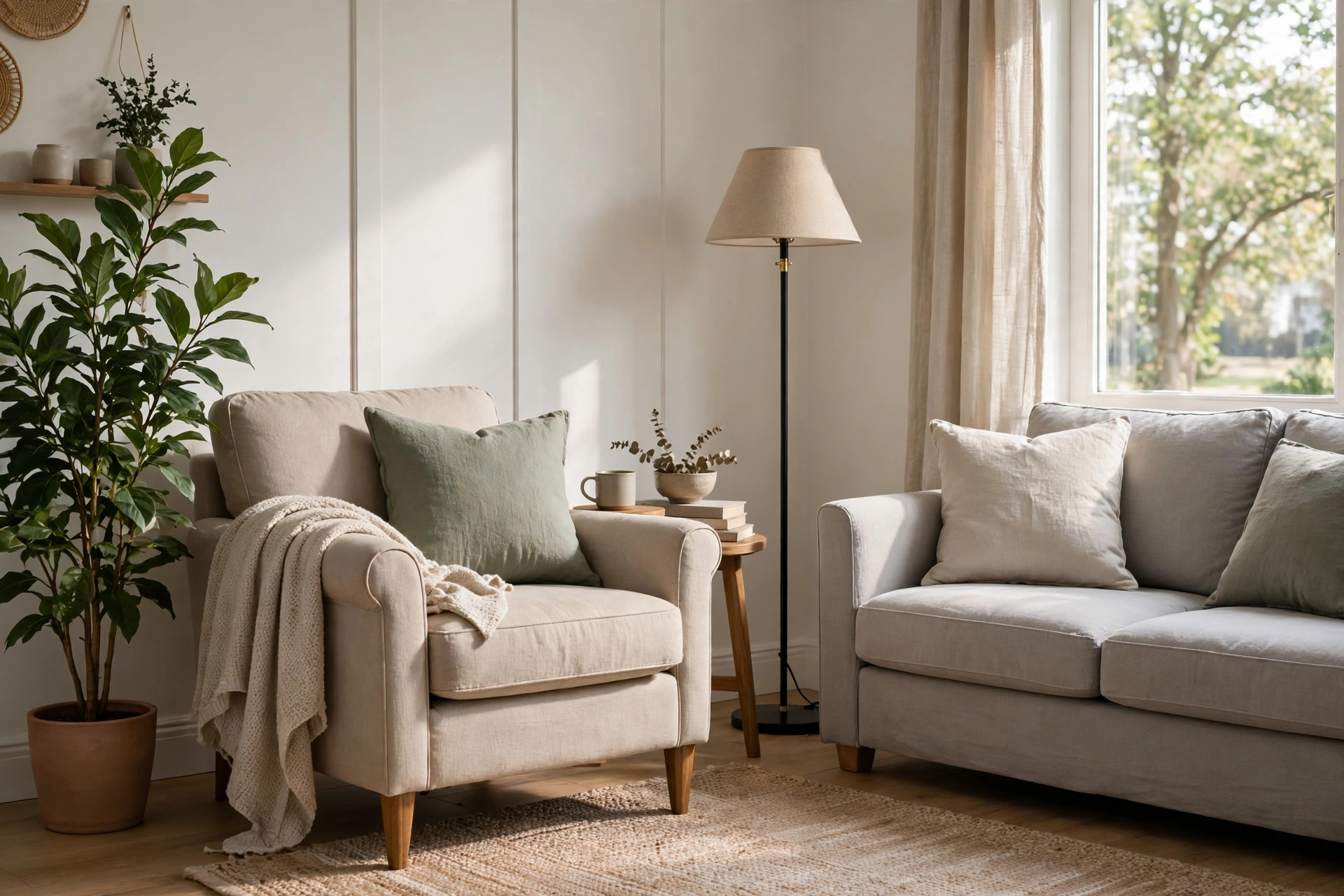
Every December tree leaves an empty corner in January. Plan for that gap now, and the room will not feel bare when the tree comes down. The spring refresh ideas for a small living room on this site can help you restyle that spot next.
Pick a corner piece that works after the holidays: a tall plant, a floor lamp, or a small reading chair. If the tree sat on a crate or cart, that base can hold the plant or a stack of books through winter.
Store the tree, lights, and ornaments in one labeled box near the corner they came from. Next December, setup takes minutes, not a full afternoon of hunting through storage. A good corner plan makes this year and next year easier.
A tight corner does not have to mean a bare December. The right tree shape, a steady base, and a clear walkway can give a small room a real holiday centerpiece. Start with one idea from this list, the one that fits your corner best.
Try it for a week before you add more decor. If the path stays clear and the sofa still feels open, the placement works.
These small living room ideas for christmas tree in a tight corner work best when they fit your daily life, not just a photo. Save this to your small living room board for later, and come back when the tree box comes out again.


