

15 Beige Living Room Ideas With Built In Shelf Styling
Built-in shelves in a beige room can look calm and rich, or they can look flat and a bit lost. The shelves are rarely the real problem. The styling on them is. A few plain tweaks often fix the whole wall.
These beige living room ideas with built in shelf styling keep every tip on the shelves themselves. You will work with shelf color, book color, empty space, baskets, plants, ceramics and light. No building work, no new furniture, just styling choices you can test today.
Small choices add up fast on a full wall of shelves. One dark book row or one crowded shelf can pull the whole wall out of balance. The good news is that small fixes add up just as fast in the other direction.
If you want the wider room tour first, our guide to beige living room ideas covers sofas, walls and rugs. Here, the shelves get all the attention. Start at the top shelf and work down, one clear choice at a time.
This post contains affiliate links. If you buy through them, we may earn a small commission at no extra cost to you. See our Affiliate Disclosure.
1. Paint the Shelves the Same Beige as the Walls
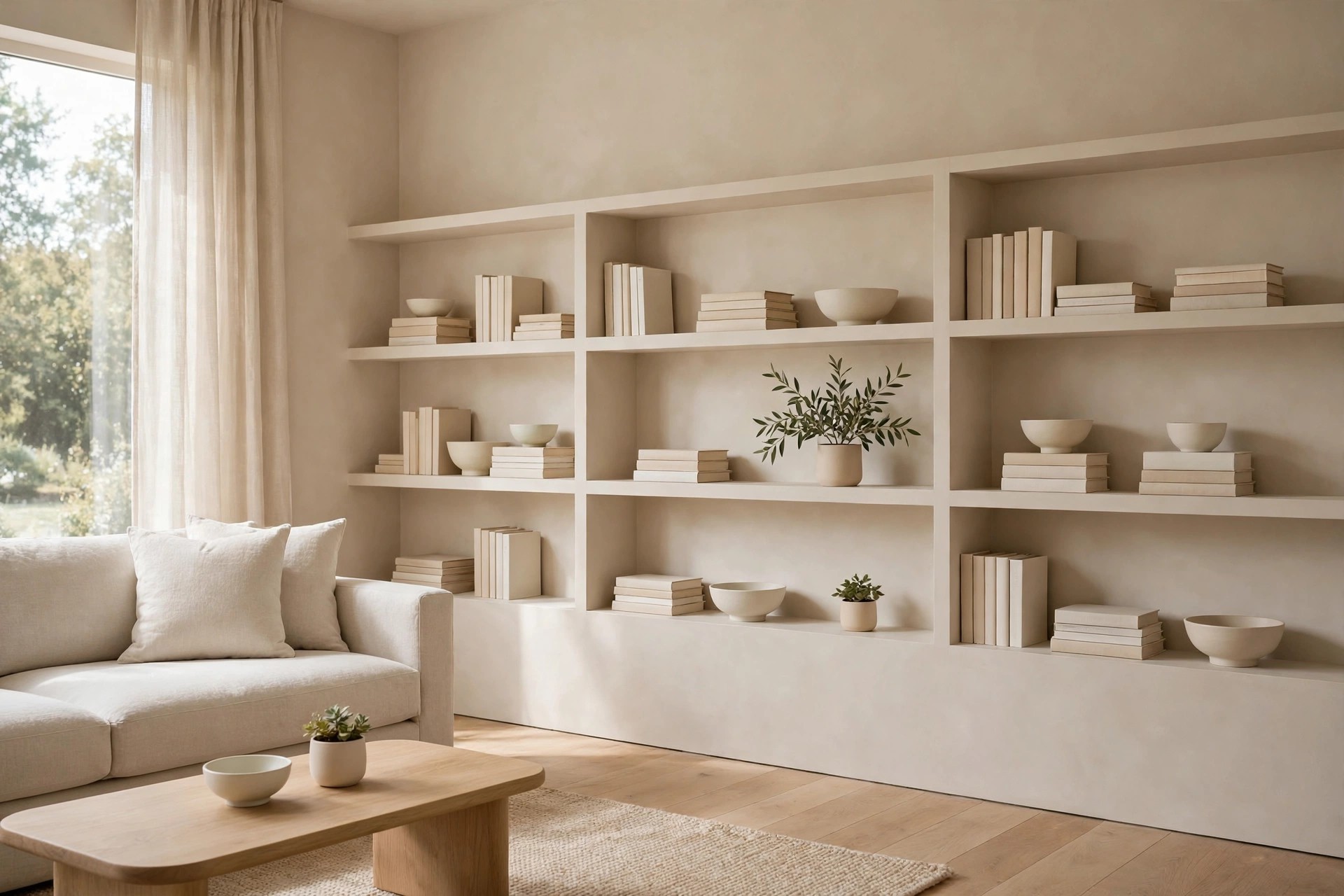
Start with the calmest option of all. Paint the built-in shelves the exact beige you used on the walls, in a soft satin finish.
When shelf and wall share one color, the unit reads as part of the room. Books, bowls and plants then stand out by shape, not by loud contrast.
Test the color on one inside panel first. Shelf interiors get less daylight, so the same beige can look half a shade deeper once the books go back.
Keep the sofa and rug a touch lighter or darker than that beige. The small gap in tone stops the wall and the seating from blurring into one block. That faint contrast is often all a tonal room needs.
2. Go One Shade Deeper on the Shelves for Soft Depth
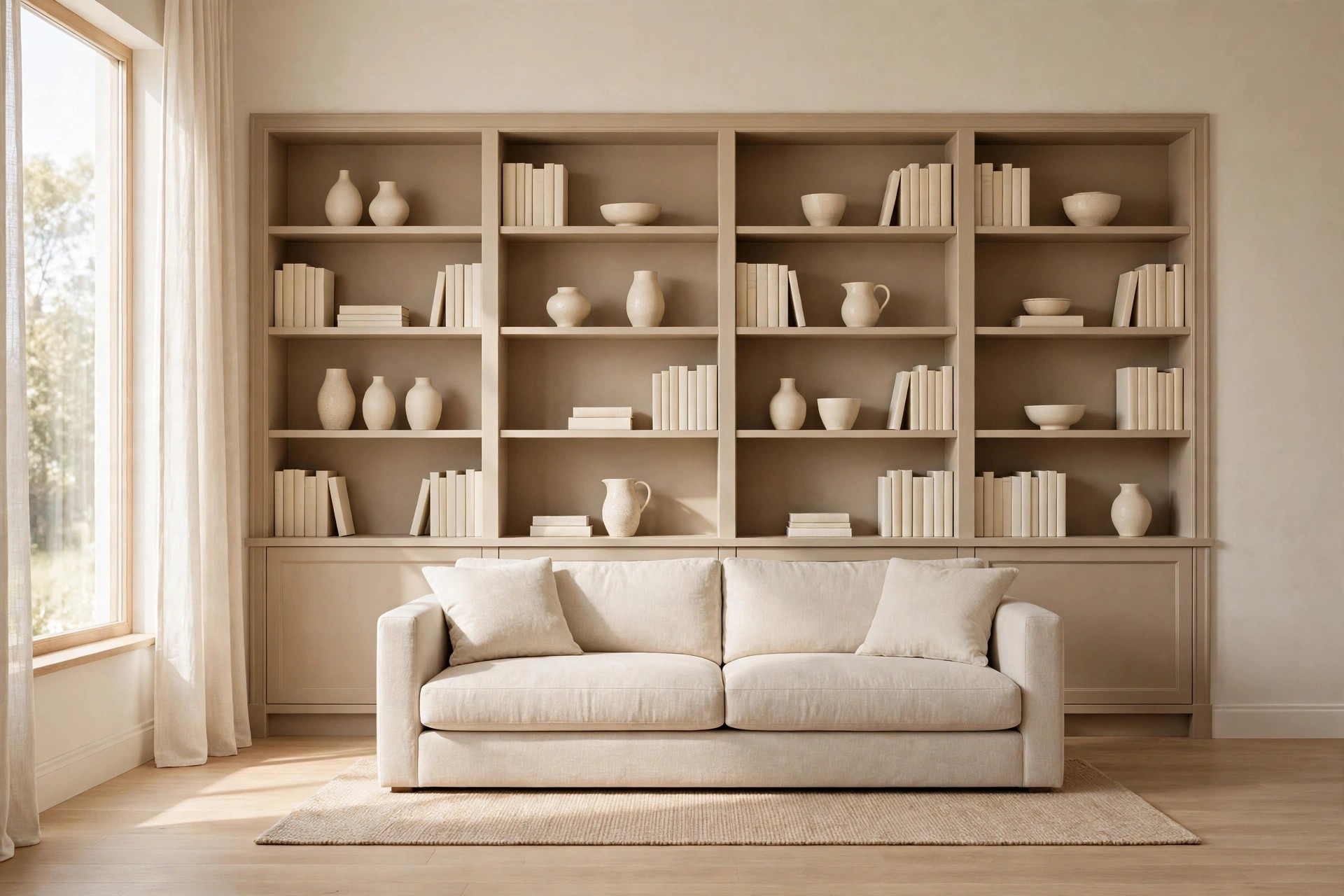
Here is the other strong color move. Keep the walls in a pale beige, then paint the built-in shelves one clear shade deeper in the same warm family.
The deeper shelf backs give each display a quiet shadow box feel. Pale ceramics and cream book spines show up well against that slightly darker ground.
Hold a paint swatch against the wall at noon and again at night. Warm lamp light can push a deeper beige toward brown, which may fight a cool grey sofa.
This tone gap also helps a long shelf wall feel shorter and cozier. The eye reads the darker unit as one piece, not as endless pale boxes. It also hides scuffs better than the palest beige does.
3. Keep Book Spines Inside a Beige Color Discipline
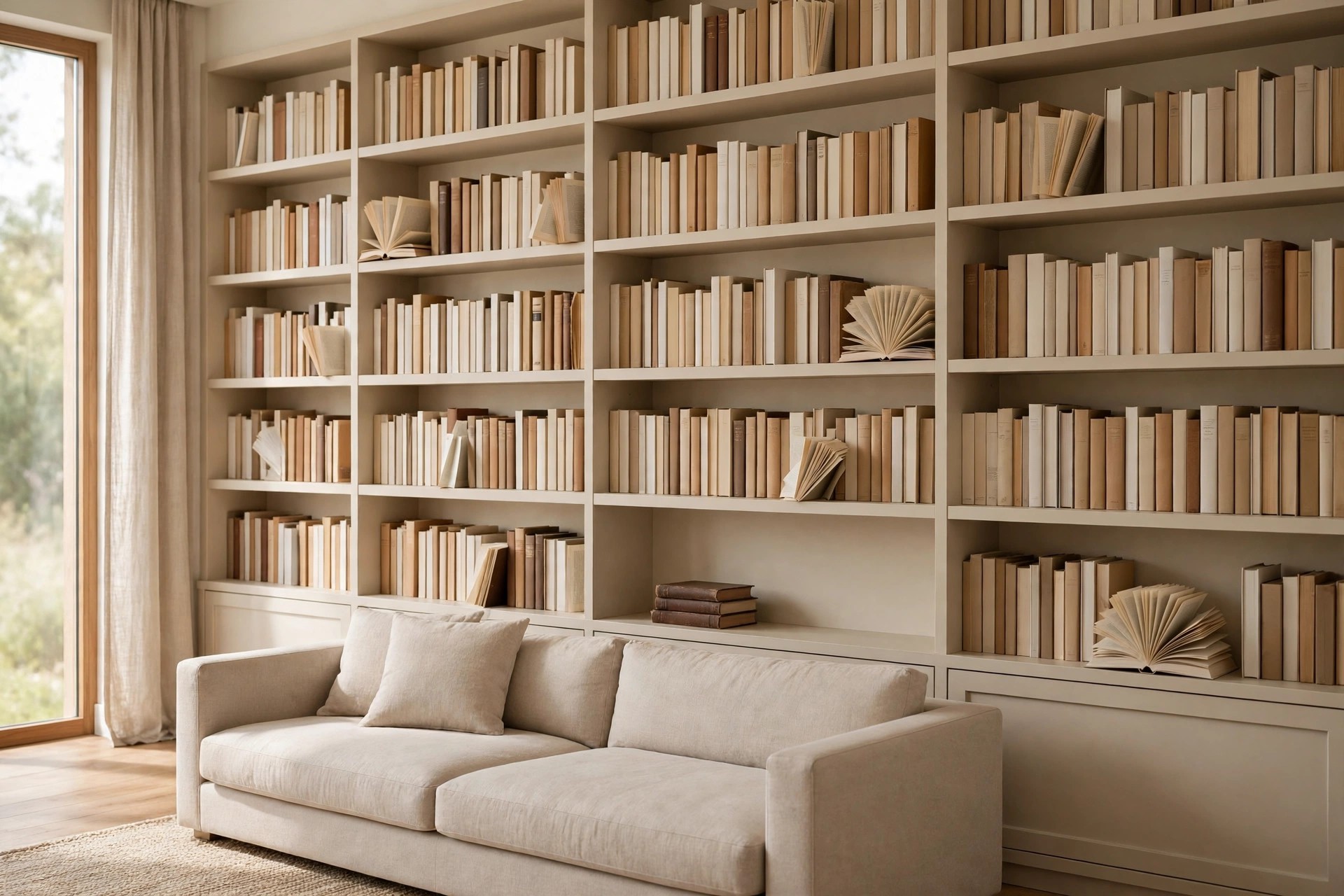
Books bring the most color onto beige shelves, and they can break the scheme in one afternoon. Sort yours into cream, tan, camel, soft brown and warm white piles.
Keep those piles for the open shelves. Move bright red, blue and neon spines to a closed cabinet or another room, where they will not fight the beige palette.
Turn a few worn books spine in, pages out, for a pale textured block. Mix those page blocks with normal spine rows so the shelves still look like real reading shelves.
Leave one small dark pile, like deep brown or charcoal, on a low shelf. That single anchor keeps the pale rows from looking washed out in bright sun. Check the piles in daylight before you shelve them for good.
4. Leave About One Third of Every Shelf Empty
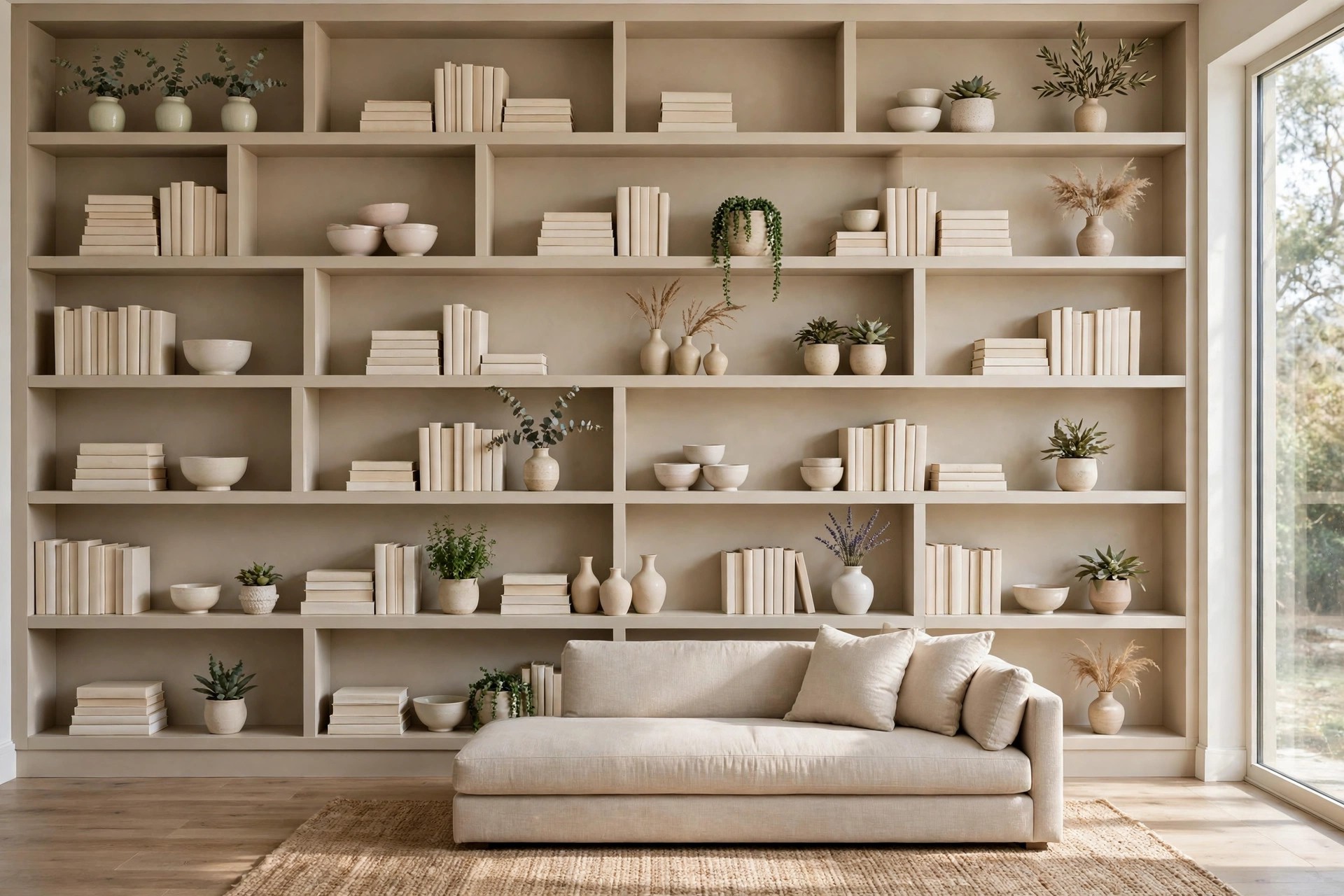
Empty space is a styling tool, not a sign that you ran out of things. Aim to leave about one third of each shelf open, with the gaps spread across the wall.
A gap beside a stack of books lets the stack read as a choice. A gap above a low bowl gives tall shelves air and stops the top rows feeling heavy.
Step back to the doorway and squint at the wall. Crowded shelves merge into dark bands, while shelves with clear gaps show a calm, even pattern.
When guests add gifts or new books arrive, fill a gap first before you squeeze books tighter. That habit keeps the wall calm as your collection grows over time. Empty space, used well, makes every kept object look chosen.
5. Style Each Shelf in Groups of Three
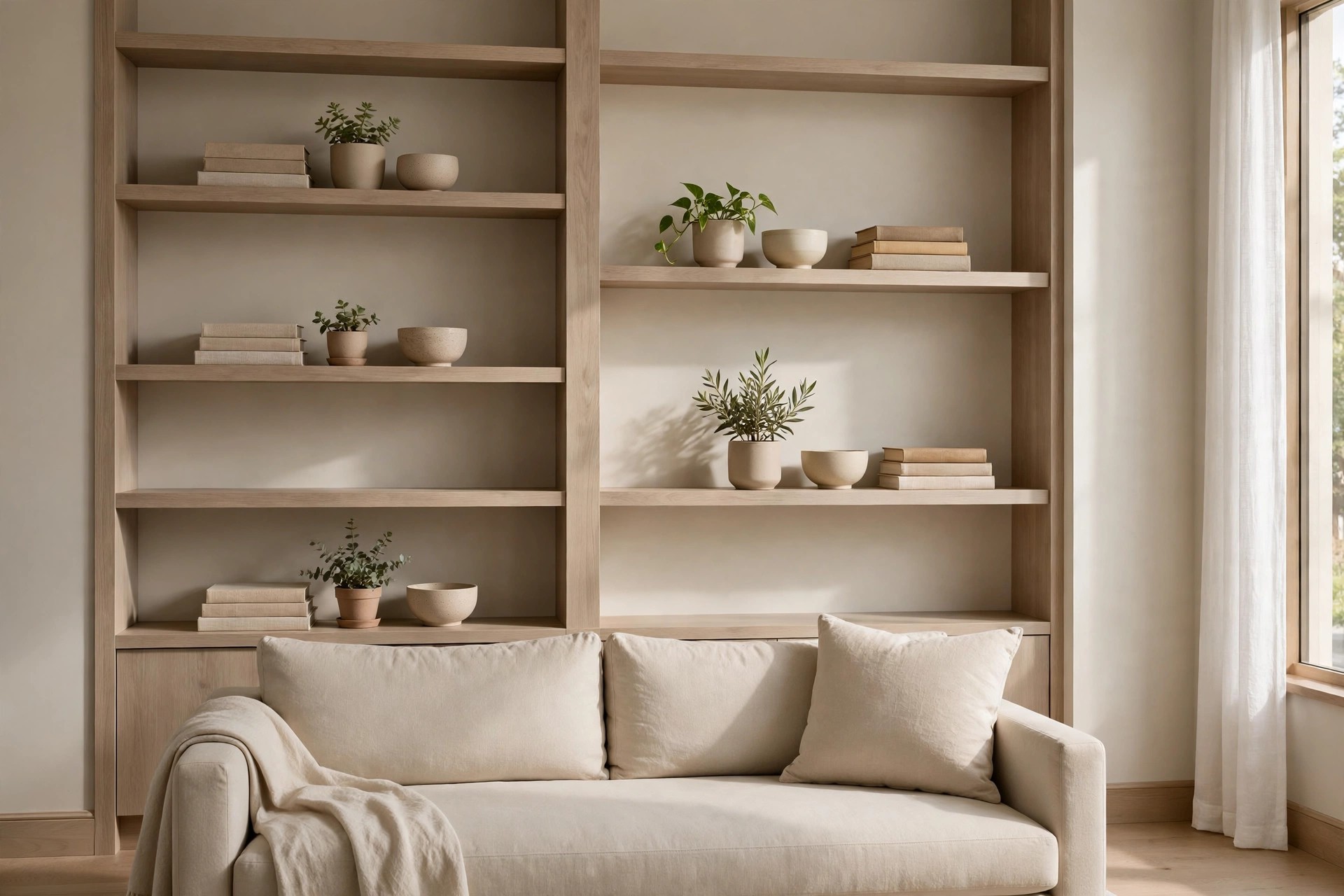
A simple group of three gives the eye a clear place to land. Try a short book stack, a small plant and one round bowl on a single shelf.
Vary the heights inside the group. Tall, middle and low pieces form a soft triangle, which looks settled from the sofa and from the door.
Repeat the same rhythm on the next shelf, but shift it to the other side. Left, then right, then left again keeps the wall balanced without looking matched.
Use odd groups on most shelves, then break the rule once. One lone vase on an otherwise empty shelf becomes a quiet focal point among the busier groups. Groups also make dusting and restyling much faster each month.
6. Put Woven Baskets Along the Lowest Shelves
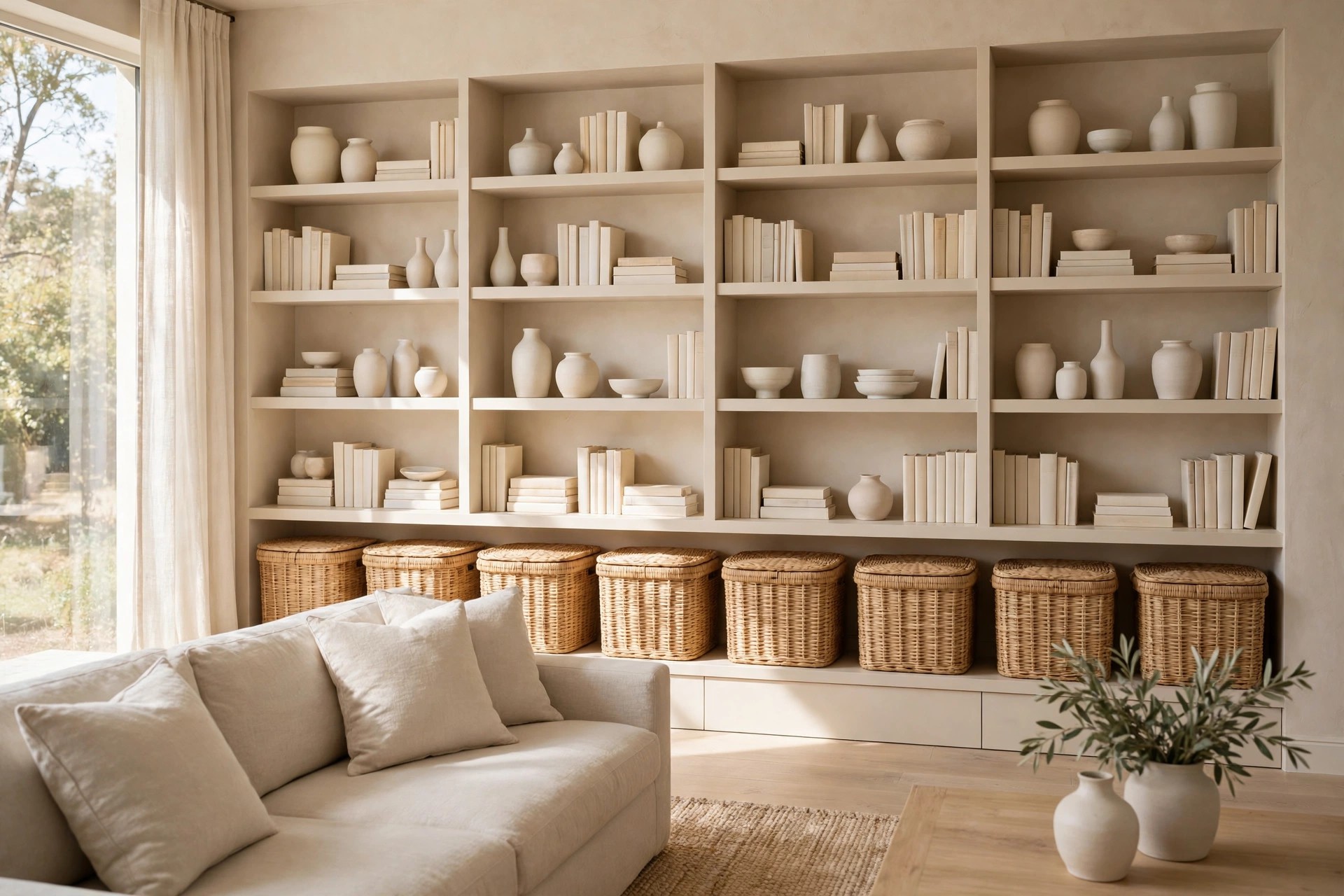
The lowest shelves work hardest in family rooms. Fill them with woven baskets in natural tan and honey tones that sit inside the beige scheme.
Baskets hide the messy things well: remotes, chargers, game controllers and loose toys. Lids help most, since open baskets still show a jumble from above.
Choose one basket style and repeat it across the bottom row. Mixed basket shapes on the lowest line can look untidy, even when each basket is neat on its own.
That woven texture also warms the painted shelves. If you like that natural feel, our cozy rustic living room ideas use the same tones on a larger scale. Keep spare baskets empty, so clutter never creeps back onto open shelves.
7. Use Lidded Linen Boxes for the Clutter You Hide in Plain Sight
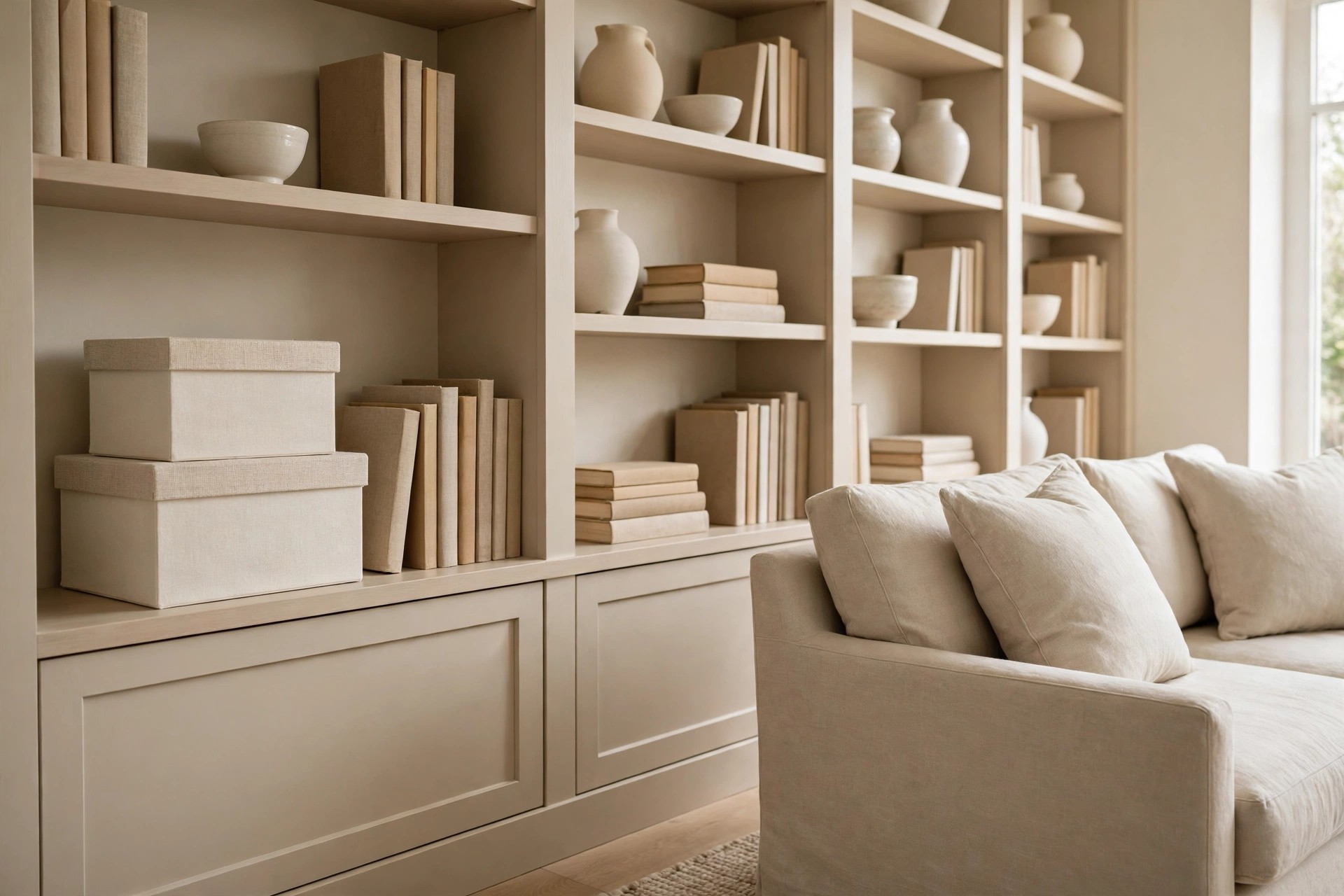
Some shelf clutter is small and fiddly: batteries, coasters, spare bulbs and card decks. Lidded boxes in cream linen or pale canvas hold it all without visual noise.
Pick boxes that fill most of the shelf depth. Shallow boxes leave a dark gap behind them, and that shadow line can look like a missing book row.
Label the boxes on the inside of the lid, not on the front. The shelves stay clean to look at, and you still find the spare remote batteries in seconds.
Stack two boxes on one wide shelf and stand books beside them. The flat stack works like a book stack, but it earns its place by holding real things. One box per type of clutter keeps the system easy to keep.
8. Mix One Trailing Plant With One Upright Plant
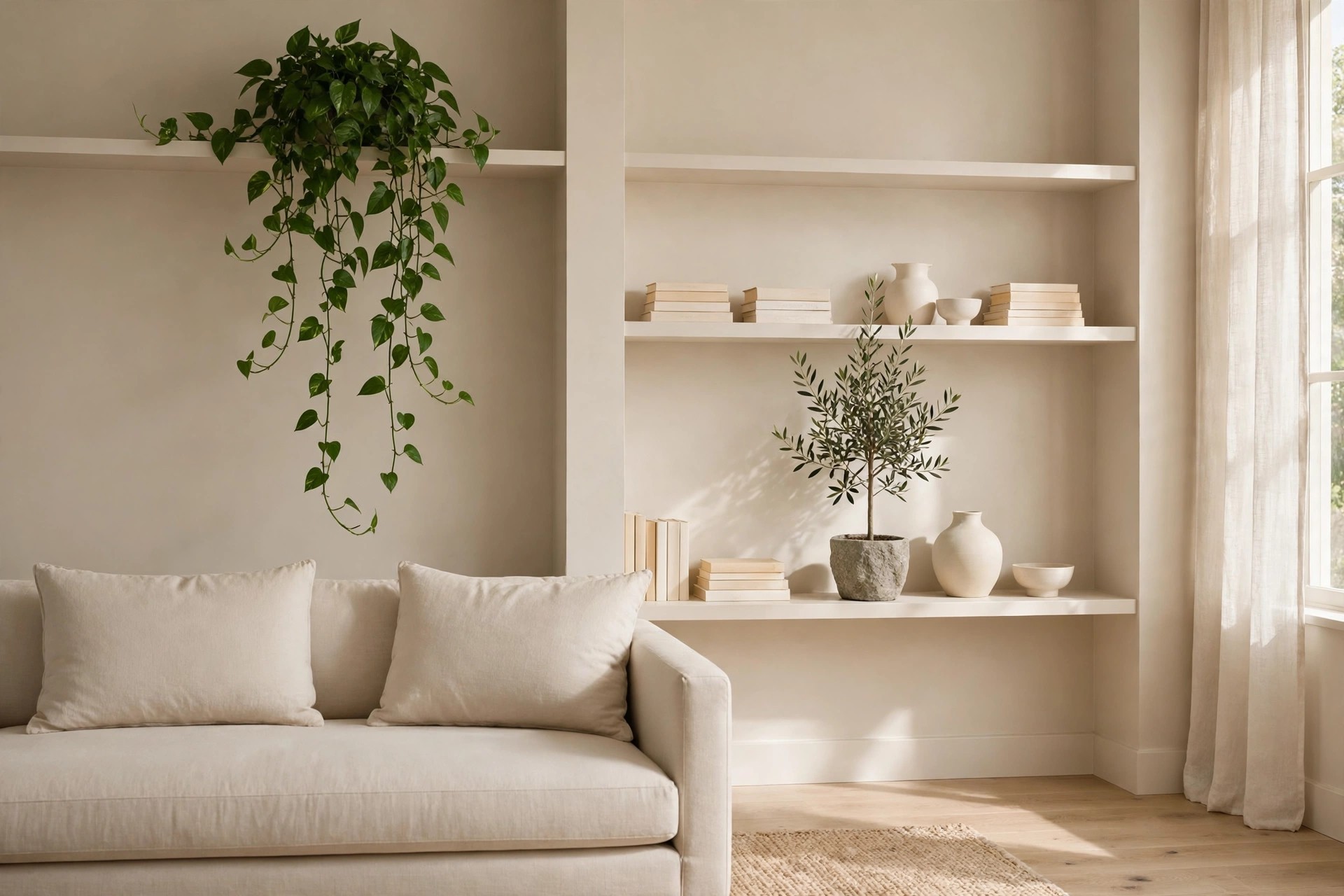
Plants soften the straight lines of built-in shelves faster than any other object. Use one trailing plant on a high shelf and one upright plant on a lower shelf.
The trailing stems break the hard shelf edge as they fall. The upright plant fills a tall gap between books and stops that shelf from looking squat.
Keep pots inside the palette: matte stone, pale terracotta, cream ceramic or woven covers. A bright plastic pot can pull more attention than the plant itself.
Watch the sunny end of the wall. Leaves there grow faster and can fade pale, so swap the two plants every few weeks to keep both sides even. Wipe dusty leaves too, since shelves show dust against pale paint.
9. Choose Ceramics in Matte and Gloss Beige Finishes
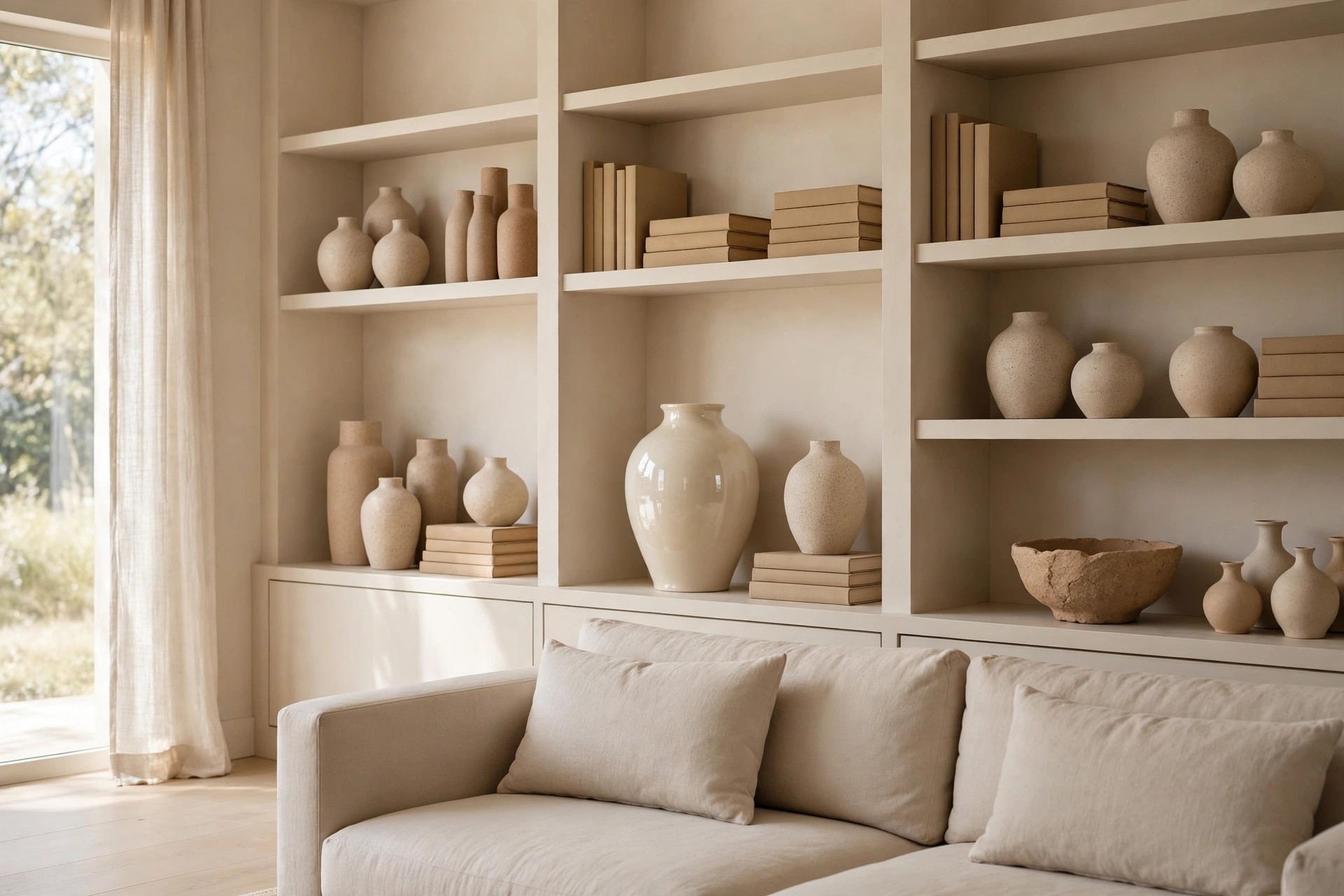
Ceramics give beige shelves their texture. Mix matte stoneware, smooth gloss pieces and one rough handmade bowl, all inside cream, sand and warm clay tones.
Group ceramics by finish as well as by size. A matte row feels soft and chalky, while a gloss piece near the window catches light and lifts the whole shelf.
Keep each ceramic group to two or three pieces. Long rows of small vases can read as a shop shelf, and dusting them soon becomes a chore you avoid.
Place the largest piece off center, then balance it with a book stack on the far side. That offset keeps the display calm but not stiff or formal. Swap one ceramic piece each season instead of buying whole new sets.
10. Add Warm Shelf Lighting to Lift Flat Beige Tones
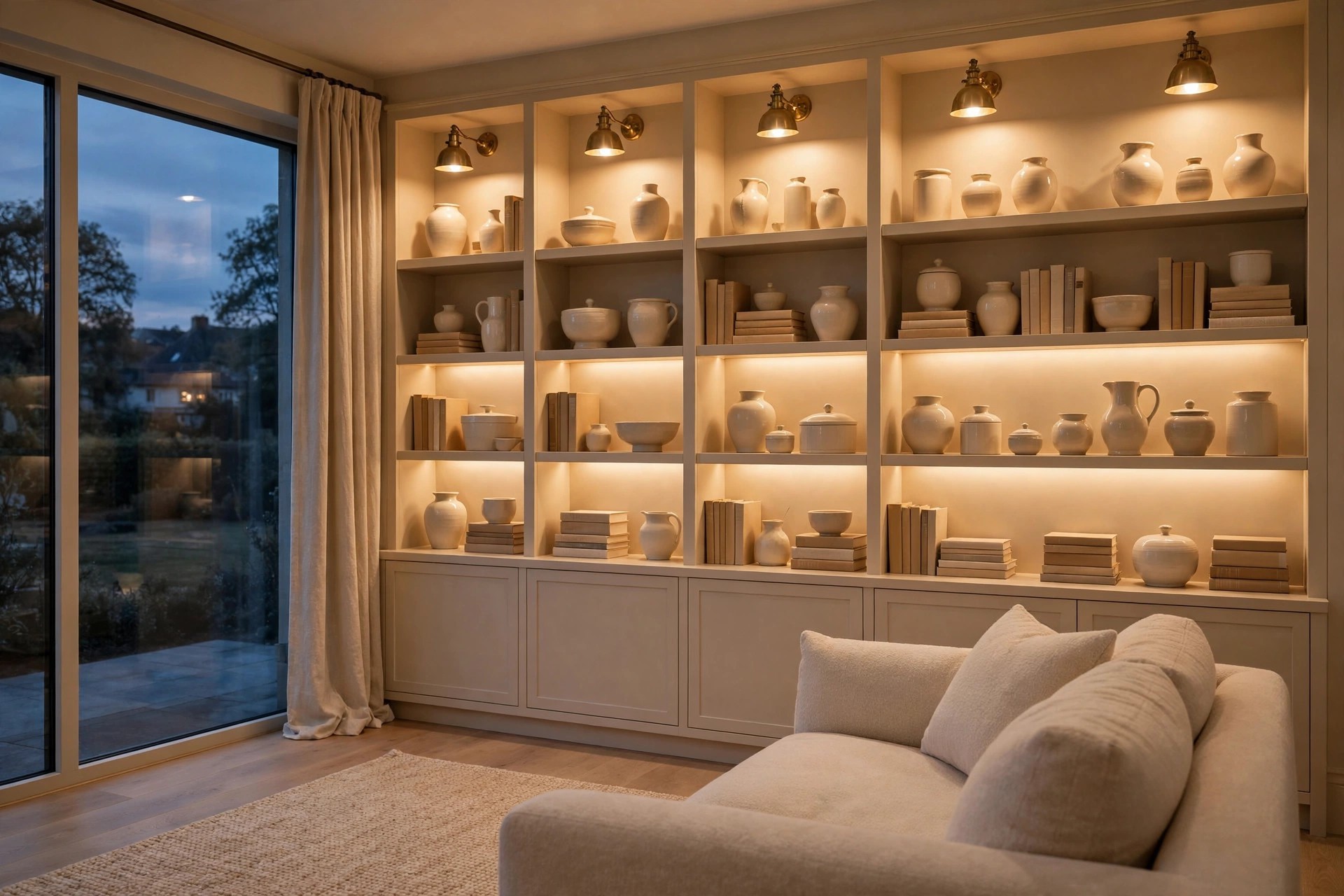
Beige shelves can look grey and flat on dull days. Slim picture lights above the top shelf or soft strips under each shelf bring the warm tones back.
Choose warm white light, and test one shelf before you fit them all. Light that is too cool turns cream ceramics blue and makes tan books look dirty.
Light the shelves you style most, not every single row. A lit middle band with darker top and bottom rows gives the wall a gentle, layered glow at night.
Keep cords and chargers behind book stacks or inside a lidded box. Visible cables cut across the calm lines and draw the eye more than any vase will. Test the glow after dark, when shelf light matters most.
11. Keep the Shelves Around a TV Quiet and Low in Contrast
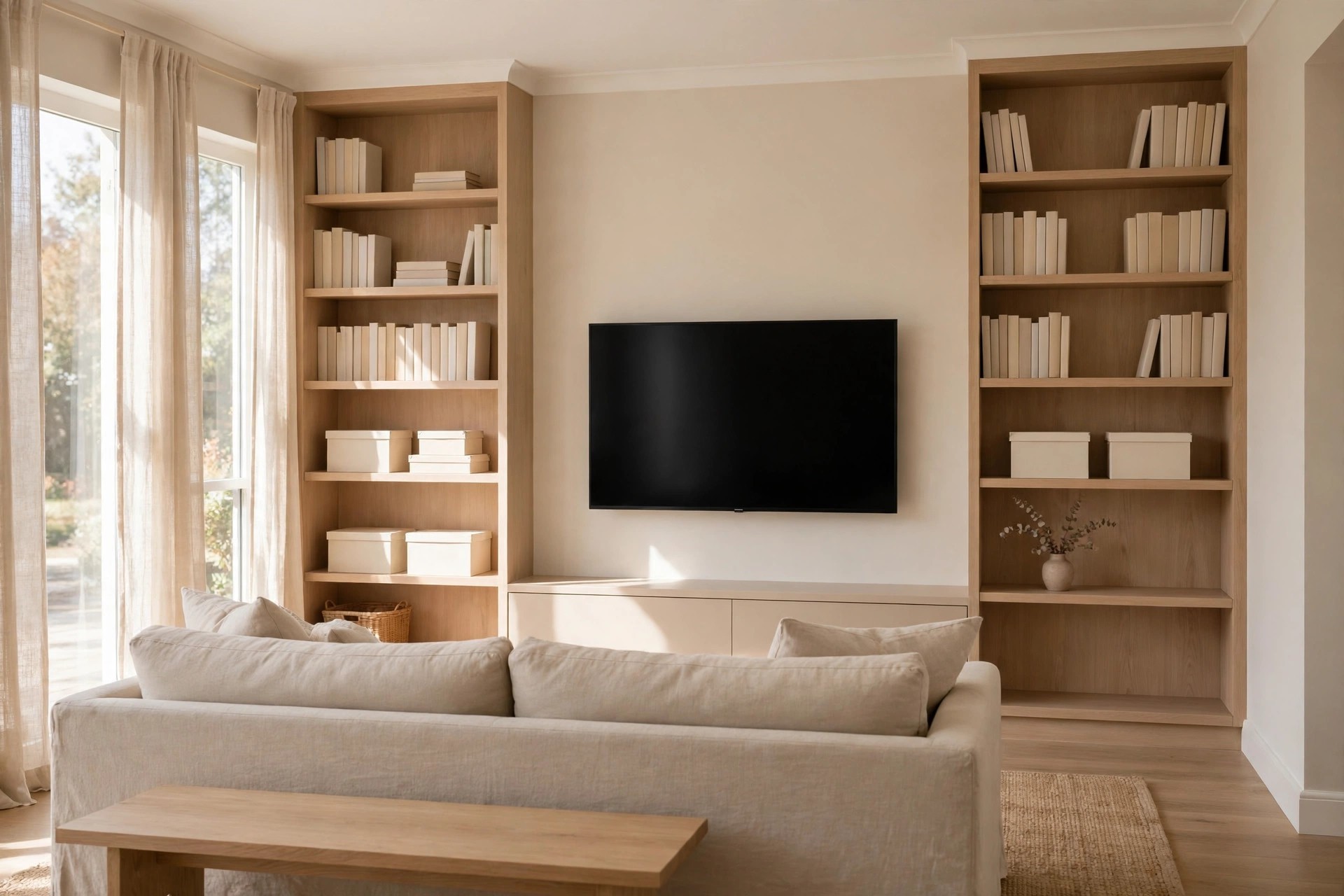
A TV between built-in shelves needs calm styling around it. Keep the shelves beside the screen low in contrast, with pale books, plain boxes and few small objects.
Dark or busy displays next to a screen compete while you watch. Your eye keeps drifting sideways, and films feel more tiring than they should in that setup.
Repeat the sofa color once on each side of the TV, in a cushion toned book pile or a fabric box. That small link ties the screen wall to the seating.
Leave the shelf right beside the screen almost empty. That breathing room frames the TV like a picture and stops the wall feeling packed edge to edge. The TV wall then feels restful even when the screen is off.
12. Balance Shelves on Both Sides of a Fireplace Without Matching Them
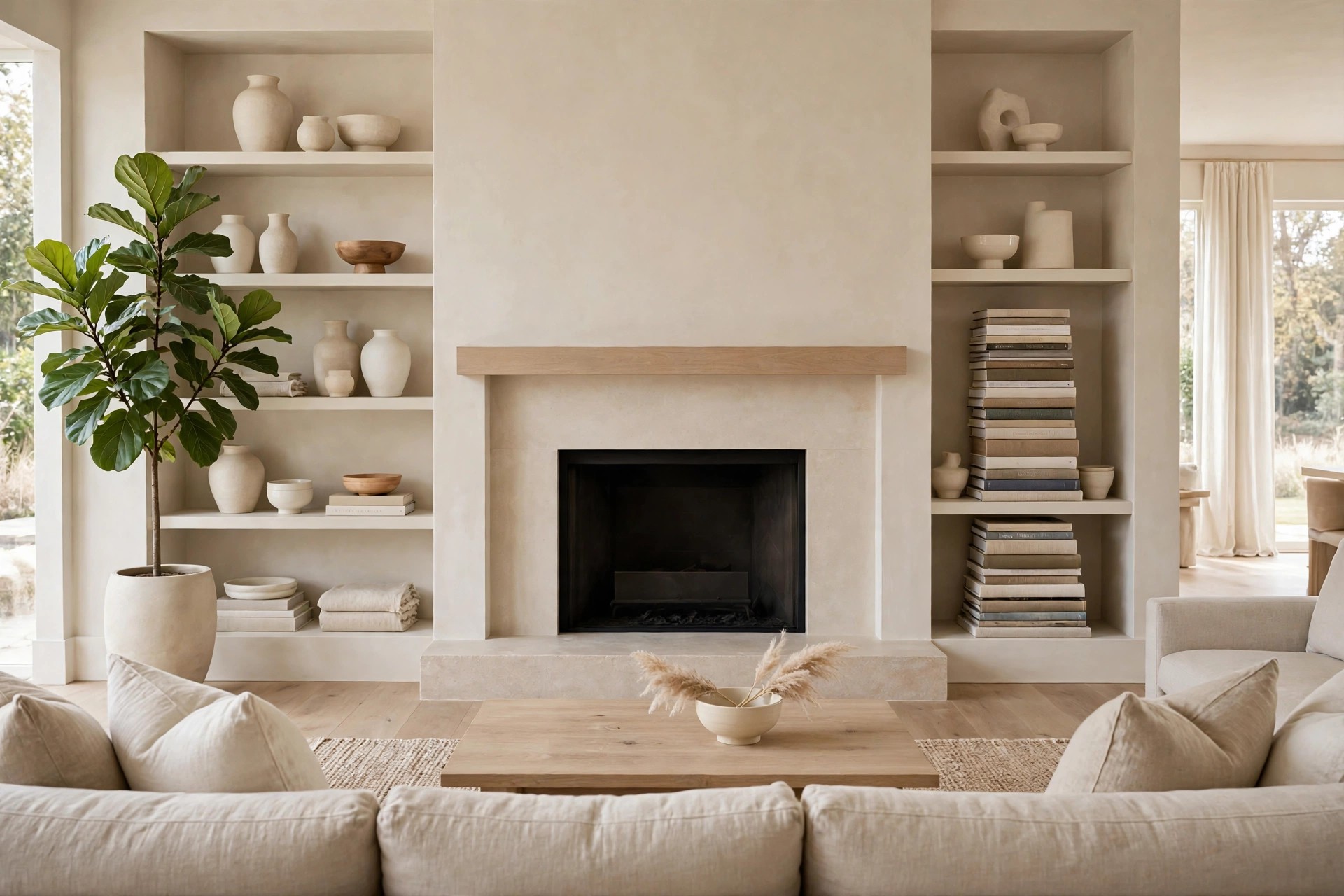
Shelves flanking a fireplace look best when they balance, not when they match piece for piece. Give each side a similar weight of books, height and dark tones.
Put a tall plant on one side and a tall stack of art books on the other. Both sides rise to a similar height, so the fireplace stays the clear center.
Repeat one material across both sides, like brass, black metal or light wood. That shared note tells the eye the two different displays belong to the same wall.
For more on the fireplace itself as the center of the room, see our grey beige fireplace focal point ideas for the hearth styling side. Keep mantel objects low, so shelf displays stay the taller layer.
13. Lean Framed Art at the Back of Deep Shelves
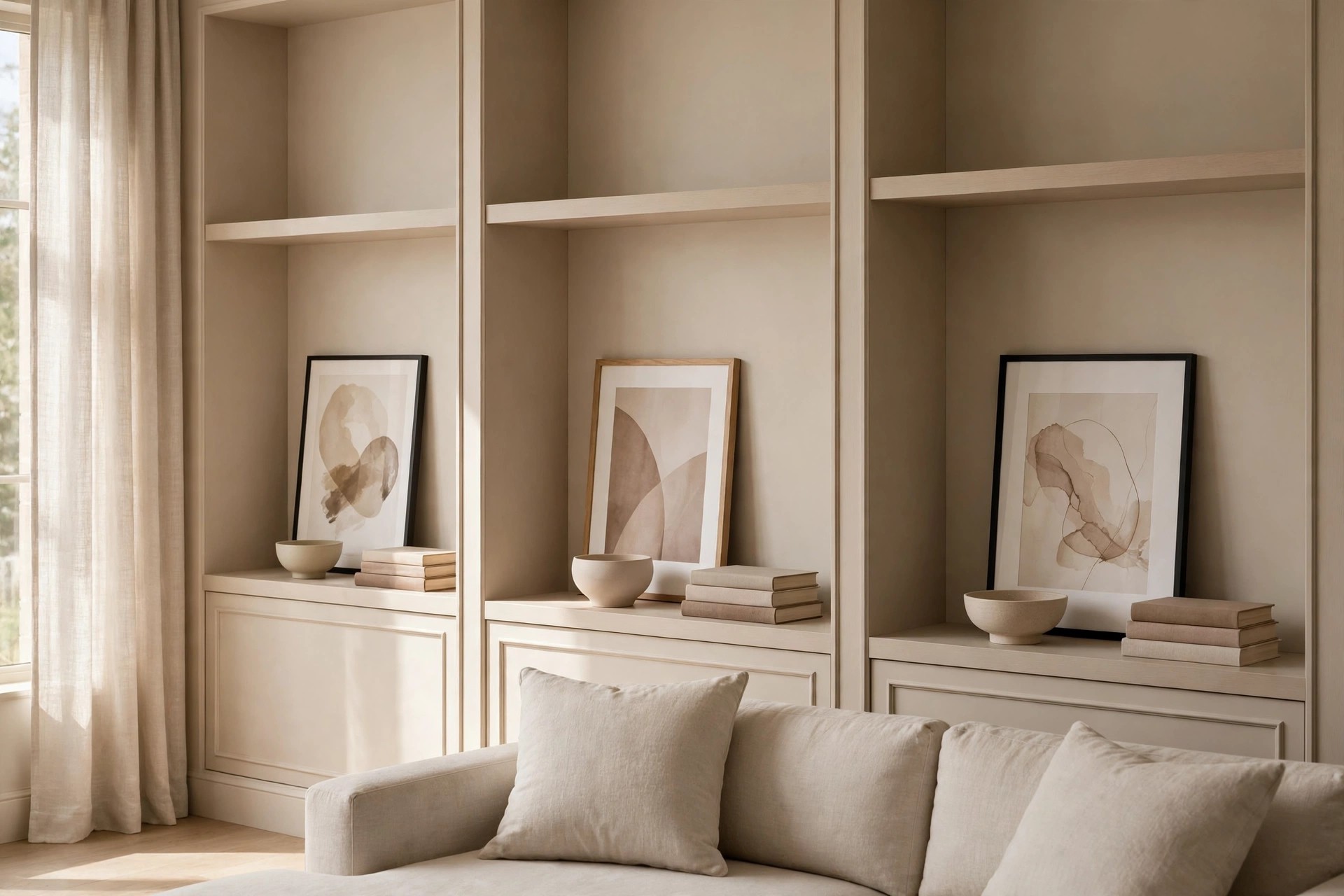
Deep shelves can swallow small objects. Lean a framed print or photo against the back panel, then place a low bowl or short book stack in front of it.
The frame fills the tall back space that books rarely reach. It also adds a flat layer behind your round and soft objects, which makes the shelf look deeper.
Stay inside the scheme with art in beige, cream, soft brown and muted green tones. Wood or thin black frames work well and do not add new colors to manage.
Leave a finger of space between the frame and the shelf above. Tight frames look wedged in, and you will chip the paint each time you pull one out to dust. One framed piece per two shelves is plenty for most walls.
14. Refresh the Shelves by Season Without Changing the Beige Base
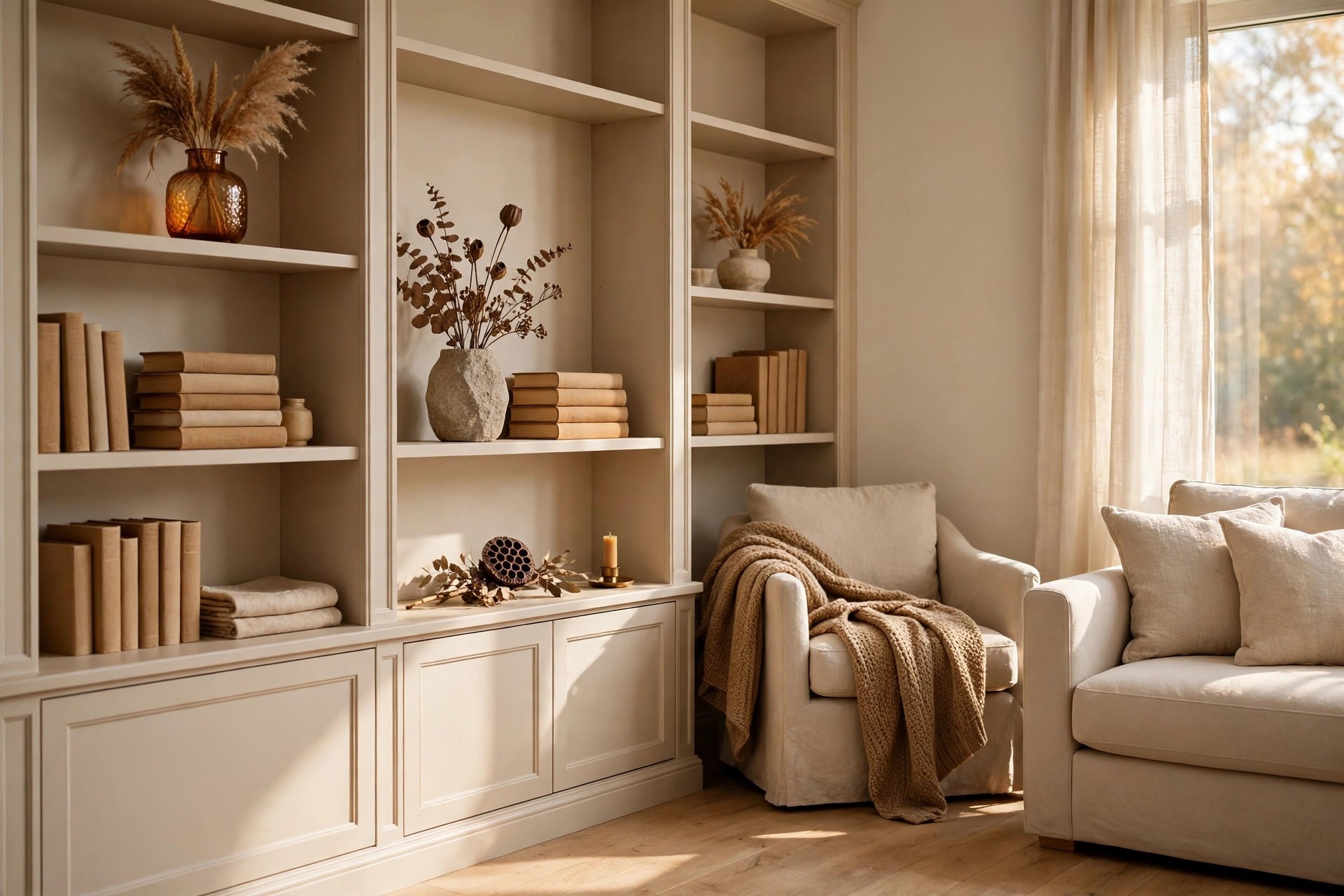
The beige base can stay all year. Change only three or four small shelf accents as the seasons turn, and the whole wall feels fresh again.
In autumn, swap in amber glass, a camel throw on the nearest chair and dried stems in a stone vase. In spring, use pale green stems and lighter cream ceramics instead.
Store the off season pieces in one of your lidded shelf boxes. The swap then takes minutes, and spare accents do not pile up in a spare room cupboard.
Take a phone photo of each season once you like it. Next year you can rebuild the same look in minutes instead of guessing what sat beside the plant. Seasonal swaps also give you a reason to dust every shelf properly.
15. End the Shelf Wall With a Small Reading Display
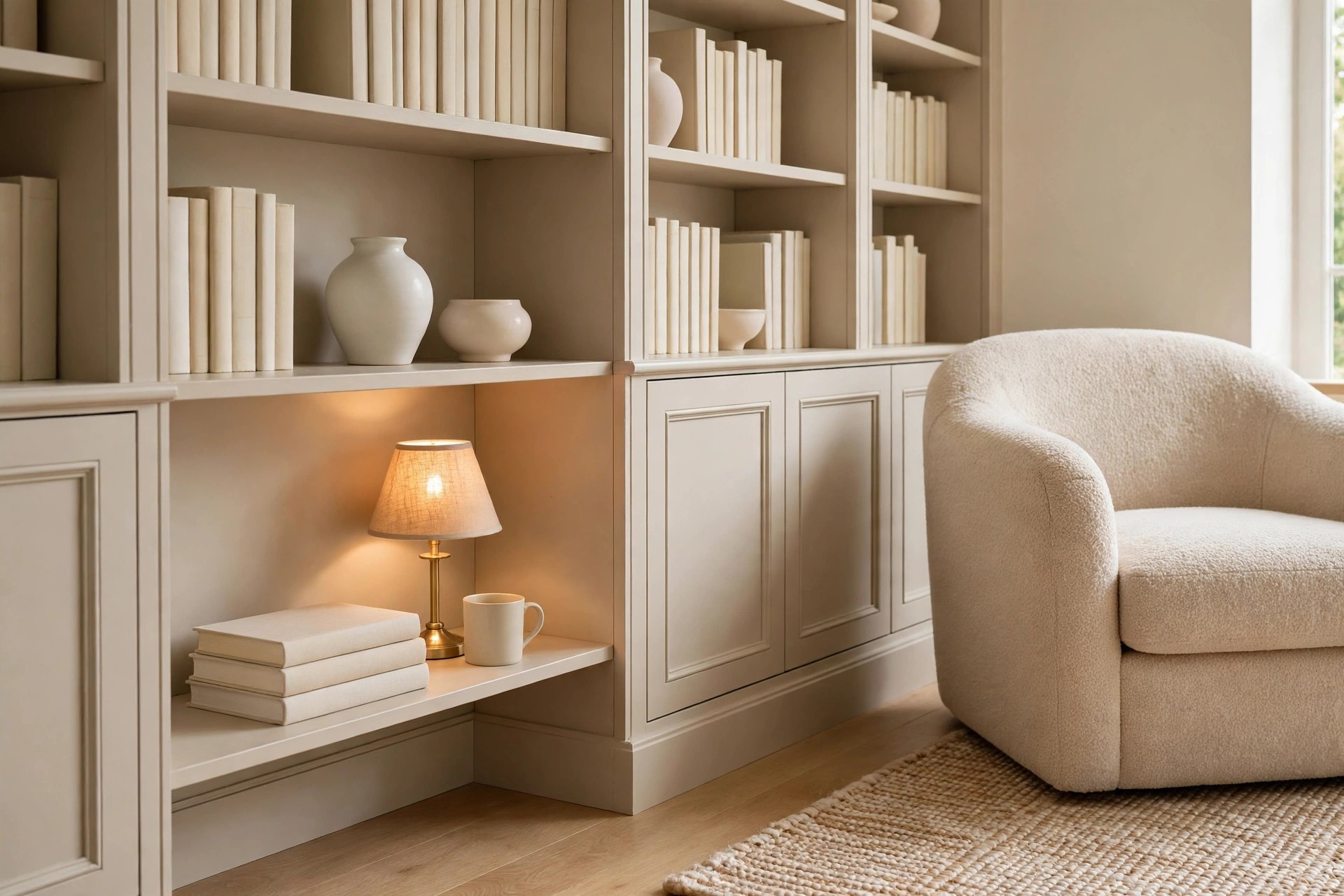
Finish the wall at the end nearest your favorite chair. Keep one low shelf for current reads, a small lamp and the book you plan to open tonight.
A short stack of three or four books looks better here than a full row. It says this corner gets used, and it leaves room for a mug beside the stack.
Tie the corner back to the seating with color. Our guide to living room rugs with a beige couch helps match that rug tone to the shelf wall.
For a fuller setup beside the shelves, our beige reading corner ideas build the chair, lamp and side table part out in detail. That small display gives the long shelf wall a warm, lived in end.
Good shelf styling in a beige room comes down to restraint. Keep the colors close, leave real gaps, and let baskets, boxes, plants and warm light do the quiet work.
Start with just one shelf, not the whole wall. Apply the book color rule, clear a third of it, and live with it for a day before you move on.
These beige living room ideas with built in shelf styling work shelf by shelf, so progress stays visible. Save this to your beige living room board for later, then tackle the next shelf.


