

15 Brown Living Room Ideas for Beginners Who Are Nervous About Going Dark
Decorating a brown living room can feel intimidating when you are starting from scratch. You may like the warmth of brown furniture but worry that the room will look too dark, too old-fashioned, or difficult to coordinate. The good news is that brown is one of the easier colors to build around once you understand how to balance it.
You do not need to replace everything or choose a complicated color scheme. Start with one brown anchor, such as a sofa, rug, coffee table, or wooden furniture. Then introduce lighter neutrals, a few different textures, and one accent color if you want more personality.
For beginners, the simplest approach is usually the most successful. Instead of trying to create a perfectly styled room immediately, build the space gradually and see how each addition works with what you already own.
These 15 brown living room ideas are designed to make the process easier, whether you are decorating your first apartment, refreshing an existing room, or simply learning how to work with warm brown tones.
1. Start With a Brown Sofa and Cream Walls
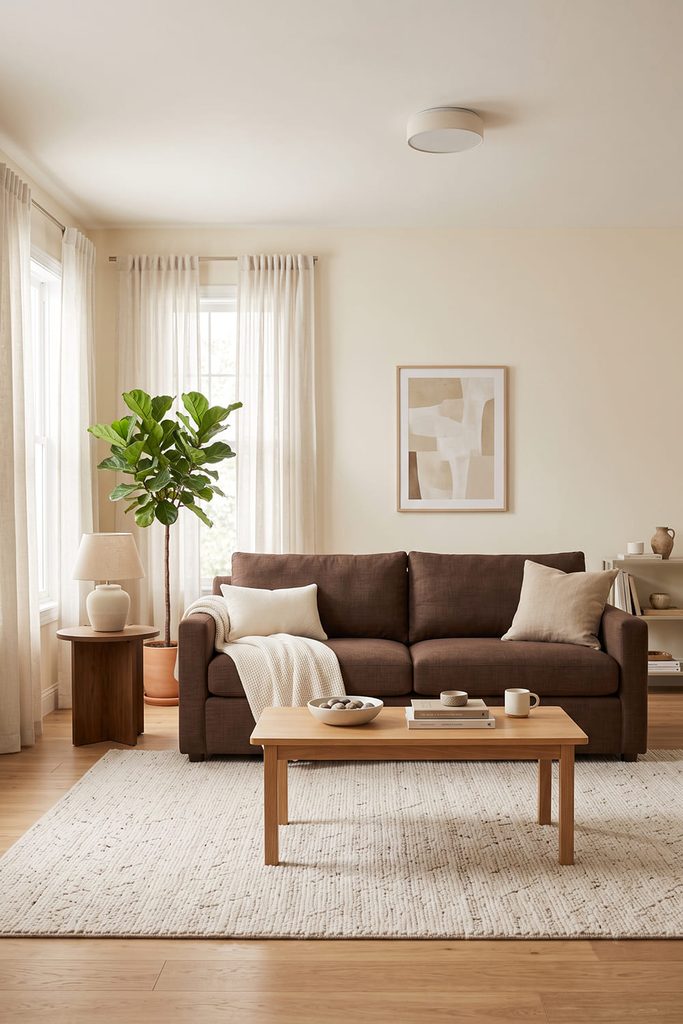
A brown sofa is one of the easiest starting points for a beginner. Let it become the main color anchor while keeping the walls light and simple.
Cream, warm white, or soft beige walls create contrast against chocolate, walnut, caramel, or medium-brown upholstery. Add an ivory rug, a few cream cushions, and simple curtains in a similar light tone.
You do not need to match every item perfectly. The purpose of the lighter colors is simply to give the brown sofa enough breathing room.
If the room already has white walls, there may be no need to repaint. Start by adding a cream rug and lighter textiles around your existing sofa. This is an easy way to test the palette before making a bigger decorating decision.
2. Try Brown and Beige for an Easy Neutral Look

If you are unsure which colors work with brown, beige is one of the simplest places to begin. Combine a medium or dark brown sofa with beige curtains, a taupe rug, and light neutral cushions.
The different shades should not be identical. Slight variations between brown, beige, tan, and taupe create depth while keeping the overall palette easy to coordinate.
Add natural wood through a coffee table or side table if you need another layer of warmth. A woven basket or textured throw can provide additional interest without introducing another strong color.
This approach is especially useful for beginners because most of the colors are naturally compatible. You can also add a stronger accent color later if the room feels too neutral.
3. Add Brown Through a Rug Instead of Furniture
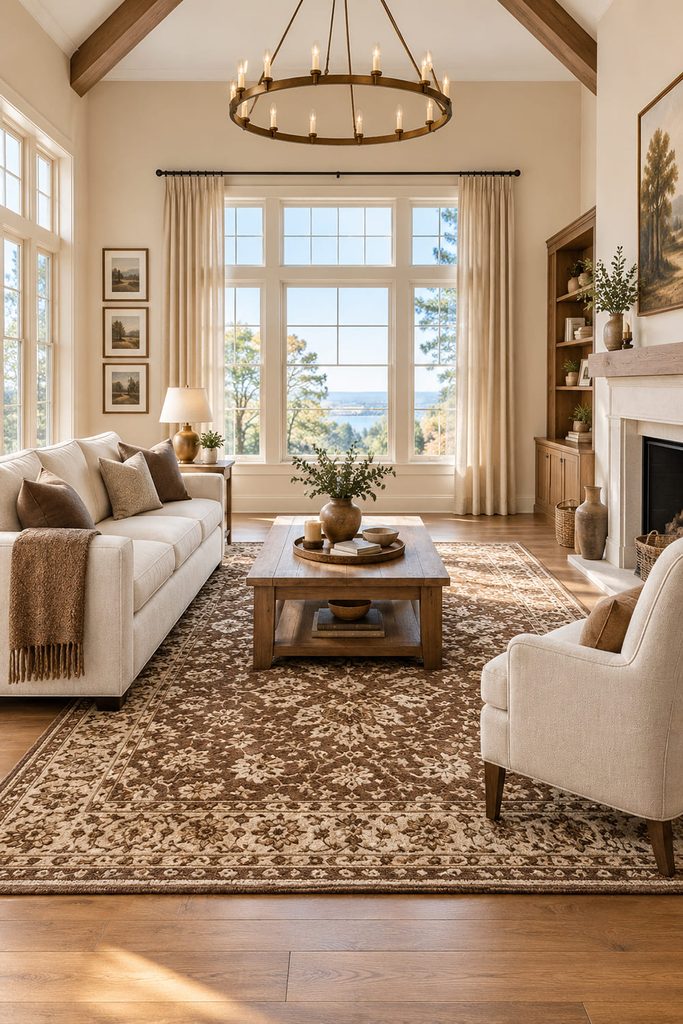
You do not need a brown sofa to create a brown living room. If your existing sofa is cream, gray, beige, or another neutral, start with a brown-patterned area rug. Choose a design that combines brown with one or two lighter shades. Cream, ivory, beige, muted blue, or soft green can help connect the rug with the rest of the room.
The rug can then become the starting point for smaller brown details. Add a wooden coffee table, brown picture frames, or a few cushions that repeat one of the rug’s shades.
This is a particularly useful beginner strategy because rugs can change the overall appearance of a room without requiring you to replace large furniture.
4. Combine Brown With Natural Wood
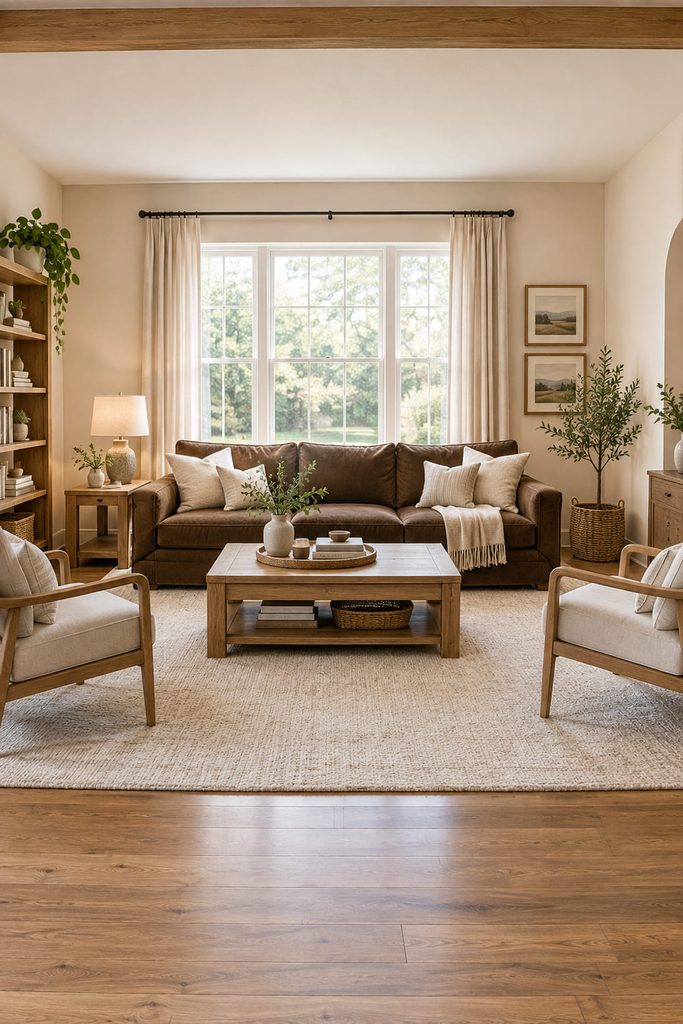
Brown and wood naturally work together, making this one of the easiest combinations for someone decorating for the first time. Start with a brown sofa or armchair and add a natural wood coffee table. You can then repeat wood through a side table, shelving, picture frames, or a small console.
Do not worry about making every wooden piece the same color. A mixture of light and medium wood can add visual variety. Balance the warmth with cream or off-white textiles. An ivory rug, light curtains, or pale cushions can stop the room from becoming a collection of dark surfaces.
This approach is simple, forgiving, and easy to build gradually.
5. Use Brown With Soft Green

If your brown living room feels too neutral, introduce a muted green. Sage, olive, or soft forest green can work particularly well with warm brown furniture.
You can start very small. Add two green cushions to a brown sofa, place a green-toned artwork above it, or introduce a few plants. For a stronger look, use an olive accent chair or curtains with subtle green details.
Keep the remaining colors simple with cream, beige, and natural wood. This allows the green and brown combination to remain the focus. Beginners do not need to use many colors at once. One accent color repeated in several places can make the room feel much more intentional.
6. Create a Brown and White Living Room

Brown furniture against white or warm-white walls creates a straightforward contrast that is difficult to overcomplicate. A dark brown sofa can stand out beautifully against light walls. Add a white or ivory rug, light curtains, and a few cushions in different shades of brown.
If the room starts feeling too stark, introduce natural wood, woven baskets, linen, or other soft textures. Avoid making every surface bright white. Warm white and cream can usually create a softer transition with brown furniture.
This combination is a useful starting point if you prefer a clean room but still want the warmth that brown provides.
7. Add a Brown Leather Accent Chair

If you already have a neutral sofa, a brown leather accent chair can introduce warmth without changing the entire room. Choose a chair in cognac, caramel, medium brown, or dark chocolate depending on the existing furniture.
Place it at an angle toward the sofa to create a comfortable conversation area. Add a small side table and a floor lamp to make the chair feel like part of the overall arrangement.
Repeat the brown once or twice elsewhere in the room through a cushion, wooden frame, basket, or small decorative object. The important part is repetition. A single brown chair can look disconnected if nothing else in the room relates to it.
8. Layer Different Shades of Brown
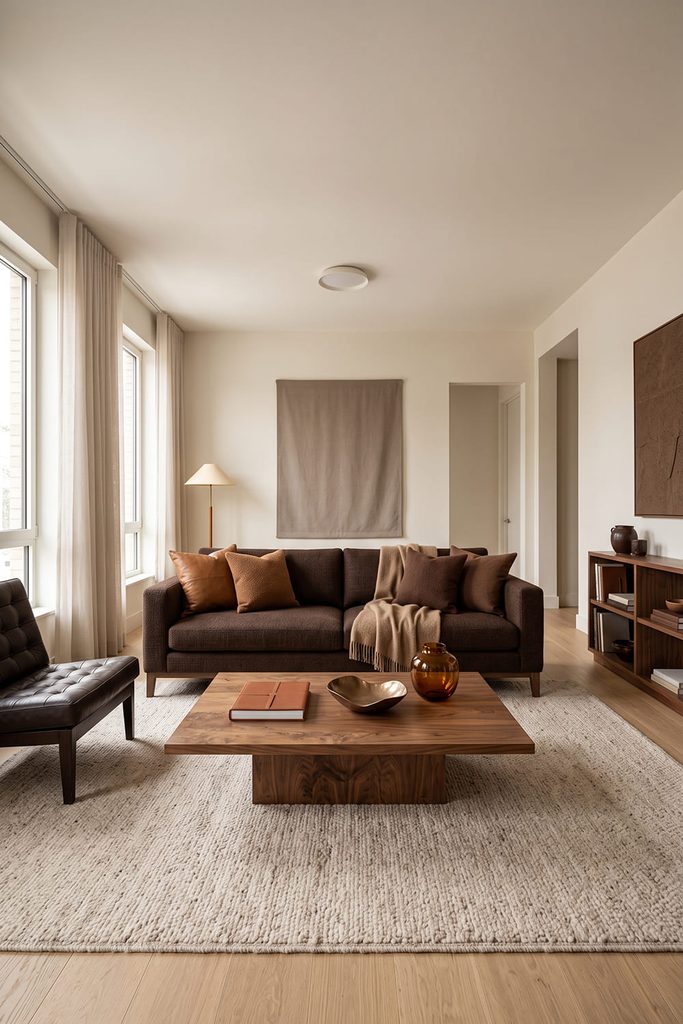
Beginners sometimes assume that every brown item needs to match. It does not. In fact, combining several related shades can make a room feel more interesting. Try chocolate brown with caramel, tan, cognac, walnut, or taupe.
For example, you could have a dark brown sofa, medium walnut coffee table, caramel cushions, and a tan throw. Keep larger surrounding surfaces lighter, particularly if several of your furniture pieces are dark.
This creates a tonal palette where the colors belong together without making the room look like a matching furniture showroom.
9. Use a Brown Coffee Table
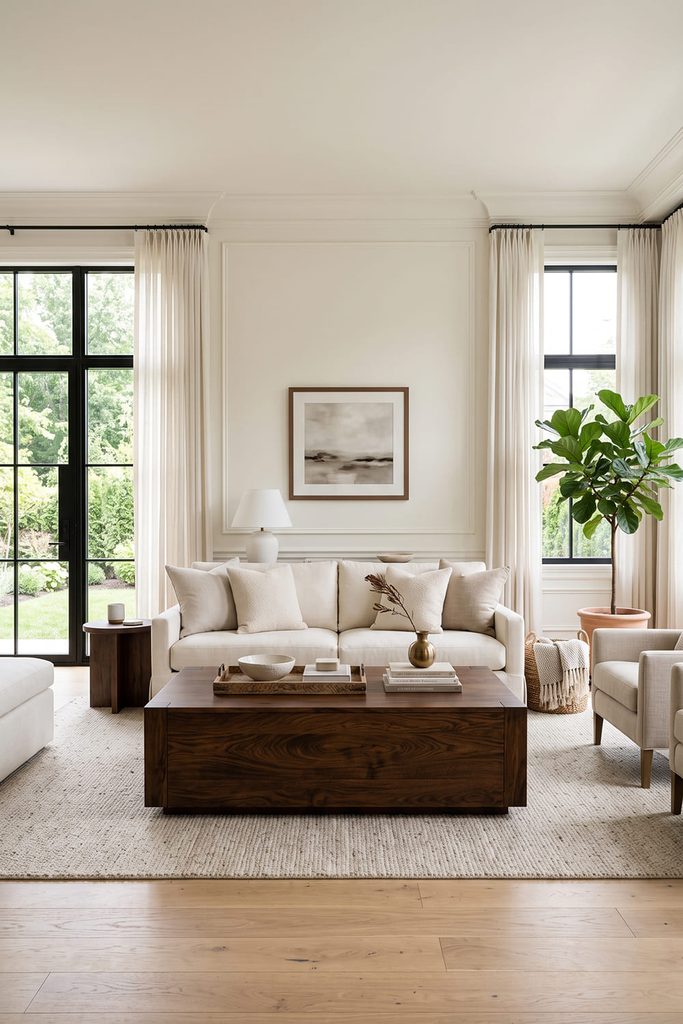
If you are not ready for a brown sofa, begin with the coffee table. A brown wooden or dark-stained coffee table can become the visual anchor of a neutral seating arrangement. Pair it with a cream, beige, gray, or soft-colored sofa.
Then repeat the brown in smaller details. A wooden side table, picture frame, floor lamp base, or decorative tray can connect the coffee table to the rest of the room.
This is a low-pressure way to experiment with brown because the color remains concentrated in furniture rather than dominating the entire space. If you eventually decide you want more brown, you already have a foundation to build on.
10. Add Cream Textures to a Dark Brown Sofa
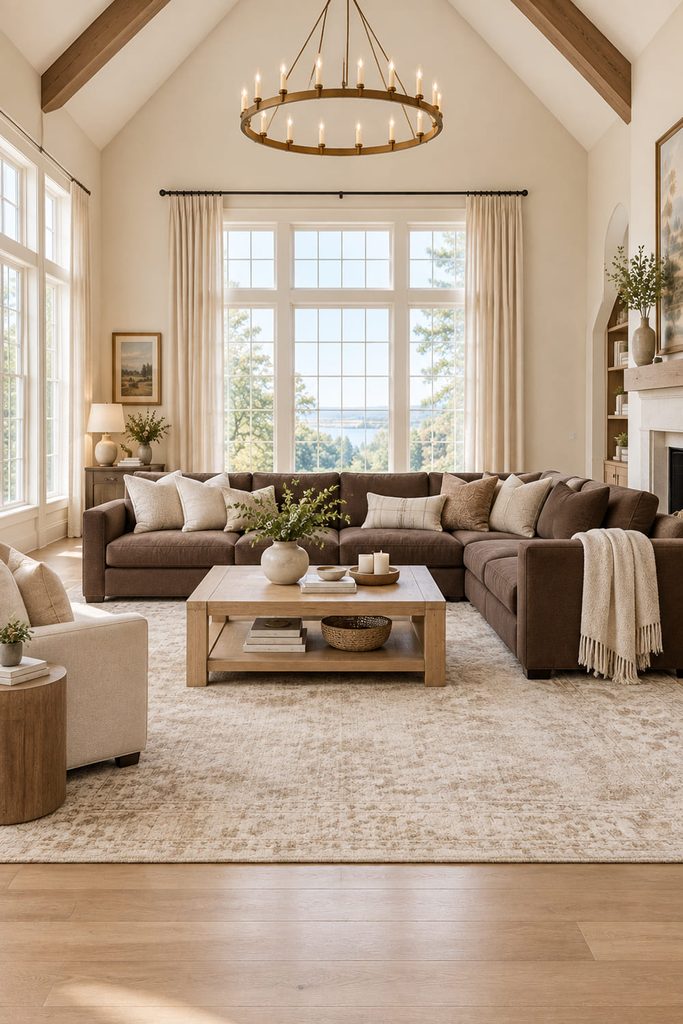
A dark brown sofa can sometimes feel visually heavy, particularly when it is large. One of the easiest ways to soften it is by adding lighter textures. Try cream or oatmeal cushions in different fabrics. Add a soft ivory throw across one arm and place the sofa over a pale neutral rug.
The contrast can make the sofa look more intentional instead of simply dark. You can also introduce a light wood coffee table or pale side table. Do not feel that every cushion needs to be a different color. A combination of cream, ivory, beige, and light tan can provide enough variation through texture alone.
11. Try Brown With Muted Blue
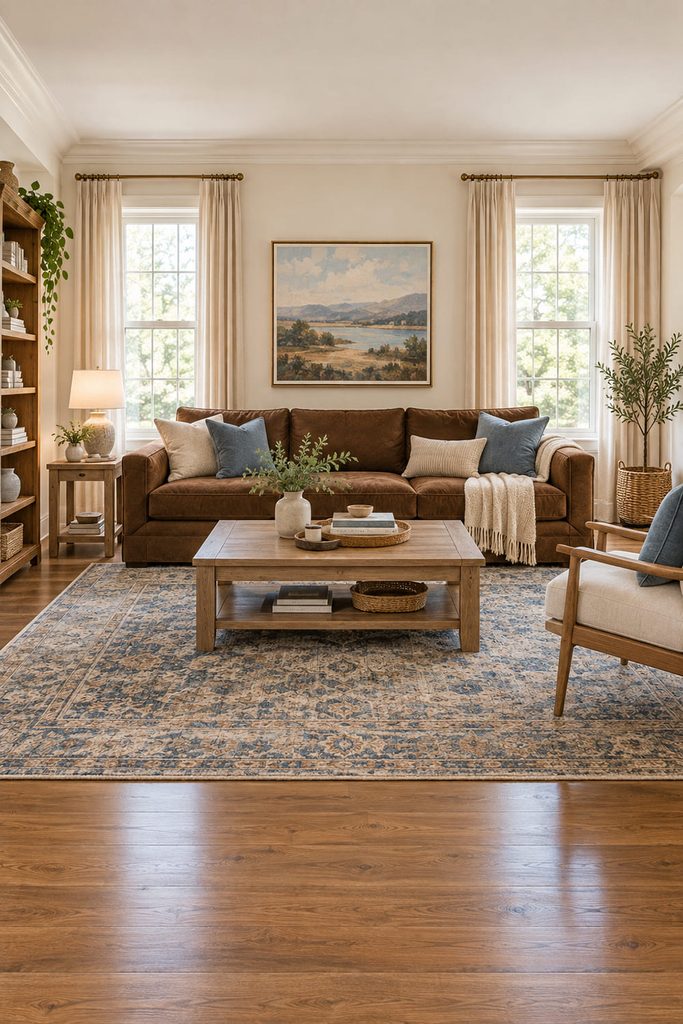
Blue can provide a cooler contrast to warm brown. For a beginner-friendly combination, choose a muted blue rather than an extremely bright shade.
A brown sofa can be paired with dusty blue cushions, a blue-and-brown rug, or one large piece of artwork containing both colors. Keep the walls and larger textiles neutral so the two main colors do not compete.
Natural wood can sit comfortably between the brown and blue, helping the palette feel more connected. If you are nervous about adding color, start with just two or three blue accessories. You can always increase the amount later if you like the result.
12. Make a Brown Living Room With Simple Black Accents
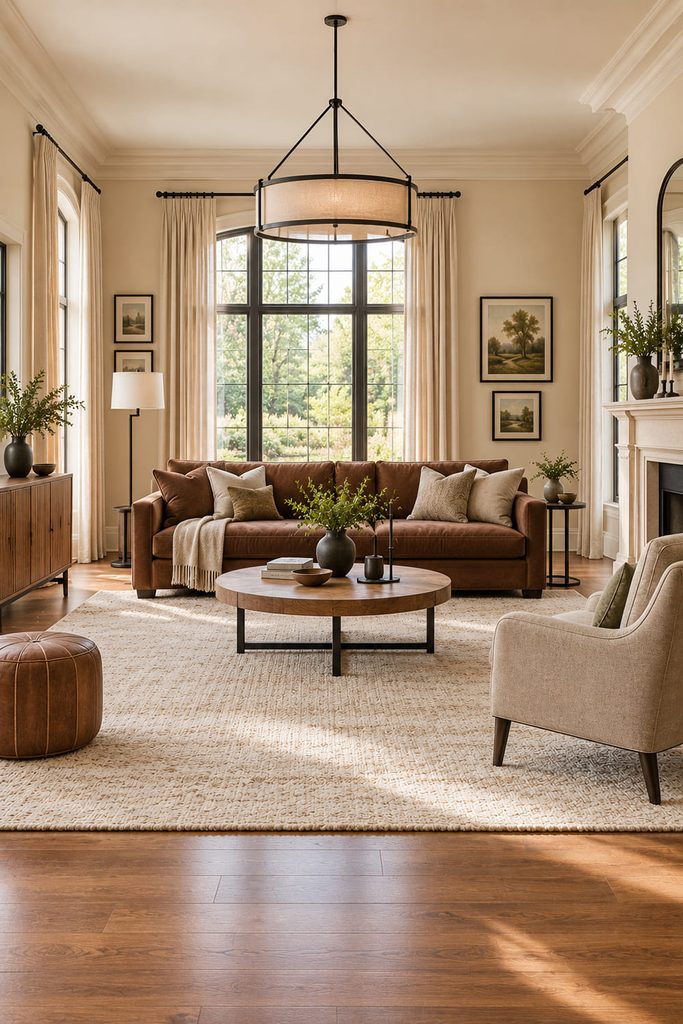
Black can add definition to a brown room, but beginners should use it selectively. Start with a brown sofa and introduce black through a floor lamp, picture frames, coffee table legs, curtain rods, or small decorative objects.
Keep the walls and rug relatively light so the black details remain accents rather than taking over the room.
Brown and black can look especially effective with cream and natural wood. The cream provides lightness, brown provides warmth, and black adds contrast. You do not need many black items. A few repeated details are enough to make the room feel more structured.
13. Add a Large Neutral Rug to Ground Brown Furniture

A large rug can make a brown living room feel much more finished, especially if the furniture currently appears scattered across the floor.
Choose an ivory, cream, beige, or softly patterned rug that is large enough to connect the main seating pieces. Place the front legs of the sofa and chairs on the rug when possible. This helps visually group the furniture into one seating area.
If your furniture is already brown, avoid automatically choosing another dark brown rug. A lighter floor covering usually provides more contrast and helps the furniture remain visible.
For beginners, this can be one of the easiest changes because it affects the entire seating arrangement without requiring a complete redesign.
14. Create a Simple Brown Reading Corner
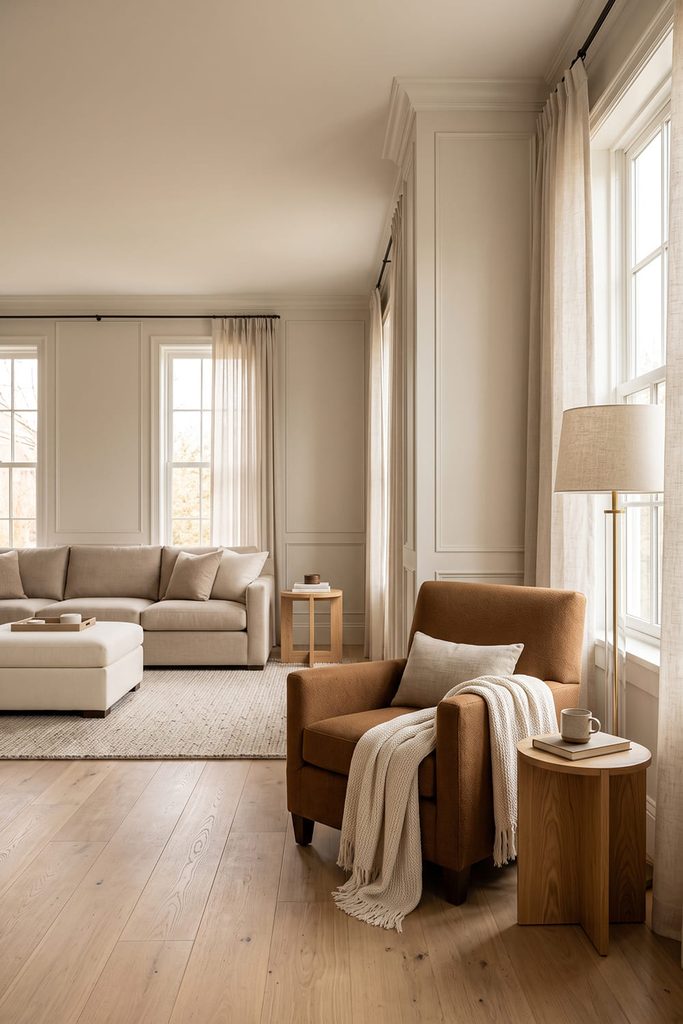
You can use brown in one smaller area instead of decorating the entire living room around it. Choose a comfortable brown armchair and place it beside a window or in an unused corner. Add a small wooden side table, floor lamp, and soft throw.
Keep the main living room furniture neutral if you prefer. This creates a cozy brown accent zone without requiring you to commit to a complete brown color scheme.
You can also connect the corner to the rest of the room by repeating brown in a picture frame, cushion, or wooden accessory elsewhere. It is a particularly easy option for beginners who want to experiment gradually.
15. Build the Room Slowly With Brown Accents

If you are completely new to decorating, you do not need to choose everything at once. Start with one brown item and build around it. For example, begin with a brown sofa. Add a cream rug next. Then introduce a wooden coffee table, a few neutral cushions, and one accent color.
Live with the arrangement for a while before buying anything else. You may discover that the room already feels complete, or you may notice an area that needs more color or texture. This gradual approach also makes it easier to avoid unnecessary purchases.
Brown is particularly forgiving because it can appear through furniture, wood, leather, woven materials, artwork, rugs, and small accessories.
How to Choose the Right Brown for Your Living Room
Not all browns create the same atmosphere. Dark chocolate and espresso can give a room more visual weight, while caramel, tan, and lighter brown can feel softer. Before buying furniture, look at the natural light in your room.
A dark brown sofa may look very different in a bright room compared with a space that receives little daylight. It is also helpful to compare the brown with your existing flooring. Very dark furniture on a dark floor can blend, while lighter flooring can provide more separation.
You do not need to identify the exact name of your brown. Focus on whether it feels warm, cool, light, medium, or dark and choose surrounding colors accordingly.
Easy Colors That Work With Brown
If you are decorating for the first time, keep your color palette simple. Brown can work with many shades, but beginners may find it easier to start with a few reliable combinations.
Consider:
- Brown and cream
- Brown and warm white
- Brown and beige
- Brown and sage green
- Brown and olive
- Brown and muted blue
- Brown and black
- Brown and natural wood
- Brown and soft gray
You do not need to use several of these together. Choose one main combination and repeat it throughout the room.
How to Keep a Brown Living Room From Looking Too Dark
The easiest solution is contrast. If your sofa is dark brown, consider using lighter walls, rugs, curtains, and cushions.
Natural daylight can also make a major difference. Keep windows relatively open during the day and avoid blocking them with excessively heavy treatments if the room already lacks light.
Texture is another useful tool. Linen, woven materials, wood, leather, wool, and ceramics can make a brown palette feel layered instead of flat.
You can also distribute the brown rather than putting every dark item in one corner. Small repeated brown details throughout the room can create better balance.
A Simple Formula for Decorating Your First Brown Living Room
If you are unsure where to begin, use a straightforward formula:
- Choose one main brown piece.
- Add one light neutral as your background.
- Choose one additional neutral for furniture or textiles.
- Add one accent color if desired.
- Introduce at least a few different textures.
- Repeat your main brown color in several small areas.
- Add lighting that works at different levels.
For example, a chocolate sofa can be combined with cream walls, a beige rug, natural wood furniture, olive cushions, and warm lamps.
The goal is not to follow a strict decorating rule. It is simply a starting point that makes the decisions easier.
Common Beginner Mistakes to Avoid
The biggest mistake is buying too many matching brown pieces at once. A brown sofa, brown rug, brown curtains, brown walls, and dark furniture can quickly make the room feel visually heavy.
Another mistake is choosing accessories before deciding on the main furniture arrangement. Start with the large pieces and work toward the smaller details.
Avoid filling every empty surface. A few carefully chosen accessories can make a room feel more finished than dozens of small objects. Finally, do not worry about making the room perfect immediately. Good decorating often happens gradually as you learn what you actually like.
Final Thoughts
Brown is a beginner-friendly color when you approach it one layer at a time. You can start with a sofa, rug, coffee table, chair, or even a few small accessories and gradually build the room around it.
Cream, beige, warm white, natural wood, muted green, and soft blue can all help balance brown without making the decorating process complicated. Texture is just as important as color, so combine smooth, soft, woven, and natural surfaces where possible.
Most importantly, you do not need to redesign the entire living room in one weekend. Start with one brown element, see how it works with your existing space, and add pieces only when they solve a real decorating need.
That slower approach makes it easier to create a brown living room that feels comfortable, personal, and genuinely yours.


