

15 Brown Living Room Ideas for Elderly Parents
A living room for elderly parents should feel warm, comfortable, practical, and easy to move around in. Brown is an excellent color for creating that atmosphere because it works naturally with wood, cream, beige, warm white, and many other calming neutrals.
However, designing a comfortable living room for older adults involves more than choosing attractive colors. Seating height, lighting, walking space, flooring, furniture placement, and accessibility can all make the room easier to use every day.
The goal is to create a space that feels like a welcoming family living room rather than a clinical environment. Comfortable furniture can still look elegant, while practical additions can be incorporated so naturally that they become part of the overall design.
These 15 brown living room ideas for elderly parents combine warmth and style with practical considerations for everyday comfort.
1. Brown Sofa With Cream Accent Chairs
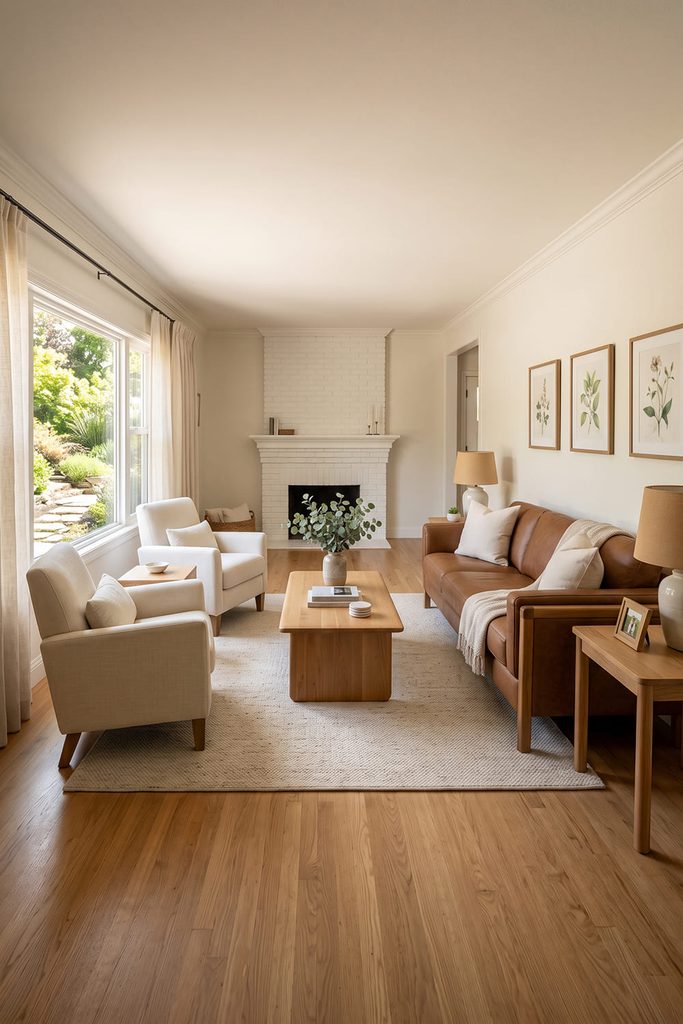
A brown sofa paired with cream accent chairs creates a warm and balanced living room. Choose a sofa with supportive cushions and a seat height that makes it relatively easy to sit down and stand up.
Cream or ivory chairs provide contrast against the brown sofa and help prevent the room from looking too dark.
Place the seating so there is a clear walking path between the main entrance, sofa, side tables, and other frequently used areas. A neutral rug can connect the seating arrangement without making the floor difficult to navigate.
2. Warm Brown Leather Sofa With Wood Furniture
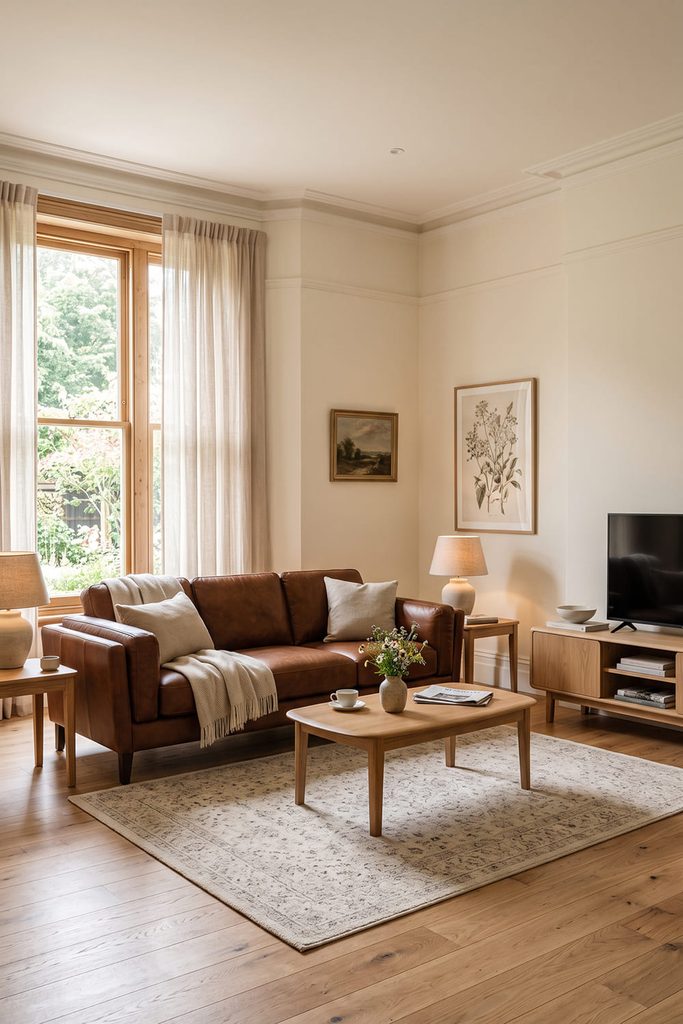
A brown leather sofa can create a timeless living room that is particularly easy to coordinate. Pair it with a wooden coffee table, side tables, and a simple media cabinet.
Choose furniture with rounded or softened edges where possible, particularly if the room has limited space. Leather can also be practical because it is relatively easy to wipe clean.
For older adults, avoid choosing a sofa simply because it looks attractive. Sit on it first and check whether the seat depth and height feel comfortable.
3. Chocolate Brown Sofa With Soft Beige Walls
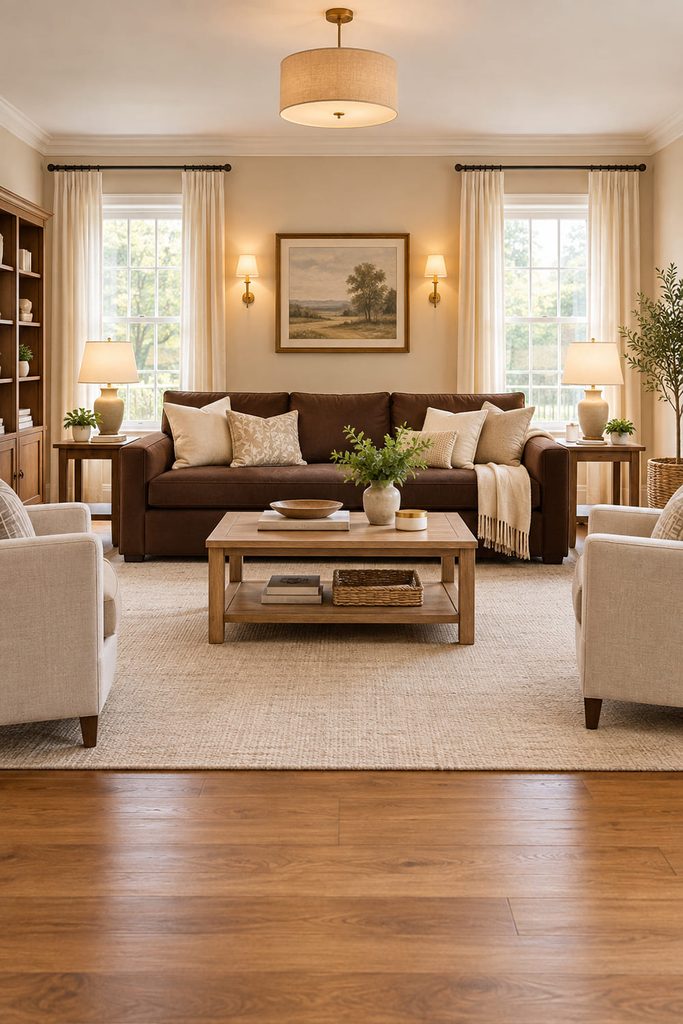
Dark brown furniture can look beautiful against warm beige walls. The lighter wall color prevents the living room from feeling too heavy while allowing the sofa to remain the visual anchor.
Add cream curtains, warm lighting, and a beige or ivory rug. If the room receives limited natural light, consider using lighter furniture and accessories around the brown sofa. This combination can create a cozy atmosphere without requiring strong decorative colors.
4. Brown and Cream Monochromatic Living Room
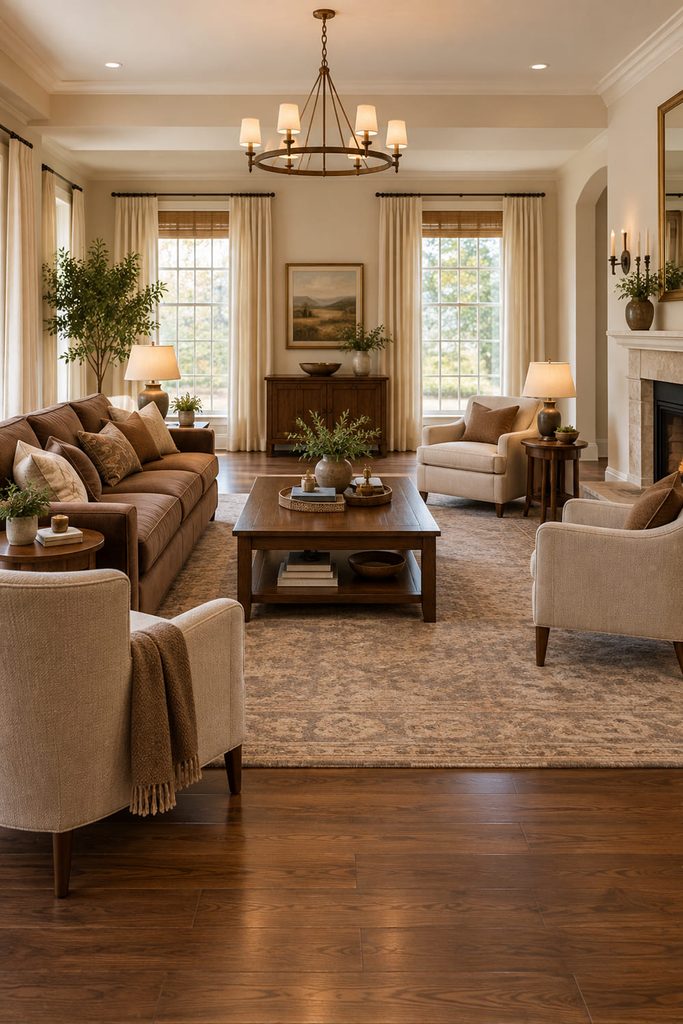
A simple brown-and-cream palette can create a peaceful environment. Use several shades of brown rather than relying on one exact tone.
For example, combine a medium-brown sofa with dark wood furniture, light beige curtains, cream cushions, and a warm taupe rug. The variety of tones keeps the room from looking flat. This palette is particularly useful if you want a traditional appearance that will remain appealing for many years.
5. Supportive Brown Recliner as a Focal Piece
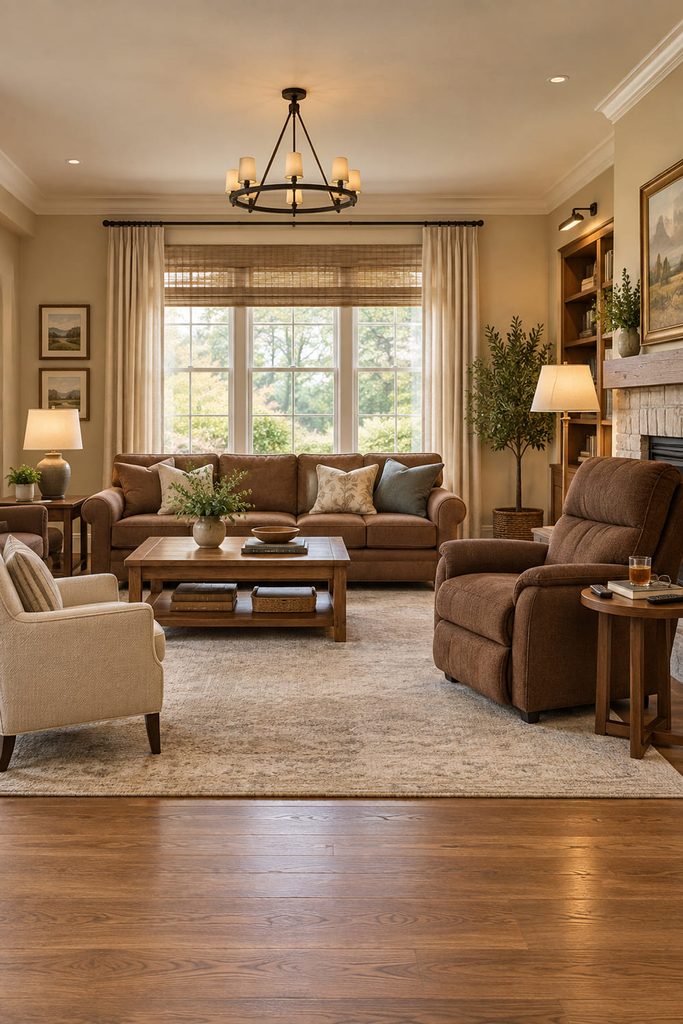
A comfortable recliner can be both practical and attractive. Choose a brown recliner that provides good support and is easy to operate.
Position it where your parent can comfortably watch television, read, talk with family members, or enjoy natural light. Avoid placing the recliner directly in the main walking path. A small side table beside it can hold a book, reading glasses, remote control, or drink. The result can feel like a dedicated relaxation area rather than a medical arrangement.
6. Brown Sofa With Two Comfortable Armchairs
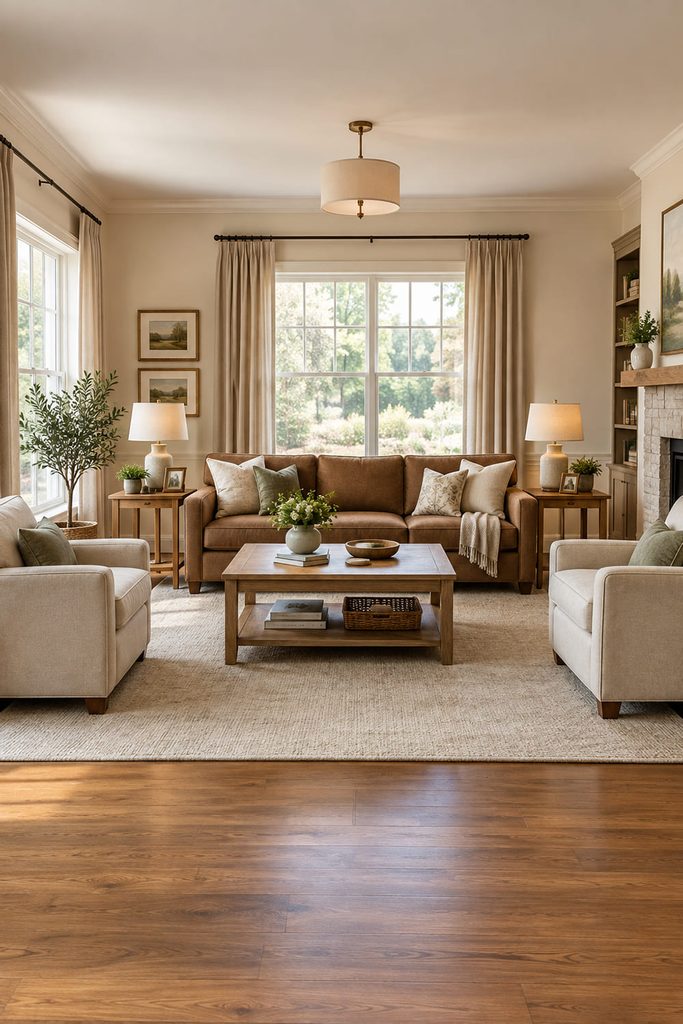
Instead of filling the room with one large sectional, consider a brown sofa with two supportive armchairs. This arrangement gives family members several comfortable places to sit while making it easier to enter and leave individual seats.
Choose chairs with sturdy arms and comfortable seat heights. Arrange them around a central coffee table while leaving enough space to walk between the furniture. The chairs can be cream, beige, taupe, or another light neutral to create contrast with the brown sofa.
7. Light Brown Sofa for a Brighter Room
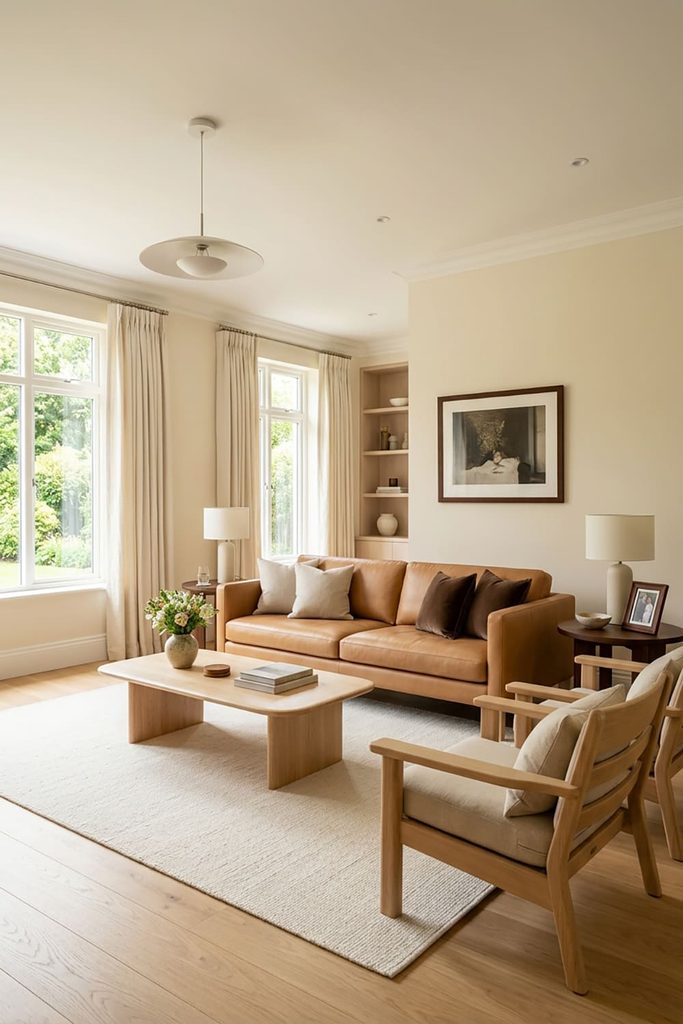
If the living room is small or receives limited daylight, consider a lighter brown sofa. Caramel, tan, camel, or warm taupe can provide the warmth of brown without making the room visually heavy.
Pair it with cream walls and light wood furniture. Add darker brown accents through cushions, artwork, or a side table. This creates a comfortable room with enough contrast while maintaining a bright overall appearance.
8. Brown Sectional With a Clear Walking Path
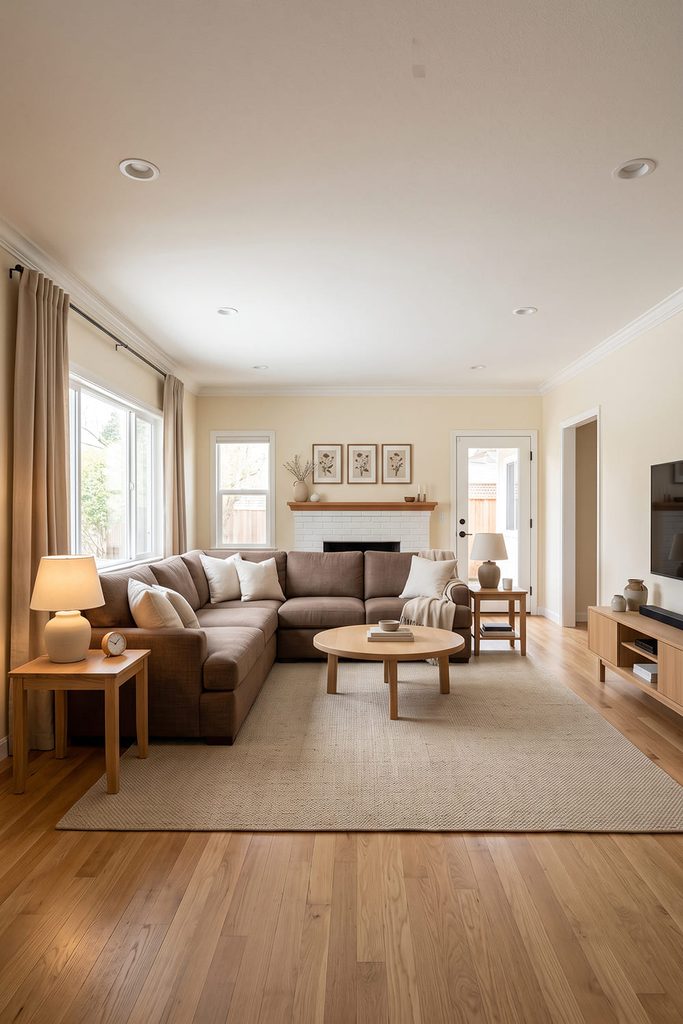
A sectional can work well for elderly parents if the room is large enough to accommodate it comfortably. Choose a design with supportive seating rather than an extremely low, deep configuration.
Position the sectional against the wall when appropriate and keep the center of the room relatively open. Avoid placing a coffee table so close to the sofa that someone has to squeeze through a narrow gap.
A large open area can make the living room feel more comfortable and easier to navigate.
9. Brown and Blue Living Room
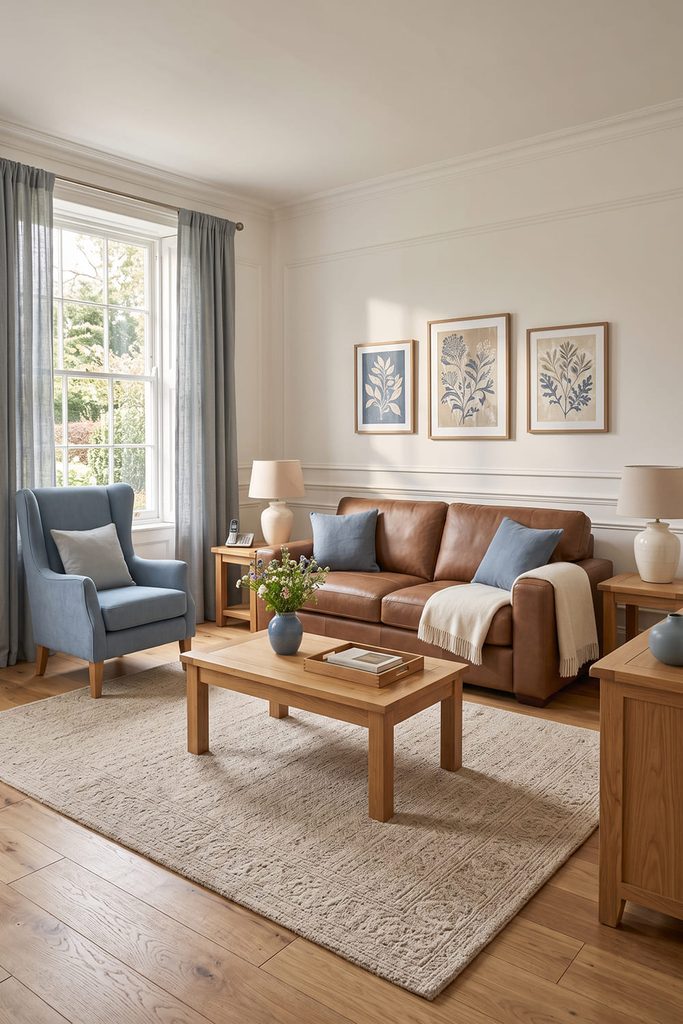
Brown and blue can create a sophisticated combination without making the space feel overly formal. Use a brown sofa as the foundation and introduce muted blue through cushions, curtains, artwork, or one accent chair.
Soft navy, dusty blue, or blue-gray can work particularly well. Keep the main furniture neutral and use blue as an accent rather than covering the entire room in strong color. This approach adds personality while preserving the calming quality of the brown foundation.
10. Traditional Brown Living Room With Built-In Storage
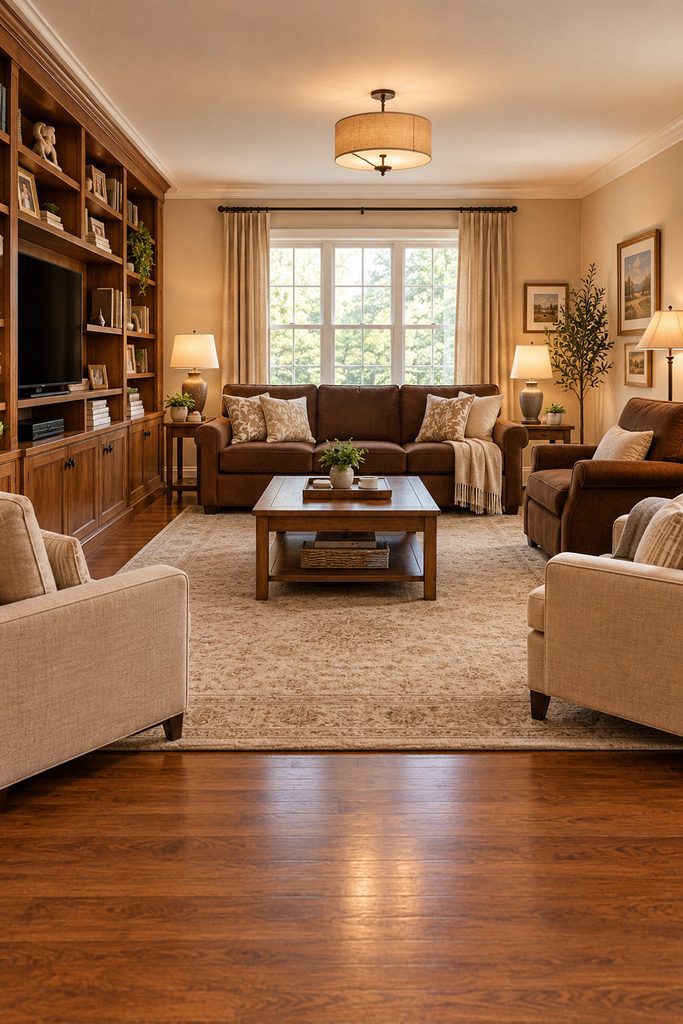
Storage can make a living room easier to maintain. Use a brown wood cabinet, low bookcase, or built-in shelving to keep books, family photographs, blankets, and entertainment equipment organized.
Avoid placing loose baskets, boxes, or decorative objects in walking areas. Frequently used items should be stored somewhere accessible without requiring excessive bending or reaching. A traditional wood storage unit can also become part of the room’s decorative character.
11. Brown Sofa With Natural Wood Accents
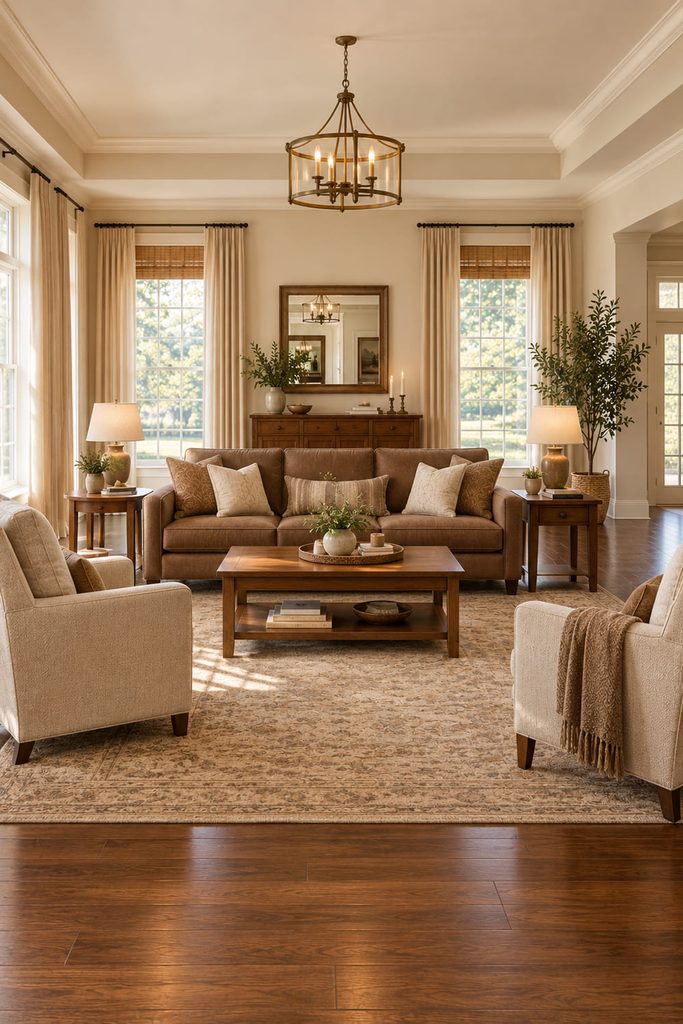
Brown furniture naturally pairs with wood. Combine a brown sofa with natural wood side tables, a wooden console, and perhaps a simple wood-framed mirror.
Choose furniture finishes that are similar enough to feel connected without requiring every piece to match exactly. Add cream textiles to prevent the room from becoming too brown.
A few green plants can also introduce a fresh natural element if they can be maintained safely and do not obstruct walkways.
12. Brown Living Room With Excellent Layered Lighting
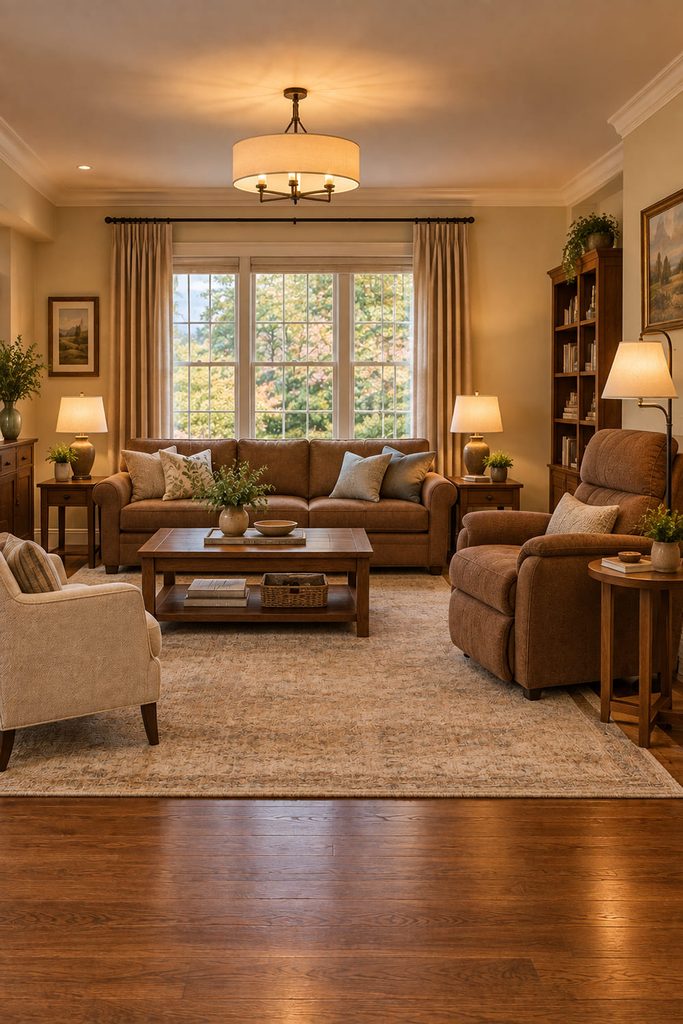
Lighting is especially important in a living room used by older adults. Instead of depending on one ceiling fixture, combine several sources of light. A floor lamp can illuminate a reading chair, while table lamps can provide light near the sofa.
Use switches that are easy to reach and position lamps where they will not create obstacles. Keep cords safely organized and away from walking paths. Warm lighting can work beautifully with brown furniture and create a comfortable evening atmosphere.
13. Brown Sofa With High-Contrast Accessories
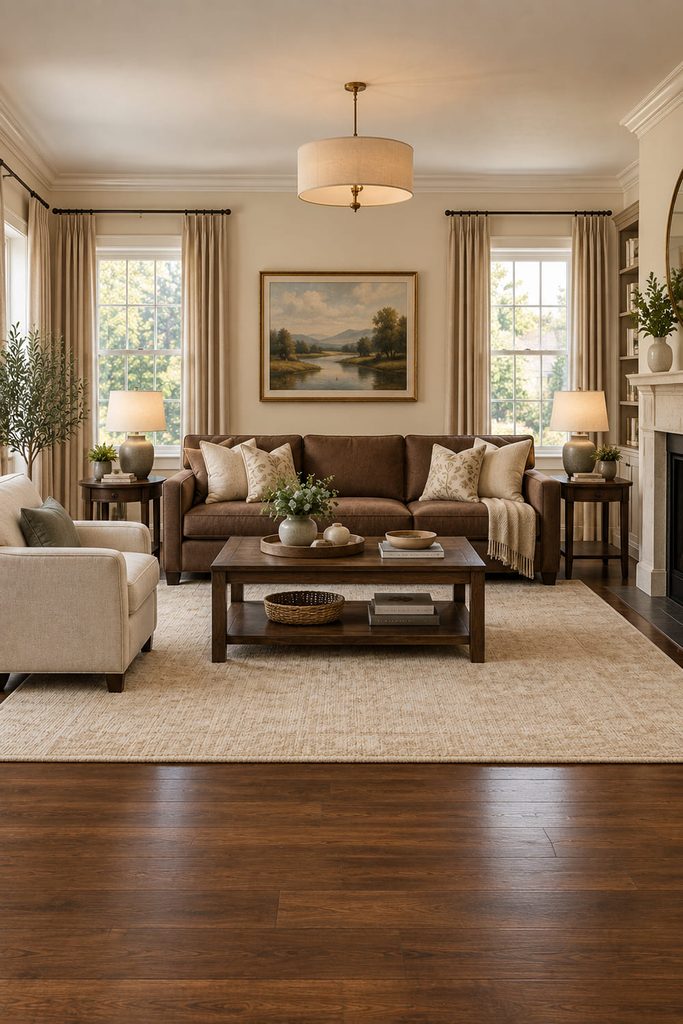
A brown living room can benefit from carefully chosen contrast. For example, combine a medium or dark brown sofa with cream cushions, a light rug, and artwork with clear but restrained contrast.
Contrast can make individual pieces easier to distinguish visually. Avoid creating a room where everything is almost the same shade of beige and brown. The goal is not to make the room visually loud but to provide enough differentiation between furniture, flooring, and accessories.
14. A Cozy Brown Reading Corner
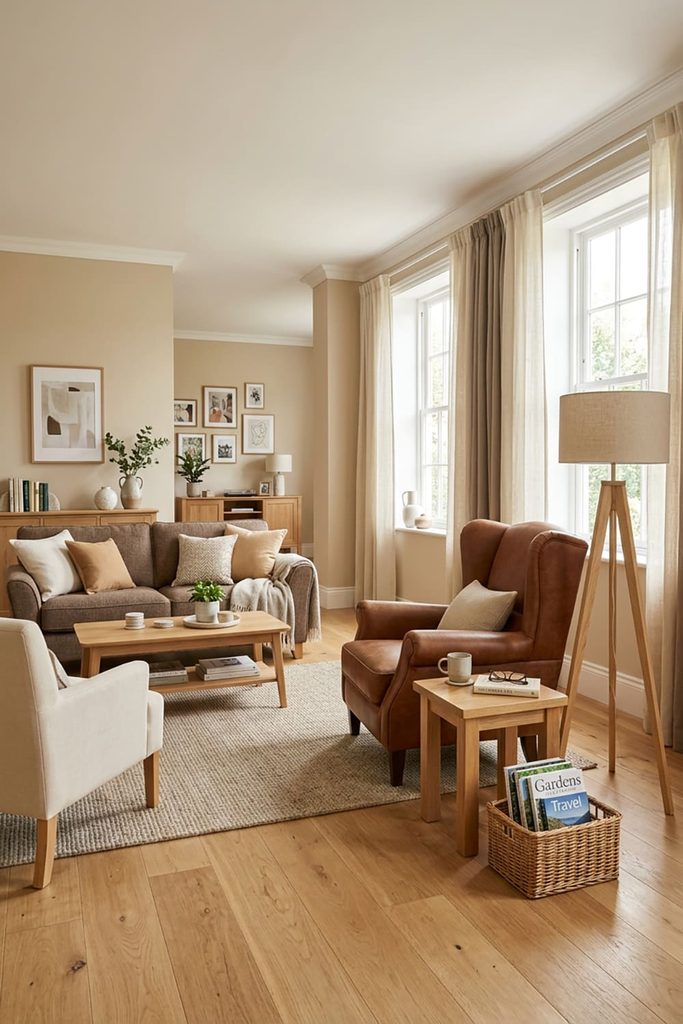
Create a dedicated reading area with a comfortable brown armchair, a small side table, and a floor or table lamp. Position the chair near a window if natural light is available. The side table should be stable and easy to reach.
Keep the floor around the chair clear so getting in and out is straightforward. Add a small basket for books or magazines if needed, but make sure it does not become an obstacle. This corner can become a favorite part of the living room for reading, relaxing, or enjoying quiet time.
15. Brown Living Room With a Timeless Neutral Palette
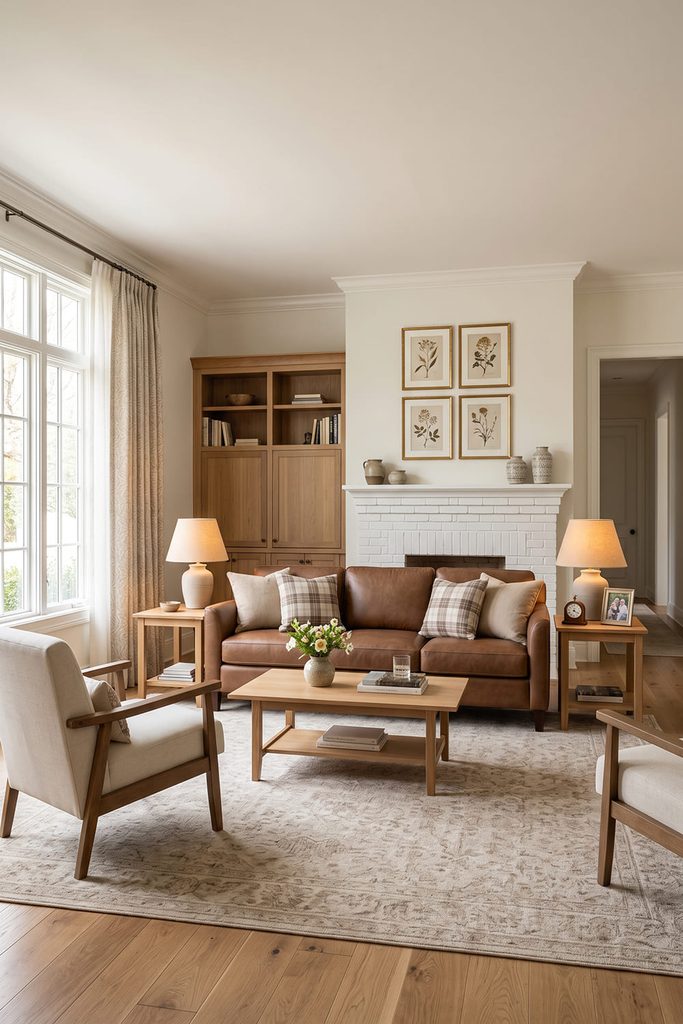
For parents who prefer classic interiors, combine brown with warm white, cream, beige, and natural wood. Use the brown sofa as the main anchor and keep most other large surfaces relatively light.
Add subtle patterns through cushions or curtains rather than introducing too many contrasting colors. Choose furniture with simple, timeless shapes that will not feel dated quickly. The result is a warm living room that can remain attractive and practical for years.
Choosing Comfortable Seating for Elderly Parents
Furniture should be selected for how it functions, not only how it looks. Very low sofas can make standing difficult, while extremely deep seats may require more effort to get out of.
Look for supportive cushions, stable armrests, and a seat height that feels comfortable for the person using it. Ideally, your parent should try the furniture before purchasing it.
A beautiful sofa that is uncomfortable will not be a successful choice for an everyday living room.
Keep Walking Paths Clear
One of the most important considerations is the arrangement of furniture. Create clear paths between the entrance, seating, bathroom access, kitchen, and other frequently used areas.
Avoid placing small tables, decorative baskets, floor plants, or stools where someone could easily walk into them. Furniture should be arranged so that people do not have to navigate around unnecessary obstacles.
A room with fewer pieces can often feel much more comfortable than a heavily decorated room.
Choose Rugs Carefully
Rugs can make a brown living room feel warmer, but they need to be positioned carefully. Avoid loose rugs that slide easily or have edges that curl upward.
If you use an area rug, make sure it sits securely and does not interfere with the main walking routes. A low-profile rug can provide warmth and visual definition without creating unnecessary changes in floor height.
Use Contrast Thoughtfully
A room filled with similar shades of brown, beige, and cream can sometimes make furniture and flooring difficult to distinguish from one another. Introduce moderate contrast.
A brown sofa can sit against a lighter wall, for example, while a cream chair can contrast with darker flooring. Contrast can help individual objects stand out visually while still maintaining a calm atmosphere.
Make Frequently Used Items Easy to Reach
Think about the things your parents use every day.
Remote controls, reading glasses, books, phones, drinks, and medications should not require difficult reaching or bending from the sofa.
A sturdy side table beside each main seating area can provide useful storage.
Keep the surface organized so important items are easy to locate.
Practical organization can make the living room feel more comfortable without adding more furniture.
Keep Decorative Pieces Secure
Decorations should not create unnecessary hazards.
Choose stable lamps, securely mounted artwork, and furniture that does not wobble.
Avoid placing fragile objects on narrow edges where they can easily be knocked over.
Wall art should be properly secured rather than simply resting against furniture.
Decorative accessories should enhance the room without interfering with normal movement.
Make the Room Feel Like a Home
Safety and accessibility do not mean the living room needs to look clinical.
You can incorporate practical furniture into a beautiful design.
A supportive recliner can look like an elegant armchair. Storage can be built into attractive wood furniture. Good lighting can become part of the room’s design.
Warm brown upholstery, family photographs, comfortable textiles, and familiar decorative objects can make the space feel personal.
The best room is one where practical features disappear naturally into the overall design.
Final Thoughts
Brown is a versatile choice for a living room designed for elderly parents because it creates warmth and works beautifully with cream, beige, natural wood, muted blue, and other comfortable neutrals.
However, the most important part of the design is not the color. It is how easily and comfortably your parents can use the room.
Choose supportive seating, keep walking paths open, provide good lighting, secure rugs and artwork, and make frequently used items easy to reach.
Once those practical needs are addressed, you can layer in the decorative details that make the room feel welcoming: soft cushions, family photographs, warm wood, gentle colors, and personal accessories.
A thoughtfully designed brown living room can therefore provide the best of both worlds: a beautiful family space that feels warm and timeless while also supporting comfort, independence, and everyday ease.


