

15 Cozy Rustic Dream Bedroom Ideas for a Warm, Relaxing Retreat
A cozy rustic bedroom should feel warm the moment you walk in. Natural wood, soft bedding, earthy colors, aged finishes, and gentle lighting can give the room that comfortable character without making it look like a themed cabin. Rustic design works especially well in bedrooms because its materials tend to feel tactile and relaxed rather than overly polished.
Current design guidance continues to emphasize wood, linen, wool, woven materials, muted natural colors, and layered lighting as effective ways to create a restful rustic atmosphere. The key is balance. Too much dark wood can make a bedroom feel heavy, while too many decorative rustic accessories can make it look staged.
Combining weathered materials with clean bedding, simple furniture, and soft illumination creates a more modern interpretation of the look. These cozy rustic dream bedroom ideas focus on specific details you can use to make your own bedroom feel warmer, more personal, and inviting.
1. Make a Reclaimed Wood Bed the Focal Point
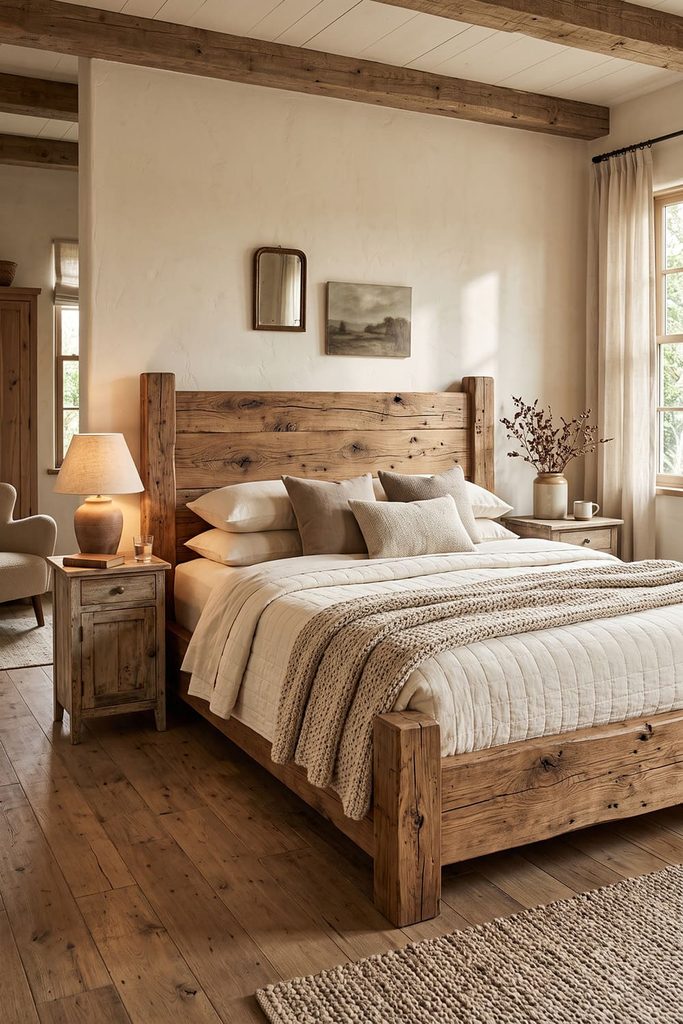
Start with a substantial reclaimed wood bed that immediately gives the bedroom character. Look for visible grain, knots, subtle imperfections, and a finish that allows the natural variation of the wood to remain noticeable. Keep the bedding softer and lighter so the bed does not visually overwhelm the room.
Cream linen sheets, a quilted coverlet, and a chunky throw can provide a beautiful contrast against darker timber. Add simple wood nightstands rather than matching every piece of furniture. The combination of imperfect wood and relaxed textiles gives the room an authentic lived-in quality.
2. Create a Warm Wood Accent Wall

Cover the wall behind the bed with warm wood planks to create a cozy architectural backdrop. You do not need to panel every wall. One carefully chosen feature wall can provide enough texture to establish the rustic character while keeping the rest of the room bright.
Use natural oak, pine, reclaimed boards, or a lightly whitewashed finish depending on the amount of warmth you want. Pair the wall with cream bedding and soft neutral curtains. Wood paneling is particularly effective because it adds visual warmth without requiring a large collection of decorative accessories.
3. Layer the Bed With Linen and Wool

Give the bed a relaxed, tactile appearance by combining several natural-looking fabrics. Start with breathable linen sheets, add a soft cotton quilt, then place a wool blanket or chunky knitted throw across the lower portion of the bed. Vary the textures rather than trying to match everything. Oatmeal, ivory, beige, muted gray, and warm brown work beautifully together.
A layered bed should look comfortable enough to climb into rather than perfectly arranged like a showroom display. Natural textiles are a recurring feature in cozy rustic bedroom guidance because they soften the harder visual weight of wood and other rugged materials.
4. Add a Vintage Wooden Dresser
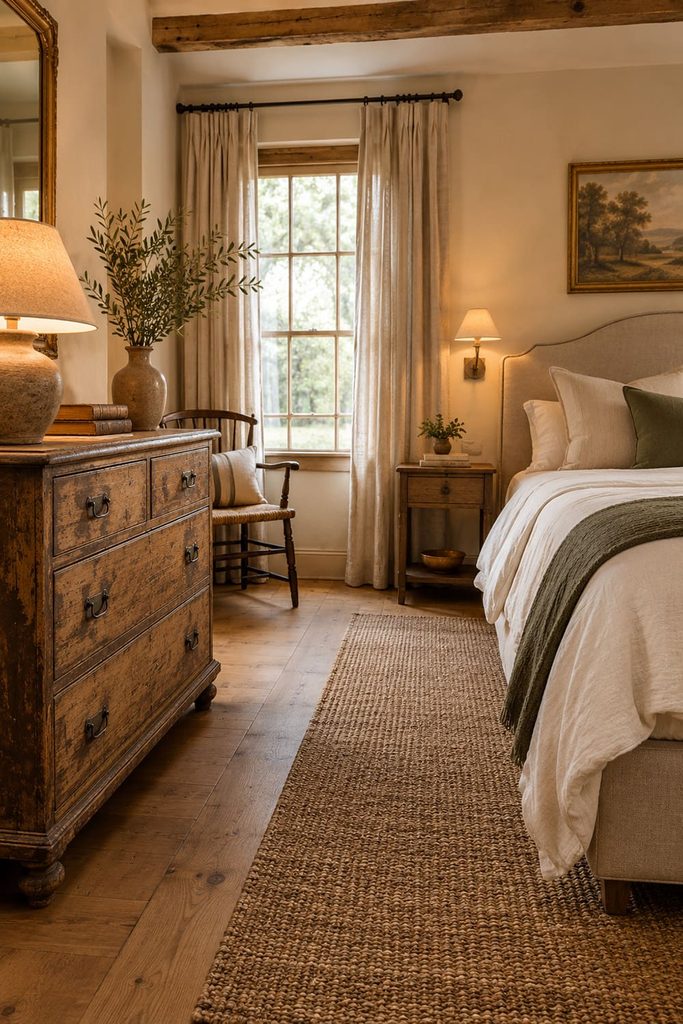
Bring personality into the room with an older wooden dresser, chest, or bedside cabinet. Look for pieces with visible grain, worn edges, traditional hardware, or a slightly weathered finish. The furniture does not have to match the bed exactly. In fact, combining different wood pieces can make the dream bedroom feel more collected and authentic.
Keep the top relatively simple with a ceramic lamp, a small stack of books, and one natural decorative element. Mixing furniture rather than buying a perfectly coordinated bedroom set also helps prevent the room from feeling like a furniture showroom.
5. Use Cream Walls With Dark Wood Details

For a brighter rustic bedroom, keep the walls warm cream or soft beige and introduce darker wood through the bed, flooring, beams, and bedside tables. The pale background prevents the natural timber from making the room feel too dark. Add ivory bedding, a woven rug, and linen curtains to maintain the soft atmosphere.
A few black or aged-brass details can provide contrast without changing the relaxed character. This approach works particularly well in smaller bedrooms because the lighter walls preserve a sense of openness while the wood provides the warmth associated with rustic interiors.
6. Hang Warm Pendant Lights Beside the Bed

Replace conventional bedside lamps with two hanging pendant lights positioned on either side of the bed. Woven shades, aged metal, ceramic fixtures, or simple linen-covered pendants can complement rustic materials beautifully. Keep the light warm and gentle rather than overly bright.
Layering bedside lighting with another ambient source is especially useful because a bedroom benefits from different levels of illumination throughout the evening. Current lighting guidance recommends combining ambient, task, and accent lighting instead of depending on one overhead fixture.
7. Put a Soft Wool Rug Under the Bed
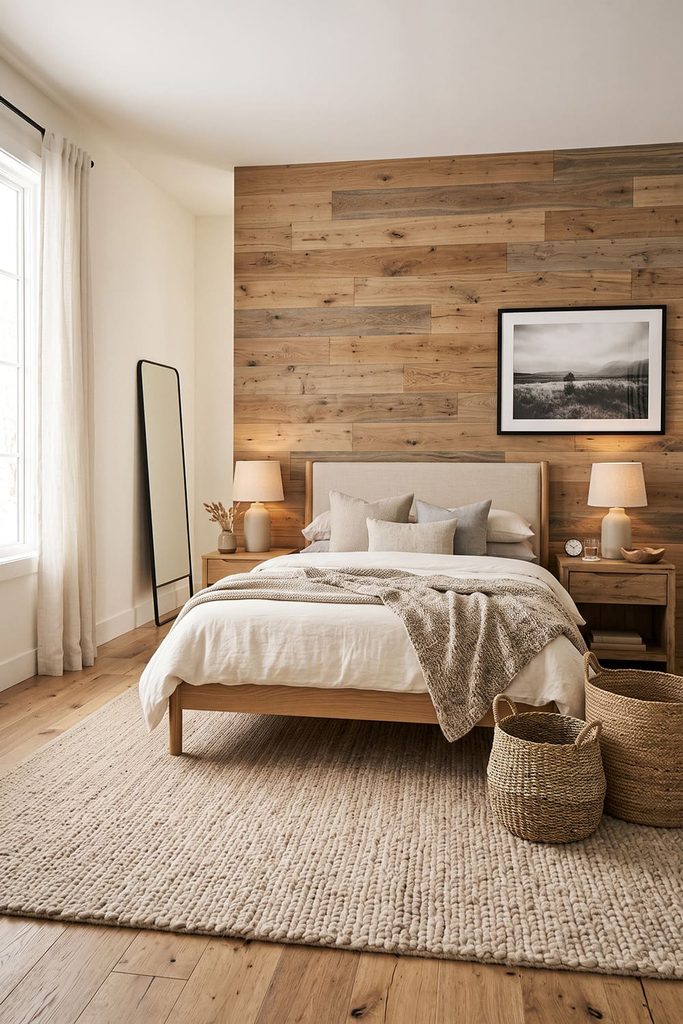
A large textured rug can make a rustic bedroom noticeably more comfortable. Choose wool, woven cotton, or another soft natural-looking material and position it beneath the bed so it extends beyond both sides. Cream, oatmeal, taupe, muted brown, and faded gray are easy choices for an earthy palette.
If you already have substantial wood flooring, the rug also creates a visual break that keeps the room from feeling overly hard. A layered rug arrangement can work particularly well, such as a larger natural-fiber rug underneath a smaller, softer rug beside the bed.
8. Frame the Bed With Rustic Wall Sconces

Install simple sconces on either side of the bed to create symmetry and provide useful reading light. Aged brass, matte black, bronze, or weathered metal can all work with rustic furniture. Choose fixtures with adjustable arms if you regularly read in bed.
This keeps the nightstands clear and gives the wall behind the bed more presence. Pair the sconces with a small overhead fixture rather than using them as the only source of light. Adjustable, warm lighting can make the room more functional while preserving the relaxed atmosphere that makes rustic bedrooms appealing.
9. Add a Chunky Throw at the Foot of the Bed

Sometimes one simple textile can make the entire bedroom feel cozier. Fold a chunky knitted blanket, wool throw, or heavy woven coverlet across the bottom of the bed. Choose a color that complements the main bedding rather than introducing an unrelated accent.
A muted sage, warm caramel, oatmeal, rust, or charcoal can work beautifully with cream bedding. Let the throw fall naturally instead of arranging it too precisely. The slight irregularity contributes to the relaxed character of rustic design while adding another layer of texture to the sleeping area.
10. Bring in a Rustic Stone Element

Wood does not have to carry the entire design. Introduce stone through a fireplace surround, bedside table, exposed wall section, decorative tray, or small architectural detail. Rough stone can provide an interesting contrast against soft bedding and natural wood.
If a real stone feature is not practical, a smaller stone accessory can create the same material contrast without major renovation. Keep the rest of the palette warm and restrained so the stone becomes part of the composition rather than a separate feature. Rustic interiors often benefit from combining several natural materials rather than repeating wood everywhere.
11. Create a Cozy Window Seat

Turn an unused window area into a comfortable little retreat. A simple wooden bench topped with a thick cushion can become a place for reading, relaxing, or enjoying morning light. Add two oversized pillows and a soft throw to make it inviting.
Keep the materials consistent with the rest of the bedroom by using linen, cotton, wool, or woven fabric. If the window is large enough, floor-length curtains around the seating area can make the entire corner feel more enclosed. This small zone gives the bedroom another purpose without requiring much furniture.
12. Use Muted Sage Green With Natural Wood

Bring a little color into the rustic bedroom through muted sage green walls or bedding. Sage works naturally with oak, walnut, reclaimed wood, cream, and warm beige because it echoes outdoor landscapes without becoming overly bright. Try sage walls with an oak bed, ivory bedding, and a woven rug.
Alternatively, keep the walls neutral and use sage through pillows, curtains, or a quilt. Rustic bedrooms generally benefit from restrained, nature-inspired palettes rather than highly saturated colors.
13. Style the Nightstand With Handmade Pieces

Give the bedside area a personal feel with a few handmade or naturally imperfect objects. A hand-thrown ceramic lamp, small pottery vase, wooden tray, vintage book, or woven basket can introduce subtle character. Avoid filling the entire surface. A few carefully selected pieces will have more impact than a large collection of rustic decorations.
Handmade ceramics and aged materials work particularly well because they bring variation to a room dominated by straight wood lines and soft textiles. The result should feel collected over time rather than purchased as a matching decorative set.
14. Add a Rustic Reading Chair

Place a comfortable chair in an empty corner to create a dedicated reading spot. A leather armchair, woven lounge chair, wooden-frame chair with cushions, or upholstered vintage chair can all suit the room. Add a small side table and a warm floor lamp nearby.
Choose upholstery that relates to the colors already used on the bed so the corner feels connected rather than randomly added. A chair can also soften a bedroom filled with straight-edged furniture. For smaller rooms, select a compact chair and keep the surrounding area visually open.
15. Finish With Natural and Personal Details

The final layer should make the bedroom feel like a real home rather than a rustic showroom. Add one or two plants, a framed landscape, a vintage mirror, woven baskets, family photographs, handmade pottery, or objects collected during travels. Keep the number of accessories controlled so the natural materials remain the main attraction. A neutral rustic foundation also makes seasonal changes easy.
You can introduce a rust-colored throw in autumn, lighter linen during warmer months, or a muted green accent without replacing the major furniture. Recent bedroom design advice similarly favors personal character, mixed furniture, appropriate scale, and restrained styling over overly coordinated rooms.
How to Make a Rustic Bedroom Feel Cozy Without Looking Old-Fashioned
The easiest way to keep rustic design current is to balance rough materials with softer, cleaner elements. Pair reclaimed or heavily grained wood with simple bedding, contemporary lighting, and uncluttered surfaces. You do not need shiplap on every wall, multiple farmhouse signs, or matching wooden furniture throughout the room.
Pay close attention to texture. Linen, wool, cotton, woven fibers, wood, leather, and stone can create plenty of visual interest without relying on bold patterns. Warm lighting is equally important. Several gentle light sources usually create a more inviting evening atmosphere than one bright ceiling fixture.
Color can remain simple. Cream, warm white, beige, taupe, brown, muted green, soft gray, and terracotta are natural companions for rustic materials. The goal is not to make every surface brown, but to create enough warmth and contrast that the wood feels intentional.
Final Thoughts
A cozy rustic dream bedroom is built through layers rather than one dramatic purchase. Start with natural wood, add comfortable bedding, introduce warm lighting, soften the floor with a rug, and finish with a handful of personal details. The most successful rooms balance rugged materials with softness, giving the bedroom character without sacrificing comfort.
Choose the ideas that suit your existing space rather than trying to recreate every rustic detail at once. A reclaimed wood bed, warm cream walls, linen bedding, soft lighting, and one vintage piece may be enough to create the peaceful rustic bedroom you have been picturing.


