

15 Luxury Dream Bedroom Ideas for a Beautiful High-End Retreat
A luxury bedroom does not need to look overly decorated or filled with expensive furniture. The most inviting high-end bedrooms usually feel calm, balanced, and intentional, with comfortable materials, good proportions, warm lighting, and a few memorable details. Current interior design guidance continues to emphasize layered lighting, upholstered beds, natural materials, refined neutral palettes, integrated storage, and tactile fabrics as important elements in sophisticated bedrooms.
The bed naturally becomes the visual center, but the surrounding walls, lighting, flooring, window treatments, and bedside furniture determine whether the entire room feels cohesive. You can create that polished atmosphere without making every surface elaborate. A restrained palette combined with rich textures often feels more luxurious than a room filled with decorative objects.
These luxury dream bedroom ideas focus on details that can make a bedroom feel more private, comfortable, and beautifully finished. Use one idea as a starting point or combine several to create a bedroom that feels like your own personal retreat.
This post contains affiliate links. If you buy through them, we may earn a small commission at no extra cost to you. See our Affiliate Disclosure.
1. Create a Dramatic Upholstered Headboard Wall

Make the bed the architectural centerpiece by extending an upholstered headboard across much of the wall behind it. Choose velvet, linen, boucle, or another substantial fabric in a warm neutral, muted taupe, deep green, charcoal, or soft beige. Instead of stopping at the width of the mattress, let the padded treatment frame the entire sleeping area.
Add slim bedside tables and discreet wall lights to keep the composition balanced. Contemporary luxury bedrooms frequently use integrated upholstered headboards because they make the bed feel connected to the architecture rather than simply placed against a wall.
2. Layer the Bed Like a Luxury Hotel

A beautifully dressed bed can change the entire character of a bedroom. Start with high-quality sheets, then build the look with a substantial duvet, a folded coverlet, several pillow sizes, and a textured throw at the foot. Keep the main colors restrained and introduce interest through differences in fabric and weave.
Cream cotton, a quilted neutral coverlet, linen accent pillows, and a soft wool or velvet throw can create plenty of depth without looking busy. The goal is a bed that looks inviting rather than excessively styled.
3. Add a Statement Chandelier Above the Bed
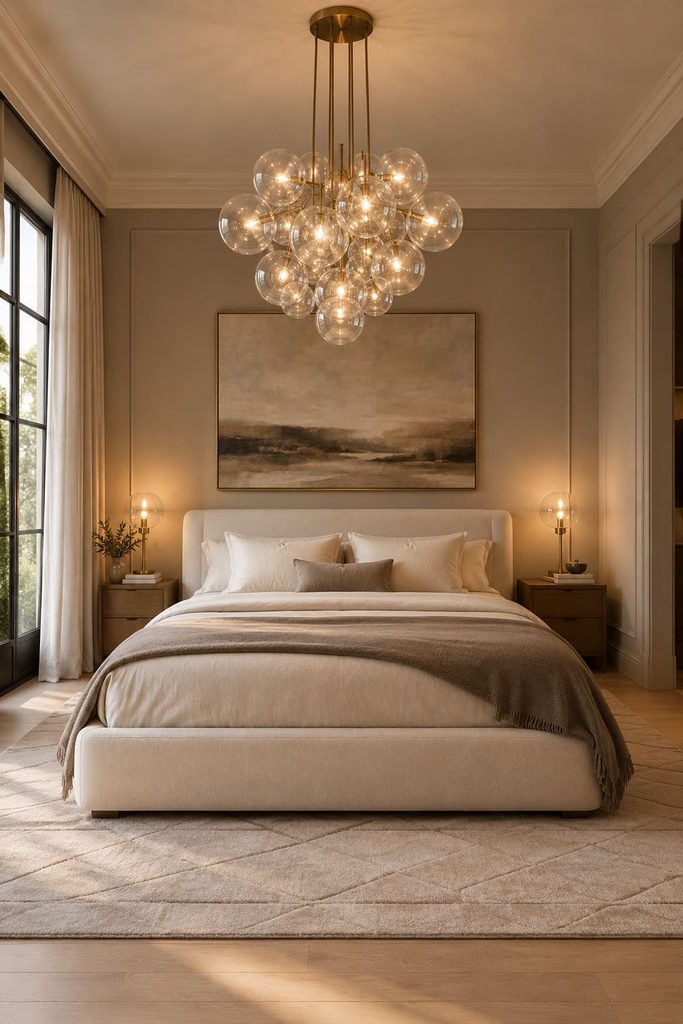
Use an eye-catching chandelier to give the ceiling a stronger presence. A sculptural glass fixture, elegant metal chandelier, or cluster of delicate pendants can become the room’s jewelry while leaving the rest of the decor relatively simple. Keep the scale appropriate to the dream bedroom so the fixture feels intentional rather than overwhelming.
Pair it with bedside lamps or sconces instead of relying on the chandelier alone. Designers consistently recommend multiple lighting sources because different layers create a softer and more adaptable atmosphere than a single overhead fixture.
4. Combine Warm Wood With Soft Neutrals

For a luxury bedroom that feels sophisticated rather than flashy, combine warm natural wood with cream, ivory, beige, or mushroom tones. A walnut bed frame, wood-paneled wall, or substantial bedside tables can provide visual warmth against soft upholstery and pale bedding.
Keep the wood grain visible rather than covering everything with high-gloss finishes. Add a textured rug and linen curtains to soften the harder surfaces. Natural materials are especially effective when the goal is a refined bedroom because they give the room depth while keeping the overall atmosphere comfortable and residential.
5. Design a Calm Cream and Gold Bedroom

Build an elegant bedroom around creamy whites, warm beige, and restrained touches of gold. Use cream walls, ivory bedding, a beige upholstered bed, and softly textured curtains as the foundation. Then introduce brushed brass through bedside lamps, cabinet hardware, picture frames, or a mirror.
Keep gold accents limited so they read as details rather than the dominant theme. A matte or brushed finish generally creates a quieter appearance than highly reflective metallic surfaces. Add one darker element, such as a walnut table or charcoal accent chair, to prevent the pale palette from feeling flat.
6. Use Floor-to-Ceiling Curtains

Long curtains can make a bedroom feel taller, softer, and more finished. Mount the curtain hardware close to the ceiling and allow the fabric to extend all the way to the floor. Choose linen, cotton, velvet, or a softly woven material in a shade close to the walls for a calm appearance.
For an especially luxurious effect, use generous fabric so the curtains have natural folds rather than hanging flat. Layering sheer curtains beneath heavier panels can provide flexibility throughout the day while adding another visual layer around the windows.
7. Create a Private Reading Corner

Give the bedroom a purpose beyond sleeping by creating a small reading corner. Place a comfortable upholstered chair beside a window or in an unused corner, then add a small side table and a floor lamp with adjustable illumination. A soft throw draped over the chair makes the area feel connected to the rest of the bedroom.
Choose materials that repeat colors already found around the bed so the corner feels intentional. Warm, adjustable lighting is particularly useful for reading because it provides task illumination without forcing the entire bedroom to become brightly lit.
8. Frame the Bed With Matching Pendant Lights

Instead of traditional bedside lamps, suspend two pendant lights on either side of the bed. This frees the nightstands for books, flowers, or a few carefully selected accessories while creating strong visual symmetry. Choose pendants with fabric shades, ribbed glass, brushed metal, or another material that complements the headboard.
Hang them at a practical height for bedside use and make sure the switches are easily accessible. The repeated vertical lines can also draw attention toward a tall headboard and make the sleeping area feel more deliberately designed.
9. Add a Stone-Topped Bedside Table

Introduce a small amount of natural stone through the bedside furniture. Marble, travertine, limestone, or another subtly veined stone can add texture without requiring a major renovation. Pair a stone top with wood or upholstered bases to prevent the room from becoming visually cold.
Keep the surface relatively uncluttered with a lamp, small tray, book, and perhaps one decorative object. The contrast between smooth stone, soft bedding, and warm wood creates the layered material palette often associated with contemporary luxury interiors.
10. Build a Moody Bedroom With Deep Colors
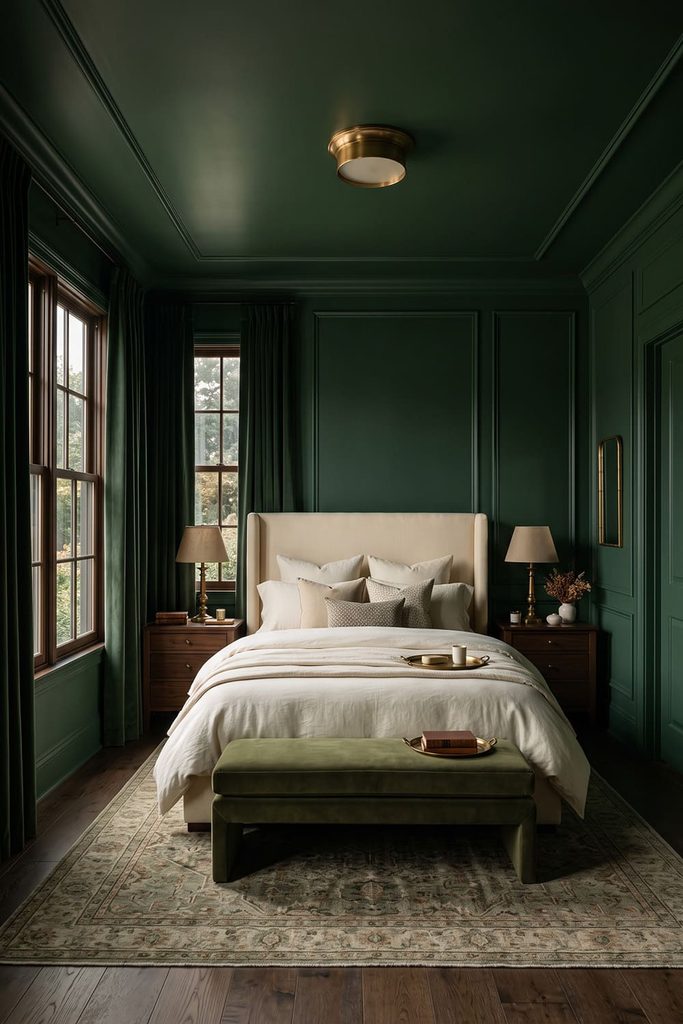
Luxury does not have to mean a bright neutral bedroom. Deep navy, forest green, chocolate brown, charcoal, or muted burgundy can create an intimate and sophisticated atmosphere. Apply the deeper shade to the walls and balance it with lighter bedding, warm wood, and soft lighting.
Using a similar color across the walls, trim, and perhaps ceiling can create a cocoon-like effect. Recent bedroom designs have continued to explore color-drenching as a way to create a calmer, more enveloping environment.
11. Install Concealed Lighting Around the Headboard
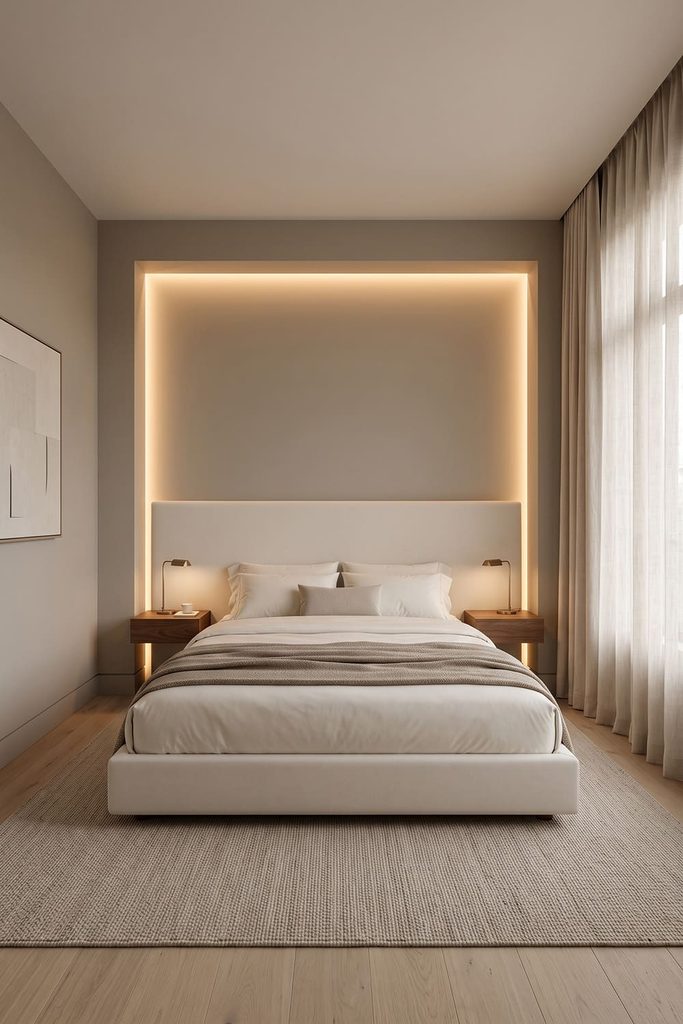
Use indirect lighting to highlight the architecture behind the bed. LED strips hidden within a recessed headboard, wall panel, or ceiling detail can create a gentle glow without exposing the light source.
Combine this with bedside task lights and a decorative ceiling fixture so the room can shift between brighter daytime illumination and softer evening lighting. Layered schemes using ambient, task, and accent lighting are a recurring recommendation in current luxury bedroom design guidance.
12. Add a Large Textured Area Rug

A substantial rug placed beneath the bed can make the sleeping area feel warmer and more grounded. Choose a plush wool, handwoven, patterned, or subtly textured rug large enough to extend beyond the sides and foot of the bed. Cream, taupe, greige, muted brown, or soft gray works especially well in a sophisticated bedroom.
The rug does more than provide softness underfoot. It visually connects the bed, nightstands, and surrounding furniture into one composition. If the room already contains several textures, choose a quieter rug pattern to maintain balance.
13. Create a Sophisticated Dressing Area

If space allows, turn one section of the bedroom into a dedicated dressing area. A built-in wardrobe with integrated lighting, a large mirror, a slim upholstered stool, and a small dressing surface can give the room a suite-like quality.
Keep cabinet fronts simple and use consistent hardware throughout the storage. Interior designers increasingly treat integrated joinery and concealed storage as part of the architecture of a luxury bedroom rather than simply adding standalone furniture.
14. Use One Large Piece of Artwork

Instead of covering the walls with many small decorations, choose one substantial artwork above a console, opposite the bed, or beside the sleeping area. A large abstract painting, atmospheric landscape, monochrome photograph, or traditional artwork can provide personality while keeping the room visually calm.
Select colors that relate to the bedding, curtains, or rug rather than matching everything exactly. One well-scaled piece can often feel more sophisticated than a collection of undersized decorations, especially in a bedroom where visual calm matters.
15. Finish the Room With a Boutique-Hotel Seating Area

If your bedroom has enough floor space, create a small seating arrangement at the foot of the bed or near a window. Two compact lounge chairs and a round table can form an intimate conversation area, while a bench and side table can provide a simpler solution.
Choose upholstery that complements the bed without making the furniture set look overly matched. Add a soft rug underneath and a nearby floor lamp for evening use. The result is a bedroom that feels like a complete private suite rather than simply a room organized around the bed.
How to Make a Luxury Dream Bedroom Feel Expensive
Luxury is usually more convincing when the room has restraint. Start with a consistent palette, then build richness through fabric, wood, stone, metal, and carefully selected lighting. Avoid filling every empty surface with accessories. Current designer advice also cautions against overly matched furniture sets and undersized decorative pieces because proportion and variation help a bedroom feel more individual and considered.
Lighting deserves particular attention. Use a combination of ambient illumination, bedside task lighting, and accent or decorative fixtures. Dimmers are useful because the bedroom needs different levels of brightness at different times of day.
Most importantly, prioritize comfort. A luxurious bedroom should look beautiful in photographs but still feel pleasant when you are actually using it. Soft bedding, practical bedside storage, comfortable seating, blackout or layered curtains, and lighting that can be adjusted easily will make the design feel complete.
Final Thoughts
The best luxury dream bedroom ideas are not necessarily the most extravagant ones. A dramatic upholstered headboard, beautifully layered bedding, warm wood, natural stone, floor-to-ceiling curtains, thoughtful storage, and well-planned lighting can create a high-end feeling without making the bedroom appear excessive. Current luxury bedroom design increasingly focuses on proportion, tactile materials, integrated details, and lighting that supports both function and relaxation.
Choose the elements that fit your room, then repeat a few materials and colors throughout the space. That consistency will give your bedroom the polished, peaceful character of a luxury retreat while still making it feel personal.


