

18 Small Shared Bedroom Ideas to Maximize Space with Style and Comfort
Designing a small shared bedroom can feel challenging because the room needs to serve two people without becoming cramped, cluttered, or chaotic. Whether siblings are sharing, guests need a dual-purpose room, or you are organizing a compact apartment setup, the key is creating enough personal space while still keeping the room open and functional.
The most successful small shared bedrooms rely on strategic furniture placement, vertical storage, cohesive color palettes, and multifunctional pieces that make every square foot count. Instead of simply squeezing in two beds, thoughtful design can make the room feel organized, cozy, and visually larger than it actually is.
From bunk beds and built-in shelves to mirrored walls and under-bed drawers, these carefully researched small shared bedroom ideas will help you build a stylish space where comfort and practicality work together beautifully.
1. Use Space-Saving Bunk Beds

Bunk beds remain one of the most effective solutions for small shared bedrooms because they instantly free up floor space. By stacking sleeping areas vertically, you create room for desks, toy storage, or walking clearance underneath. Modern bunk bed designs also come in sleek wood, white, or minimalist metal styles that look stylish rather than bulky. This setup helps the room feel organized while giving both sleepers a designated area.
2. Choose Matching Twin Beds with a Narrow Gap
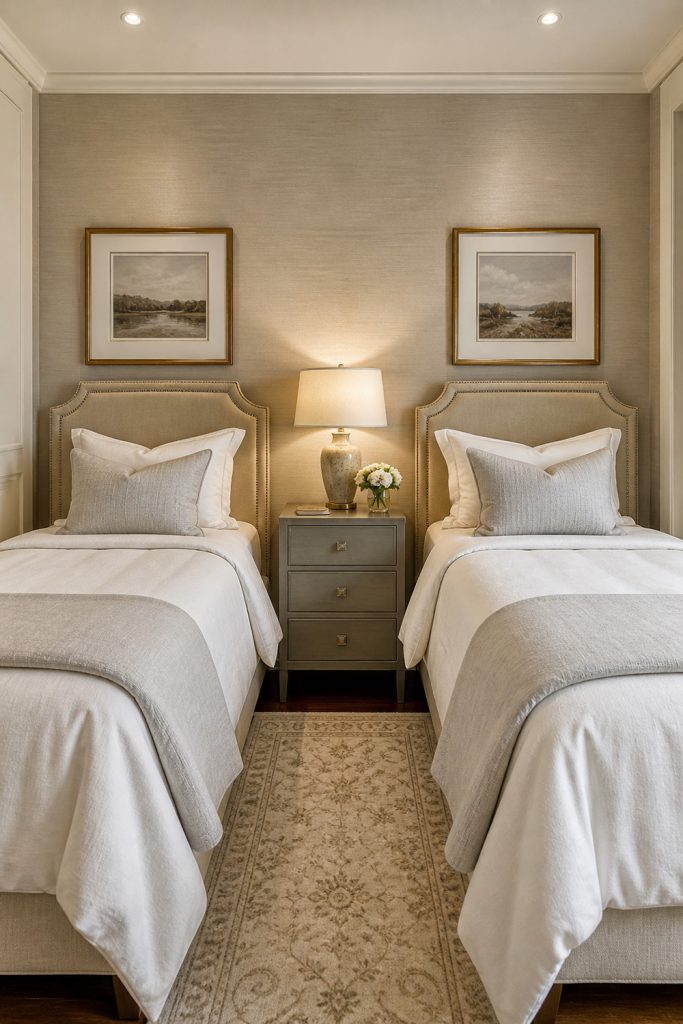
If bunk beds are not preferred, two matching twin beds placed parallel with a narrow central gap create visual balance. Symmetry makes a small room feel cleaner and less chaotic. Matching bed frames, bedding palettes, and bedside decor also create unity, which helps the room look intentionally designed rather than overcrowded. A slim nightstand or shared lamp between the beds can maximize the middle space efficiently.
3. Install Under-Bed Storage Drawers

In a shared bedroom, hidden storage becomes essential. Under-bed drawers are perfect for storing clothes, shoes, toys, seasonal bedding, or school supplies without consuming visible floor area. Since two people share the room, eliminating extra dressers can dramatically improve openness. Beds with built-in rolling drawers or lift-up storage platforms make the room far more practical while keeping surfaces uncluttered.
4. Use Vertical Wall Shelving

When floor space is limited, the walls become valuable real estate. Installing vertical shelves above beds, desks, or dressers creates extra storage without making the room feel cramped. Books, baskets, framed art, school items, and decorative pieces can all be stored upward rather than outward. Vertical shelving also draws the eye higher, which visually makes the ceiling feel taller and the room feel larger.
5. Keep the Color Palette Light and Neutral
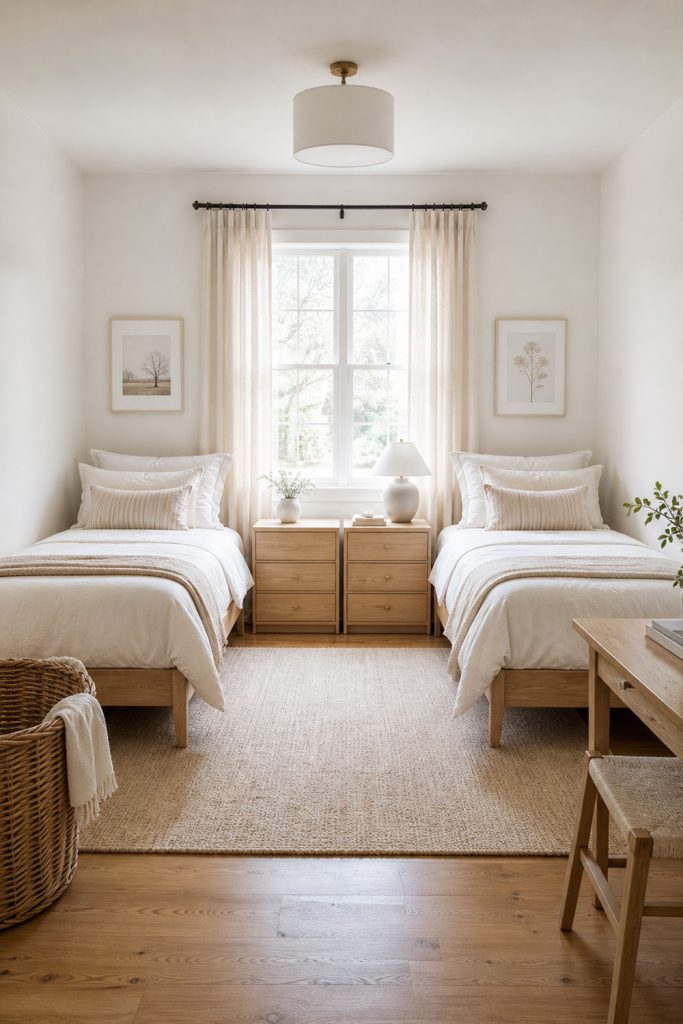
Small shared bedrooms benefit enormously from soft colors like white, cream, pale beige, light gray, or muted pastels. Light colors reflect more natural light and reduce the boxed-in feeling that dark shades can create. A neutral base also helps different furniture pieces blend smoothly. When two beds, two storage units, and two personalities share one room, a calm palette prevents the space from looking visually crowded.
6. Add Built-In Wall Desks
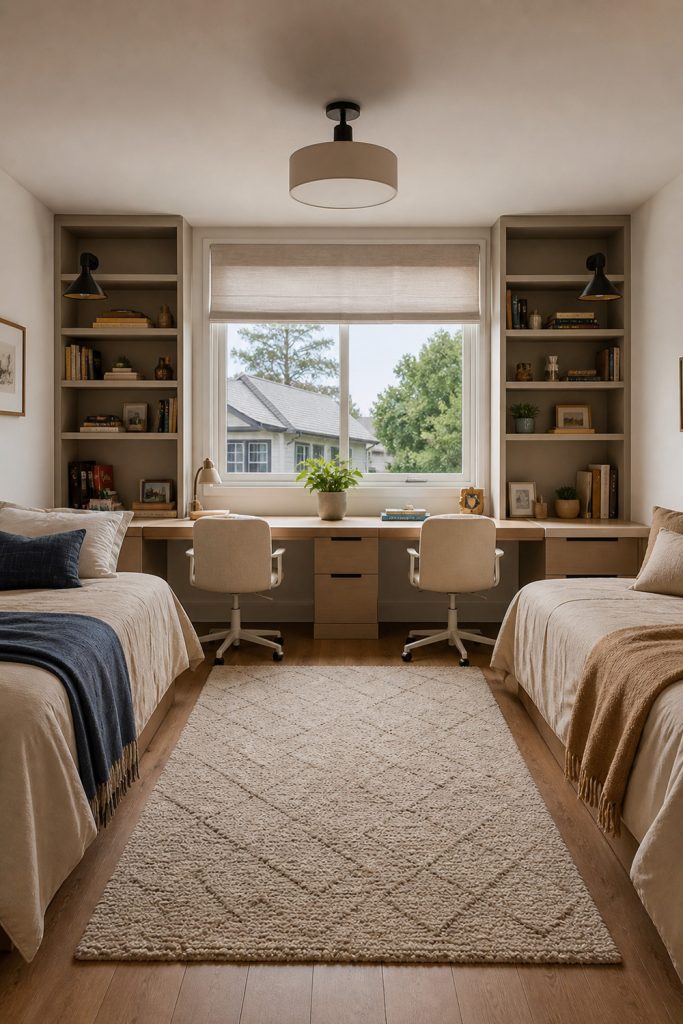
Instead of using two bulky study tables, a built-in wall desk can provide a shared homework or activity station while saving floor space. Floating desks create a clean, streamlined look and leave room underneath for chairs or baskets. This setup is especially useful in kids’ or teens shared bedrooms where functionality matters as much as sleep. It turns one wall into a productive zone without interrupting movement.
7. Use a Shared Headboard Wall

Placing both beds against the same wall with one continuous upholstered or wooden headboard creates a polished designer appearance. This technique visually joins the room instead of making it look like separate, mismatched corners. It also keeps furniture concentrated on one side, leaving the rest of the room more open. Shared headboard layouts are particularly useful in narrow rectangular bedrooms.
8. Incorporate Wall Hooks Instead of Floor Stands
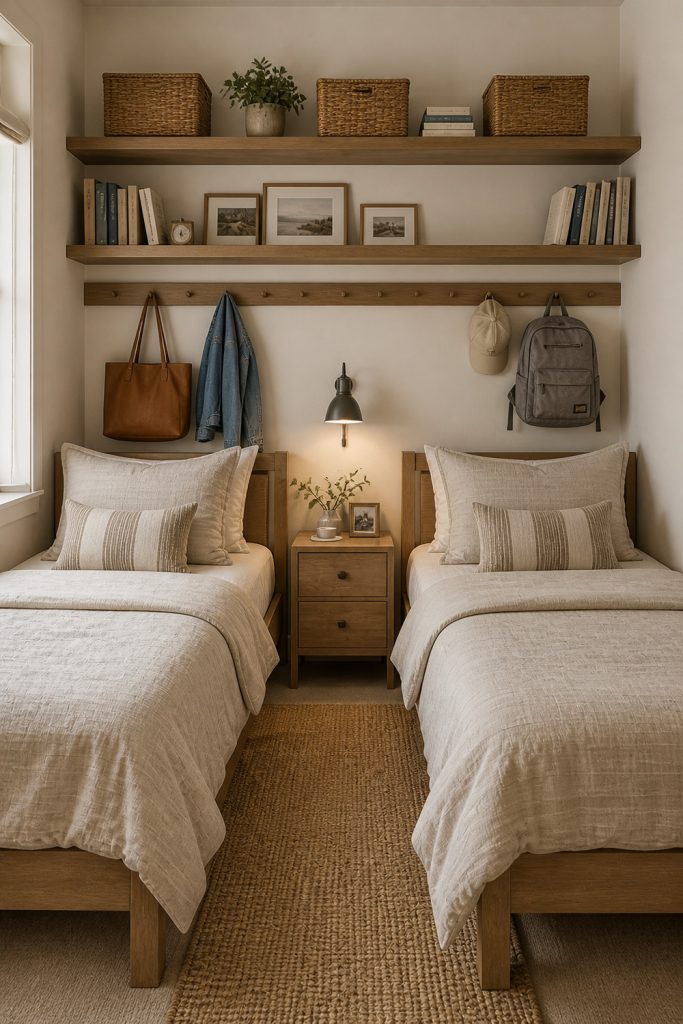
Freestanding coat racks, towel ladders, or hanging stands take up precious floor space. Wall-mounted hooks behind the door or beside each bed offer a far more efficient solution. Jackets, bags, robes, or headphones can all be hung vertically. This keeps everyday items accessible without creating piles on chairs or beds, which is common in shared spaces.
9. Add Personalized Bedding for Individual Identity
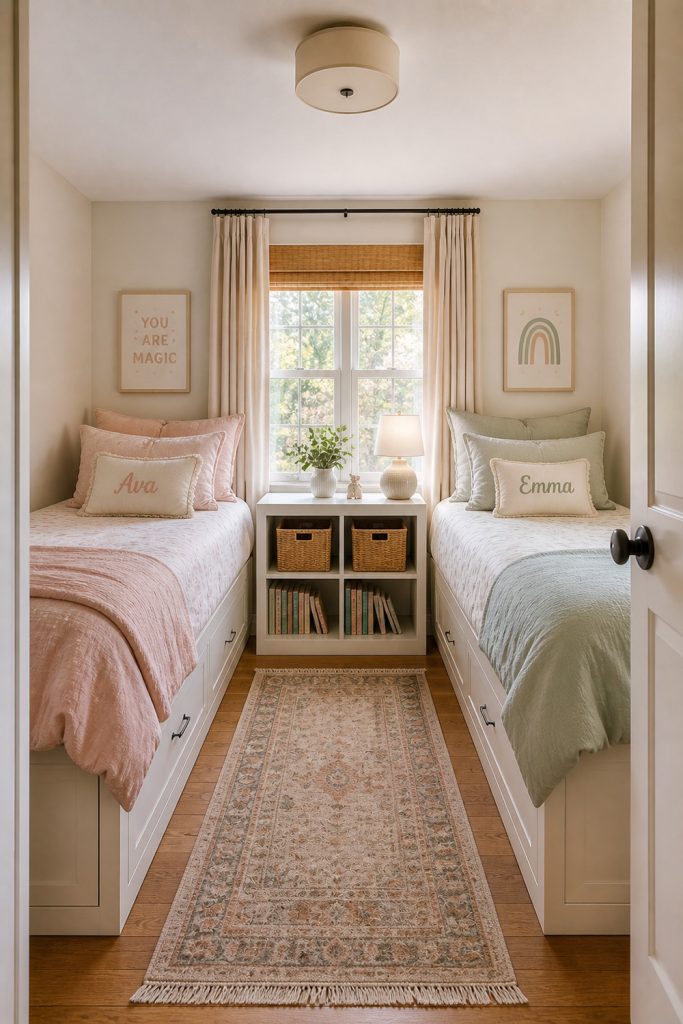
Even in a small room, each person should feel ownership of their side. Personalized bedding in coordinating but slightly different patterns or colors helps define each sleeping zone. This prevents the room from feeling overly uniform while still keeping the overall aesthetic cohesive. Small personal touches create comfort and reduce the feeling of forced sharing.
10. Use Mirrored Closet Doors

Mirrors are one of the oldest interior tricks for making small spaces appear larger. Mirrored closet doors reflect light and visually double the perceived room depth. In a shared bedroom where furniture can quickly close in the walls, mirrors create an immediate sense of openness. They also serve a practical dressing purpose without requiring an extra mirror stand.
11. Choose Multifunctional Nightstands

Instead of decorative bedside tables that only hold lamps, choose nightstands with drawers, cubbies, or baskets. In a shared bedroom, every furniture piece should contribute to storage. Compact multifunctional nightstands can hold books, chargers, stationery, or personal items while keeping surfaces tidy. This reduces the need for additional cabinets that consume floor area.
12. Utilize Over-the-Door Organizers

The back of the bedroom door is often wasted space. Hanging organizers can store shoes, toiletries, school accessories, toys, or folded clothes. This is one of the simplest and cheapest ways to gain extra storage without changing the room layout. Shared bedrooms benefit greatly from hidden organizing tools that keep personal items separated but accessible.
13. Install Floating Bedside Shelves

Floating shelves beside each bed are a smart replacement for bulky side tables. They provide just enough room for a lamp, phone, water bottle, or alarm clock while maintaining an open floor plan. Because they do not touch the floor, they make the room feel less crowded and easier to clean. This small modern update creates a lighter visual footprint.
14. Use Coordinated Storage Baskets
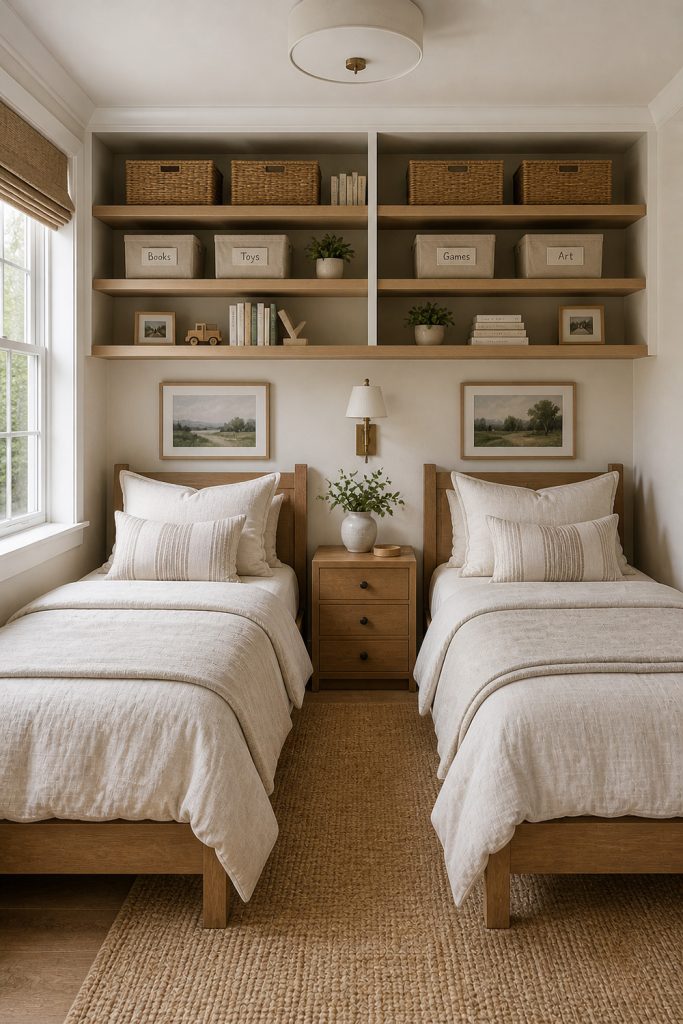
Open shelving can quickly look messy in a shared room unless items are concealed. Coordinated woven baskets, fabric bins, or labeled boxes help store each person’s belongings neatly. Matching storage containers also creates visual consistency, which makes the room look styled rather than chaotic. This is especially important when toys, books, or school supplies are involved.
15. Place Beds in an L-Shaped Layout
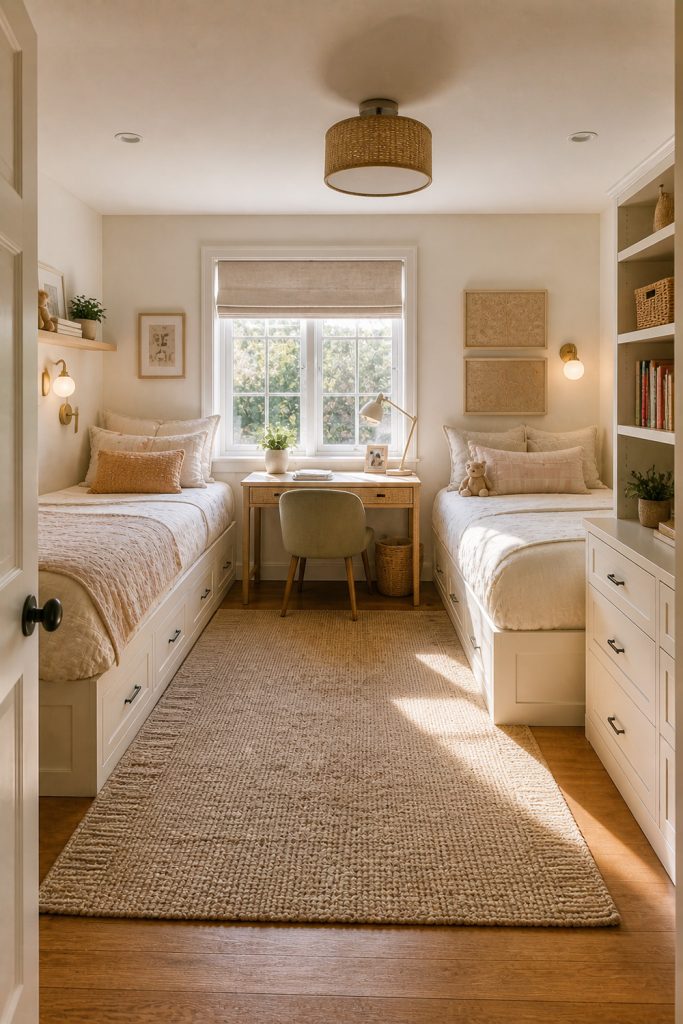
For square rooms, placing the beds in an L-shape can improve movement and create more distinct personal corners. One bed sits against one wall and the second against the adjacent wall, leaving the center open. This arrangement can make the room feel less like a dorm setup and more like two cozy sleeping zones within one shared space.
16. Add a Central Shared Rug
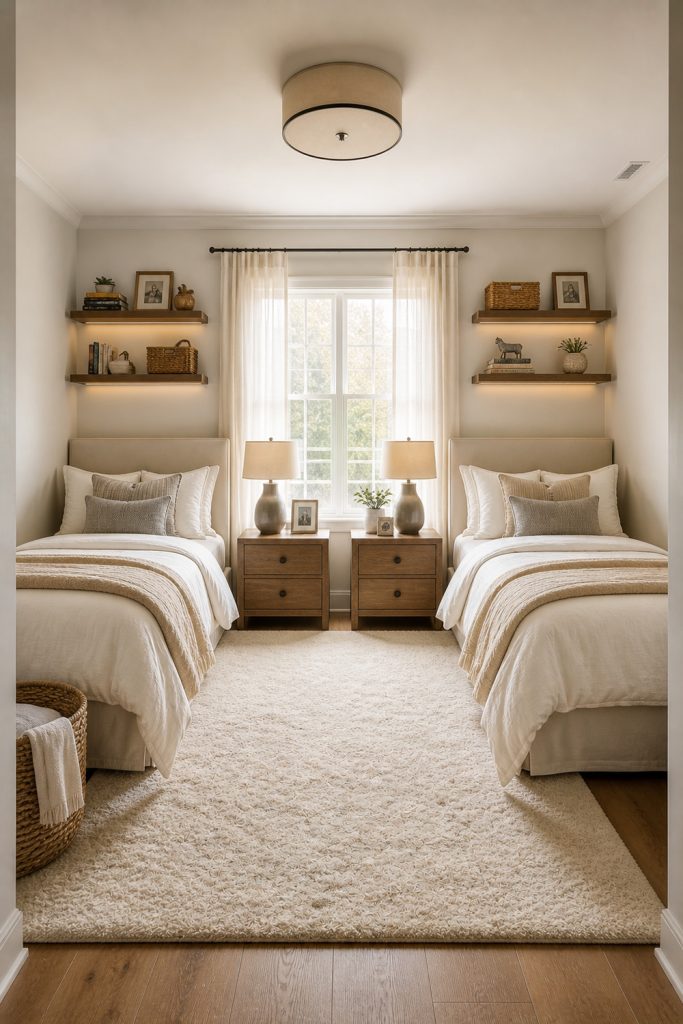
A single large rug placed in the center of the room helps visually unite the layout and soften the floor. Rugs make small bedrooms feel warmer and more intentional. Choosing one shared rug rather than several smaller mats keeps the room from looking fragmented. It also gives the center area a designated cozy play or seating zone.
17. Use Ceiling-Height Storage Cabinets

Tall cabinets that reach close to the ceiling provide maximum storage without increasing the furniture footprint. Shared bedrooms need more clothing and item storage than solo rooms, so going vertical is essential. Ceiling-height wardrobes or slim built-ins help reduce clutter while keeping the floor area more open than multiple short dressers would.
18. Keep Decor Minimal and Organized

In small shared bedrooms, too much decor quickly turns into visual noise. Instead of filling every wall and surface, choose a few framed prints, one lamp style, matching curtains, and limited accessories. Clean styling helps the room feel breathable. The goal is not just fitting two people inside the room—it is making the room feel calm enough for both to rest comfortably.
Conclusion
A small shared bedroom does not have to feel cramped or messy when every design decision is made with purpose. Smart layouts, vertical storage, light colors, multifunctional furniture, and minimal clutter can completely transform even the tiniest room into a stylish and efficient shared retreat.
The best shared bedrooms balance practicality with personal comfort. By giving each person designated storage, sleeping identity, and enough breathing room, you create a space that feels cooperative, cozy, and beautifully organized.
Frequently Asked Questions
How do you fit two beds in a small shared bedroom?
Bunk beds, twin beds with narrow spacing, or L-shaped bed layouts are the most effective ways to fit two sleeping areas without overcrowding the room.
What colors make a small shared bedroom look bigger?
White, cream, pale gray, beige, and soft pastel tones reflect light and help the room feel brighter and more spacious.
How can I add more storage to a shared bedroom?
Use under-bed drawers, wall shelves, floating nightstands, over-the-door organizers, and tall vertical cabinets to maximize hidden storage.
Are bunk beds the best option for shared bedrooms?
Bunk beds are excellent for saving floor space, but twin or L-shaped layouts can work just as well, depending on room shape and age preferences.
How do you keep a shared bedroom from looking cluttered?
Use matching storage bins, minimal decor, multifunctional furniture, light colors, and designated personal zones to keep the room visually organized.


