

15 Dream Bedroom Ideas for Small Bedrooms to Maximize Space
A small bedroom can still feel like a beautiful retreat. Limited floor space simply means every piece of furniture needs to earn its place. With the right layout, clever storage, calming colors, and a few thoughtful details, even a compact room can feel comfortable rather than cramped.
The biggest mistake in a small bedroom is trying to fit too much into it. A large bed, oversized nightstands, a bulky dresser, and several decorative pieces can quickly make the room difficult to move around. Instead, focus on the essentials and use the walls, corners, and unused spaces more effectively.
These dream bedroom ideas for small bedrooms show how to create a cozy and functional space without sacrificing personality. From wall-mounted furniture and storage beds to mirrors and clever layouts, each idea offers a practical way to make a compact bedroom work harder while still feeling inviting.
This post contains affiliate links. If you buy through them, we may earn a small commission at no extra cost to you. See our Affiliate Disclosure.
1. Light and Airy White Bedroom
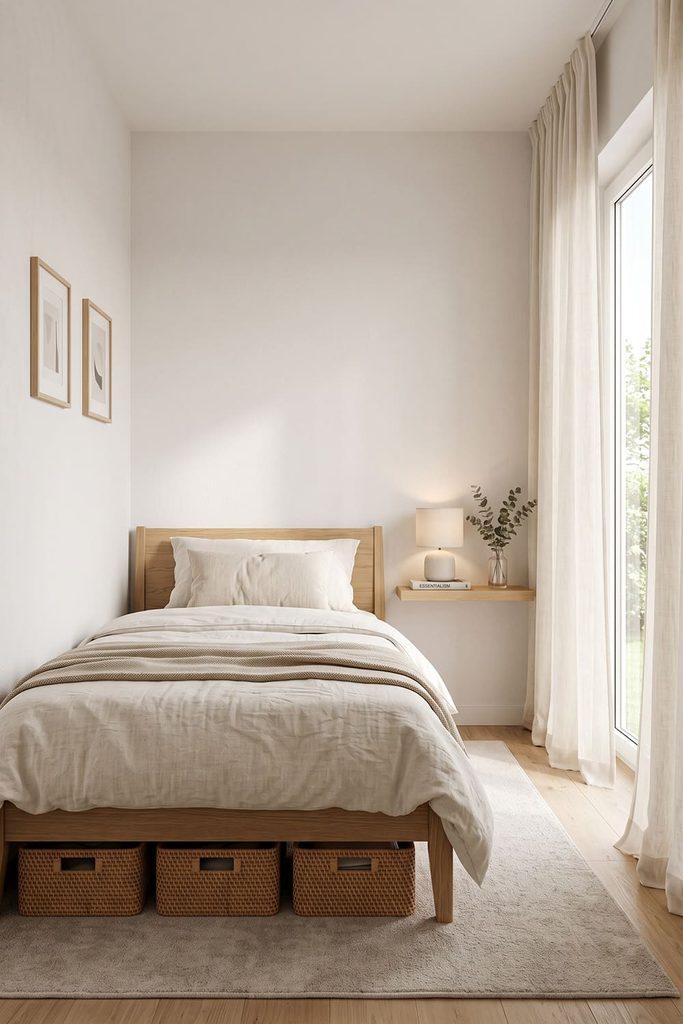
White can make a small bedroom feel brighter and more open, especially when natural light is limited. Use warm white on the walls rather than an overly cool shade, then introduce cream and beige through bedding and textiles.
Choose a simple bed frame with a slim profile so it does not visually dominate the room. Instead of a large nightstand, use a narrow floating shelf beside the bed. A soft rug can add warmth without making the floor feel crowded.
Keep decorations minimal and use a few framed prints rather than filling the walls. For extra storage, choose baskets that can slide underneath the bed. The result is a simple room that feels clean, comfortable, and spacious.
2. Bed With Built-In Storage

A storage bed is one of the most useful choices for a compact bedroom because it turns unused space beneath the mattress into valuable storage.
Use the drawers for folded clothing, shoes, spare bedding, or seasonal items. If the bed has lift-up storage, larger items can be kept underneath and removed when needed. Keep the rest of the furniture relatively simple. A small wall-mounted nightstand can replace a bulky bedside table.
Choose light-colored bedding to balance the heavier visual presence of the storage bed. A large mirror placed nearby can reflect light and make the room feel more open. This setup works particularly well when there is little closet space available.
3. Floating Nightstands

Replace traditional bedside tables with floating shelves or wall-mounted nightstands. This simple change leaves more visible floor space beneath the furniture, making the bedroom feel less crowded.
Choose a shelf wide enough for a lamp, phone, book, and a few small essentials. Install one on each side of the bed if space allows. Matching shelves can create symmetry without adding visual weight.
Use the wall above each shelf for a small sconce or reading light. Keep the shelves organized and avoid turning them into storage piles. The open floor beneath the nightstands also makes cleaning easier, which is a useful bonus in a compact room.
4. Mirror Wall for a Spacious Feel

A strategically placed mirror can make a small bedroom appear larger by reflecting natural and artificial light. A large rectangular mirror against one wall can create the impression of additional depth.
Another option is a mirrored wardrobe door, which combines storage with a useful full-length reflection. Keep the surrounding decor relatively simple so the mirror does not compete with too many visual elements.
Place it opposite a window when possible to reflect daylight deeper into the room. Choose a simple frame in black, wood, brass, or a neutral finish that complements the existing furniture. The goal is not to cover every wall with mirrors. One well-positioned piece can have a stronger effect.
5. Small Bedroom With a Loft Bed

A loft bed can dramatically increase the usable floor area in a very small bedroom. The elevated sleeping platform leaves the space underneath available for a desk, wardrobe, reading corner, or storage.
Choose a sturdy design with enough clearance for the intended use below. A compact desk underneath can create a dedicated homework or work area without requiring another part of the room.
Use shelves on the nearby wall for books and everyday items. Keep the colors light and the furniture streamlined so the loft structure does not make the room feel visually heavy. This layout is particularly useful in bedrooms where floor space is limited, but ceiling height provides more room to work with.
6. Cozy Corner Bed Layout

If the bedroom has an awkward shape, position the bed against a corner rather than leaving equal space on both sides. This can free up valuable floor area for a desk, wardrobe, or open walking zone.
Use a comfortable headboard against the wall to create a finished appearance. A narrow wall-mounted shelf can function as the bedside table. Add a soft rug partially beneath the bed to define the sleeping area.
Keep the opposite side of the room as open as possible. This arrangement may not provide traditional symmetry, but in a very small bedroom, practical use of space is often more valuable than maintaining a perfectly centered bed.
7. Floor-to-Ceiling Storage

Use the full height of the room instead of relying only on low furniture. Tall wardrobes, built-in shelves, or floor-to-ceiling cabinets can provide significant storage while taking up relatively little floor area.
Choose doors with a simple finish so the storage blends into the walls. Place less frequently used items on the highest shelves and everyday clothing within easy reach. If the room feels visually heavy, choose a light cabinet color that matches the walls.
A small open shelf can break up the solid cabinetry and provide space for books or decorative pieces. Vertical storage is especially useful when the bedroom has limited width but reasonable ceiling height.
8. Soft Beige Minimalist Bedroom

Create a calm small bedroom using beige, cream, oatmeal, and light wood. A neutral palette can make the room feel visually connected rather than broken into many separate areas.
Choose a simple upholstered bed and pair it with a slim wooden nightstand. Use layered bedding to introduce texture instead of adding lots of decorative objects. A small woven rug can soften the floor while keeping the neutral palette intact.
Choose curtains that are close in color to the walls so they do not create a strong visual division. Add one large piece of artwork rather than several small decorations. The result feels warm and sophisticated while keeping the limited space visually quiet.
9. Wall-Mounted Desk Bedroom
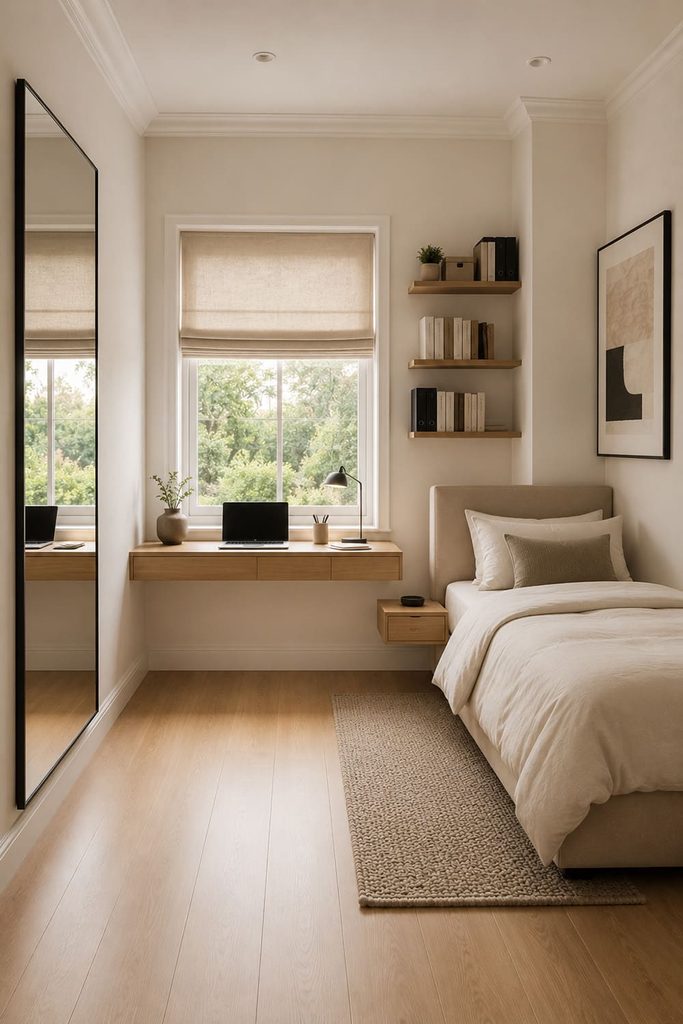
When you need a workspace but do not have enough room for a traditional desk, consider a wall-mounted design. A narrow floating desk can provide enough surface area for a laptop, notebook, and small lamp.
Install shelves above it for books and office supplies. When the desk is not being used, the open floor beneath it remains available. Place the desk near a window if possible to take advantage of natural light.
Keep the sleeping area simple with a compact bed and minimal bedside furniture. Choose a desk and shelves that match the wall or other furniture so the workspace blends naturally into the bedroom.
10. Daybed-Style Small Bedroom
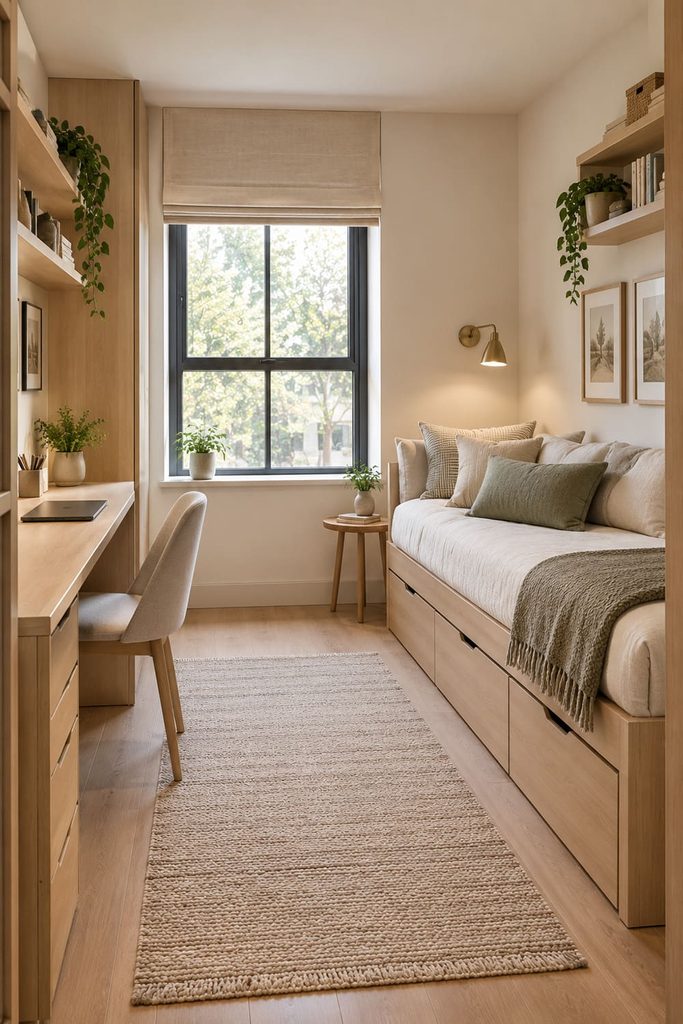
A daybed can serve as both a sleeping surface and a comfortable seating area during the day. Choose a design with a simple frame and dress it with cushions that can be rearranged.
This works particularly well for rooms that also serve as study or relaxation spaces. Add a small side table instead of a full nightstand. Use drawers underneath the daybed for additional storage.
A wall-mounted reading lamp can save table space. Choose neutral bedding and add color through a few cushions or a throw. The flexible layout makes the bedroom feel more like a multipurpose room without requiring a large amount of furniture.
11. Small Bedroom With a Large Window
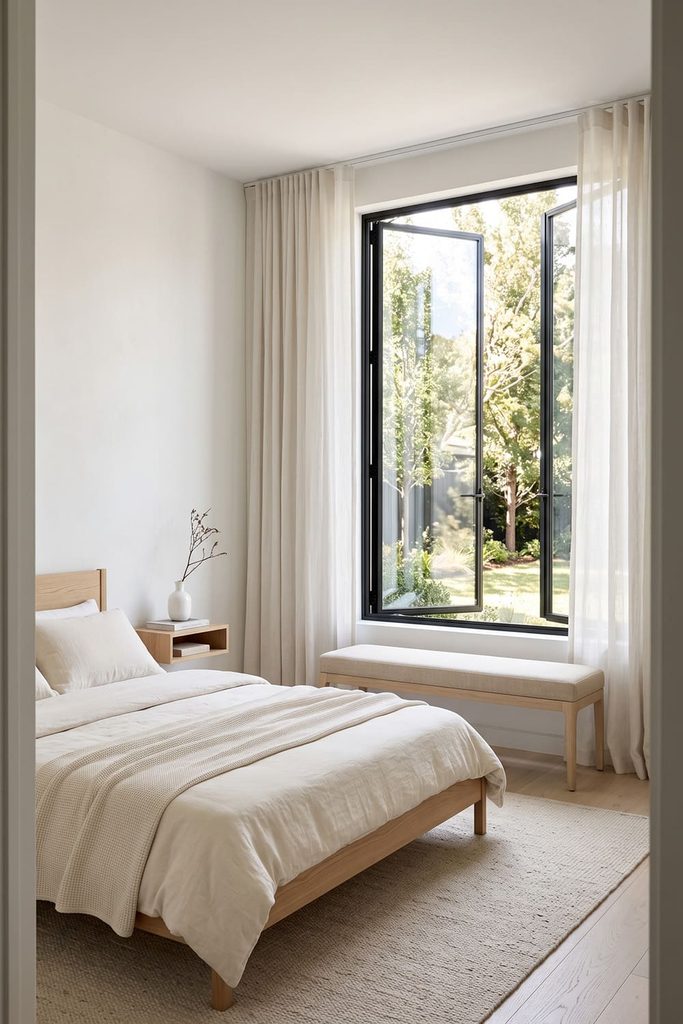
If your compact bedroom has a large window, make it the visual focus. Keep the area around it relatively clear so natural light can spread throughout the room.
Position the bed where it does not block the window and use simple curtains that can be pulled completely open during the day. Choose pale bedding and light furniture to enhance the brightness.
A small bench beneath the window can provide seating without taking up much space. Avoid placing tall furniture directly beside the window if it blocks incoming light. The combination of natural daylight, light colors, and an uncluttered layout can make a compact room feel considerably more comfortable.
12. Murphy Bed for Maximum Flexibility
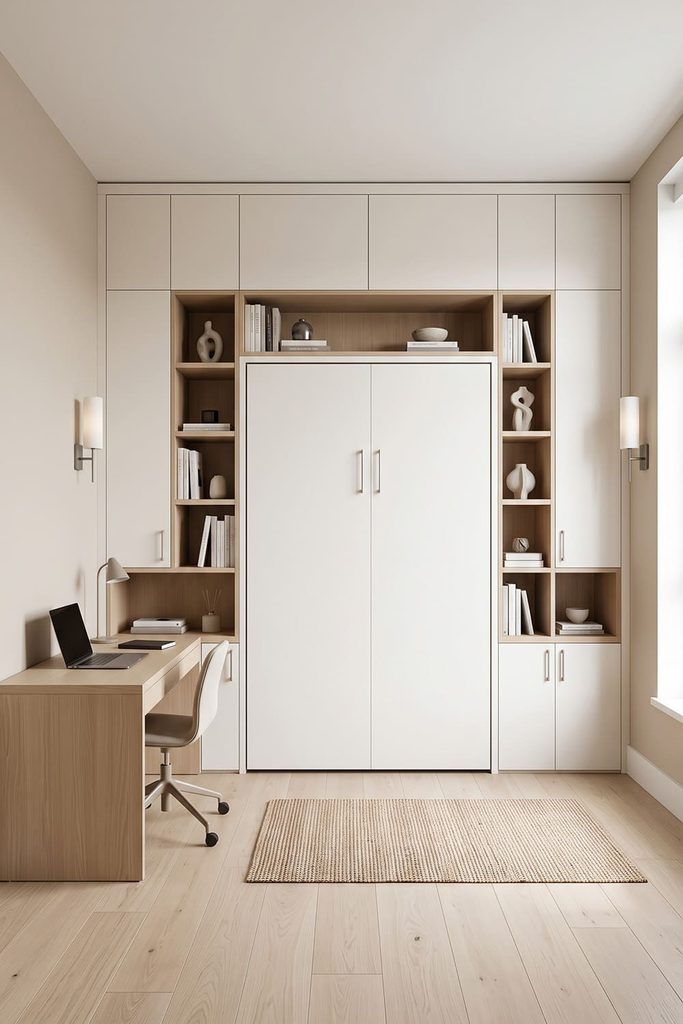
A wall bed can completely change how a small bedroom functions. When folded away, the floor can become a workspace, exercise area, or open living space. Choose a modern design that blends with the wall and provides storage around the bed if possible.
During the day, keep the surrounding area tidy so the room can serve its secondary purpose. Use simple bedding and a few decorative pieces that are easy to move when the bed is folded. A wall-mounted lamp can eliminate the need for bulky bedside furniture.
This solution is especially useful in studio apartments, guest rooms, or bedrooms that need to serve multiple functions.
13. Small Bedroom With a Statement Wall

A small room does not have to be completely neutral. Create personality with one statement wall behind the bed. Try muted green, dusty blue, warm terracotta, subtle wallpaper, or a simple painted arch.
Keep the remaining walls lighter so the accent does not visually shrink the entire room. Choose simple furniture and neutral bedding to prevent the room from becoming too busy.
One statement wall can actually reduce the need for lots of additional artwork and accessories. Add a small bedside lamp and one or two meaningful decorative pieces. The result gives the room character while keeping the overall design controlled.
14. Under-Bed and Behind-Door Storage
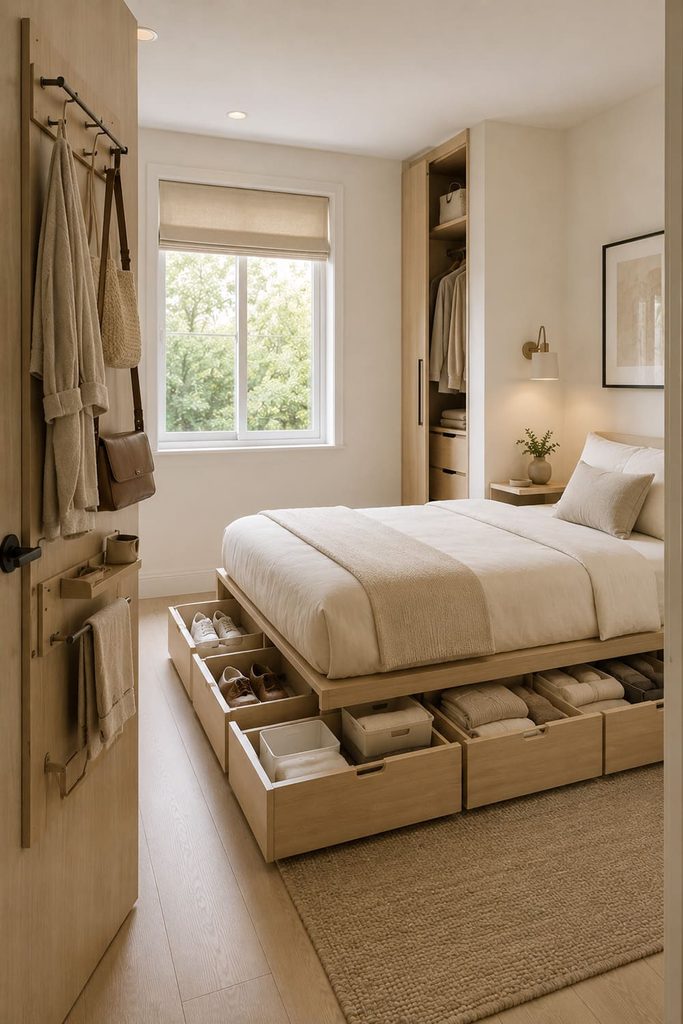
Make use of the spaces that are often overlooked in small bedrooms. Under-bed containers can hold shoes, seasonal clothing, spare blankets, or other items that are not needed every day.
Behind the bedroom door, install hooks or a slim organizer for bags, accessories, robes, or lightweight clothing. Use labeled containers so finding stored items does not become frustrating.
Keep the visible surfaces of the room relatively clear. A simple wardrobe and compact bedside shelf may be enough when hidden storage is used effectively. This approach does not require changing the room’s overall style. It simply makes the existing space more useful.
15. Cozy Small Bedroom With Layered Lighting

Good lighting can make a compact bedroom feel much more comfortable. Instead of depending entirely on one ceiling fixture, combine several smaller sources of light.
Use bedside sconces or compact lamps for reading, a floor lamp in an empty corner, and soft ambient lighting for the evening. Choose warm bulbs to create a relaxing atmosphere. Keep the furniture compact so the lighting fixtures do not compete for limited floor space.
Use curtains that allow daylight into the room during the day while providing privacy at night. When different lighting sources can be switched independently, the room becomes easier to adapt for reading, relaxing, getting dressed, or winding down.
Conclusion
A small bedroom does not need to feel cramped or ordinary. The right furniture scale, thoughtful storage, light colors, mirrors, and flexible layouts can make even a limited room feel comfortable and inviting. Start by deciding what the bedroom needs to do every day, then remove furniture that does not serve a clear purpose.
Use vertical walls, space beneath the bed, and overlooked corners to gain extra storage without filling the floor. Once the practical pieces are in place, add soft bedding, artwork, rugs, and lighting to give the room personality.


