

15 Dream Bedroom Ideas for Empty Nesters to Create a Cozy, Elegant Retreat
An empty nest can change the way a home feels. Once the children have moved out, the bedroom can finally become a space designed around the people who actually use it every day. Instead of keeping the room stuck in the same style for years, this stage of life can be a great opportunity to create a calmer, more comfortable retreat.
The best dream bedroom ideas for empty nesters combine beautiful design with practical details. A supportive bed, uncluttered surfaces, thoughtful lighting, useful storage, and comfortable seating can make the room feel more relaxing without making it look overly formal. Sleep experts also recommend paying attention to temperature, noise, light, bedding, and clutter when creating a bedroom that supports better rest.
Here are 15 bedroom ideas ranging from warm traditional spaces to modern retreats, guest-friendly bedrooms, reading corners, and layouts designed with future comfort in mind.
1. Warm Neutral Bedroom With Natural Wood

Create a peaceful retreat with a palette of warm beige, ivory, taupe, and natural wood. A simple upholstered bed can anchor the room while oak or walnut nightstands add warmth without making the space feel heavy. Choose soft cotton or linen bedding in layers so the bed looks inviting but remains easy to maintain.
Keep decorations meaningful rather than filling every surface. A favorite landscape print, ceramic lamp, or framed family photograph can provide personality. Natural wood also works beautifully for a bench at the foot of the bed.
The result is timeless enough to enjoy for years while still feeling fresh after the children have left home.
2. Elegant Hotel-Inspired Bedroom
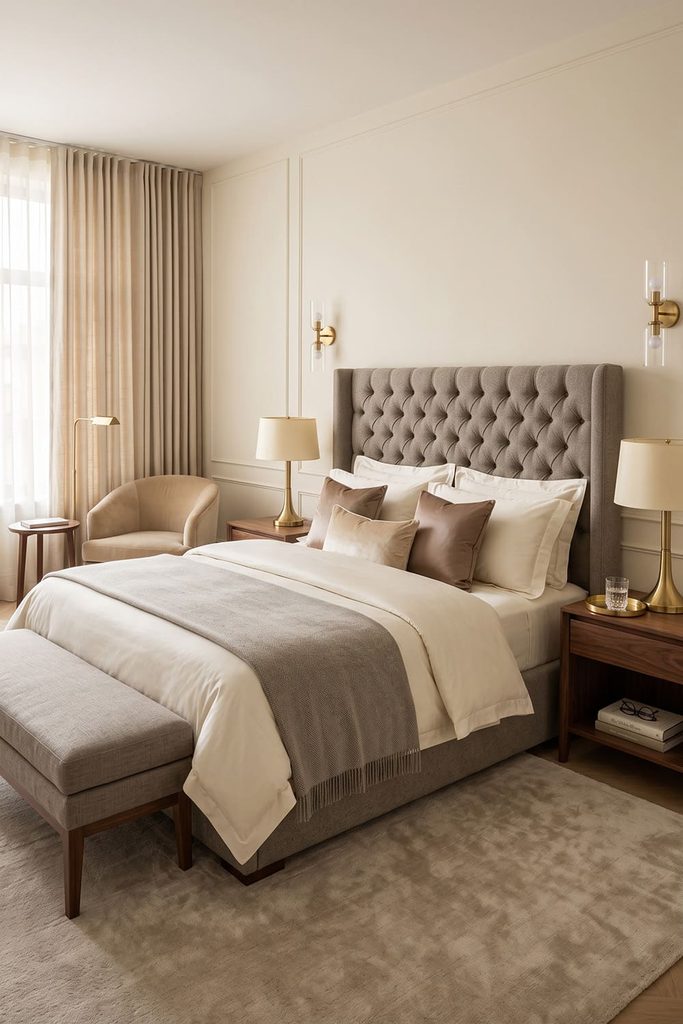
Turn the primary bedroom into a private hotel-style retreat with a generously upholstered headboard, crisp bedding, matching bedside tables, and layered lighting. Keep the color palette restrained with cream, warm gray, champagne, and soft brown.
Instead of relying on one bright ceiling fixture, combine bedside lamps, wall sconces, and a subtle overhead light. Dimmers make it easier to change the atmosphere throughout the evening.
Add a bench at the foot of the bed and a small tray for books, glasses, or other nighttime essentials. The goal is comfort rather than excessive decoration. A few high-quality materials can make the entire room feel polished without filling it with unnecessary furniture.
3. Cozy Bedroom With a Reading Corner
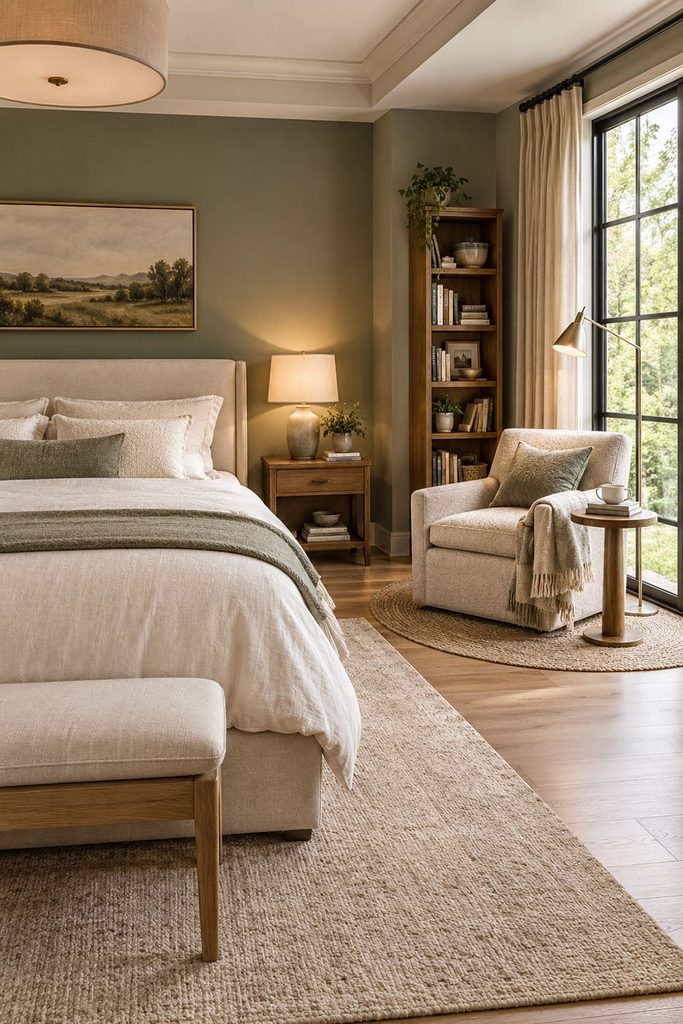
If the children are gone and there is extra space, dedicate one corner of the bedroom to reading. Place a comfortable armchair beside a floor lamp near a window, then add a small side table for books and a cup of tea.
A textured rug can visually separate the reading area from the sleeping zone. Keep the chair large enough to sit comfortably but not so large that it makes the room difficult to navigate.
Choose warm neutrals or muted greens and blues throughout the room to maintain a restful feeling. The reading corner gives the bedroom another purpose without turning it into a home office, helping preserve the room’s sense of calm.
4. Soft Sage Green and Cream Retreat

Sage green works especially well in a bedroom because it brings a gentle connection to nature without overwhelming the room. Use sage on the walls or behind the bed, then balance it with cream bedding, light oak furniture, and woven accessories.
Keep the pattern mix simple. A subtle botanical print on a cushion can complement the wall color without making the space feel busy.
Add curtains in ivory or natural linen to soften the windows while allowing plenty of daytime light. At night, blackout-lined window treatments can help create a darker sleeping environment, which is useful because light exposure can affect the body’s sleep-wake cycle.
5. Downsize the Furniture, Not the Comfort

After children leave home, there may be less need for oversized furniture and crowded storage. Use the opportunity to remove pieces that no longer serve a purpose.
A streamlined upholstered bed, two practical nightstands, one dresser, and a comfortable chair may be all the room needs. Keep walking paths open and avoid squeezing furniture against every available wall.
Choose drawers that are easy to access and storage pieces that keep everyday items organized. A tidy room can feel significantly more relaxing at bedtime, and current sleep guidance specifically recommends reducing bedroom clutter as part of creating a calming environment.
The result is a bedroom that feels spacious, intentional, and easier to maintain.
6. Sophisticated Navy and Ivory Bedroom
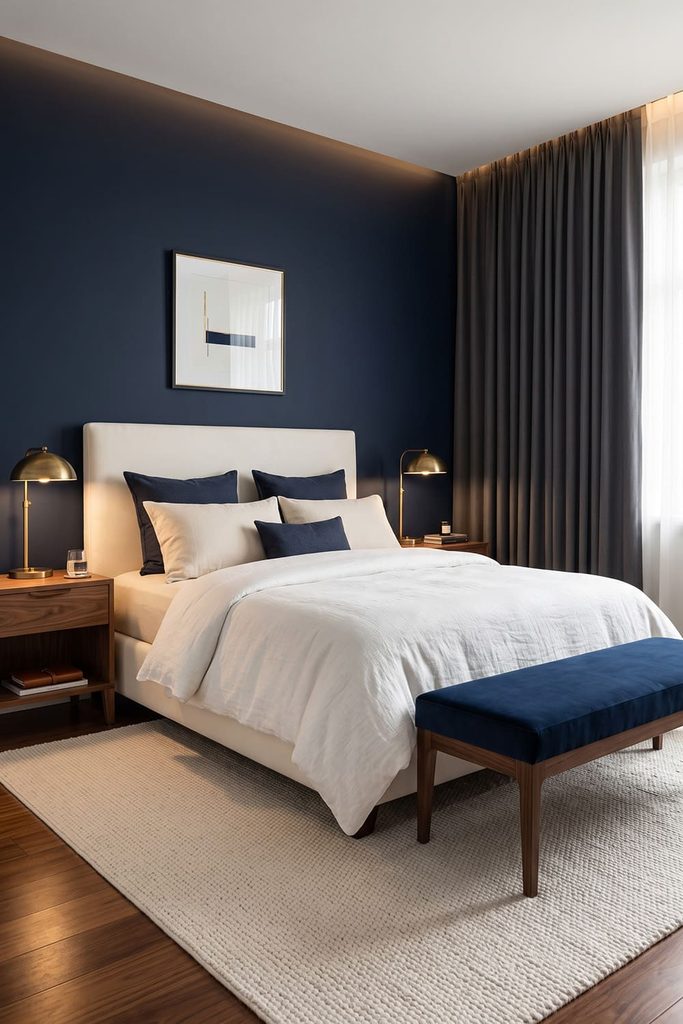
For empty nesters who prefer a richer palette, combine deep navy walls with ivory bedding and warm wood furniture. The darker backdrop creates an intimate atmosphere while the lighter bedding keeps the room from becoming visually heavy.
Use brass or aged-metal lighting for a subtle contrast. A large upholstered headboard can add softness against the dark wall. Avoid filling the room with too many competing colors. Navy, ivory, walnut, and one metallic accent are enough to create a sophisticated scheme.
For nighttime comfort, consider blackout curtains if exterior lighting enters the room. A dark sleeping environment can reduce unwanted light exposure during the night.
7. Bedroom With a Beautiful Window Seat

If the bedroom has a wide window, turn the space beneath it into a comfortable window seat. A custom cushion, two washable pillows, and a small side table can create a peaceful spot for morning coffee or afternoon reading.
Keep the main bed positioned so the window seat remains visually accessible rather than hidden behind furniture. Soft curtains can frame the window while adding texture.
This idea is especially useful in a larger bedroom because it gives unused space a clear purpose. Choose fabrics that coordinate with the bedding rather than matching everything exactly.
The finished room can feel personal and relaxed without needing extensive remodeling.
8. Modern Bedroom With Minimal Clutter
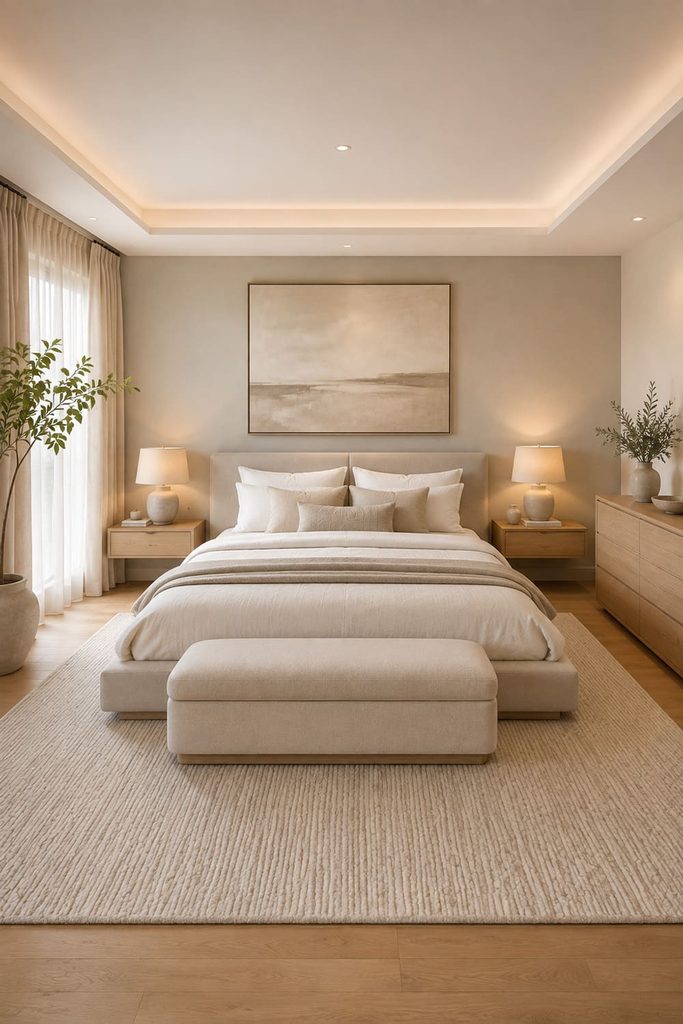
A minimalist bedroom can be especially appealing once the house becomes quieter. Start with a simple platform or upholstered bed and keep the furniture limited to pieces you genuinely use.
Instead of decorating every wall, choose one large piece of artwork above the bed or opposite it. Keep bedside tables relatively clear with just a lamp, book, and small personal item.
Storage becomes important in this style. Use drawers, baskets, or a storage bench to keep miscellaneous belongings out of sight.
The room should feel visually quiet rather than empty. Soft bedding, natural textures, and a few meaningful objects provide enough warmth to prevent the minimalist approach from becoming sterile.
9. Earthy Brown, Cream, and Terracotta Bedroom
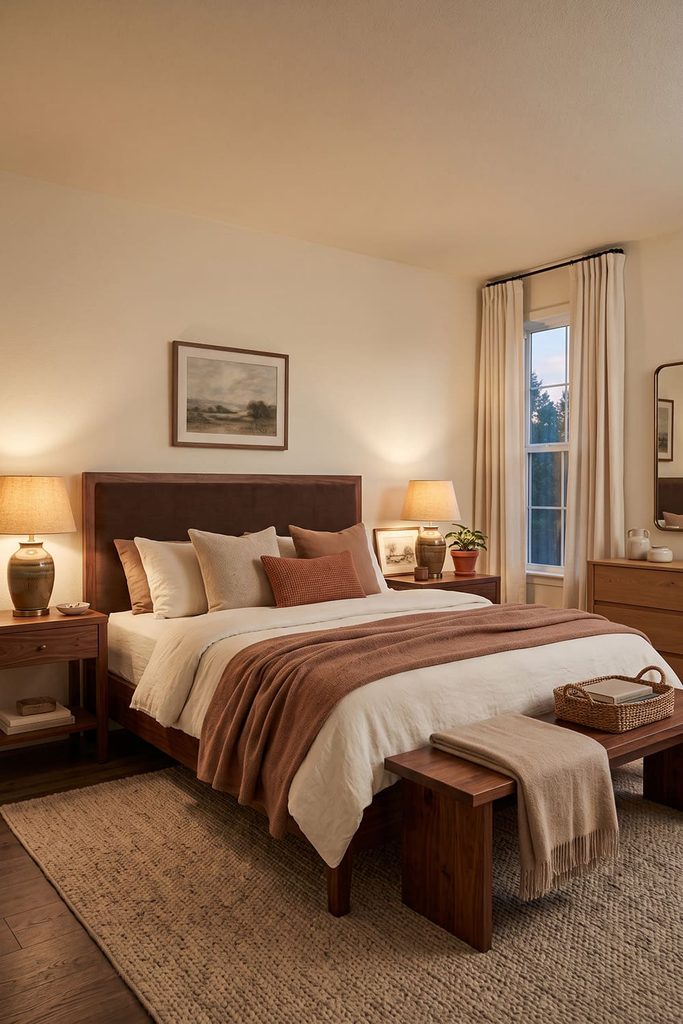
Create a warm retreat with earthy colors such as chocolate brown, clay, terracotta, sand, and cream. These tones work particularly well with wood furniture, woven baskets, linen bedding, and ceramic accessories.
Use the strongest color in small doses rather than covering every surface. A terracotta throw or pair of cushions can provide enough contrast against cream bedding.
Add a textured rug beside the bed and a warm wood bench at the foot. Keep the lighting soft in the evening, using table lamps or sconces instead of relying entirely on bright overhead lighting.
Warm, dim lighting can help create a relaxing transition toward bedtime, while cooler and brighter light late in the evening can be more stimulating.
10. Bedroom With a Small Sitting Area
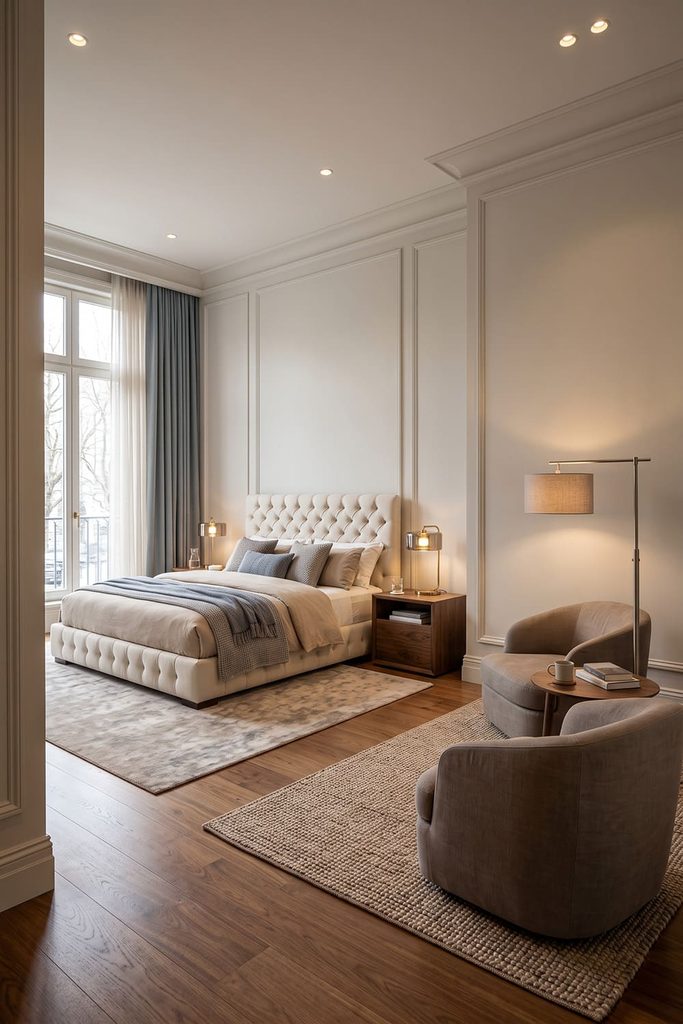
A larger primary bedroom can accommodate a compact sitting area without becoming a second living room. Place two comfortable chairs beside a small round table or use a loveseat along an unused wall.
This gives the room a place for conversation, morning coffee, or reading while keeping the bed area reserved for rest.
Use a different rug or small pendant light to visually distinguish the sitting area from the sleeping zone. Choose furniture that leaves generous walking space between the bed, doors, and other frequently used areas.
For empty nesters, this setup can make the bedroom feel more like a private retreat rather than simply a place where the bed happens to be.
11. Timeless Blue and White Bedroom
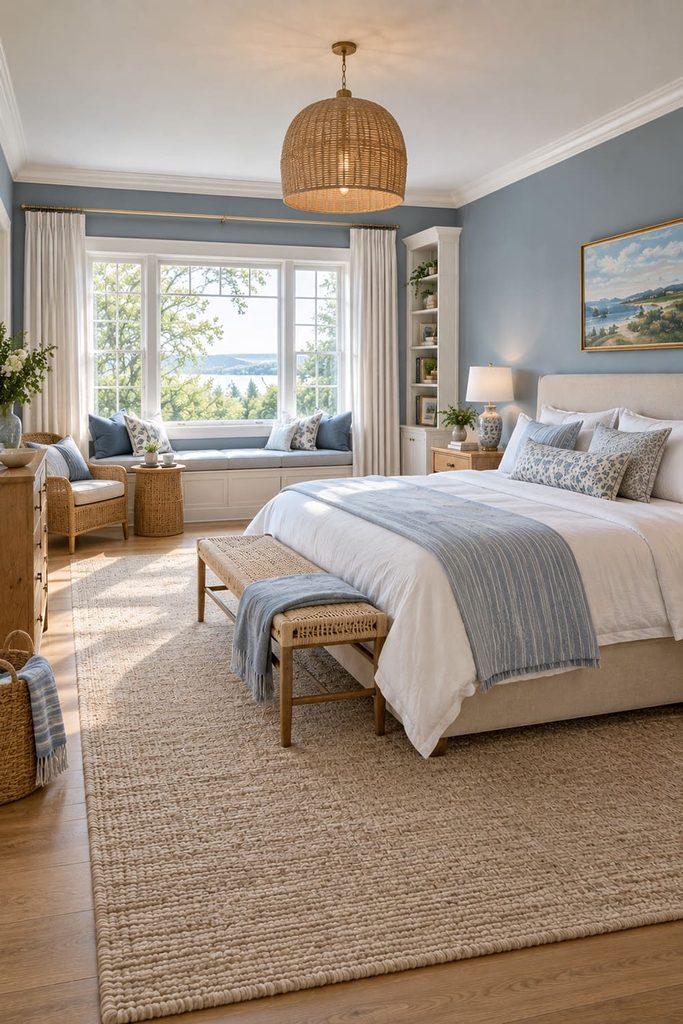
Blue and white create a classic combination that can work across many decorating styles. Use dusty blue walls with white trim, or reverse the palette with warm white walls and blue upholstered furniture.
Bring in natural wood to keep the room from feeling too cool. Woven baskets, a cane bench, or a rattan pendant can add texture without introducing another strong color.
Choose bedding with subtle stripes or small-scale patterns rather than several competing prints. Keep artwork simple and personal.
This design works particularly well for someone who wants a bedroom that feels fresh but does not need to be redecorated every few years.
12. Bedroom Designed for Better Nighttime Comfort
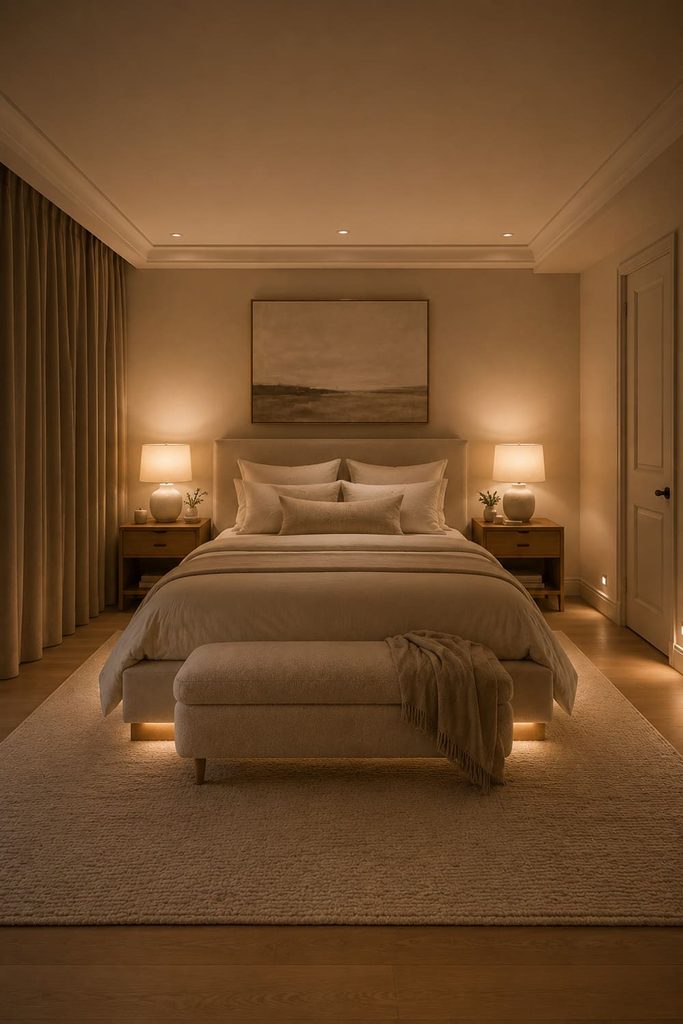
A beautiful bedroom should also work well after the lights go out. Start by creating clear pathways around the bed and keeping frequently used items within easy reach.
Use bedside lighting that can be controlled without getting out of bed. Motion-sensor lighting near the floor or along a nighttime pathway can also provide gentle illumination without requiring a bright overhead light.
Sleep guidance recommends keeping bedrooms dark, quiet, and comfortably cool, while minimizing disruptive light and noise.
Choose bedding that suits personal temperature preferences and keep unnecessary electronics out of the immediate sleeping area. These small decisions can make the room feel much more comfortable and practical every night.
13. Romantic Bedroom With Soft Blush Accents
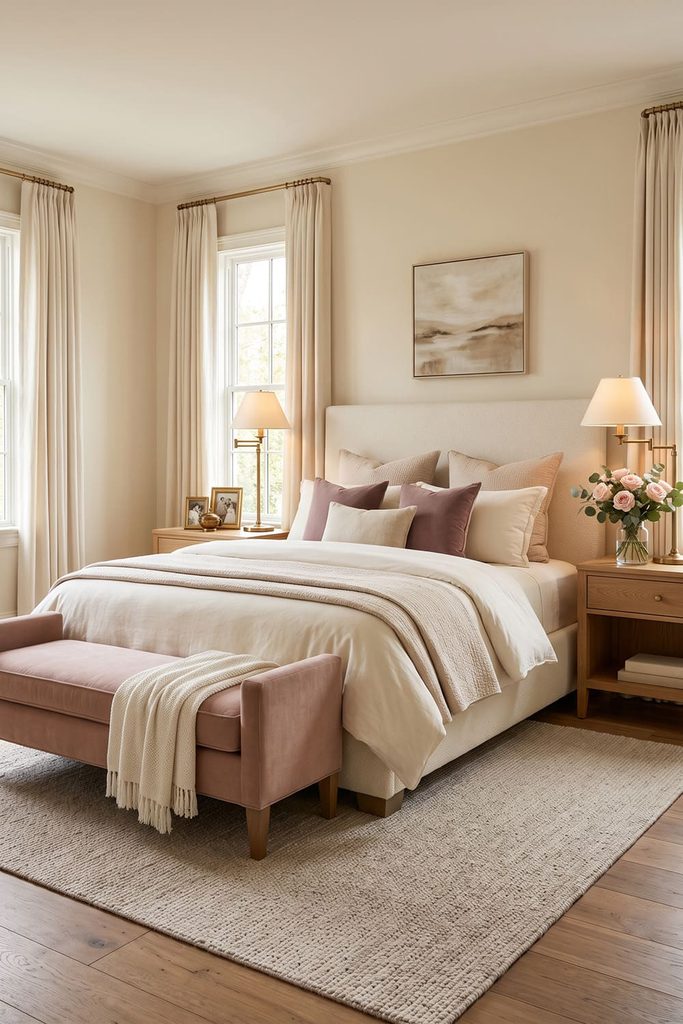
Create a romantic but mature bedroom using warm ivory, beige, muted blush, and natural wood. The blush should act as an accent rather than dominating the space.
Try a blush throw, upholstered bench, floral artwork, or a pair of decorative cushions against a neutral bed. Keep the rest of the room understated with cream curtains and warm wood nightstands.
Layer several sources of light so the room can shift from bright daytime use to a softer evening atmosphere. A pair of matching bedside lamps creates balance while providing practical reading light.
Finish with a vase of fresh flowers or a small collection of sentimental objects. The result feels romantic without becoming overly themed.
14. Flexible Bedroom With a Hidden Guest Function

An empty nest bedroom can occasionally need to accommodate visiting family members. Instead of permanently turning the room into a guest room, design it so the space remains primarily yours.
A comfortable bedroom chair can become a sleeper chair, or a daybed can provide additional sleeping space without dominating the room. Keep extra pillows and bedding inside a nearby cabinet or storage bench.
This approach is particularly useful when adult children or grandchildren visit occasionally. The bedroom remains a peaceful personal retreat most of the year but can adapt when family comes to stay.
Use attractive storage rather than leaving folded blankets in visible piles. A flexible room should feel intentional in both everyday and guest mode.
15. Future-Friendly Bedroom With an Open Layout

One of the smartest approaches is to design the bedroom with long-term comfort in mind without making it look clinical. Keep pathways open, avoid unnecessary furniture, and make sure drawers, switches, and bedside items are easy to reach.
Choose a bed height that feels comfortable to use and place sturdy furniture where it is genuinely useful. Good lighting becomes increasingly important, so combine ambient lighting with focused bedside illumination.
A clear route between the bed, bathroom, and bedroom door can make everyday movement easier. Keep rugs secure and avoid unnecessary floor clutter.
The beauty of this approach is that it simply looks like a spacious, well-organized bedroom today while remaining adaptable as needs change.
Conclusion
An empty nest can be the beginning of a new chapter for the home. Instead of keeping the primary bedroom exactly as it was when the children were growing up, use the extra freedom to create a space centered on comfort, personality, and everyday routines.
The best dream bedroom ideas for empty nesters do not need to be expensive or complicated. A calmer color palette, better lighting, comfortable bedding, useful storage, an inviting reading chair, or a more open furniture arrangement can make a noticeable difference. Focus on what makes the room easier to enjoy now while choosing flexible details that can continue working well in the years ahead.


