

15 Bedroom Ideas for Couples With Different Sleep Schedules
One of you is asleep by ten. The other is wide awake until midnight, needs the light to read, and has an alarm set for a completely different hour. Sharing a bedroom on different sleep schedules is not really a sleep problem — it is a layout problem. When every light, drawer and doorway serves both routines at once, even small movements feel disruptive, and the person trying to rest lies awake listening to the other person trying to be quiet.
The good news is that a few thoughtful changes can give you both what you need without turning the room into two separate bedrooms. The best bedroom ideas for couples with different sleep schedules are about zoning, softer light and quieter habits built into the furniture. If you are starting from a shared room you already love, like the layouts in these dream bedroom ideas for couples, you do not need to replace it — you just need to let each side of the room work a little more independently.
This post contains affiliate links. If you buy through them, we may earn a small commission at no extra cost to you. See our Affiliate Disclosure.
How to Zone a Shared Bedroom for Two Different Schedules
Start by naming the zones honestly. Every mismatched-schedule bedroom needs three: a sleep zone around the bed that can go dark and quiet, an awake zone for reading or winding down, and a getting-ready zone for clothes and bags. In most rooms those zones overlap completely, which is why one partner’s evening becomes the other’s disturbance. Your job is to pull them apart, even by a few feet, so activity stops happening right beside the pillow of the person already asleep.
Next, work through light first, because light travels furthest. Give the awake zone one low, directional lamp so it never needs the overhead light after a certain hour. Give the sleep zone the darkest treatment you can — lined curtains and no glowing chargers at eye level. Couples on far more extreme hours often borrow from blackout bedroom ideas for night shift workers, and many of those layering tricks work beautifully on just one side of an ordinary bedroom.
Then tackle sound and movement. Lay the quietest route from door to bed to dressing corner, with soft surfaces along it: a rug underfoot, fabric rather than hard blinds, and nothing that needs dragging or rummaging through in the dark. Finally, agree the etiquette rules while you are both awake — who uses which light after ten, where clothes go, and how alarms are handled. A room arranged around kind routines, like the thinking behind these dream bedroom ideas for a shared bedroom, stops most friction before it starts.
1. Use Two Single Duvets on One Shared Bed

Two single duvets on one double bed quietly solves several problems at once. Each person can choose a weight that suits them, turn over, get up or come to bed late without tugging covers off the other, and slip out without a ripple of cold air across their partner. Choose matching covers so the bed still looks pulled together, fold each duvet back on its own side, and keep one shared throw across the foot to finish the look.
2. Give Each Side Its Own Directional Reading Light

A single ceiling light forces an all-or-nothing choice, so replace it after hours with two small, directional lamps — one each side, aimed down at the book rather than across the bed. Wall-mounted swing-arm styles work well because they take up no table space and angle tightly. Use warm, low bulbs and shades that block sideways glare. The awake partner gets proper reading light, the sleeping partner gets near-darkness, and nobody negotiates brightness in whispers at midnight.
3. Black Out the Sleeper’s Side Only
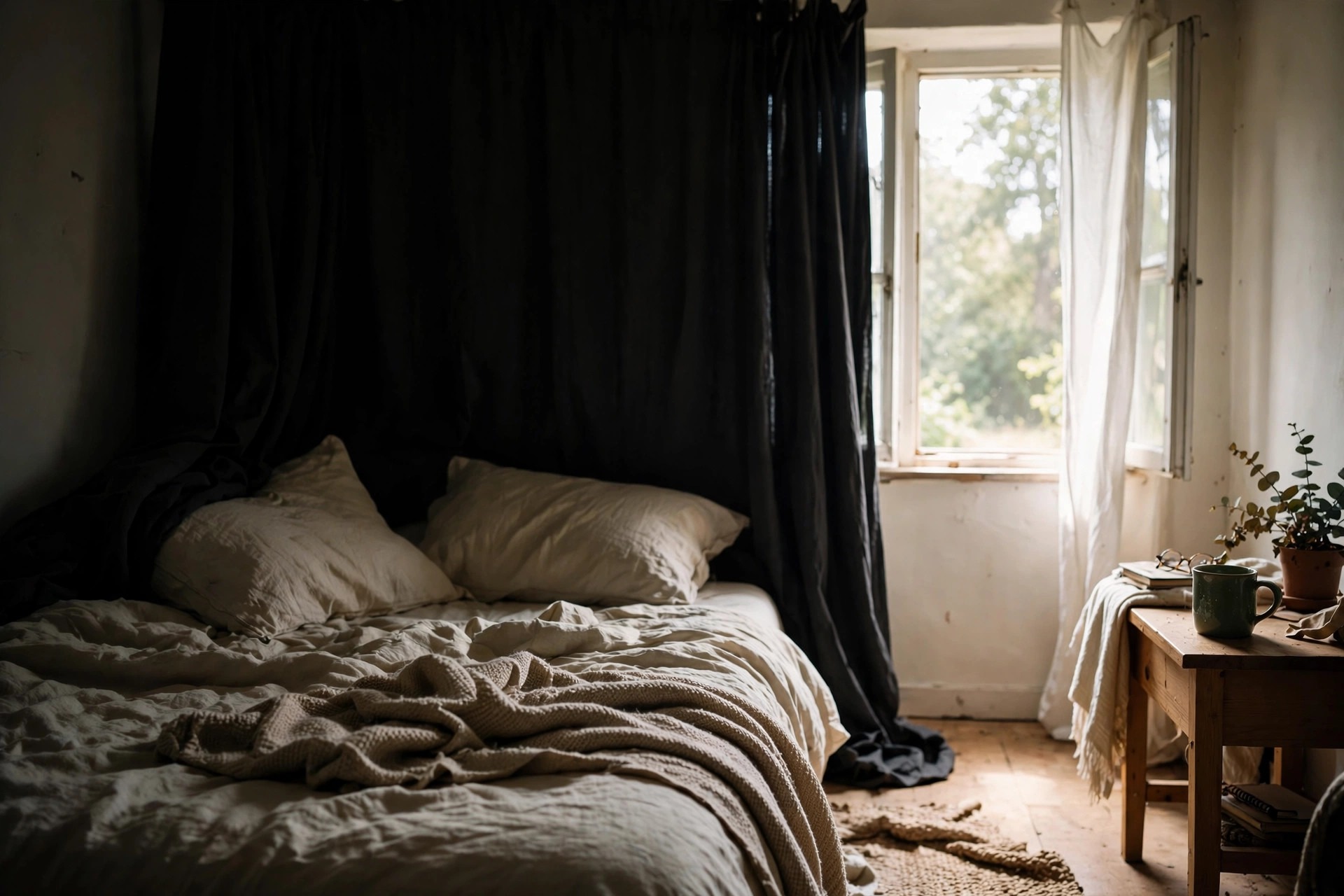
If one of you sleeps past dawn or rests during the day, you do not need the whole room in darkness — just the bed. Hang blackout-lined curtains across the window nearest the bed, or add a canopy curtain on the sleeper’s side that can be pulled around the pillow area. The awake partner keeps natural light for getting ready, the sleeper keeps a pool of dark, and the room avoids that closed-in cave feeling full blackout can bring.
4. Create a Quiet Dressing Corner Away From the Bed
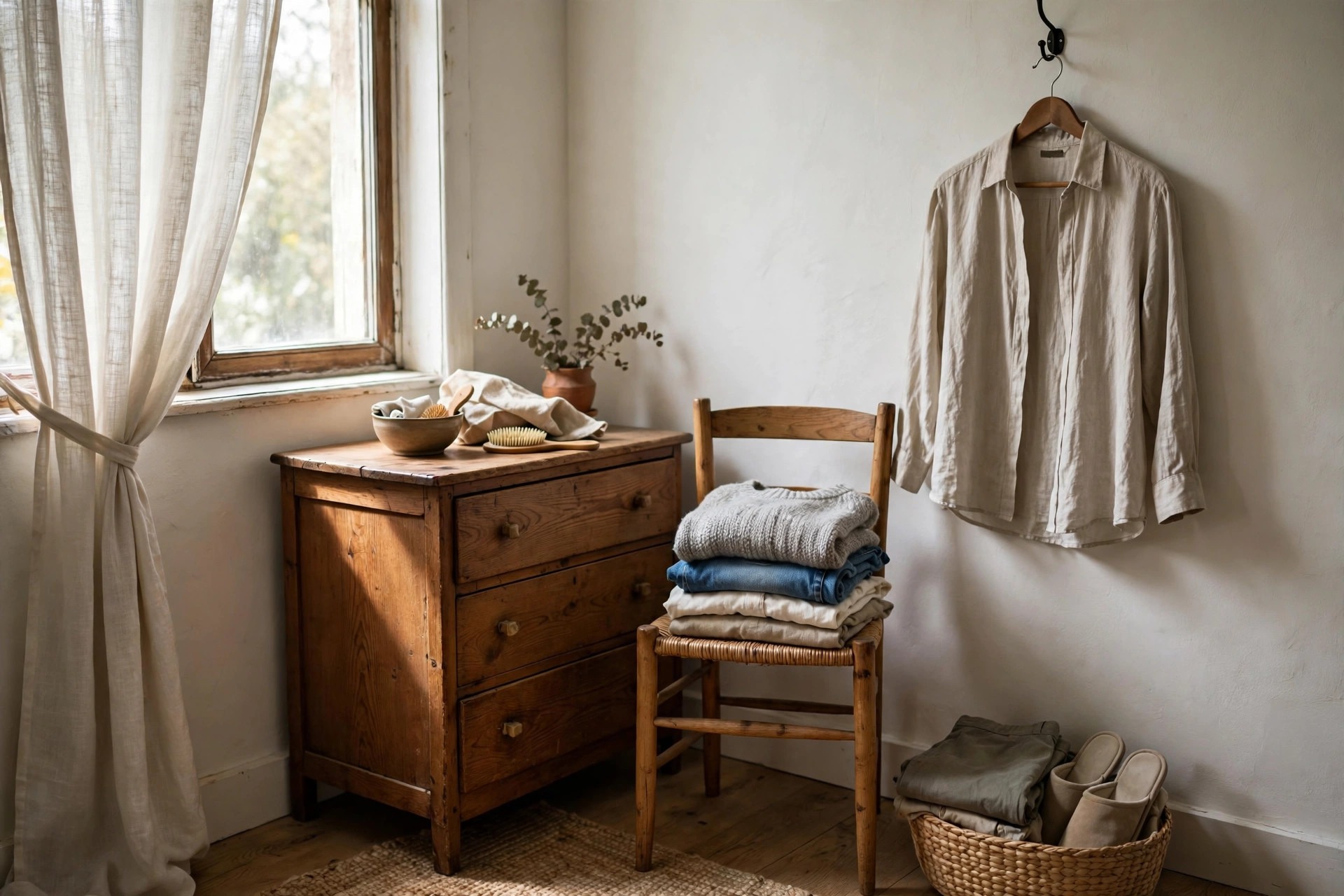
The noisiest part of a staggered morning is rarely the alarm — it is drawers, hangers and zips beside the bed. Move dressing to the corner furthest from the pillows: a small dresser, a chair for laid-out clothes and a hook for tomorrow’s outfit. Keep only everyday items there so nothing needs hunting for. The early riser can dress in one spot with the light on low, while the bed end of the room stays undisturbed behind them.
5. Lay Out Tomorrow’s Clothes the Night Before

This is the simplest idea on the list and one of the most effective. Whoever leaves first chooses their full outfit — clothes, shoes, bag and coat — before bed, and leaves it together in the dressing corner or just outside the door. It removes morning rummaging entirely, along with the torch-on-phone search through shared drawers. As a habit it takes two minutes in the evening, when noise does not matter, and saves ten fraught, half-whispered minutes when it really does.
6. Soften Sound With Rugs, Curtains and Upholstery

Hard rooms amplify every small noise, so layer in soft surfaces wherever you can. A thick rug around the bed muffles footsteps, fabric curtains absorb more sound than blinds, and an upholstered headboard cushions the wall behind the pillows. Add a soft runner along the route from door to bed. None of this looks like soundproofing — it reads as a cosy, layered bedroom that happens to stay noticeably quieter at night.
7. Keep a Tidy Sleep Kit on the Early Sleeper’s Side

Give the partner who sleeps first a small kit within arm’s reach: a sleep mask for stray light, comfortable earplugs for household noise, and their own water glass and book so they never need to get up once settled. Keep it in a tray or drawer tidy rather than scattered across the table, so it feels cared for rather than defensive. It is a small gesture that says the awake partner has thought about the sleeper’s rest, not just their own evening.
8. Add a Small Reading Chair for the Partner Still Awake

When the only comfortable seat is the bed, the awake partner ends up reading and scrolling right beside someone trying to sleep. A compact chair in a corner, with a cushion, a throw and its own low lamp, changes the geography of the evening. The night owl can stay in the room, warm and settled, without sitting in the sleep zone at all. Choose soft upholstery rather than a hard dining style, and angle it away from the bed so its light faces a wall, not a pillow.
9. Light the Way In With Low, Warm Pathway Lighting
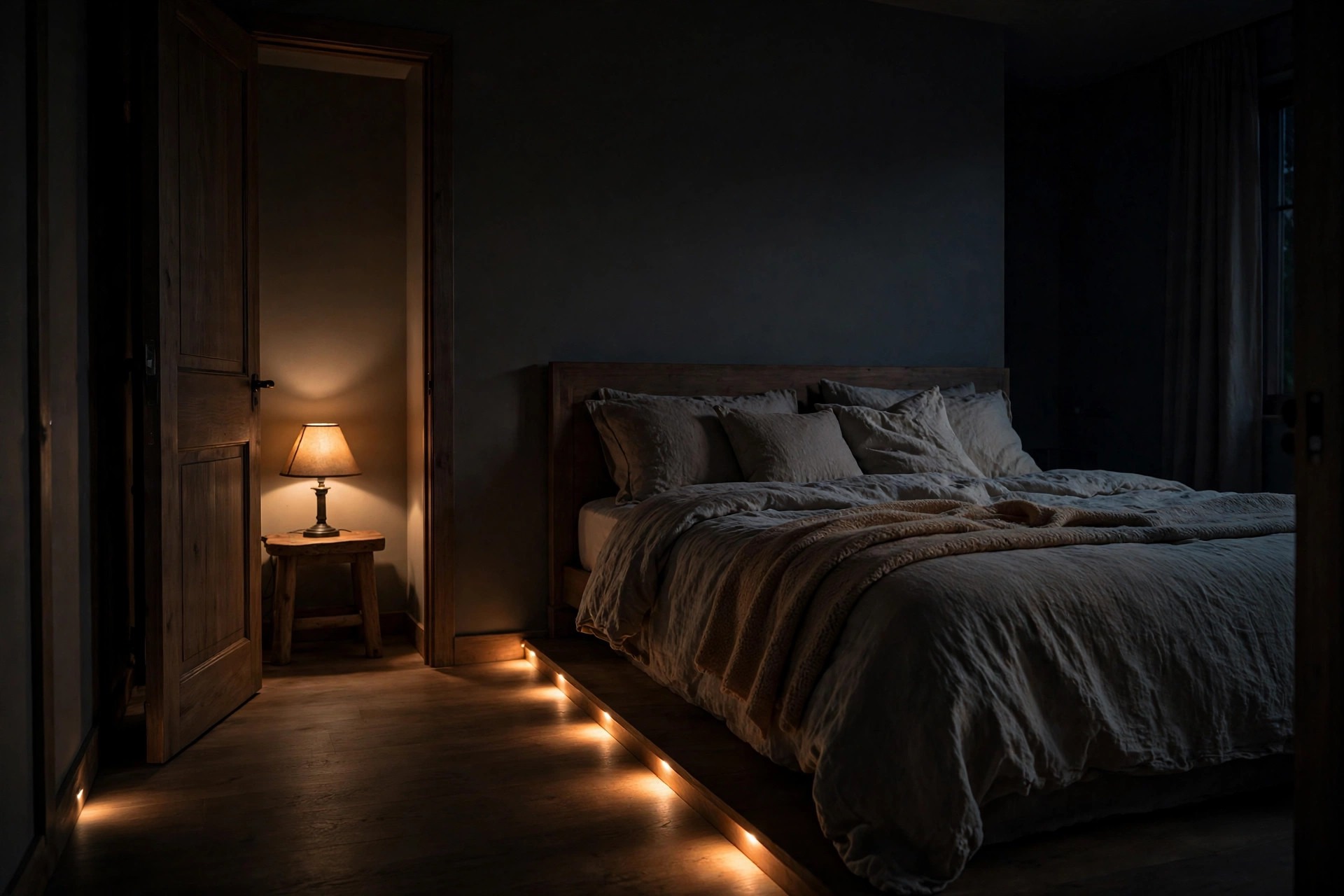
The latecomer’s hardest moment is crossing a dark room without switching on a main light or tripping over shoes. Solve it with low-level lighting along the route in: a small warm lamp near the door, a plug-in night light in the hallway, or a shaded lamp on the far side of the room left on low. The glow stays below pillow height, so it guides feet without waking eyes. Combined with a clear floor route, it makes coming home late feel considerate rather than clumsy.
10. Style Two Bedside Tables as Two Personal Zones

Matching tables can still hold completely different lives. Let each side keep what its routine needs: charger, water and current book for one; alarm, glasses case and morning essentials for the other. Drawers or baskets stop small items spreading and rattling in the dark. This deliberate split works even in compact rooms — the approach in these small shared bedroom ideas shows how defined personal zones make a shared room feel larger, calmer and more fairly divided.
11. Buffer Everyday Noise With a Steady Background Sound

Sudden noises stand out most in a silent room, so a low, steady background sound on the sleeper’s side can make doors and distant traffic far less noticeable. A small fan is the classic, low-effort option, and it doubles as gentle air movement on warm nights. Keep the volume low, position it on the sleeper’s table, and let the sleeper control it. The aim is not to drown anything out, just to smooth the edges off ordinary household sounds.
12. Layer Window Treatments So Mornings Can Be Staggered

Two layers at the window give you two different mornings. A blackout blind handles the early hours, keeping the room dark for whoever is still asleep, while a sheer curtain over the top lets the early riser open just the outer layer for soft, workable daylight. Fit the layers so each moves quietly on its own track or rod. It is a gentle compromise between one partner’s sunrise start and the other’s lie-in, with no blind rattling up at dawn.
13. Move Morning Getting-Ready Out of the Bedroom

If your home allows it, relocate the noisy, bright parts of the morning entirely: hair drying, outfit checking and bag packing belong in a bathroom or hallway nook, not beside a sleeping partner. A mirror, a hook and a basket of essentials are all a satellite station needs. The same zoning logic helps families too — just as nursery nook ideas in parents’ bedroom carve a separate purpose out of one shared room, a getting-ready spot outside the door carves sleep back out of the morning routine.
14. Set Up a Landing Strip Just Inside the Door
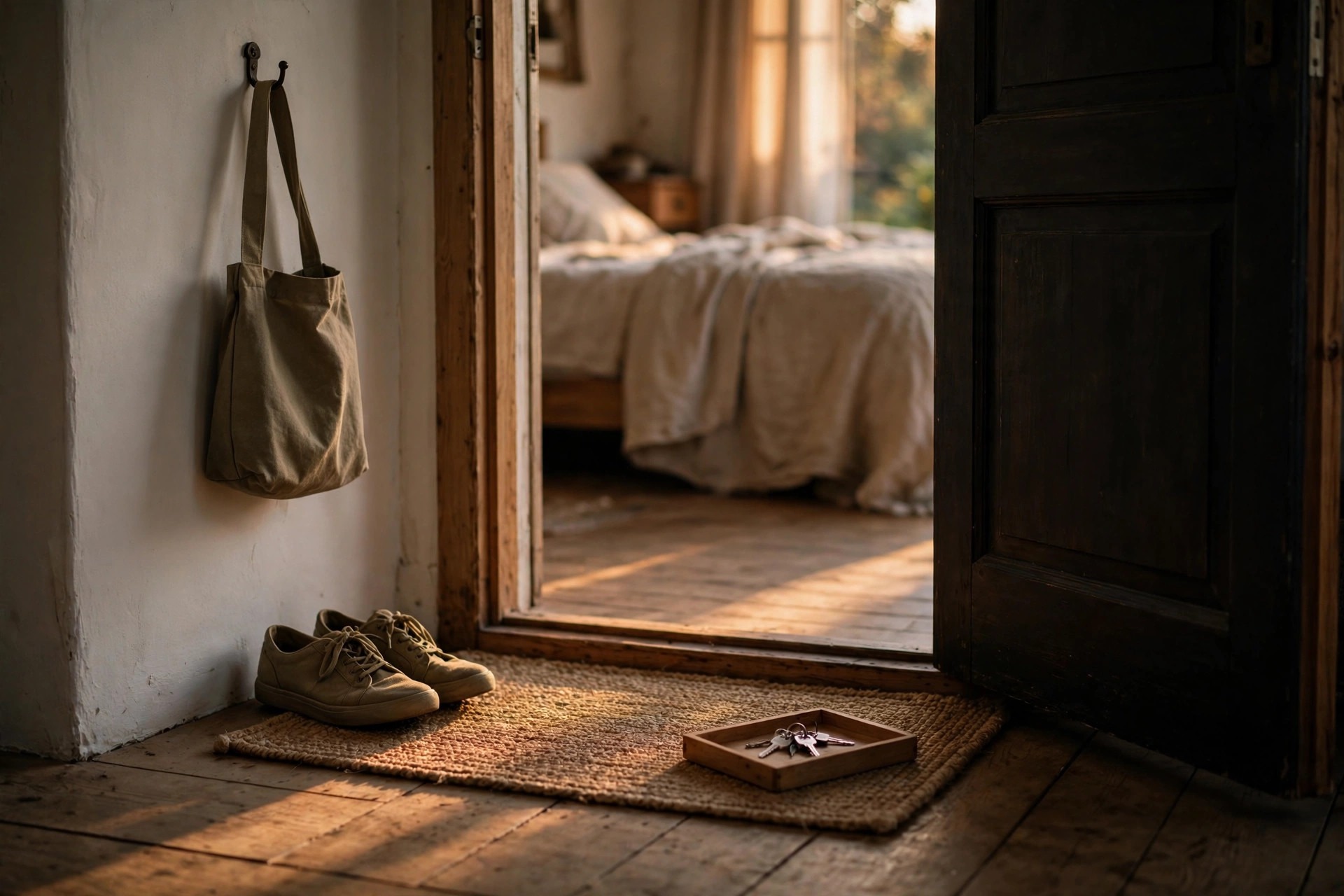
Late arrivals wake partners with logistics, not malice: keys dropped, bags dumped, shoes kicked off in the dark. A landing strip stops all of it — one tray for keys and phone, one hook for a bag, one spot for shoes, all just inside the door. The latecomer can unload by touch, in low light, in seconds, then cross the room empty-handed. Keep it tidy, because a landing strip only works if there is always room on it.
15. Agree on Simple Alarm and Light Etiquette
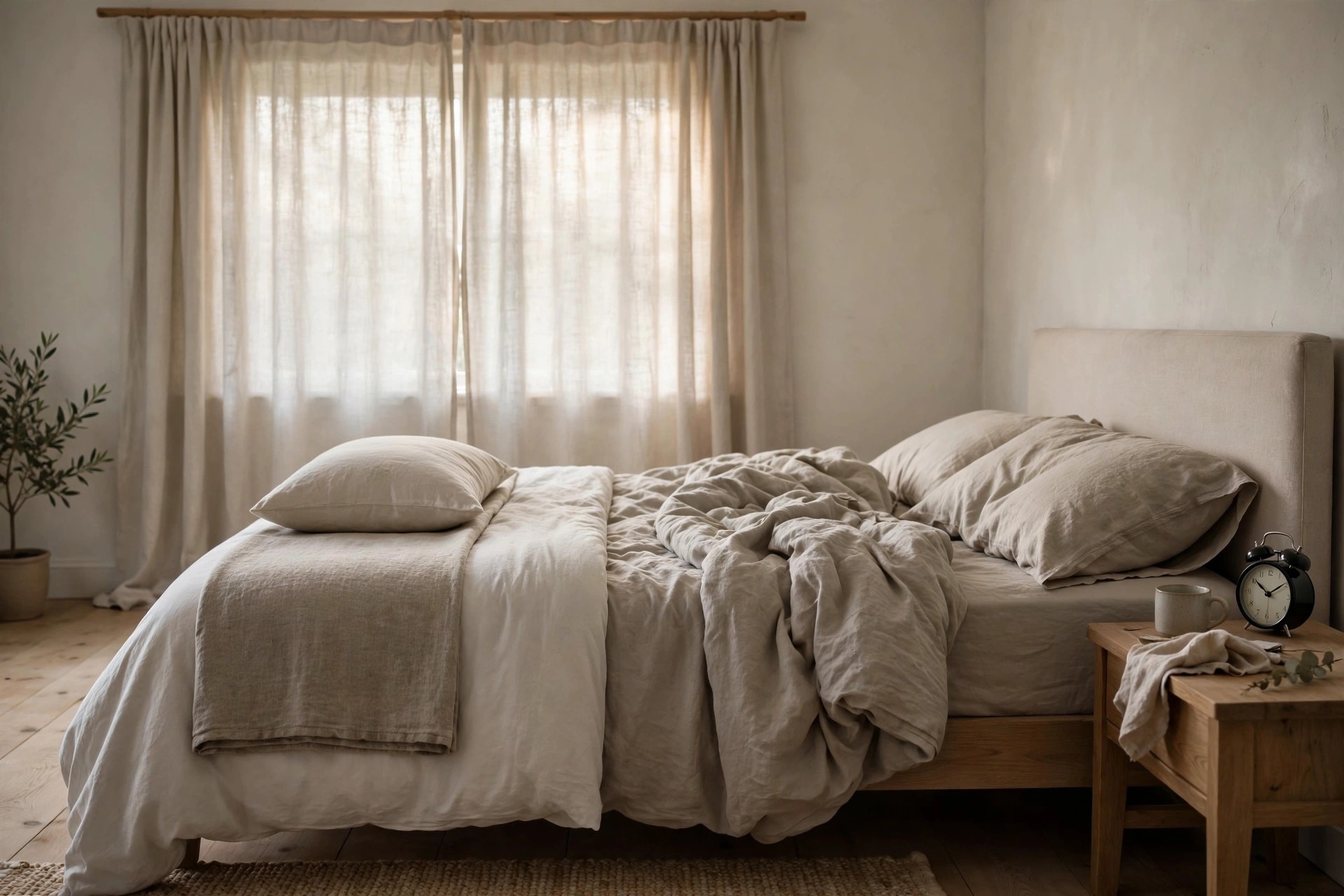
The prettiest room still needs two or three shared agreements. Keep alarms on the riser’s own side, set to the gentlest sound that works, and get up on the first ring rather than sharing a cycle of snoozes. Agree a lights-low hour after which overhead lights stay off, and a rule that whoever is last up leaves the room ready for the first sleeper. These small courtesies turn clever layout into genuine rest for both of you.
Common Mistakes to Avoid
1. Relying on one overhead light for everything. A single bright ceiling light makes every late return and early start a whole-room event. Without a low, directional alternative, the awake partner has no considerate option, and the sleeper has no darkness. Fix the lighting in layers first — one lamp per zone, each controllable from where it is used — before spending on anything else in the room.
2. Keeping all the clothes beside the bed. Wardrobes and drawers next to the pillows guarantee that dressing becomes the loudest activity in the room, at the worst possible hour. Even in a small bedroom, moving everyday clothes to a dresser or rail at the far end, and laying outfits out the night before, removes most morning disturbance without buying a single new piece of furniture.
3. Trying to fix it with rules but not layout. Asking a partner to simply be quieter rarely works, because the room itself forces noise — squeaky drawers, bright lights, nowhere to sit but the bed. Change the layout so the considerate choice is also the easy choice, then agree the few rules that remain. Couples who rearrange first argue less, because the room stops setting them up to disturb each other.
Frequently Asked Questions
Can two single duvets really look tidy on one bed?
Yes, if the covers match. Choose two single duvets in the same fabric and colour, make each half of the bed separately with the fold at the same height, and lay one shared throw or blanket across the foot to unify the look. During the day it reads as one styled bed; at night each person can adjust, wrap up or throw off their own covers without affecting the other at all.
What if our bedroom is too small for separate zones?
Zones do not need walls or much floor space. A chair turned into a corner, a dresser moved to the far wall, one directional lamp and a tray by the door already create three working zones in a compact room. Think in terms of sides and corners rather than separate areas: sleep at the bed end, activity at the door end, and a clear, soft route between the two.
How do we handle very different alarm times?
Keep the alarm on the early riser’s own bedside table, choose the softest effective sound, and place clothes, bag and shoes ready outside the sleep zone so getting up is one quiet movement rather than a series of tasks. A vibrating alarm worn or placed under the riser’s own pillow can work well for some couples. The key agreement is simple: one alarm, up promptly, lights stay low until out of the room.
Should the awake partner just go to another room?
Sometimes that is the kindest option for part of the evening, and there is no failure in it. But a well-zoned bedroom means it does not have to be the only option. With a reading chair, low directional light and quiet storage, most couples find the awake partner can wind down comfortably in the same room, which keeps bedtime feeling shared rather than separate, even when the actual sleep times differ by hours.
Final Thoughts
Different sleep schedules do not need different bedrooms. They need a room that can be dark and bright, quiet and lived-in, at the same time — from zoning, layered light and considerate habits built into where things live. Start with the change that solves your loudest friction point, whether that is two duvets, a dressing corner or a lamp each, and build from there. Small adjustments, made together, will protect both partners’ rest far better than tiptoeing around a room never set up for two routines.


