

15 Blackout Bedroom Ideas for Night Shift Workers Who Sleep in the Day
Sleeping in the day while the rest of the street is awake is a particular kind of tired. Curtains glow at the edges, light spills under the door, and just as you drift off, the room brightens again. For night shift workers, a bedroom that is merely dim is not enough — it needs to feel like night at midday, calm and properly dark, so rest can actually happen.
These blackout bedroom ideas for night shift workers are practical, renter-friendly in spirit and focused on layers rather than one miracle product. You will seal the window properly, close the small leaks most people ignore, and make the room quiet, cool and easy to switch back to a bright, normal bedroom when you wake.
This post contains affiliate links. If you buy through them, we may earn a small commission at no extra cost to you. See our Affiliate Disclosure.
How to Black Out a Bedroom Properly, Layer by Layer
Start at the window, because that is where almost all daytime light enters. Work in layers: first a blackout blind or shade fitted close to the glass, then floor-to-ceiling curtains hung high and wide beyond the frame. Each layer catches what the one before it misses, removing the bright outline a single curtain leaves behind.
Next, walk the room slowly in full daylight with the curtains closed and look for leaks. Check the curtain sides and centre, the gap under the door, skylights and any glass panel in the door. Fix one leak at a time — a return, a draught excluder, a covered transom — and re-check.
Then think beyond the window. Cover or turn away glowing displays, keep one very low lamp for moving around safely, and make the room feel calm rather than sealed in: soft bedding, a cool feel and a tidy bedside all signal rest. If you share the home with someone on a daytime schedule, agree the quiet hours and the signals — a closed door and dim hallway — in the way couples work through in our guide to bedroom ideas for couples with different sleep schedules.
Finally, test the room at the brightest hour you will sleep through, not in the evening. Lie in bed, let your eyes adjust, and notice what still glows. Adjust, sleep, then adjust once more.
1. Hang Floor-to-Ceiling Blackout Curtains With No Gaps

Your main defence is a pair of blackout curtains that genuinely cover the whole window and more. Hang the rail high, close to the ceiling, and extend it well past the frame on both sides so the fabric overlaps the wall, not just the glass. Let the curtains puddle very slightly or just kiss the floor — a floating hem leaves a bright strip at skirting level. Choose a calm, plain fabric with a woven texture rather than a shiny face, keep the lining facing the window, and overlap the two panels generously in the middle where they meet.
2. Layer a Blackout Roller Blind Behind the Curtains

A blind behind the curtains is the layer that does the quiet, unglamorous work. Fitted inside the recess or tight against the frame, a blackout roller blind stops light at the glass before it can halo around the curtain edges. The curtains then add a second, softer seal and keep the room feeling like a bedroom rather than a darkroom. This two-layer approach also helps on bright mornings when a single curtain glows: the blind stays flat and still, the curtain absorbs what little gets past, and the bed stays in shadow.
3. Seal the Edges With Returns, Wraps and Pelmet Covers
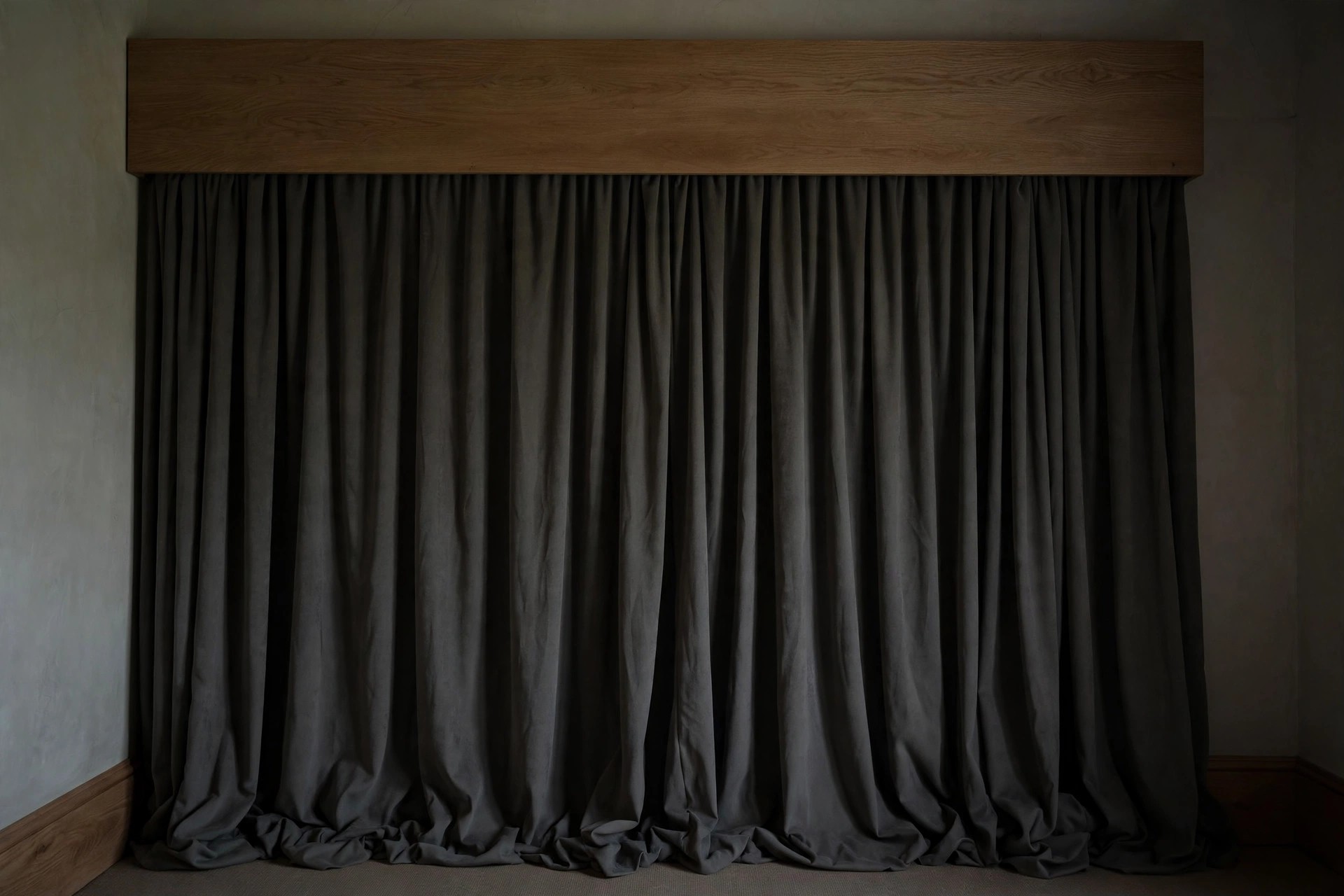
Most blackouts fail at the edges, not in the middle of the fabric. Bring the curtain sides back to the wall with return brackets or simple wrap-around rails so light cannot slip in sideways, and consider a plain upholstered pelmet or valance across the top to close the gap between rail and wall. From the bed, do the daylight check: if you can see a bright line, light is seeing you. Small fixes here — an extra hook, a strip of fabric, a repositioned bracket — often transform the whole room.
4. Block the Light That Spills Under the Door
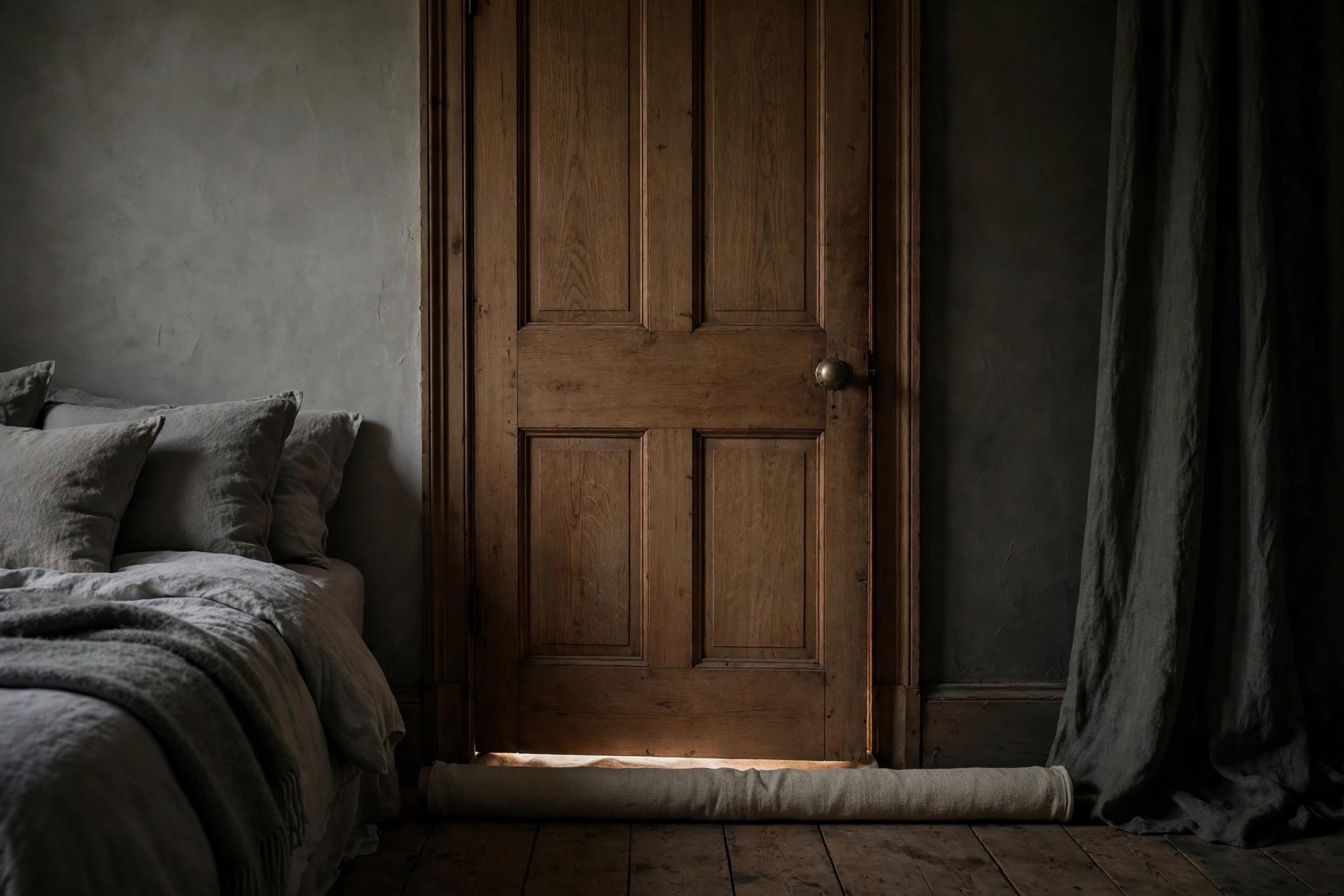
A bright landing will paint a hard line under a bedroom door all day long. A soft draught excluder, a fitted door sweep or even a neatly rolled towel in a pillowcase closes that gap and softens household sounds at the same time. If your door has a glass panel or a fanlight above it, cover it on the bedroom side with a plain blackout panel or curtain you can remove without damage. Keep the hallway light itself switched off during sleep hours if the household can manage it — the simplest seal of all.
5. Cover Awkward Windows With Simple Blackout Panels
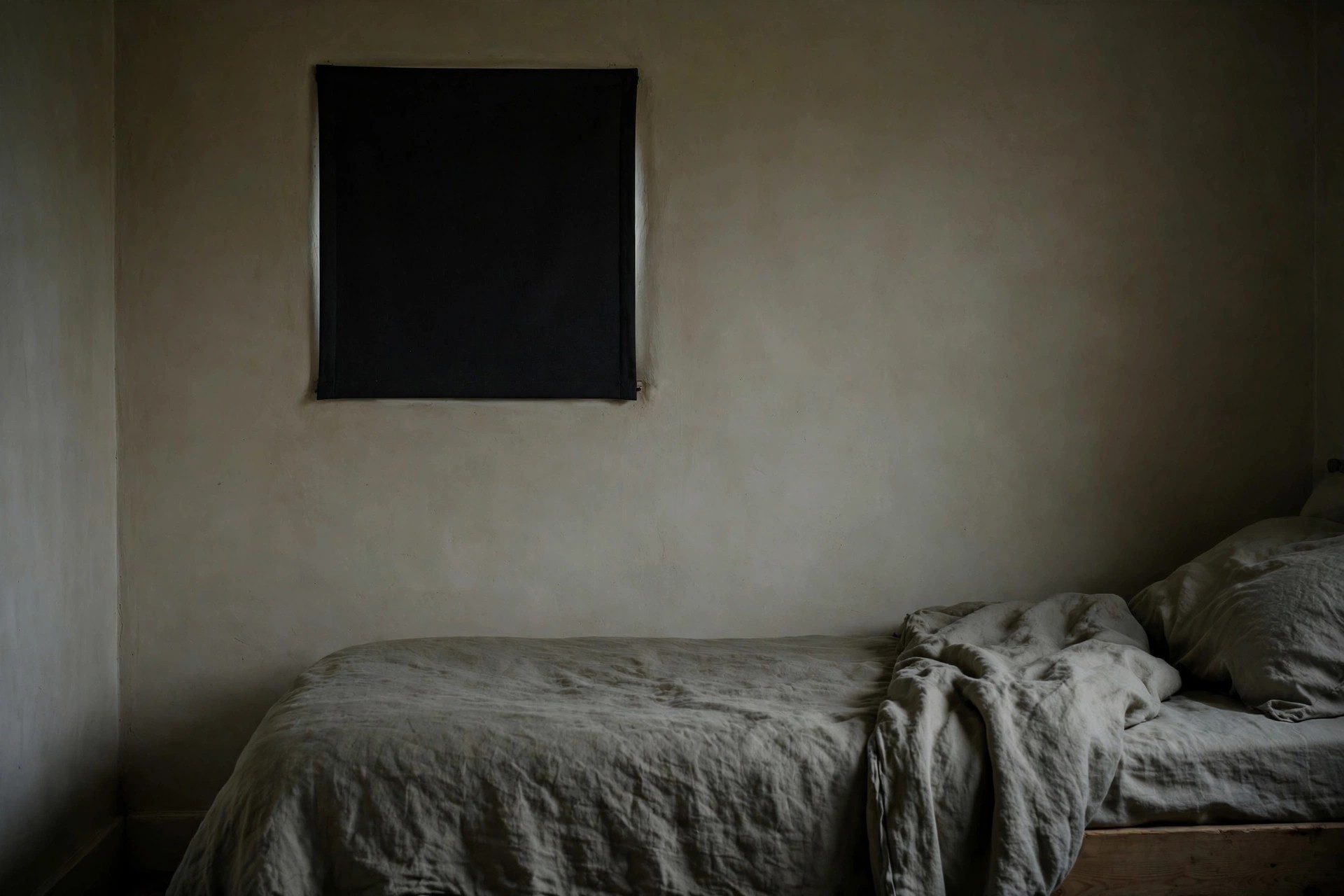
Not every window suits curtains. Skylights, narrow side windows, round portholes and rented rooms where drilling is not welcome all respond well to simple removable blackout panels, cut slightly larger than the glass and fixed flat so no edge lifts. Keep the finish plain so the covered window does not dominate the wall. The goal is boring reliability: the same complete darkness every shift, with nothing sagging or glowing by lunchtime.
6. Create a Curtained Sleep Zone Around the Bed

If the whole room cannot go dark — because a partner reads in it, or the window wall is all glass — shrink the problem and darken just the bed. A ceiling-mounted curtain track, a simple canopy frame or heavy drapes on three sides creates a sleep zone that feels enclosed and calm even when the rest of the room stays in use. The same divide-the-room thinking helps families carving out a nursery nook in the parents’ bedroom: one room, two gentle purposes, separated by fabric rather than walls. Leave ventilation space at the top so the zone never feels stuffy.
7. Choose Deep, Matte Colours That Keep the Room Feeling Dim

Colour will not block light, but it decides how the light that remains behaves. Deep, matte walls absorb stray brightness instead of bouncing it around, so a blackout room in charcoal, forest or navy feels darker at the same curtain level than a glossy white one. If you love moody schemes, our dark cherry bedroom ideas and green and black bedroom ideas show how to keep deep colour restful. Balance the walls with pale bedding so the bed still feels fresh, and keep finishes flat rather than shiny everywhere.
8. Swap Bright Ceiling Light for One Low, Warm Lamp
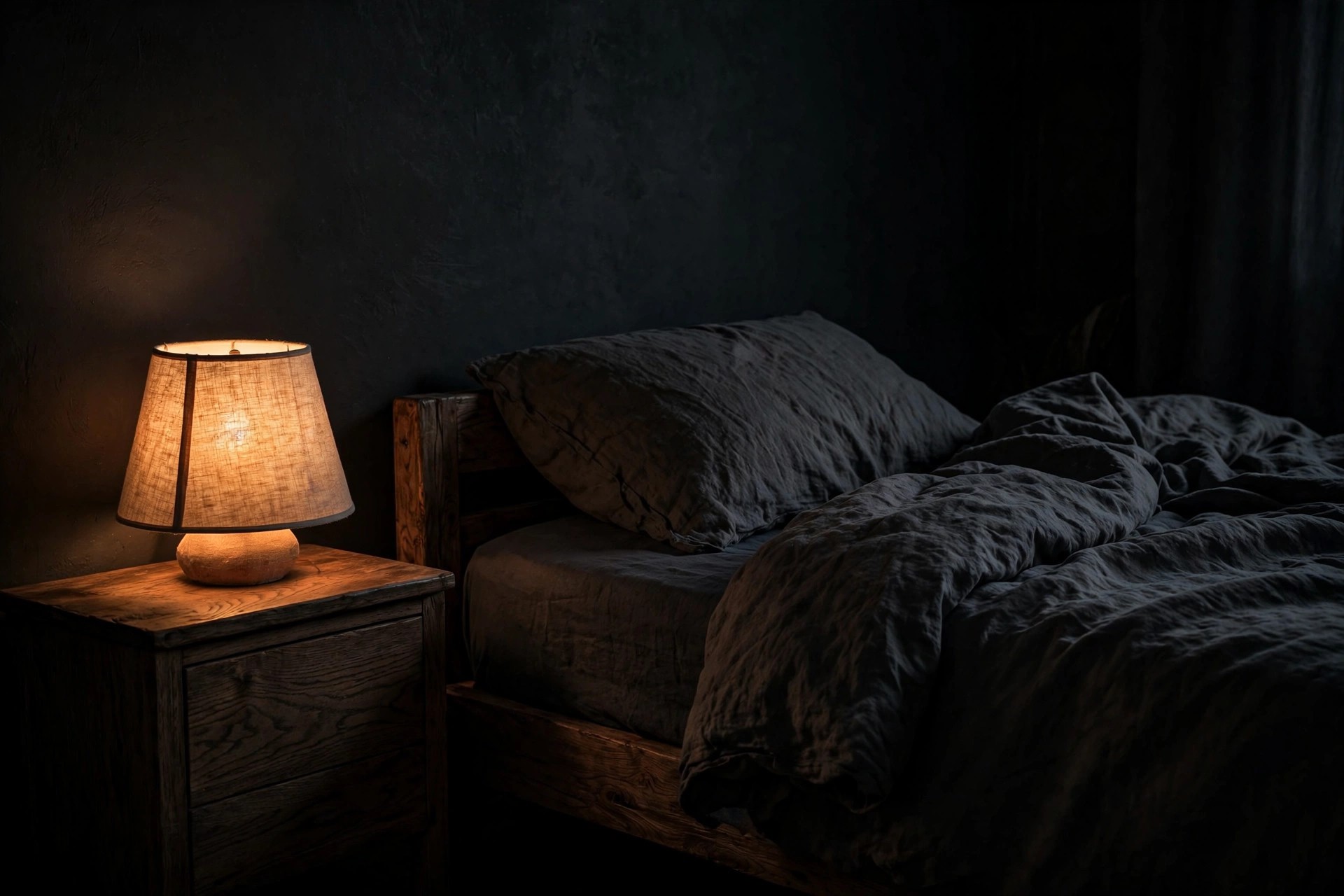
Day sleepers still need to find the bathroom, answer the door and wind down without flooding the room with light. Keep one low lamp with a fabric shade and a warm bulb beside the bed, and let it be the only light you use in the hour before sleep and the minutes after waking. Avoid overhead lights in that window — a single soft pool of light keeps the room feeling like night. The same layered, low-light thinking runs through our living room ideas for dark rooms, and it works just as well here.
9. Cover Every Standby Light and Glowing Display

In a properly dark room, one tiny standby dot can feel like a lighthouse. Walk the room at night and cover or turn away every glow: charger lights, television standby dots, clock displays and router lights on a shelf. Small opaque stickers, a folded card in front of a display, or simply turning a device to the wall all work — no special purchase needed. Charge your phone face down or in a drawer. You will be surprised how much deeper the darkness feels once the last few points of light are gone.
10. Soften Sound With Heavy, Soft Layers at the Same Time

Daytime sleep is interrupted by sound as often as by light, and the same layers help with both. Heavy curtains, a thick rug under the bed, an upholstered headboard and soft bedding all soak up echo and make voices, doors and footsteps from the rest of the home feel further away. Hang a soft throw or a plain fabric wall hanging on a shared wall if the room next door is busy. None of this needs to look like a studio — it should just look like a comfortable, padded, quiet bedroom that happens to rest well.
11. Keep the Room Cool With Breathable Bedding Layers

A blacked-out room can feel warm and sealed by midday, especially with curtains closed against the sun. Keep the bed itself breathable: natural cotton or linen sheets, a light layer you can push back, and heavier warmth folded at the foot rather than spread over you all sleep long. Air the room well before your sleep window, then close everything down. A small fan, if you like one, adds moving air and a steady background sound. Cool and dark together feel like night in a way that dark alone never quite manages.
12. Keep a Calm, Covered Bedside Setup Within Reach

Everything you might reach for should already be beside the bed, so a small wake-up does not become a full, lights-on expedition. Keep water, a sleep mask for any residual glow, earplugs if you use them, lip balm and a tissue box on a tidy tray or in a drawer. A sleep mask is also your honest backup on the brightest days and when you travel between shifts. Keep the surface uncluttered — a calm bedside is part of the wind-down, and fumbling through clutter at midday wakes you up more than the light does.
13. Move Charging Phones and Screens Out of the Sleep Zone
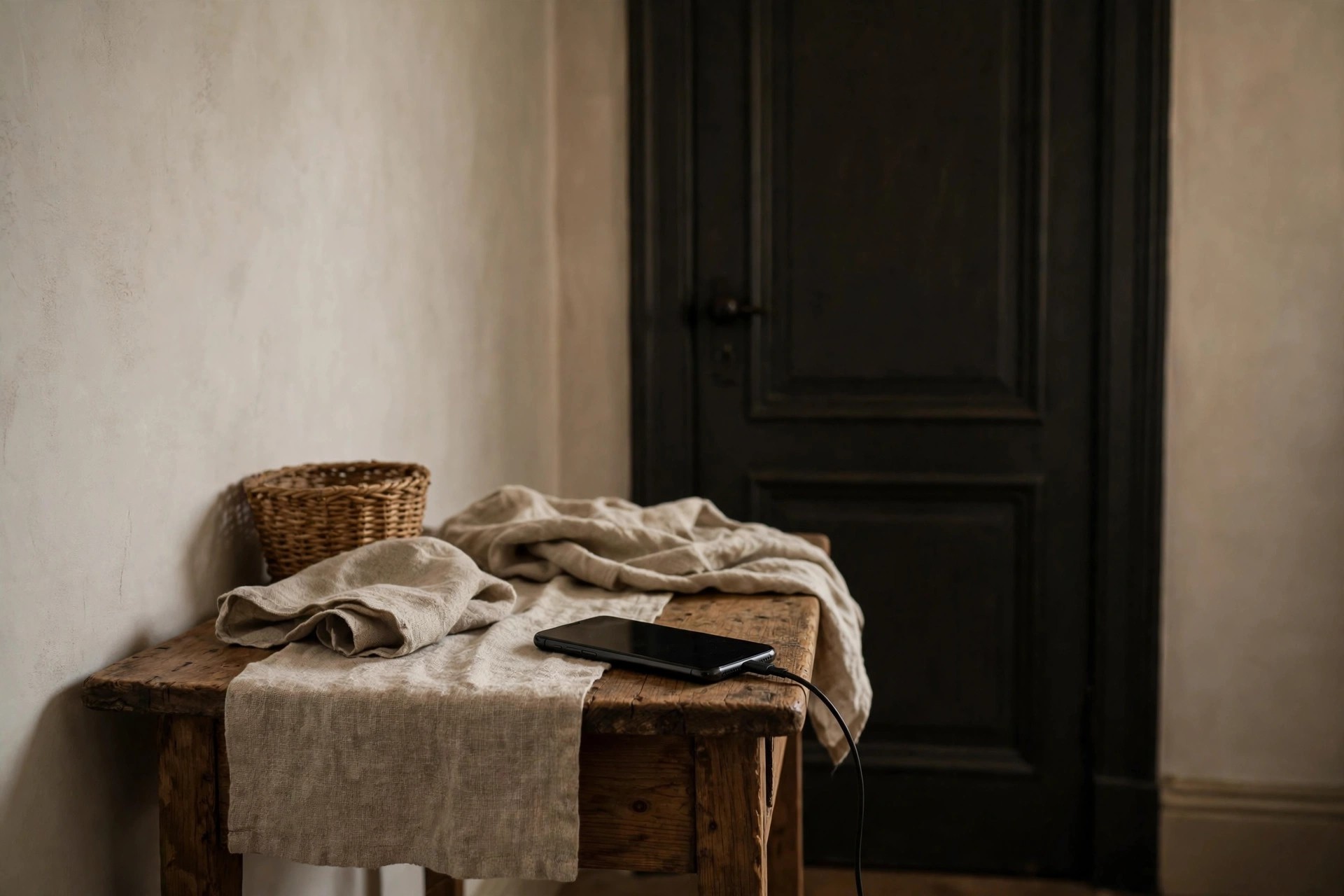
Screens bring light and other people’s urgency straight to the pillow. Charge your phone outside the bedroom, or across the room face down with notifications silenced except for emergencies and your alarm. If an alarm clock is needed, choose one you can dim right down. The bedroom then holds only rest — no buzzing, no glowing rectangles, no last scroll.
14. Make a Simple Wind-Down Corner That Is Not the Bed
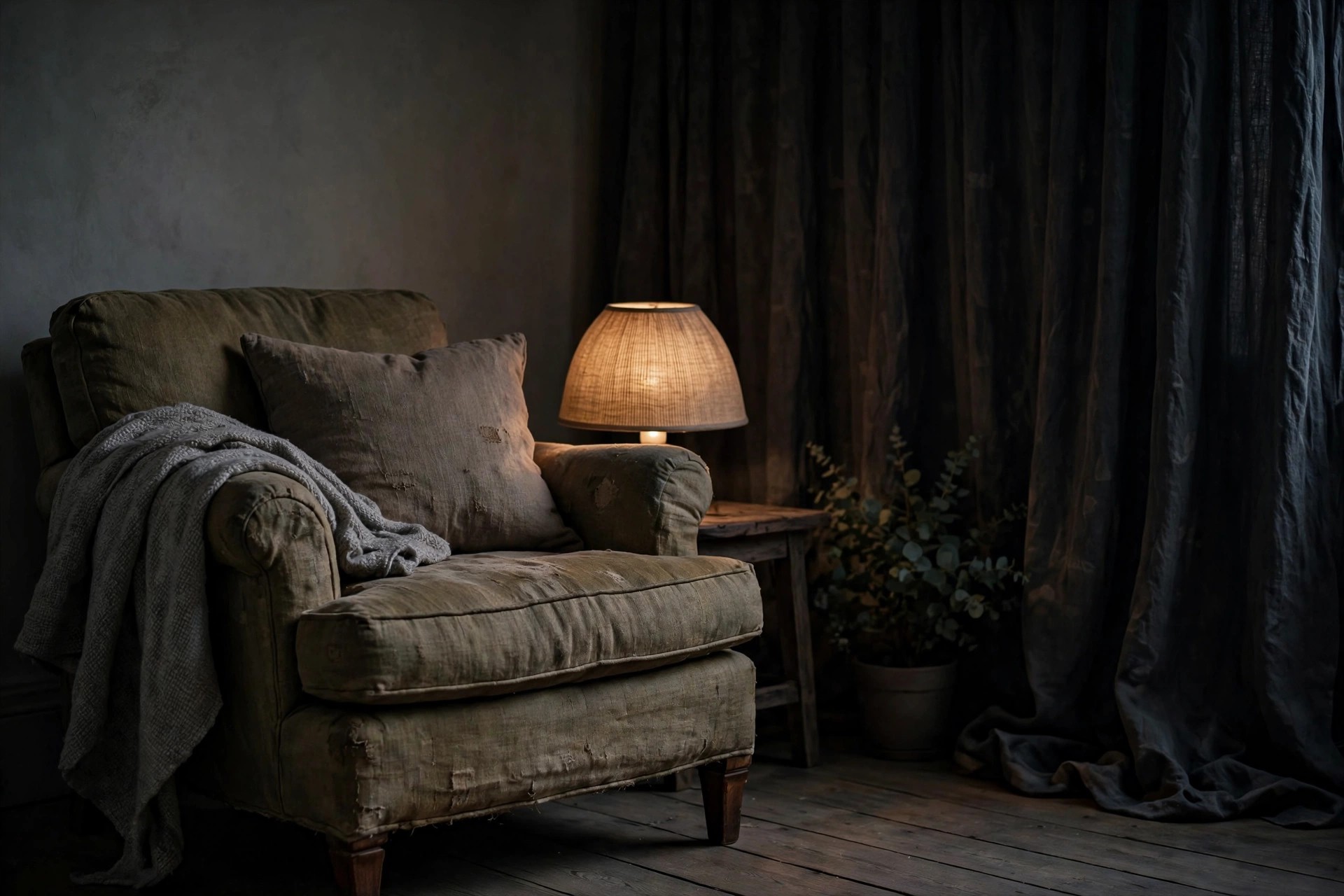
Going straight from a bright kitchen into a dark bed rarely works. Give yourself a ten-minute landing: a comfortable chair in the corner, your low lamp, and the same short routine each day — wash, change, sit, breathe, bed. Keep work clothes and bags out of this corner. A repeated routine tells your body what comes next even when the clock says lunchtime.
15. Make the Darkness Reversible for Your Waking Hours

The best day-sleep bedroom is not a permanent cave. When you wake, you want light, air and a room that feels like yours again — so make every blackout layer easy to open, fold or remove in under a minute. Curtains that draw fully clear of the glass, panels that roll away, a blind that disappears into its casing: these details matter on your days off, when the same room needs to be bright and sociable. Reversible darkness keeps the habit sustainable, because the room never starts to feel like the place you only go to recover.
Common Mistakes to Avoid
1. Buying one curtain and expecting total darkness. A single curtain, however thick, leaks at the top, sides, centre and floor. Real blackout comes from layers and sealed edges — a blind plus curtains, hung wide, with the gaps closed — not from fabric weight alone.
2. Forgetting the door, displays and hallway. Many people perfect the window and then sleep facing a bright line under the door and three glowing standby lights. Walk the whole room from the pillow, in daylight and at night, and fix every source you can see from the bed.
3. Making the room dark but hot, noisy and cluttered. Darkness alone does not create rest. If the bed is too warm, the room echoes with household sound and the bedside is a jumble of chargers and work kit, sleep stays shallow. Cool layers, soft furnishings and a tidy, screen-free room complete the job.
Frequently Asked Questions
What is the best way to black out a bedroom window completely?
Use two layers: a blackout blind fitted close to the glass, then floor-to-ceiling curtains hung high and wide beyond the frame. Seal the top and sides so light cannot slip around the edges, and check the result from the bed in full daylight, fixing any bright line you can still see.
Can I black out a rented bedroom without drilling?
Yes. Removable blackout panels cut slightly larger than the glass, tension rods inside the window recess and freestanding or adhesive-fixed rails all work without permanent fixings. Add a draught excluder under the door and cover glowing displays, and a rented room can sleep almost as dark as a fitted one.
Are blackout curtains enough on their own for day sleeping?
For some people in a north-facing or shaded room, good curtains may be plenty. In a bright or south-facing room, most day sleepers need the extra blind behind them and the edges sealed. Try curtains first, sleep through the brightest hour, then add layers only where you can still see light.
How do I keep a blackout bedroom from feeling like a cave?
Make everything reversible and keep the waking version of the room lovely: pale, fresh bedding, curtains that open fully clear of the glass, and one low warm lamp rather than harsh overhead light. Open everything up the moment you wake so the room rejoins the day with you.
Final Thoughts
A bedroom that truly goes dark in the daytime is built in layers, not bought in one box: blind plus curtains, sealed edges, a quiet door, no glowing displays and a cool, tidy bed. Work through the leaks one by one, test at the brightest hour, and keep it all easy to undo when you wake. Do that, and the room will give you back the one thing night shifts take away — proper night, whenever you need it.


