

18 Primary Bedroom Ideas That Transform Your Space Into a Personal Sanctuary
Your primary bedroom is the most intimate room in your home — and it deserves to be designed with the same intention, creativity, and investment as any other space you live in. It is the first room you see when you wake and the last you experience before you sleep. It sets the emotional tone for your entire day. It is your refuge from noise, obligation, and the relentless pace of modern life. And yet, for too many homeowners, the primary bedroom remains an afterthought — a room furnished hastily, decorated minimally, and never quite elevated to the sanctuary it deserves to be.
That changes today. Whether you are starting from scratch in a new home, refreshing a tired bedroom scheme, or finally committing to the renovation you have been postponing for years, these 18 unique, inspiring, and thoroughly researched primary bedroom ideas will help you design a space that is not merely beautiful, but deeply restorative — a room that genuinely reflects who you are and how you want to feel every single day.
1. Dramatic Upholstered Headboard as the Room’s Focal Point

Nothing commands a bedroom with the quiet authority of a floor-to-ceiling upholstered headboard. Stretching from the mattress to the ceiling, an oversized upholstered headboard instantly transforms the bed wall into a piece of architectural furniture — bold, sculptural, and deeply luxurious. Choose a tufted velvet design in jewel tones like midnight blue, forest green, or dusty rose for maximum visual drama. Neutral linen or bouclé in warm cream or soft oatmeal suits a more serene, understated aesthetic. Flank with slim wall-mounted reading lights in brushed brass to frame the headboard beautifully. This single design investment redefines the entire room around a clear, confident focal point.
2. Moody Dark Walls for Cocoon-Like Intimacy
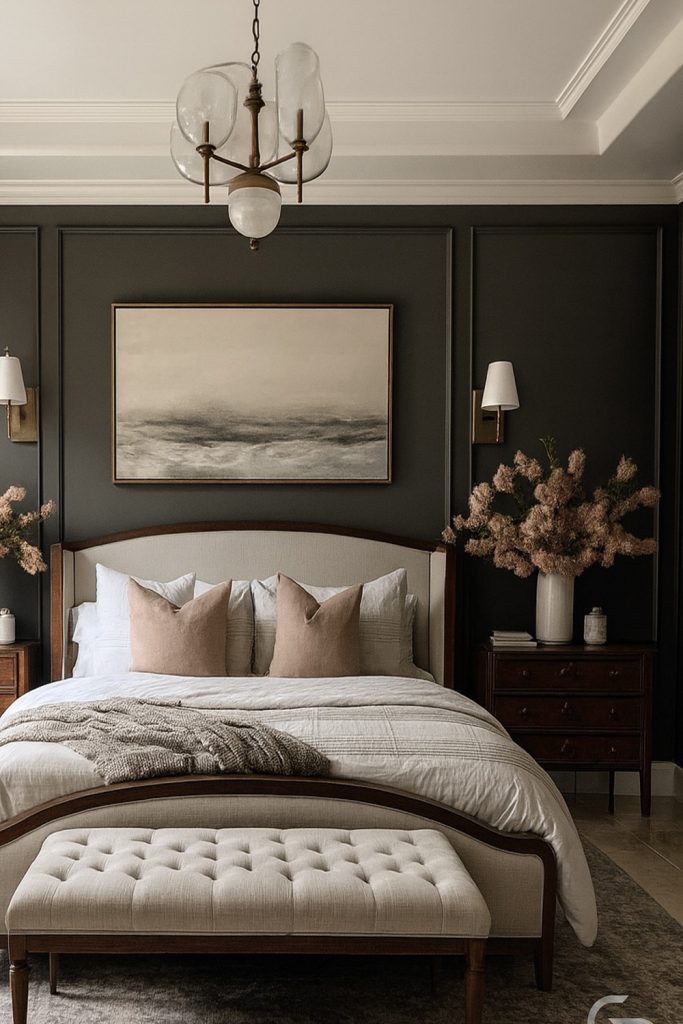
Painting your primary bedroom in a deep, enveloping dark color — charcoal, forest green, midnight navy, or rich plum — is one of the most transformative and emotionally powerful design decisions you can make. Far from making the room feel smaller, a well-executed dark bedroom creates a cocoon-like atmosphere of extraordinary intimacy and calm. The walls seem to recede in the evening light, making the room feel boundless and deeply restful. Paint the ceiling in the same shade for full immersion. Balance dark walls with warm lighting, cream or white bedding, and rich textural layers in velvet, wool, and linen. The result is a bedroom that feels like the most indulgent hotel suite imaginable.
3. Biophilic Bedroom Design with Living Walls and Botanicals
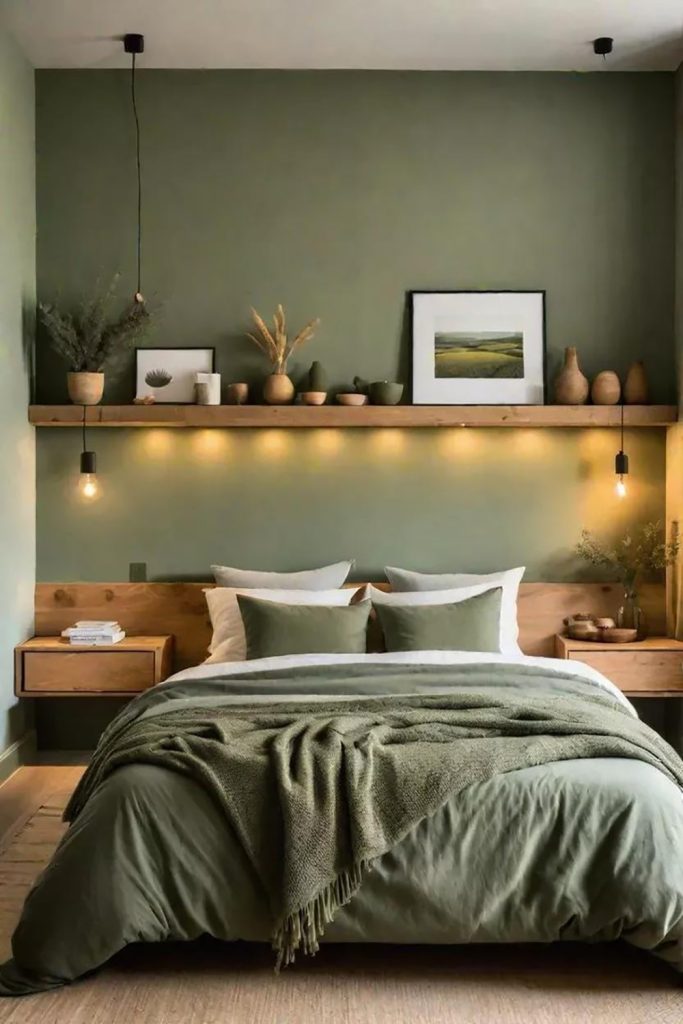
Biophilic design — the practice of incorporating natural elements into interior spaces to support human wellbeing — is one of the most evidence-backed trends in contemporary bedroom design. Research consistently demonstrates that exposure to nature, natural materials, and living plants reduces cortisol levels, lowers blood pressure, and significantly improves sleep quality. In the primary bedroom, introduce biophilic principles through a living moss wall panel behind the bed, generous clusters of indoor plants — snake plants, fiddle-leaf figs, and trailing pothos are particularly effective — natural wood furniture, linen bedding, stone accessories, and earthy, nature-inspired color palettes. A bedroom that breathes with life is a bedroom that genuinely restores you.
4. Japandi Primary Bedroom for Mindful Minimalism

Japandi — the beautifully resolved design philosophy that merges Japanese minimalism with Scandinavian warmth and functionality — creates primary bedrooms of extraordinary serenity and purposeful restraint. Every element earns its place. Every surface is uncluttered. Every material is natural, honest, and beautifully considered. A low-profile platform bed in pale ash or walnut, warm white walls with a subtle warm undertone, handmade ceramic bedside vessels, a simple shoji-inspired screen, and a single piece of calligraphy or abstract art — this is the Japandi bedroom in its purest form. Eliminate synthetic materials. Choose linen bedding, a woven wool rug, and rattan accents for a full, harmonious effect.
5. Luxurious Layered Bedding for a Hotel-Worthy Bed
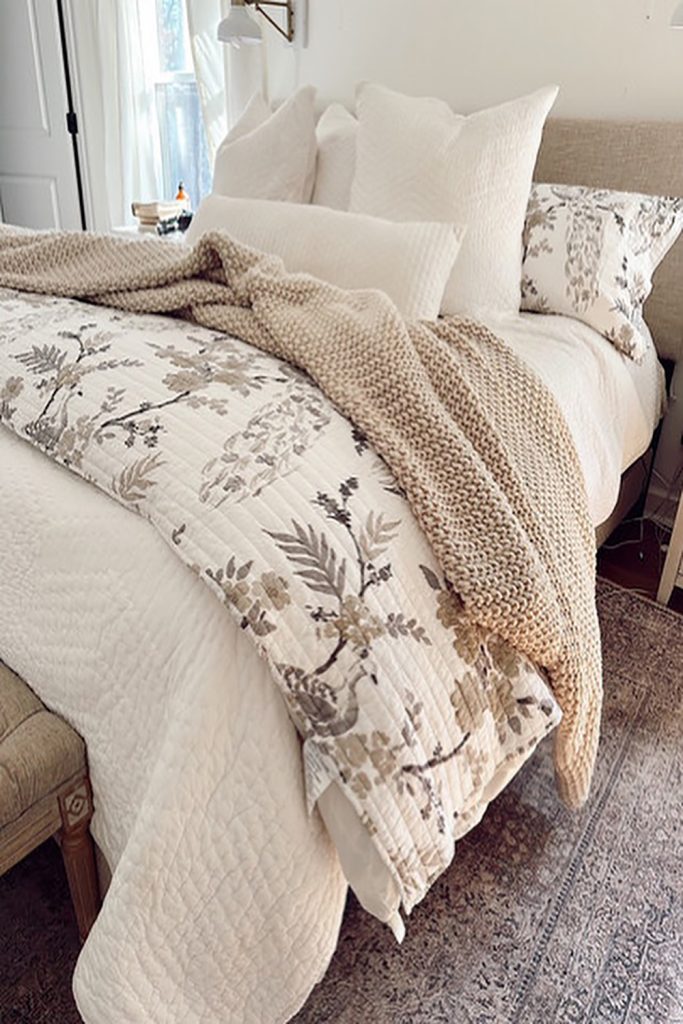
The bed is the undisputed centerpiece of any primary bedroom, and investing in hotel-quality layered bedding is the single most effective way to elevate it. Begin with a high thread-count cotton or linen fitted sheet, add a breathable duvet in a crisp white or warm ivory cover, layer a lightweight throw blanket across the foot of the bed, and arrange a carefully composed stack of pillows — sleeping pillows in matching shams, European square pillows behind for height, and two or three decorative cushions in front for texture and color. Change your cushion arrangement seasonally to refresh the room’s look without any renovation. A beautifully made bed makes the entire room feel more considered and complete.
6. Integrated Dressing Room and Wardrobe Wall
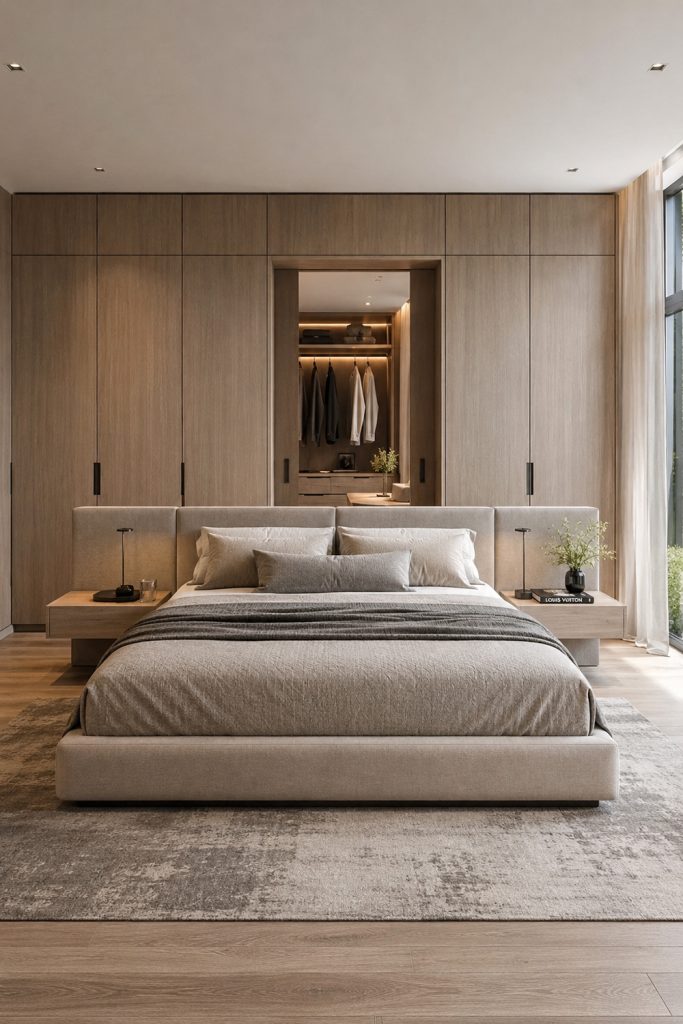
One of the most impactful and practical upgrades for a primary bedroom is the installation of a full-wall integrated wardrobe system — particularly one that incorporates a concealed dressing area. Floor-to-ceiling joinery in a warm white, soft grey, or natural oak finish creates an uninterrupted wall of elegant, generous storage that eliminates the visual clutter of freestanding wardrobes and chests of drawers. Incorporate a dedicated dressing section with a pull-out mirror, integrated lighting, and open shelving for accessories and jewelry. Sliding doors in a frosted glass or cane panel design maintain visual lightness. A well-designed wardrobe wall makes getting dressed a genuinely pleasurable daily ritual.
7. Statement Ceiling Treatment for Unexpected Drama

In a primary bedroom, the ceiling is the one surface you literally stare at every night before sleep — and yet it is almost universally ignored by homeowners. Transforming it with a thoughtful design treatment creates drama, intimacy, and architectural interest that elevates the entire room. Options are plentiful: paint the ceiling in a deep contrasting color to the walls for an enveloping, tent-like effect; install timber-look panels or real wood shiplap for warmth and texture; add a hand-painted mural of clouds, botanicals, or abstract forms; or install a plaster rose and ornate cornicing for period grandeur. Whatever your aesthetic, a considered ceiling commands attention and completes the room.
8. Primary Bedroom Sitting Area for Lifestyle Luxury

If your primary bedroom is generously proportioned, carving out a dedicated sitting area within it elevates the room from a simple sleeping space to a genuine private retreat — a room within a room where you can read, unwind, enjoy morning coffee, or simply exist without purpose or obligation. A pair of upholstered armchairs or a compact loveseat, a small side table, a floor lamp with a warm amber bulb, and a soft area rug beneath define the sitting zone without any structural work. Position the seating to face a fireplace, a garden view, or a television integrated discreetly into cabinetry. This addition transforms the primary bedroom into a fully realized sanctuary.
9. Warm Ambient Lighting Design for Rest
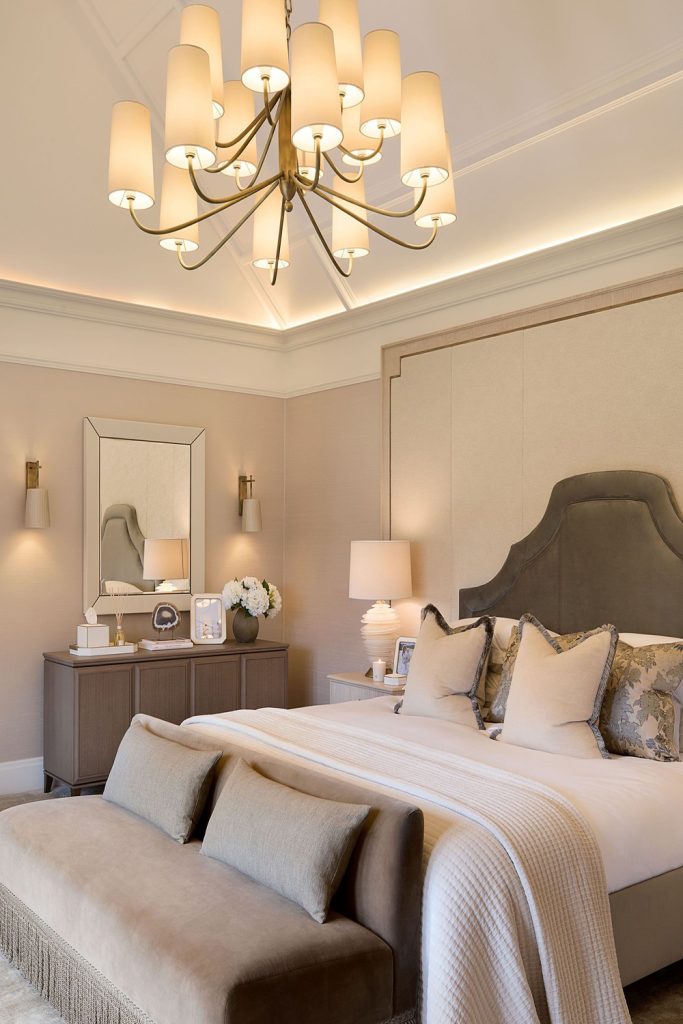
Lighting is the single most underestimated element in primary bedroom design. The difference between a bedroom that truly relaxes the mind and one that merely looks attractive often comes down entirely to how it is lit. Overhead lighting — particularly a single bright ceiling fixture — is the enemy of bedroom atmosphere. Replace it with a layered lighting scheme: a central pendant or chandelier on a dimmer for ambient light, wall-mounted reading lights on either side of the bed for task lighting, table lamps on bedside tables for soft pools of warmth, and concealed LED strip lighting behind the headboard or beneath the bed frame for an ethereal glow. Warm white bulbs at 2700K are essential.
10. Textural Contrast: Mixing Materials for Sensory Richness
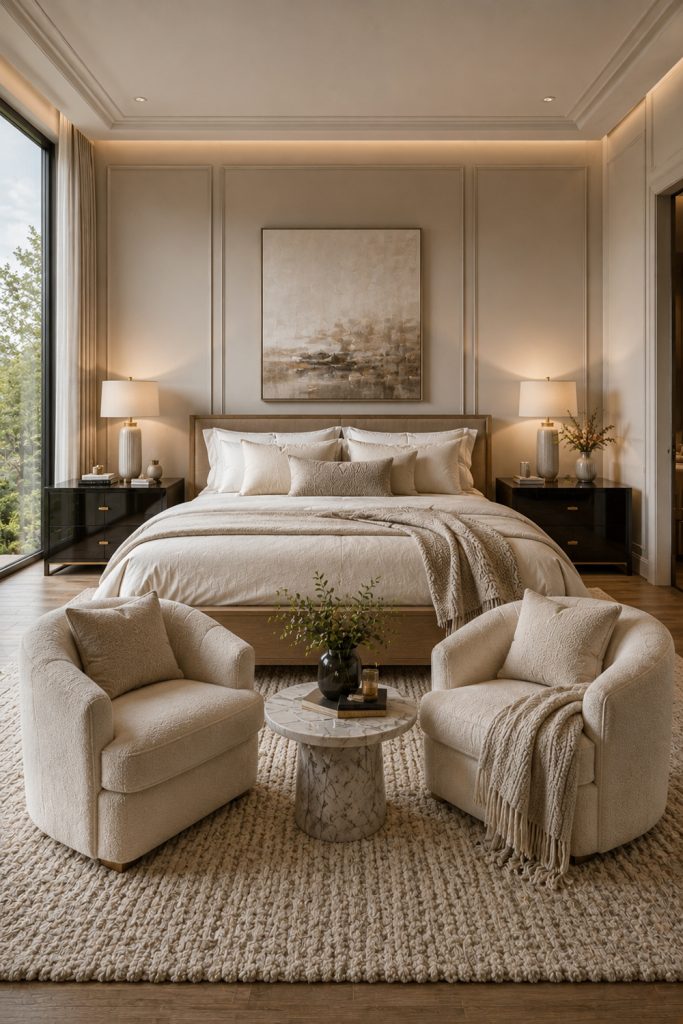
The most visually compelling and emotionally satisfying primary bedrooms are rarely those decorated in a single material or finish — they are rooms where multiple textures coexist in harmonious contrast. Consider the interplay of a smooth linen duvet against a nubby boucle throw; a glossy lacquered bedside cabinet beside a raw, wire-brushed oak bed frame; a plush wool rug underfoot contrasted with cool marble on the windowsill. These textural juxtapositions engage the eye, invite touch, and create a room that reveals more of itself the longer you look. Build your texture palette deliberately — always within a cohesive tonal family — and your primary bedroom will feel layered, rich, and genuinely sophisticated.
11. Canopy Bed for Romantic, Enveloping Drama

A canopy bed — whether a traditional four-poster draped in flowing linen, a modern metal frame hung with sheer voile, or a Japandi-inspired minimalist timber structure with no draping at all — introduces a sense of ceremony, romance, and personal enclosure to the primary bedroom that no other furniture piece can match. The canopy defines the sleeping space as a room within a room, creating a psychological sense of sanctuary and protection that profoundly supports restful sleep. In a high-ceilinged primary bedroom, a canopy bed fills vertical space beautifully. Choose your draping fabric to suit your aesthetic — heavy velvet for drama, sheer linen for romance, no fabric for pure architectural minimalism.
12. Gallery Wall of Personal Art and Photography

A bedroom gallery wall — a curated collection of artworks, photographs, prints, and framed objects arranged across one or more walls — is one of the most personal and expressive ways to bring character, warmth, and individuality into a primary bedroom. Unlike the living room gallery wall designed partly for guests, the bedroom gallery should be unapologetically personal: family photographs in beautiful frames, travel prints from places you love, artworks that genuinely move you, and a child’s drawing elevated to fine art by a quality mount and frame. Arrange in a grid for formality, or in a loose, organic salon hang for an eclectic, collected feel. This is your room — make the walls tell your story.
13. Primary Bedroom with Ensuite Bathroom Connection

Designing the primary bedroom with a considered visual and spatial connection to an adjoining ensuite bathroom creates a cohesive, hotel-suite experience that dramatically elevates both spaces. Use the same flooring material — large-format stone tile or wide-plank oak — running continuously through the bedroom and into the bathroom to dissolve the boundary between the two rooms. Choose a complementary color palette that flows naturally from one space to the other. Install a full-height glass partition or an open doorway without a door for an uninterrupted visual connection between the bed and a freestanding bathtub beyond. This spatial relationship — bedroom flowing into bathroom — is the very definition of five-star residential luxury.
14. Sconce Lighting and Floating Bedside Shelves
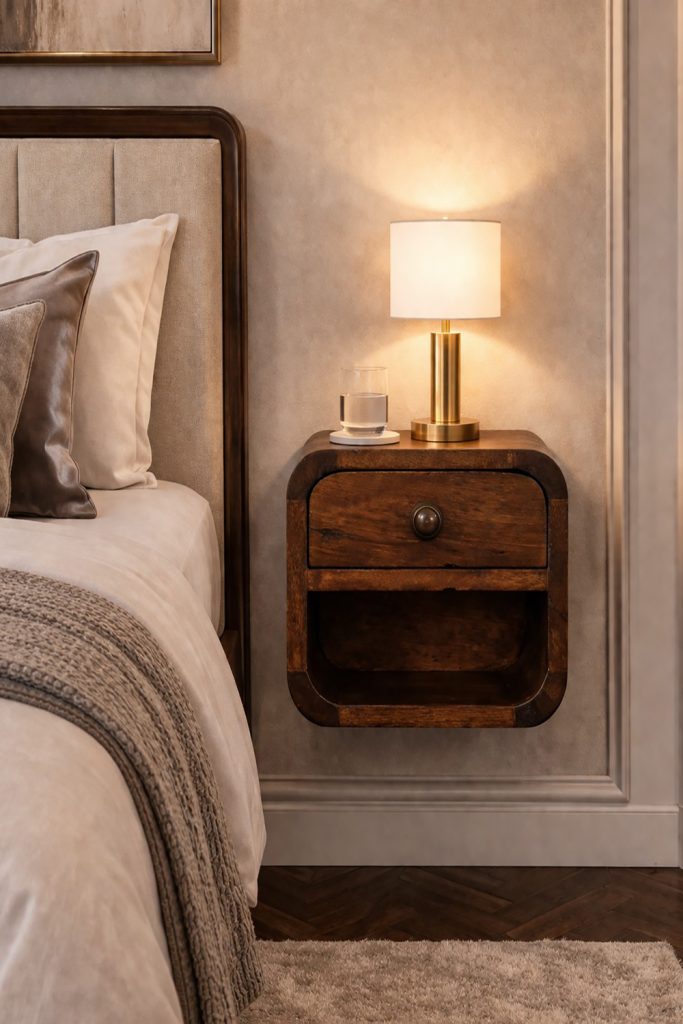
Replace traditional bedside tables with wall-mounted floating shelves paired with integrated or adjacent wall sconces for a primary bedroom that feels contemporary, space-efficient, and effortlessly sophisticated. Floating shelves in a slim profile — white lacquer, natural oak, or blackened steel — provide surface space for a glass of water, a book, and a small plant without consuming any floor space, making the room feel larger and the floor easier to clean. Paired with adjustable wall sconces in brushed brass or matte black, positioned at the perfect reading height, this combination creates a bedside arrangement that is both functionally excellent and visually elegant. Ideal for narrow rooms or those with smaller footprints.
15. Earthy Terracotta and Warm Neutral Palette

The terracotta renaissance in interior design shows no signs of slowing — and nowhere does this warm, sunbaked color palette feel more appropriate and enveloping than in the primary bedroom. Walls in a soft terracotta or burnt sienna, paired with warm white or cream bedding, natural jute or wool rugs, rattan furniture, and accessories in warm ochre, blush, and brown, create a bedroom of extraordinary warmth and emotional comfort. This palette draws from the natural world — desert landscapes, Mediterranean villas, ancient earthenware — and brings that primal, grounding warmth into your most personal space. Add tactile layers of woven textiles and handmade ceramics to deepen the earthy, artisanal quality of the scheme.
16. Floor-to-Ceiling Curtains for Height and Grandeur

Few design interventions are as immediately and dramatically effective in a primary bedroom as installing floor-to-ceiling curtains that run the full width of the bed wall or window wall. Hanging curtain rods as close to the ceiling as possible — and choosing curtains long enough to pool slightly on the floor — draws the eye upward, creates the illusion of significantly greater ceiling height, and introduces a sense of grandeur and softness that instantly elevates the room. Choose heavyweight linen in warm white or soft greige for a relaxed, romantic feel. Velvet curtains in a deep jewel tone add theatrical drama. Blackout lining is essential for a primary bedroom to ensure quality sleep regardless of sunrise.
17. Symmetrical Bedroom Design for Calm and Order
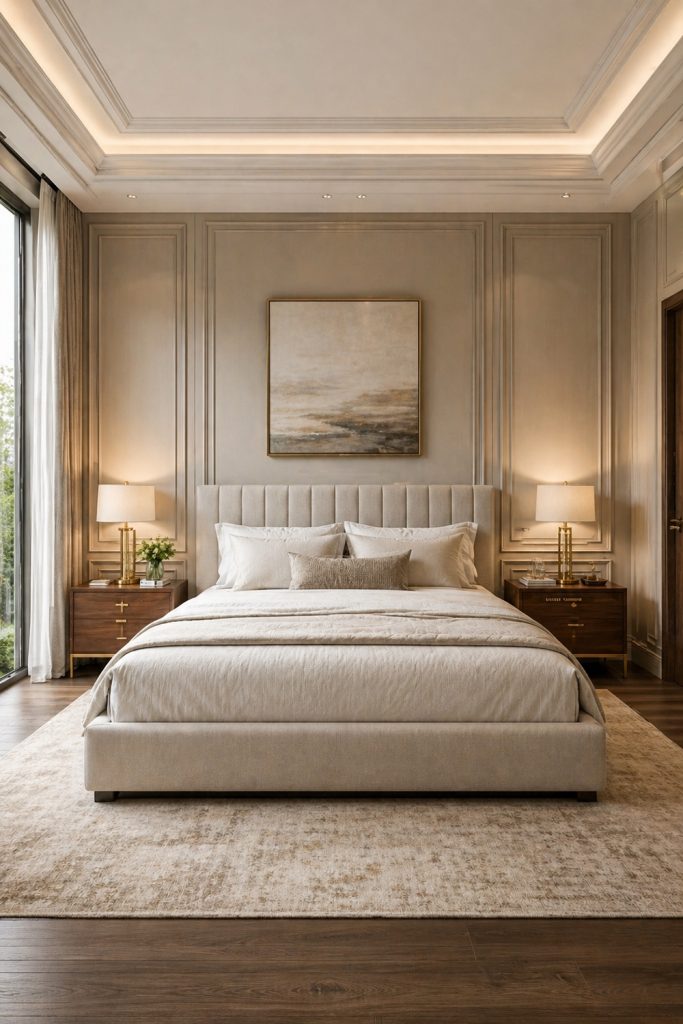
Symmetry is one of the most powerful and psychologically soothing principles in interior design, and in the primary bedroom — a space explicitly dedicated to rest and mental decompression — its calming effect is particularly pronounced. A symmetrically designed primary bedroom, where identical or near-identical furniture, lighting, and accessories are mirrored on either side of the bed, creates an immediate sense of order, balance, and visual harmony. Matching bedside tables, matching table lamps or wall sconces, matching artwork hung at equal heights — these deliberate visual rhymes calm the nervous system and signal to the brain that this is a space of rest. Symmetry is not boring — it is profoundly, scientifically restful.
18. Smart Bedroom Technology for Modern Living

A thoughtfully integrated smart technology system transforms the primary bedroom from a passive sleeping space into an intelligently responsive environment that actively supports your well-being. Smart lighting systems — such as Philips Hue or Lutron Caséta — allow you to program sunrise wake-up scenes that gradually brighten the room, mimicking natural dawn to support healthy cortisol rhythms. Smart thermostats maintain the optimal sleeping temperature of 65–68°F (18–20°C) throughout the night. Motorized blackout blinds controlled via smartphone or voice command provide total light control without leaving bed. A quality sound system streaming white noise, nature sounds, or sleep-optimized playlists completes the picture. Technology, when deployed thoughtfully, makes the primary bedroom the most restorative room in the house.
Primary Bedroom Planning Guide: Getting the Fundamentals Right
Before committing to any of the ideas above, these fundamental planning principles will ensure your primary bedroom design is as successful in reality as it is in your imagination:
Bed Placement: The bed should ideally be positioned facing the door without being directly in line with it — a principle drawn from feng shui that also happens to be excellent practical design. Allow a minimum of 24 inches of clearance on both sides of the bed for comfortable movement, and at least 36 inches at the foot.
Color Psychology: Cool tones — soft blues, muted greens, gentle greys — are clinically associated with reduced heart rate and improved sleep onset. Warm neutrals — cream, taupe, warm white — create a cocooning sense of comfort. Avoid stimulating colors — bright red, vivid orange, intense yellow — in a primary bedroom environment.
Storage as a Priority: A primary bedroom without adequate, well-designed storage will never feel truly calm, no matter how beautiful the decor. Plan your wardrobe and storage solution first, before making any other design decisions. Clutter is the single greatest enemy of bedroom serenity.
Rug Sizing: A bedroom rug should be large enough for bare feet to land on when getting out of bed on both sides. A rug that is too small is worse than no rug at all — it makes the furniture appear to be floating unanchored in the room.
Window Treatment Priorities: For a primary bedroom, light control and privacy are non-negotiable. Always include blackout capability — whether through blackout lining in your curtains, blackout roller blinds layered beneath sheer curtains, or motorized smart blinds. Quality sleep is foundational to well-being, and quality sleep requires darkness.
Final Thoughts: Designing a Primary Bedroom That Truly Restores You
The primary bedroom is the most personal space in the home — the room that belongs entirely to you. It is where you begin and end every single day of your life, and that fact alone makes it worthy of your very best design thinking, your most considered material choices, and your most honest self-expression. The ideas in this article span every aesthetic and every budget — from the simple, transformative power of layered bedding and warm lighting to the architectural ambition of integrated dressing rooms and canopy beds. Wherever you begin, begin with the question: how do I want to feel in this room? Answer that honestly, and every design decision that follows will fall beautifully into place.


