

15 Sage Green and Cream Kitchen Ideas — Calm, Warm & Timeless
Sage green and cream is the kitchen palette people choose when they want colour without noise. Sage brings the soft, leafy calm of a garden into the room, while cream warms it up in a way plain white never quite manages. Together they feel light in the morning, cosy by evening, and forgiving of everyday mess in between.
The pairing also adapts easily. It suits Shaker cabinetry and cottage details, but it works just as well in a small galley or an open kitchen-diner. The fifteen ideas below move from full cabinet colour to small, low-commitment touches, so you can take the whole look or borrow a single piece of it.
This post contains affiliate links. If you buy through them, we may earn a small commission at no extra cost to you. See our Affiliate Disclosure.
1. Paint Every Cabinet Sage and Let Cream Walls Breathe

The simplest version is often the strongest: sage on every cabinet, cream on the walls above and around them. With no competing cabinet colour, the green reads calm and confident rather than busy. Keep worktops pale, repeat the cream in a blind or runner, and let one warm material, such as oak boards or brass handles, bridge the two shades so the room feels layered rather than flat. Paint the inside of a glass-fronted cabinet cream if you have one; the small break stops a long run of green feeling heavy.
2. Split It Two-Tone: Sage Lowers, Cream Uppers

Two-tone cabinetry is the easiest way to keep a sage kitchen feeling open. Sage on the base cabinets grounds the room at working height, while cream uppers bounce light around and stop the green closing in, especially in north-facing spaces. If you are new to mixing cabinet colours, our guide to two-tone kitchen cabinet ideas walks through the pairings that hold up best. Keep the dividing line clean at worktop height rather than letting it wander, use the same handle style on both colours so the split reads deliberate, and choose a cream for the uppers that matches the wall colour closely enough to feel like one pale backdrop.
3. Flip the Contrast With a Sage Island

If a whole room of green feels like too much, put the sage where it counts: on the island. Cream perimeter cabinets keep the walls light, and the island becomes a calm centrepiece you can repaint one day without touching the rest of the kitchen. For a moodier take on the same contrast idea, see how white oak and black kitchen ideas use one strong element against a pale base. Give the island a slightly deeper sage than you would dare everywhere, then echo it once in a stool cushion or herb pots so it looks deliberate.
4. Back It With Cream Zellige-Style Tiles

A cream backsplash with a handmade, uneven glaze gives sage cabinets a soft glow instead of a hard line. The tiles catch light at slightly different angles, so the wall shifts gently through the day, and their warm undertone stops sage reading grey. Run them in a simple stacked or brick layout, keep grout close to the tile colour, and finish the edge neatly so the texture, not the pattern, does the talking. Take the tiles up to the wall cabinets, and order a few spares from the same batch, because their shade variation makes later replacements hard to match.
5. Lay Cream Stone Worktops Over Sage
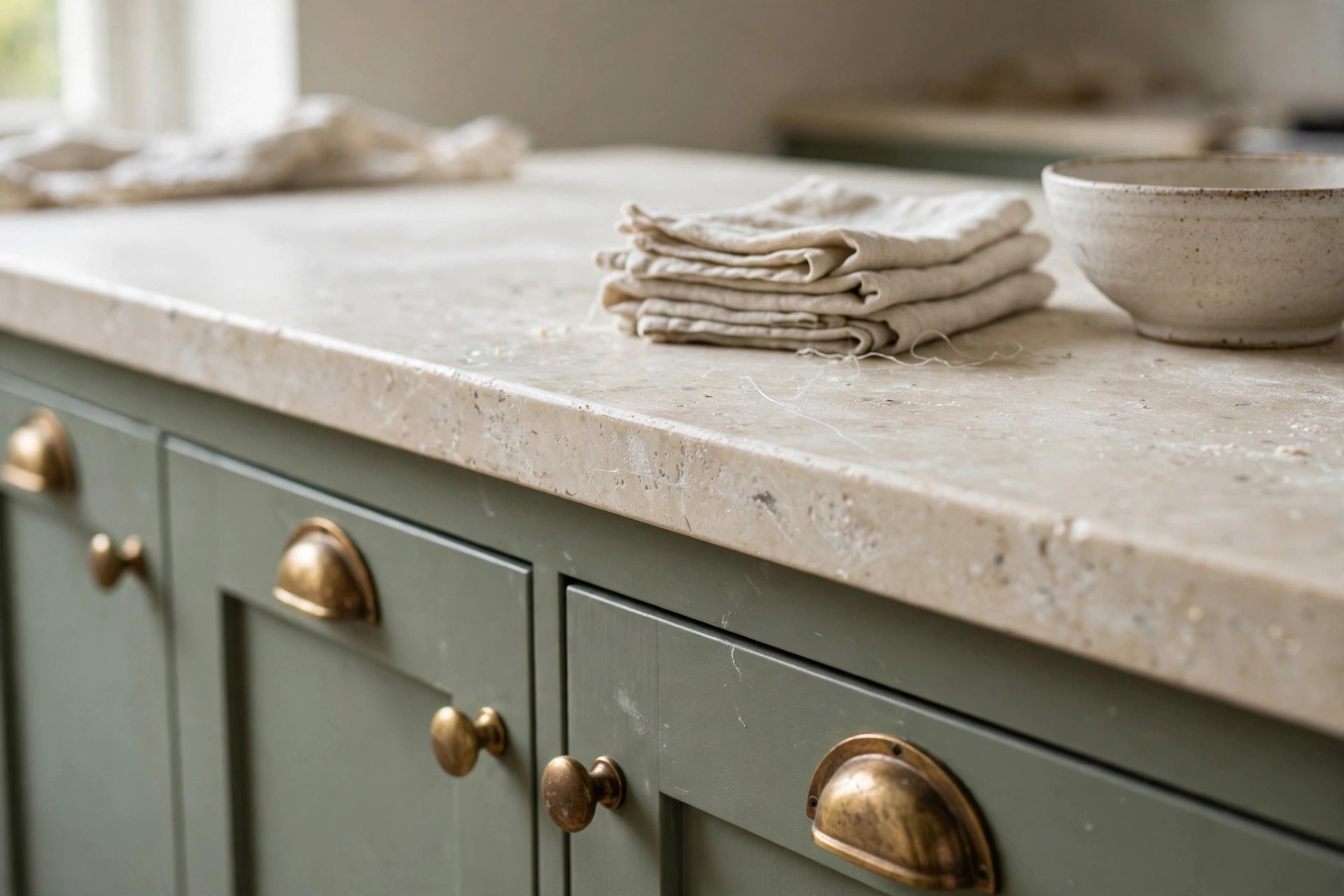
Cream stone, or a good stone-effect surface with soft cream veining, is the classic partner for sage. It gives you a bright, wipeable working plane and reflects light back up into the room, which flatters green cabinetry at every hour. Choose a matte or honed finish rather than a high shine, and echo the warm tone in brass or wooden accessories so the worktop feels connected to the rest of the scheme. Check a large sample against a painted cabinet door before ordering, because cream veining can turn grey or pink under kitchen lighting; a short upstand in the same stone finishes the wall join.
6. Build a Full-Height Sage Pantry Wall
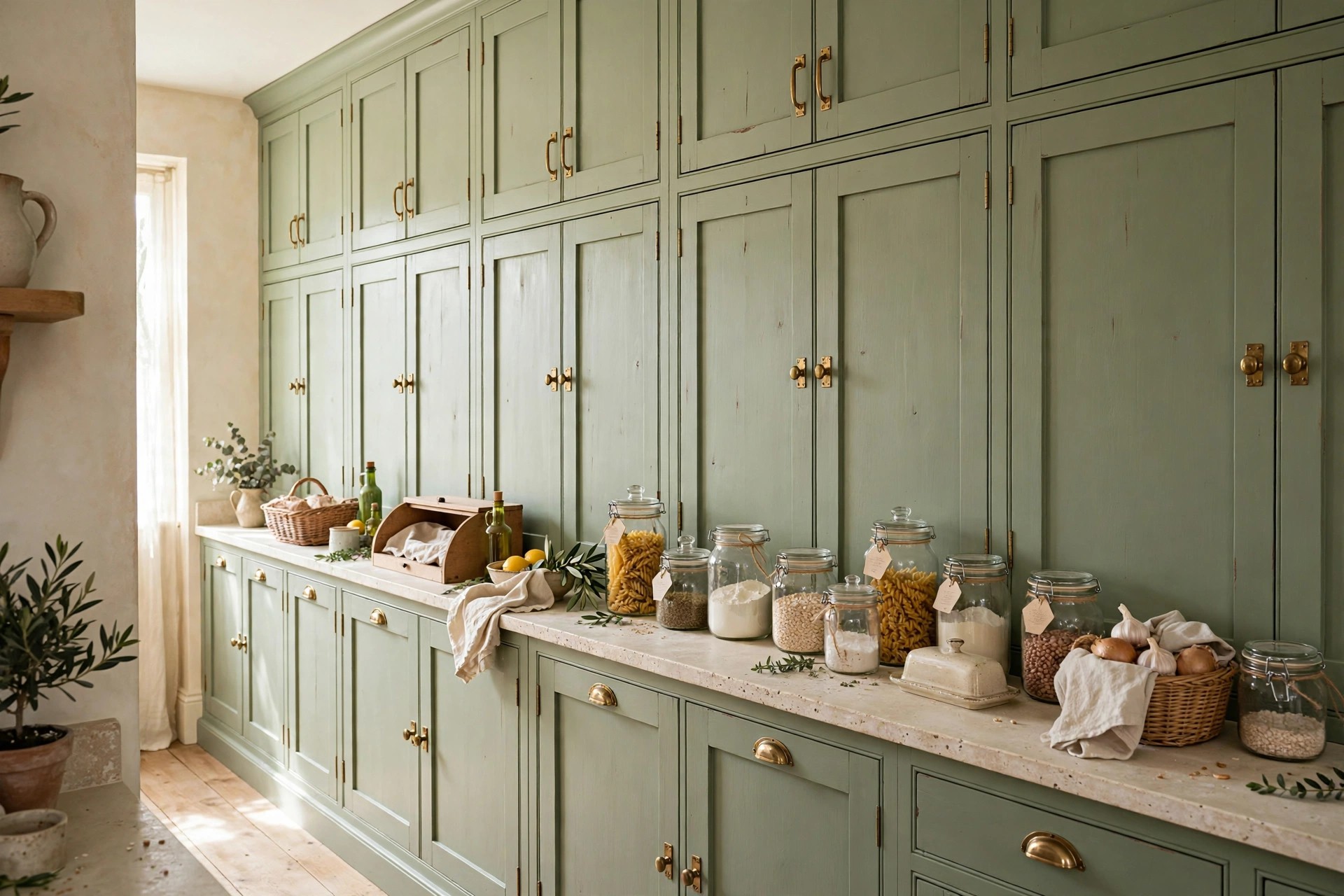
A bank of tall larder cupboards in sage turns storage into the design feature. Run it along one wall of an otherwise cream kitchen and the green arrives as one confident block instead of scattered accents. Inside, it hides the clutter that makes open kitchens feel chaotic. Keep handles simple and consistent, and repeat a small touch of the same sage, a stool, a blind, a utensil pot, somewhere opposite for balance. Plan the interiors too: pull-out shelves at waist height for heavy jars, shallow shelves up top for packets, and one cupboard left clear for the toaster and coffee machine.
7. Float Open Oak Shelves on Cream Walls
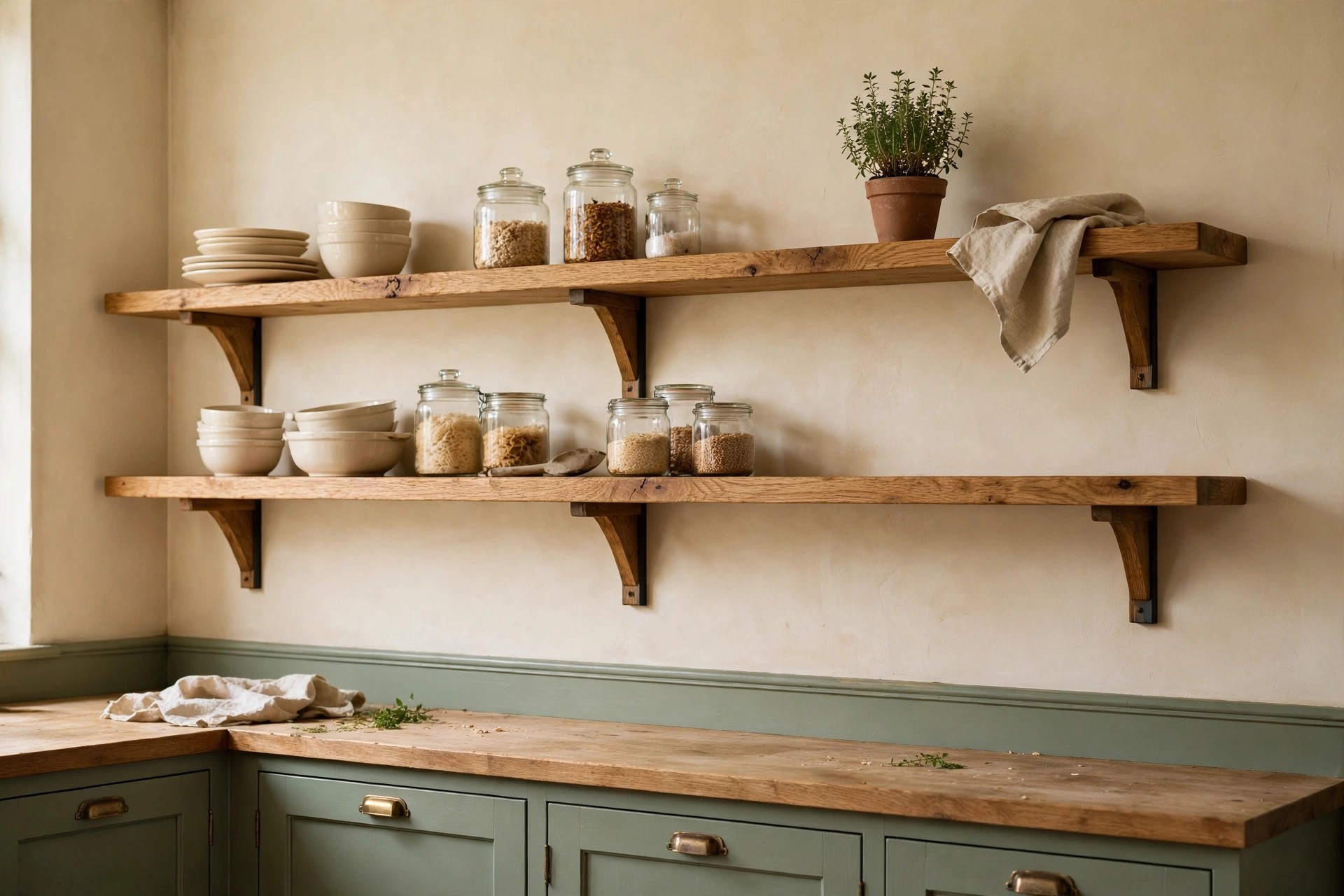
Swapping one run of upper cabinets for open oak shelves lightens a sage kitchen instantly. The wood warms both colours, and cream crockery, glass jars and a small herb pot give you display that still earns its keep. Keep shelves to everyday pieces rather than ornaments, group items loosely instead of lining them up, and leave breathing room at the ends so the arrangement looks relaxed, not staged. Choose chunky solid oak and fix it into studs or solid masonry, because loaded shelves are heavier than they look; two shelves are plenty, the lower one within easy reach of the worktop.
8. Make the Cooker Wall a Sage Feature
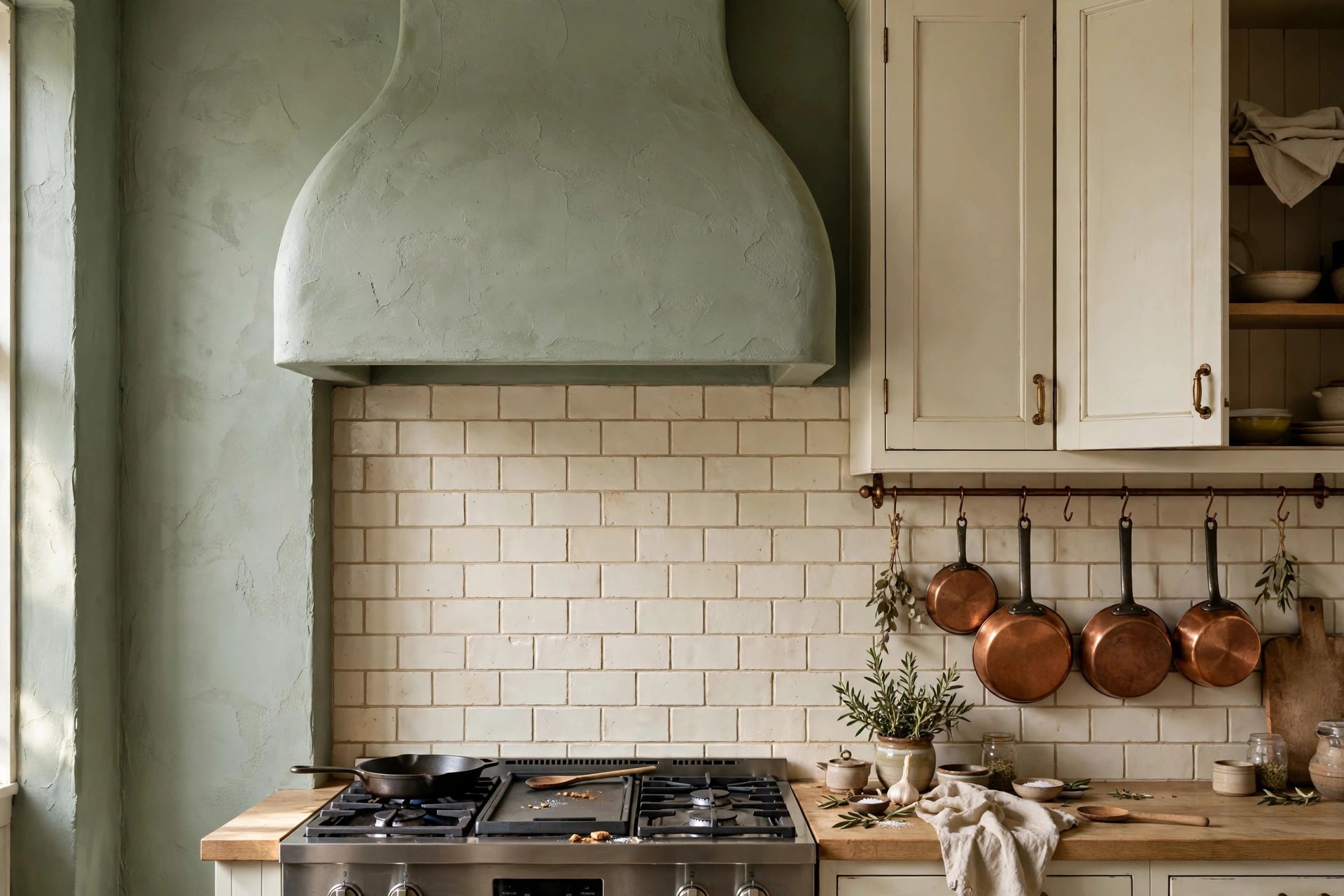
Concentrating sage around the cooker, on a plastered hood surround, a panelled chimney breast or the cabinets either side, gives the room a clear focal point while the remaining cabinetry stays cream. It is a good route for renters of the palette who are not ready to commit everywhere. Add a rail for pans or utensils, keep the splashback cream, and the cooking wall reads intentional rather than accidental. Use a durable, washable paint near the hob, because steam and splashes find a feature wall first, and end the colour block with a tiled upstand or timber trim.
9. Set a Cream Farmhouse Sink Under the Window

A cream apron-front sink is a small change with an outsized effect. Its soft, rounded face breaks up a run of sage base cabinets, catches the light under the window, and suits the palette’s gentle character far better than a stark white or steel finish. Pair it with a warm metal tap, a wooden draining board and a linen cloth over the edge, and the hardest-working corner of the kitchen becomes one of the prettiest. Check the cabinet beneath first, because an apron sink needs an adapted unit and enough depth; a fitted grid in the base protects the cream surface from pan scratches.
10. Add a Cream Dresser for Cottage Storage

A freestanding cream dresser or plate rack brings the cottage side of this palette to life, and it is storage you can take with you when you move. Use it for the plates, jugs and serving bowls that deserve daylight, and keep the styling loose and useful. Our round-up of small cottage kitchen ideas has more freestanding pieces that work in tight spaces. Measure the wall first and leave a hand’s breadth of air on either side so it reads as furniture; a second-hand dresser painted in your cream is often better made than new flat-pack.
11. Tuck a Cream Breakfast Nook Into the Corner
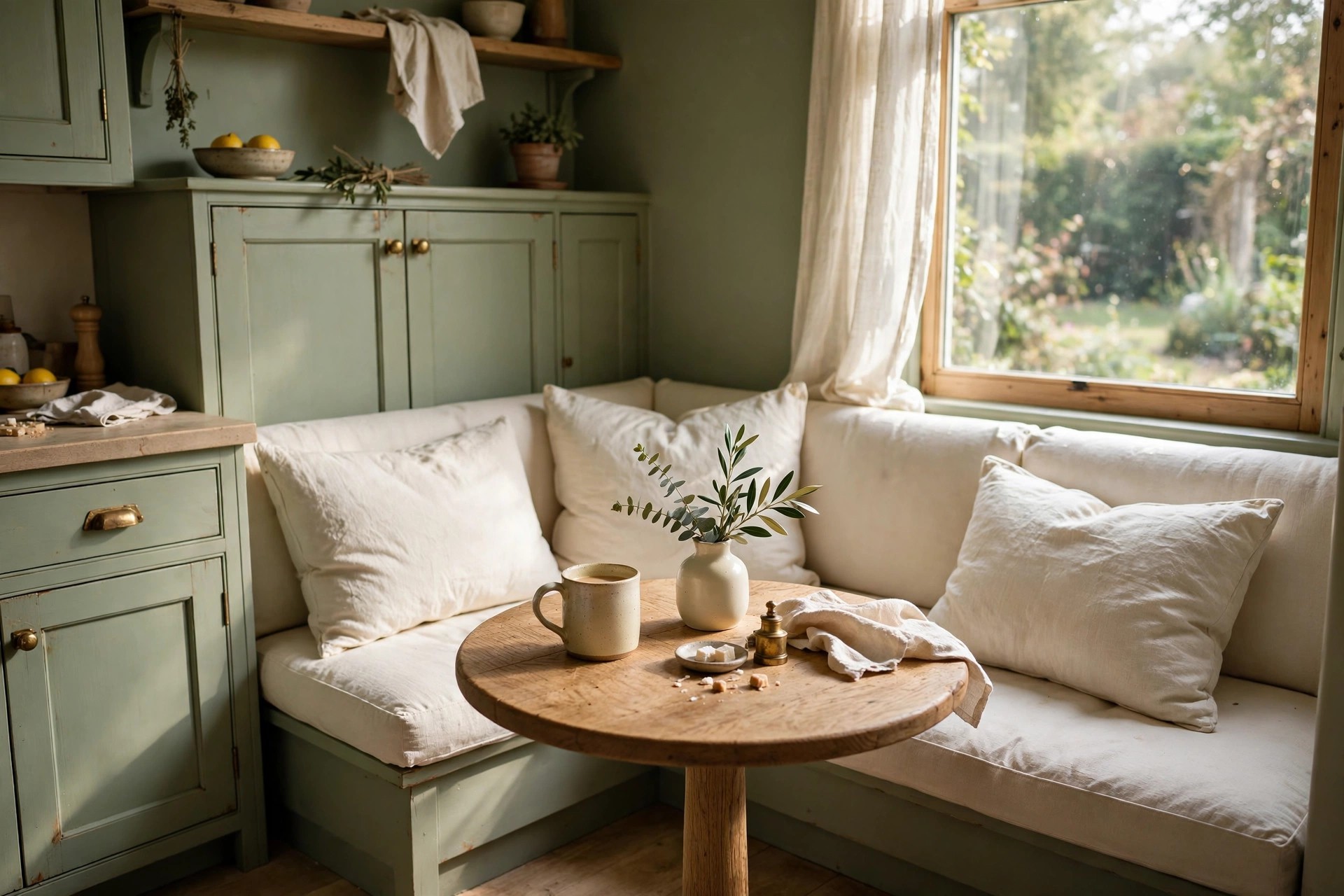
A built-in bench in cream, piled with cushions in washed linen and soft checks, turns an awkward corner into the spot everyone chooses first. Against sage cabinetry it feels fresh rather than sugary, and it gives the kitchen a second job beyond cooking. Keep the table wooden, the seat pads washable, and add a small pendant or wall light above so the nook still works after dark. Build storage into the bench base, with a hinged seat for linen or the slow cooker, and choose a pedestal table so people can slide in without catching their knees.
12. Panel the Walls in Sage Tongue-and-Groove
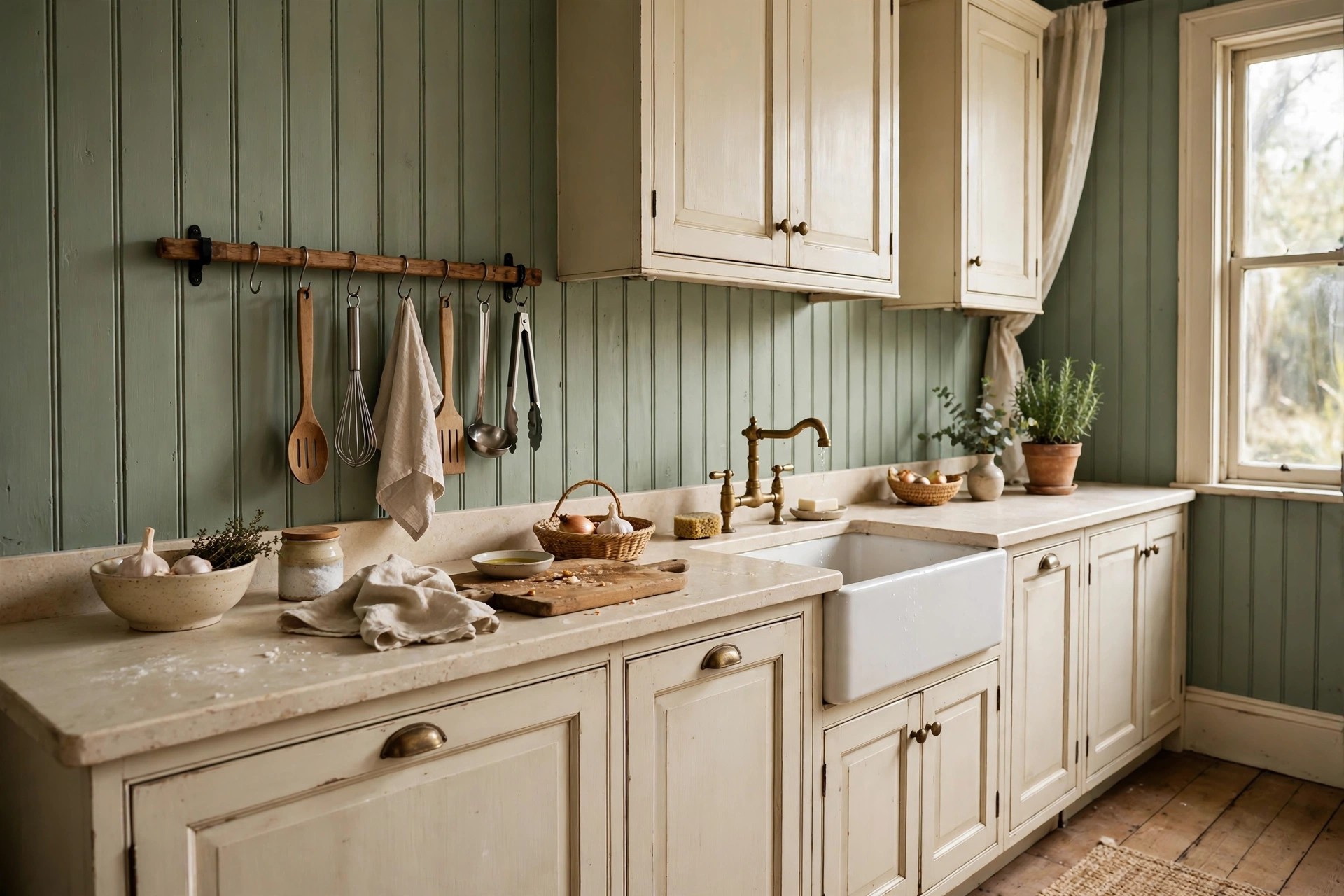
If the cabinets must stay cream, bring the sage in through panelling. Tongue-and-groove boards painted sage, run to picture-rail height or across one wall, add texture that flat paint cannot, and they stand up well to scuffs in a busy room. Cream cabinets against the panelling look crisp and considered. Finish the top edge with a simple shelf ledge for jars and small frames. Fix boards vertically to lift a low ceiling, prime raw timber so knots do not grin through, and use a wipeable satin or eggshell finish that shrugs off daily splashes.
13. Keep a Small Galley Light With Cream on Top
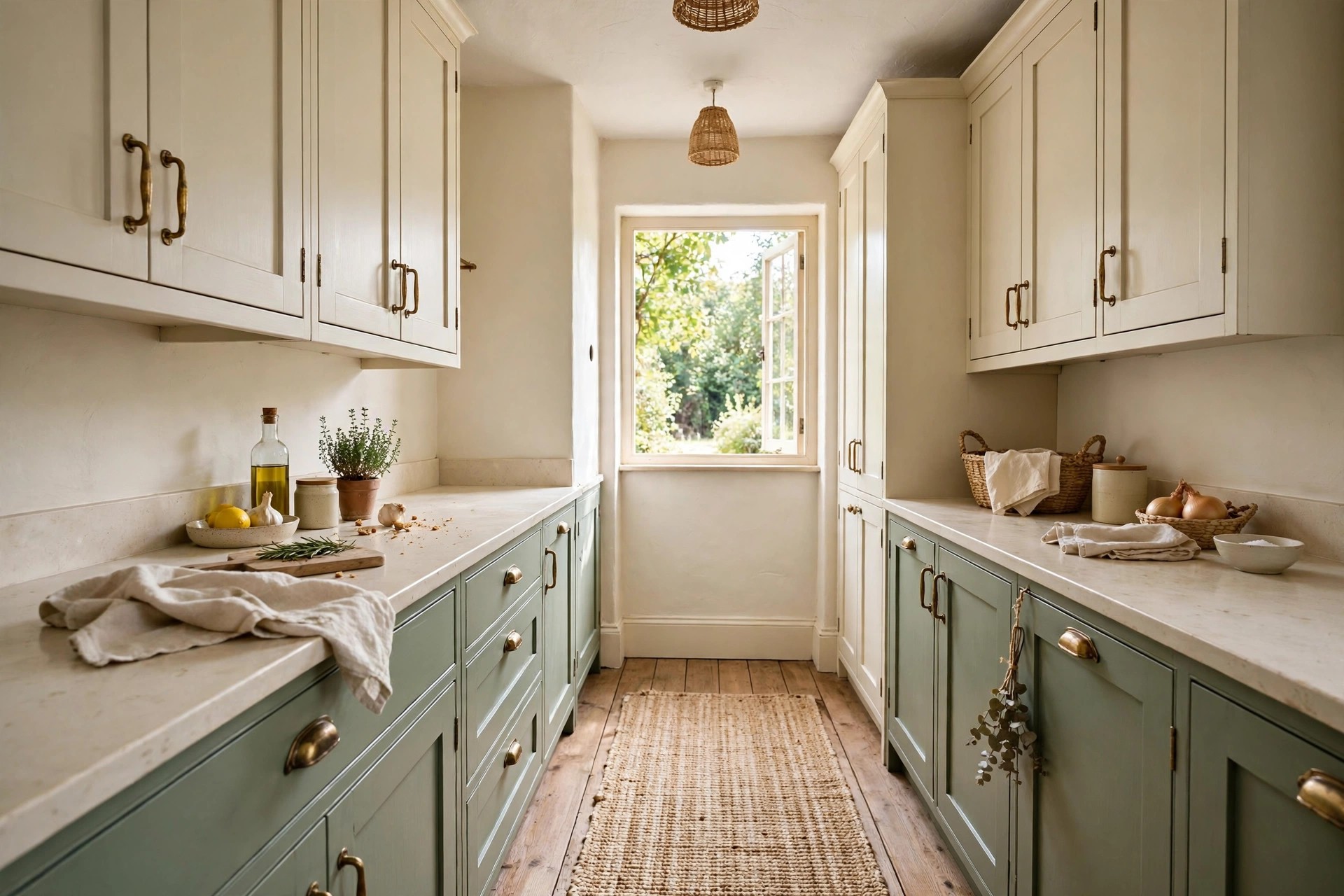
In a narrow galley, proportion matters more than anywhere. Sage on the lower cabinets only, with cream uppers, walls and ceiling, keeps the eye travelling to the light at the end instead of stopping at dark boxes overhead. Choose slim handles, keep worktops as clear as you can, and run a pale runner down the floor to lengthen the room. The green still registers, but the kitchen feels twice as wide. Put the hob and sink on opposite sides only where there is comfortable passing width, keep everyday items between waist and shoulder height, and leave the far window wall clear so the room ends in light.
14. Soften the Edges With Cream Linen and Cotton
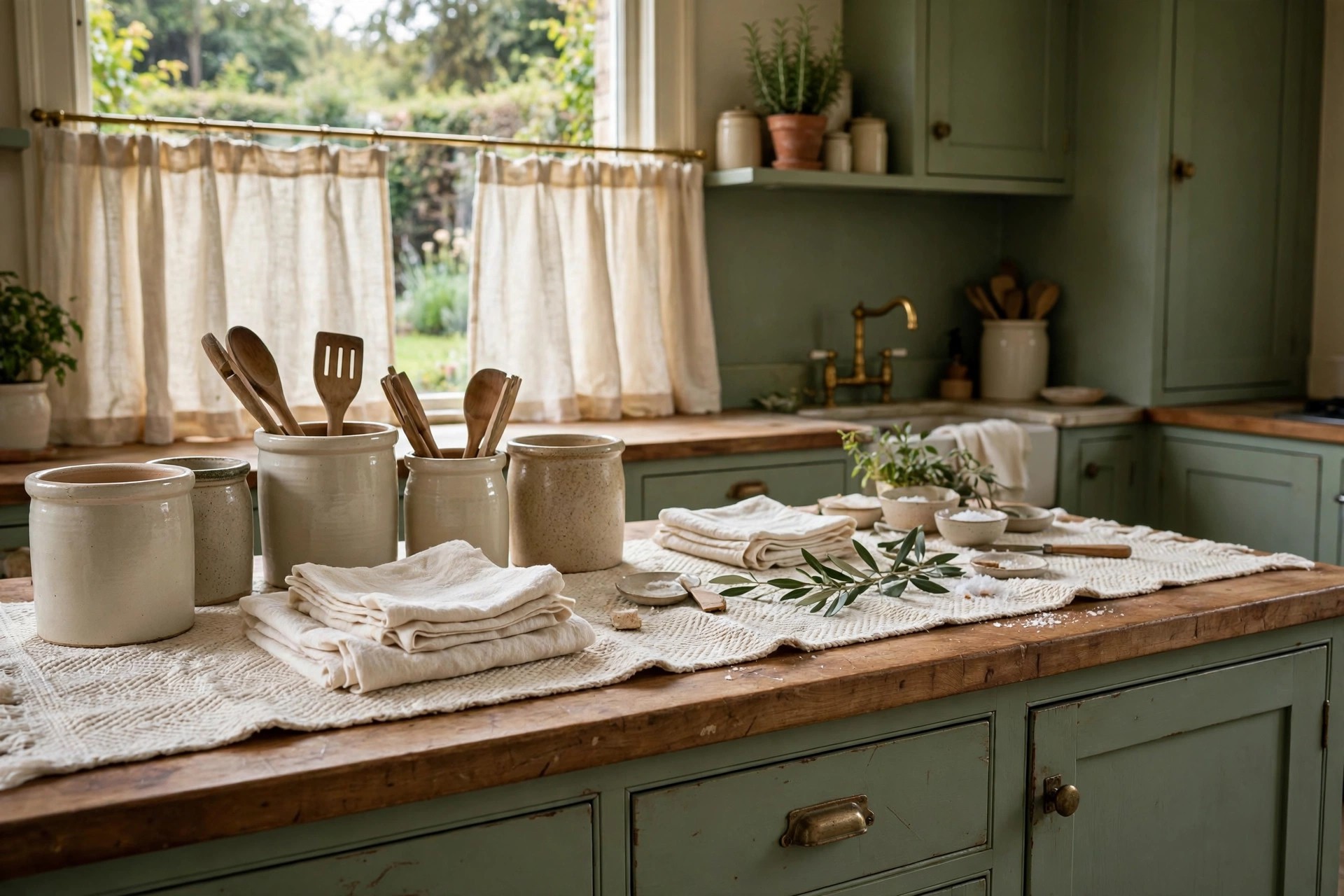
Textiles are the fastest, cheapest way to test this palette. Cream linen café curtains, a washed cotton runner and a stack of natural-toned tea towels warm up sage cabinetry and soften all the hard surfaces a kitchen is full of. Because nothing is fixed, you can adjust the balance seasonally, more cream in winter for cosiness, less in summer. Choose washable fabrics and accept a few creases; perfection is not the point here. Buy the runner long enough for the sink and hob where you actually stand, in a low, flat weave doors can clear, and repeat the cream in seat pads or a blind.
15. Open It Into a Kitchen-Diner With an Oak Table

In an open room, let sage and cream zone the space without a wall. Sage cabinetry defines the cooking end, cream walls and an oak dining table soften the eating end, and repeating cream in the island and dining chairs ties the two together. For a bolder dining zone altogether, aubergine kitchen ideas show the deep-colour alternative. Keep flooring continuous throughout so the room reads as one calm whole. Light the zones separately, warmer and lower over the table, and use washable cream chair fabric so the colour thread runs to the far end.
Getting the Sage and Cream Balance Right
Start with the ratio. Aim for roughly two-thirds of one colour and one-third of the other, rather than an even split, which tends to look unsettled. Most rooms suit sage as the smaller, stronger share on cabinets, with cream carrying walls, worktops and textiles. If your kitchen is large and bright, you can reverse it and let sage lead, but keep one colour clearly in charge either way.
Next, settle the undertones. Sage leans either warm and yellow-green or cool and grey-green, and your cream should lean the same way. Paint both onto one large board, prop it against the cabinets, and check it in morning light, flat afternoon light and under your evening bulbs. A warm sage beside a blue-toned cream will look muddy in at least one of those lights, and that is the test doing its job.
Then add the third layer: material. Warm metals, natural oak and woven textures, the same materials that anchor rustic modern kitchen ideas, will always flatter this pairing, while cold chrome and blue-white paints fight it. Finally, repeat each colour at least three times around the room, in big, medium and small touches, so nothing appears only once. Work through those four steps in order, ratio, undertones, materials, repetition, and the scheme tends to settle itself without any guesswork.
Common Mistakes to Avoid
Choosing a blue-white instead of a true cream. Stark, cool whites make sage look muddy and grey by comparison. Pick a cream with a warm, slightly yellow base and check it against the green in your own light, not the shop’s.
Splitting the colours fifty-fifty. Equal amounts of sage and cream leave the eye unsure which colour leads. Let one dominate and use the other as the supporting act, on either the cabinets or everything around them.
Forgetting a third material. Paint alone can leave this palette feeling flat. The scheme needs wood, stone, woven fibre or warm metal somewhere in the room to give the soft colours something to play against.
Frequently Asked Questions
Does sage green work in a kitchen with little natural light? Yes, if cream carries the upper half of the room. Keep uppers, walls and worktops pale, choose a sage with a warm rather than grey undertone, and it will feel cosy instead of gloomy. A warm bulb helps at night too.
What worktop colour suits sage and cream cabinets? A cream or warm off-white stone suits them best, because it bridges the two colours. Pale oak butcher’s block also works well and adds the natural texture this palette loves. Keep the finish matte or honed, not glossy.
Which metal finish should I choose for handles and taps? Warm metals flatter sage and cream most: brushed or aged brass, bronze and warm nickel all sit comfortably. Avoid bright chrome, which reads cold against both colours. Keep every visible metal in the same family.
Can I use sage and cream in a modern kitchen, not just a cottage one? Absolutely. Choose flat-front cabinets, keep handles minimal or integrated, skip the cottage accessories and let the colour pairing itself provide the softness. The palette stays the same; the details change the mood. A plain cream slab splashback keeps it clean, not busy.
Final Thoughts
Sage green and cream endures because it asks so little of you: two gentle colours, one warm neutral to support them, and honest materials doing the rest. Start with the version that fits your room’s light, test the undertones together, and build up in layers. Done that way, this is a kitchen that will feel just as right in ten years as it does on the day the paint dries.


