

15 Cloffice Ideas to Turn a Bedroom Closet Into an Office
Working from the kitchen table gets old fast. Your laptop shares space with breakfast, your chair is wrong for eight hours of sitting, and every video call shows the whole room behind you.
If there is no spare room to claim, the answer might already be in your bedroom: a closet with a door is a small, separate space waiting to become an office — a cloffice.
The appeal is simple. A closet gives you a defined work zone in a home that has none, and at the end of the day you can close the door on work completely.
Renters can do almost all of it without building anything, and small homes gain a desk without losing a room.
If you have been comparing home office in living room ideas, a cloffice is the quieter alternative — no rearranging the sofa, and no work creeping across shared space.
Below is a step-by-step guide to making the conversion, followed by fifteen cloffice ideas you can mix and match.
Start with the layout that fits your closet, then layer in storage, light and the small comforts that make a tiny office somewhere you actually want to sit.
This post contains affiliate links. If you buy through them, we may earn a small commission at no extra cost to you. See our Affiliate Disclosure.
How to Turn a Closet Into a Cloffice, Step by Step
Begin by emptying the closet completely and deciding honestly what has to go back in. Most closets hold far more than we wear, so edit as you empty: relocate off-season clothes elsewhere.
Measure the interior width, depth and height, and note where the nearest power outlet sits, because that decides your desk position and cable runs.
Clean the walls, fill any scuffs, and paint if you are allowed — a pale colour bounces light around a small space, while a deeper shade makes the nook feel deliberate.
If two of you will share the finished office, look at shared home office ideas for ways to divide storage fairly from the start.
Next, set the desk height first and build everything else around it. A work surface at comfortable sitting height, with your elbows resting naturally, matters more than any styling.
Add a shelf or two above for storage, position a lamp before you place anything decorative, and run one power strip neatly to the wall outlet so everything plugs in along a single tidy line.
Finally, test the setup for a full working day before committing to fixings. The same small-space thinking behind laundry closet ideas for apartments applies here — measure twice, keep everything reachable, and let the tight footprint work for you.
1. Take the Doors Off and Work in the Open
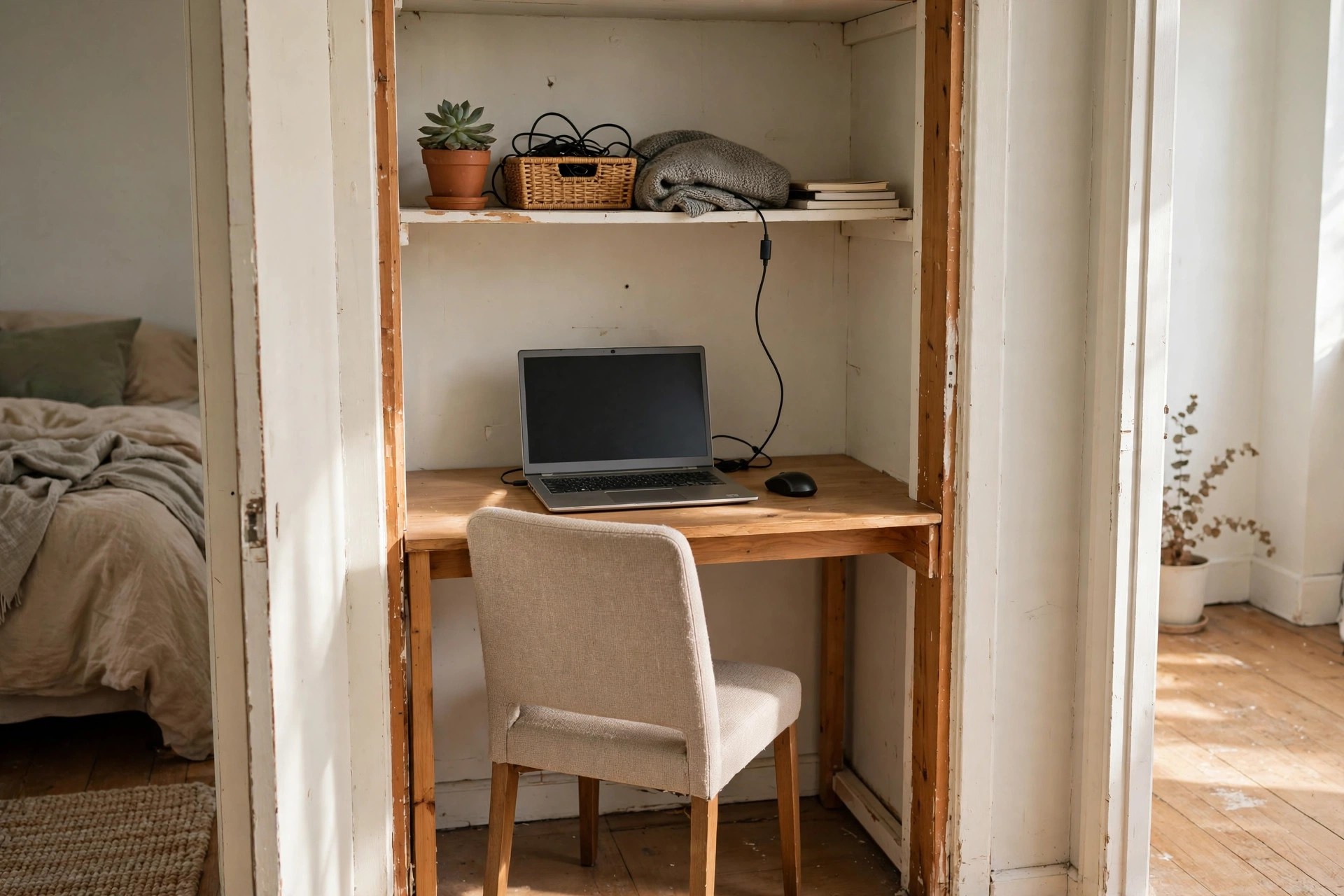
Removing the doors is the simplest way to make a cloffice feel like a room rather than a cupboard. With hinged doors off, the opening widens, light reaches your desk more easily, and your chair can roll slightly in and out without clipping anything.
Store the doors flat somewhere safe, wrapped in a blanket, with the screws taped to them in a labelled bag so everything goes back exactly as it was.
Nothing is built and nothing is damaged — the closet becomes a proper workspace the same afternoon you clear it out.
2. Paint the Inside of a Bifold-Door Cloffice

Bifold doors fold back neatly without swinging into the room, so they suit a cloffice well — and painting the interior walls gives the space its own identity.
Choose one colour for the back wall and shelves so the nook reads as a single, intentional piece of joinery when the doors open. A muted sage, dusty blue or warm clay separates work from rest far better than plain white.
Use leftover paint if you have it, keep the doors untouched, and let the colour do the decorating.
3. Turn the Deep Shelf Into Your Desk
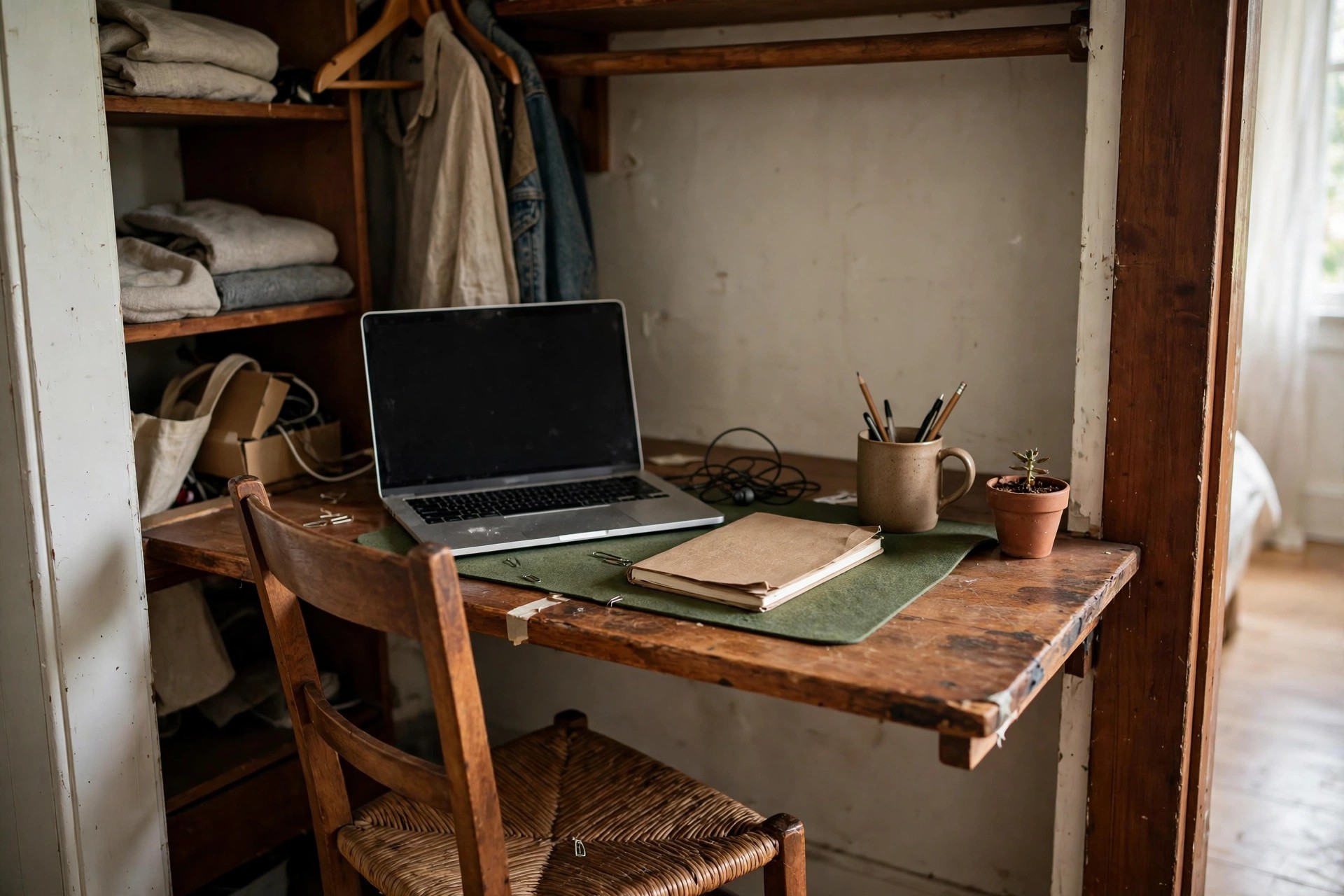
Many closets already contain your desk: the deep shelf running along the back. If it sits near comfortable working height and feels solid, clear it, sand any rough edges, and try it as your work surface before buying anything.
A shelf desk spans the full width, leaves the floor clear for your chair, and costs nothing. If it sits a little high, a taller chair solves it; a little low, and a sturdy board laid across raises the surface.
Cover a worn shelf with a desk mat and it looks deliberate, not improvised.
4. Float Shelves Above the Desk

In a cloffice, the wall above your desk is your storage, so use all of it. Two or three floating shelves hold books, files or storage boxes while keeping the work surface itself clear.
Fix them into studs where you can, keep the heaviest items on the lowest shelf, and leave the top shelf for lighter, prettier things that soften the view on calls. Renters can use a freestanding unit that slides in above desk height instead.
The layering principle matches good kitchen storage ideas for apartments with no pantry: go vertical, group similar items, and keep daily essentials closest to hand.
5. Hang a Pegboard Organiser Wall

A pegboard turns one flat section of wall into flexible storage that changes as your work does. Hang it on the side wall or beside your monitor, then add hooks and small shelves for headphones, notebooks, chargers and stationery.
Everything stays visible and off the desk, which matters when the desk is barely wider than your laptop. Paint the board the same colour as the closet interior so it looks built-in rather than workshop-like.
Because the pegs lift out, the whole system rearranges in minutes as your work changes.
6. Wallpaper the Interior for a Room-Within-a-Room Feel

Wallpaper is the fastest route from cupboard to room. Lining the back wall — or the whole interior — with a patterned paper gives your cloffice a finished feel and a backdrop that looks thoughtful on video calls.
In a space this small you can afford a bolder print than you would risk on a full wall, and a single roll often covers it. Peel-and-stick papers are the renter’s friend: they go up in an afternoon and come down without damage.
Keep the desk and shelves plain so the pattern stays the star, and repeat one of its colours in a cushion or desk mat.
7. Hang a Curtain Instead of Doors
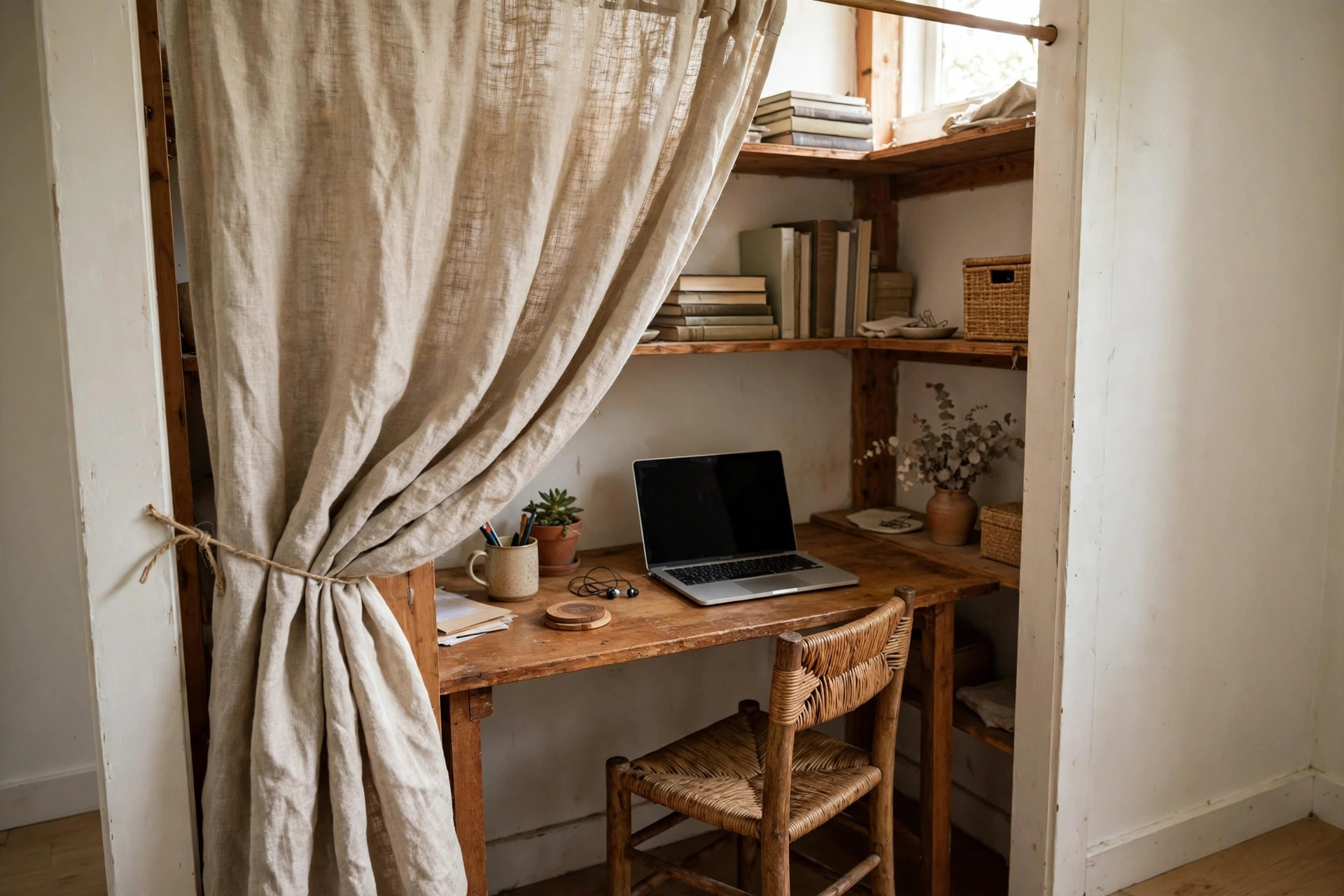
If your closet has no doors, awkward doors, or doors you are not allowed to remove, a curtain solves everything softly.
A tension rod inside the frame holds a linen or cotton curtain that hides the workspace at night and sweeps aside in seconds each morning. Fabric also takes up no swing space and adds the texture a small bedroom often lacks.
Choose a colour that works with your bedding so the closed cloffice looks like part of the room. This is the most forgiving renter option: no holes, no hardware, and the whole office disappears behind cloth.
8. Fit a Cloffice Into a Closet Under the Stairs
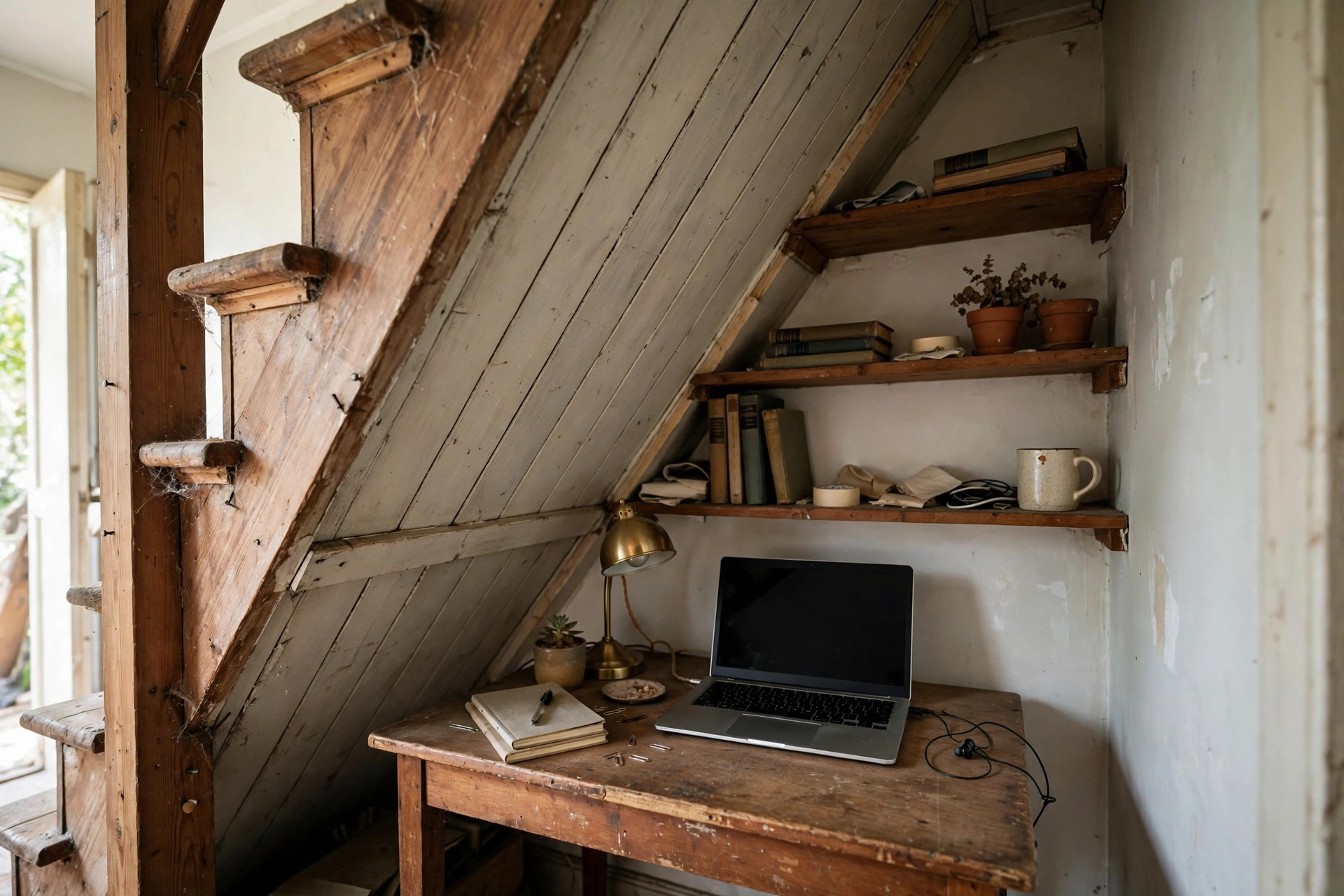
An under-stairs closet is awkward for storage but surprisingly good for a desk. The sloping ceiling does not matter when you are sitting down, and the tallest end usually fits shelves or a small filing unit.
Run the desk along the long wall, put your chair in the highest part of the slope, and use the low triangle for boxes you rarely touch. Good lighting matters more here than anywhere, because these closets rarely see daylight.
Measure the doorway carefully before choosing furniture, since access is usually the tightest part of the plan.
9. Convert a Double-Door Wardrobe Into an Office

A wide double-door wardrobe or reach-in closet gives you the most generous cloffice layout: room for a proper desk, a shelf run, and even a small drawer unit at one side. Treat it like a tiny fitted office.
Centre the desk, flank it with vertical storage, and hang a calendar on the inside of one door so opening up becomes part of your morning routine. Because the opening is wide, your chair can stay out in the room without blocking anything.
When guests stay, the doors close and the bedroom is simply a bedroom again.
10. Add Built-In Drawers Beneath the Desk

Drawers are what separate a desk from a workspace. A slim drawer unit tucked under one end of the worktop swallows paperwork, chargers and the clutter that otherwise colonises a small surface.
If you are building a desktop across the closet, a freestanding drawer pedestal can support one end of it — no brackets needed. Keep the top drawer for daily items and deeper ones for files.
For a more fitted look, the styling in these modern closet design ideas shows how clean finishes make storage look intentional. Renters can use a rolling cart that slides away when not needed.
11. Layer Task Lighting and a Small Lamp

Closets are dark by design, so lighting decides whether your cloffice feels gloomy or inviting.
Start with a task light that aims at your desk — a clamp lamp on a shelf saves surface space — then add a small warm lamp to soften the corners and flatter your face on calls.
Avoid relying on a single overhead bulb, which casts shadows exactly where you work. Position lights to the side of your screen rather than behind it to prevent glare.
A USB or battery lamp helps where outlets are scarce, and warm bulbs make even a windowless nook feel calm by evening.
12. Choose a Chair That Tucks Fully Away

The test of a cloffice chair is not just comfort — it is whether the doors close with the chair inside.
Measure the depth of your closet with the desk fitted, then choose a compact chair with a low or armless profile that slides completely under the worktop.
A padded seat and decent back support matter for long days, so try before you commit if you can. If your chair cannot disappear, the space-saving benefit of a cloffice disappears with it — treat this measurement as non-negotiable.
13. Tidy Cables With a Simple Power Strip Setup

Nothing shrinks a small office faster than a tangle of cables. Run a single power strip along the back of the desk or mount it underneath, plug everything into that one line, and let just one cord travel to the wall outlet.
Cable clips or a small basket keep chargers and leads together, and labelling each plug saves crawling around when something needs unplugging. Keep the strip off the floor so vacuuming stays easy.
Tidy cables also make the space calmer — and your backdrop on calls instantly looks more professional.
14. Share a Guest-Bedroom Closet and Keep Some Clothes

Your cloffice does not have to evict every garment. In a guest-bedroom closet, claim one end for the desk and keep the other end hanging clothes — a curtain or a row of storage boxes between the two zones keeps them visually separate.
Use the rail above your desk only for things you rarely reach for, so nothing brushes your head while you work. It is the most realistic layout for many homes: the room keeps its storage, you gain an office, and guests lose nothing.
15. Finish With Art and a Plant So It Feels Like Yours
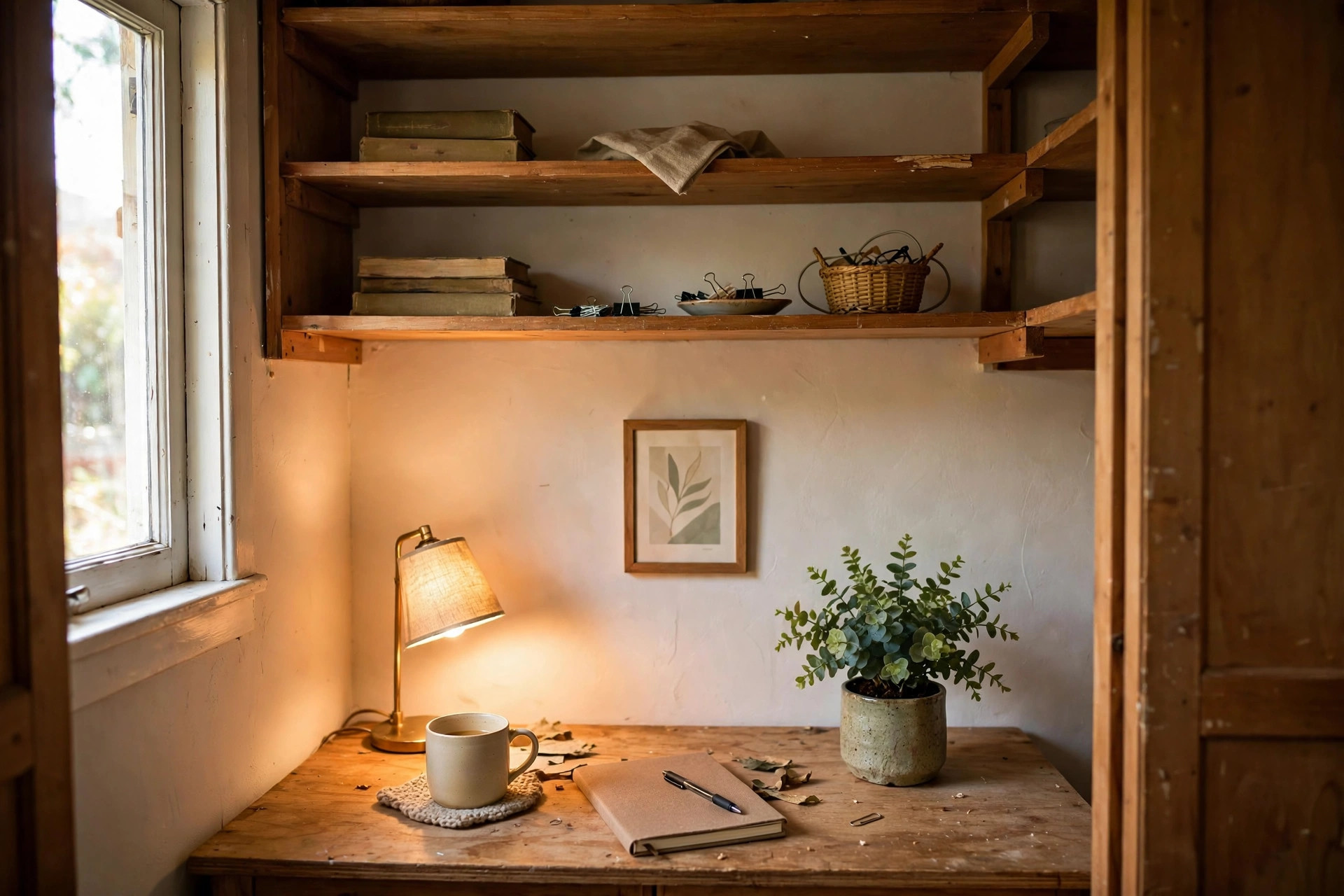
The last layer is what turns a converted closet into your office.
Hang one or two small framed prints at eye level when seated, add a plant that tolerates low light on a shelf, and keep one personal object on the desk — a favourite mug or a small photograph.
These touches cost little and stop the space feeling like storage you happen to sit in. Resist filling every surface, though: a few chosen pieces feel generous, while clutter closes the walls in.
Common Mistakes to Avoid
1. Skipping the measure-up. Buying a desk or chair before measuring the closet interior — including door swing and depth with the chair tucked in — is the most common way cloffice projects stall.
Measure everything twice, write it down, and take the numbers shopping with you.
2. Forgetting light and power. A beautiful desk in a dark closet with one distant outlet becomes frustrating within a day.
Plan your lamp, task light and power strip before arranging furniture, and test the setup on a real video call before you call the job done.
3. Treating it like storage again. Once the office works, spare blankets and boxes creep back in. Give everything removed a permanent new home elsewhere, and hold the line: the moment a cloffice doubles as overflow storage, the workspace feeling disappears.
Frequently Asked Questions
How much space do you need for a cloffice?
Less than you think. A standard reach-in closet with room for a desk around the width of the opening and a chair that tucks under it is enough.
What matters most is depth for your knees and a door or curtain that closes, so measure those before anything else.
Can renters make a cloffice without damaging the closet?
Yes. Use a freestanding or shelf desk, tension rods for curtains, peel-and-stick wallpaper, and clamp lamps instead of fixed fittings. Keep the original doors stored safely with their screws, and the closet returns to normal when you move out.
What desk works best in a closet office?
A simple surface that spans the full width works best — an existing deep shelf, a board resting on drawer units, or a narrow desk that leaves room for your chair to slide under. Prioritise comfortable working height and a clear floor over extra features.
How do you make a cloffice comfortable for full workdays?
Focus on the chair, the light and the air. Choose a supportive chair that fits the space, layer a task light with a warm lamp, and crack the door or add a small fan if the nook warms up.
Short breaks out of the nook help too.
Final Thoughts
A cloffice will not give you a bigger home, but it gives work a boundary — and that changes how a small home feels.
Pick the layout that matches your closet, keep the build renter-friendly where you need to, and add the comforts in the order you will feel them: chair, light, storage, then the pretty things.
Close the door at the end of the day, and the bedroom is yours again.


