

15 Laundry Closet Ideas for Apartments With No Laundry Room
No laundry room does not mean no laundry system. In most apartments the washer and dryer live wherever the plumbing allowed them to land — a deep closet off the hallway, an alcove by the bathroom, a cupboard that also hides the water heater.
The problem is rarely size — it is that the closet was treated as a hiding place instead of a workspace, so bottles pile on the floor and every wash day starts with a small excavation.
A laundry closet that works is planned like a tiny room: a place for dirty clothes to wait, a surface for folding, storage you can reach without moving three other things, and doors that close on all of it.
If your machines share space with the bathroom instead, our small bathroom with laundry design ideas cover that layout. Here, the focus is the closet itself — stacked, side-by-side, or a single washer in an alcove.
The fifteen ideas below follow the order a real closet comes together: layout first, then doors and surfaces, then storage details. Most need no building work, and the rest are simple shelves and rails that come out again when you move.
This post contains affiliate links. If you buy through them, we may earn a small commission at no extra cost to you. See our Affiliate Disclosure.
How to Plan a Laundry Closet That Actually Works, Step by Step
Start by measuring honestly: the closet’s width and depth, the swing of its doors, and the clearance the machines need so hoses, vents and plugs stay reachable.
Then empty it completely and sort what came out — supplies, dirty laundry, clean laundry in transit, and things stored there only for lack of anywhere else. That last group needs a new home; a laundry closet fails once it becomes general storage.
Sketch three zones: the machine zone, fixed by plumbing; the storage zone above and beside it, holding only what a wash cycle uses; and movement room for a hamper, a basket and you. Renting?
Keep every fix reversible — tension rods, freestanding shelves and over-door hooks do the work of built-ins, the same principle behind our renter-friendly kitchen makeover ideas.
Next, give every stage of the wash a home before you buy a single basket.
Dirty clothes need a hamper that fits the closet or slides out of it, detergent sits within arm’s reach of the machine, and folded clothes need a surface so they never land on the floor.
Add light if the closet has none — a strip light under a shelf is enough to spot stains and stray socks — plus a small bin for lint and clear labels so things go back where they belong.
Treat the closet like the other hardworking corners of a small home — the same zone thinking that makes pet feeding station ideas work applies here too. When each task has a spot, the closet stays tidy by itself.
1. Stack the Machines and Give the Wall Beside Them a Job
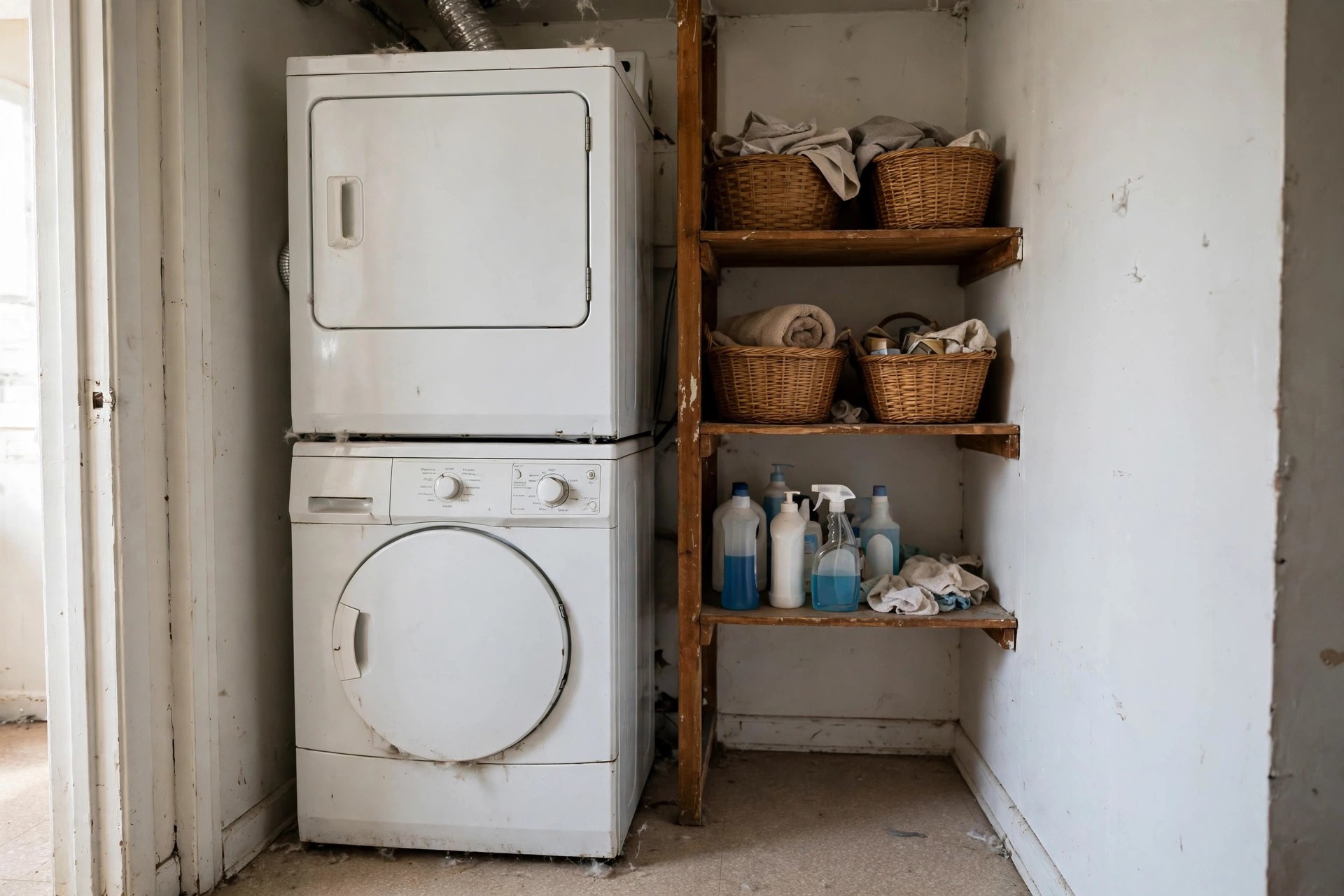
Stacking halves the machines’ floor footprint and frees a full-height strip of wall beside them. Do not waste that strip.
Fit narrow shelves, a rail for hang-dry shirts, or a slim cupboard for the ironing board, keeping daily supplies nearest the washer door, and leave recommended clearance around the stack.
2. Run a Folding Counter Over Side-by-Side Machines
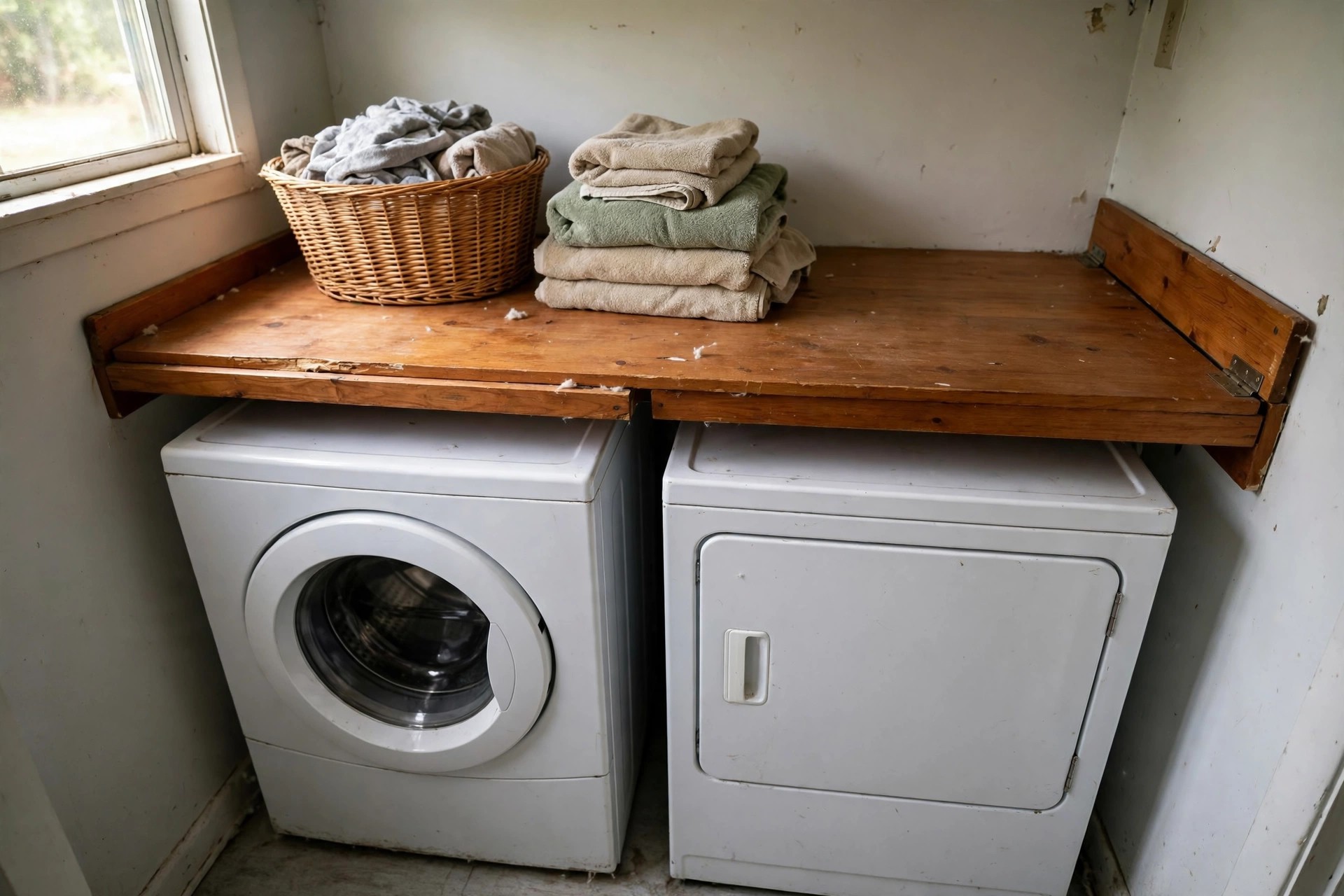
If your machines sit side by side, the space above them is the closet’s most valuable surface.
A simple counter — a sturdy board on battens, or a worktop cut to fit — turns the machine tops into a folding station and a landing spot for the basket.
Clothes get folded the moment they leave the dryer instead of migrating to the bed — the same thinking that turns any spare surface into a useful station, like the worktops in these freestanding kitchen nook ideas.
Make sure the counter lifts off easily, so machines can still be pulled out for servicing.
3. Style the Closet Like a Room Behind Bifold Doors

Bifold doors open the whole closet at once, so the interior is on display every wash day — style it like the tiny room it is.
Paint the inside walls a deliberate colour instead of leftover white, choose matching baskets, and keep one shelf partly decorative with a small plant or framed print. A closet that looks intentional stays tidy without thinking.
Check the bifolds fold clear of the machines and never pinch hoses; tired doors can be painted to match the hallway, with new knobs.
4. Swap Sticking Doors for a Simple Curtain

Doors that stick, clash with the washer door, or eat floor space are a daily irritation. A curtain on a tension rod solves all three: it slides aside in one motion, gives the machines breathing room, and softens a hallway full of hard doors.
Choose a washable fabric — linen-look cotton or canvas — hung just inside the frame, hem a fraction above the floor so it never wicks up spills. For renters, this is the friendliest door fix there is: no marks at all.
5. Wallpaper the Inside for a Hidden Burst of Pattern

A laundry closet interior is the safest place in an apartment to be brave with pattern. Because the doors close on it, bold wallpaper — big florals, a cheerful stripe, a vintage-style print — becomes a private surprise rather than a room-wide commitment.
Line the back wall and keep shelves plain so the pattern stays the star. Peel-and-stick papers make this renter-friendly and easy to change; press edges firmly and keep paper clear of dryer heat.
One roll often covers a whole closet — the highest-impact, lowest-commitment idea on this list.
6. Fill the Gap Above the Machines With Shelves and Labelled Baskets

The empty air above a washer is wasted space.
Two or three shelves across the full width turn it into the closet’s store cupboard: detergent and stain treatments on the lowest shelf, and labelled baskets above — one for delicates bags, one for cleaning cloths, one for the sewing kit.
Labels matter more than the baskets; they stop shelves becoming dumping ledges. Use baskets with handles, keep heavy things low, and measure your tallest bottle before fixing shelf heights.
7. Slide a Divided Hamper Into the Dead Space
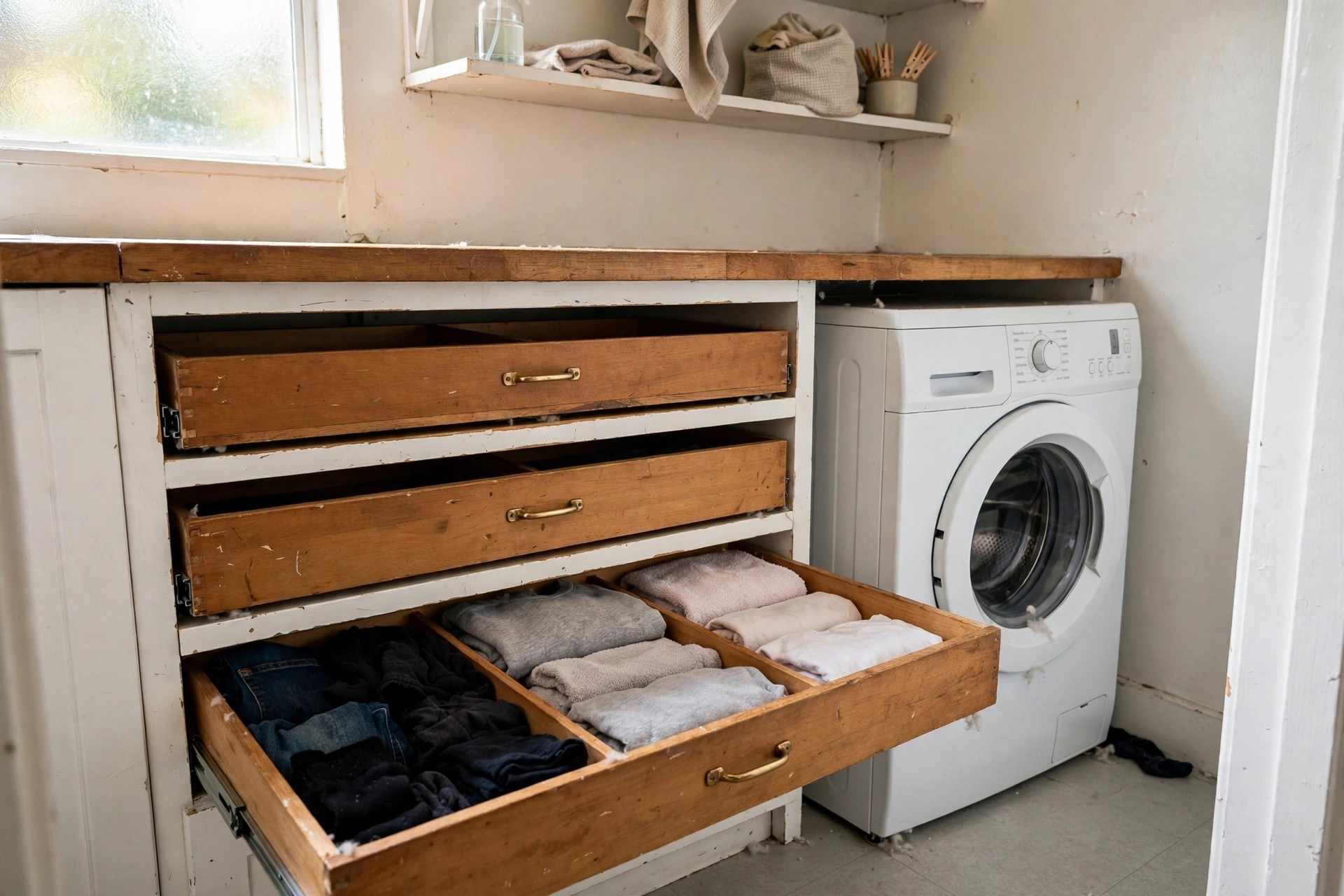
Dirty laundry needs a home that is not the floor. A pull-out hamper — a tilt-out cabinet, drawers on runners, or two slim hampers under a low shelf — keeps waiting washing sorted and invisible.
Two sections are enough — regular loads and delicates — so sorting happens as clothes come off. Choose liners that lift out and go straight to the machine, and mesh or slatted fronts so waiting laundry never smells stale. No floor space?
Hang a divided hamper bag inside the door.
8. Roll a Slim Cart Into the Gap Between Machines
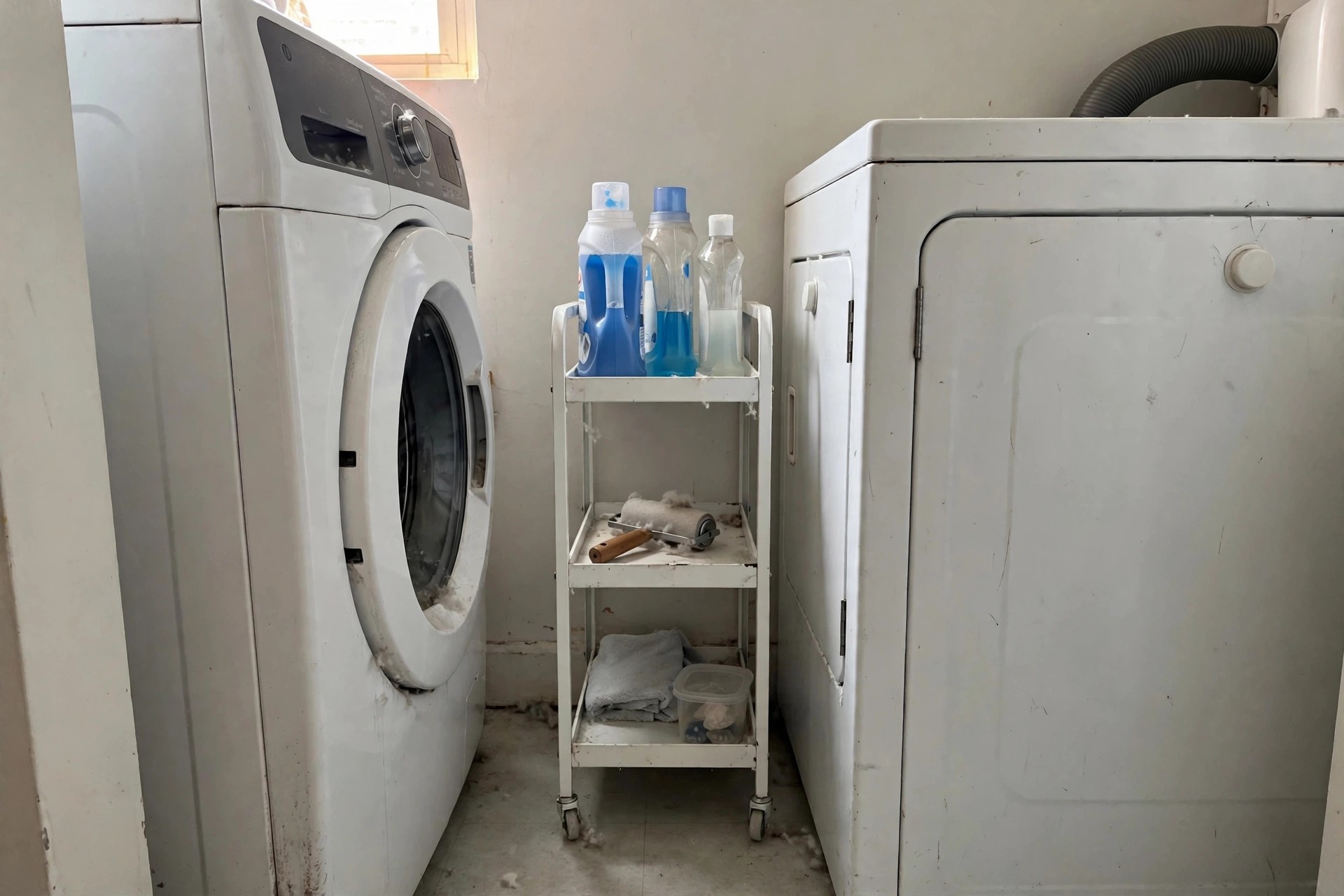
Most laundry closets have an awkward narrow gap — between the machines, or between a machine and the wall — that fits nothing standard. A slim rolling cart is made for that slot.
Load it with detergent, stain remover, a lint roller and cloths; roll it out when you need it and push it back into hiding when you do not.
It is the easiest upgrade for a shelfless closet, and it moves with you to the next apartment. Check the gap width before buying; keep the top tier for everyday bottles.
9. Mount a Folding Drying Rack on the Wall or Door
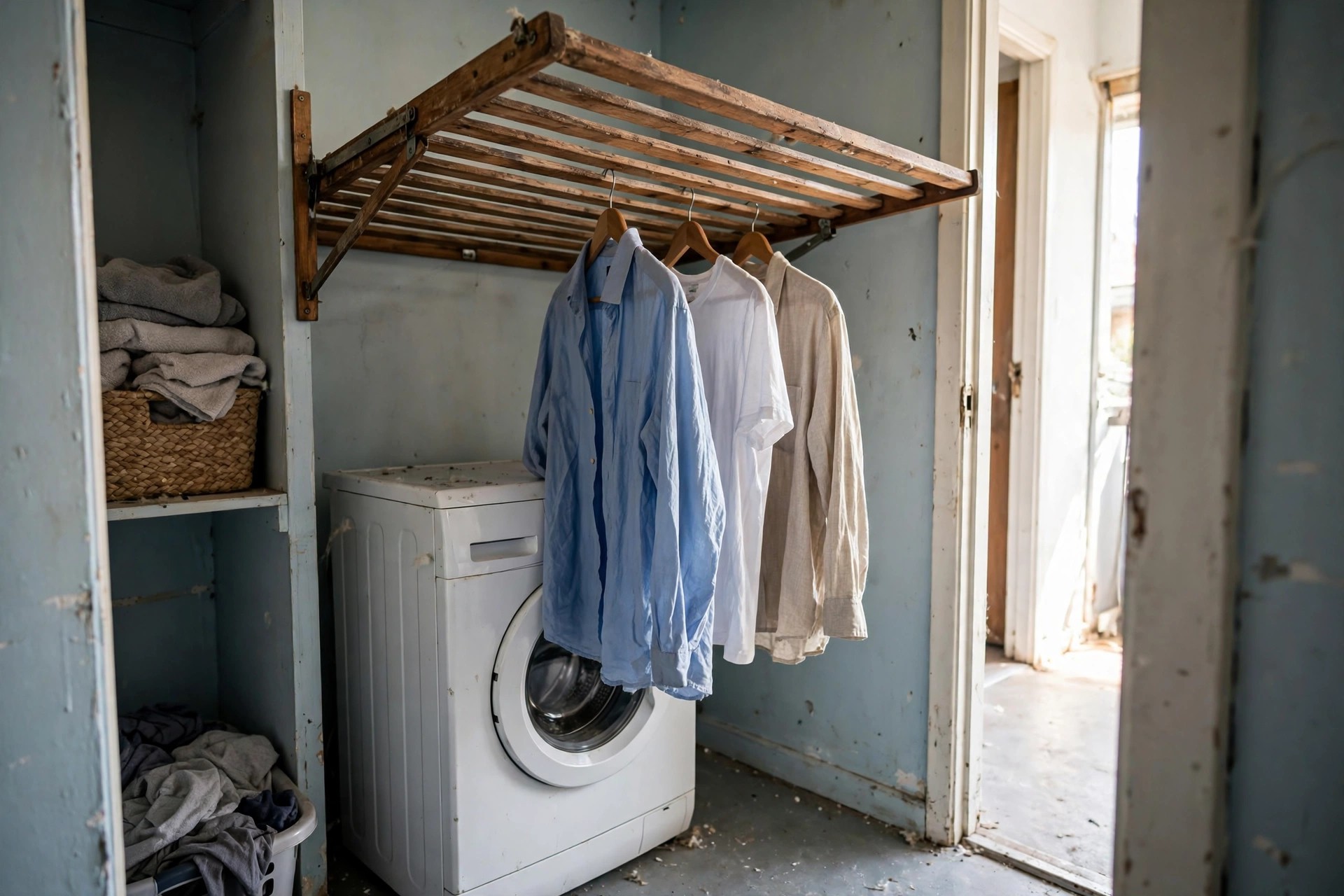
Not everything can be tumble-dried, and apartment dwellers rarely have floor space for a standing airer.
A wall-mounted folding rack solves it: fixed above the machines or on the closet door, it pulls down for shirts, knitwear and delicates, then folds flat so the doors still close. Position it where air can move, and space items out so they dry.
A simple rail under a high shelf does the same job. Either way, damp laundry stays out of the living room, which alone makes a small apartment feel calmer.
10. Turn One Wall Into a Pegboard for Supplies

A pegboard turns a flat wall into flexible, visible storage. Hang the tools that usually vanish into a jumble: the lint brush, scissors, a spray bottle of stain treatment, pegs in a small basket, mesh bags for delicates, a hook for the steamer.
Everything is visible at a glance, and hooks move in seconds as supplies change. Fix it to battens so hooks sit clear of the wall, heaviest items low. Renting? A panel on strong removable hooks gives the same order without the holes.
11. Squeeze a Small Utility Sink Into a Wide Closet

If your closet is wide enough — some were built for side-by-side machines plus storage — a small utility sink transforms what the space can do. Hand-washing delicates, soaking stained shirts and filling a mop bucket all stop happening in the kitchen or bathroom sink.
A compact sink beside the washer, plumbed by a professional, needs surprisingly little width, and a skirted cabinet under it hides buckets and brushes.
It needs a landlord’s permission and proper plumbing, but in a long-term rental or owned apartment it is the upgrade tiny-laundry owners praise most.
12. Choose Louvred Doors So the Closet Can Breathe
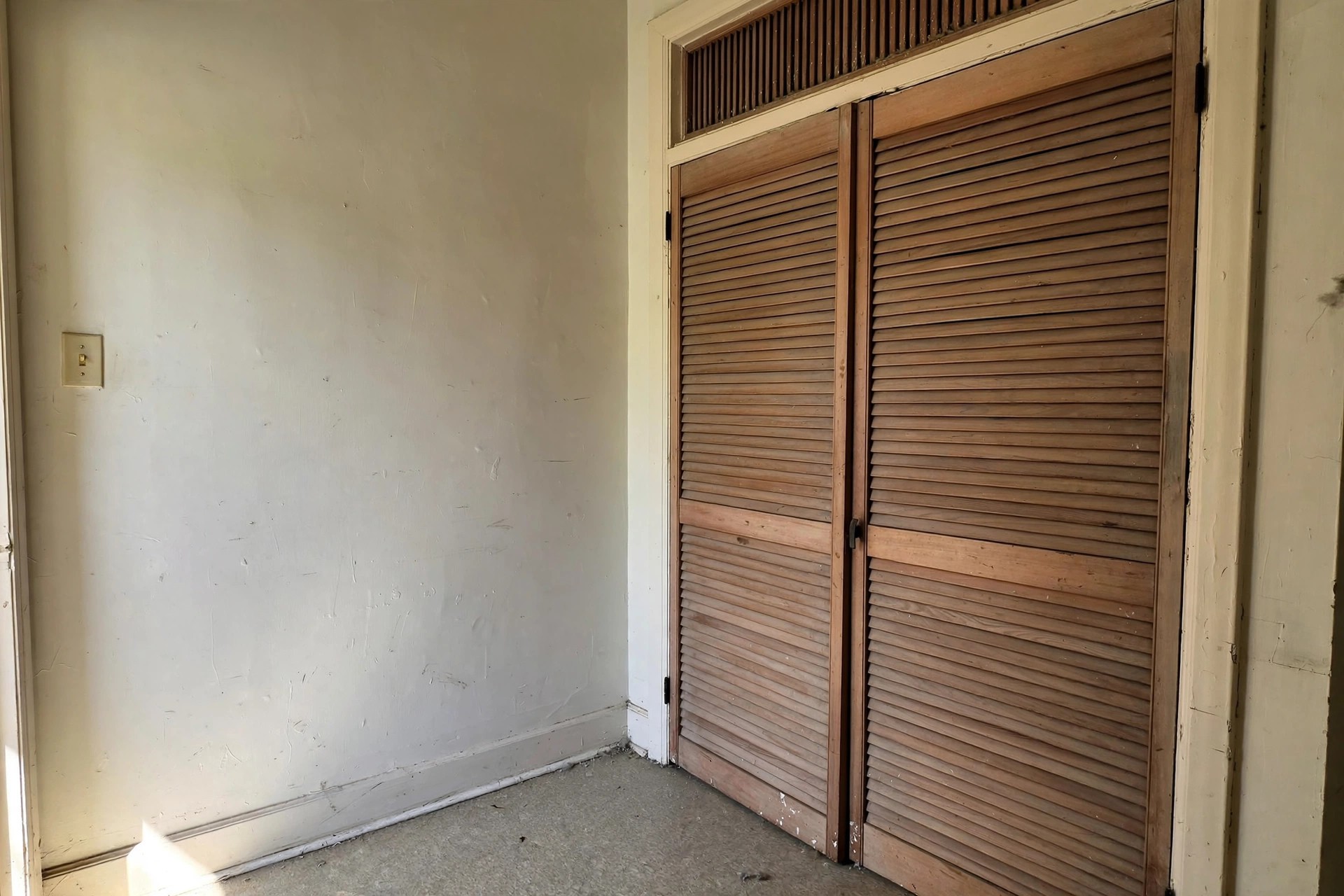
Dryers make heat and moisture, and a sealed closet traps both — so doors matter. Louvred doors — or solid doors with a vent fitted low or high — let air circulate, so the closet stays fresher and the dryer works as it should.
Louvres also read as intentional joinery rather than a utility afterthought. If new doors are not an option, leave solid doors ajar after a drying cycle.
Never crowd the closet against the dryer: airflow is a safety matter, not a styling choice, and vents should stay unblocked and lint-free.
13. Paint It Light and Bright So It Feels Bigger

Most laundry closets have no window, so colour and light do all the work of making the space feel clean and bigger.
Warm white or a pale neutral on walls and shelves bounces whatever light you add, and shows up splashes and lint so the closet stays genuinely cleaner. Keep the palette tight: light walls, natural baskets, one accent colour in a curtain or labels.
For bolder contrast done well, notice how the white oak and black kitchen ideas pair pale wood with dark accents; the same balance works in miniature here, with black hooks and basket labels against white walls. Satin paint wipes down best where detergent drips.
14. Decant Supplies Into Jars on a Countertop Tray

Manufacturer packaging is loud, bulky and mismatched. Decanting powder, pods and pegs into clear glass or ceramic jars instantly calms a shelf — and you can see at a glance what is running low.
Group the jars on a tray so the whole kit lifts out in one move for a deep clean. Label every jar, and keep the original safety and dosage information in the closet or photographed on your phone.
Store chemicals sealed, high up or behind a latched door, out of reach of children and pets.
15. Hide a Hallway Alcove Laundry Behind Full-Height Doors
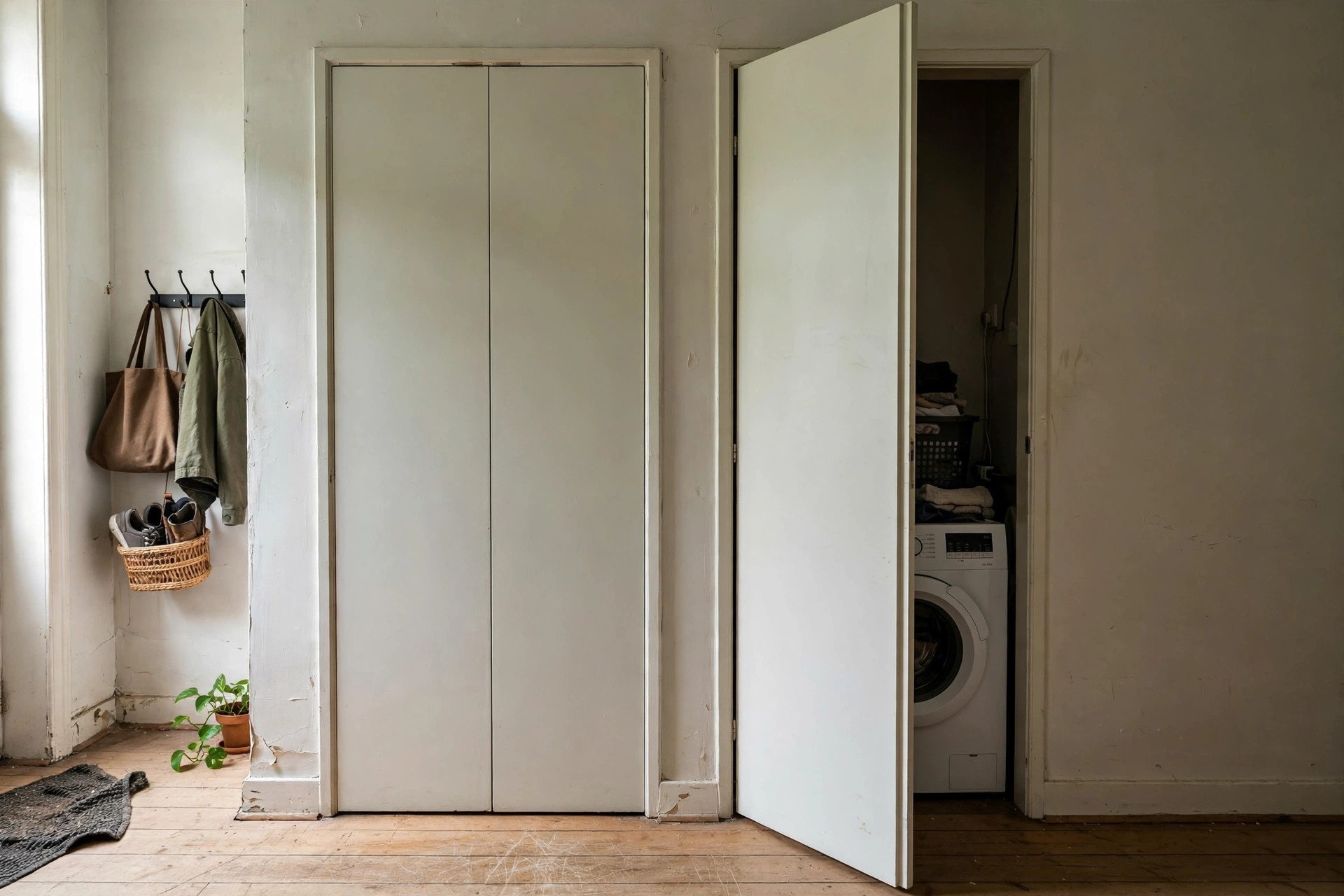
Some apartments give you no closet at all — just a hallway alcove where the machines stand in the open.
Full-height doors are the answer: a pair of simple flat doors, or one wide door on a track, turns the alcove into what reads as a hallway cupboard, and the machines disappear between washes.
Inside, use the ideas above in miniature — shelf over the machines, slim cart in the gap, rail for hang-dry pieces — and match door colour and handles to the hallway. Measure the washer door swing and hose access first.
Common Mistakes to Avoid
1. Blocking ventilation and access. A packed closet that starves the dryer of airflow, buries the shut-off valves, or stops the machines being pulled out for repair is a hazard dressed as organisation.
Leave the specified clearances, keep vents clear of lint, and store nothing that must be moved before a machine can be serviced.
2. Storing everything the home owns in the laundry closet. The moment the vacuum, the toolbox and the spare bedding move in, the laundry stops working. A laundry closet holds laundry things; general storage belongs elsewhere.
3. Forgetting light and labels. An unlit, unlabelled closet returns to chaos no matter how good the shelves are. A strip light for spotting stains, and a label on every basket and jar, are the two cheapest fixes — and the most often skipped.
Frequently Asked Questions
How do I fit a laundry area into an apartment with no laundry closet?
Look for any alcove, deep cupboard or stretch of hallway near existing plumbing — beside the bathroom is usually easiest. A stacked pair needs only a closet-sized footprint.
Hide it behind full-height doors or a curtain, add one shelf and a slim cart, and you have the same system described here.
Can I stack any washer and dryer in a closet?
No — only machines designed to be stacked, with the manufacturer’s stacking kit, should be stacked, and the closet needs the clearances and venting the manuals specify. If yours cannot stack, side-by-side machines under a folding counter use the space differently.
When in doubt, ask an installer to check the setup.
How do I stop a laundry closet smelling musty?
Airflow is the main fix: louvred or vented doors, space around the machines, and leaving the washer door and drawer open between washes so they dry out.
Wipe the door seal regularly, never leave damp laundry sitting in a closed closet, and keep an open box of bicarbonate of soda on a shelf.
What should I store in a laundry closet — and what should I keep out?
Keep the wash-day kit: detergent, stain treatments, delicates bags, pegs, a lint brush, cloths and hampers. Keep out anything flammable, anything unrelated that eats working space, and food or paper goods that suffer in a steamy cupboard.
Chemicals stay labelled, sealed and out of reach of children and pets.
Final Thoughts
A laundry closet will never be the biggest room in an apartment, but it can be one of the best organised.
Plan it in zones, give every stage of the wash a home, and let doors and walls work as hard as the shelves.
And a cupboard you apologise for becomes a calm little workspace you barely think about, which for laundry is the highest praise there is.


