

15 Pet Feeding Station Ideas for Dog and Cat Owners
A pet feeding station sounds like a small thing until you live without one. Bowls drift across the kitchen floor, kibble scatters under the cabinets, the water dish gets kicked on the way to the kettle, and somehow there is always a damp patch exactly where you step in socks. One fixed, tidy home for food and water fixes all of that.
The good news is that a feeding station does not need a renovation or a spare room. It can be a drawer, the end of an island, a mudroom corner, or a single stand and mat. Pets share almost every part of the house — from the kitchen to the spaces covered in our balcony decor ideas for pet owners — so their corner deserves the same thought.
Below are fifteen pet feeding station ideas for dog and cat owners, from built-in cabinetry to a simple crate-style setup you can put together in an afternoon. Start with the guide below, then pick the idea that fits your space and pet.
This post contains affiliate links. If you buy through them, we may earn a small commission at no extra cost to you. See our Affiliate Disclosure.
How to Choose and Set Up a Pet Feeding Station, Step by Step
First, watch where the mess gathers. The best spot is quiet, away from heavy foot traffic, but close to the kitchen so filling and washing bowls stays easy. Avoid placing food beside a litter tray, a slammed door, or a radiator, and leave room for your pet to stand and turn. Measure before buying — width, depth and door swing — and check the floor: a wipeable surface, or a protective mat, saves daily mopping. Think about storage too, because food, treats and a scoop need a home nearby; our kitchen storage ideas for apartments with no pantry show how much a shelf or basket can hold. Finally, consider height. Needs vary by size, age and health, so if you are unsure what height suits your animal, a quick conversation with your vet is the sensible route.
Once the spot is chosen, build in layers. Start with the base — a washable mat or low tray with a non-slip backing — sized to catch splashes and stray kibble on every side. Add sturdy, easy-to-wash bowls in wide, stable shapes that resist tipping; keep a second set so one can be washed while the other is used. Then add storage within reach: a lidded food container, a hook for the scoop, and a cloth. Live with it for a week before fixing anything permanently. Most households adjust the position once, and that trial turns a good-looking station into one that genuinely makes mealtimes calmer.
1. Build a Feeding Station Into a Bottom Drawer
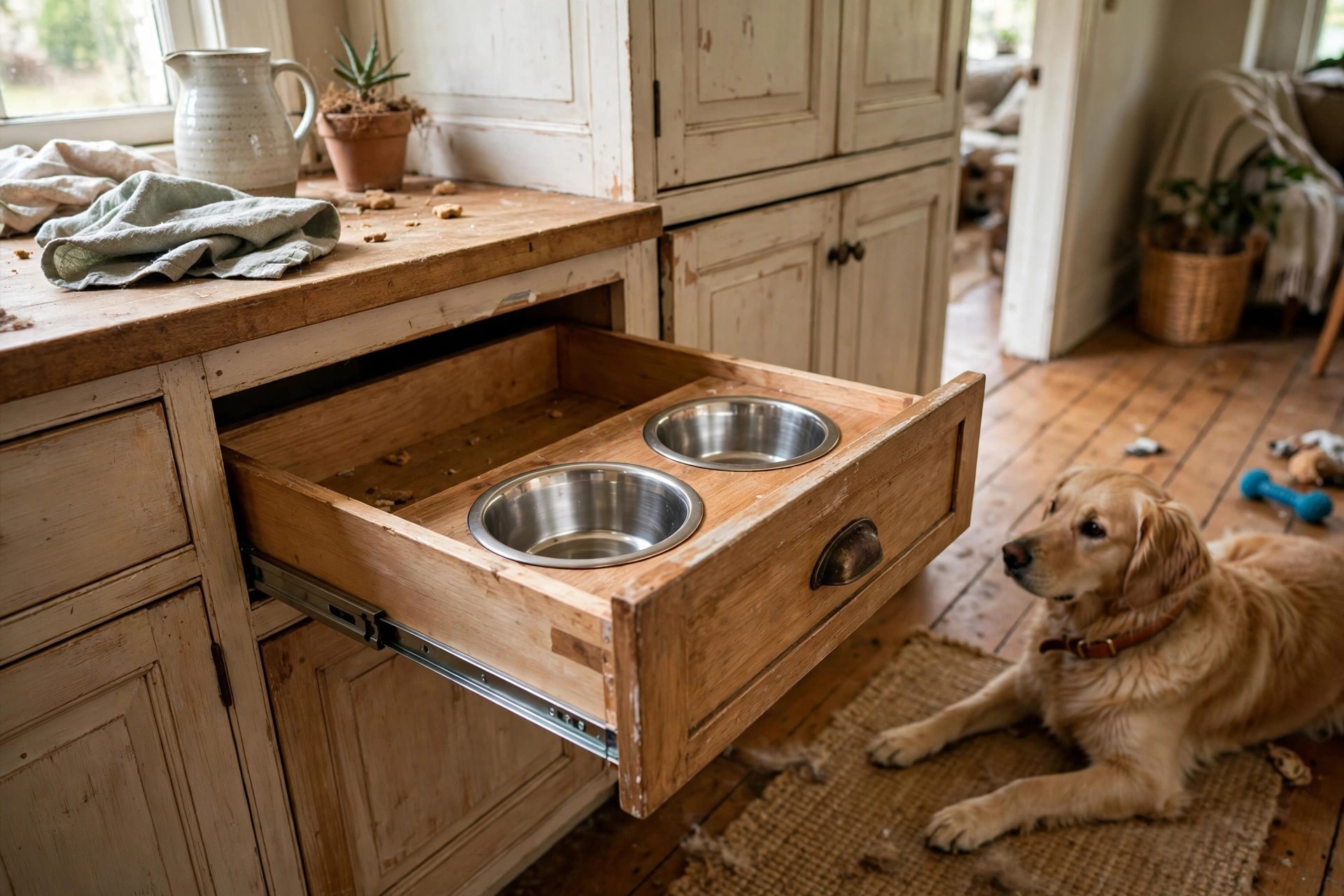
The bottom drawer of a kitchen run can be converted into a feeding station by fitting a panel with two bowl cut-outs into its top. Open it at mealtimes, close it afterwards, and the bowls disappear completely — a gift in a small kitchen or an open-plan room. Choose removable bowls that lift out for washing, and add a thin washable liner beneath them to catch drips before they reach the drawer box.
2. Choose a Raised Wooden Stand With Stainless Bowls
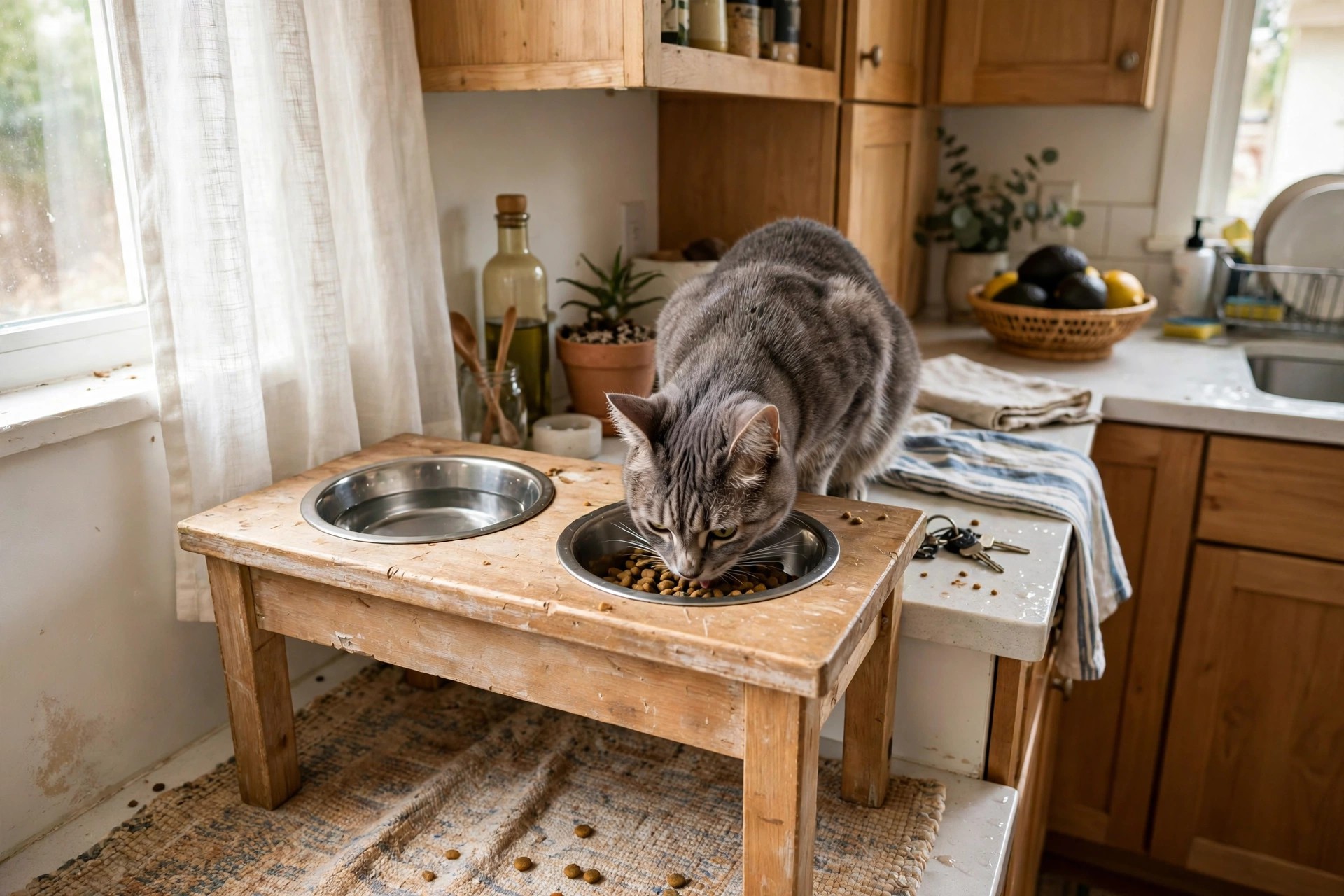
A simple raised stand is the easiest upgrade from bowls on the floor. Look for solid, stable construction — a stand that rocks or slides will be pushed around the room within a week — and bowls that sit securely in their cut-outs rather than rattling at every nudge. Wood suits most kitchen styles, from farmhouse to modern,. Place it on a washable mat to protect the floor beneath, and check the height against your own pet rather than a generic size chart; comfort at mealtimes is individual.
3. Use the End of the Kitchen Island

The short end of a kitchen island is often wasted space, which makes it a natural home for a feeding station. A shallow recess, a low open shelf, or simply a defined mat zone at the island’s end keeps bowls out of the main walkway while staying close to the sink and food storage. Make sure there is still comfortable room to walk past when your pet is eating.
4. Claim a Mudroom Corner
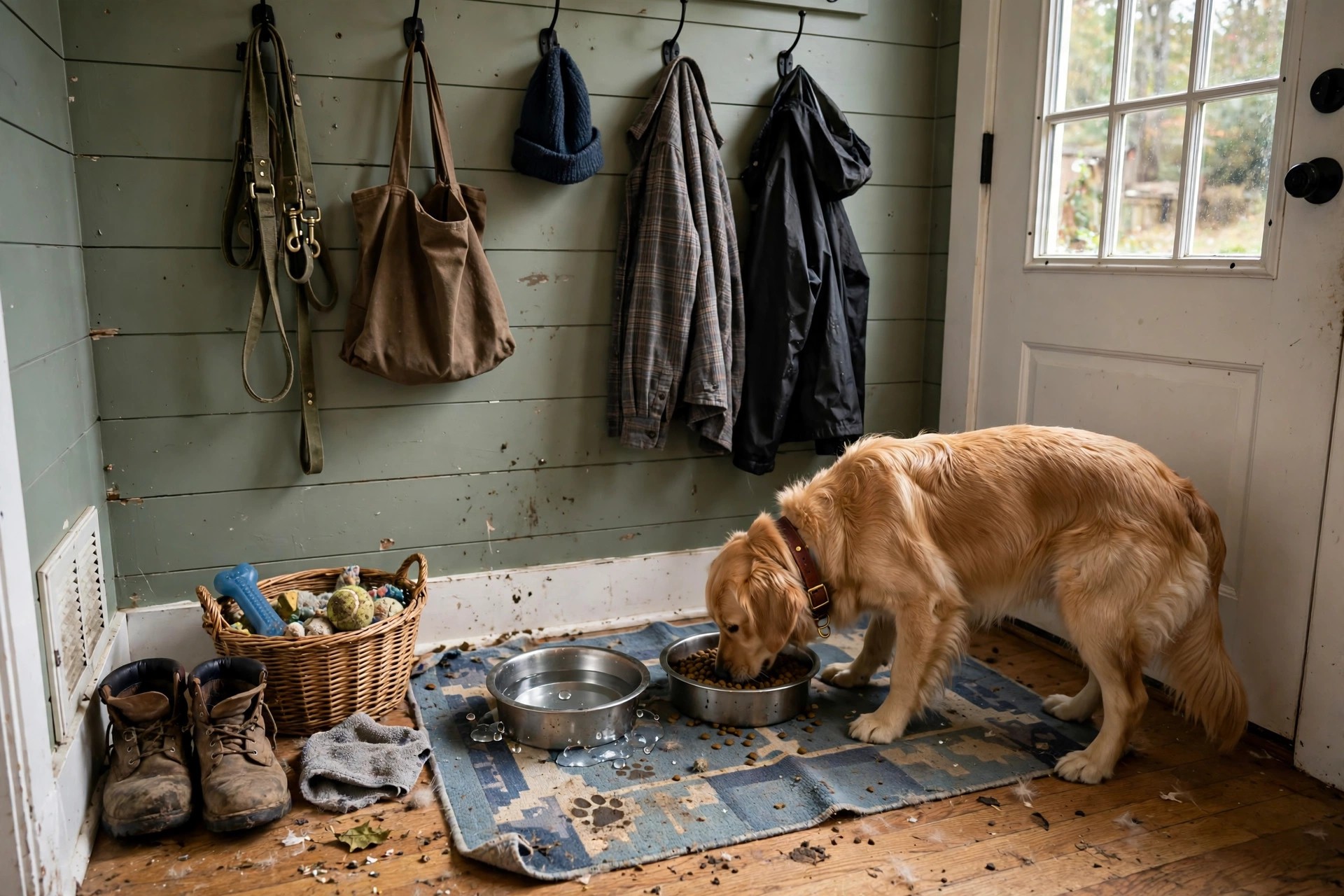
If your pet comes in through the back door with muddy paws, feeding them in the mudroom keeps both mess and food smells out of the kitchen. A corner with a washable mat, sturdy bowls and a lidded food bin nearby is all it takes; add hooks above for leads and a towel, and the whole pet routine lives in one place. Mudrooms and laundry spaces often work together, and our laundry closet ideas for apartments show how even a compact utility corner can be organised this way.
5. Fit a Pull-Out Cabinet Station

A pull-out station works like the drawer idea but uses a full base cabinet: a low sliding shelf holds the bowls, gliding out for meals and back in behind a standard cabinet door afterwards. It is a neat option if you are planning a kitchen refresh anyway, because a cabinet-maker can adapt an existing unit without changing the layout. Fit a raised lip or non-slip surface to the shelf so bowls stay put while it moves, and keep the food container in the same cabinet so everything travels together.
6. Create a Tiled Alcove With Water on Tap

An unused alcove — beside a fireplace, under a staircase window, or in a utility nook — can become a dedicated feeding alcove with one practical addition: tiles. Tiling the floor patch and the wall behind the bowls turns splashes into a ten-second wipe-down, and lets you add colour or pattern in a small, low-risk dose. If the alcove is near existing plumbing, some owners add a small tap for filling water bowls in place, though a simple jug filled at the sink works just as well.
7. Turn a Storage Bench Into a Feeding Hub

A low storage bench does double duty: food, treats and spare bowls hide inside the hinged seat, while the bowls themselves sit on a mat in front of it. It suits hallways, boot rooms and kitchen corners where a seat is useful too — somewhere to sit while pulling on shoes, with everything for mealtimes underneath. Choose a bench with a wipeable finish and a lid that stays safely open or closes gently.
8. Mount a Folding Station on the Wall

In a truly tiny kitchen, floor space is too precious to give away permanently. A wall-mounted folding station — a hinged shelf with bowl cut-outs that folds down at mealtimes and flat against the wall afterwards — solves the problem elegantly. Fit it into solid wall or studs, at a height that suits your pet, and pair it with a slim washable mat you can roll up and store in a cupboard. When folded away, a simple painted finish or a framed front can make it almost invisible.
9. Tuck a Station Under the Stairs

The space under the stairs is often awkward for people but perfectly sized for a pet. A feeding station there — bowls on a washable base, food stored in a lidded container, perhaps a bed alongside — gives your animal a den-like corner of their own and frees the kitchen entirely. Add soft, warm lighting if the nook is dim, and make sure ventilation is reasonable and the area stays dry.
10. Style an Automatic Feeder Corner Neatly
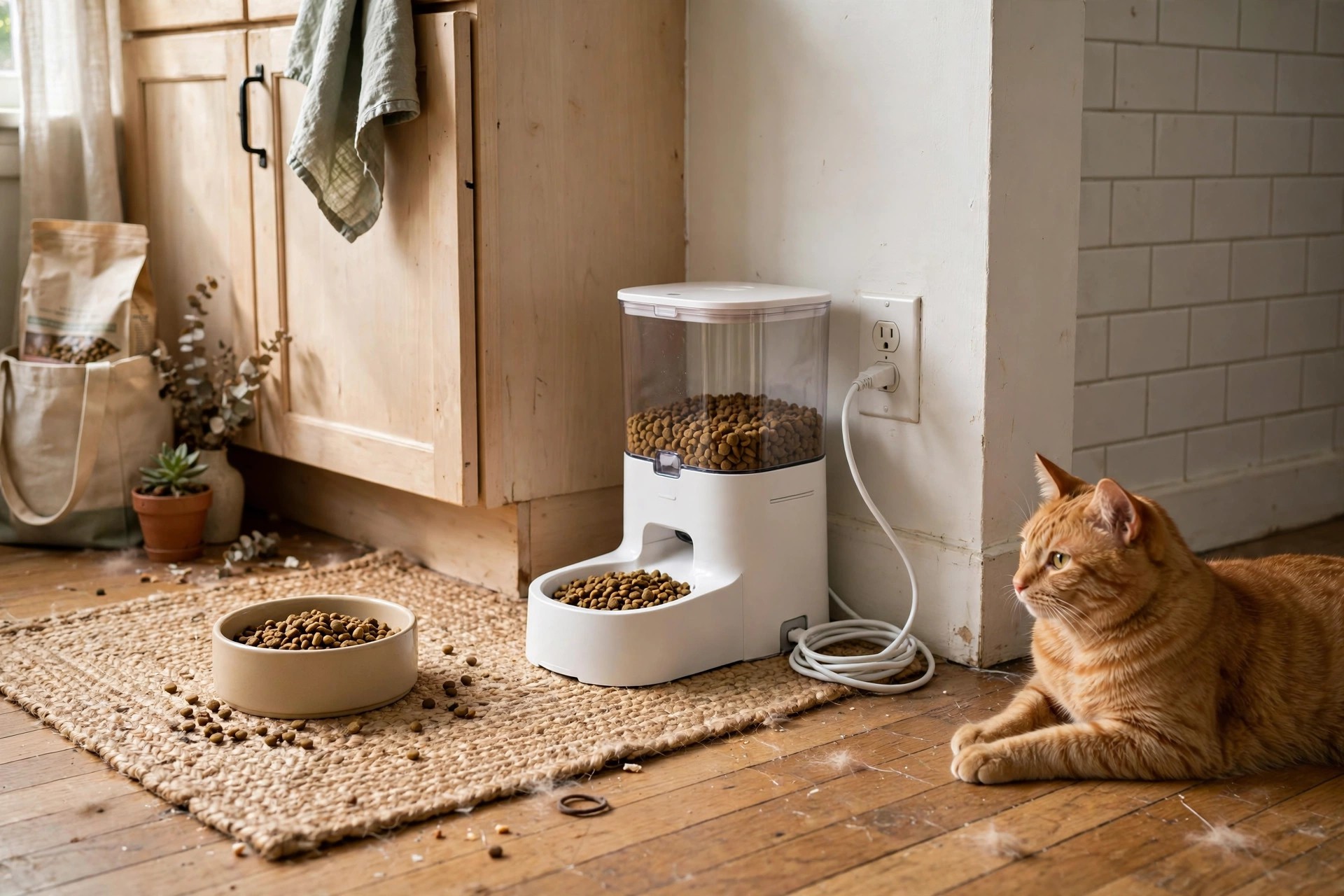
An automatic feeder can look like a piece of tech that wandered into the kitchen by accident — or like part of a planned station. The difference is the styling around it: a washable mat beneath to define the zone, a small basket or box to hide the spare food bag, and the cable routed tidily along the skirting board rather than trailing across the floor. Place a separate, generous water bowl beside it and keep it topped up and washed just as you would any other.
11. Give Cats a Sideboard Station Away From Dogs

In a mixed household, cats often prefer to eat up high and undisturbed. A sideboard, a wide shelf or the top of a low bookcase in a quiet room makes a calm cat-only station that dogs cannot reach. Add a non-slip mat under the bowls to protect the furniture surface, and a small step, stool or nearby chair if your cat would appreciate an easier route up as they get older. This separation can make mealtimes more relaxed for everyone; our blue living room ideas for pet owners show how pet-friendly zones can blend into a room’s scheme rather than fight it.
12. Set Up a Double Station for Two Dogs

Feeding two dogs side by side works best with a little deliberate spacing. Use a long mat or a double-width stand, place each dog’s bowls as a clear pair, and leave a comfortable gap between the pairs so each animal has its own patch. If one eats faster, a small divider panel or simply feeding at a slight angle can help keep mealtimes peaceful — and if tension ever appears, separate spots in the same room are always an option. Families planning pet-friendly rooms will find more layout thinking in our brown living room ideas for families with kids and pets.
13. Start With a Washable Mat and Splash Guard
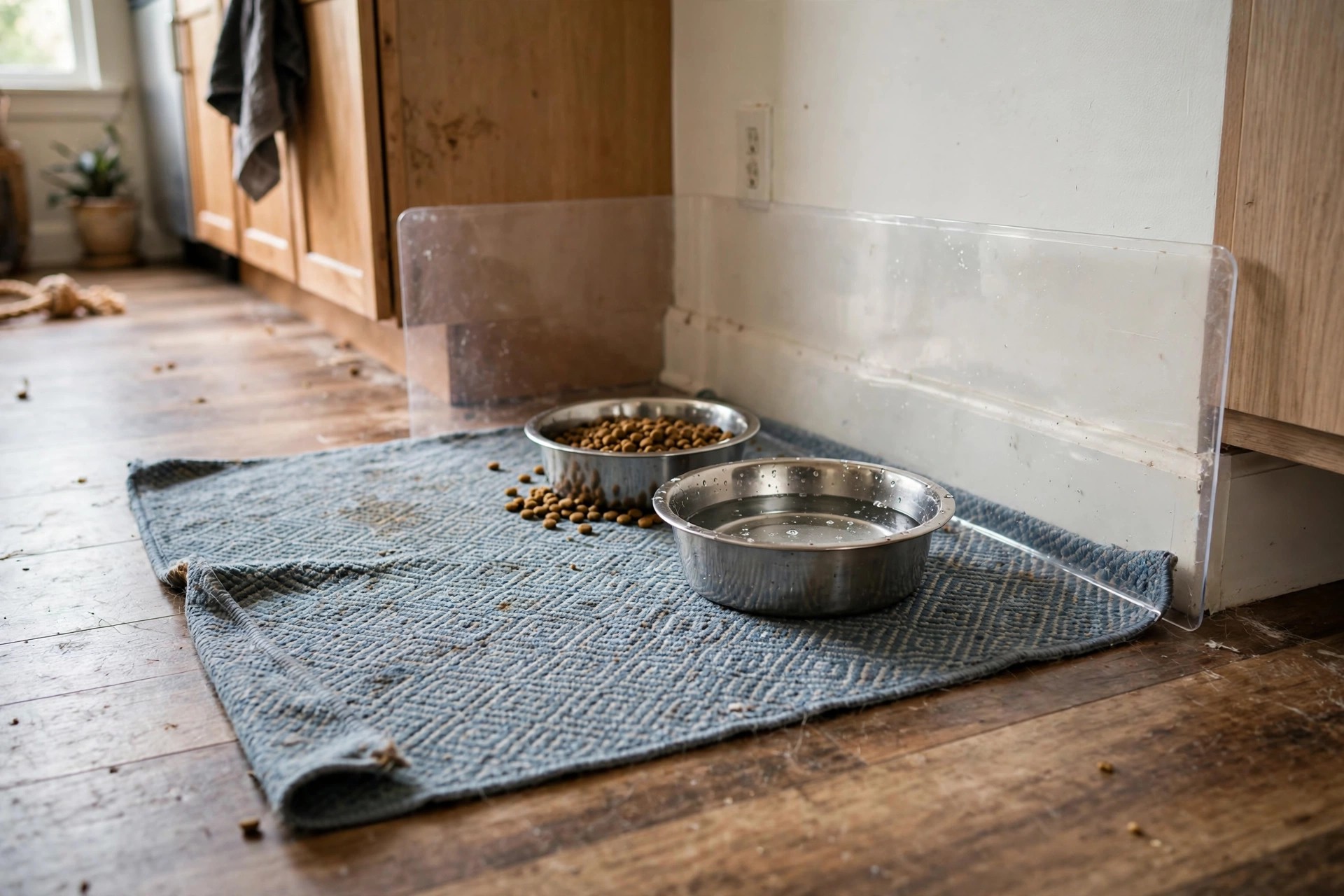
Sometimes the best station is the simplest: a generously sized washable mat plus a low splash guard along the wall behind the bowls. The mat catches kibble and water before they reach the floor, the guard protects paintwork from the shake-and-splash that follows every drink, and both can be washed or wiped in minutes. This setup suits renters and first-time owners alike, costs little to try, and can later become the base layer under a stand or bench.
14. Hang a Station Inside the Pantry Door
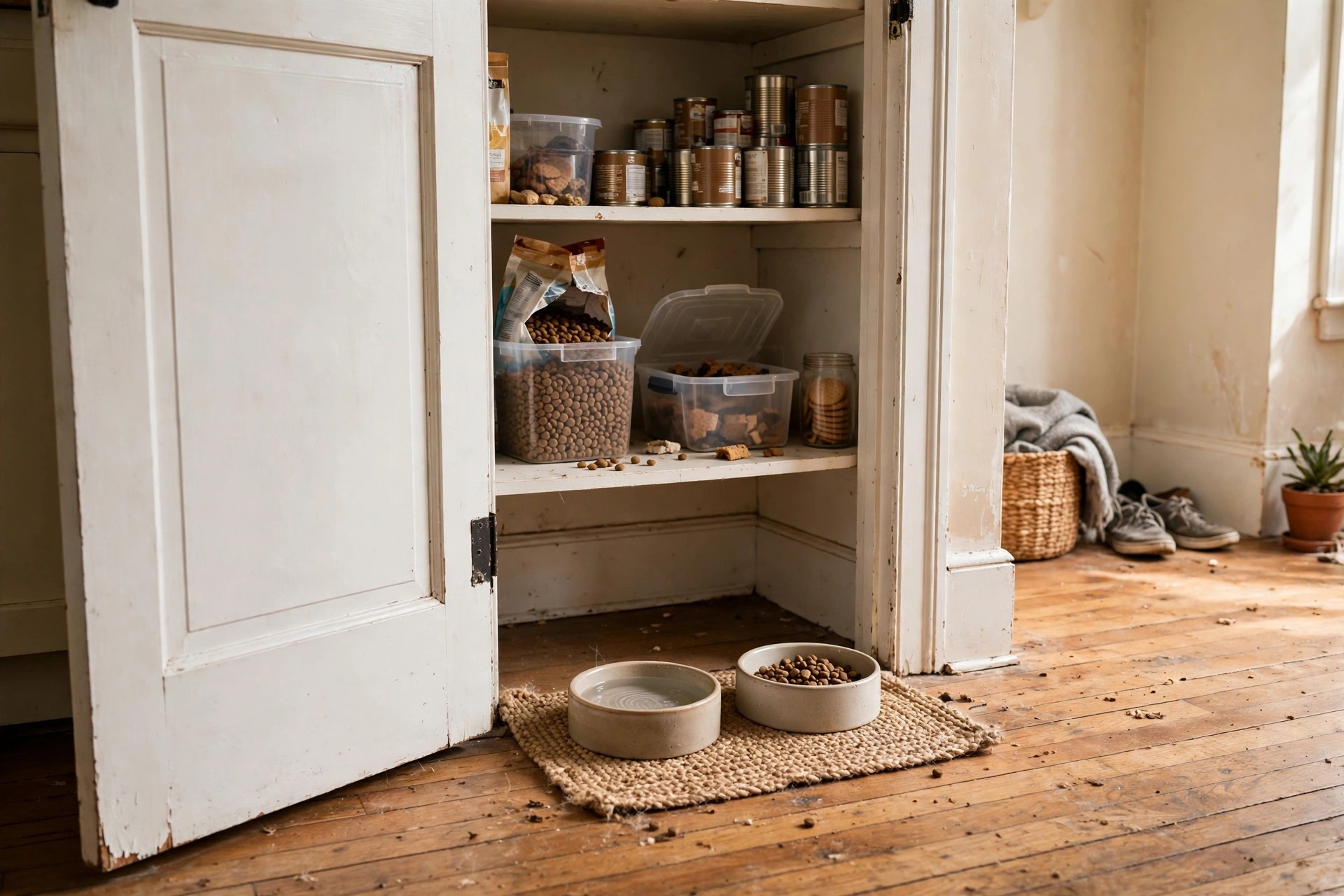
The inside of a pantry or utility cupboard door is prime, forgotten storage. Slim over-door racks or shallow mounted pockets can hold treats, a scoop, spare bowls and a cloth, while the bowls themselves sit on a mat directly in front of the cupboard where the food lives. The result is a station with almost no footprint: open the door, and everything you need is at hand; close it, and the kitchen is clear.
15. Build a Farmhouse Crate-Style Station

For a relaxed farmhouse look, stack or line up sturdy wooden crates to make a low feeding unit: bowls set into a cut-out top on one crate, food and treats stored in another, and a washable mat underneath it all. The crates bring warmth and texture, can be rearranged as your needs change, and move with you if you move house. Sand any rough edges smooth, fix stacked crates together securely so nothing can topple, and line the storage crate if you keep food in its original bag.
Common Mistakes to Avoid
1. Putting the bowls in the busiest walkway. A station beside the main door or directly in front of the sink guarantees kicked bowls, splashed floors and a pet trying to eat while people step around them. Choose a quiet edge of the room instead, even if it is a few steps further from the food cupboard.
2. Choosing looks over washability. Untreated wood that stains, fabric mats that cannot be washed, and intricate stands with unreachably tight corners all look lovely for a fortnight and grubby forever after. Every surface at a feeding station will meet food and water daily, so pick materials you can wash, wipe or replace easily.
3. Forgetting the water. Food bowls get all the attention, but water is refilled and spilled far more often. Give water the same planning: a stable, generous bowl, a mat that extends beneath it, and a spot close enough to a tap that refreshing it never feels like a chore worth skipping.
Frequently Asked Questions
Where is the best place for a pet feeding station?
A quiet, low-traffic corner of the kitchen, mudroom or utility space usually works best — away from litter trays and busy doorways, on a wipeable floor or protective mat, and close enough to food storage and a tap that filling and cleaning stay effortless.
Should I use a raised feeder?
Many owners find a raised stand tidier and more comfortable for their pet, but the right height and style depend on the individual animal’s size, age and health. Measure your pet, start with a modest height, and ask your vet for guidance if you are unsure or your pet has any existing condition.
How do I keep the feeding area clean?
Build cleaning into the setup: a washable mat under everything, bowls that are easy to wash and kept in rotation, a lidded container for food, and a cloth stored at the station for daily splashes. A quick wipe after meals and a regular wash of mat and bowls will keep the corner fresh.
How can I feed cats separately from dogs?
Height and access are the simplest tools. A cat station on a sideboard, shelf or in a room the dog cannot enter lets cats eat calmly at their own pace. Keep the cat’s water in the same separate spot, and make sure older cats still have an easy, comfortable route up.
Final Thoughts
The best of these pet feeding station ideas is simply the one your household will keep tidy without thinking about it. Whether that is a drawer that hides the bowls away, a bench that swallows the food bin, or a humble mat and splash guard in the right corner, a defined mealtime spot makes the whole room calmer. Measure carefully, choose washable everything, and let your pet’s habits — not a photograph — decide the final position.


