

15 Balcony Decor Ideas for Pet Owners With Dogs And Cats
A balcony can be much more than an outdoor sitting area when you share your home with a pet. With the right arrangement, it can become a comfortable little retreat where you enjoy your morning coffee while your dog relaxes beside you or your cat watches the activity outside.
Decorating a pet-friendly balcony does require a little more thought than decorating a space used only by people. Furniture needs to be stable, fabrics should be reasonably easy to clean, plants need careful consideration, and open edges require particular attention. Cats can be seriously injured by falls from balconies, so an attractive setup should never replace appropriate safety measures.
The good news is that pet-friendly design does not have to look like a pet store. You can create a sophisticated outdoor space using comfortable furniture, attractive washable textiles, organized storage, greenery, and a few features specifically chosen for your companion.
These 15 balcony decor ideas for pet owners focus on creating a space that works for both humans and animals without sacrificing the appearance of your home.
1. Create a Dedicated Pet Lounge Corner
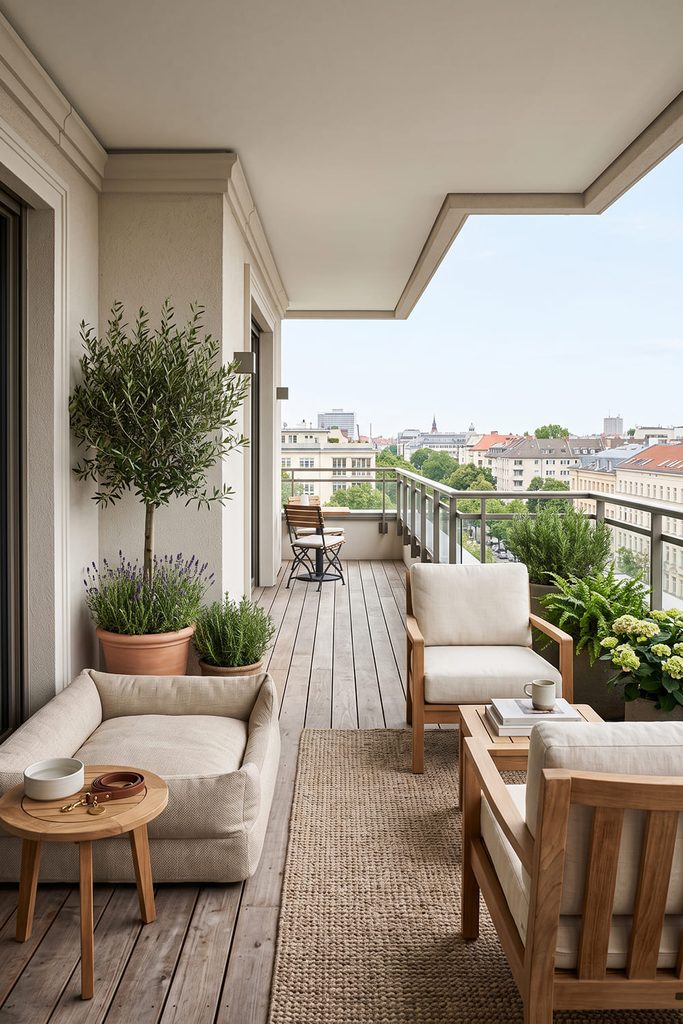
Give your pet a specific place to relax instead of allowing the entire balcony to become their sleeping area.
A comfortable outdoor pet bed can sit beside your main chair or sofa, creating a small lounge corner that feels intentional. Choose a bed with a removable, washable cover and a shape that fits comfortably against a wall.
For a more coordinated look, match the bed’s color to your outdoor cushions. Cream, beige, gray, olive, and muted brown can blend naturally into a balcony decorated for adults.
Add a small side table or plant nearby, but leave enough open floor around the bed so your pet can enter and leave easily. The result is a balcony where your pet has its own place while the rest of the space remains visually organized.
2. Use a Washable Outdoor Rug
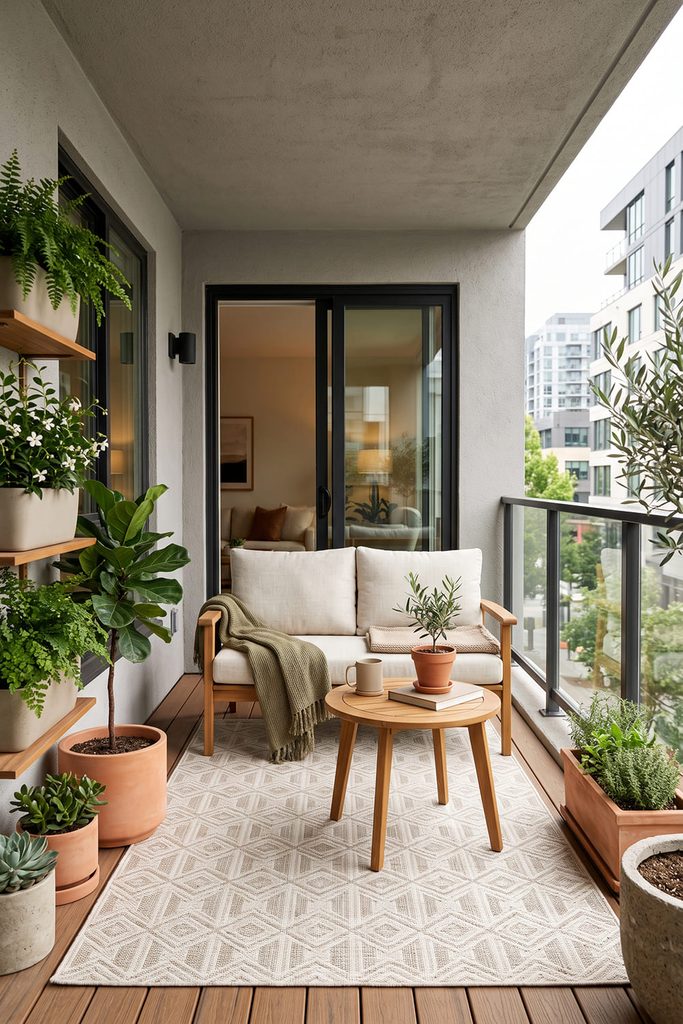
An outdoor rug can make a balcony more comfortable for pets while visually defining the seating area.
Choose a low-pile outdoor rug that can be cleaned relatively easily. A subtle geometric pattern can be particularly practical because it is less likely to show every small mark between cleanings.
Place the rug underneath your main seating arrangement, leaving a border of visible flooring around the edges. For pets that like to lie on cool floors, do not cover the entire balcony with rugs. Having both soft and uncovered surfaces gives your pet different places to settle.
Neutral shades such as taupe, charcoal, beige, and muted blue can work well with most outdoor furniture while keeping the space looking sophisticated.
3. Build a Pet-Friendly Reading Nook
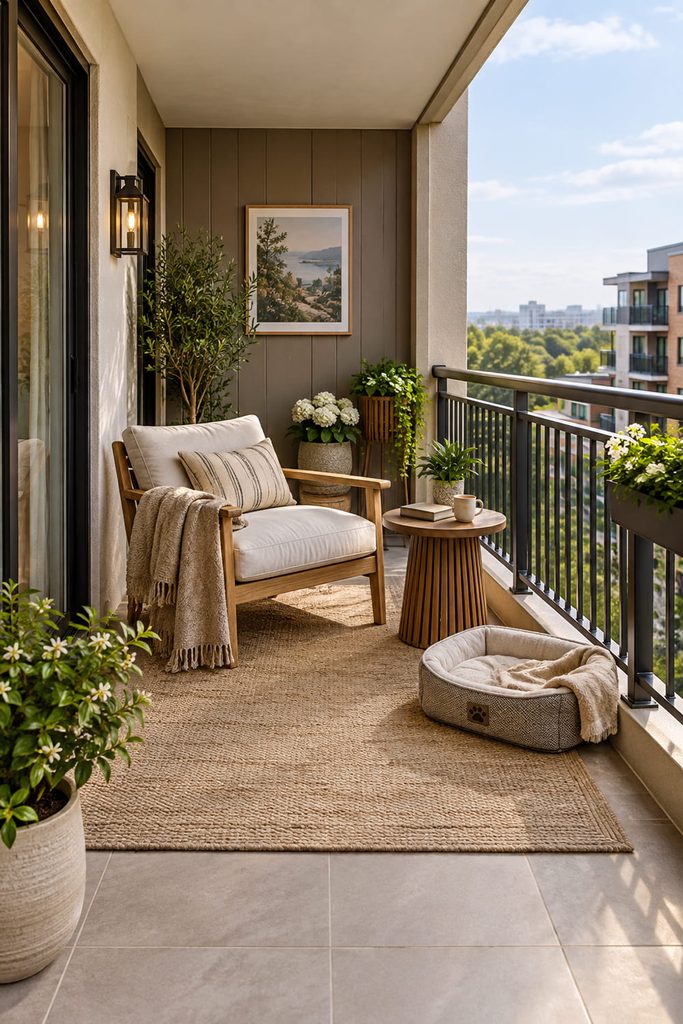
A balcony reading nook can work beautifully for both you and your pet. Place one comfortable chair beside a small outdoor table, then position your pet’s bed or cushion nearby. This allows your companion to stay close while you read without needing to share your chair.
A lightweight blanket can be folded over the chair when temperatures drop, while a washable pet cushion provides a dedicated resting surface. Keep the arrangement simple. One chair, one table, one pet bed, and a plant or lantern can be enough.
This setup is especially useful for smaller balconies because it creates a clear purpose without requiring a large sofa or multiple pieces of furniture.
4. Add a Pet-Safe Plant Collection

Plants can make a balcony feel more natural, but pet owners should be selective about what they grow. Some common plants can cause serious problems if pets chew or ingest them. Lilies, sago palms, oleander, tulips, and several other plants are examples that require particular caution.
Instead of choosing plants based only on appearance, research each species before bringing it onto a balcony your pet can access.
Some plants listed as non-toxic to cats and dogs include spider plants, Boston ferns, friendship plants, and certain other species, although individual pets may still experience stomach upset after eating plant material.
Group your chosen plants in stable containers and position them where your pet cannot easily knock them over.
5. Create a Shaded Resting Spot for Your Dog

If your dog enjoys spending time outside, provide a comfortable shaded area rather than leaving the entire balcony exposed to direct sunlight.
A small outdoor canopy, shade umbrella, or covered section can create a cooler resting zone depending on the balcony’s structure and building rules. Place a breathable outdoor pet bed underneath the shade and keep fresh water nearby.
The exact arrangement should depend on your local weather and the amount of direct sunlight your balcony receives. During hot conditions, do not assume that a shaded balcony is automatically safe for a pet.
The decorative goal can remain simple: a neutral bed, a water bowl, one comfortable chair, and a small table can create a tidy outdoor retreat.
6. Use Stable, Heavy Planters
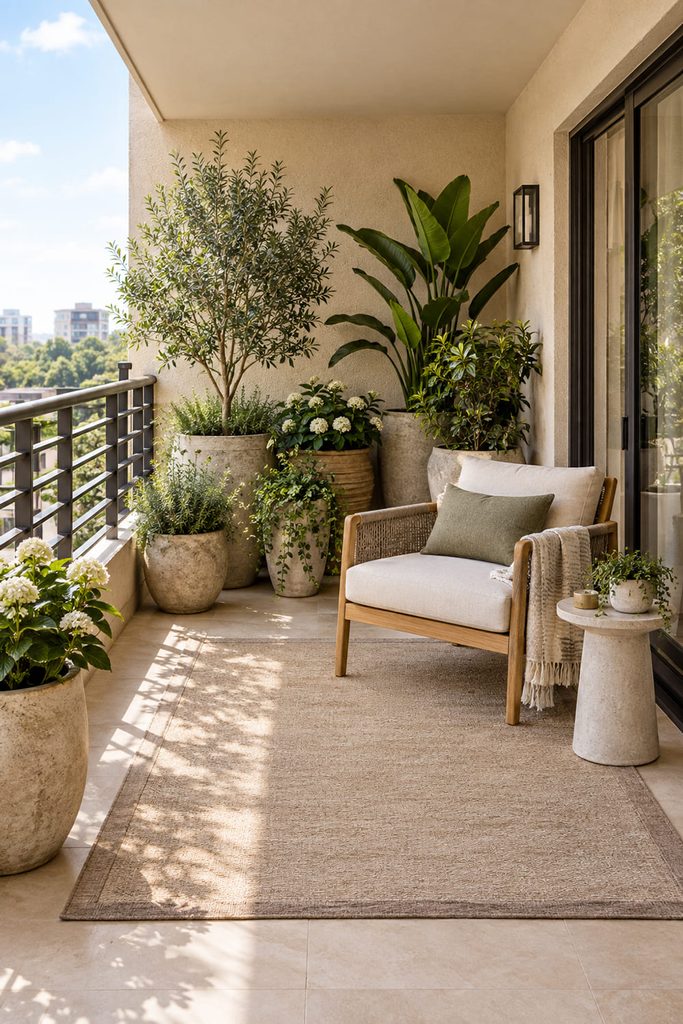
Pet owners know that lightweight decorative objects can quickly become inconvenient when an energetic animal is nearby.
Choose sturdy planters with a stable base rather than very lightweight containers that can easily be pushed over. Group several planters together along one wall or corner instead of scattering them throughout the walking area.
This creates a stronger visual composition while keeping the central portion of the balcony open.
If your pet likes to investigate everything, consider placing plants in locations that are difficult to reach and choosing containers that cannot be easily tipped. Also make sure water drainage is properly managed so excess water does not create slippery flooring or problems below the balcony.
7. Create a Small Dog-Friendly Activity Area
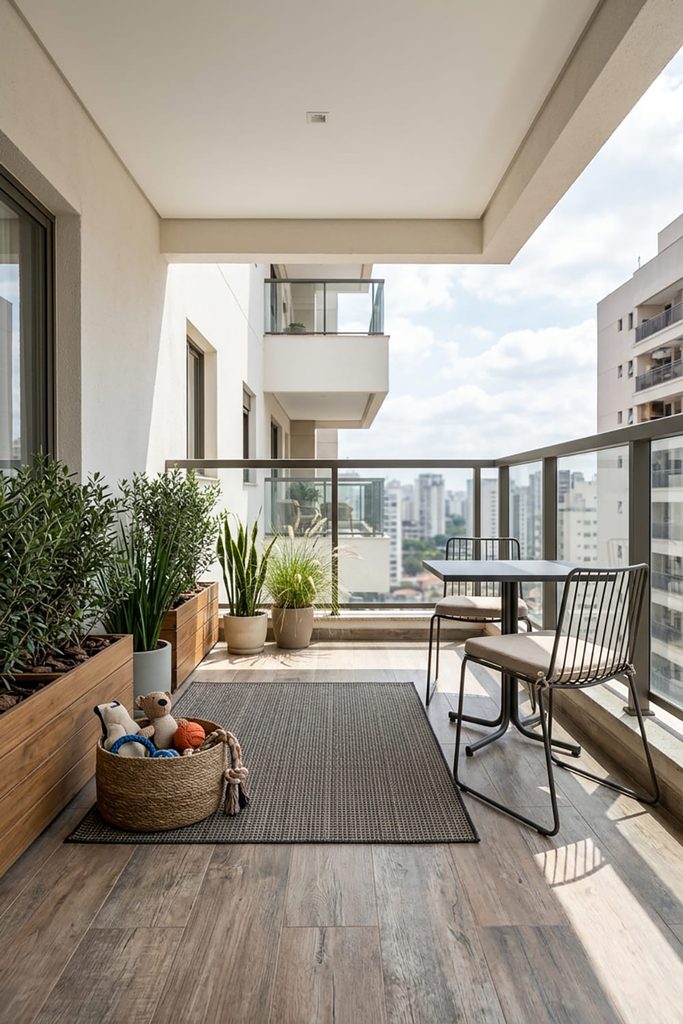
A larger balcony may have enough room for a small activity zone. Leave one section of flooring open and place a few appropriate pet toys or a durable outdoor mat there. The area does not need to be large. Its purpose is simply to give your dog a designated place for gentle activity.
Keep toys organized in a weather-resistant basket or storage container when they are not being used.
Avoid turning the balcony into a crowded playroom. The main seating area should remain comfortable for people, while the pet section can be defined through a mat or subtle change in flooring.
Always supervise your pet outdoors and consider their individual behavior before deciding which activities are appropriate.
8. Install Secure Storage for Pet Supplies
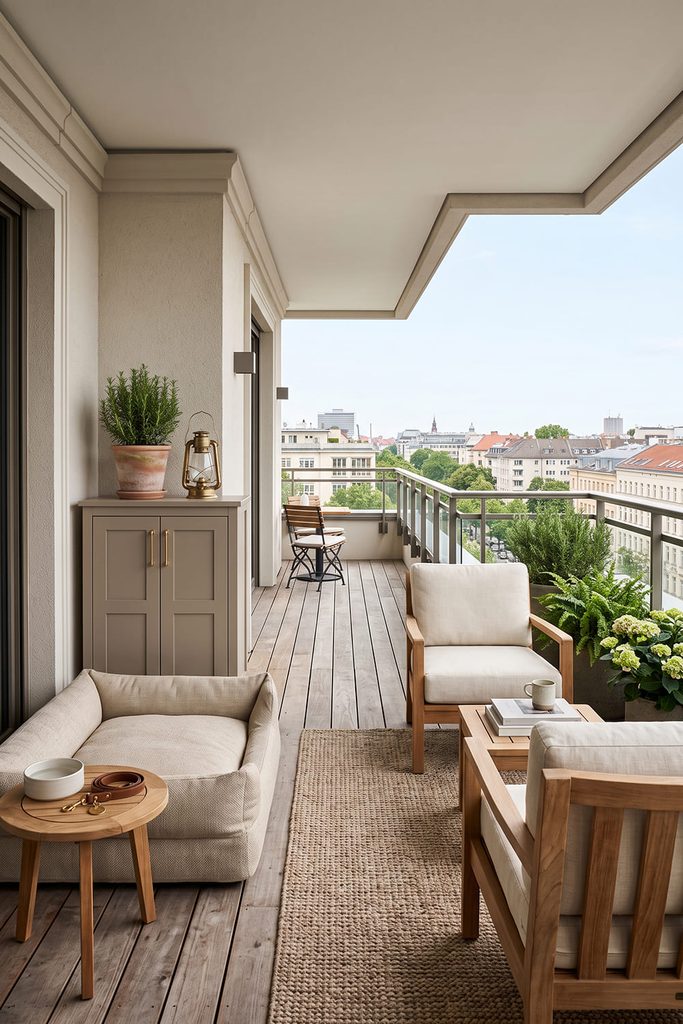
A balcony can become cluttered quickly when you add leashes, toys, towels, grooming supplies, and cleaning products. A narrow weather-resistant storage cabinet can keep these items organized.
Choose a cabinet with doors rather than open shelves if your pet tends to investigate everything. Store potentially harmful products securely and never leave chemicals, fertilizers, pest-control products, or other unsafe substances within reach.
The cabinet can also hold spare cushions and blankets during bad weather. Use the top surface for one or two decorative objects, such as a planter or lantern, so the storage piece becomes part of the balcony design rather than looking like an afterthought.
9. Add a Cozy Pet-Friendly Sofa
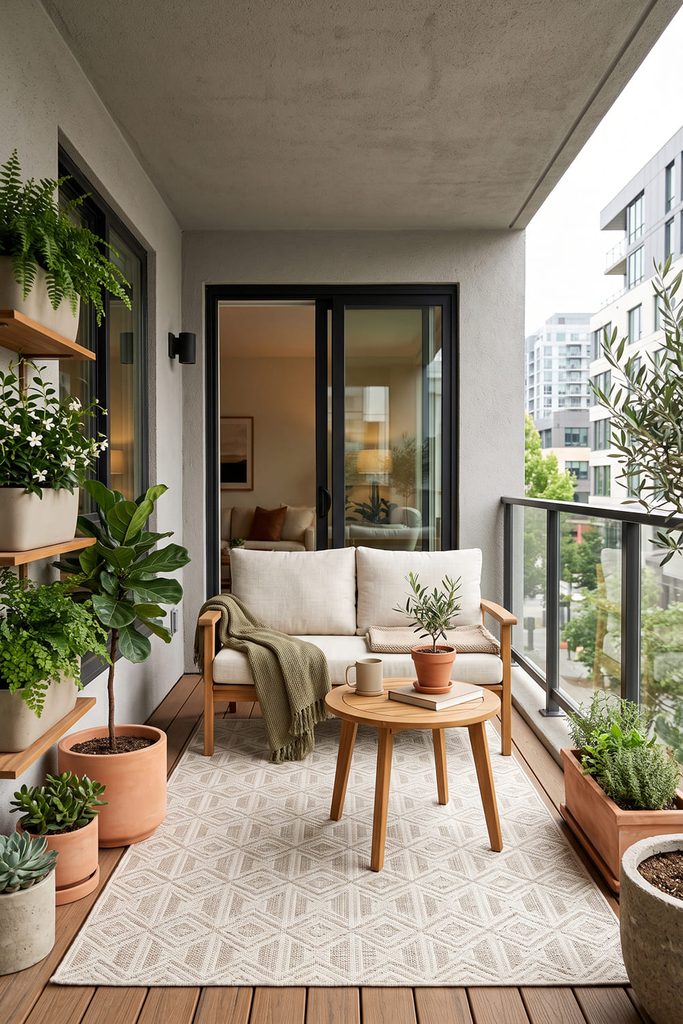
If you have enough space, a compact outdoor sofa can create a shared lounging area for you and your pet. Choose cushions with removable covers or fabrics designed for outdoor use. A textured neutral fabric can provide a polished appearance while being practical for everyday living.
Add two or three cushions for human comfort and keep a washable pet blanket on one side. If your pet is allowed on the furniture, choose materials that can tolerate regular cleaning.
If you prefer to keep pets off the main sofa, position their bed directly beside it so they can still remain close. This arrangement works particularly well for balconies designed as outdoor living rooms.
10. Create a Secure Observation Spot for Your Cat
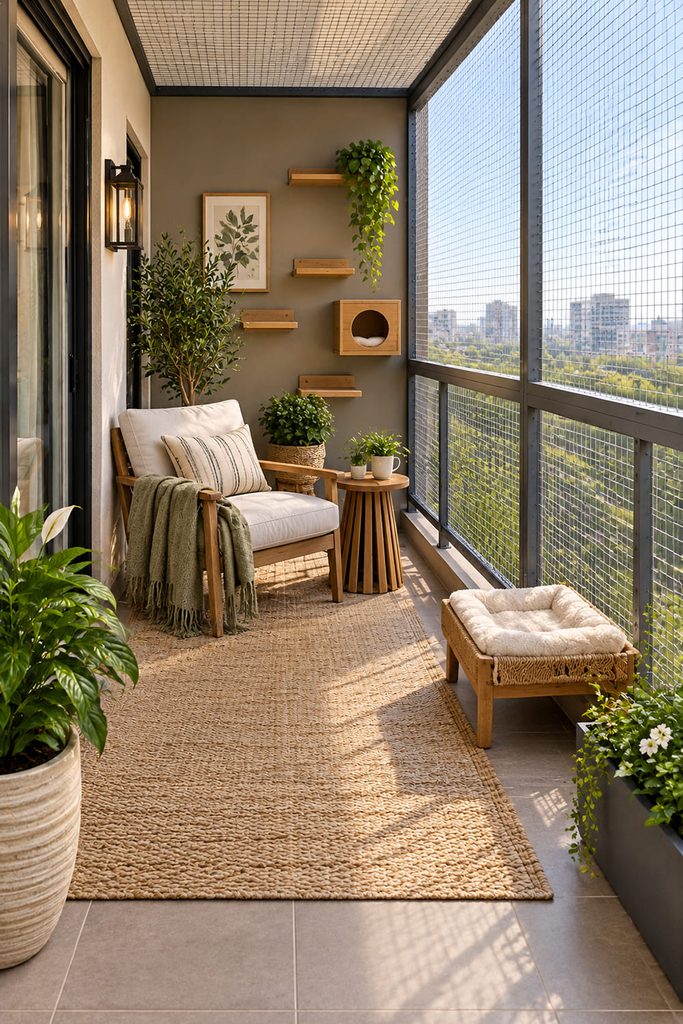
Cats often enjoy watching birds, people, trees, and activity outside. A balcony can provide interesting stimulation, but the viewing area needs to be secure. Create a comfortable observation spot using a stable cat bed or platform positioned away from the balcony edge.
For cats, appropriate physical barriers are particularly important because falls from balconies can cause serious injuries. Blue Cross specifically advises keeping cats away from unsafe balconies and preventing falls.
If you use cat-proof screening or another enclosure system, make sure it is professionally appropriate for your particular balcony and building. Once safety is properly addressed, keep the decor simple. A washable cushion, secure platform, and nearby plant can create an attractive little viewing station.
11. Use Natural Wood and Neutral Textiles
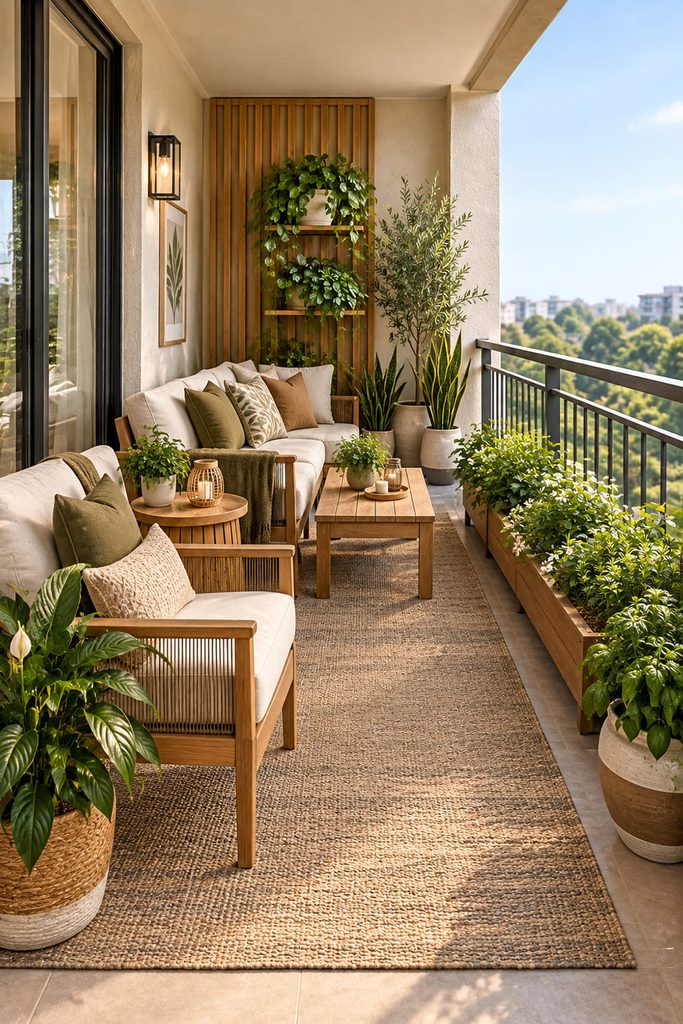
Natural-looking materials can make a pet-friendly balcony feel sophisticated rather than overly themed. Combine a wooden outdoor table with neutral cushions, a woven-style rug, and a few carefully selected plants.
Cream, sand, warm gray, olive, and brown work particularly well together. For textiles, choose materials that can withstand outdoor conditions and regular cleaning. Avoid delicate decorative fabrics that need constant protection.
A natural palette also makes small signs of everyday use less visually distracting. Add one darker accent, such as a charcoal cushion or brown planter, to give the arrangement some definition.
12. Create a Water and Feeding Station

If your pet spends a lot of time on the balcony, create a dedicated place for water. Use a sturdy, non-slip bowl positioned somewhere away from the main walking path. A small outdoor mat underneath can help define the area and make occasional spills easier to manage.
For dogs, keeping fresh drinking water available during outdoor time is an important practical consideration. If you feed your pet outdoors, keep food portions controlled and clean the area afterward rather than leaving food sitting outside.
A small storage box can hold bowls when they are not being used. This keeps an otherwise practical necessity looking like part of the balcony’s overall organization.
13. Add a Pet-Friendly Window or Door Transition
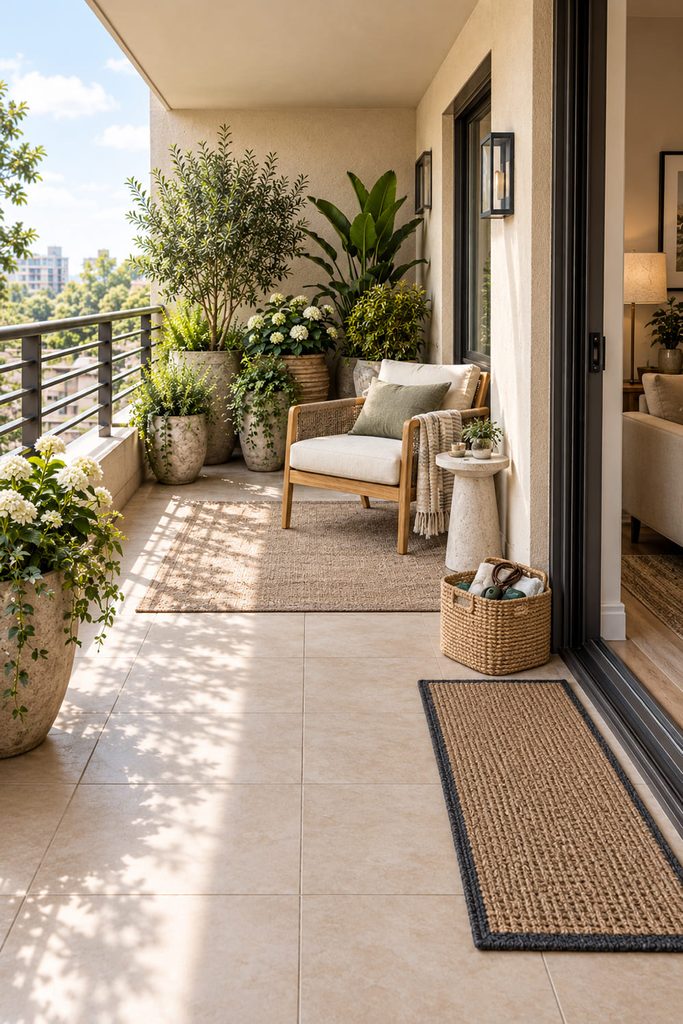
The area between your home and balcony deserves attention too. A small outdoor mat near the doorway can help catch dirt before your pet comes inside. Choose one that is easy to shake out or clean.
Keep the area around the door relatively open so your pet can move through without knocking over plants or furniture.
If you have a dog that frequently goes outside, a basket near the doorway can hold a leash, towel, and waste bags. For cats, the same area might hold a toy or carrier that is easy to access. The goal is to make the balcony transition practical while keeping visual clutter under control.
14. Create a Pet-Friendly Evening Retreat

Your balcony can become especially inviting in the evening with soft lighting and comfortable seating. Place a warm lantern or suitable outdoor light near the main seating area. Add an outdoor rug and comfortable cushions, then position your pet’s bed nearby.
Avoid candles, exposed flames, or decorations that your pet could knock over. A few carefully positioned lights are usually more effective than filling the balcony with small glowing decorations.
For a calm color palette, combine warm beige, brown, cream, charcoal, or muted green. This creates a relaxing space where you can sit outside with your pet after the day’s activities.
15. Design a Balcony That Works for Both of You
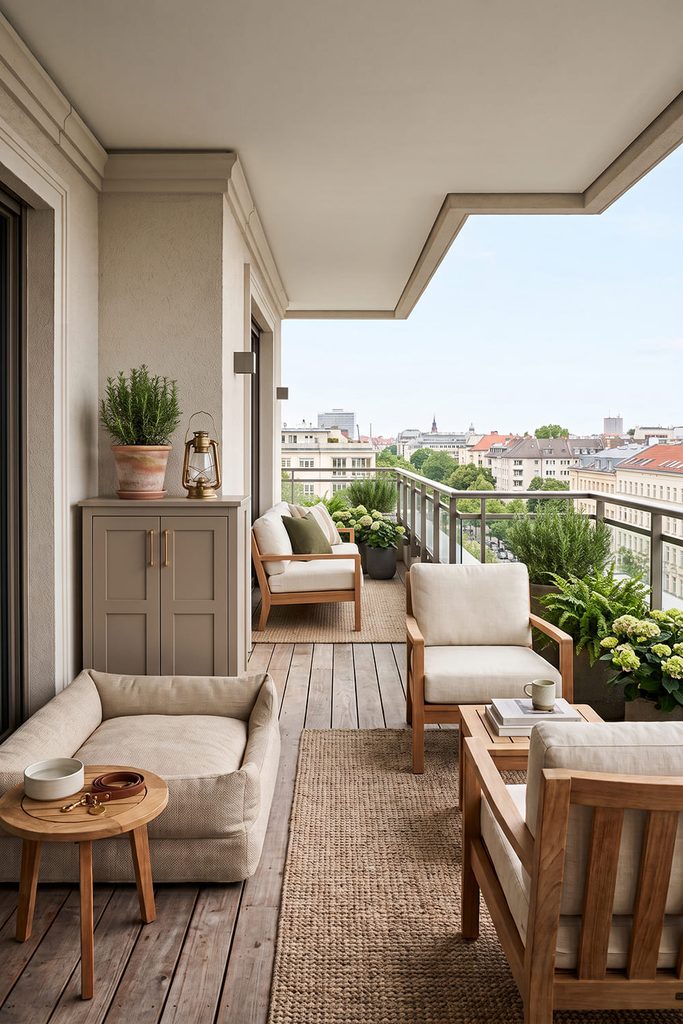
The best pet-friendly balcony does not need to look like a dedicated animal space. Instead, divide the balcony into a few simple zones. One area can be for human seating, another for your pet’s bed, and another for plants or storage.
Keep the main walking route open and avoid placing unstable decorative pieces where your pet frequently moves. Use coordinated colors throughout the space so pet accessories blend naturally with the furniture.
For example, a beige outdoor sofa, olive cushions, a brown pet bed, a natural wood table, and green plants can create a cohesive arrangement without matching every piece exactly. The balcony should ultimately feel like part of your home, with thoughtful details that make it comfortable for everyone who uses it.
How to Make a Balcony Safer for Pets
Safety should come before decoration when pets have access to an elevated outdoor space. Inspect railings, gaps, doors, screens, and furniture placement before allowing your pet onto the balcony. Do not assume that a pet will understand the danger of an open edge.
Cats require particular caution because falls from balconies can cause serious injuries. A secure enclosure or other professionally appropriate barrier may be necessary before a cat can safely use the area.
For dogs, consider whether they can climb onto furniture near the railing or squeeze through spaces.
Also keep toxic plants, fertilizers, pesticides, and other potentially dangerous products inaccessible. ASPCA guidance specifically recommends caution with pet-accessible plants and gardening products.
Choosing Pet-Friendly Balcony Plants
Plant selection deserves more attention when pets have direct access to the balcony.
Do not rely on common names alone because similar-looking plants can have very different safety profiles. Check the exact species before purchasing.
The ASPCA lists several plants as non-toxic to cats and dogs, including spider plants, Boston ferns, friendship plants, and some other varieties.
At the same time, several popular decorative plants can be dangerous if eaten. Lilies are particularly concerning for cats, while sago palms and oleander are among the plants that can cause serious toxicity in pets.
Even plants considered non-toxic can cause stomach upset if eaten, so supervision and sensible placement still matter.
How to Keep a Pet Balcony Clean
Choose furniture and textiles that can tolerate regular cleaning. Wash removable cushion covers according to their care instructions, shake out outdoor rugs regularly, and wipe down furniture as needed.
Keep a small cleaning kit nearby so spills and muddy paw prints can be handled quickly. A covered storage container can keep towels and cleaning accessories organized.
Plants should also be maintained regularly. Remove fallen leaves and inspect pots for standing water or damaged containers.
Most importantly, avoid allowing the balcony to become a collection of pet toys, food bowls, blankets, and miscellaneous supplies. Designated storage makes a surprisingly big difference.
Final Thoughts
A pet-friendly balcony can be beautiful, comfortable, and practical at the same time. The key is to design around the way your pet actually behaves rather than simply adding a few animal-themed accessories.
Start with safety, then choose comfortable furniture, washable textiles, stable planters, useful storage, and a dedicated resting area. If you grow plants, check each species carefully before bringing it into an area your pet can access.
A well-designed balcony should give your pet somewhere comfortable to relax while still giving you a pleasant place to read, drink coffee, entertain a friend, or enjoy a quiet evening.
With thoughtful planning, the balcony can become a shared outdoor room that feels like a natural extension of your home rather than a space where you constantly have to worry about what your pet might knock over or chew.


