

15 Renter-Friendly Balcony Privacy Ideas for a More Private Outdoor Space
A balcony can be a wonderful place to sit with coffee, read a book, or get some fresh air, until you notice how easily neighbors can see in. Rental balconies can make the problem harder because permanent screens, drilling, and structural changes may not be allowed. That does not mean you have to give up your privacy.
The smartest renter-friendly balcony privacy ideas use removable, portable, and low-commitment solutions. Outdoor curtains, privacy screens, tall plants, bamboo panels, and carefully placed furniture can block unwanted views while still keeping the balcony comfortable and bright. The right choice depends on your balcony’s size, railing style, weather, and rental rules.
You also do not need to cover every side. Sometimes blocking one direct sightline is enough to make the entire space feel more comfortable. These ideas can help you create a private balcony without turning a simple decorating project into a permanent renovation.
This post contains affiliate links. If you buy through them, we may earn a small commission at no extra cost to you. See our Affiliate Disclosure.
1. Hang Outdoor Curtains Along the Most Exposed Side
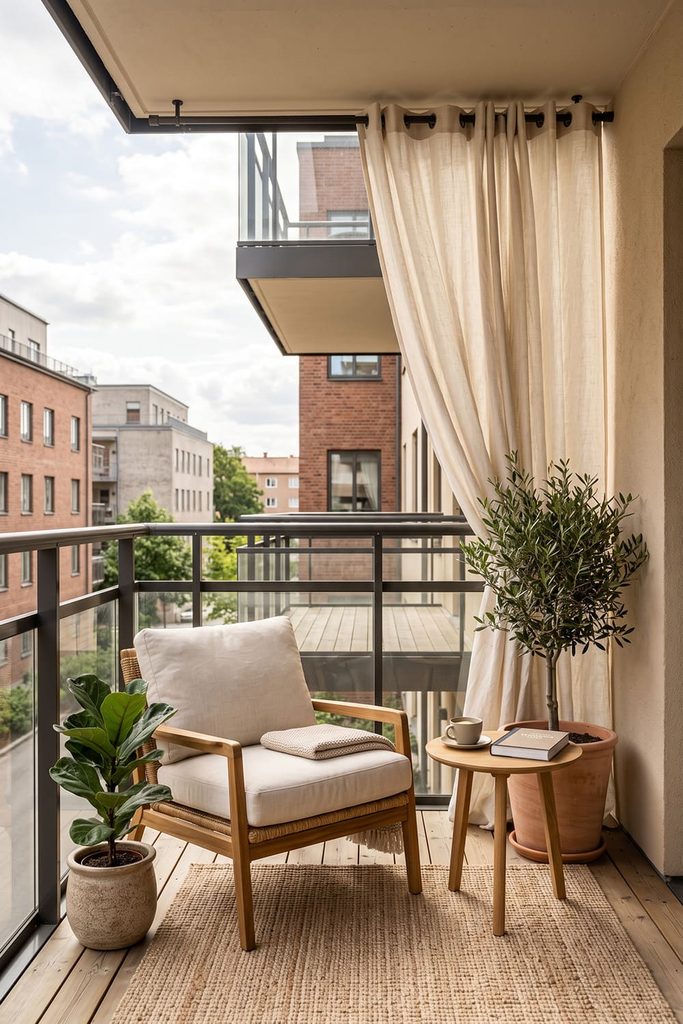
Outdoor curtains are one of the easiest ways to add privacy to a rental balcony. Instead of covering every side, focus on the section where neighbors have the clearest view. This keeps the balcony open while creating a more protected seating area.
Choose lightweight outdoor fabric in white, cream, beige, or another color that works with your furniture. A removable curtain system can make the setup easier to take down when you move.
Leave the curtains open when you want more sunlight and close them when you want privacy. Make sure the fabric and hanging method are suitable for outdoor conditions. If your balcony gets strong wind, secure the curtains properly rather than allowing loose fabric to flap around.
2. Use a Freestanding Privacy Screen Behind Your Seating

A freestanding privacy screen can block a direct view without being attached to the building. This makes it particularly useful for renters who cannot drill into walls or install permanent panels.
Place the screen behind your main chair or along the side facing a neighboring balcony. Folding screens are especially practical because you can change their position whenever you rearrange the furniture.
Choose a material that suits your outdoor conditions, such as weather-resistant wood, metal, or an appropriate outdoor synthetic material. Keep the screen stable and avoid placing a tall, lightweight panel where strong wind could knock it over.
A screen does not need to cover the entire balcony. Blocking the area directly behind your seating position may provide all the privacy you need.
3. Create a Green Privacy Wall With Tall Potted Plants

Plants can provide privacy while making the balcony feel more natural. Tall potted plants placed along the exposed edge can interrupt direct sightlines without creating the hard appearance of a solid screen.
Choose plants based on your balcony’s sunlight, temperature, and wind conditions. Grouping several plants at different heights can create a fuller barrier than placing identical pots in a straight row.
Use large, stable containers for taller plants so they are less likely to tip. If real plants require more care than you want, suitable artificial outdoor plants can provide a similar visual barrier.
Keep enough space between the plants and the railing for cleaning and movement. A small green screen can make the seating area feel more secluded without making the balcony feel closed in.
4. Add a Railing Privacy Screen Without Changing the Structure

A railing privacy screen can block views from nearby apartments while leaving the upper part of the balcony open. This is useful when neighbors can see directly into the balcony from a similar height.
Look for a screen designed specifically for outdoor railings and choose an attachment system that does not require drilling. Measure your railing before buying so the screen fits properly without leaving large gaps.
Neutral colors such as taupe, gray, beige, or dark green can blend into the space. A tightly woven material can provide more visual coverage than an open pattern.
Before installing anything, check your building or lease rules. Some properties have restrictions on exterior balcony coverings, especially if they affect the appearance of the building.
5. Use a Bamboo Screen for Natural-Looking Balcony Privacy

Bamboo can give a balcony a softer, more natural appearance than a standard synthetic privacy screen. A roll or panel can be positioned along one exposed side to reduce direct views from nearby windows or balconies.
For a rental, choose a freestanding or removable installation rather than attaching it permanently to the structure. Bamboo can also work well with wood furniture, woven baskets, terracotta pots, and neutral outdoor textiles.
Keep the screen limited to the area where privacy is needed. Covering every railing can make a small balcony feel enclosed.
Check how the material handles moisture and sunlight in your particular location. Secure the screen carefully because lightweight natural panels can catch wind. The goal is a visual barrier that remains attractive and practical.
6. Place a Tall Outdoor Plant Stand Near the Balcony Entrance

Privacy does not always need to come from the railing. A tall plant stand can create a visual screen from the side while also providing space for several smaller plants.
Position the stand between your seating area and the direction from which people can see into the balcony. Choose a stable, freestanding model that can be moved whenever necessary.
Use a mix of plants with different leaf shapes and heights rather than filling every shelf with identical pots. This creates a softer barrier and keeps the arrangement from looking too heavy.
Make sure the stand does not block the balcony door or become an obstacle in the main walking path. This approach works especially well when privacy is needed from one angle rather than across the entire balcony.
7. Create Privacy With an Outdoor Trellis and Potted Vines

A freestanding trellis can provide a vertical structure for climbing plants while creating a sense of separation. For renters, choose a movable trellis that stands inside the balcony rather than one that needs to be fixed to the building.
You can grow suitable climbing plants in a large container at its base, allowing the foliage to gradually fill the open sections. If you want an instant result, an appropriate artificial vine can provide immediate coverage.
Place the trellis beside the seating area where it blocks the most noticeable sightline. Keep the structure stable and make sure plants or vines do not interfere with neighboring properties.
This idea is particularly attractive if you want your balcony privacy solution to feel like part of the garden rather than a barrier.
8. Use Outdoor Roller Shades for Adjustable Privacy

Outdoor roller shades give you control over how much of the balcony is visible from outside. They can be lowered when you want privacy and raised when you want more daylight and an open view.
Choose a shade designed for the location and use a removable installation method where possible. Neutral shades tend to blend more easily with balcony furniture and exterior walls.
This option can be especially useful for balconies that receive strong afternoon sunlight because the shade can serve more than one purpose.
Keep the shade properly secured and follow the manufacturer’s installation instructions. Wind can be a concern with large outdoor fabrics, so do not leave a loose shade extended during conditions it was not designed to handle.
9. Arrange Your Balcony Furniture to Block Direct Sightlines

Sometimes the best privacy solution is simply changing where your furniture sits. A chair positioned directly opposite a neighbor’s balcony can leave you feeling exposed even when there are other areas available.
Move the main seating toward a corner and angle it away from the strongest sightline. A storage bench, plant stand, or compact side table can then sit between the seating area and the exposed edge.
The goal is not to create a wall of furniture. Keep the arrangement comfortable and leave enough room to walk through the balcony.
This approach costs nothing and can be tested immediately. Try several layouts before buying privacy products. You may discover that a small change in furniture placement solves more of the problem than expected.
10. Add a Layer of Tall Decorative Grass in Planters
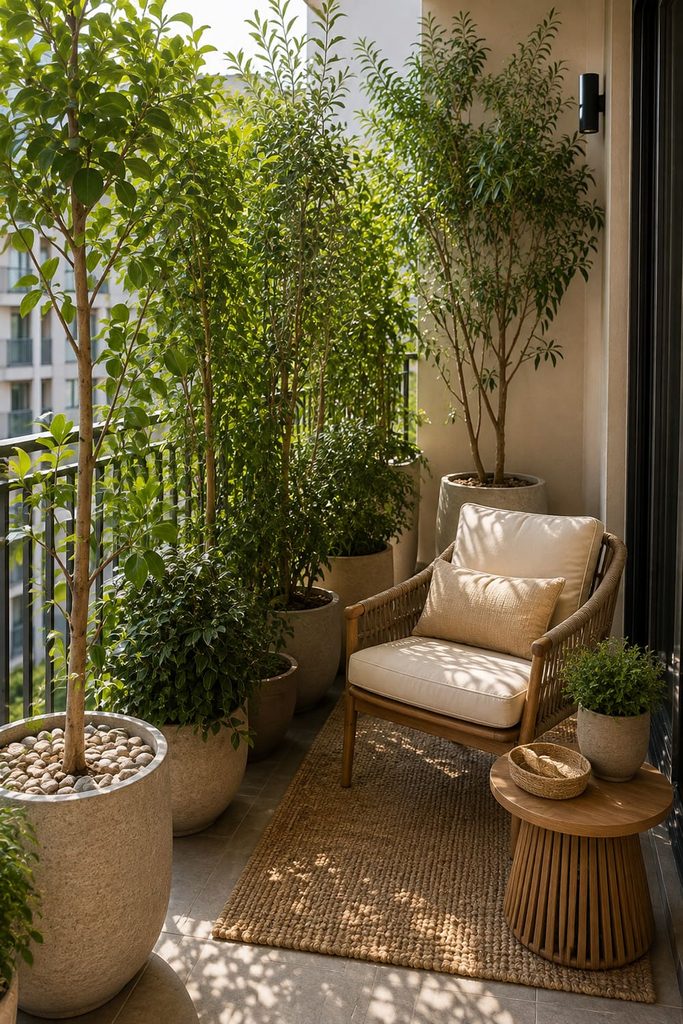
Tall ornamental grasses can create a soft visual screen without the solid appearance of a traditional privacy panel. Several containers grouped can help interrupt views while adding movement and texture to the balcony.
Choose varieties that are suitable for containers and appropriate for your local climate and available sunlight. If maintaining live plants is not practical, outdoor-rated artificial grasses can provide a similar effect.
Use planters with enough weight and stability for tall plants, especially in windy locations. Position the tallest pieces toward the side where privacy is most important.
Avoid filling the entire railing with plants. A concentrated group near the seating area can provide privacy while leaving other sections open for light and views.
11. Hang a Lightweight Outdoor Fabric Panel

A simple outdoor fabric panel can act as a softer alternative to a conventional privacy screen. Choose a weather-suitable fabric and hang it vertically along the side where you need coverage.
A neutral linen-look material can create a relaxed appearance, while a subtle pattern can add more visual interest. Keep the panel narrow enough that it does not make the balcony feel boxed in.
The installation should be removable and appropriate for your rental. Avoid using heavy fabric or hardware that could become unsafe in strong wind.
This idea works particularly well behind a single chair or small seating area. Rather than trying to hide the whole balcony, use the fabric to create a private backdrop around the spot where you spend the most time.
12. Build a Privacy Corner With a Storage Bench and Plants

Combining furniture with plants can create a more useful privacy barrier than using either one alone. Place a narrow storage bench along the exposed side of the balcony, then arrange medium or tall plants beside it.
The bench provides seating or hidden storage while the plants interrupt views from neighboring spaces. Choose containers that fit comfortably on the floor without narrowing the main walking route.
Keep the plant arrangement slightly irregular so it feels like a garden corner rather than a rigid wall. Use similar pot colors to keep the different pieces visually connected.
This setup is especially useful on balconies where a full privacy screen would feel too heavy. You are solving two problems at once while keeping everything portable enough to move when necessary.
13. Use a Folding Screen That You Can Move as Needed
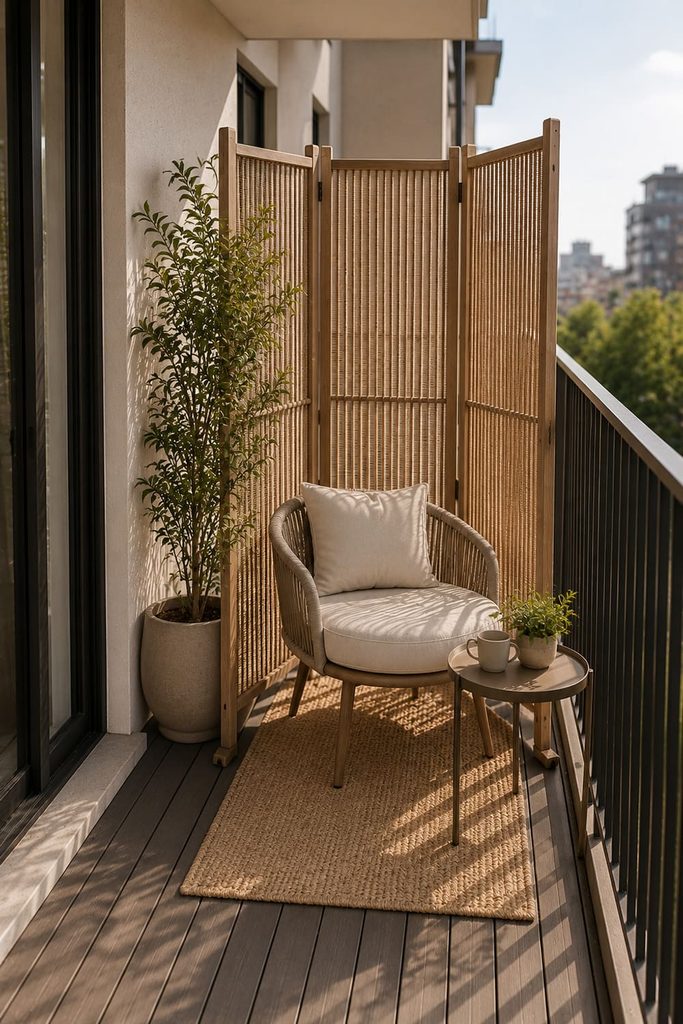
A folding outdoor screen gives you privacy exactly where you need it without permanently dividing the balcony. Open it around your seating area when you want more seclusion, then fold it away when you want an unobstructed view.
Choose a screen designed for suitable outdoor use and make sure it has a stable base. Lightweight screens can be useful for renters, but they still need to remain secure in windy conditions.
A folding design also lets you change the layout as your needs change. You might place it beside the chair in the morning and move it later to block the afternoon view from a neighboring building.
This flexibility makes folding screens a strong option when your privacy needs are not constant.
14. Combine Sheer Curtains With Plants for Layered Privacy

One privacy solution does not have to do all the work. Combining sheer outdoor curtains with plants can create a layered barrier that feels lighter than a solid screen.
Use the curtains to soften the main sightline, then place plants in front of them to break up the view. The combination provides visual separation while still allowing some light through.
Choose plants in different sizes rather than using one continuous row. This keeps the arrangement more natural and prevents the balcony from looking overcrowded.
Sheer fabric also gives you flexibility. You can close it when you want more privacy and pull it aside when you want a clearer view. Just make sure both the fabric and plant containers are suitable for your balcony’s weather conditions.
15. Create a Private Balcony Nook Around One Comfortable Seat

You do not need to make the entire balcony private to make it feel secluded. Instead, focus on the small area where you actually sit.
Place one comfortable chair in the least exposed corner, then add a tall plant, compact screen, or curtain along the side facing the strongest sightline. A small side table and outdoor rug can help define the area without filling the balcony.
Keep the center and entrance open so the space still feels airy. This approach is especially useful for very small balconies where large privacy screens would make the area feel cramped.
Think of the setup as a private outdoor nook rather than a fully enclosed room. You get a comfortable retreat while keeping the balcony bright and usable.
Conclusion
Good balcony privacy does not require permanent construction or an expensive renovation. With the right combination of outdoor curtains, plants, screens, shades, and smart furniture placement, you can create a more comfortable outdoor space while keeping your rental intact.
Start by identifying exactly where the unwanted view comes from. Then block that sightline rather than covering the entire balcony. This usually creates a lighter, more open result and leaves room for furniture, plants, and fresh air.
The best renter-friendly balcony privacy ideas are flexible enough to change as your needs change. Choose removable pieces that you can rearrange, store, or take with you when you move.


