

15 Balcony Wall Painting Ideas to Transform Your Outdoor Space
A balcony is often the smallest room in the house, yet it carries an outsized amount of emotional weight. It’s where the first coffee of the day gets poured, where plants are fussed over, where evenings wind down under string lights. And more often than not, it’s the most neglected wall in the entire home — left bare, chipped, or painted the same builder-grade white as everything else.
That changes with a coat of paint. Balcony wall painting is one of the fastest, most affordable ways to turn a forgotten outdoor corner into a space that actually feels designed. Whether you’re working with a sprawling terrace or a narrow city ledge just big enough for two chairs, the right wall color sets the entire mood — cozy and warm, breezy and coastal, moody and dramatic, or clean and minimal.
Below are 15 balcony wall painting ideas to inspire your next outdoor makeover, followed by a practical guide to choosing paint that actually holds up outside.
This post contains affiliate links. If you buy through them, we may earn a small commission at no extra cost to you. See our Affiliate Disclosure.
1. Warm Terracotta Accent Wall

Terracotta is the color equivalent of golden-hour light — warm, earthy, and endlessly flattering against greenery. Painting one balcony wall in a rich clay or burnt-orange terracotta shade instantly gives the space a sun-baked, Mediterranean warmth, even in a small apartment. It pairs beautifully with rattan furniture, woven baskets, and terracotta plant pots for a cohesive, grounded look. This color also has a forgiving quality — it hides dust and minor scuffs better than lighter shades. For balconies that get strong afternoon sun, terracotta tends to age gracefully rather than looking washed out over time.
2. Coastal Blue & White
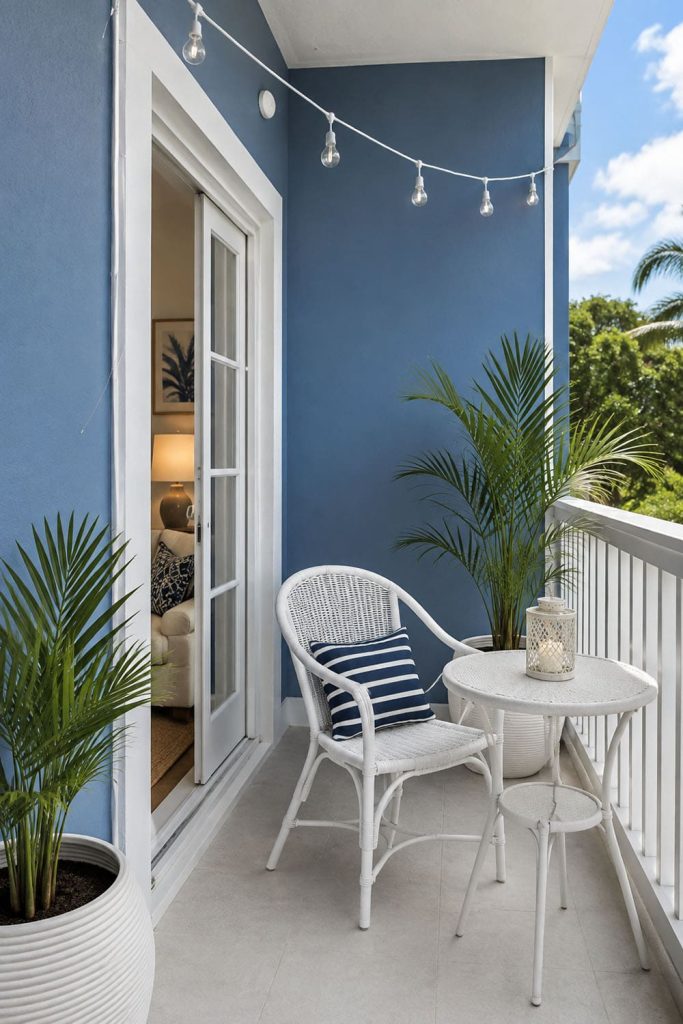
There’s a reason coastal blue and white shows up on nearly every dream balcony — it reads instantly as vacation. A soft ocean or navy blue on the main wall, balanced with crisp white trim, railings, or furniture, creates a breezy, nautical feel that works whether your balcony overlooks the sea or a parking lot. Lighter powder blues keep small balconies feeling airy and open, while deeper navy tones add drama after sunset. Add white string lights, striped cushions, and a few potted palms, and the coastal illusion is complete.
3. Sage Green Nature-Inspired Wall

Sage green sits at the intersection of calming and sophisticated, which is exactly why it’s become a favorite for balconies surrounded by plants. A muted, dusty green wall blurs the line between indoor and outdoor space, letting foliage feel like part of the design rather than an addition to it. It’s a particularly smart choice for plant-heavy balconies, since it never competes with greenery the way brighter colors can. Pair it with natural wood furniture, linen cushions, and woven textures for a wall that feels like an extension of a garden.
4. Bold Black Statement Wall
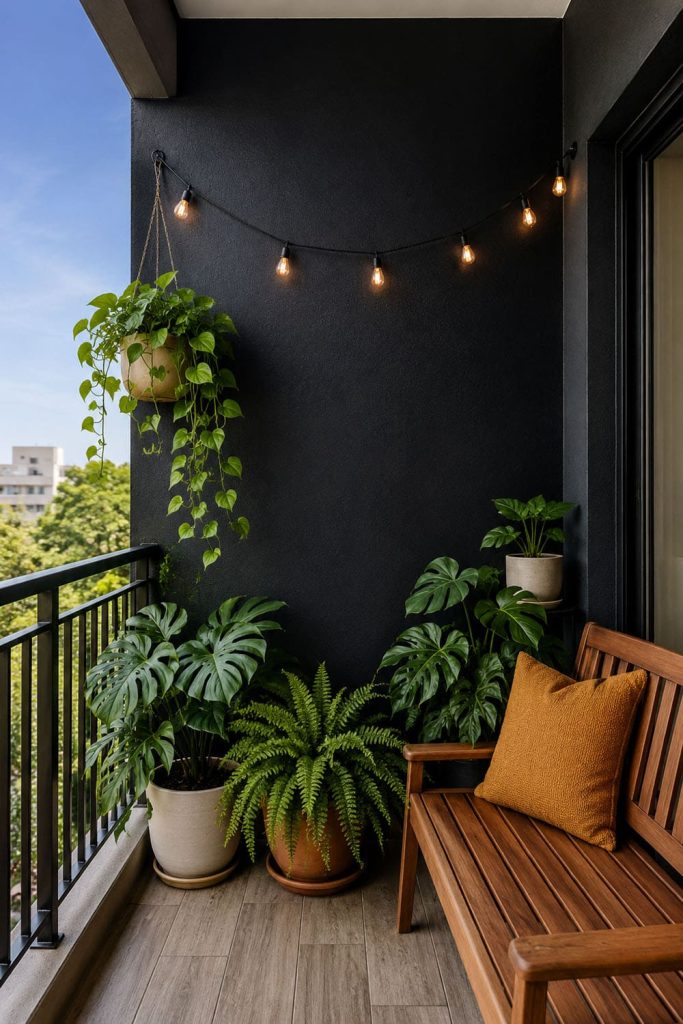
Black on a balcony wall sounds unexpected until you see it done — then it looks inevitable. A matte or charcoal-black wall creates a striking, moody backdrop that makes greenery, string lights, and colorful cushions pop dramatically against it. It works especially well on balconies that get plenty of natural light, since the darkness keeps the space feeling intentional rather than closed-in. Black also has a practical upside outdoors: it hides dirt, water stains, and shadows far better than pale colors, making it a low-maintenance pick for high-traffic city balconies.
5. Mediterranean Whitewash Finish

For a sun-bleached, old-world feel, a whitewashed or lime-washed balcony wall is hard to beat. Instead of a flat, uniform coat, whitewash finishes create soft variation and texture across the surface, mimicking the weathered plaster walls found across Greece, Spain, and Southern Italy. This finish photographs beautifully because it catches light differently throughout the day. It suits balconies with terracotta tile floors, wrought-iron railings, or climbing vines, and pairs effortlessly with blue shutters, olive plants, and woven furniture for a full Mediterranean-courtyard effect.
6. Tropical Leaf Mural

A hand-painted or stenciled palm-leaf mural turns a plain balcony wall into a lush, jungle-inspired escape, no matter how small the actual footprint is. Deep green leaves against a warm cream or soft yellow background create an immersive, resort-like backdrop that pairs naturally with real potted plants — the painted and living greenery blend for a fuller, layered look. This idea works especially well for narrow balconies, where an oversized mural adds visual depth and makes the space feel bigger. Stencil kits make this achievable even without freehand painting skills.
7. Geometric Pattern Wall
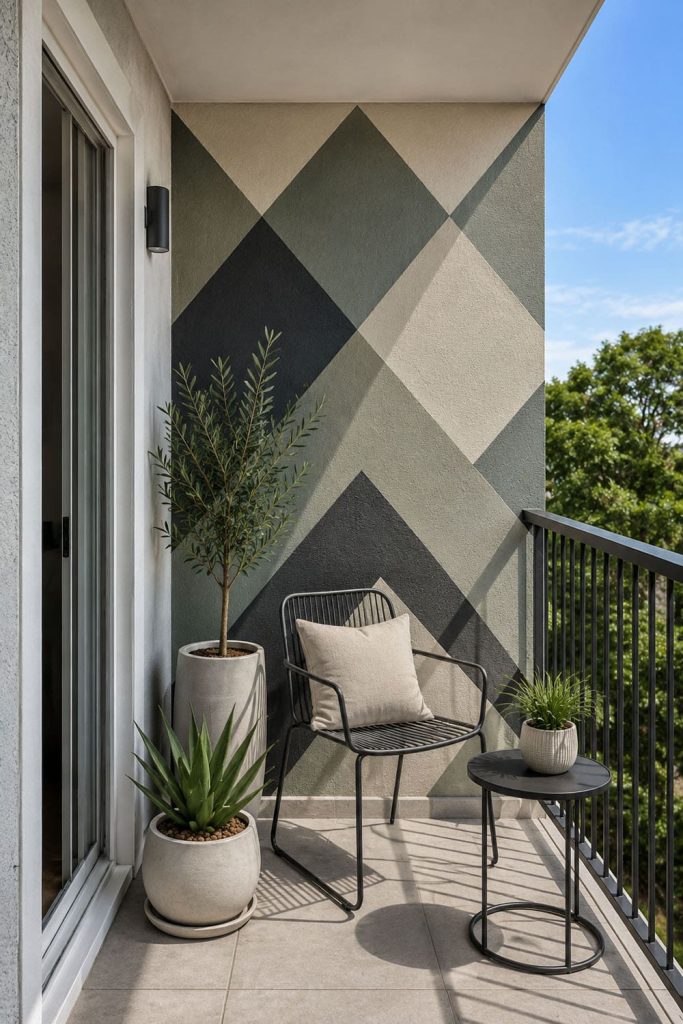
For a more modern, graphic look, geometric patterns bring energy without requiring a full mural. Think painter’s-tape triangles, chevron stripes, or a repeating diamond motif in two or three complementary tones. Geometric walls work particularly well on small balconies because clean lines and defined shapes create the illusion of structure and intention, rather than clutter. This idea is also one of the more forgiving DIY projects on this list — painter’s tape does most of the precision work, making crisp results achievable even for first-time painters.
8. Ombre Gradient Wall
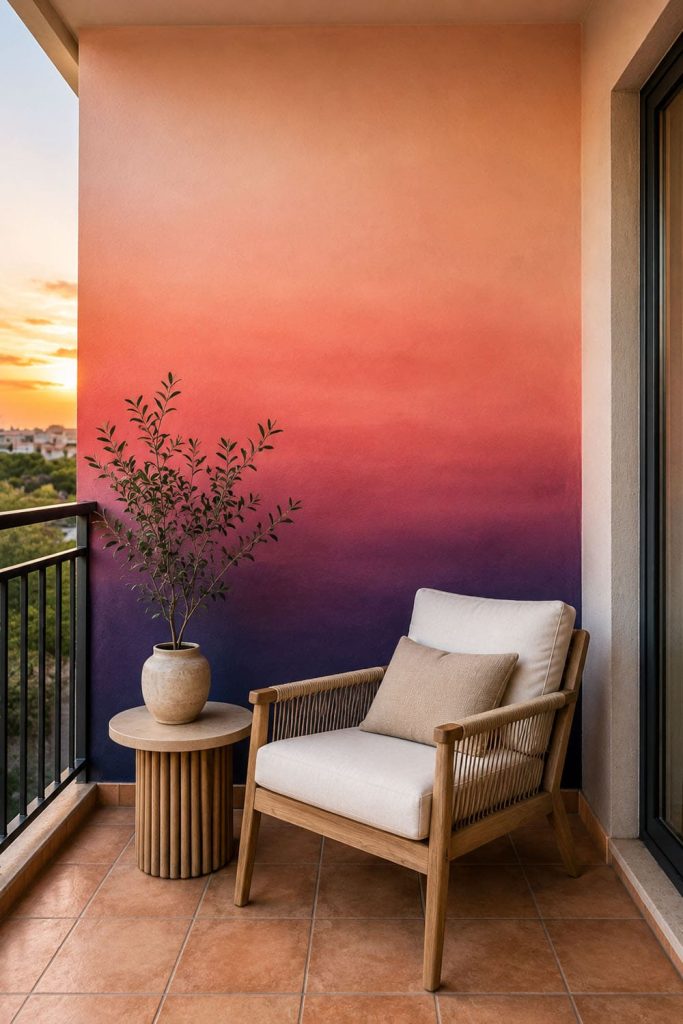
An ombre wall — where color gradually shifts from light to dark, or between two complementary hues — adds a soft, artistic focal point without needing any patterns or murals. A common approach is blending sky blue into deep indigo to mimic a sunset, or fading terracotta into blush pink. The gradual color shift adds visual interest and a sense of movement to an otherwise static wall. Achieving a smooth blend takes patience and a slightly wet edge while painting, but the dreamy, editorial result is worth the extra care.
9. Textured Lime Plaster Finish

Texture is having a real moment in balcony design, and lime plaster is leading the charge. Rather than a smooth, flat coat, a textured plaster finish creates subtle ridges, swirls, or a hand-troweled look that catches shadow and light beautifully outdoors. Earthy tones — warm beige, soft clay, muted olive — work best with this technique, giving the wall an organic, artisanal quality that feels closer to natural stone than painted drywall. It’s a slightly more involved project than a standard paint job, but the tactile, high-end result makes small balconies feel considerably more expensive.
10. Soft Pastel Pink Wall

A gentle blush or dusty pink wall brings a romantic, feminine softness to a balcony without tipping into overly sweet territory, especially when kept muted rather than bright. This color works surprisingly well with greenery, brass or gold accents, and warm wood furniture, creating a look that feels curated rather than themed. Pastel pink also photographs exceptionally well in both daylight and golden-hour light, making it a strong pick for balconies that double as a favorite spot for photos. It tends to suit smaller, more intimate balcony layouts best.
11. Charcoal Grey Modern Minimalist
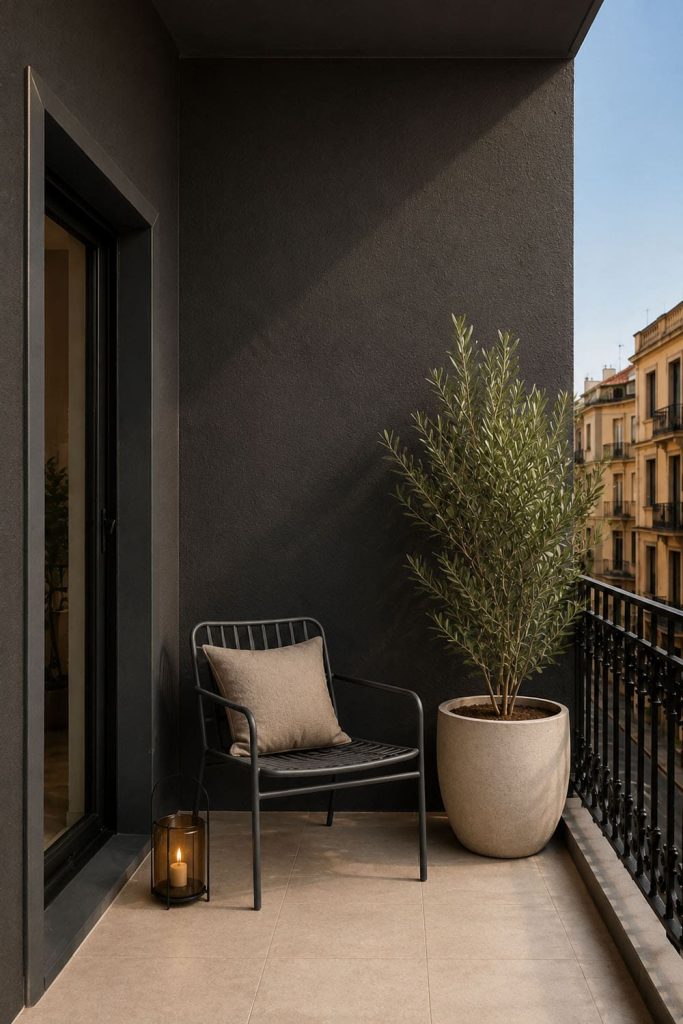
For a sleek, contemporary look, charcoal grey offers drama without the starkness of pure black. It’s an especially good fit for minimalist balconies furnished with clean-lined metal or concrete furniture, where the goal is a calm, uncluttered outdoor extension of a modern interior. Charcoal also does double duty practically — it resists showing dirt, water marks, and shadow patterns far better than lighter neutrals. Pair it with a single statement plant, warm-toned lighting, and one or two textured cushions to keep the look grounded rather than cold.
12. Sunny Yellow Cheerful Wall

A warm, buttery yellow wall injects instant energy into a balcony, making it feel bright and inviting even on overcast days. This color works particularly well for balconies used as breakfast nooks or morning coffee spots, since it echoes the feeling of sunlight even before the sun’s fully up. Lean toward warmer, muted yellows — mustard or ochre — rather than neon shades, which can feel overwhelming on a small wall. Pair with white furniture and green plants for a fresh, cheerful combination that never feels overdone.
13. Abstract Art Wall

For balcony owners who want something that feels genuinely one-of-a-kind, a freehand abstract mural turns the wall itself into the statement piece. Loose, organic shapes in two or three coordinating colors — think soft blush, terracotta, and cream, or navy, white, and sage — create a gallery-like backdrop without requiring formal art training. This idea works particularly well for balconies with minimal furniture, letting the wall carry most of the visual interest. It’s also easy to update or refresh seasonally, since abstract shapes are more forgiving to repaint than detailed murals.
14. Botanical Stencil Wall
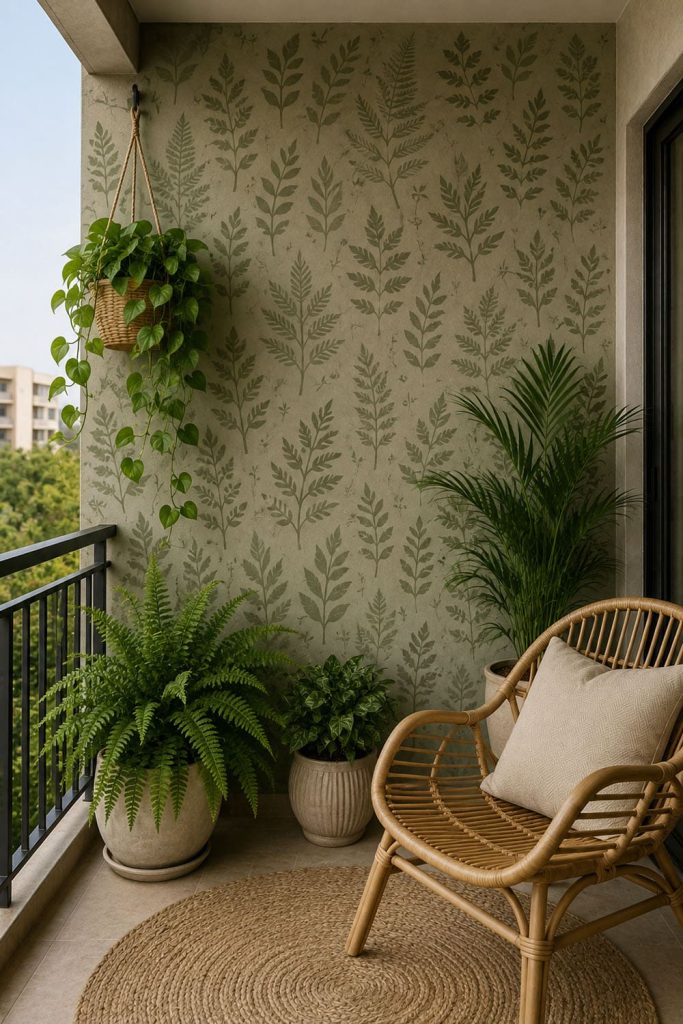
Somewhere between a mural and a plain paint job, a botanical stencil wall uses repeating leaf, fern, or floral motifs to add pattern without full commitment. Stenciling a single accent wall in a tone-on-tone palette — sage on sage, cream on white — keeps the look subtle and elegant rather than busy. This approach is ideal for renters or anyone hesitant to commit to a bold mural, since the pattern can be painted over easily later. It also pairs beautifully with real plants, extending the botanical theme from the wall into the actual space.
15. Two-Tone Color Block Wall

Color blocking — splitting a wall into two distinct painted sections, often with a straight or curved dividing line — is one of the most versatile balcony wall painting ideas because it can be adapted to virtually any palette. A popular combination pairs a deep, saturated color on the lower half of the wall with a soft neutral on top, adding depth without overwhelming a small space. This technique also visually lowers a ceiling or wall that feels too tall, making it a smart pick for balconies with awkward proportions.
Balcony Wall Painting: A Practical Buying & Planning Guide
Choosing a color is the fun part — choosing the right paint is what makes it last. Balcony walls face sun, rain, humidity, and temperature swings that interior walls never see, so the same paint used inside the house usually won’t hold up outdoors.
Choose Exterior-Grade Paint, Not Interior Paint
Standard interior paint isn’t built to withstand UV exposure or moisture, and it will fade, peel, or crack far faster outdoors. Exterior emulsion paints, formulated specifically for outdoor walls, offer better resistance to sun, dust, and dampness, along with more consistent color retention over time. If your balcony is only partially covered or fully exposed to rain, look for paint labeled explicitly as weatherproof or exterior-use.
Consider Elastomeric or Masonry Paint for Concrete Walls
Many balcony walls are concrete, brick, or plastered masonry rather than drywall, which changes what paint performs best. Elastomeric coatings are worth considering here — they’re flexible enough to expand and contract with temperature changes, which helps prevent the fine cracking that rigid paints develop over time. For masonry specifically, breathable acrylic formulas allow trapped moisture to escape rather than blistering the paint from underneath.
Pick a Finish Based on Traffic and Climate
Finish affects both looks and durability. Matte finishes hide surface imperfections well but can be harder to wipe clean. Satin and eggshell finishes offer a nice middle ground — some sheen, easier cleaning, and decent scratch resistance — which makes them a popular default for balcony walls. Semi-gloss and high-gloss finishes are the most durable and easiest to clean, though they show more surface imperfections and tend to suit railings or trim better than large wall areas.
Factor In Your Climate
Balconies in humid or coastal climates benefit from mildew- and algae-resistant paint additives, since trapped moisture easily encourages fungal growth on exterior walls. In hot, sun-drenched climates, lighter colors and UV-resistant formulas help reduce fading and heat absorption, while darker walls should be paired with high-quality UV protection to avoid premature color loss. In areas with heavy rain or freeze-thaw cycles, flexible, waterproof formulas prevent the cracking and peeling that rigid paints are prone to.
Prep the Wall Properly
No paint performs well over a poorly prepped surface. Clean the wall thoroughly to remove dust, algae, or old flaking paint, patch any cracks, and allow the surface to fully dry before starting. Priming is especially important on bare concrete or previously unpainted masonry, since it helps the topcoat adhere evenly and last significantly longer.
Frequently Asked Questions
What is the best paint for balcony walls?
Exterior-grade emulsion or masonry paint is generally the best choice, since it’s formulated to resist UV rays, moisture, and temperature swings that interior paint isn’t designed to handle.
Can I use regular interior paint on my balcony?
It’s not recommended. Interior paint lacks the weatherproofing and UV protection needed outdoors, so it tends to fade, peel, or develop mildew far faster than exterior-rated paint.
How do I protect balcony wall paint from rain and sun?
Choose a weatherproof, UV-resistant exterior paint, prep the surface properly before painting, and consider a protective topcoat or sealant for walls that get heavy direct sun or rain exposure.
What color makes a small balcony look bigger?
Light, soft tones like pale blue, sage green, or warm white tend to open up a small balcony visually, while a two-tone or ombre technique can also add the illusion of extra height or depth.
Final Thoughts
A balcony doesn’t need a full renovation to feel transformed — often, it just needs a wall that finally matches the vision in your head. From sun-bleached whitewash to a bold black statement wall, these 15 balcony wall painting ideas offer a starting point for nearly any style, budget, and climate. Pick the one that matches how you actually want to feel out there, choose paint built to handle the outdoors, and let that small, often-overlooked wall finally do some of the design work for you.


