
15 Beige Living Room Decor Ideas That Feel Warm, Not Boring
Beige has a reputation problem. For years it’s been shorthand for “safe,” the color you pick when you can’t decide on anything else. But the beige living rooms getting saved and re-pinned right now have nothing to do with playing it safe — they’re layered, textured, and quietly luxurious, proving that neutral doesn’t have to mean flat.
The secret is contrast and material. A beige room built entirely from one flat matte paint and a beige sofa will always feel unfinished. A beige room built from linen, boucle, warm wood, brass, and a few deliberate accent colors feels expensive, calm, and completely intentional — the kind of space people describe as “quiet luxury” rather than “builder-grade.”
Below are 15 beige living room decor ideas to pin and plan around, followed by a practical styling guide for getting beige right the first time.
This post contains affiliate links. If you buy through them, we may earn a small commission at no extra cost to you. See our Affiliate Disclosure.
1. Layered Neutral Textures
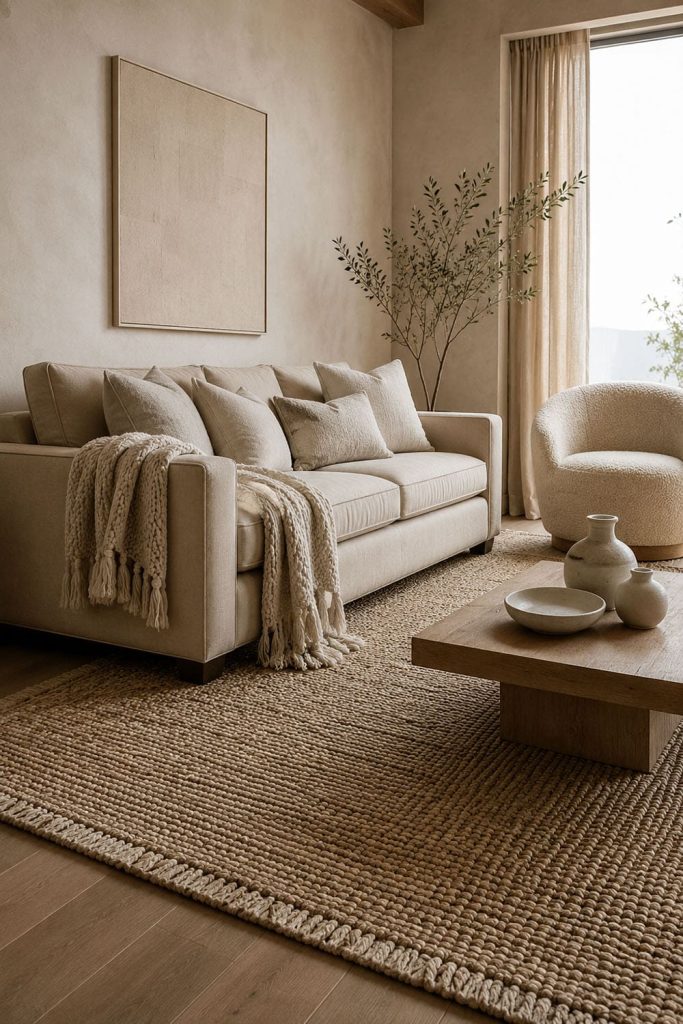
The easiest way to keep a beige room from feeling flat is to stack textures instead of colors. Combine a boucle armchair, a linen sofa, a chunky wool throw, and a jute or wool rug, all in slightly different shades of beige and cream. The tonal variation catches light differently across each surface, giving the room depth even without a single bold accent color. This layered-neutral approach has become one of the defining looks of quiet-luxury interiors, and it works in almost any size room, from a cozy studio to a sprawling open-plan living area.
2. Beige and Black Contrast

Pairing warm beige walls with black accents — a coffee table, picture frames, lamp bases, or curtain rods — instantly sharpens a neutral room and keeps it from reading as bland. The trick is restraint: a few well-placed black pieces against a soft beige backdrop create graphic contrast without overwhelming the calm palette. A cream linen sectional against beige walls, finished with matte black decor and a textured rug, reads as sophisticated and current rather than sterile. This combination photographs particularly well, since the contrast gives the eye clear focal points.
3. Warm Wood Furniture Accents

Beige walls lean warm or cool depending entirely on what’s placed against them, and warm wood tones are the safest way to keep beige feeling cozy rather than cold. Furniture in white oak, warm oak, or walnut reflects amber light onto beige walls, reinforcing their warmth instead of fighting it. This pairing is especially forgiving for beginners, since warm wood tones rarely clash with any beige undertone. A wood coffee table, open shelving, or a media console anchors the room and keeps an all-neutral palette from feeling washed out.
4. Beige and Olive Green

Green is one of the most reliable accent colors for a beige living room, and olive or sage in particular feels grounded rather than jarring. A few olive velvet cushions, a sage accent chair, or simply a collection of leafy plants against beige walls introduces color without disrupting the room’s calm, neutral foundation. This combination also has a practical upside: real plants thrive against a beige backdrop, since the warm neutral tone makes greenery look more vivid by contrast rather than competing with it.
5. Cream Linen Sectional Centerpiece
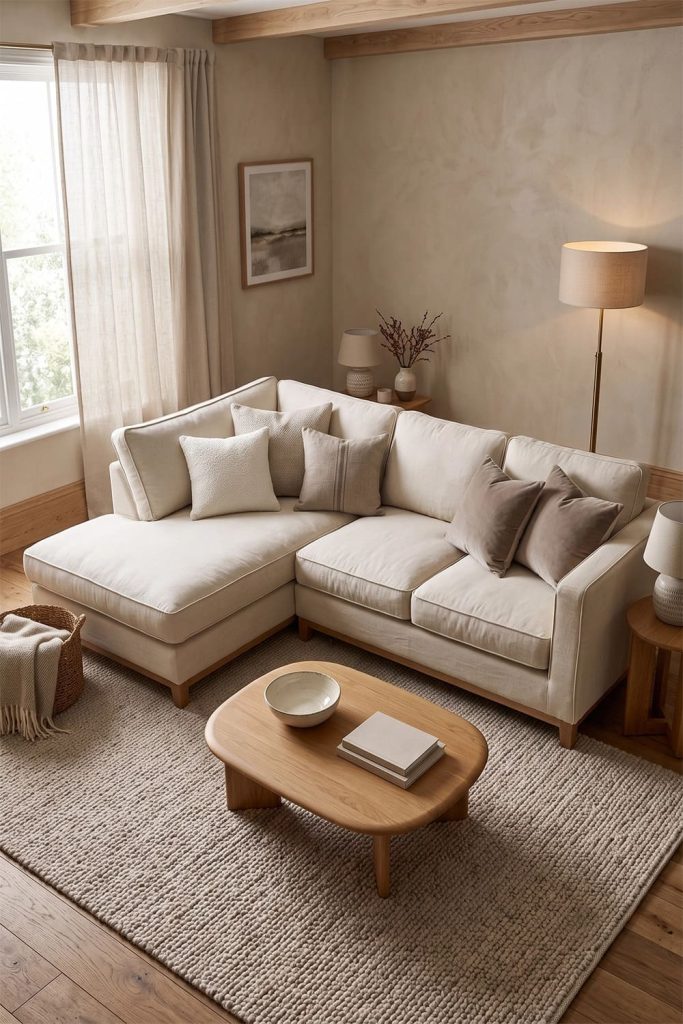
An oversized cream or beige linen sectional, styled with a mix of textured cushions, is the anchor piece behind many of the most-saved beige living rooms online. Linen’s slightly rumpled, lived-in texture keeps a large beige sofa from looking stiff or showroom-perfect. Building the rest of the room around this centerpiece — a low wood coffee table, a plush rug, and soft ambient lighting — creates a space that feels genuinely made for slow mornings and long evenings rather than styled for a photo and never actually used.
6. Tonal Color-Drenched Beige

Color drenching — painting the walls, trim, and sometimes even the ceiling in variations of the same beige tone — creates a cocooning, immersive effect that reads as designer-level intentional. Rather than a stark white ceiling breaking up beige walls, a matching warm-white or soft beige overhead keeps the eye moving smoothly around the room, making low ceilings feel taller and small rooms feel larger. This technique works best with a slightly warmer trim than wall color, avoiding the muddy look that can happen when beige meets a cold, blue-toned white.
7. Beige with Brass and Gold Accents
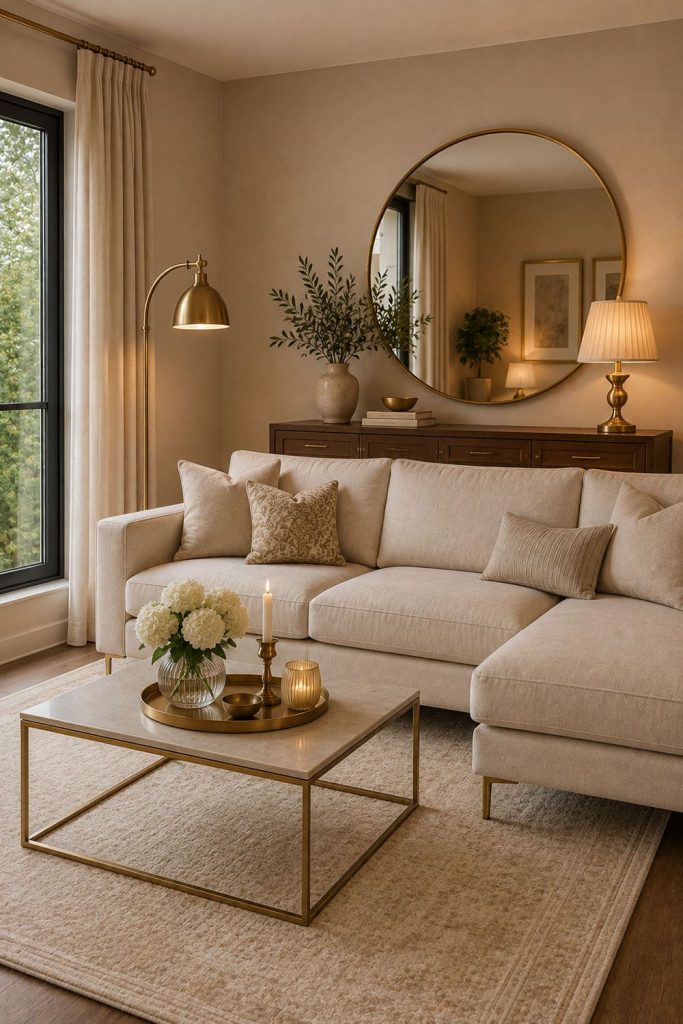
Warm metallics are one of the most flattering accent choices for a beige living room, since brass and gold pick up the same warm undertones already present in the walls. Brass lamp bases, gold-rimmed mirrors, or antique brass hardware on furniture add a subtle shimmer that keeps an all-neutral room from feeling flat under artificial light. This pairing leans slightly more formal and polished than black accents, making it a strong choice for living rooms that double as entertaining spaces.
8. Layered Rug Styling
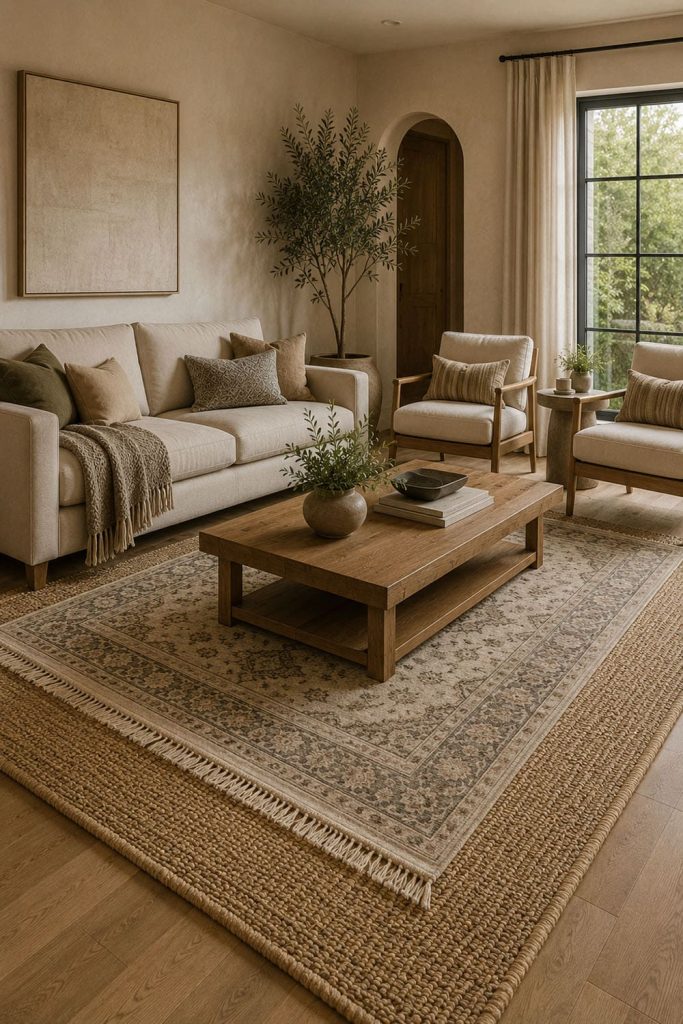
A single flat rug rarely does enough work in a beige room, but layering two rugs — a larger jute or sisal base topped with a smaller patterned or textured rug — adds definition and warmth underfoot. This technique also helps zone an open-plan living area, visually separating a seating space from the rest of the room without adding walls or furniture. Choose rugs in slightly different beige, cream, or taupe tones rather than matching exactly, so the layering reads as intentional rather than mismatched.
9. Beige and Navy Blue

Navy is a classic pairing for beige because the deep, cool tone provides sharp contrast against a warm neutral without clashing. A navy accent chair, throw pillows, or drapery against beige walls creates a grounded, slightly traditional look that still feels current when paired with modern furniture shapes. This combination tends to suit living rooms that want to feel a little more formal or masculine than an all-neutral or pastel-accented beige room, while still keeping the overall palette calm.
10. Curated Gallery Wall

Beige walls are an ideal, low-contrast backdrop for a gallery wall, since the neutral base lets varied frame finishes and artwork colors stand out clearly. The current approach favors smaller, more curated arrangements over packed, salon-style walls — a handful of meaningful pieces in cohesive tones and mixed frame finishes, rather than dozens of mismatched prints. This idea works especially well above a beige sectional or console table, adding personality and visual height to a room that might otherwise feel too uniform.
11. Beige with Terracotta and Rust

Warm, earthy accent colors like terracotta and rust bring an inviting, sun-baked energy to a beige living room without breaking from its calm neutral base. A rust-colored throw, terracotta ceramics, or a single burnt-orange accent chair reads as intentional rather than random, since these tones sit naturally within beige’s warm color family. This pairing has become especially popular as designers move away from flat, tone-on-tone neutral rooms toward beige palettes with a bit more visible warmth and personality.
12. Natural Stone and Travertine Details
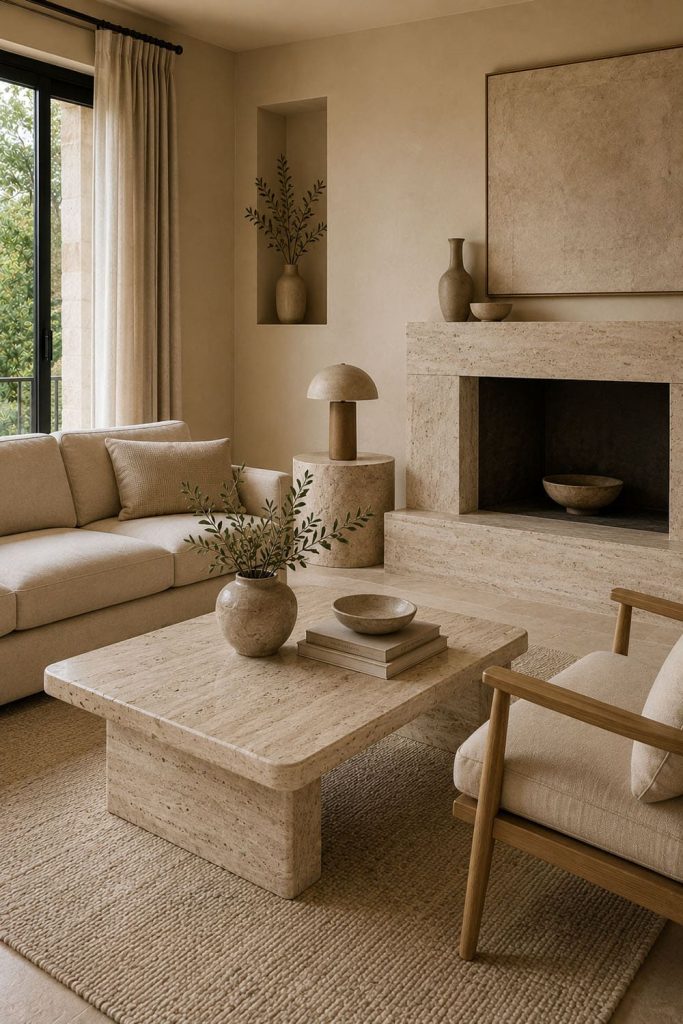
Travertine and other natural stone finishes — a coffee table, side table, or fireplace surround — bring an organic, textural quality to a beige living room that paint and fabric alone can’t achieve. The soft variation in stone’s natural coloring echoes the tonal layering found in the best beige rooms, while adding a slightly more architectural, high-end feel. This idea pairs particularly well with warm wood furniture and linen textiles for a grounded, natural-materials palette that feels current and long-lasting rather than trend-driven.
13. Boucle and Velvet Mix

Combining boucle and velvet furniture within the same beige room creates contrast through texture rather than color, which keeps the palette calm while still adding visual richness. A boucle armchair paired with a velvet cushion or ottoman gives the eye two very different surfaces to read, even though both stay within the same neutral tone family. This mix has become a signature of the “quiet luxury” living room look, since it signals a considered material choice rather than a matched furniture set.
14. Beige with Plum or Burgundy

For a beige room with a little more depth and drama, plum and burgundy accents add rich, jewel-toned contrast without disrupting the room’s overall calm. A burgundy velvet cushion, a plum-toned artwork, or deep-colored drapery against beige walls creates a moodier, more sophisticated version of the classic neutral living room. This combination works especially well in the evening, when warm lamp lighting deepens both the beige base and the jewel-toned accents.
15. Minimalist Beige with Sculptural Lighting

For a cleaner, more modern take, a beige living room built around minimal furniture and one or two sculptural lighting pieces lets shape and form carry the design instead of color or pattern. An organically shaped floor lamp, a sculptural table lamp, or an irregular pendant fixture becomes the room’s focal point against an otherwise calm, uncluttered beige backdrop. This approach suits living rooms that want a warm-minimalist feel, favoring negative space and considered pieces over layered textiles and heavy styling.
How to Style a Beige Living Room the Right Way
Beige lives or dies at the edges — the trim, floor, and lighting choices around it matter just as much as the wall color itself.
Get the Undertone Right
Beige can lean warm (yellow or pink undertones) or cool (grey undertones), and mismatching this with your existing floors or furniture is usually what makes a beige room feel dingy rather than warm. Warm oak or walnut floors call for a warm beige; if your space has cool, grey-washed floors, a slightly greige or taupe-leaning beige will look more intentional than a classic warm beige fighting against it.
Choose Trim and Ceiling Thoughtfully
A soft, warm white on trim tends to flatter beige walls far better than a stark, blue-toned white, which can make beige look muddy by comparison. For low ceilings, painting the ceiling the same warm white as the trim keeps the room feeling bright and tall; for a cozier, more cocooned feel, a soft beige-toned ceiling works well too.
Prioritize Texture Over Pattern
Since beige offers little contrast on its own, texture does most of the visual work. Mix at least three different textures in any given beige room — linen, boucle, wool, wood, stone, or woven rattan — rather than relying on one flat fabric across all the furniture. This is the single biggest factor separating a “designer” beige room from a flat, builder-grade one.
Don’t Skip Accent Color
A fully monochrome beige room can look sophisticated in photos but often feels lifeless to actually live in. Choose one or two accent colors — green, navy, terracotta, black, or plum — and repeat them in small doses throughout the room, rather than adding a single overwhelming accent piece.
Layer Your Lighting
Warm, layered lighting is essential to making beige feel cozy rather than flat. Combine ambient overhead light with a floor lamp, table lamp, and a few candles or string lights, all in warm color temperatures, to avoid the washed-out look that cool, single-source lighting creates on neutral walls.
Frequently Asked Questions
What colors go best with a beige living room?
Green, navy, black, terracotta, brass, and plum all pair well with beige, since they either echo its warmth or provide clean contrast without clashing with the neutral base.
Is beige still in style for living rooms?
Yes, though the trend has shifted away from flat, all-beige “quiet luxury” rooms toward beige palettes layered with texture and a few deliberate accent colors for more personality.
How do I make a beige living room look less boring?
Focus on texture over flat fabric, add at least one accent color, mix in warm wood or natural stone, and layer your lighting rather than relying on a single overhead source.
What undertone of beige should I choose?
Match your beige to your existing floors and furniture — warm wood tones call for a warm, yellow-based beige, while cooler grey-toned floors pair better with a greige or taupe-leaning beige.
Final Thoughts
A beige living room only reads as boring when it’s treated as a single flat color instead of a foundation to build on. Layer in linen, wood, stone, and a considered accent shade or two, and that same neutral palette becomes calm, warm, and genuinely elevated. Whether you lean into moody plum accents, crisp black contrast, or a fully tonal color-drenched look, these 15 beige living room decor ideas prove that neutral can still be the most personal color choice in the room.


