

15 Japandi Balcony Design Ideas for a Calm, Beautiful Outdoor Retreat
Even a few square feet of outdoor space can become a sanctuary when you design it with intention. Japandi — the quiet marriage of Japanese wabi-sabi and Scandinavian hygge — is one of the most balcony-friendly design styles there is. It doesn’t ask for a lot of furniture or a big budget. Instead, it asks for restraint: natural materials, a muted palette, and a handful of well-chosen pieces that each earn their place.
If your balcony currently doubles as a storage dump for bikes and boxes, that’s actually good news — you have a blank canvas. Below are 15 Japandi balcony design ideas, each one a self-contained way to bring warmth, texture, and stillness to your outdoor space. Mix and match a few, or work through the whole list room by room.
This post contains affiliate links. If you buy through them, we may earn a small commission at no extra cost to you. See our Affiliate Disclosure.
1. Start With a Natural Wood Decking Foundation

Nothing unifies a Japandi balcony faster than swapping concrete or tile for warm wood underfoot. Interlocking wood deck tiles are the easiest fix — they click together over an existing floor with no tools or renovation required, and can be lifted again if you move. Choose light oak, teak, or acacia tones for that soft, sun-bleached look Japandi is known for. The wood grain adds texture without adding visual noise, and it instantly makes bare feet feel at home. Think of decking as your base layer: everything else in the space — furniture, plants, textiles — will look more intentional sitting on top of it.
2. Choose Low-Profile Platform Seating

Japandi borrows the Japanese habit of sitting close to the ground, which makes any space feel larger and calmer. A low wooden bench, a floor cushion, or a platform-style loveseat with slim, tapered legs reads as more spacious than a bulky patio set. Low furniture also lowers your eye line toward the plants and horizon rather than toward walls or railings, which is part of why these balconies photograph so peacefully. If your balcony is small, one substantial low seat often works better than two crowded chairs — pick a single piece you’ll actually want to sit in every morning.
3. Add a Bamboo Privacy Screen

Bamboo is one of the clearest signals of the “Japanese” half of Japandi, and it solves a very real balcony problem: privacy. A rolled bamboo screen along the railing or a woven bamboo panel used as a partial divider softens harsh sightlines from neighboring units without blocking light or airflow completely. It also filters wind, which matters if your balcony catches gusts. Choose natural, unstained bamboo rather than painted versions — the raw color ages gracefully and pairs effortlessly with the wood tones already anchoring the space. It’s an inexpensive upgrade that does a lot of design work.
4. Layer in Neutral Linen Textiles
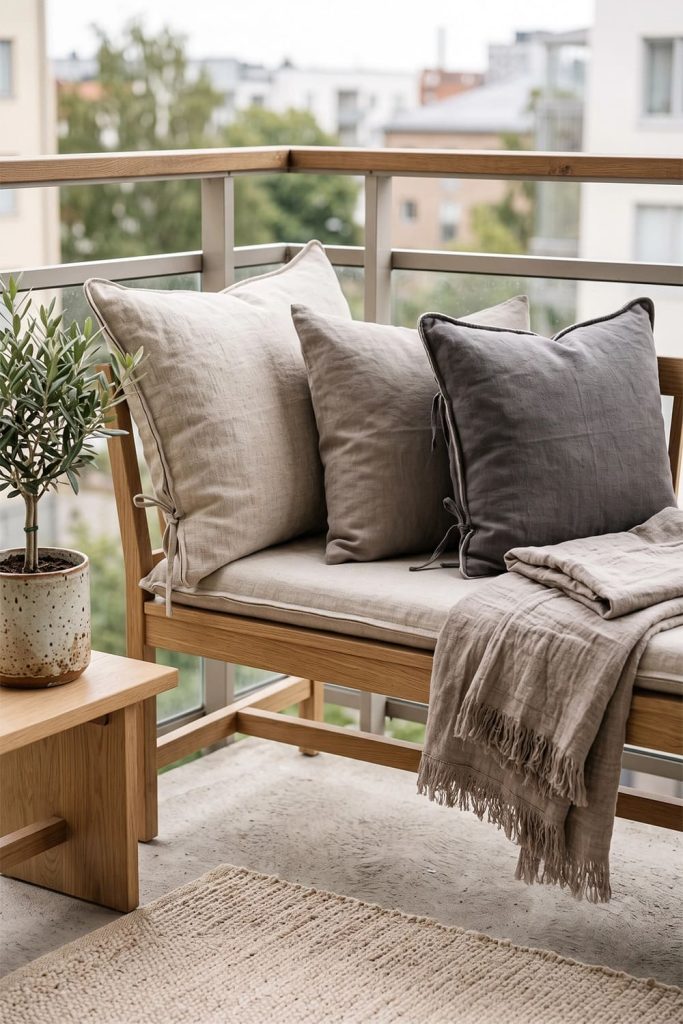
Textiles are where Japandi balconies get their comfort. Outdoor-safe linen or cotton cushions in oatmeal, stone, sand, or soft charcoal soften hardwood and metal surfaces and make the space feel lived-in rather than staged. Keep patterns to a minimum — a subtle woven texture is welcome, but busy prints will fight the calm you’re building. Look for water-resistant or quick-dry fabric blends made for outdoor use so cushions survive dew and light rain. A stack of two or three cushions in slightly different neutral shades adds depth without adding visual clutter.
5. Use Terracotta and Stoneware Planters
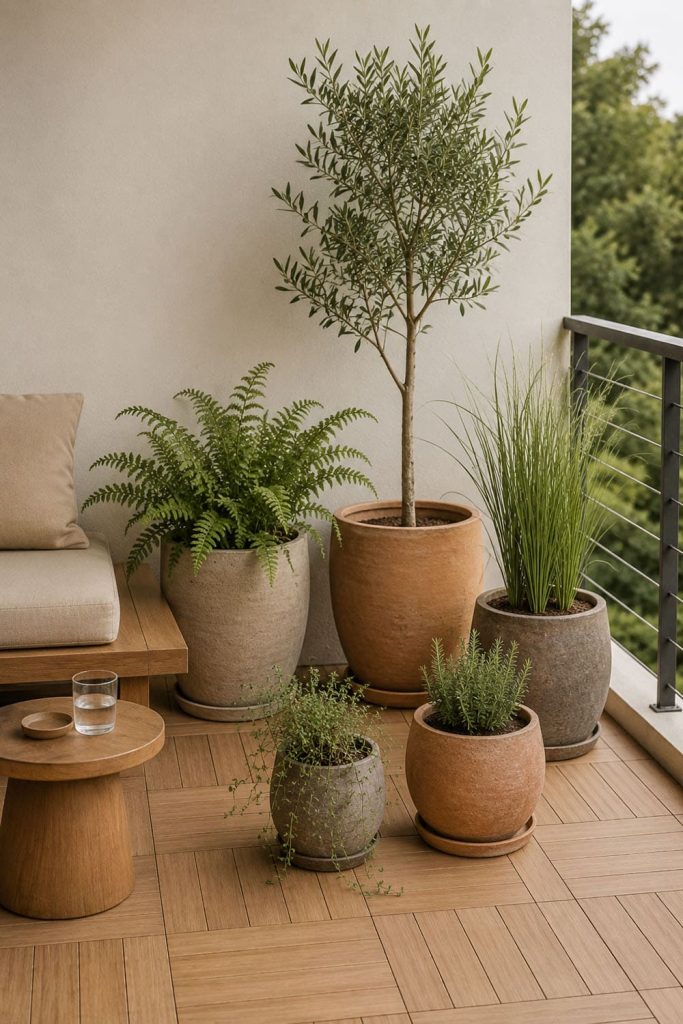
Skip the glossy plastic pots and reach for terracotta, unglazed stoneware, or concrete planters instead. Their matte, earthy surfaces are core Japandi material choices, and they age beautifully outdoors, developing a soft patina over time rather than looking worn out. Group planters in odd numbers and varying heights — a classic design trick that creates natural visual rhythm without symmetry, which Japandi tends to avoid. Stick to a narrow range of neutral tones across your pots so the plants themselves, not the containers, become the focal point.
6. Layer in Lantern and Ambient Lighting
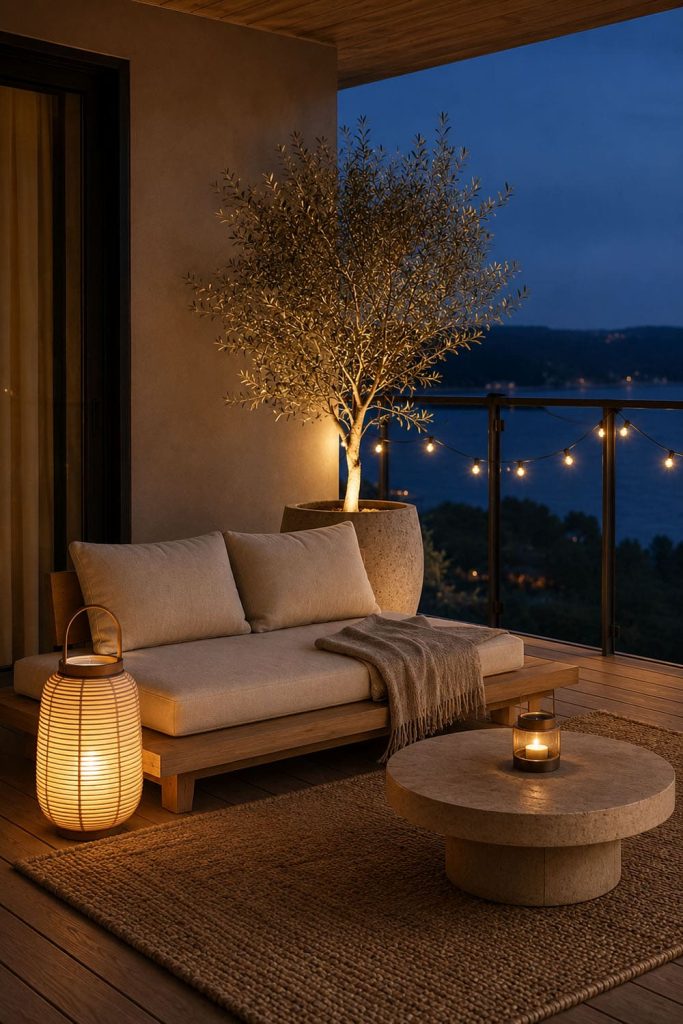
Harsh overhead lighting has no place on a Japandi balcony. Instead, layer several small, warm light sources: a paper or rattan lantern on the floor, a low-voltage string light along the railing, and perhaps a small solar candle on a side table. This layered approach mimics the soft, diffused glow found in traditional Japanese lanterns and Scandinavian candlelight rituals alike. Warm white bulbs (never cool white or blue-toned LEDs) keep the mood grounded and restful. Good lighting is often the difference between a balcony that looks nice in daylight and one that feels magical after sunset.
7. Add a Minimalist Storage Bench

Balconies rarely have enough room for both seating and storage, so let one piece do both jobs. A simple wooden bench with a lift-up seat or built-in cubby can hold cushions, a throw blanket, gardening tools, or citronella candles out of sight when not in use. Choose a design with clean, unadorned lines and light or mid-tone wood to keep it from reading as bulky “outdoor furniture.” This kind of dual-purpose piece is exactly the kind of thoughtful, functional design Japandi is built around — nothing sits there just for decoration.
8. Bring in Shoji-Inspired Sliding Screens

For balconies that need a stronger design statement, a shoji-inspired screen — a wood-framed panel with a translucent or slatted infill — makes an unmistakable Japandi anchor. Used as a partial room divider or a backdrop behind seating, it filters light into soft, diffused patterns during the day and adds architectural structure to an otherwise open space. Outdoor-rated versions use weather-resistant frames and UV-safe panels instead of traditional paper. Even a single fixed screen, rather than a sliding one, can do the job if space or budget is tight.
9. Add a Pebble or Gravel Zen Accent

A small tray or corner filled with smooth river pebbles or fine gravel brings a literal piece of Japanese garden design onto your balcony. Use it to underplant a single sculptural branch, cradle a candle, or simply sit beneath a bench as a textural contrast to the wood decking. Raking a few lines into fine gravel with a small wooden tool, in the tradition of karesansui (dry rock gardens), turns this into a small daily ritual rather than just decor. It’s one of the lowest-cost ideas on this list and one of the most distinctly meaningful.
10. Build a Compact Tea Ritual Corner
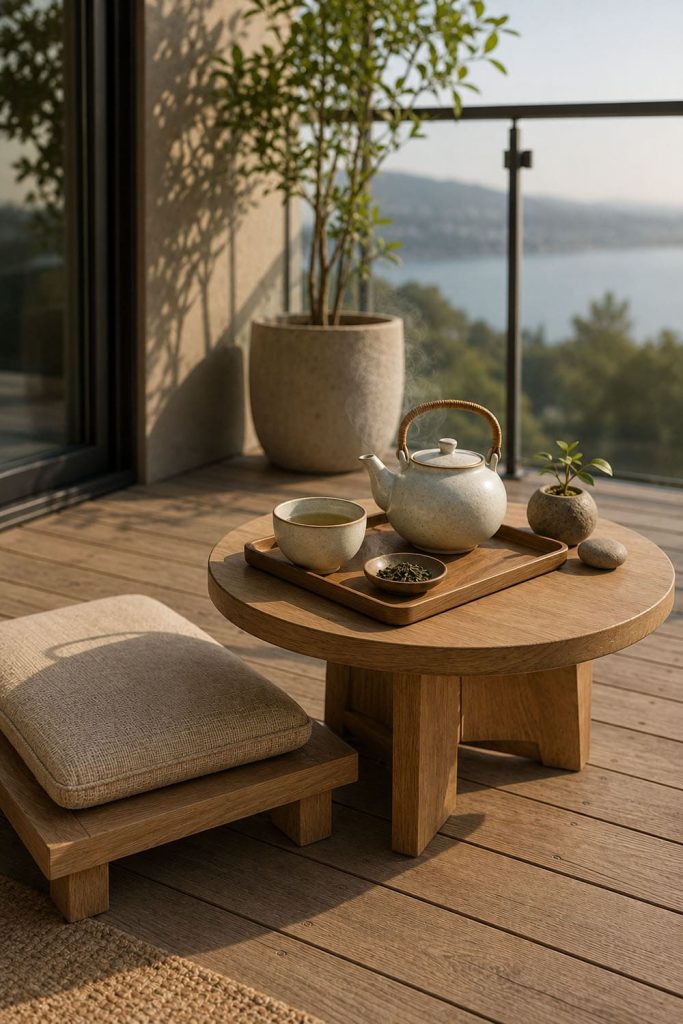
Even a balcony as small as two feet by four feet has room for a tea corner: a low stool, a small round side table, and a simple tray for your kettle, cup, and a saucer for loose leaves. This idea leans into the mindful-living heart of Japandi — the point isn’t the furniture, it’s the five quiet minutes you spend there each morning. Keep the tray styling sparse: one cup, one small plant, maybe a single stone. A dedicated ritual space, however small, does more to make a balcony feel personal than any amount of decor.
11. Feature a Sculptural Bonsai or Japanese Maple
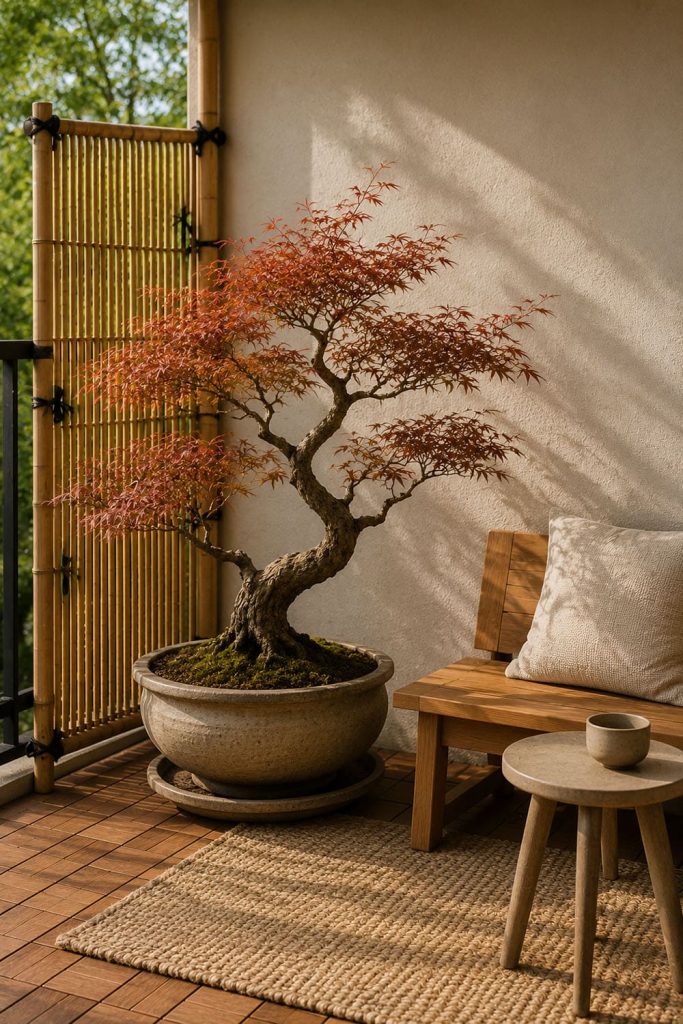
A single, well-shaped plant often has more impact on a Japandi balcony than a dozen scattered pots. A bonsai tree, a dwarf Japanese maple, or a sculptural olive tree in a simple ceramic or concrete container becomes a living focal point — something the eye returns to. These plants also reinforce the “wabi-sabi” appreciation for natural, imperfect form: an asymmetrical branch or weathered trunk is a feature, not a flaw. If your balcony gets limited sun, ask your local nursery for shade-tolerant alternatives with the same slow, sculptural growth habit.
12. Drape a Warm Wool or Boucle Throw
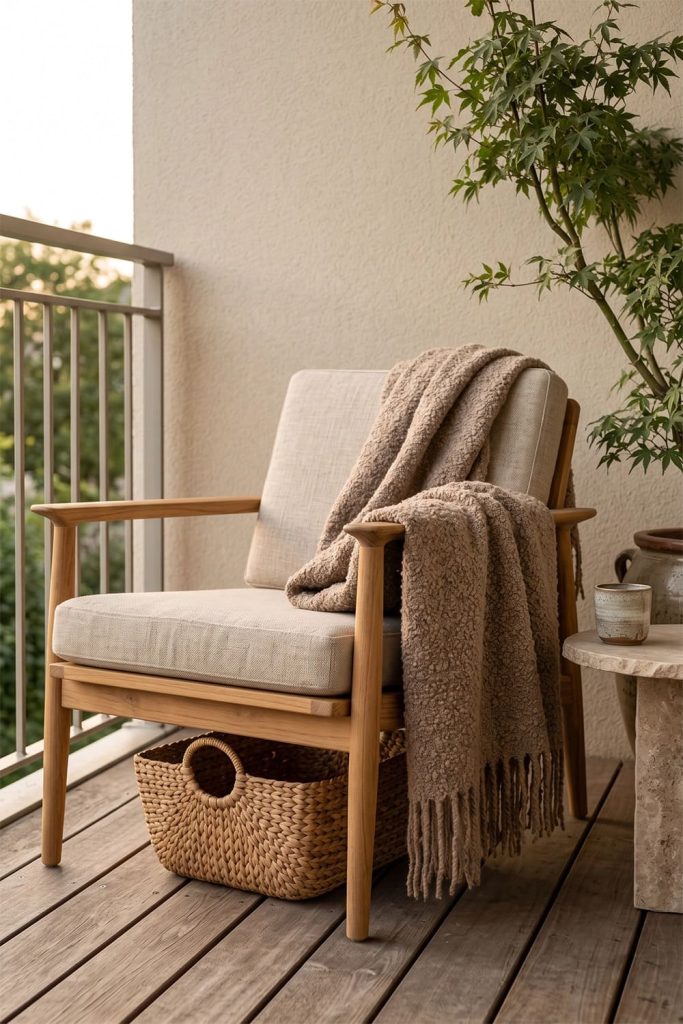
A folded wool or boucle throw over the arm of a chair or the edge of a bench adds instant warmth and softens hard outdoor materials like teak or metal. Beyond looks, it’s genuinely functional — balconies cool down quickly once the sun dips, and a throw within reach means you’ll actually use the space in the evening rather than retreating indoors. Stick to warm neutrals (oat, taupe, soft rust) rather than stark white or black, which can feel clinical against natural wood and greenery. Store it in your bench or a woven basket when not in use.
13. Grow a Vertical Herb or Greenery Wall

When floor space is tight, let the wall do the gardening. A simple wood-slat trellis, a set of floating wall-mounted planters, or a modular vertical garden panel lets you grow herbs, ferns, or trailing greenery without sacrificing a single inch of seating area. This is especially useful for narrow city balconies where every square foot of floor matters. Keep the planter hardware in matte black or natural wood to stay within the Japandi palette, and group plants by similar water needs so the whole wall thrives together rather than in patches.
14. Style a Handcrafted Ceramic Vase Display

A small side table or wall-mounted shelf with one or two handcrafted ceramic vases — ideally with visible texture, a slightly uneven glaze, or a hand-thrown shape — captures the Japanese principle of appreciating the handmade over the mass-produced. Fill one with a single stem or a small branch rather than a full bouquet; Japandi styling favors restraint over abundance, echoing the philosophy behind ikebana flower arranging. Rotate the stem seasonally — a bare branch in winter, a single peony in spring — so the display changes gently with the time of year instead of staying static.
15. Add a Woven Rattan Accent Chair

If a full platform seat feels like too much for your space, a single woven rattan or wicker accent chair delivers the same natural texture in a smaller footprint. The open weave keeps the piece visually light, which matters on a small balcony where a solid, heavy chair can dominate the space. Pair it with one linen cushion and let the chair itself be the statement piece rather than layering it with extra decor. Rattan’s natural tan tone bridges the wood decking and the greenery around it, tying the whole balcony together.
How to Plan Your Japandi Balcony (Before You Buy Anything)
A few practical steps will save you from an expensive redo later:
- Measure first. Note the full width, depth, and railing height, and account for door swing and walkway space — Japandi furniture should feel proportionate, not cramped.
- Check weight limits. Concrete planters, water features, and heavy decking add up fast. Confirm your balcony’s load capacity, especially in older buildings.
- Prioritize weatherproof materials. Look for UV-stabilized wood finishes, rust-resistant hardware, and outdoor-rated fabrics so cushions and screens hold up through seasons.
- Limit your palette. Two or three wood tones and a narrow neutral color range (cream, stone, charcoal, sage) keep even a busy mix of ideas feeling cohesive.
- Edit ruthlessly. Japandi’s calm comes from what you leave out as much as what you add — resist the urge to fill every corner.
Final Thoughts
A Japandi balcony doesn’t require a big renovation or a big budget — it requires editing. Pick a handful of ideas from this list that suit your space and climate, prioritize natural materials and low, simple furniture, and let a few plants do most of the visual work. The result is a small outdoor space that feels far calmer and more intentional than its square footage would suggest — exactly the point of Japandi design.


